Ruby-Throated Hummingbird or Black-Chinned Hummingbird?
Here's how to tell the difference

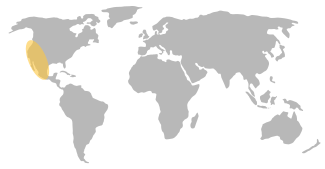


Ruby-Throated Hummingbird


Black-Chinned Hummingbird
Ruby-Throated Hummingbird
Archilochus colubris
General appearance
The ruby-throated hummingbird is a small bird with iridescent green plumage on its back and head, and white underparts. It has a slender, straight bill designed for feeding on nectar. Its wings are narrow and enable rapid, agile flight, making a buzzing sound that is often the first indicator of its presence in the wild.
Male vs female
Males are distinguished by their striking ruby-red throat patch, known as a gorget, which can appear black in poor lighting. Their tail feathers are forked with a dark, iridescent blue-green. Females lack the bright throat patch and instead have white underparts with a light spotting or streaking. Their tail feathers are rounded and edged with white.
Juvenile
Juveniles resemble adult females with similar green and white coloring. They lack the distinctive gorget of adult males. As they mature, young males begin to develop the red throat feathers that gradually replace the white of their juvenile plumage. Juveniles have buffy edges to their plumage, especially noticeable on the breast.
Size
2.8 - 3.9 in/0.1 - 0.2 oz
There's more to learn about Ruby-Throated Hummingbird
View full detailsBlack-Chinned Hummingbird
Archilochus alexandri
General appearance
The Black-chinned Hummingbird is about the size of a Sparrow, measuring approximately 3 3/4 inches (10 cm). Its most distinguishing colors are black, green, purple, and white. The bird's wings are narrow, rounded, and short, and its tail is multi-pointed, notched, rounded, and square-tipped.
Male vs female
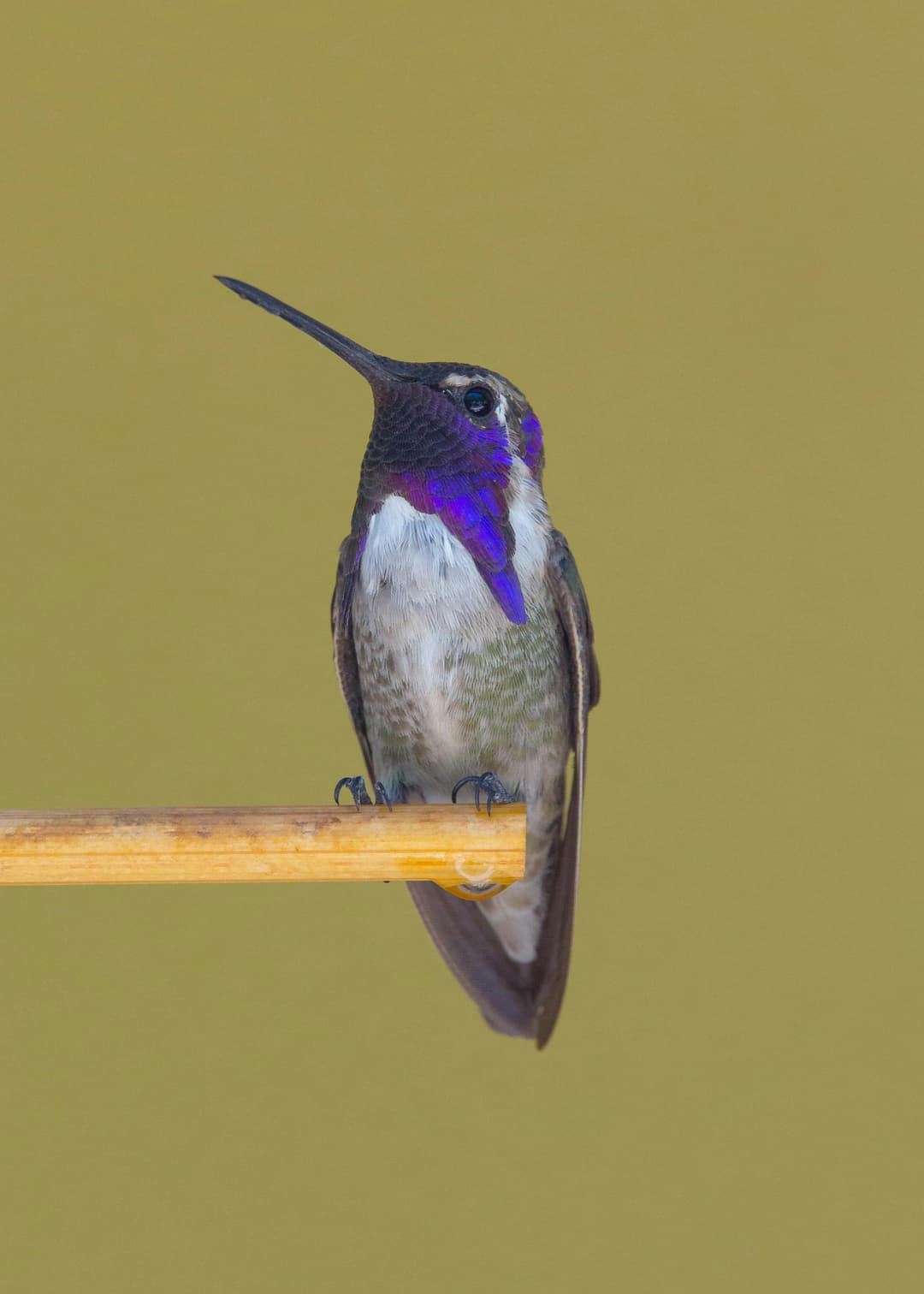
The male's distinguishing feature is a black chin which is difficult to see. Below the black chin, there is a more discernible white collar and a purple band. The female Black-chinned Hummingbird, on the other hand, is nearly identical to the female Ruby-throated Hummingbird. Distinguishing features include a long bill, pale underparts, and specific callnotes.
Juvenile
No specific information is available for the appearance of juvenile Black-chinned Hummingbirds. Considering hummingbirds as a species, juveniles often resemble the adult female until they achieve full adult plumage. Keep an eye out for the specific characteristics of the species, such as coloration and callnotes, when trying to identify juveniles.
Size
3.7 - 4.1 in/0.1 - 0.2 oz
There's more to learn about Black-Chinned Hummingbird
View full detailsHow to tell the Ruby-Throated Hummingbird from the Black-Chinned Hummingbird
Visual differences
The Ruby-Throated Hummingbird and Black-Chinned Hummingbird present distinct visual differences. The male Ruby-Throated features a vibrant ruby-red throat, while the male Black-Chinned shows a subtle black chin with a purple band, discernible only in optimal lighting. Generally, Ruby-Throated Hummingbirds exhibit iridescent green backs and forked tail feathers edged with white (in females), whereas Black-Chinned birds have a prominent white collar and a multi-pointed tail. Both have slender bills, but Ruby-Throated males have more striking color variations. Size is similar, with both approximately 3-4 inches long.
Key differences and behavior
The Ruby-Throated Hummingbird and Black-Chinned Hummingbird share overlapping behaviors but have some distinctions. Both species engage in similar courtship displays, involving U-shaped arcs and whirring sounds. However, Ruby-Throats prefer semi-open woods and gardens, while Black-Chins thrive in semi-arid areas and move to mountains post-breeding. Both females build well-camouflaged nests, typically higher for Ruby-Throats (10-20 feet) than Black-Chins (4-8 feet). Their diets are similar, mainly nectar and insects, with both utilizing sugar-water feeders. Size-wise, Ruby-Throats are slightly lighter, weighing 2-6g (0.07-0.21 oz) compared to Black-Chins' 2.5-5.1g (0.09-0.18 oz). The overall subtle differences in habitat preference and subtle variances in nesting heights are key behavioral indicators for identification.
Still not sure? Here are more lookalikes!
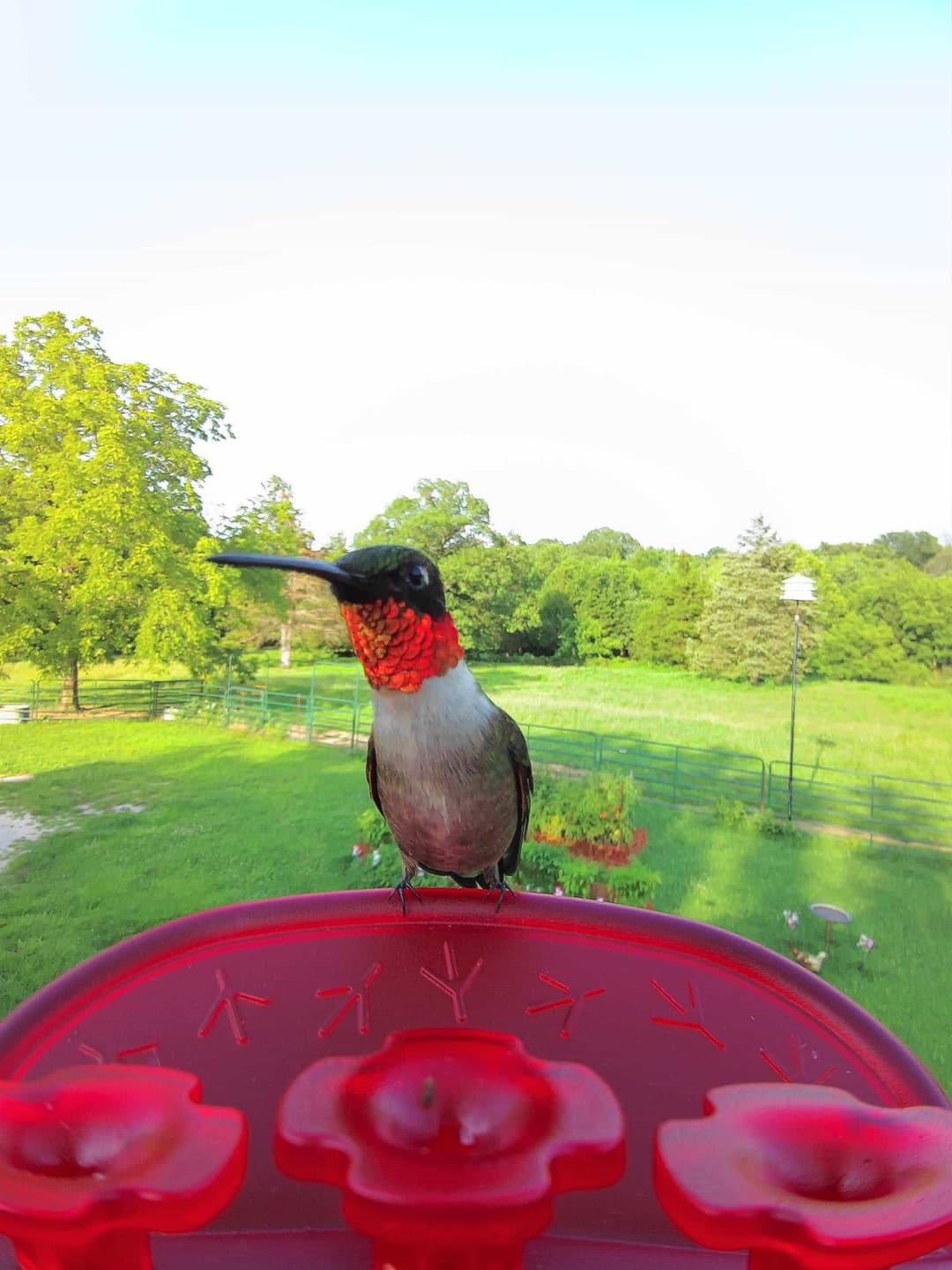
Ruby-Throated Hummingbird vs Broad-Tailed Hummingbird
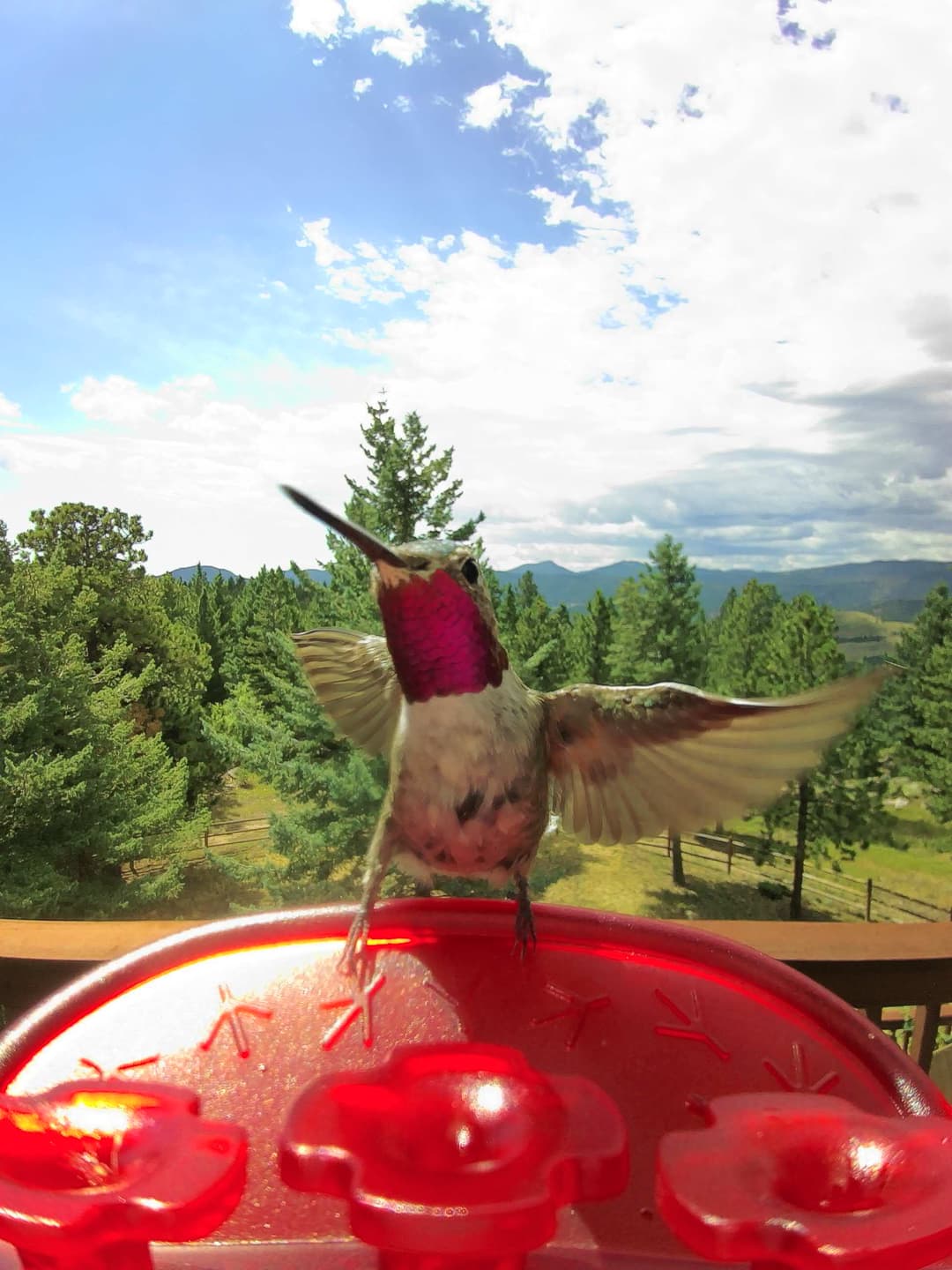
Ruby-Throated Hummingbird vs Anna's Hummingbird
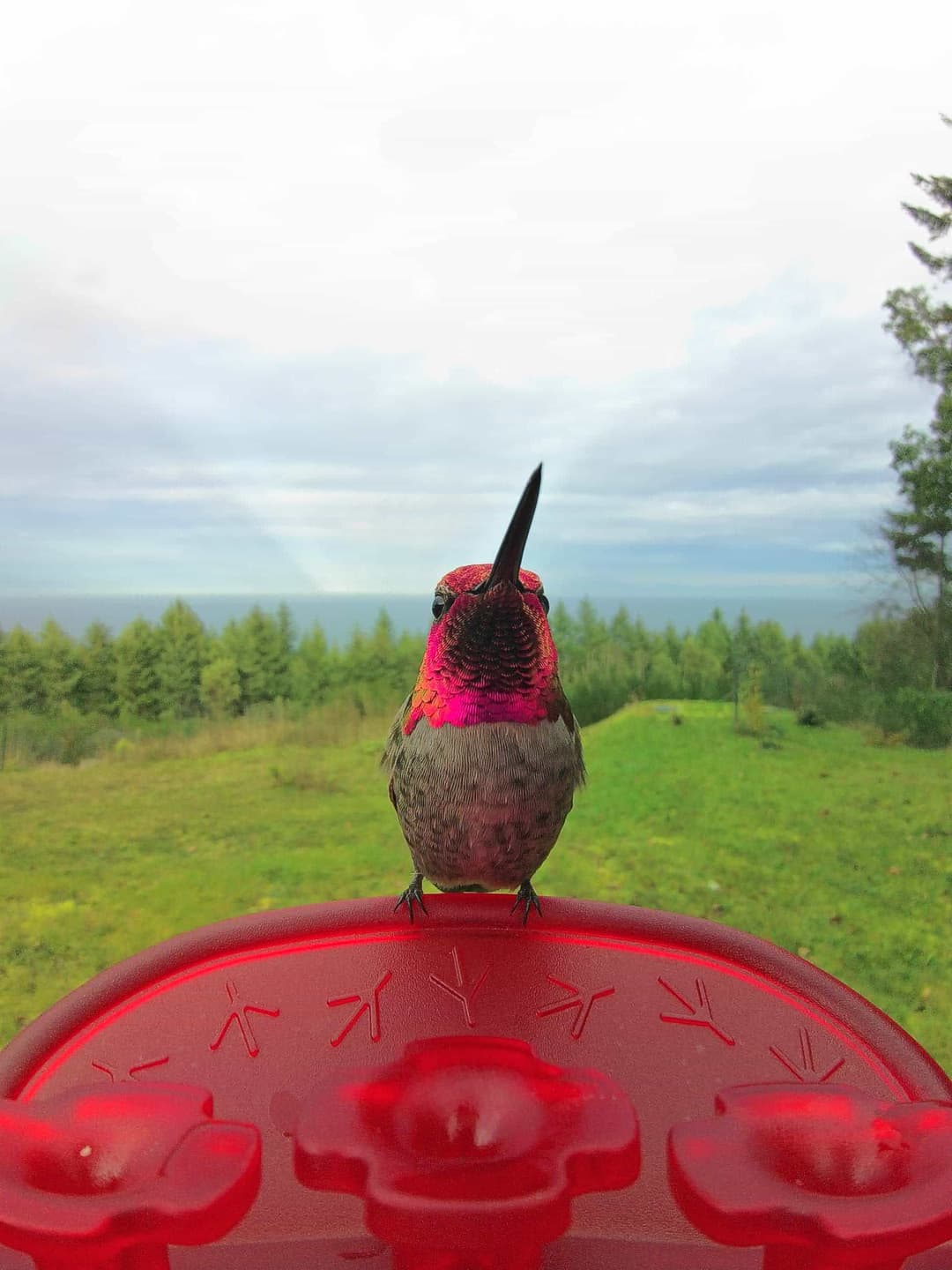
Ruby-Throated Hummingbird vs Rufous Hummingbird
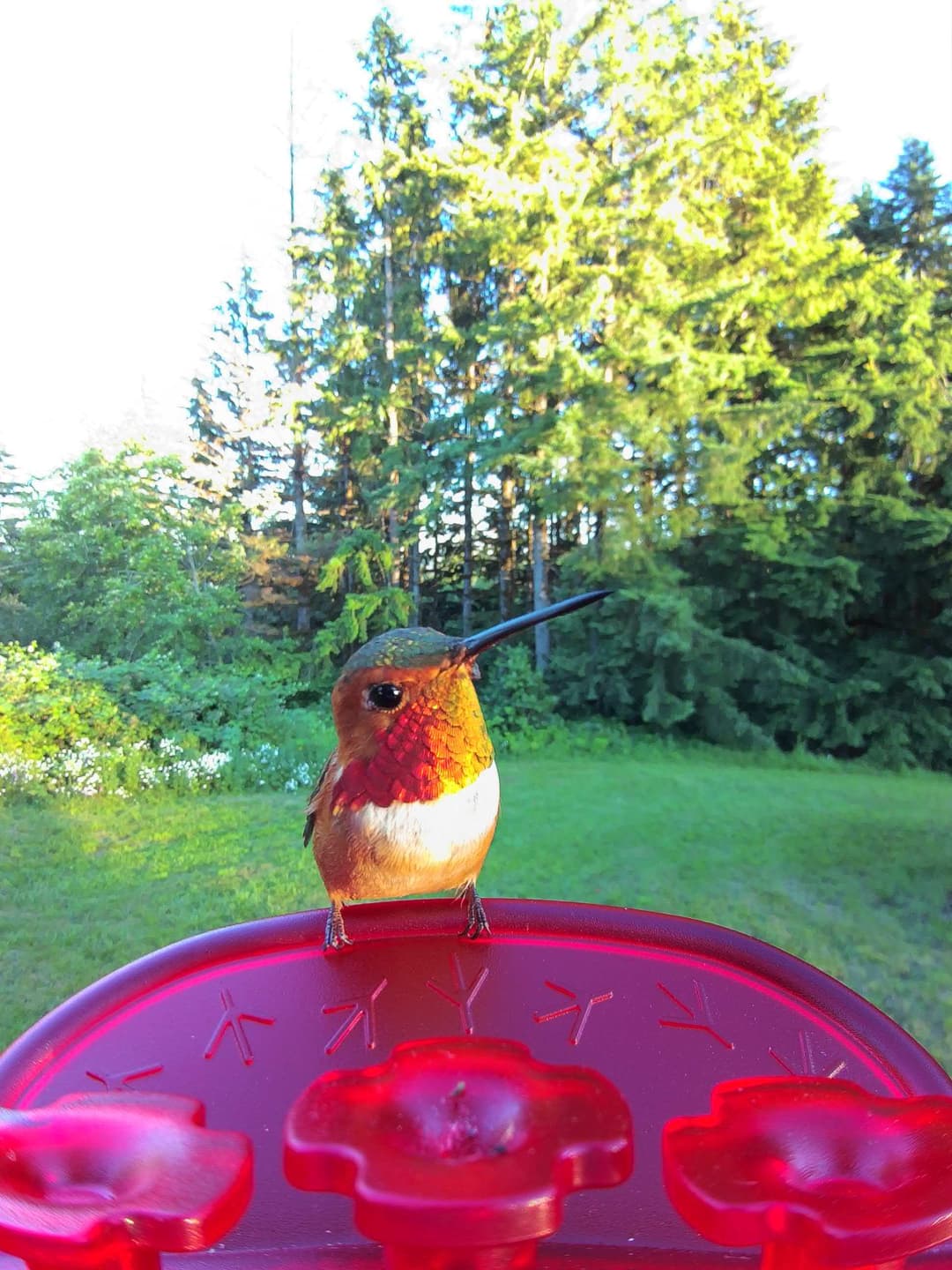
Black-Chinned Hummingbird vs Anna's Hummingbird
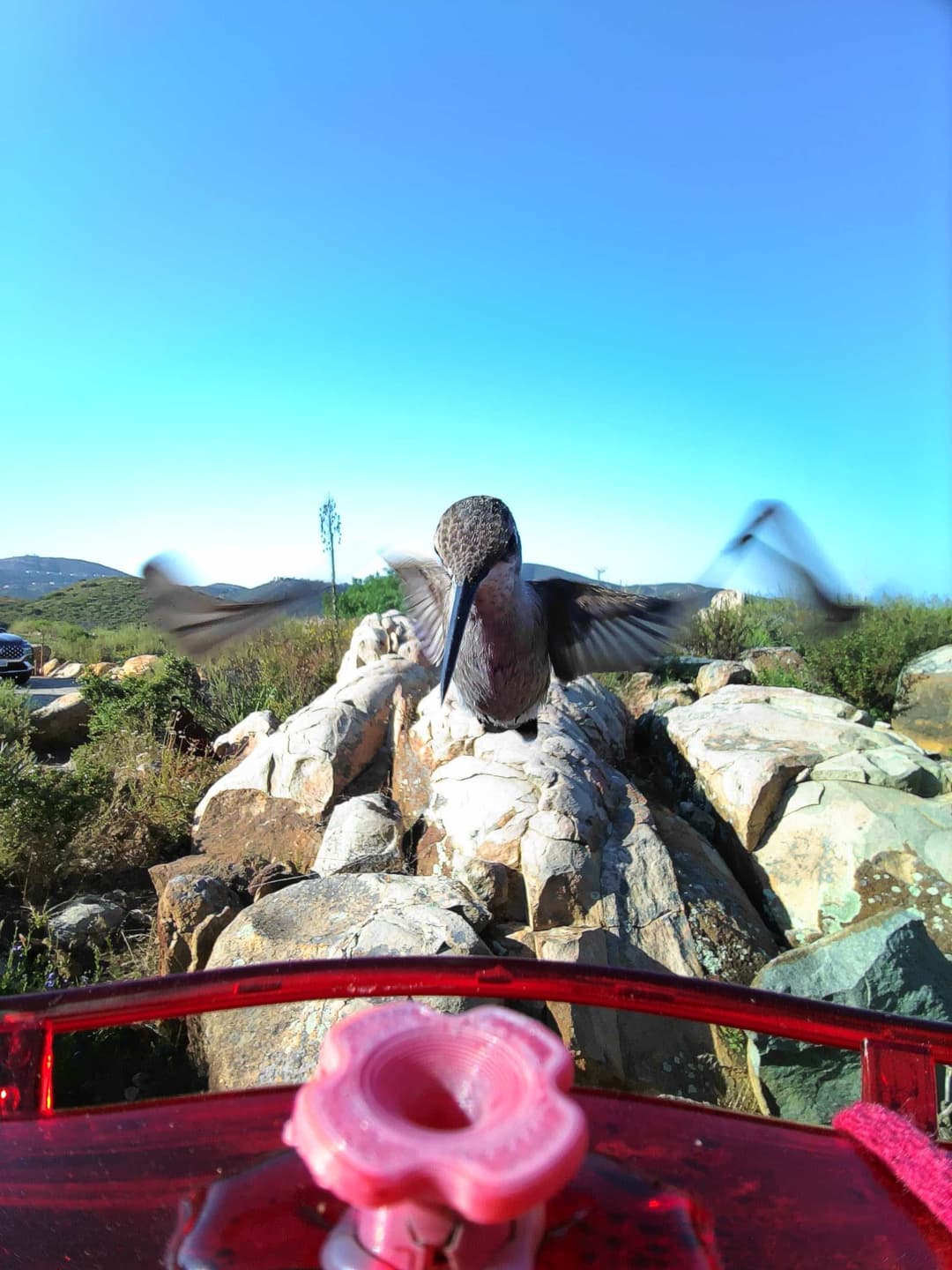
Black-Chinned Hummingbird vs Costa’s Hummingbird
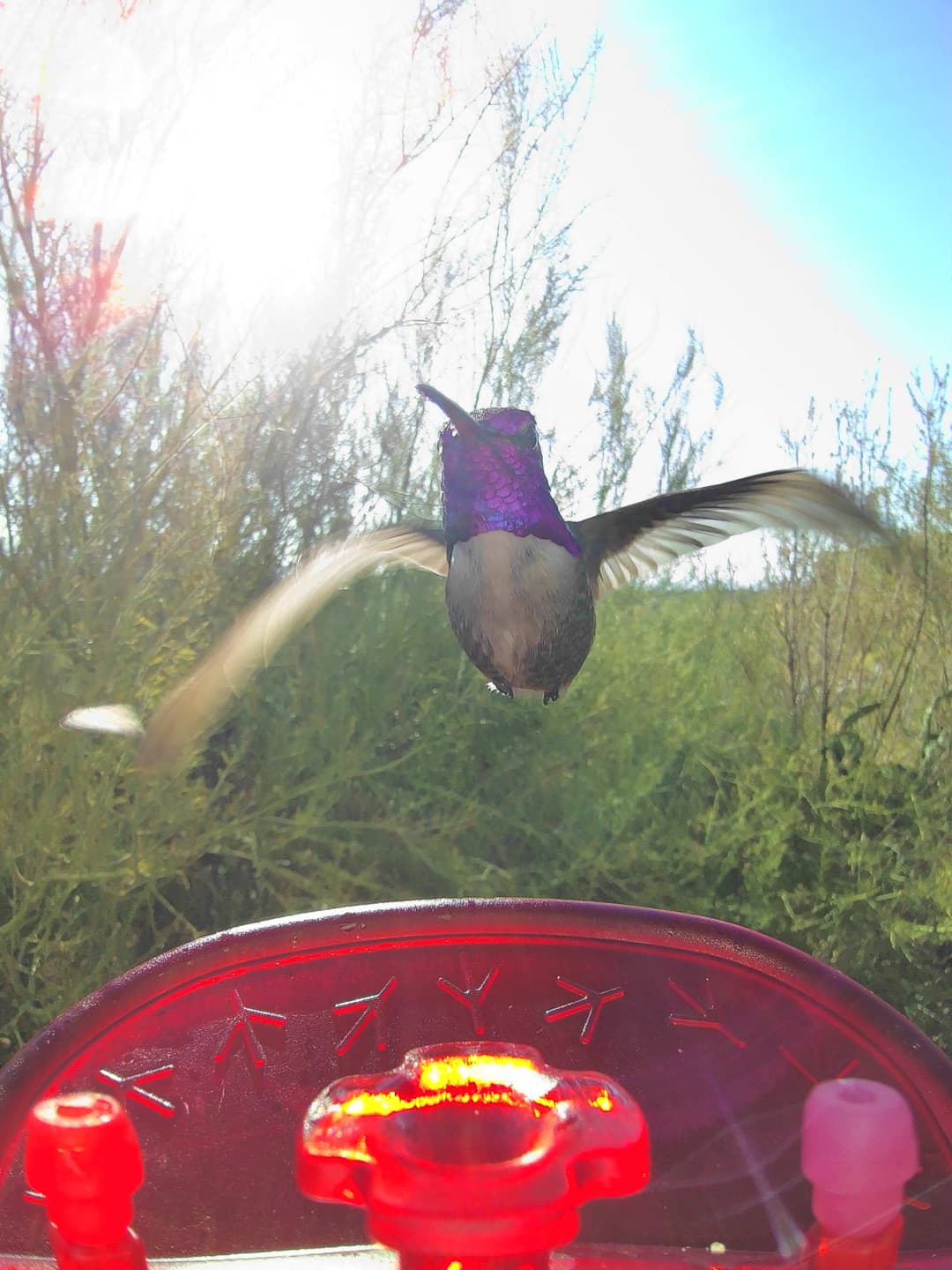
Black-Chinned Hummingbird vs Lucifer Hummingbird
Ruby-Throated Hummingbird vs [Select a bird]

[Select a bird]
Pick a bird to compare
Black-Chinned Hummingbird vs [Select a bird]
[Select a bird]
Pick a bird to compare