Ruby-Throated Hummingbird or Broad-Tailed Hummingbird?
Here's how to tell the difference




Ruby-Throated Hummingbird


Broad-Tailed Hummingbird
Ruby-Throated Hummingbird
Archilochus colubris
General appearance
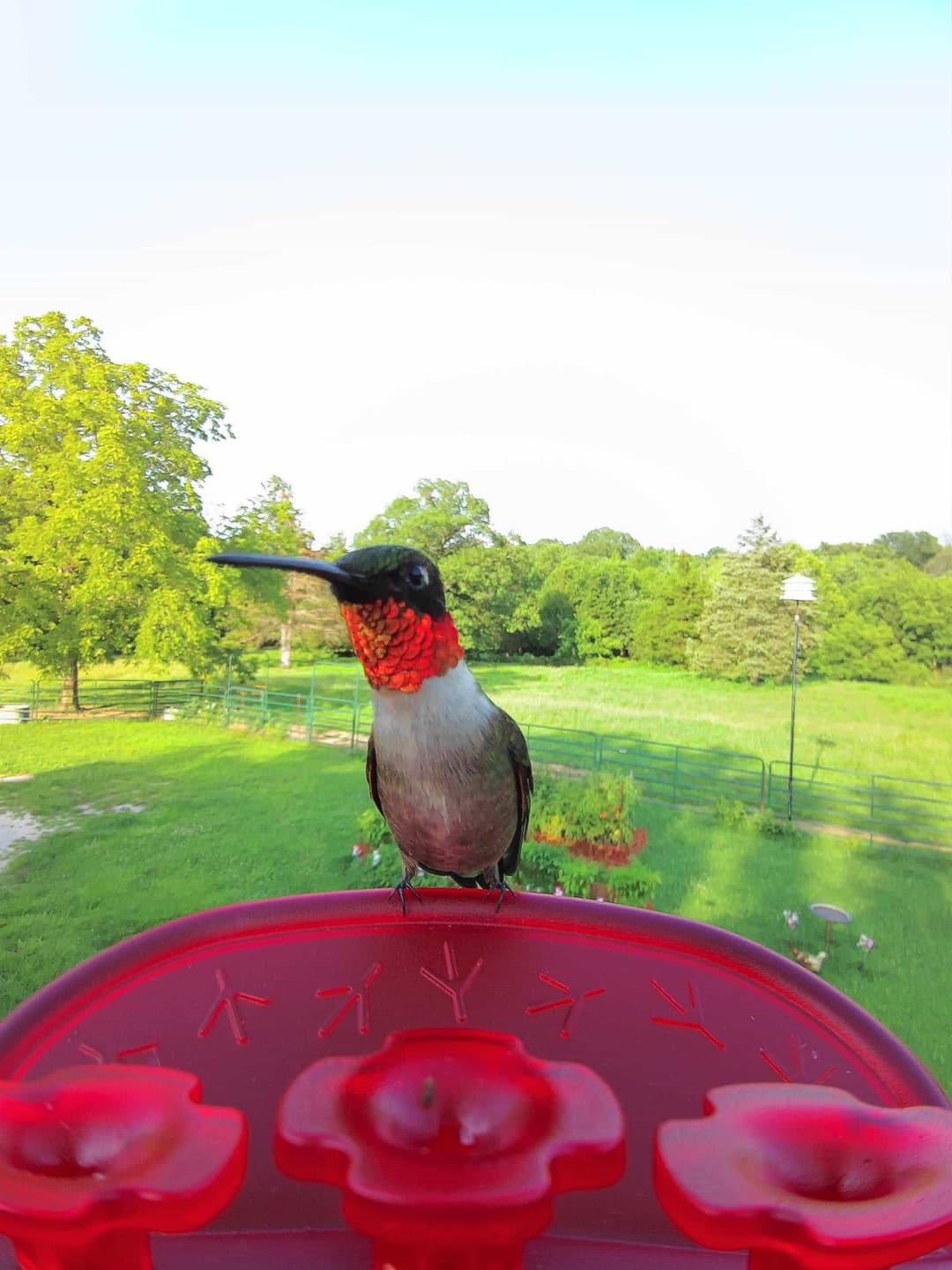
The ruby-throated hummingbird is a small bird with iridescent green plumage on its back and head, and white underparts. It has a slender, straight bill designed for feeding on nectar. Its wings are narrow and enable rapid, agile flight, making a buzzing sound that is often the first indicator of its presence in the wild.
Male vs female
Males are distinguished by their striking ruby-red throat patch, known as a gorget, which can appear black in poor lighting. Their tail feathers are forked with a dark, iridescent blue-green. Females lack the bright throat patch and instead have white underparts with a light spotting or streaking. Their tail feathers are rounded and edged with white.
Juvenile
Juveniles resemble adult females with similar green and white coloring. They lack the distinctive gorget of adult males. As they mature, young males begin to develop the red throat feathers that gradually replace the white of their juvenile plumage. Juveniles have buffy edges to their plumage, especially noticeable on the breast.
Size
2.8 - 3.9 in/0.1 - 0.2 oz
There's more to learn about Ruby-Throated Hummingbird
View full detailsBroad-Tailed Hummingbird
Selasphorus platycercus
General appearance
The broad-tailed hummingbird measures 4-4 1/2 inches (10-11 cm) in length. It displays a unique coloration pattern with a green back, the sides, and distinct pearlescent hues. The tail is multi-pointed, notched, rounded, and square-tipped, embodying a rusty orange color. Their wings are narrow, rounded, and short, akin to that of a sparrow.
Male vs female
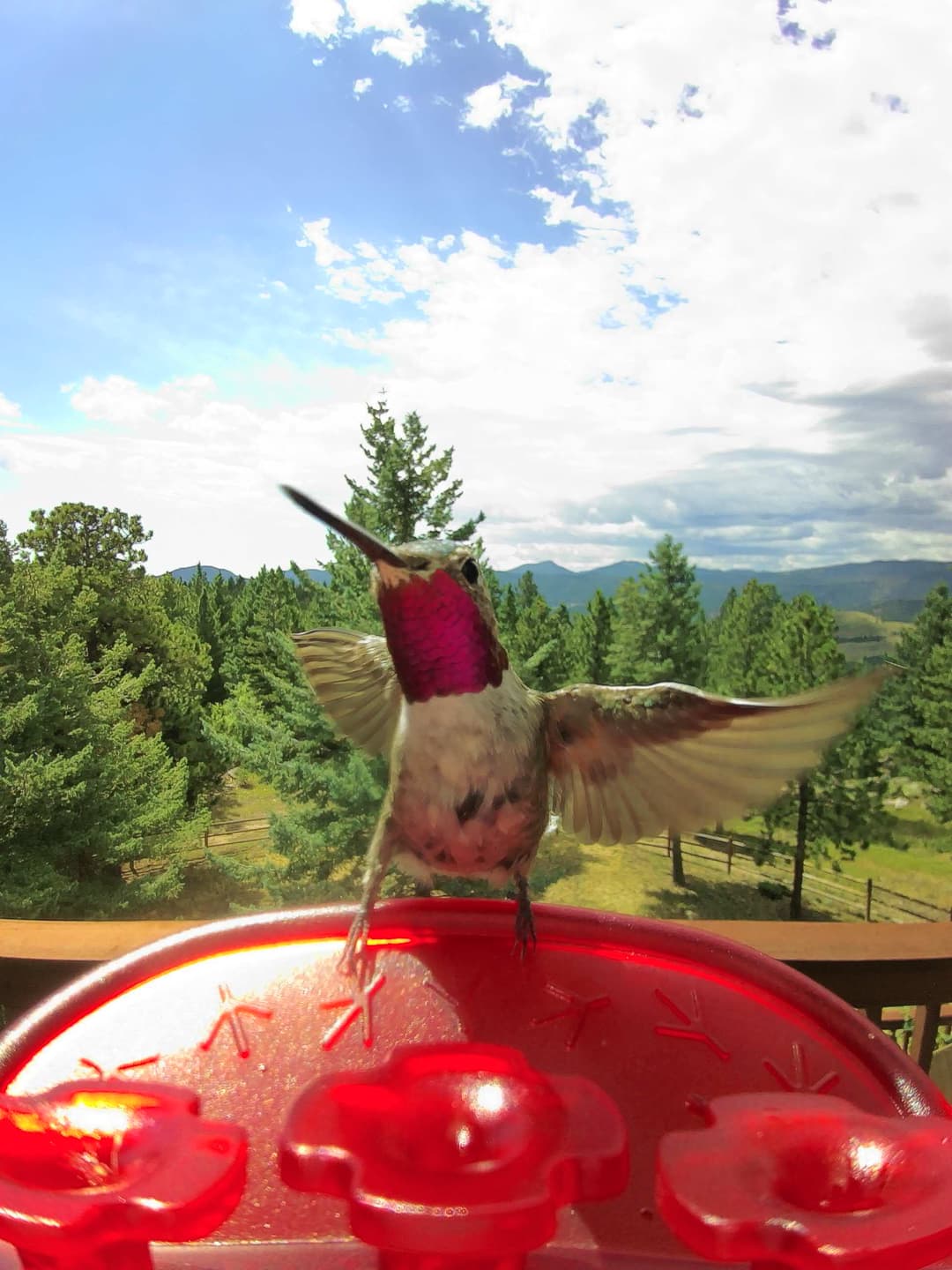
Males are identifiable with a rose-colored throat, contributing to their vibrant display. In contrast, females bear a green coat above with buff tones on the sides. They are distinguishable from the female Rufous Hummingbird by their larger tail. Seasonal variations in appearance may occur, particularly in males.
Juvenile
Juvenile broad-tailed hummingbirds retain a semblance to young male Anna's hummingbirds found in the western regions. Identification markers for juveniles are not specifically mentioned, but they are likely to possess less vibrant, more uniform coloration than adults, following the general pattern in avian species.
Size
3.3 - 3.8 in/0.1 oz
There's more to learn about Broad-Tailed Hummingbird
View full detailsHow to tell the Ruby-Throated Hummingbird from the Broad-Tailed Hummingbird
Visual differences
The Ruby-Throated Hummingbird (2-6g, 2.8-3.9 in) has iridescent green upperparts and a distinctive male ruby-red gorget, whereas the Broad-Tailed Hummingbird (3-4g, 3.9-4.3 in) exhibits green with pearlescent hues and a rose-colored male throat. Ruby-Throated males have forked tails with dark, iridescent blue-green, while Broad-Tailed males have multicolored, square-tipped tails. Ruby-Throated females and juveniles have white underparts with spotting, contrasting the buff-toned sides of female Broad-Tails. Both species feature slender, straight bills.
Key differences and behavior
The Ruby-Throated Hummingbird typically inhabits semi-open habitats like gardens or woods, while the Broad-Tailed prefers higher elevations in mountainous regions. Both species consume nectar and insects, but each shows a strong preference for tubular flowers. During breeding, Ruby-Throated males exhibit a pendulum-like courtship flight, unlike the Broad-Tailed's aerial loops and dives accompanied by unique wing sounds. While both species involve females performing nest construction and chick-rearing, Ruby-Throated nests range from 5 to 50 feet high in trees, whereas Broad-Tailed nests are often in montane meadows and open woodlands. Ruby-Throated Hummingbirds are active in more temperate climes during migration, unlike Broad-Tailed Hummingbirds, which echo their mountain breeding habitats even while migrating. Both species visit feeders for sugar-water, sharing a similar food preference despite differing habitats.
Still not sure? Here are more lookalikes!
Ruby-Throated Hummingbird vs Black-Chinned Hummingbird
Ruby-Throated Hummingbird vs Anna's Hummingbird
Ruby-Throated Hummingbird vs Rufous Hummingbird
Broad-Tailed Hummingbird vs Rufous Hummingbird
Broad-Tailed Hummingbird vs Allen's Hummingbird
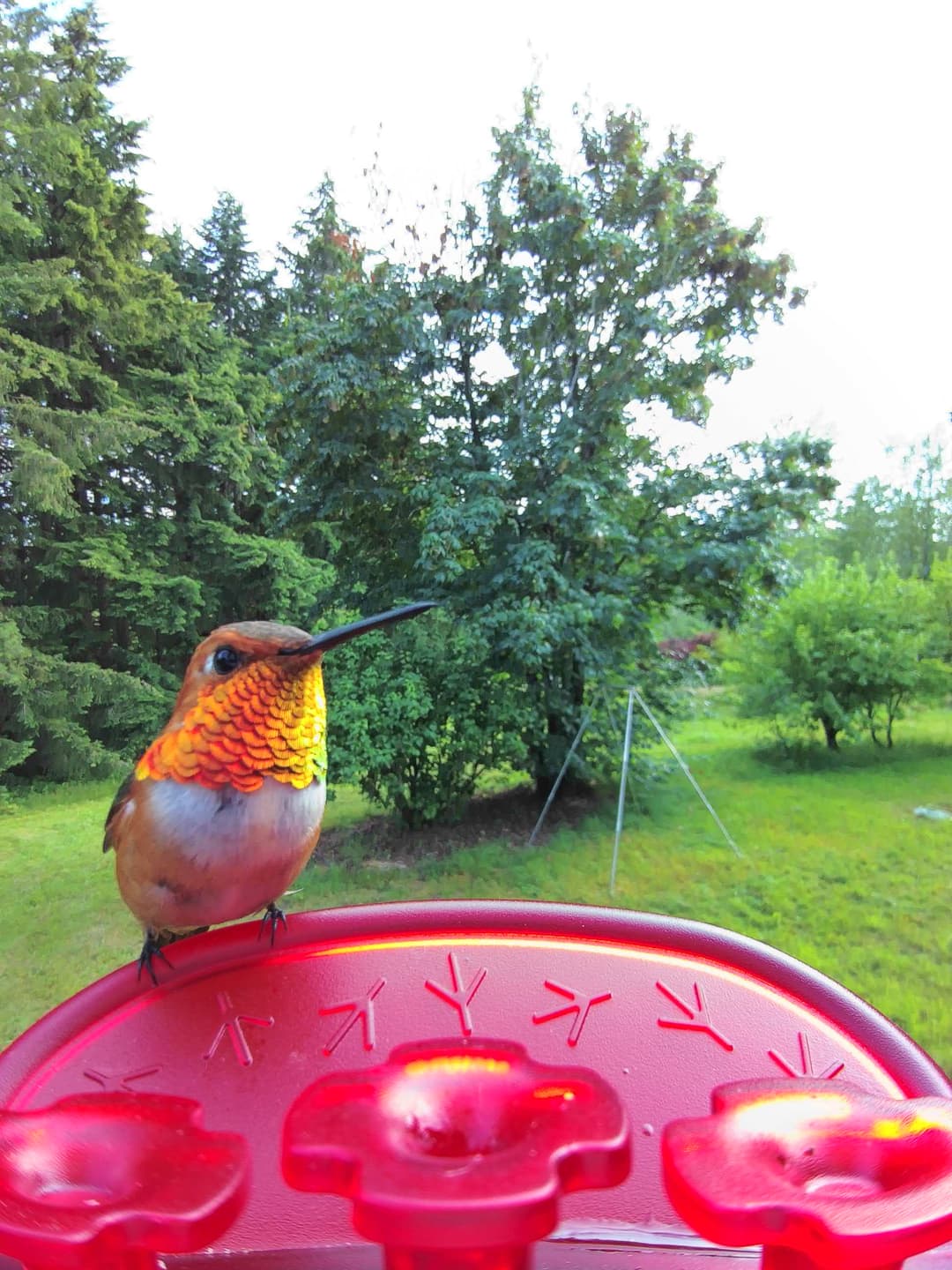
Broad-Tailed Hummingbird vs Anna's Hummingbird
Ruby-Throated Hummingbird vs [Select a bird]

[Select a bird]
Pick a bird to compare
Broad-Tailed Hummingbird vs [Select a bird]
[Select a bird]
Pick a bird to compare