Corn Bunting or Dunnock?
Here's how to tell the difference
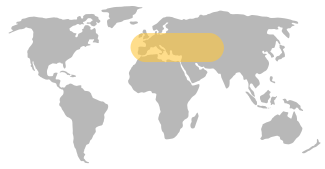


Corn Bunting


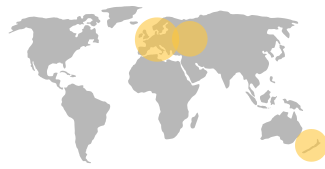
Dunnock
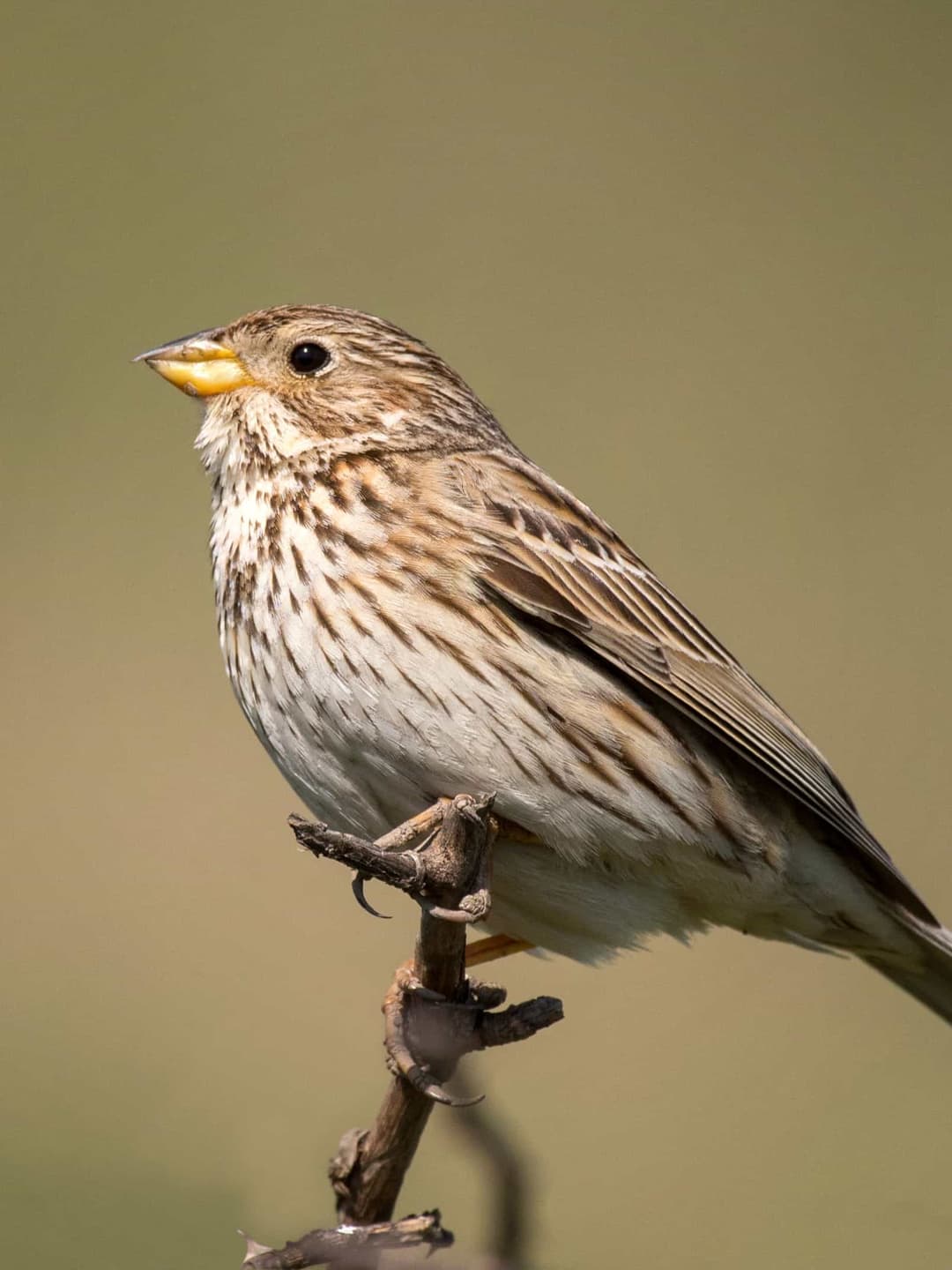
Corn Bunting
Emberiza calandra
General appearance
The corn bunting is a robust bird measuring approximately 16-19 cm in length. It possesses a distinctively stout, yellowish bill and a thick neck. The plumage boasts a brownish coloration interspersed with darker streaks and its underparts possess a whitish hue. The torso appears somewhat bulged, with rounded wings and a rather blunt tail. During flight, their short wings flutter quickly.
Male vs female
Male and female corn buntings are virtually indistinguishable by physical appearance alone as both sexes possess similar plumage coloring and size. However, behavioral differences can be used to tell them apart. Males are known for their unique song which sounds like jangling keys, used primarily for mating calls. Males are also territorial during breeding season.
Juvenile
Juvenile corn buntings resemble adults in size, but their plumage has a more ruffled appearance and is slightly paler. They lack the darker streaking seen in adults until they mature. Juvenile birds also lack the bold territorial and vocal behaviors of adult males until they reach sexual maturity.
Size
6.7 - 7.5 in/1.1 - 2.4 oz
There's more to learn about Corn Bunting
View full detailsDunnock
Prunella modularis
Also known as: Hedge Accentor
General appearance
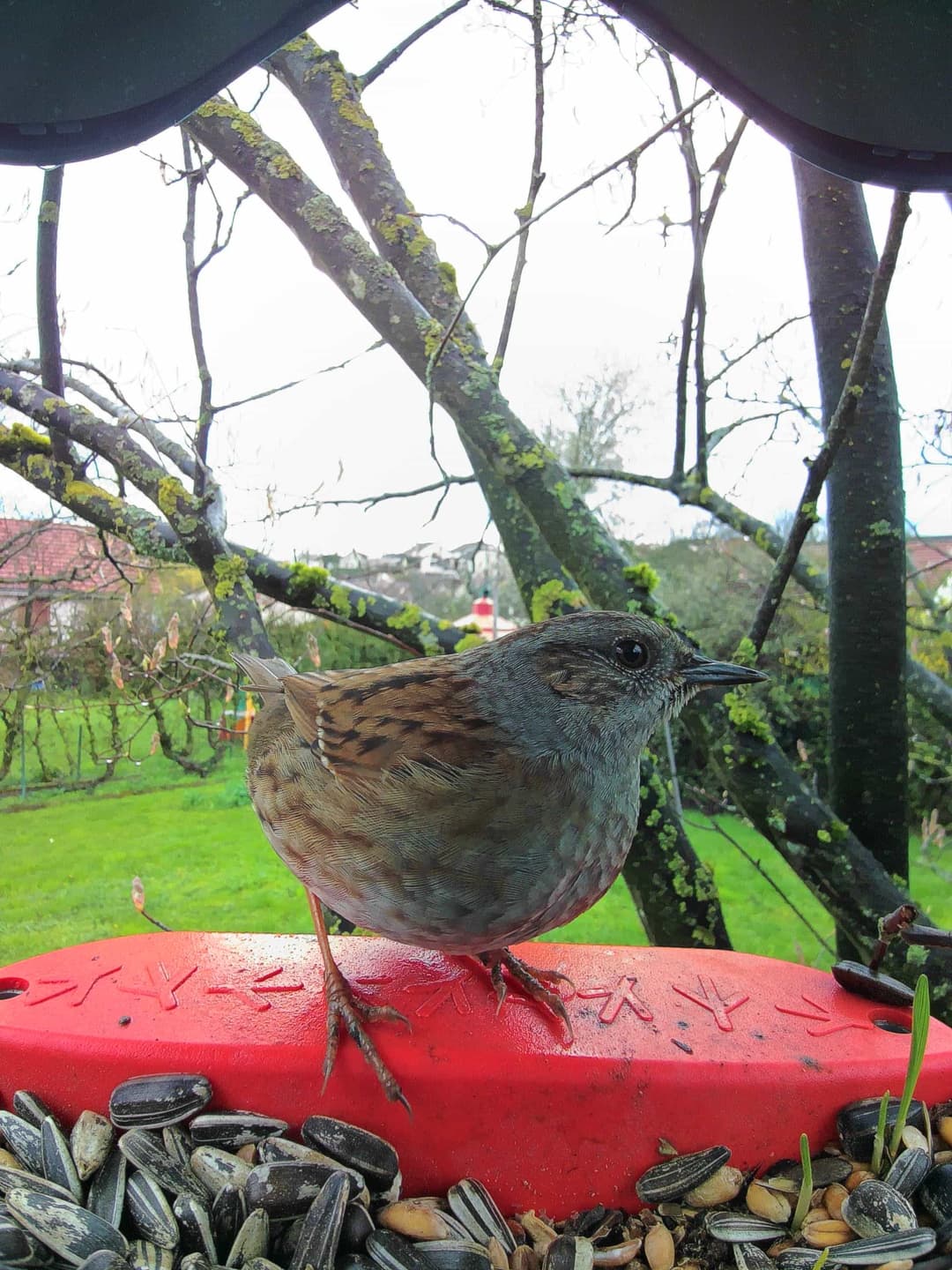
The dunnock, or hedge sparrow, is a small, unobtrusive bird characterized by its slender body, thin bill, and long legs. It has a streaked brown back, somewhat reminiscent of a sparrow, but its underparts are blue-grey. Its eyes are dark, and it has a distinctive orange-brown streak running from the beak to the eye. Dunnocks often flit about in dense undergrowth and are more often heard than seen.
Male vs female
Male and female dunnocks are generally similar in appearance, making it challenging to distinguish between the two in the wild. Both sexes have similar plumage, with no marked differences in coloration or size. However, males can be slightly larger, though this is not obvious without close comparison.
Juvenile
Juvenile dunnocks are similar in size to adults but usually have a duller, more brownish appearance with less distinct streaking. Their underparts lack the blue-grey hue of adults, appearing more buff in color. The eye stripe is less pronounced, and overall, they blend more into their environment until they mature.
Size
5.3 - 5.5 in/0.7 oz
There's more to learn about Dunnock
View full detailsHow to tell the Corn Bunting from the Dunnock
Visual differences
Corn Buntings (6.7-7.5 inches, 1.1-2.4 oz) are larger, with a stout, yellowish bill and thicker neck. Their plumage is brown with darker streaks and whitish underparts, and they have rounded wings and blunt tails. Dunnocks (5.3-5.5 inches, 0.67-0.70 oz) are smaller, with a slender body, thin bill, and longer legs. They have a streaked brown back, blue-grey underparts, and an orange-brown streak from beak to eye. Dunnocks are generally more discreet in dense undergrowth, while Corn Buntings favor open farmland.
Key differences and behavior
Corn Buntings and Dunnocks exhibit distinct behaviors and preferences. Corn Buntings (6.7-7.5 in, 1.1-2.4 oz) are robust and open farmland dwellers, whose males sing jangling tunes from perches to establish territory and attract mates. They nest and forage in low vegetation, primarily eating seeds and insects. Dunnocks (5.3-5.5 in, 0.7 oz) are smaller, shy, and favor dense undergrowth in woodlands or gardens. They have complex mating systems, engaging in clandestine courtship behaviors. Favored nesting sites are thick shrubs, and their diet mainly includes insects, switching to seeds in winter. Unlike Corn Buntings, Dunnocks adapt well to urban environments, often foraging at ground level.
Still not sure? Here are more lookalikes!
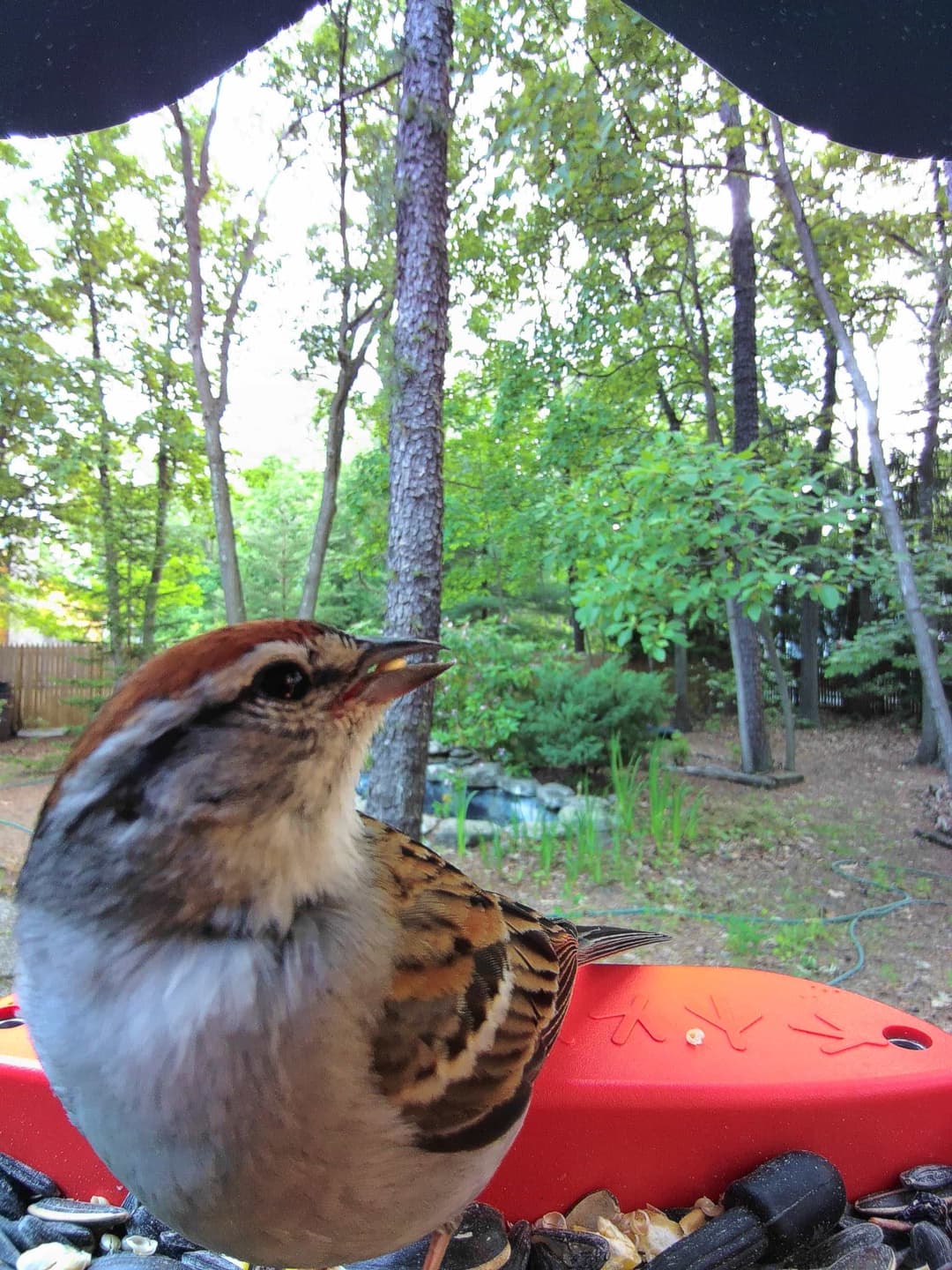
Corn Bunting vs Chipping Sparrow
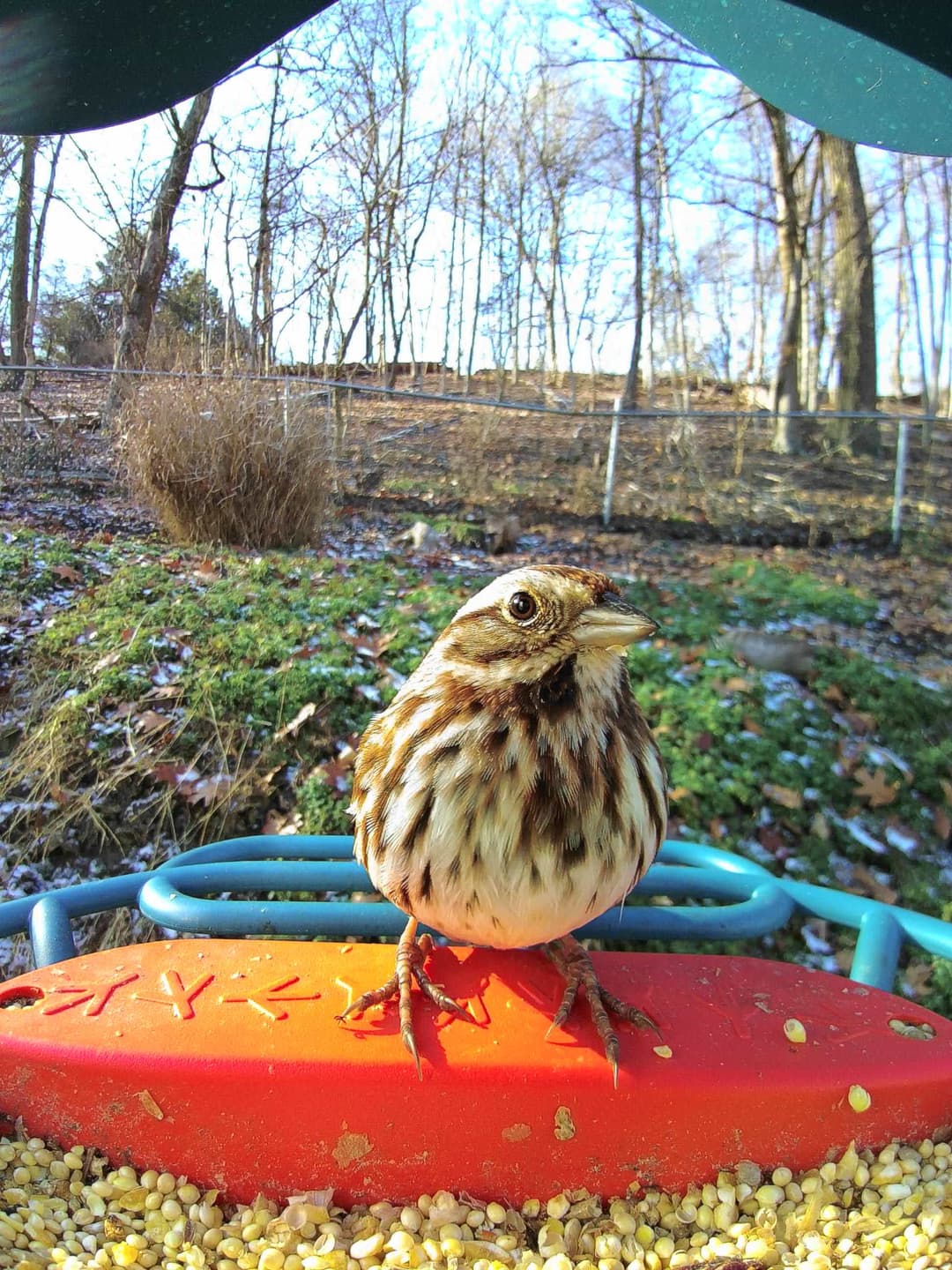
Corn Bunting vs Song Sparrow
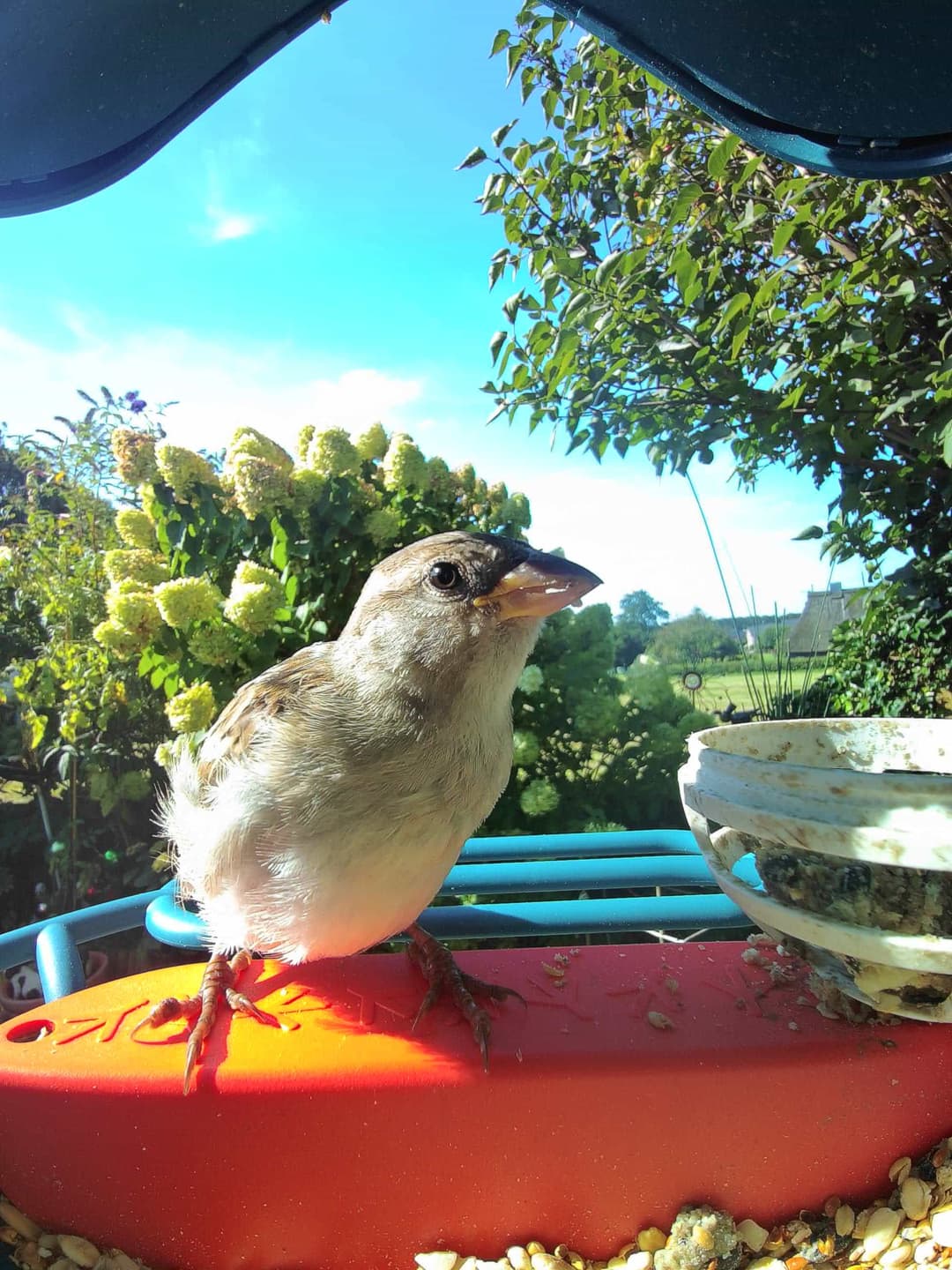
Corn Bunting vs House Sparrow
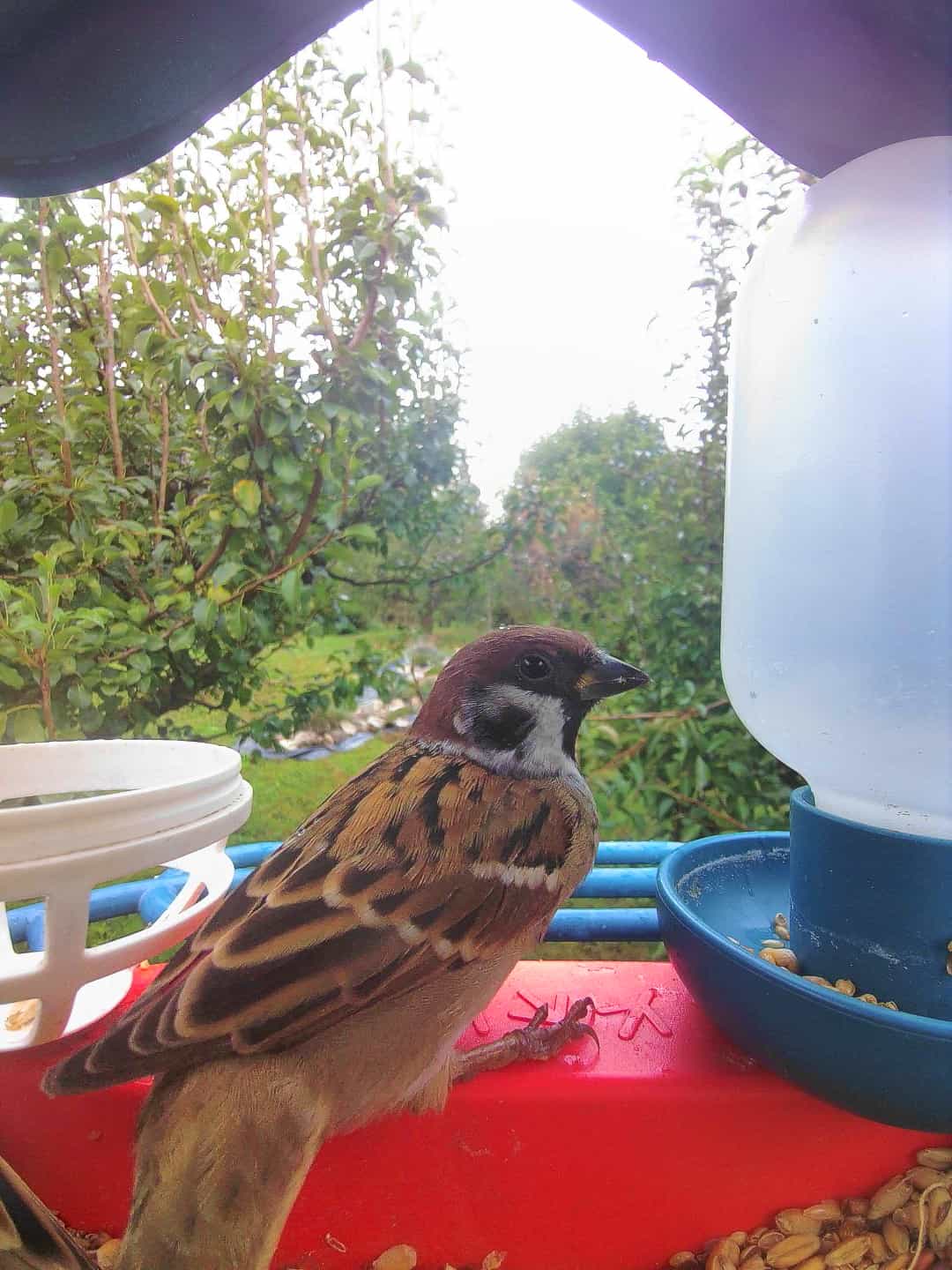
Corn Bunting vs Eurasian Tree Sparrow
Corn Bunting vs [Select a bird]

[Select a bird]
Pick a bird to compare
Dunnock vs [Select a bird]
[Select a bird]
Pick a bird to compare