Black-Chinned Hummingbird or Anna's Hummingbird?
Here's how to tell the difference
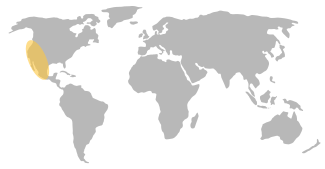


Black-Chinned Hummingbird


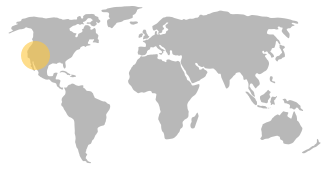
Anna's Hummingbird
Black-Chinned Hummingbird
Archilochus alexandri
General appearance
The Black-chinned Hummingbird is about the size of a Sparrow, measuring approximately 3 3/4 inches (10 cm). Its most distinguishing colors are black, green, purple, and white. The bird's wings are narrow, rounded, and short, and its tail is multi-pointed, notched, rounded, and square-tipped.
Male vs female
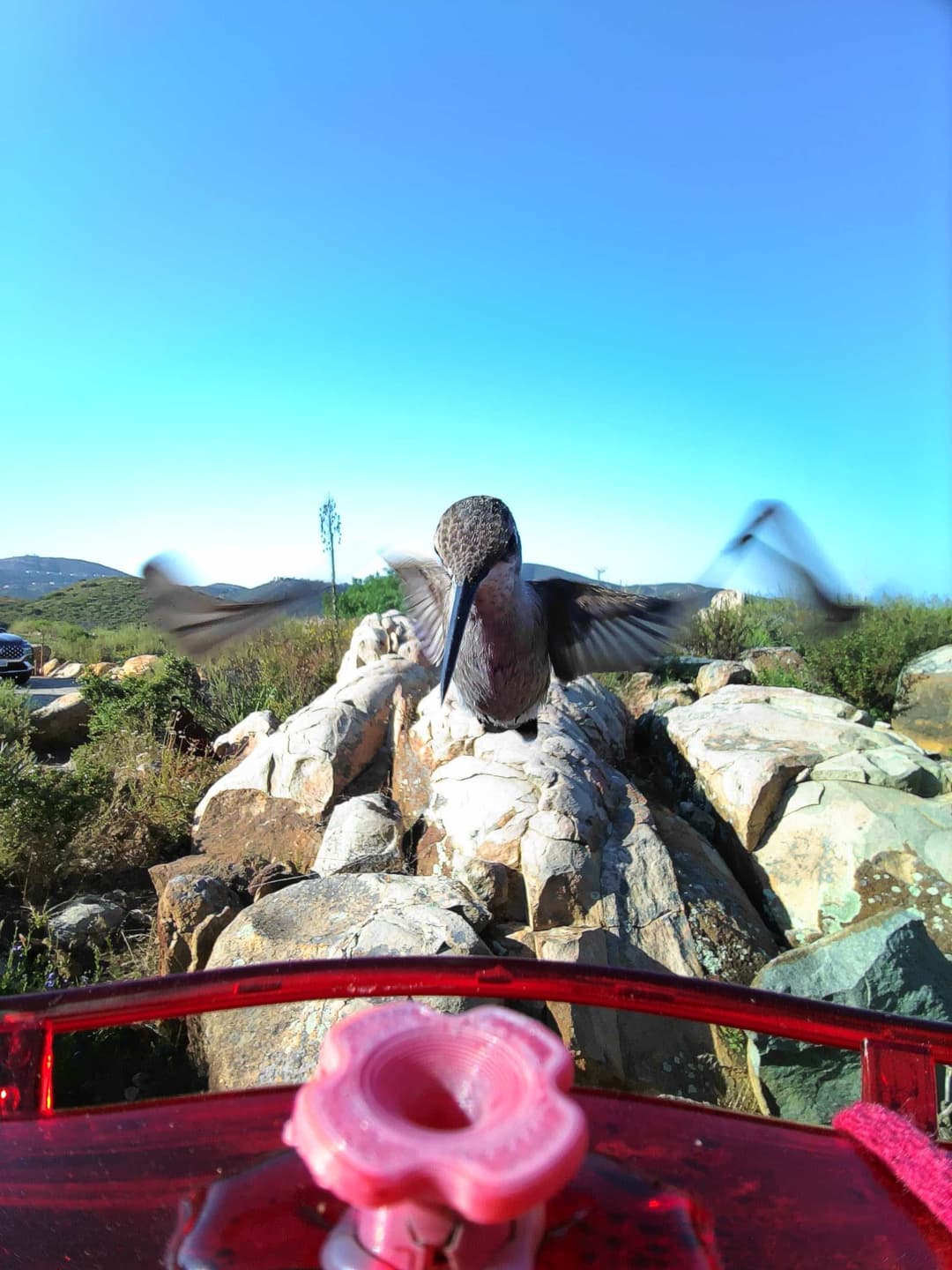
The male's distinguishing feature is a black chin which is difficult to see. Below the black chin, there is a more discernible white collar and a purple band. The female Black-chinned Hummingbird, on the other hand, is nearly identical to the female Ruby-throated Hummingbird. Distinguishing features include a long bill, pale underparts, and specific callnotes.
Juvenile
No specific information is available for the appearance of juvenile Black-chinned Hummingbirds. Considering hummingbirds as a species, juveniles often resemble the adult female until they achieve full adult plumage. Keep an eye out for the specific characteristics of the species, such as coloration and callnotes, when trying to identify juveniles.
Size
3.7 - 4.1 in/0.1 - 0.2 oz
There's more to learn about Black-Chinned Hummingbird
View full detailsAnna's Hummingbird
Calypte anna
General appearance
Feast your eyes on Anna's hummingbirds! These radiant beauties are a vibrant combination of elegant form and stunning color. Their body is adorned with green and grey shades, offering a subtle yet captivating sight. The lower body beams with a light grey-white color, balancing the otherwise rich tones. Despite their relatively small size of about 9cm, they own their presence, darting daringly through the skies.
Male vs female
Males and females of Anna's hummingbirds showcase a delightful color variation. The males steal the spotlight with their breath-taking iridescent crimson-red crowns and throats, shimmering brilliantly in direct sunlight. Their back is metallic green, a perfect contrast to their radiant front. The ladies, on the other hand, adorn a more modest attire of green on top and greyish white underneath. Some females may display a subtle touch of red marking on their throat, adding a dash of secret charm.
Juvenile
The juveniles initially mirror the females in coloration carrying the green-grey theme. But as they grow, the young male Anna's hummingbirds start developing their glamorous red feathers that herald their entry into adulthood. A hint of this transformation is their first indicator of age. Regardless of age, the Anna's hummingbirds keep their vibrant energy, embodying the spirit of free flight throughout their life!
Size
3.7 - 4.1 in/0.1 - 0.2 oz
There's more to learn about Anna's Hummingbird
View full detailsHow to tell the Black-Chinned Hummingbird from the Anna's Hummingbird
Visual differences
The Black-chinned Hummingbird is slightly longer, at about 3 3/4 inches, compared to Anna's Hummingbird, which is approximately 3 1/2 inches. Black-chinned males display a black chin with a rarely visible purple band, while Anna's males have shiny crimson-red crowns and throats. Females of both species have green upperparts and pale underparts, but Anna's may show a hint of red on the throat. Both have slender bills, but the Black-chinned has a more pronounced white collar below the chin, making it a key distinction.
Key differences and behavior
Black-Chinned Hummingbirds inhabit semi-arid areas, thriving from suburbs to desert washes, and move to higher elevations post-breeding. In contrast, Anna's Hummingbirds frequent gardens, open woods, and lowlands, but are also found in high mountain meadows during late summer. During courtship, Black-Chinned Hummingbirds perform a pendulum display, while Anna's Hummingbirds execute a 12-second dive, often with a reflective sunlit display. Nesting occurs in diverse locations for both, but Anna's may use nontraditional sites like wires or under eaves. Both species primarily feed on nectar and insects, also visiting feeders. Black-Chinned females incubate and rear offspring with dedicated feeding trips, while Anna's nesting begins as early as December.
Still not sure? Here are more lookalikes!
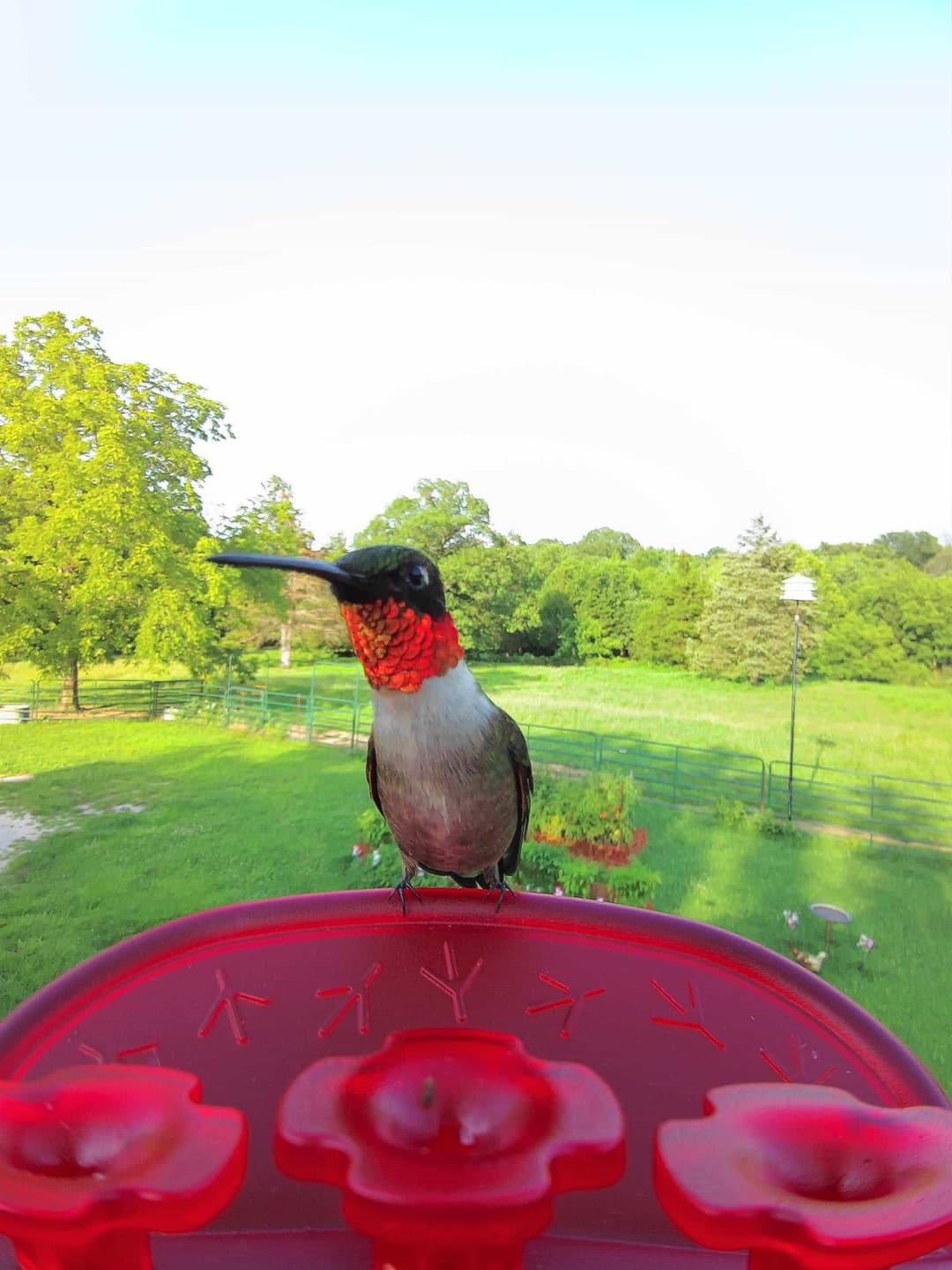
Black-Chinned Hummingbird vs Ruby-Throated Hummingbird
Black-Chinned Hummingbird vs Costa’s Hummingbird
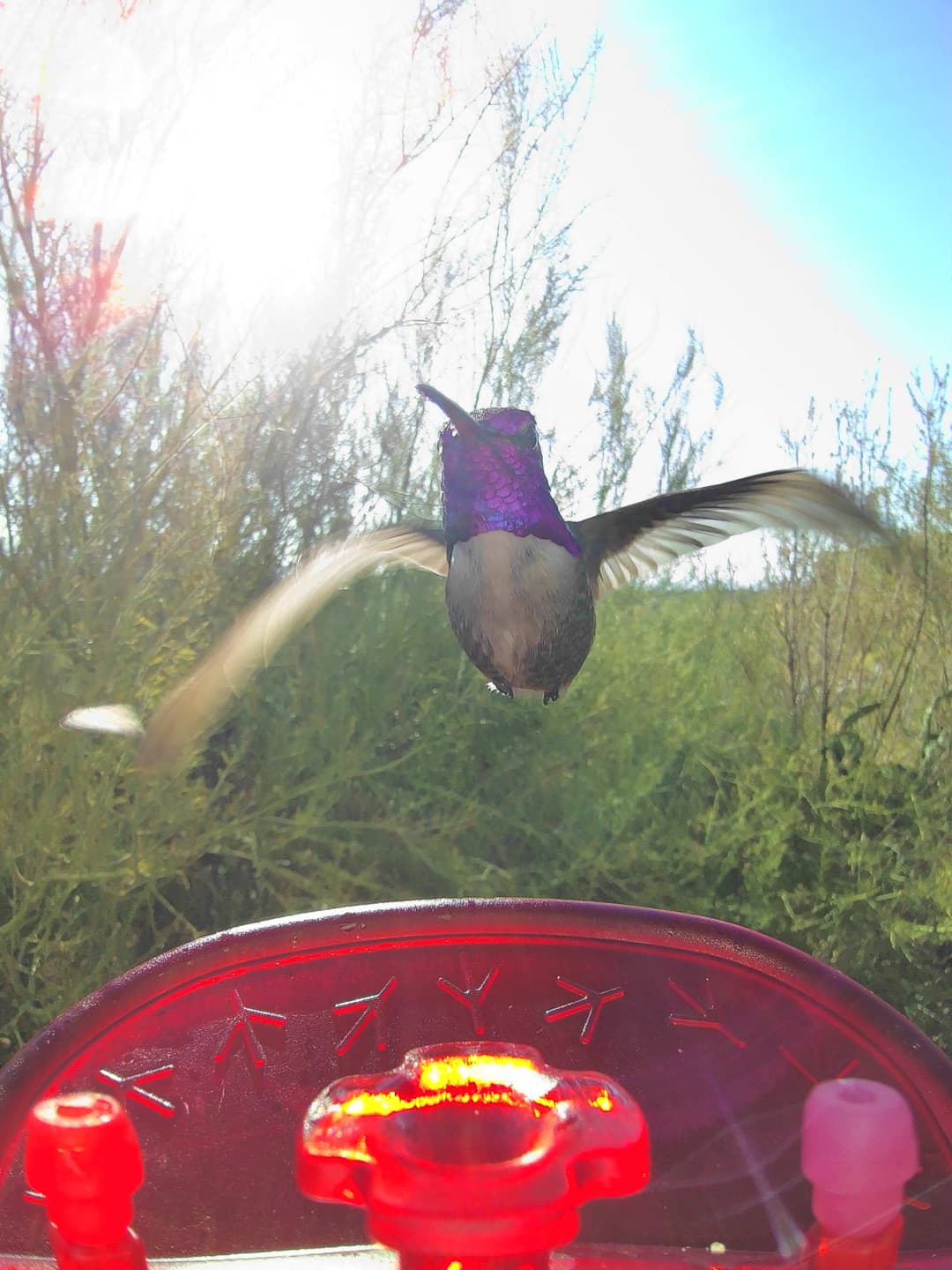
Black-Chinned Hummingbird vs Lucifer Hummingbird
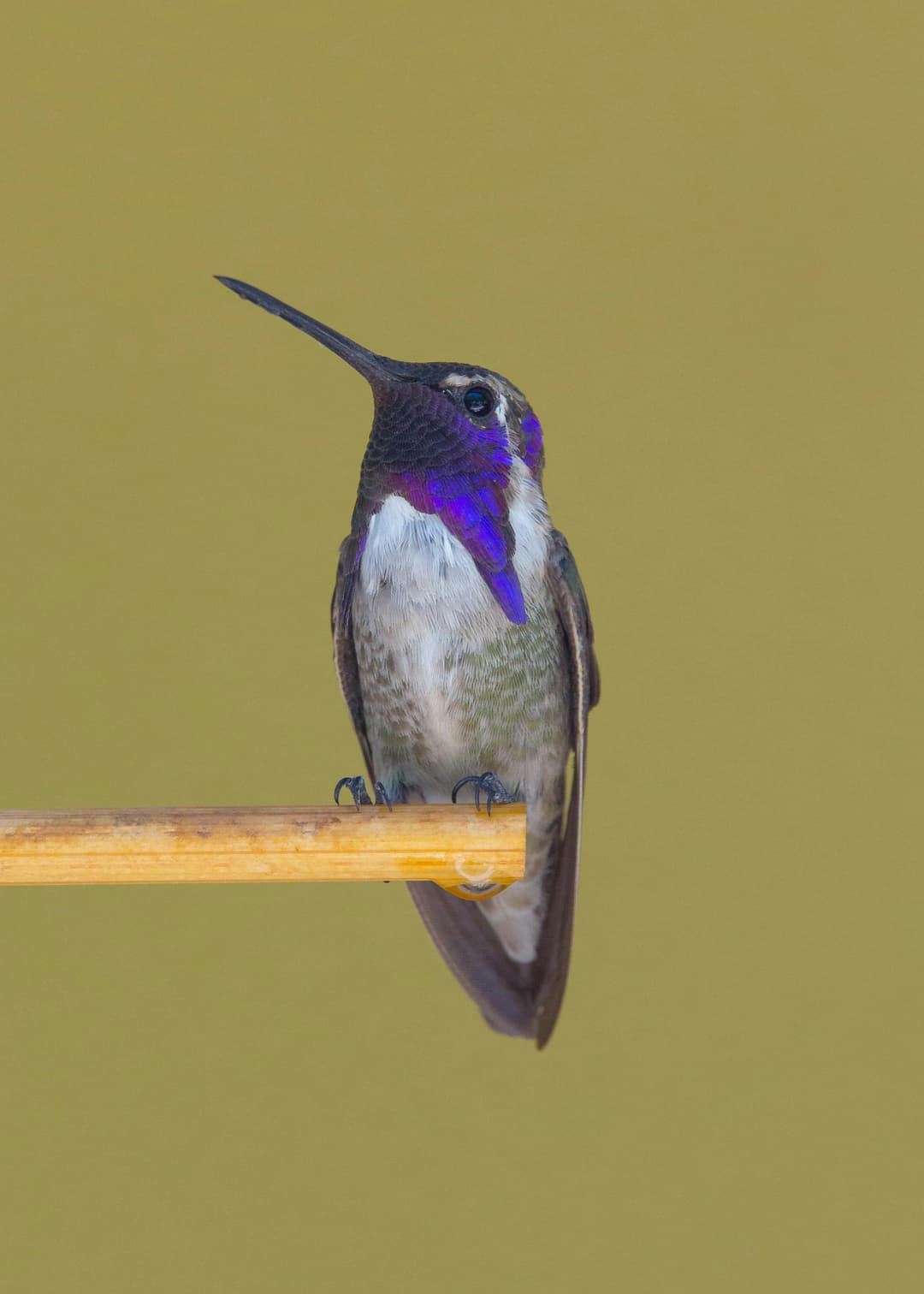
Anna's Hummingbird vs Broad-Tailed Hummingbird
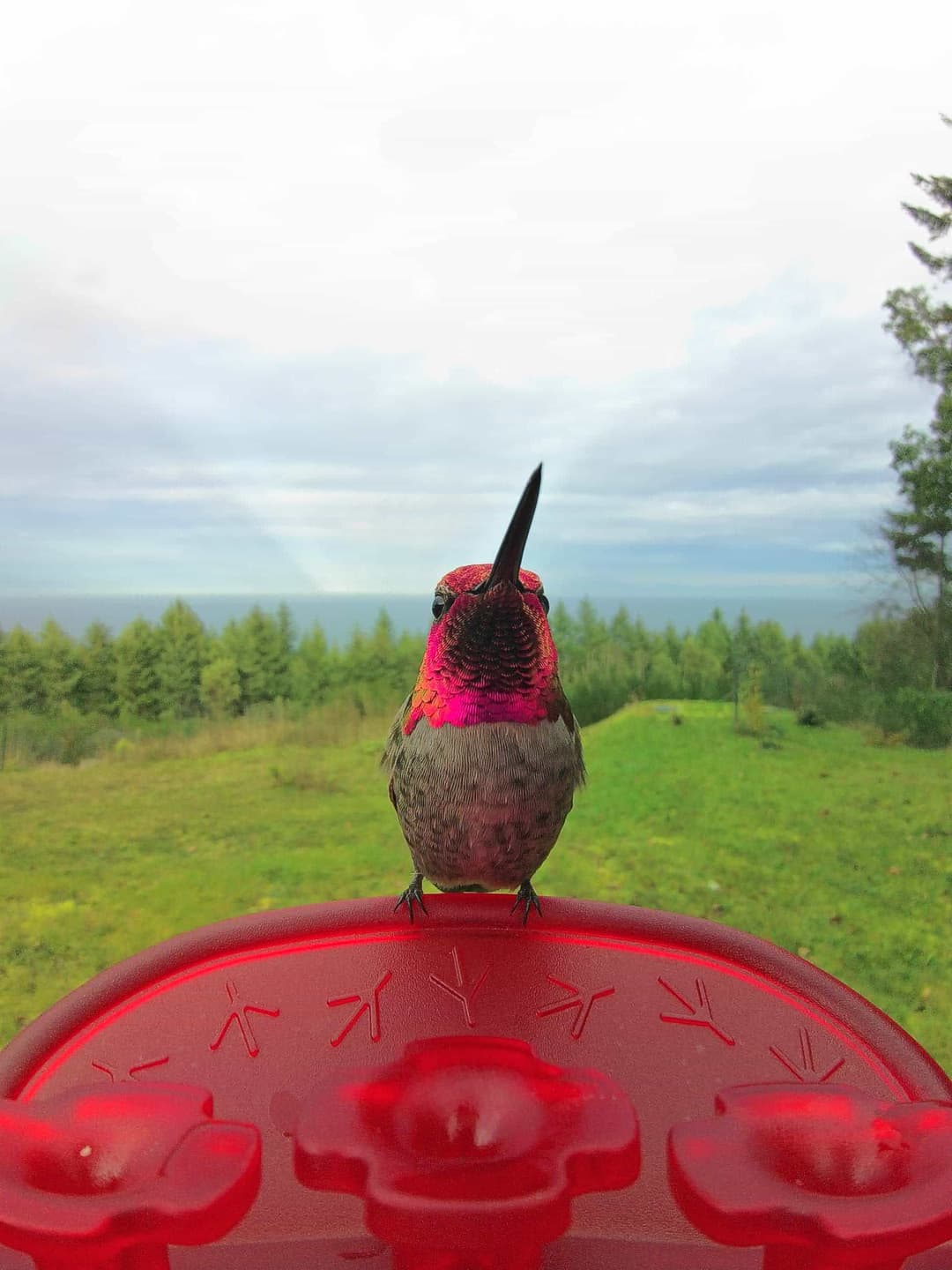
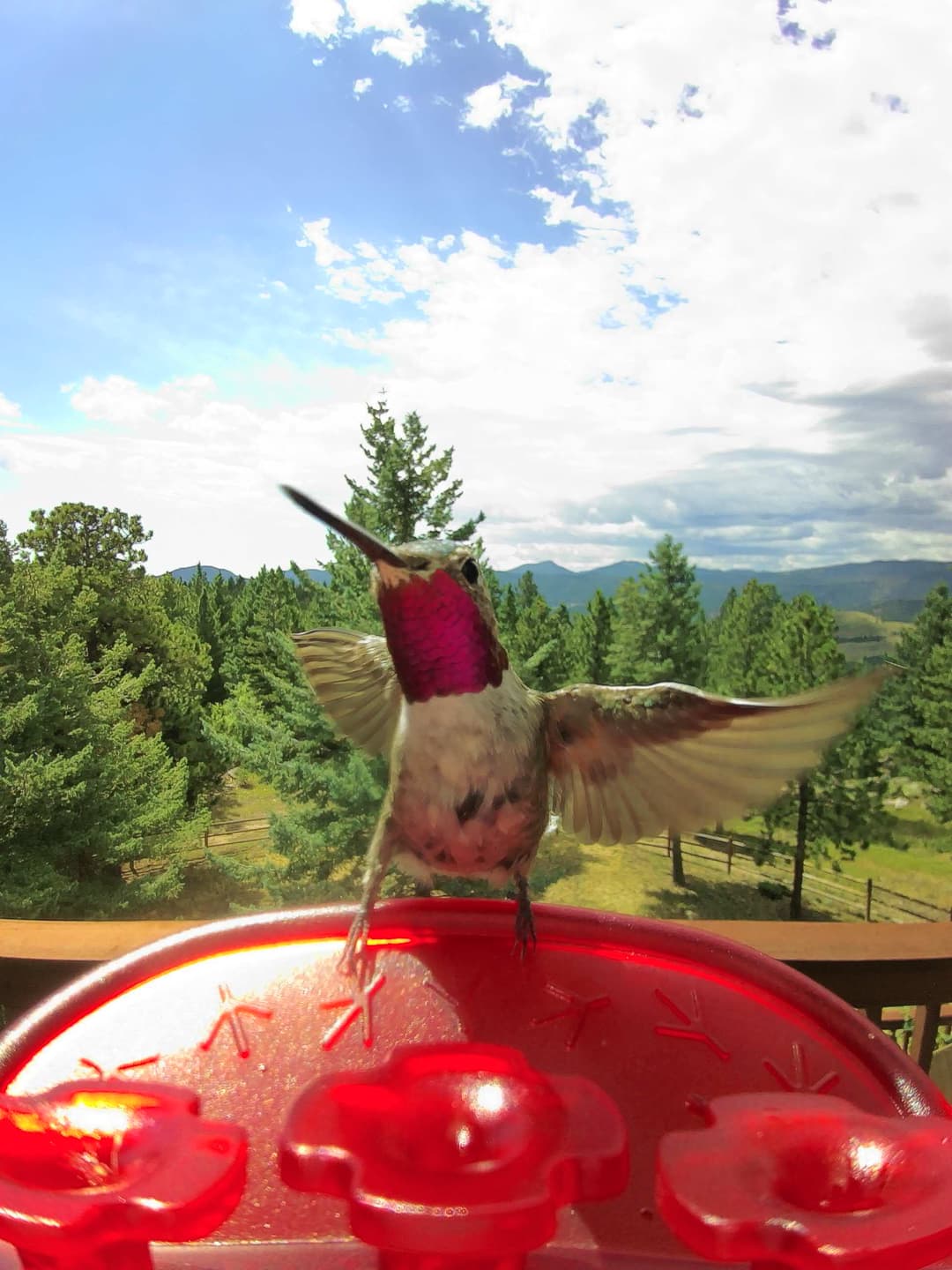
Anna's Hummingbird vs Costa’s Hummingbird
Anna's Hummingbird vs Rufous Hummingbird
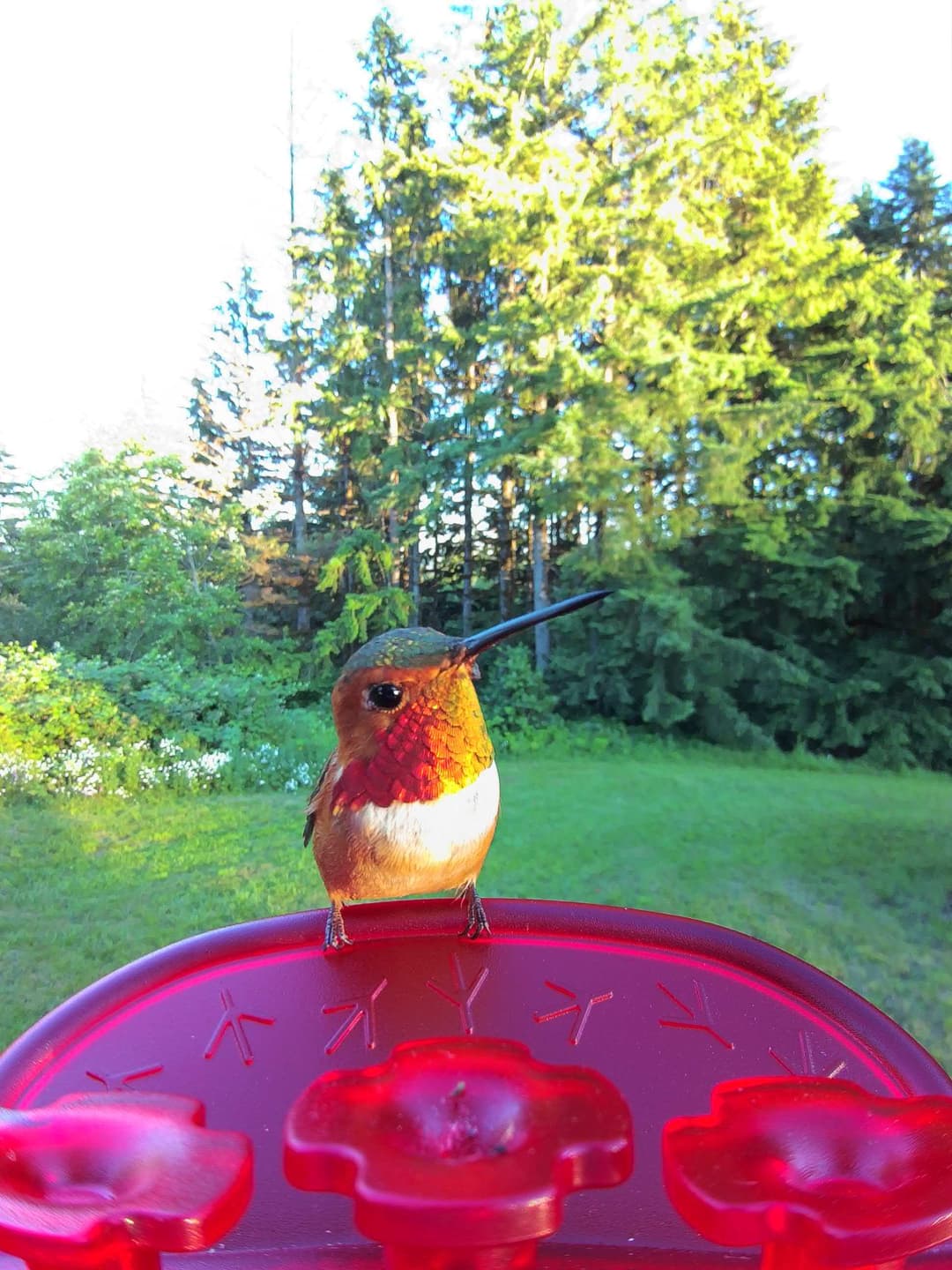
Black-Chinned Hummingbird vs [Select a bird]

[Select a bird]
Pick a bird to compare
Anna's Hummingbird vs [Select a bird]
[Select a bird]
Pick a bird to compare