Oriental Turtle Dove or Eurasian Collared Dove?
Here's how to tell the difference
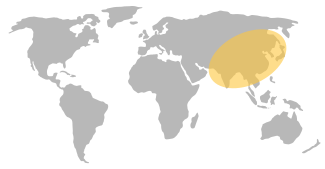


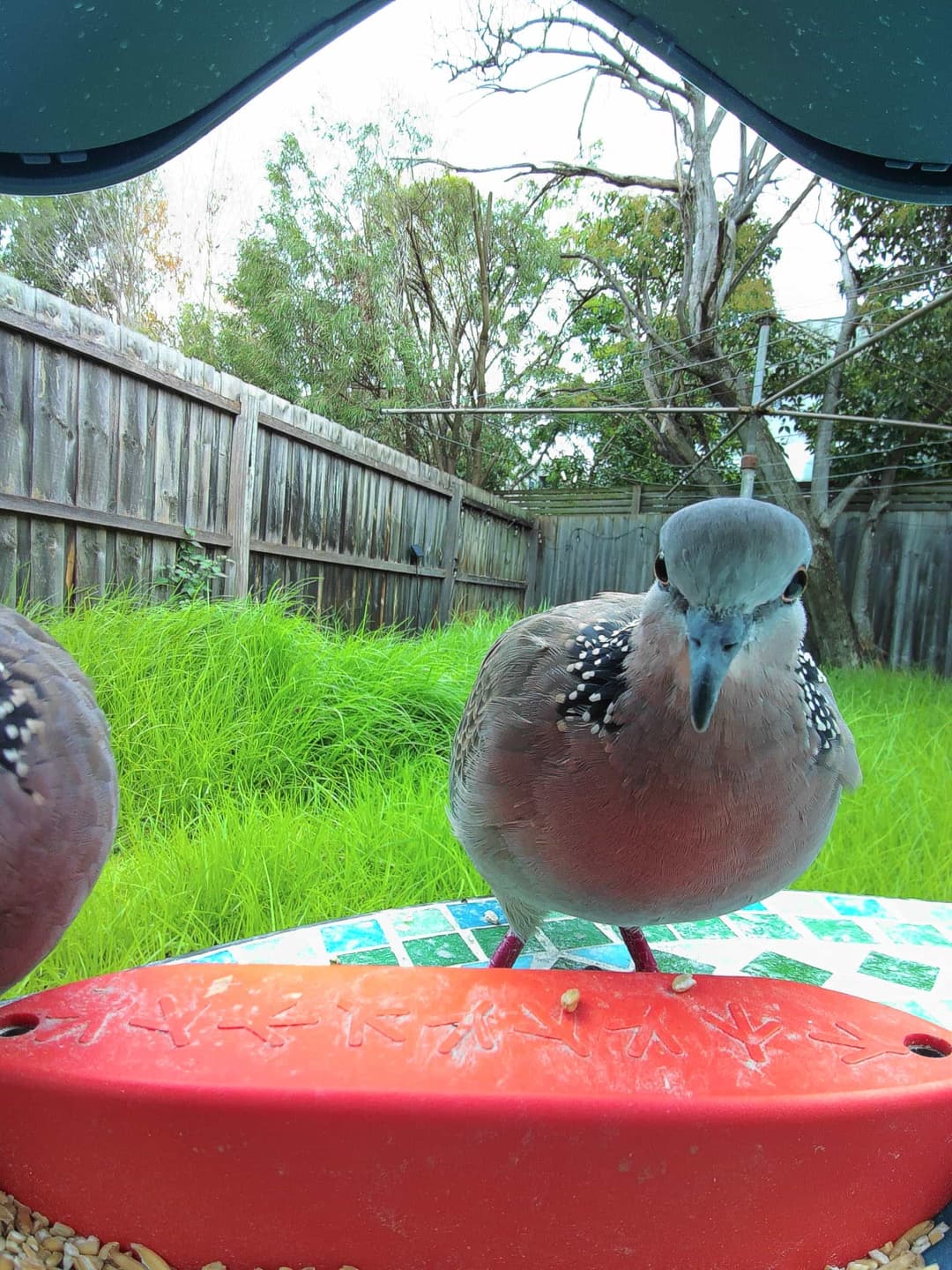
Oriental Turtle Dove
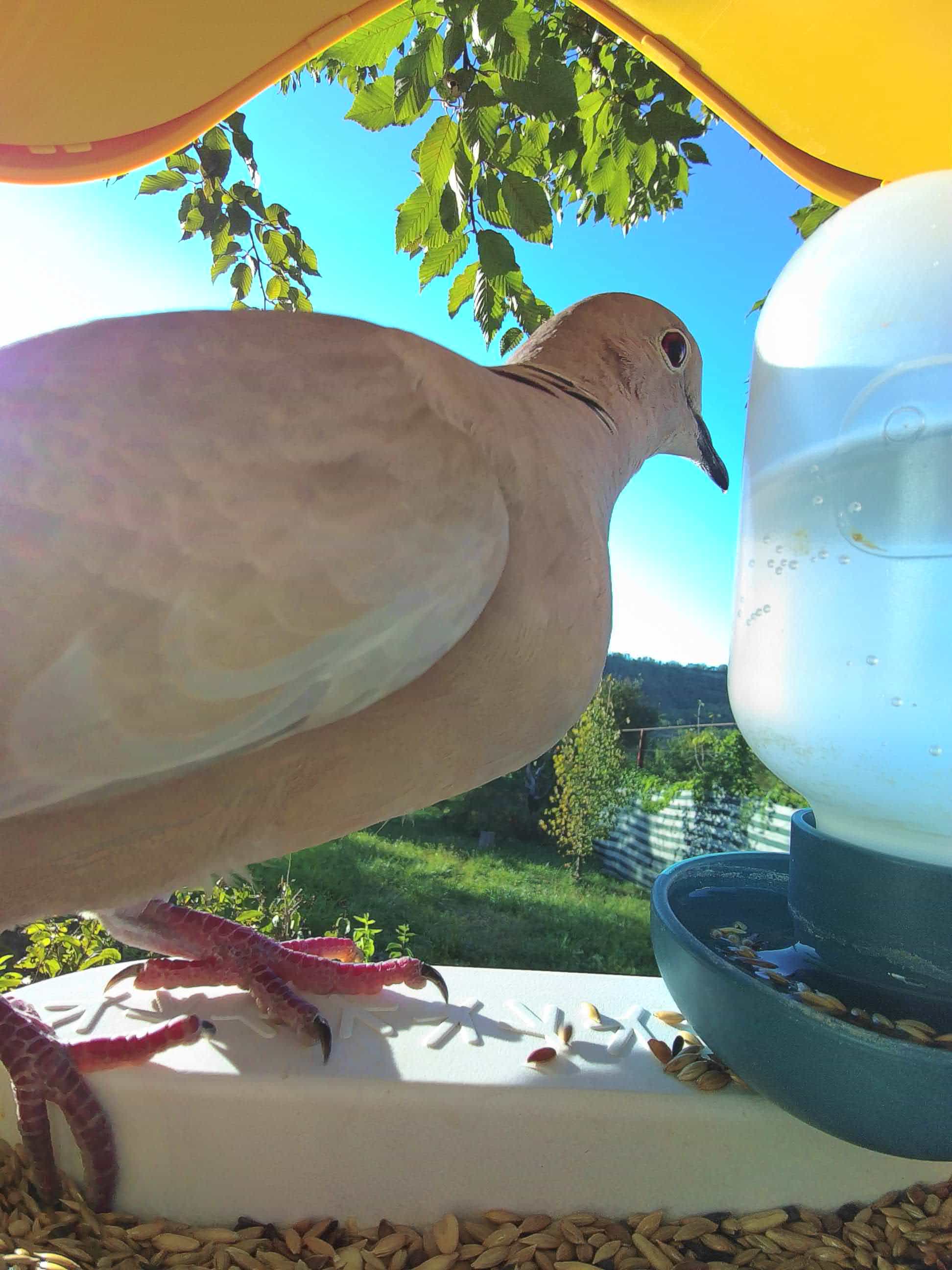


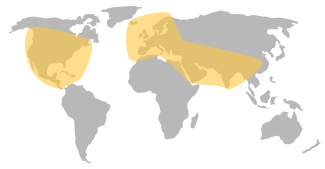
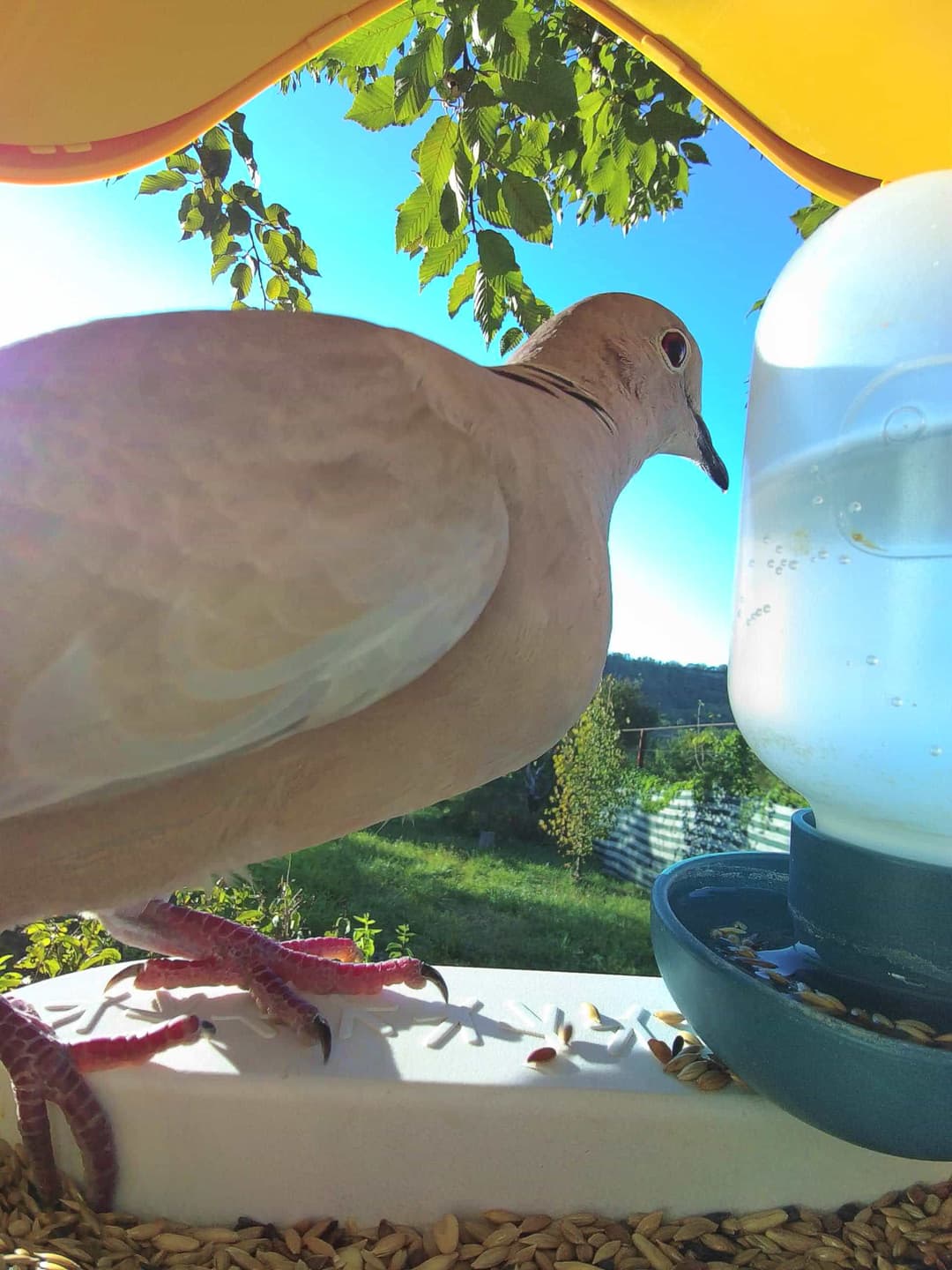
Eurasian Collared Dove
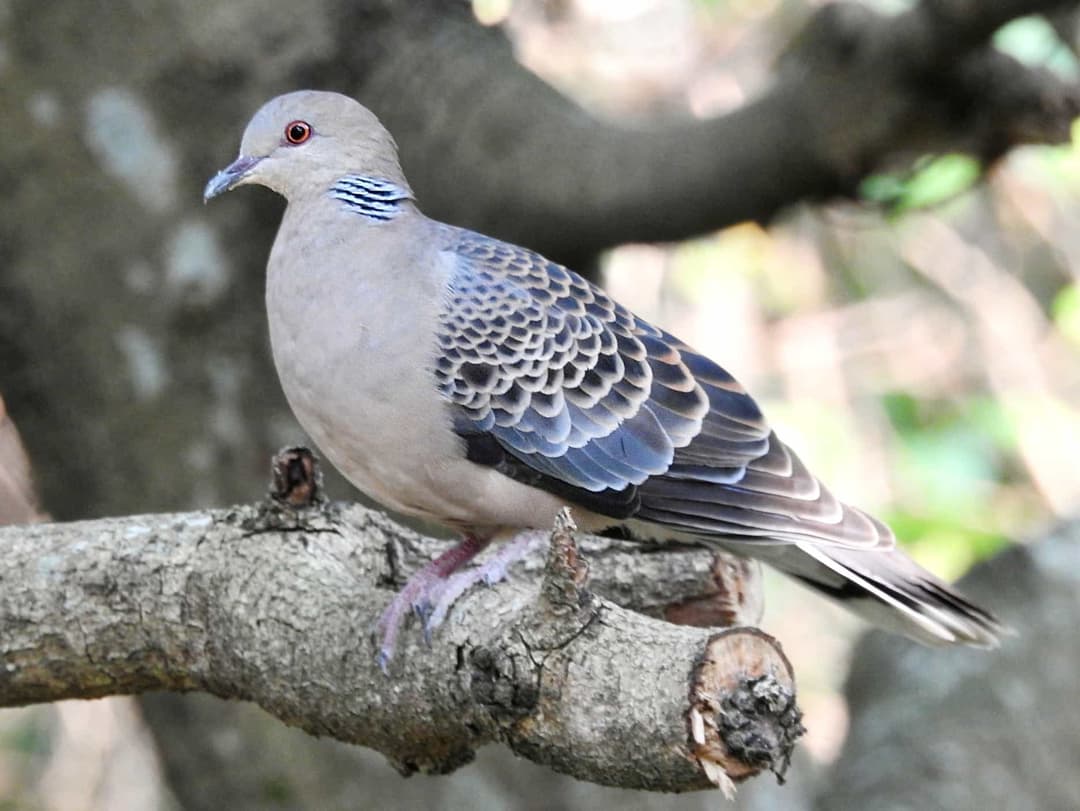
Oriental Turtle Dove
Streptopelia orientalis
Also known as: Rufous Turtle Dove
General appearance
The Oriental turtle dove is a large bird measuring 13-14 inches (33-35 cm), similar in size to a crow or robin. It exhibits a bold scaly pattern characterized by rich rufous, buff, or whitish edges on the dark feathers of the back, scapulars, and wings. It has a primarily smooth buffy gray head and underparts. A unique feature includes a patch of black and white lines on the side of its neck. The wings are broad and pointed, while the tail is rounded and square-tipped.
Male vs female
There is not much sexual dimorphism in the Oriental Turtle Dove, and the appearance of males and females is largely similar. Both genders display the same coloration and physical traits, making them difficult to distinguish purely based on appearance.
Juvenile
Juvenile Oriental turtle doves closely resemble the adults but may have a slightly duller color palette. Over time, as they mature, their colors may become more vibrant and they gain the distinctive scaly pattern on their upper body. They also develop the characteristic black and white neck patches.
Size
13.0 - 13.8 in/5.8 - 9.6 oz
There's more to learn about Oriental Turtle Dove
View full detailsEurasian Collared Dove
Streptopelia decaocto
General appearance
The Eurasian collared dove measures approximately 12 1/2 inches (32 cm) in length. Its predominant color is pale brown, with a distinctive narrow black ring around its neck. It has large white patches on its outer tail feathers. The species is darker than the domesticated Ringed-Turtle-Dove, especially on undertail coverts and wingtips. The size is roughly equivalent to that of a crow. The wings are of a broad and pointed shape, and the tail shape is generally rounded or square-tipped.
Male vs female
There are minimal noticeable differences between the sexes in the Eurasian collared dove. Both males and females exhibit similar features such as the black neck ring, pale brown body color, and white patches on the tail. Any variation is subtle and generally indistinguishable in the wild.
Juvenile
Juvenile Eurasian collared doves are similar in size and color to adults, but they may have slightly duller coloration. Recognizing them may be challenging due to their resemblance to adult birds until they attain their distinctive adult plumage.
Size
11.4 - 11.8 in/4.9 - 6.3 oz
There's more to learn about Eurasian Collared Dove
View full detailsHow to tell the Oriental Turtle Dove from the Eurasian Collared Dove
Visual differences
The Oriental Turtle Dove is larger (13-14 inches) with a bold scaly pattern marked by rich rufous or buff edges on dark feathers and a black-and-white neck patch. In contrast, the Eurasian Collared Dove is smaller (12 1/2 inches) with a pale brown body, distinctive narrow black neck ring, and large white outer tail patches. Both species have broad, pointed wings and rounded, square-tipped tails, but the Turtle Dove's vibrant scaliness distinguishes it from the simpler coloration of the Collared Dove.
Key differences and behavior
The Oriental Turtle Dove and the Eurasian Collared Dove exhibit notable behavioral differences. Oriental Turtle Doves are more vocal, with a gentle, purring song during courtship and mutual preening between pairs, whereas the Eurasian Collared Dove employs steep flight displays and harsh calls. Habitat-wise, Oriental Turtle Doves favor temperate forests and agricultural lands, frequently adapting to city parks, while Eurasian Collared Doves thrive in suburban farmlands and semi-open areas. Both species exhibit cooperative nesting, but Oriental Turtle Doves share incubation duties based on time of day, unlike the Eurasian Collared Dove’s preference for elevated locations and multiple broods annually. In terms of diet, Oriental Turtle Doves favor seeds, grains, and fruits, often foraging on the ground, whereas Eurasian Collared Doves consume seeds and occasionally berries and insects, adapting well to feeding from bird feeders.
Still not sure? Here are more lookalikes!
Oriental Turtle Dove vs Mourning Dove

Eurasian Collared Dove vs Mourning Dove
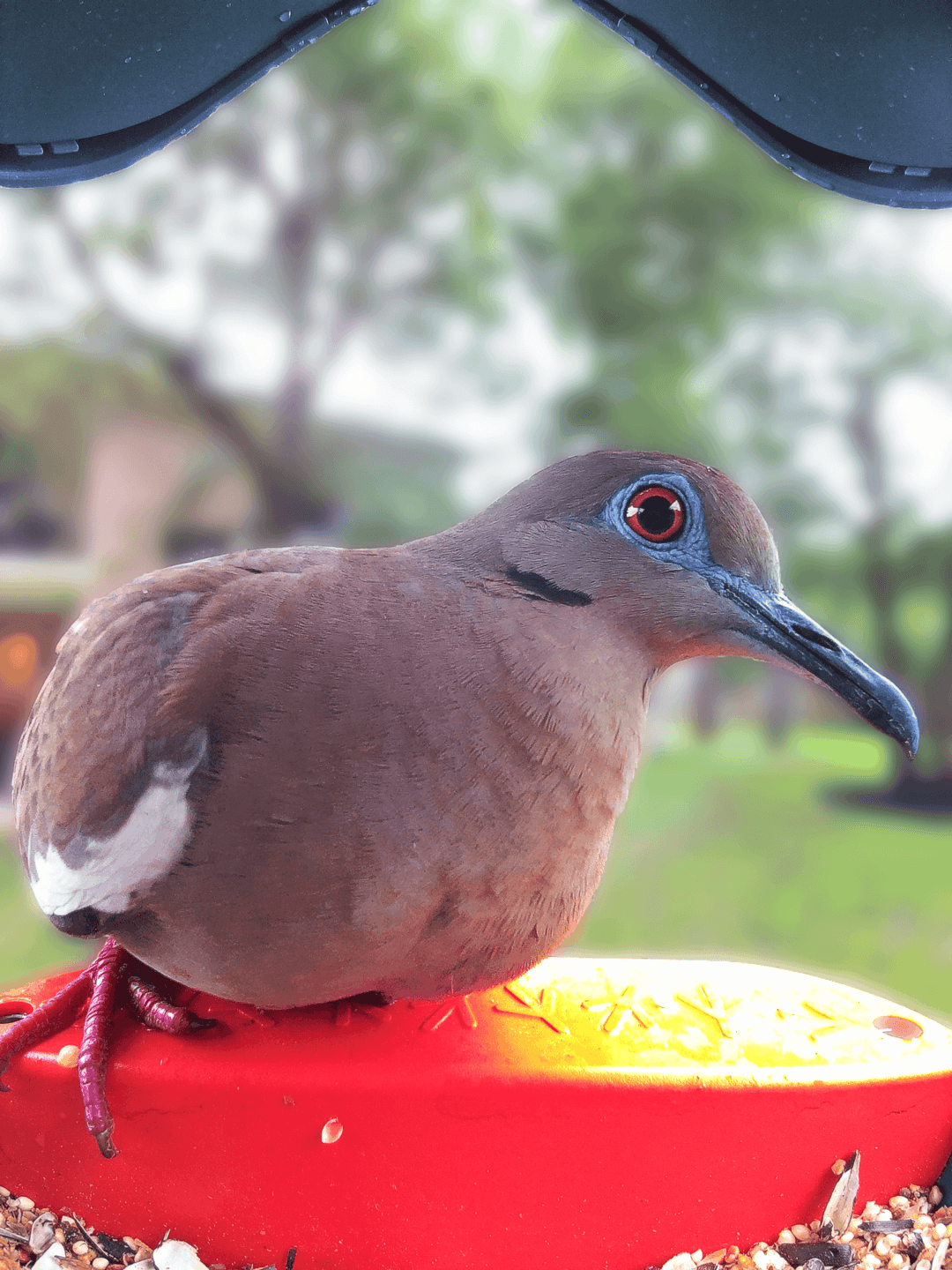
Eurasian Collared Dove vs White-Winged Dove
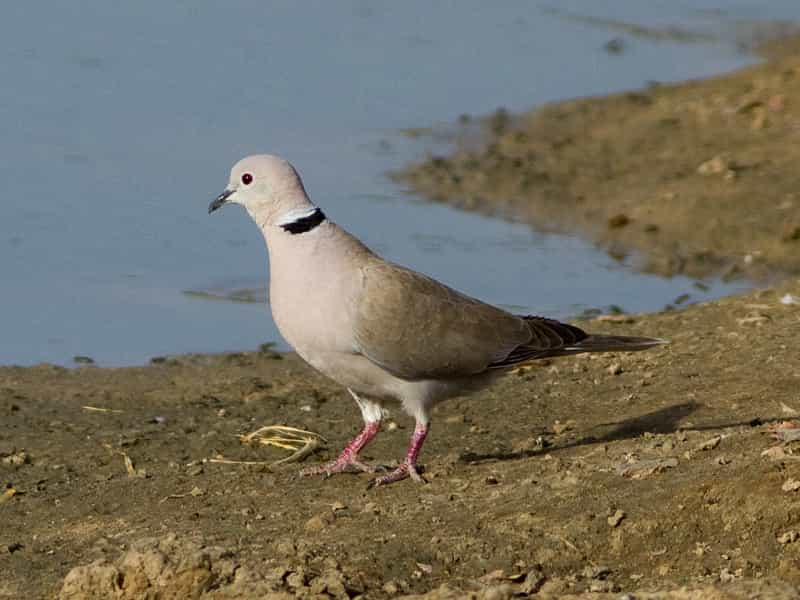
Eurasian Collared Dove vs African Collared Dove
Oriental Turtle Dove vs [Select a bird]

[Select a bird]
Pick a bird to compare
Eurasian Collared Dove vs [Select a bird]
[Select a bird]
Pick a bird to compare