Common Grackle or Rusty Blackbird?
Here's how to tell the difference

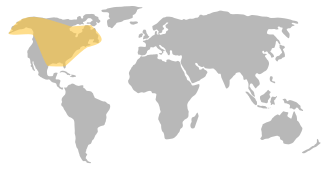
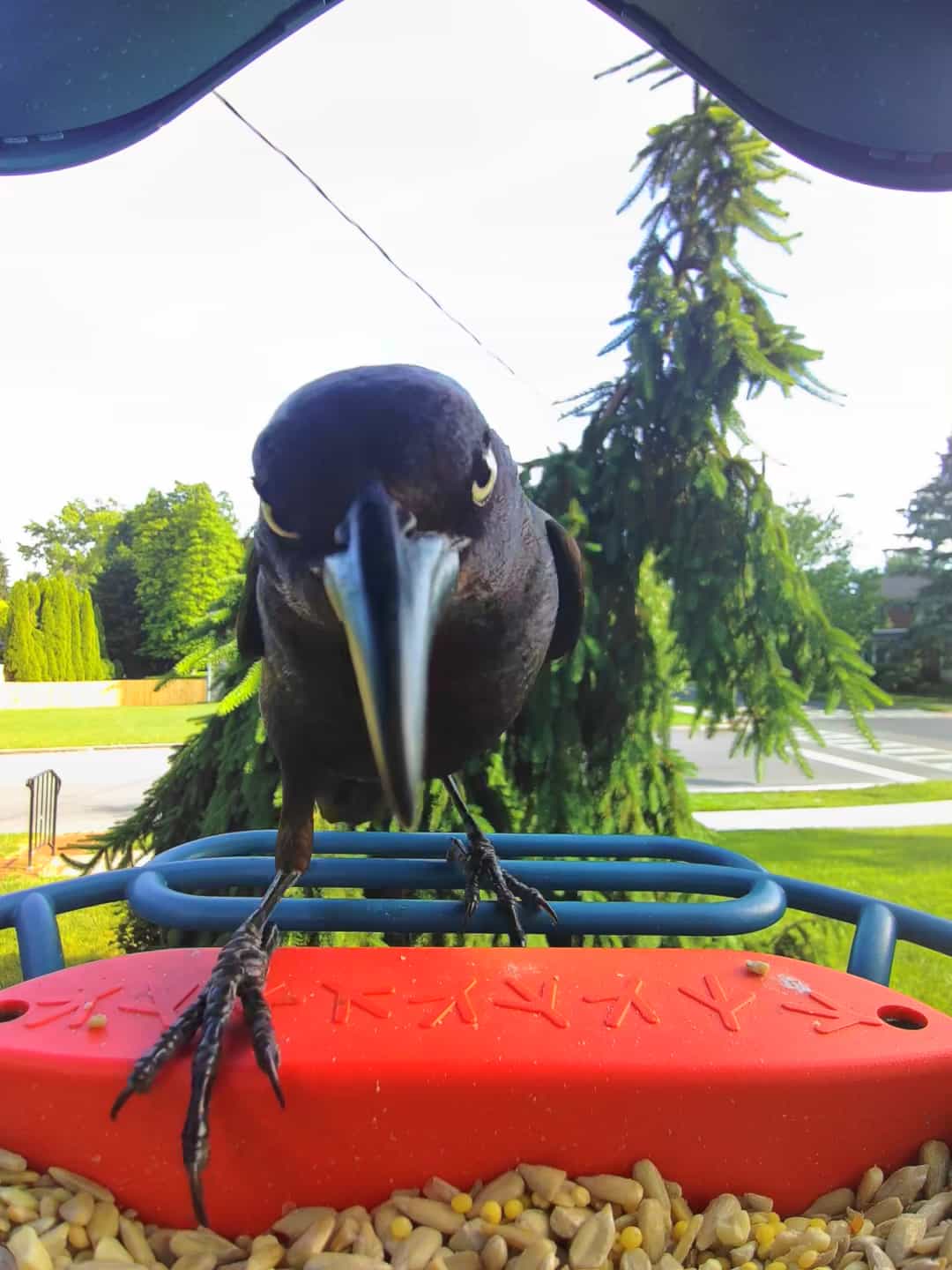


Common Grackle
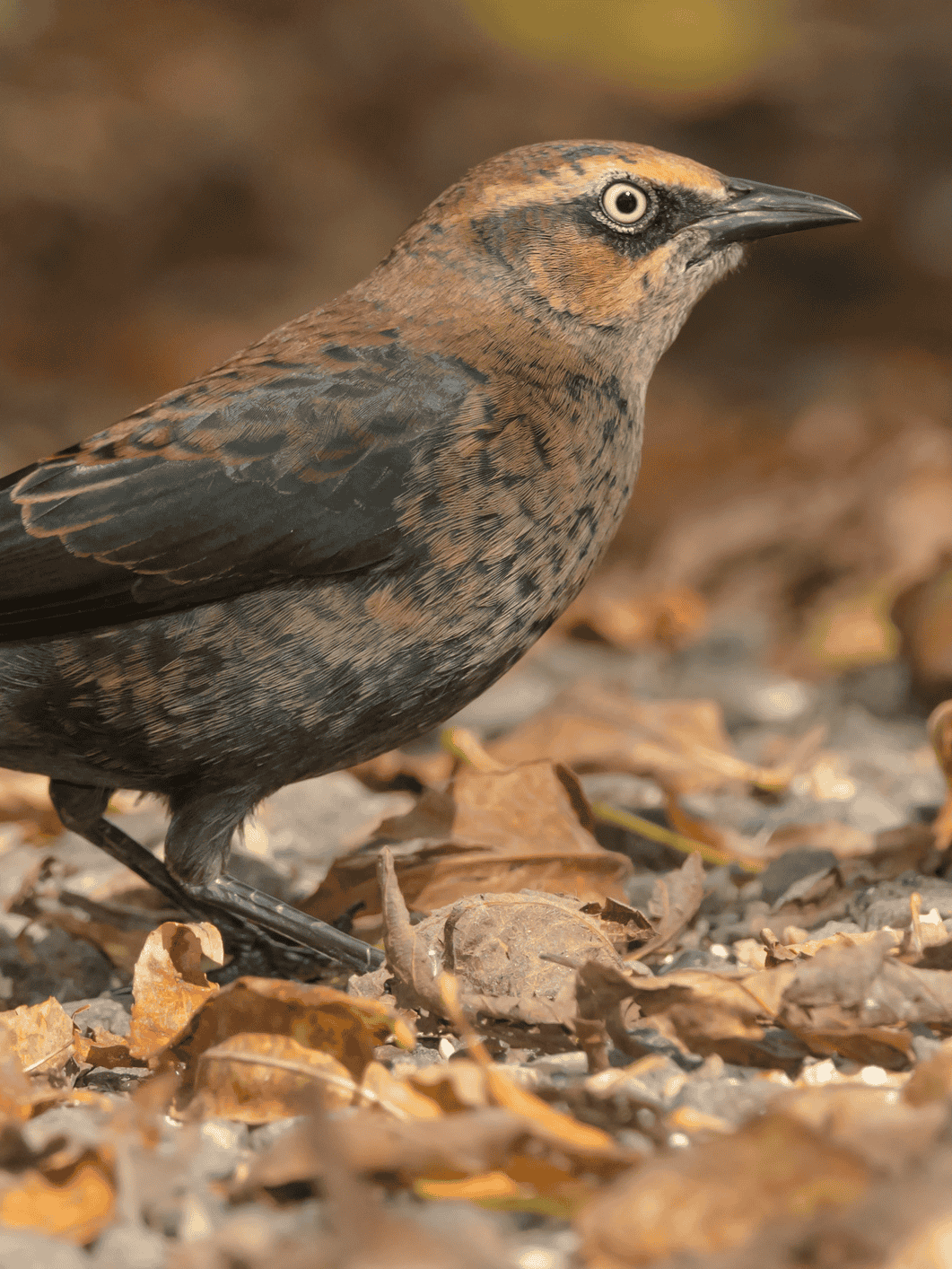


Rusty Blackbird
Common Grackle
Quiscalus quiscula
Also known as: Blackbird
General appearance
The common grackle is about the size of a crow, bearing a distinctive long tail with a crease down the middle. Coloring varies with two forms presented, namely, the 'Bronzed Grackle' and the 'Purple Grackle.' The former spots a bronzy body offset by a blue-black head while the latter shines with glosses of purple and green, offering less contrast.
Male vs female
Physical variations between the sexes are not explicitly stated. However, based on the Bronzed and Purple forms noted, it could be inferred that some slight difference in color intensity and gloss may exist.
Juvenile
Juvenile grackles present dark eyes in contrast to the whitish-yellow eye color observed in adults. Molting, a period prevalent in late summer, results in these younger birds having short or fragmented tails.
Size
11.0 - 13.4 in/2.6 - 5.0 oz
There's more to learn about Common Grackle
View full detailsRusty Blackbird
Euphagus carolinus
General appearance
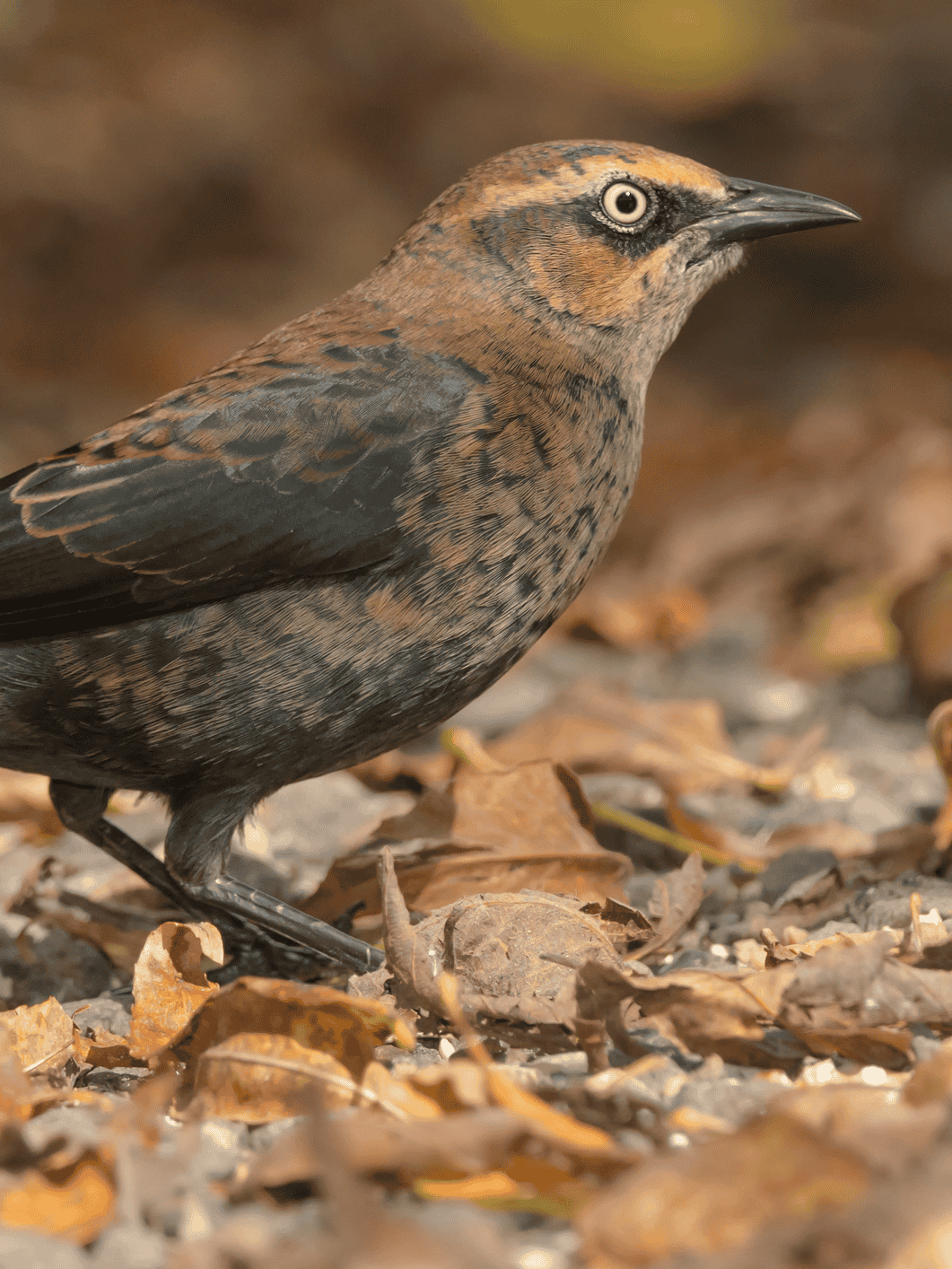
Rusty Blackbirds are medium-sized blackbirds with striking seasonal changes in plumage. In winter, they exhibit a distinctive rusty-edged appearance with rusty or rufous edges to their dark feathers, and pale yellow eyes. In summer, their feathers become mostly black or dark brown, losing the rusty edges. They have slender, slightly curved bills and relatively long tails, which are typical traits of blackbirds.
Male vs female
Males in breeding plumage are glossy black with greenish or bluish iridescence, whereas females are more subdued with dark gray or brownish plumage. During the non-breeding season, both sexes look similar with rust-colored feather edges; however, males often display richer, darker hues than females, who maintain a slightly browner overall appearance.
Juvenile
Juvenile Rusty Blackbirds have a more uniformly brown coloration compared to adults, lacking the glossy adult sheen. They are primarily a dull brown with streaked underparts and dark eyes, distinguishing them from adults whose eyes are pale yellow. As they mature, juveniles gradually acquire the adult plumage patterns and eye color.
Size
8.3 - 9.8 in/1.6 - 2.8 oz
There's more to learn about Rusty Blackbird
View full detailsHow to tell the Common Grackle from the Rusty Blackbird
Visual differences
The Common Grackle (11-13 inches, 2.6-5 oz) is larger than the Rusty Blackbird (8.3-9.8 inches, 1.6-2.8 oz). Grackles exhibit iridescent plumage; males show either bronzed bodies or purple and green glosses, with distinctive long tails. Rusty Blackbirds have slender, slightly curved bills, long tails, and seasonal plumage with rusty edges in winter and glossy black or dark brown in summer. Both have pale eyes, but juvenile grackles have dark eyes. Grackles resemble small crows with longer tails, whereas Rusty Blackbirds have a browner appearance overall, especially in females.
Key differences and behavior
Common Grackles and Rusty Blackbirds exhibit notable behavioral and ecological differences. Common Grackles are omnivorous and frequently forage in diverse habitats like farmlands and suburbs, often displaying aggressive behavior at feeders and engaging in unique "anting" practices for pest control. They tend to nest in colonies, usually in trees or shrubs near water. In contrast, Rusty Blackbirds are primarily insectivorous, preferring wet northern forests during breeding, and are less likely to visit bird feeders. They nest in isolation or loose colonies, often low above water. Rusty Blackbirds are also known for their stark seasonal plumage change and characteristic harsh song during mating. Both species share some habitat overlap in winter but exhibit differing levels of sociability and dietary focus.
Still not sure? Here are more lookalikes!
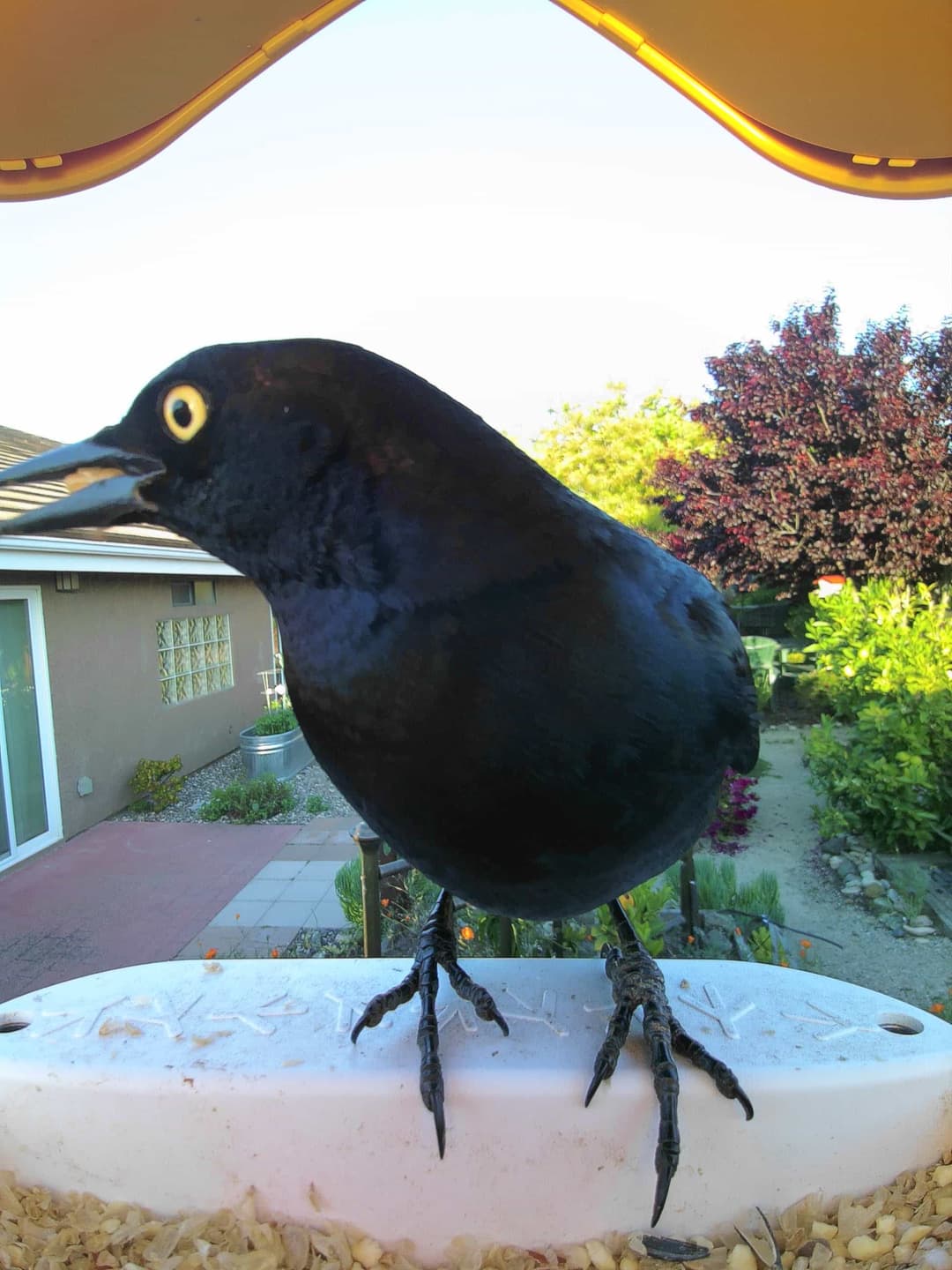
Common Grackle vs Great-Tailed Grackle
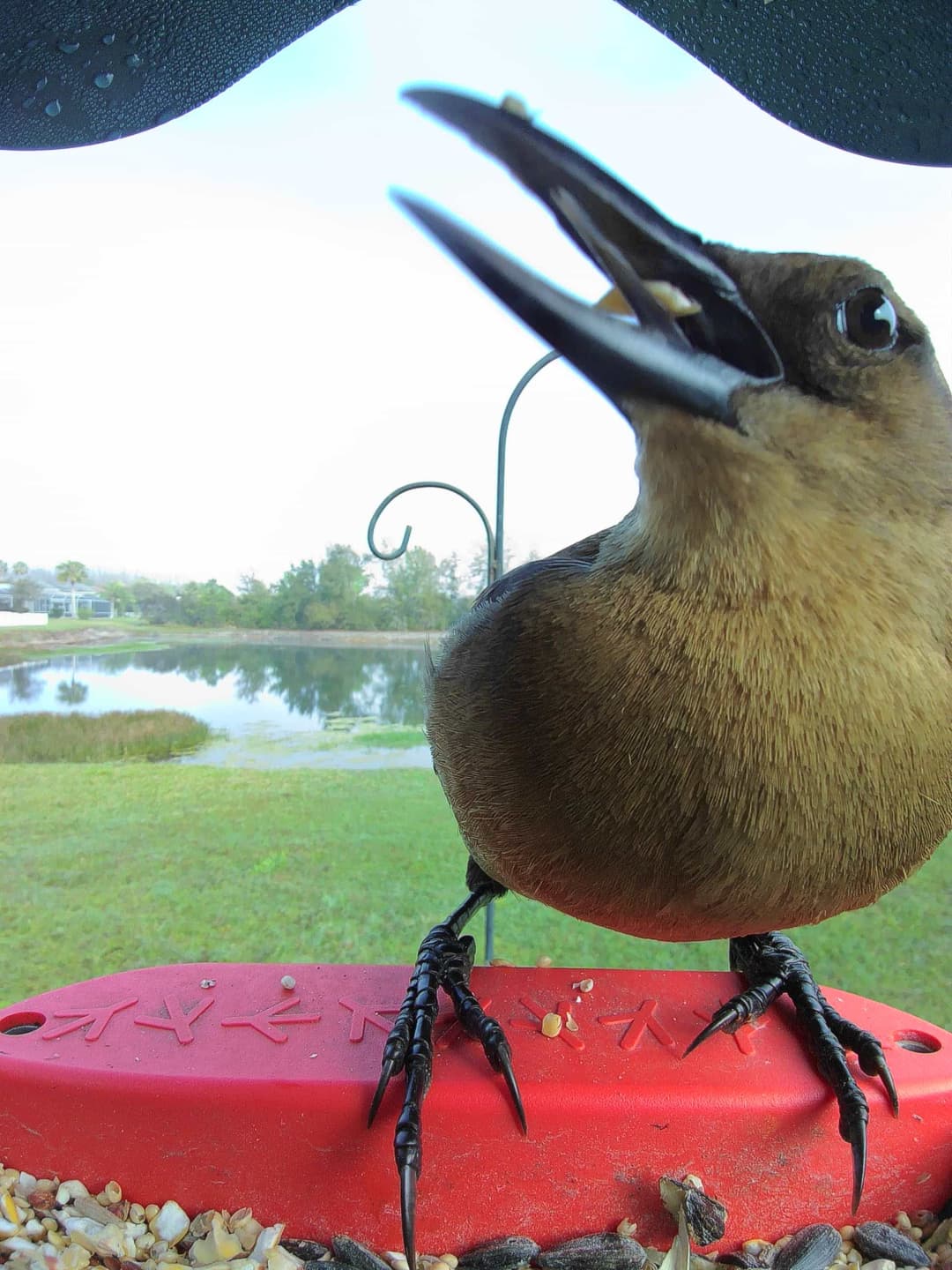
Common Grackle vs Boat-Tailed Grackle
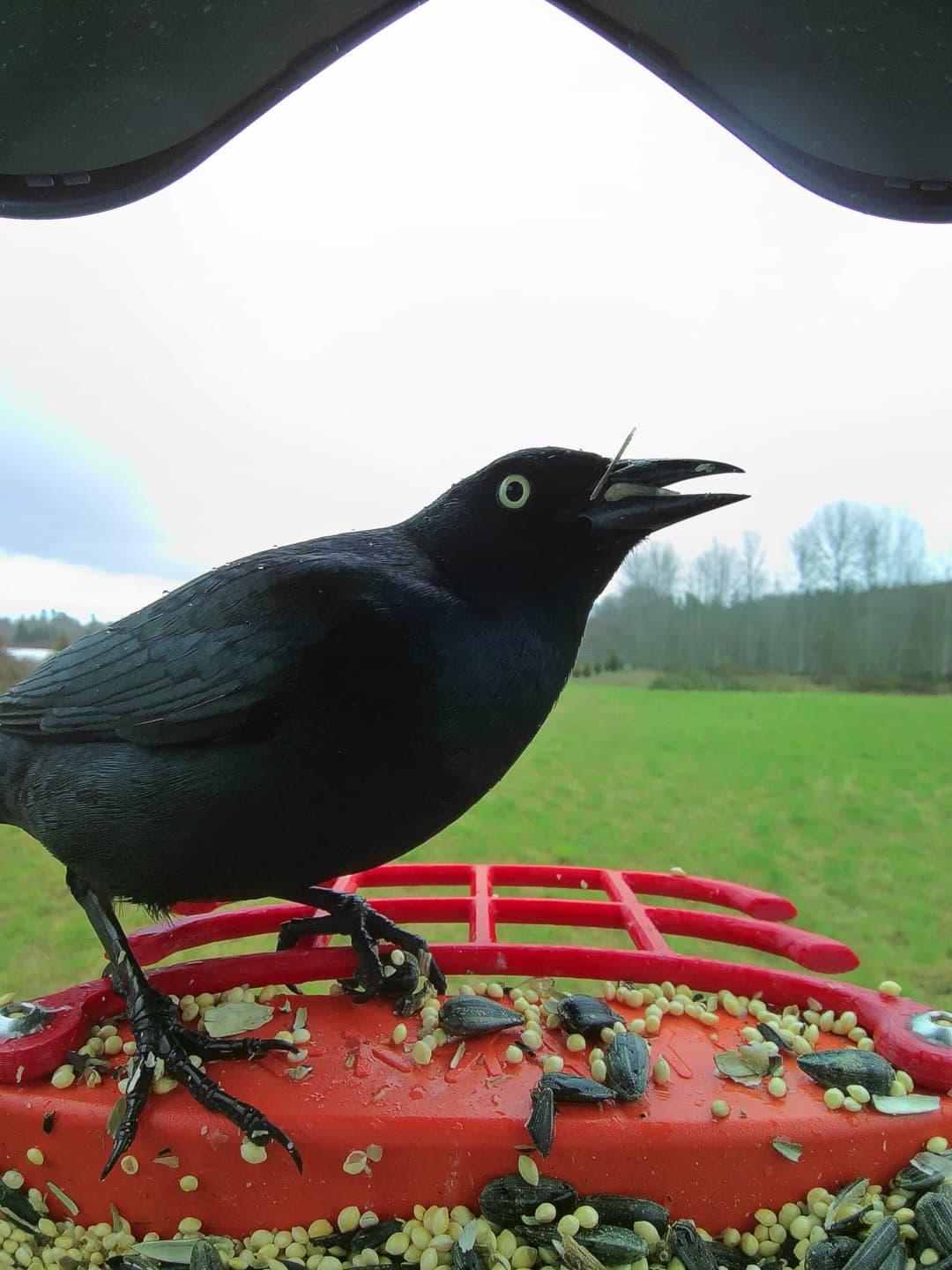
Common Grackle vs Brewer’s Blackbird
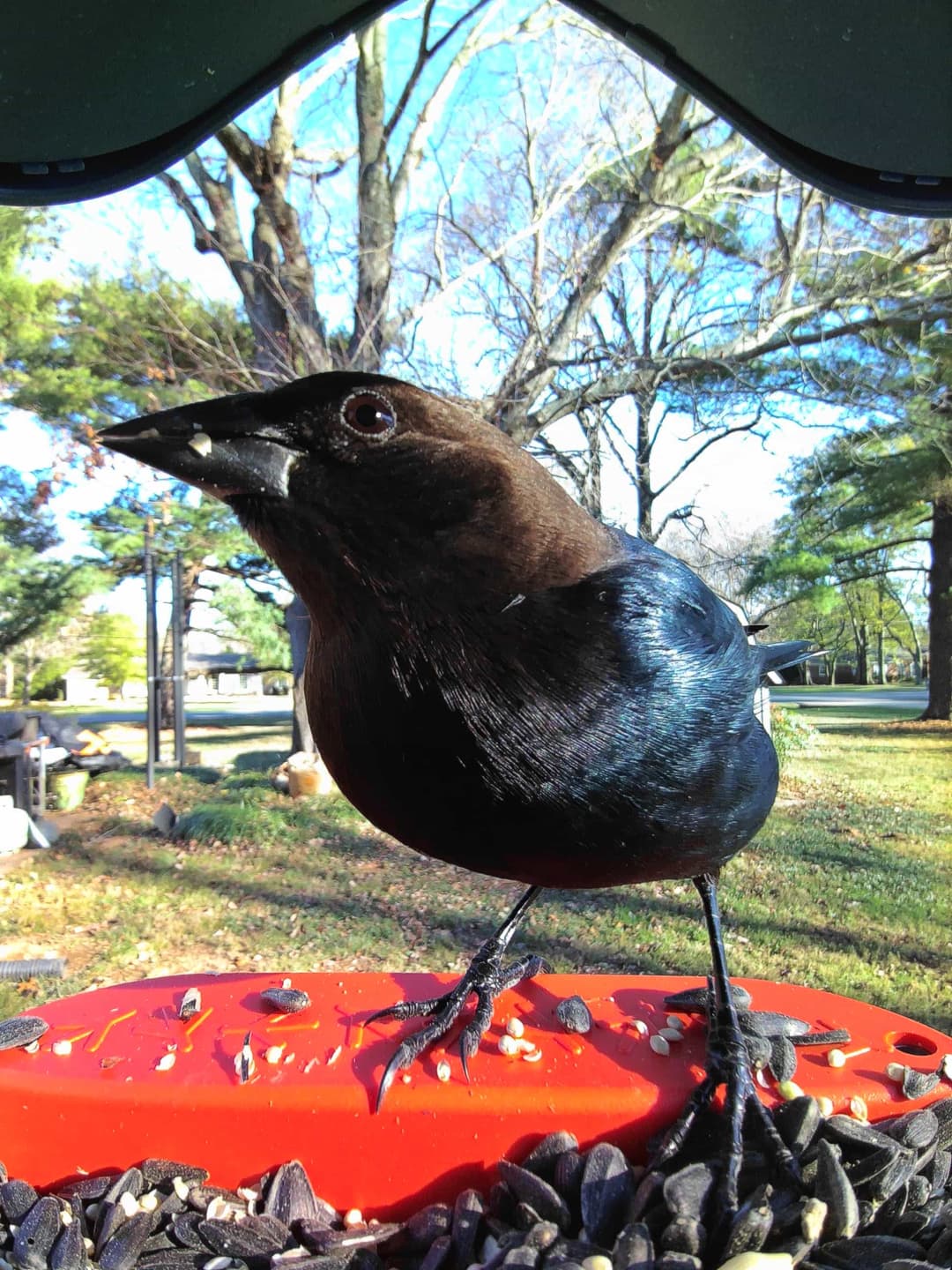
Common Grackle vs Brown-Headed Cowbird
Rusty Blackbird vs Red-Winged Blackbird
Rusty Blackbird vs Brown-Headed Cowbird
Common Grackle vs [Select a bird]

[Select a bird]
Pick a bird to compare
Rusty Blackbird vs [Select a bird]
[Select a bird]
Pick a bird to compare