
Great-Tailed Grackle
Great-Tailed Grackle
Also known as: Mexican Grackle
Quiscalus mexicanus


Quick Identification guide
Quick Identification guide
Male
- •
glossy black plumage with an iridescent sheen
- •
Long, V-shaped tail that is prominent and dramatic
- •
large, pointed bill adapted for various foods
Female
- •
More subdued brown plumage with subtler iridescence
- •
Lesser distinct tail, though still long and V-shaped
- •
smaller, pointed bill similar in shape to the male's
What does a great-tailed grackle sound like?
The Great-tailed Grackle boasts a multifaceted vocal repertoire, featuring a wide range of whistles, clucks, and hissing notes that can be both raucous and melodic. These vocalizations often fit into varying patterns such as falling, flat, rising, and undulating. These complex calls captivate with diverse tonalities like buzz, chatter, chirp or chip, hi, rattle, scream, trill, and whistle, making the Great-tailed Grackle's communication exceptionally intricate and distinct amongst avian species.


Description
Did you know that great-tailed grackles are one of North America's fastest expanding species? In winter, they like to gather in huge numbers. Thousands and up to half a million birds will gather in so-called roost trees. They can learn to recognise researchers that work in breeding colonies and sound an alarm call when they see them coming!
The great-tailed grackle can weigh between 115to265grams and be from38to46centimeters tall.
A great-tailed grackle typically lives up to 20 years in the wild. Although this species can live slightly longer in captivity, the life expectancy remains similar. Compared to common grackles and boat-tailed grackles, which have an average lifespan of 14 and 17 years respectively, the great-tailed grackles tend to have a longer lifespan, likely due to differences in their environments and lifestyles.
Did you know?
Most popular questions about great-tailed grackle
How to recognise a great-tailed grackle?
General appearance
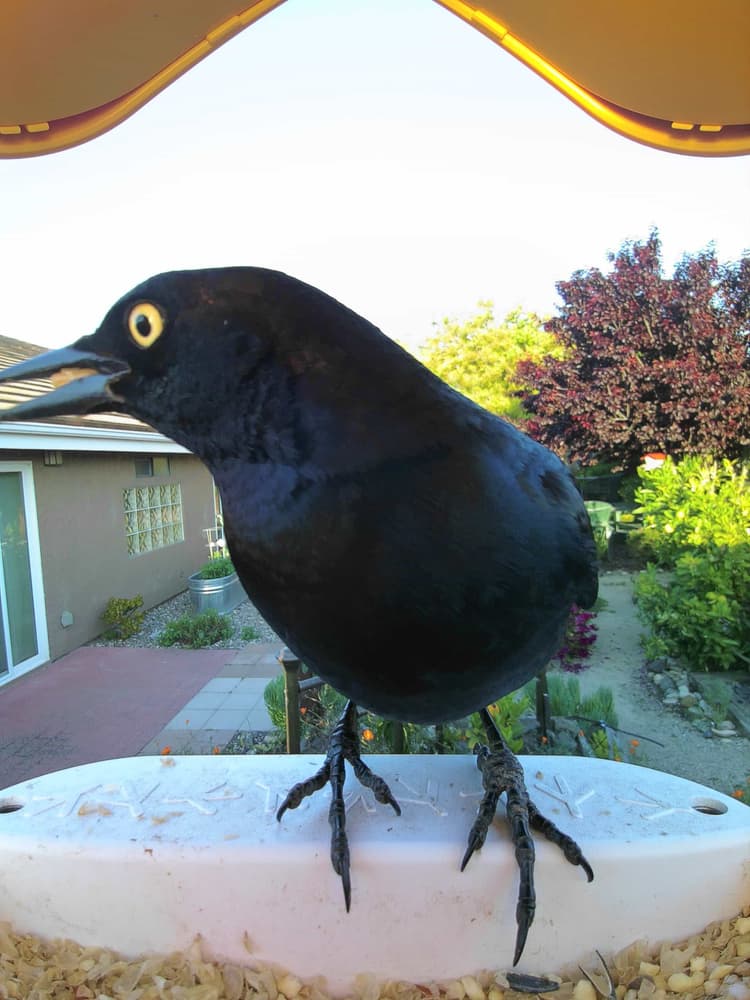
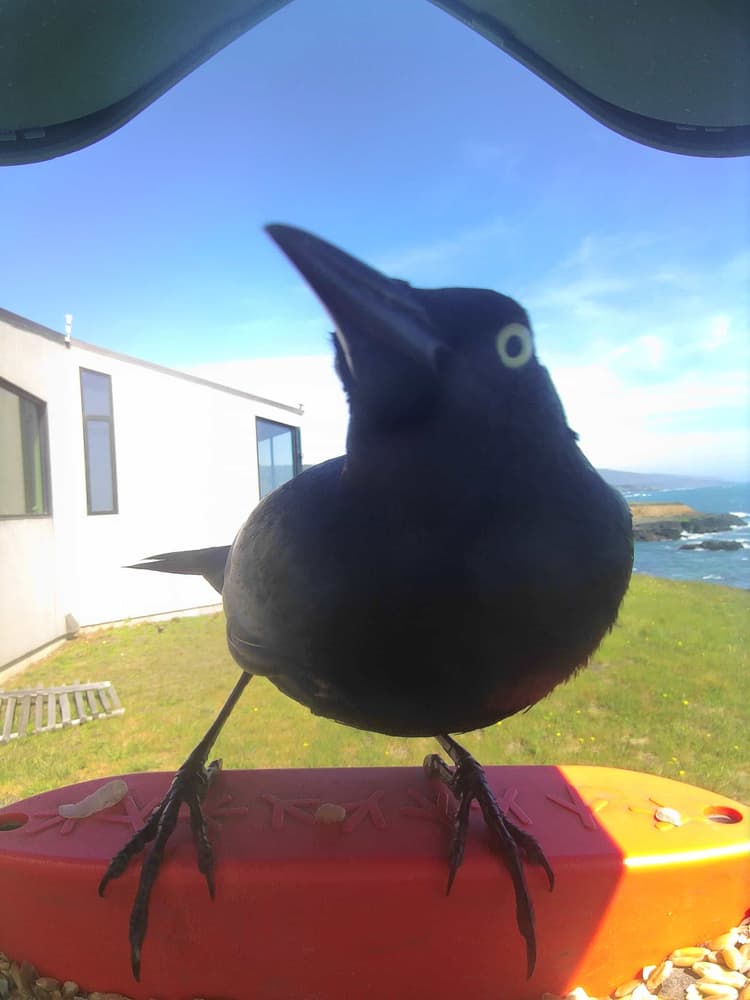
The great-tailed grackle is a large, lanky bird with long legs and an iridescent plumage. It has a distinct wedge-shaped tail and a strong, pointed bill. Its coloration ranges from glossy black to purplish-blue in good light, and it often emits loud, varied calls that echo in open areas.
Male vs female
Males are larger with predominantly glossy black feathers and striking iridescence, mainly purplish-blue on the head and body. Females are smaller, predominantly brown, with lighter underparts and less iridescence. Males have longer tails which contribute to their distinctive silhouette.
Juvenile
Juvenile great-tailed grackles resemble adult females but have a more muted coloration and slightly shorter tails. As they mature, their plumage transitions to match their respective adult coloration, either glossy black for males or dark brown for females.
Often mistaken for
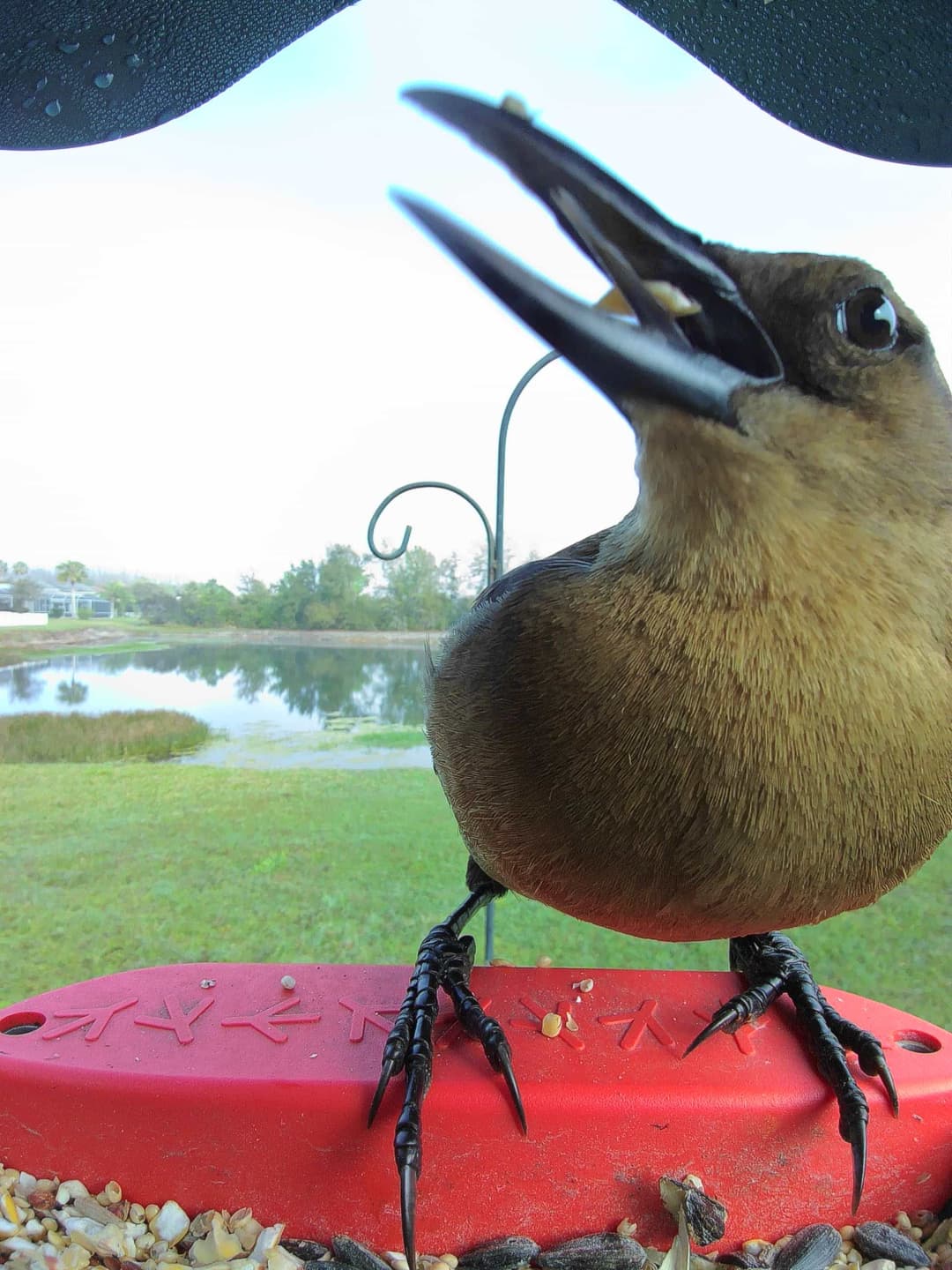
Boat-Tailed Grackle vs Great-Tailed Grackle
Great-Tailed Grackles are larger with longer tails and more iridescent plumage. Boat-Tailed Grackles are usually found along U.S. coastal areas. Listen for the Boat-Tailed’s noisier and harsher voice.
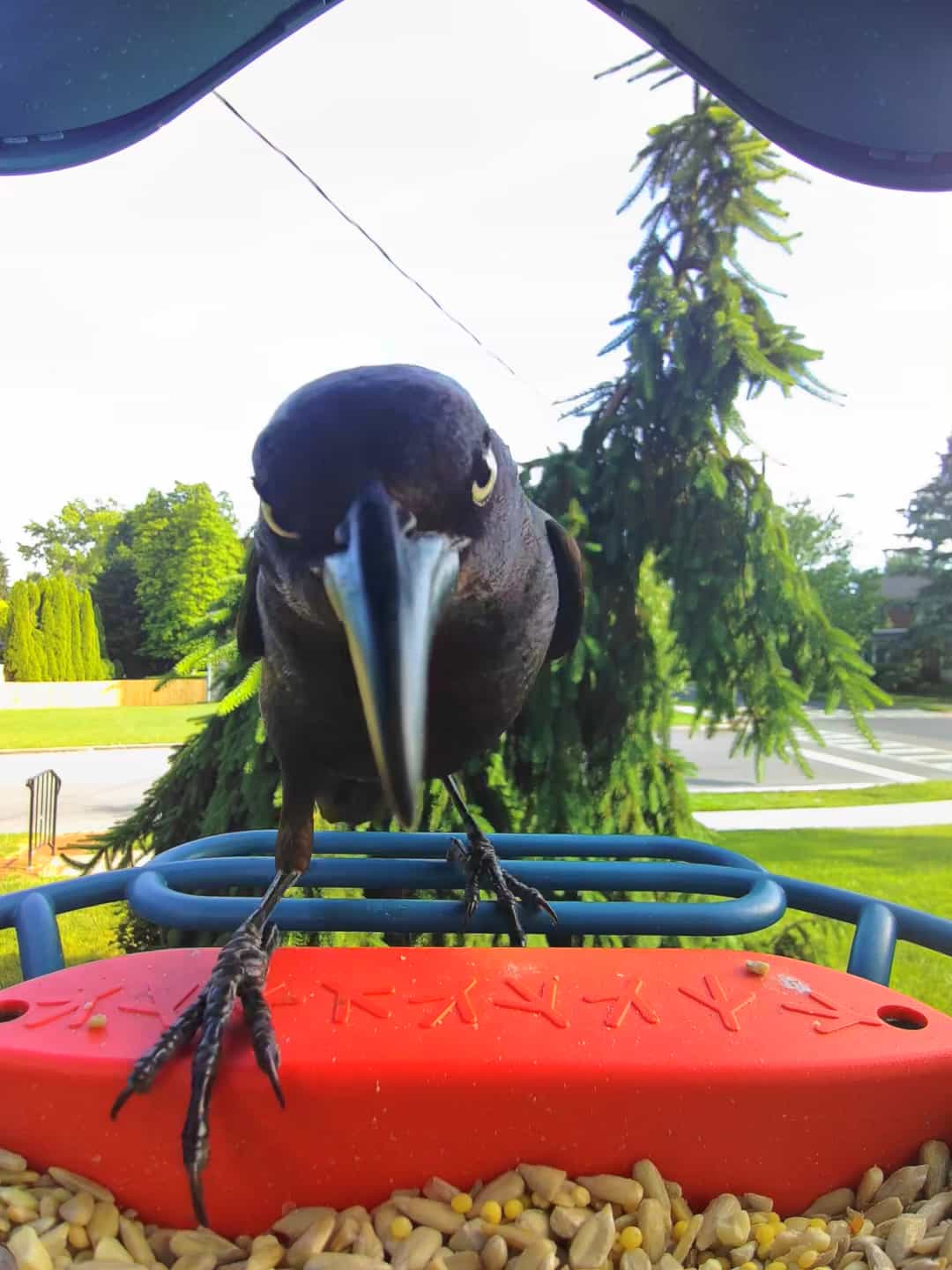
Common Grackle vs Great-Tailed Grackle
Great-Tailed Grackles are generally larger with longer tails than Common Grackles. The Common Grackle has a less pronounced V-shaped tail and exhibits a more purple sheen compared to the Great-Tailed’s blue shimmer.
Bronzed Cowbird vs Great-Tailed Grackle
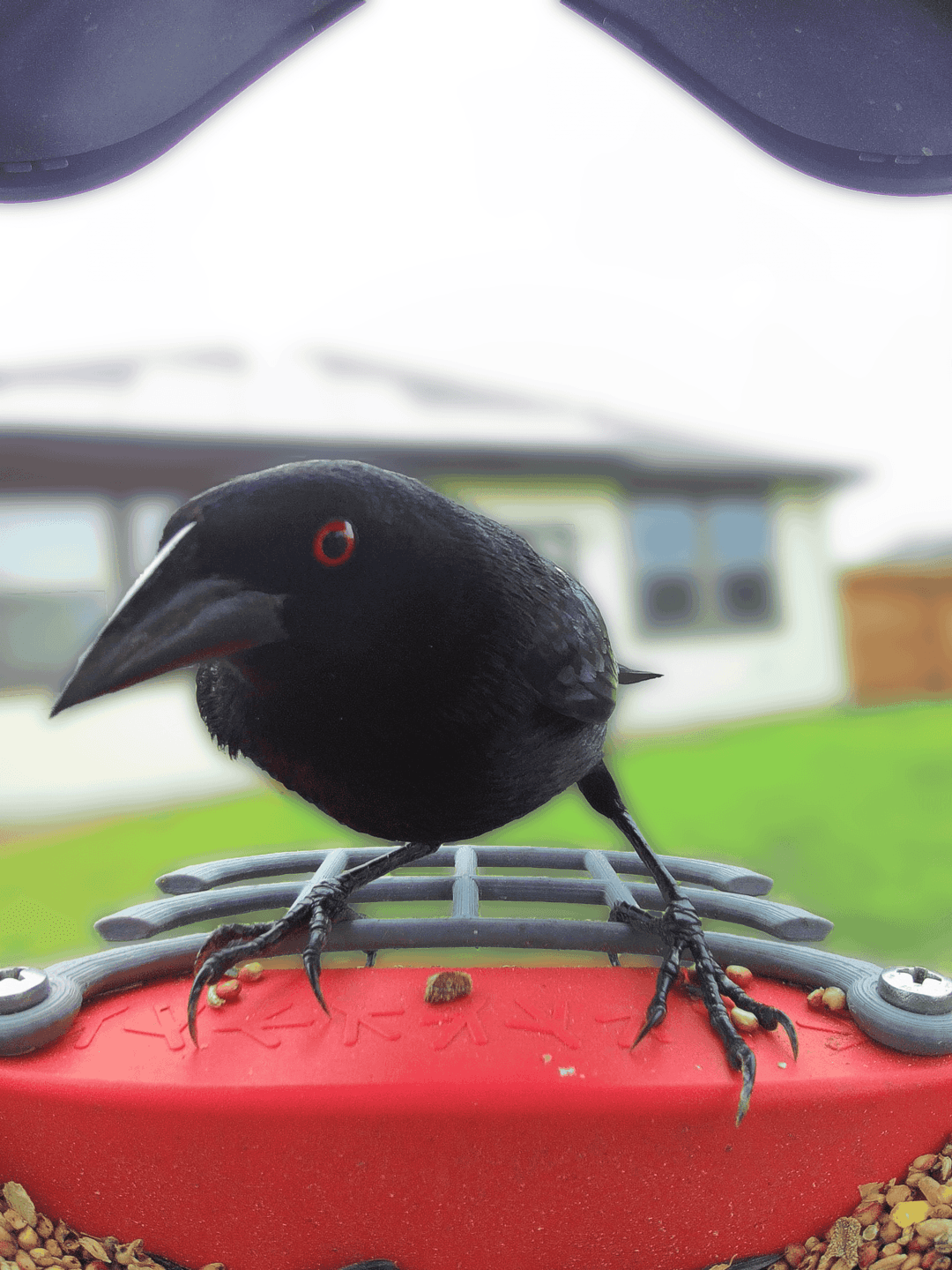
Bronzed Cowbirds are smaller with shorter wings and tails. They have a distinctive red eye and more uniform glossy black plumage compared to the iridescent colors of Great-Tailed Grackles.
Brewer’s Blackbird vs Great-Tailed Grackle
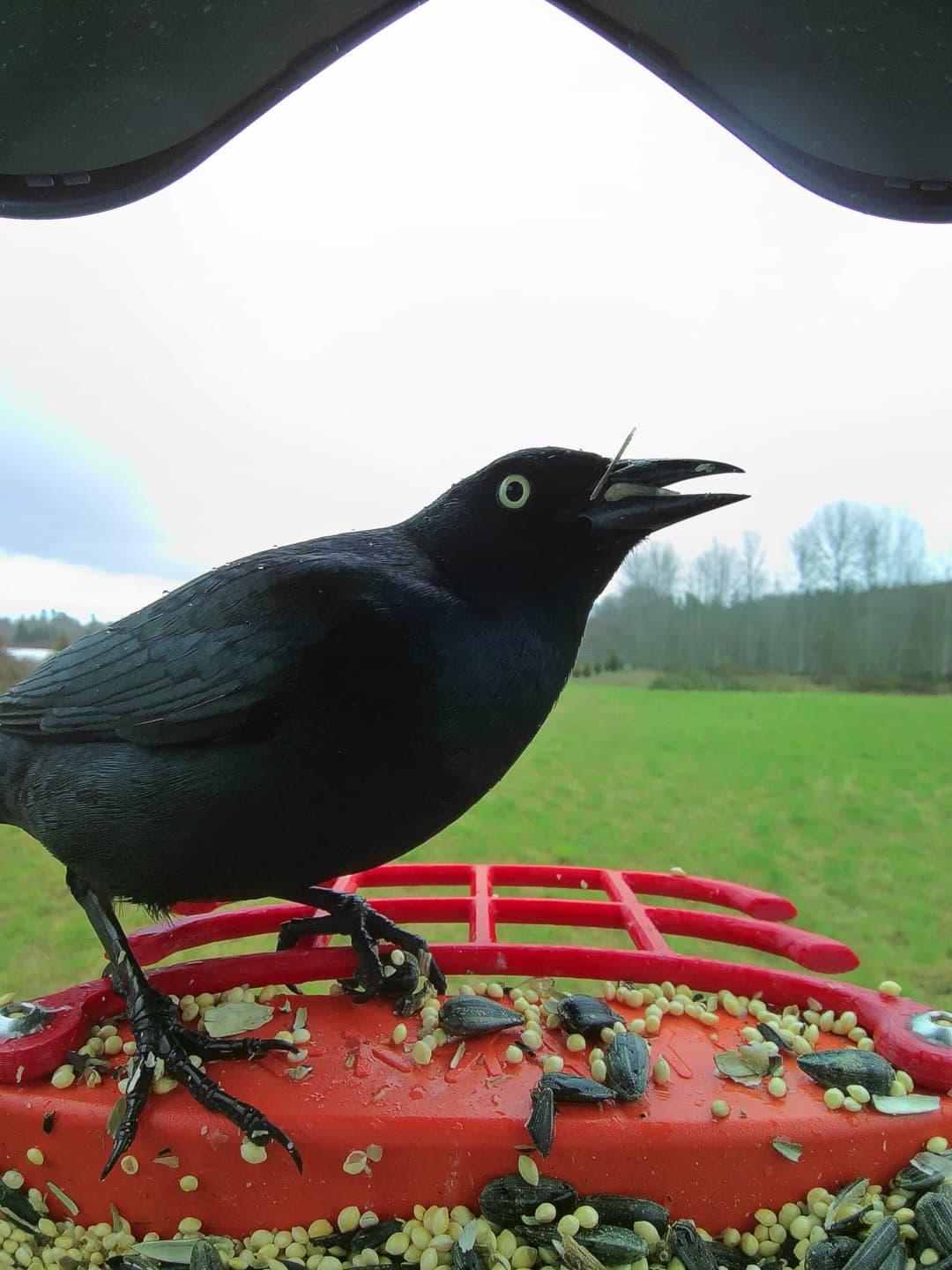
Great-Tailed Grackles are significantly larger with a distinctive keel-shaped tail. Brewer's Blackbirds have a straight tail and less iridescence. Brewer’s also have a shorter beak than Great-Tailed Grackles.
Breeding and nesting habits of the great-tailed grackle
Mating behaviors
Great-tailed grackles nest in colonies with varying sizes. During courtship and territorial displays, males perch in the open, fluff feathers, and rapidly flutter wings while making harsh calls. They posture with bills pointed straight up as a threat display. Both sexes may be polygamous.
Nesting details
Nesting sites are in dense vegetation near water, in shrubs, low trees, marshes, or tall trees, ranging from 2-50' above ground or water. Nests, built by females, are bulky open cups made of twigs, grass, weeds, cattails, rushes, and lined with fine grass. Mud or manure is often added to the nest base, and females may steal materials from each other.
Eggs and chick-rearing
Great-tailed grackles typically lay 4-5 eggs per clutch. Both parents participate in feeding the chicks. During the breeding season, fostering a habitat with dense shrubbery and access to water may support breeding success.
What does a great-tailed grackle like to eat?
Berries
Bird eggs
Carrion
Fruits
Insects
Scraps
Seeds
Small animals
Spiders
Worms
Natural diet
The great-tailed grackle is omnivorous and has an extremely varied natural diet. It feeds on many insects and also consumes spiders, millipedes, snails, crayfish, tadpoles, small fish, lizards, and eggs and nestlings of other birds. Occasionally, it may also eat adult birds. In addition to animal matter, the grackle's diet includes a wide variety of seeds, waste grain, berries, fruits, and nuts.
Bird feeders
At bird feeders, great-tailed grackles are likely to consume seeds and grains, which are common provisions. They may also eat peanuts if available, taking advantage of the food offered by humans.
Favorite snacks for great-tailed grackles
To attract the great-tailed grackles, try offering them their favorite snacks. These birds are omnivores, and while they’ll eat a variety of foods, they particularly like insects, berries, seeds, and grains. You could put out a variety of tasty treats, but for the best results, we recommend Bird Buddy seeds. These seeds are expertly chosen for the season, making them particularly appealing to the great-tailed grackle.
Ideal feeders for great-tailed grackles
When it comes to bird feeders, great-tailed grackles aren't too fussy. They are comfortable with most feeders, but they do particularly like platform or tray feeders and hopper feeders. These types of feeders provide perches and plenty of spaces, which are perfect for their large size.
Fun tricks to attract great-tailed grackles
In addition to the right food and feeders, there are a few fun tricks that can help attract great-tailed grackles to your yard. Providing a birdbath or water feature can be a big draw for these birds as they love to bathe and drink regularly. Also, if you play recordings of their calls or songs, they might drop by to join in on the sing-along! And don't forget to keep your yard fairly open, as these birds prefer spaces where they can keep an eye on their surroundings.
Where can you find great-tailed grackles?
Primary habitat
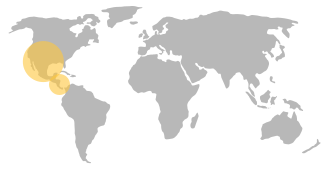
Great-tailed grackles largely occupy open and semi-open terrains such as groves, thickets, farms, towns, and city parks. They are found throughout different lowland landscapes.
Additional range
This species adapts to a variety of environments from farmland, marshes, irrigated fields to suburban lawns and brushy areas. They avoid true deserts, but can thrive near water sources in dry regions.
Do they migrate?
The great-tailed grackle exhibits partial migratory behavior, particularly in the northern parts of its range. Historically, these birds have been primarily migratory, moving seasonally to their summer breeding grounds and returning to warmer regions in the winter. However, recent changes have led to some populations becoming permanent residents in areas where they were once only present during the summer months. In terms of migratory routes, those great-tailed grackles that do migrate are generally found in the northern regions of their range, such as the southwestern United States. They typically move southwards to more temperate areas within the U.S. or northern Mexico during colder months. The specific timing of migration can vary depending on local climate conditions, but it usually occurs as temperatures begin to drop in the fall, typically from September to November, with return migration occurring in the spring, around February to April. Key locations for these migratory populations include regions like Texas and other southwestern states, where some have now established a year-round presence due to warmer conditions and availability of resources. Consequently, not all great-tailed grackles follow traditional migratory patterns.
What is the role of great-tailed grackles in nature and how to protect them?
Conservation status
The great-tailed grackle is a common and expanding species, thriving across its range. Its population growth and competitive success may have contributed to the extinction of the Slender-billed Grackle in central Mexico. Currently, the great-tailed grackle faces no significant threats warranting conservation efforts aimed at vulnerability or endangerment. The species adapts well to various environments, benefiting from urban expansion and agricultural areas. Consequently, there are no major conservation programs specifically targeting the great-tailed grackle, as it remains widespread and increasing in numbers across its habitat range.
Ecological role of great-tailed grackles
Its role in the ecosystem
The great-tailed grackle plays a remarkably diverse and multifaceted role in its ecosystem, and its ecological significance is profound. Its omnivorous diet, encompassing insects, spiders, millipedes, and snails, helps in controlling the population of these species, potentially keeping pest numbers in check. Similarly, its preference for small fish, tadpoles, and lizards contributes to the regulation of aquatic and terrestrial ecosystems. Furthermore, its diet that includes berries, fruits, nuts, and seeds is crucial for seed dispersal, assisting in plant biodiversity, and survival. Through stealing and reusing nesting materials, grackles possibly influence the distribution and recycling of materials within their environment. Interestingly, their habit of seeking out other bird’s nests to rob can act as a population control mechanism for other bird species, preventing overpopulation. In communal nesting sites, their possibly aggressive behavior might influence the nesting patterns and distributions of other bird species. Overall, the great-tailed grackle represents a critical part of the ecological tapestry, with effects cascading throughout the food web and the physical environment.
How to help protect great-tailed grackles
Preservation tips
Habitat preservation strategies
Safeguarding the great-tailed grackle's natural habitat is crucial. This involves maintaining areas rich in food supply, like insects and small invertebrates. Urban development plans should incorporate green spaces to support local bird populations. Protect wetlands, which are prime grackle habitations, from pollution and human encroachment. Advocating for responsible land use laws can also support broad-based conservation goals.
Community science initiatives
Engage the community in bird-watching and data collection programs to monitor grackle populations, aiding in the identification of threats. Promote citizen science projects like the 'Great Backyard Bird Count' and 'Project FeederWatch' which contribute to understanding bird populations. Community education about the ecological role of grackles and ways to coexist peacefully (e.g., discouraging feeding, maintaining proper waste disposal) can increase local conservation efforts.