
Boat-Tailed Grackle
Boat-Tailed Grackle
Quiscalus major


Quick Identification guide
Quick Identification guide
- •
Features a glossy black plumage in males and brownish tones in females, creating a sharp sexual dimorphism
- •
Exhibits a long, keel-shaped tail reminiscent of a boat, hence the name
- •
Possesses a stout and straight beak, which is slightly pointed at the tip
What does a boat-tailed grackle sound like?
The boat-tailed grackle vocalizes with a distinct, harsh "jeeb-jeeb-jeeb-jeeb" sound that differs from the characteristic whistles and clucks of the Great-tailed Grackle. Its calling pattern demonstrates a flat, falling sequence. The call can be categorized under four types: buzz, chatter, chirp/chip, and rattle, by each lending a unique nuance to the grackle's song.


Description
Did you know that if a boat-tailed grackle fledgling falls into the water, it can swim by using its wings as paddles! These guys are crafty and don't mind humans one bit; they take advantage of our presence to scavenge and score some protection from predators. You're welcome, happy to be of service!
The boat-tailed grackle can weigh between 100to240grams and be from37to43centimeters tall.
The boat-tailed grackle typically lives for about 17 years in the wild. This lifespan is generally longer than that of other grackle species like the common grackle and the great-tailed grackle. However, like many birds, mortality rates for young grackles can be high.
Did you know?
Most popular questions about boat-tailed grackle
How to recognise a boat-tailed grackle?
General appearance
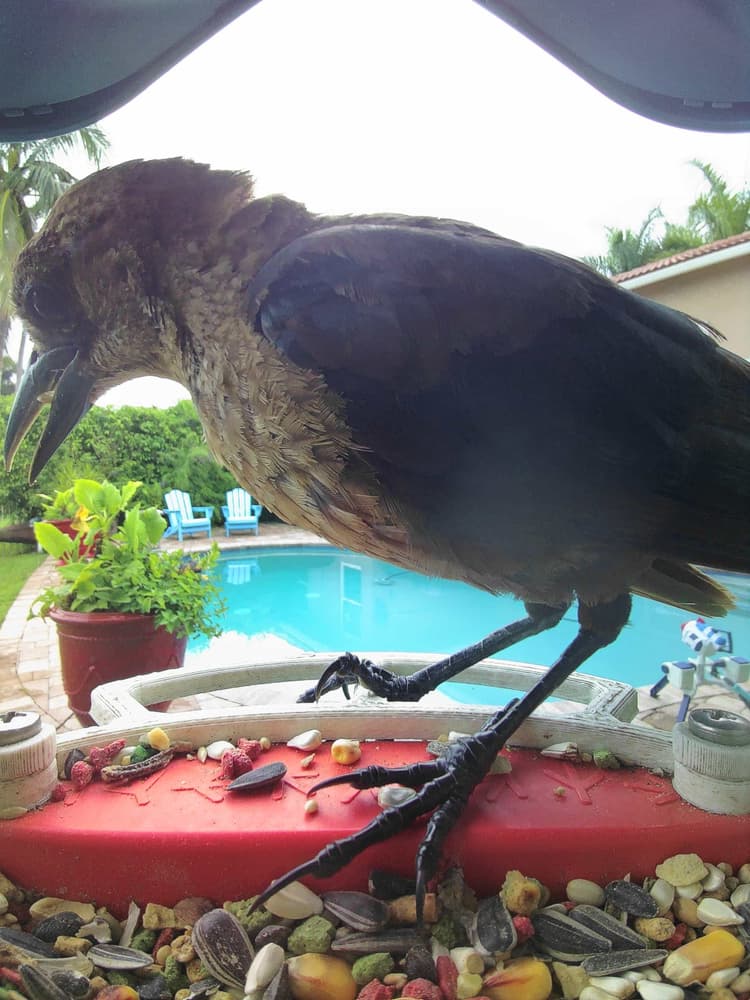
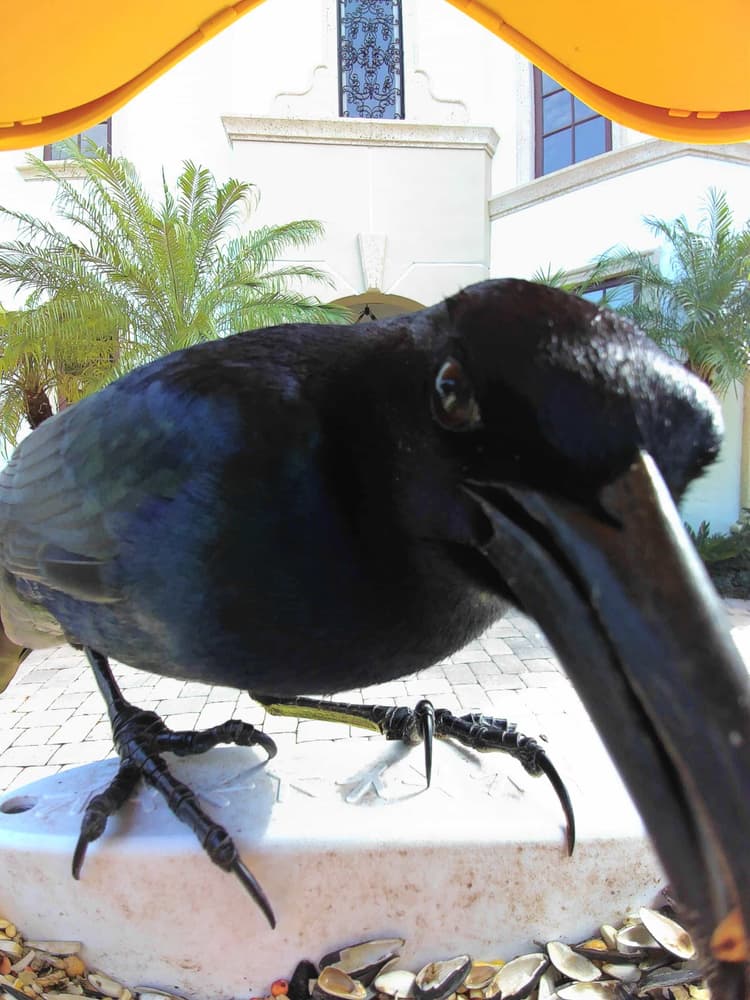
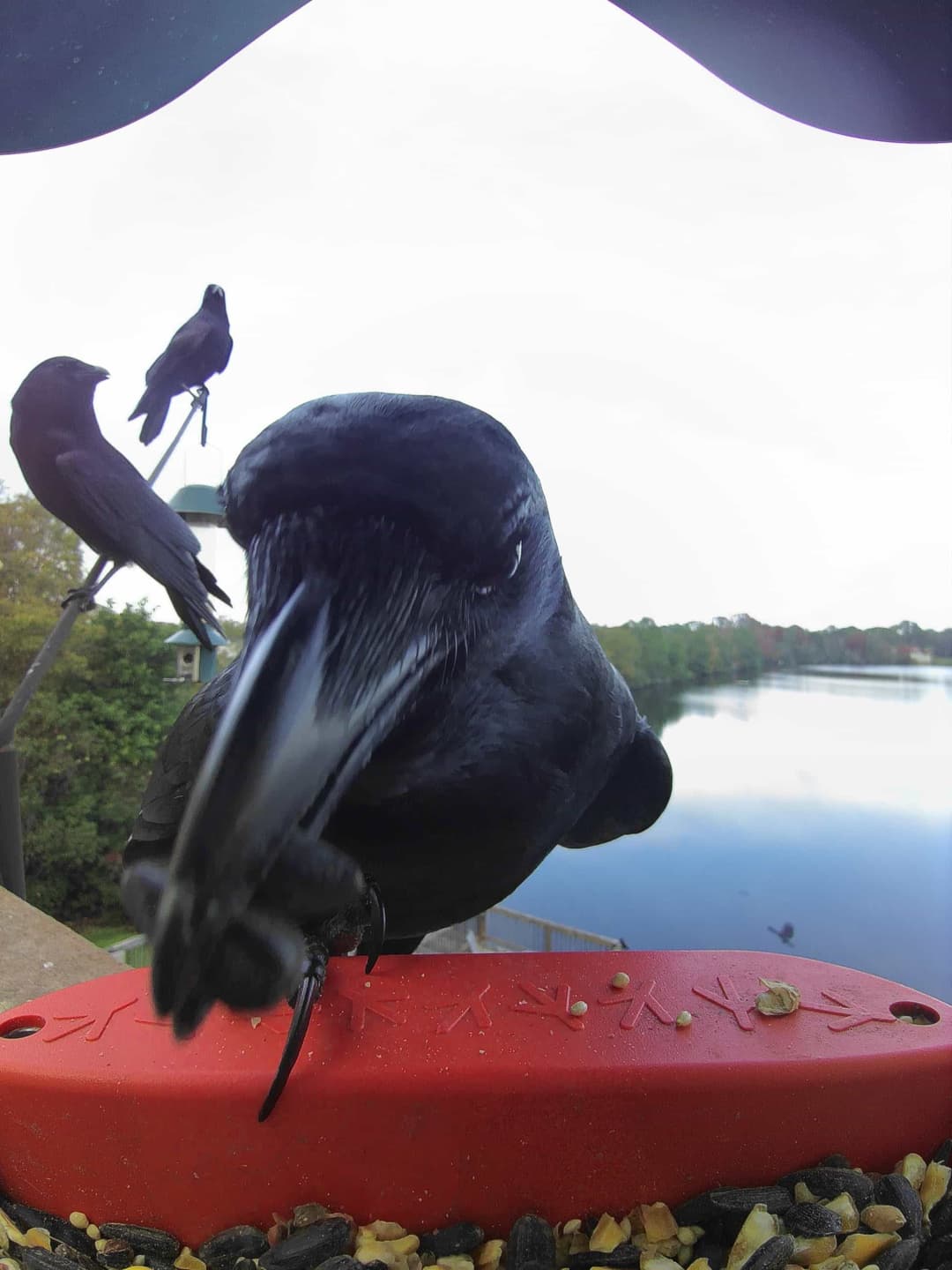
Boat-tailed Grackles are about the size of a crow, possessing a black, brown, and tan color. They feature rounded wings and have a long, rounded, or wedge-shaped tail, resembling a Great-tailed Grackle but with a shorter tail and rounder head. Differences can be noted in their eye color depending on the geographical location. In Texas-Louisiana coast overlap region, Boat-tails have dark eyes.
Male vs female
Size variations exist between male and female boat-tailed grackles. Males measure between 41 and 43 cm, while females are notably smaller, ranging between 33 and 35 cm. As such, males are generally larger than the females.
Juvenile
Interestingly, young Boat-tails, much like their Great-tail counterparts, have dark eye color. It's important to note that Boat-tails found north from northeast Florida possess yellow eyes. This characteristic sets them apart and could be useful in identification.
Often mistaken for
Great-Tailed Grackle vs Boat-Tailed Grackle
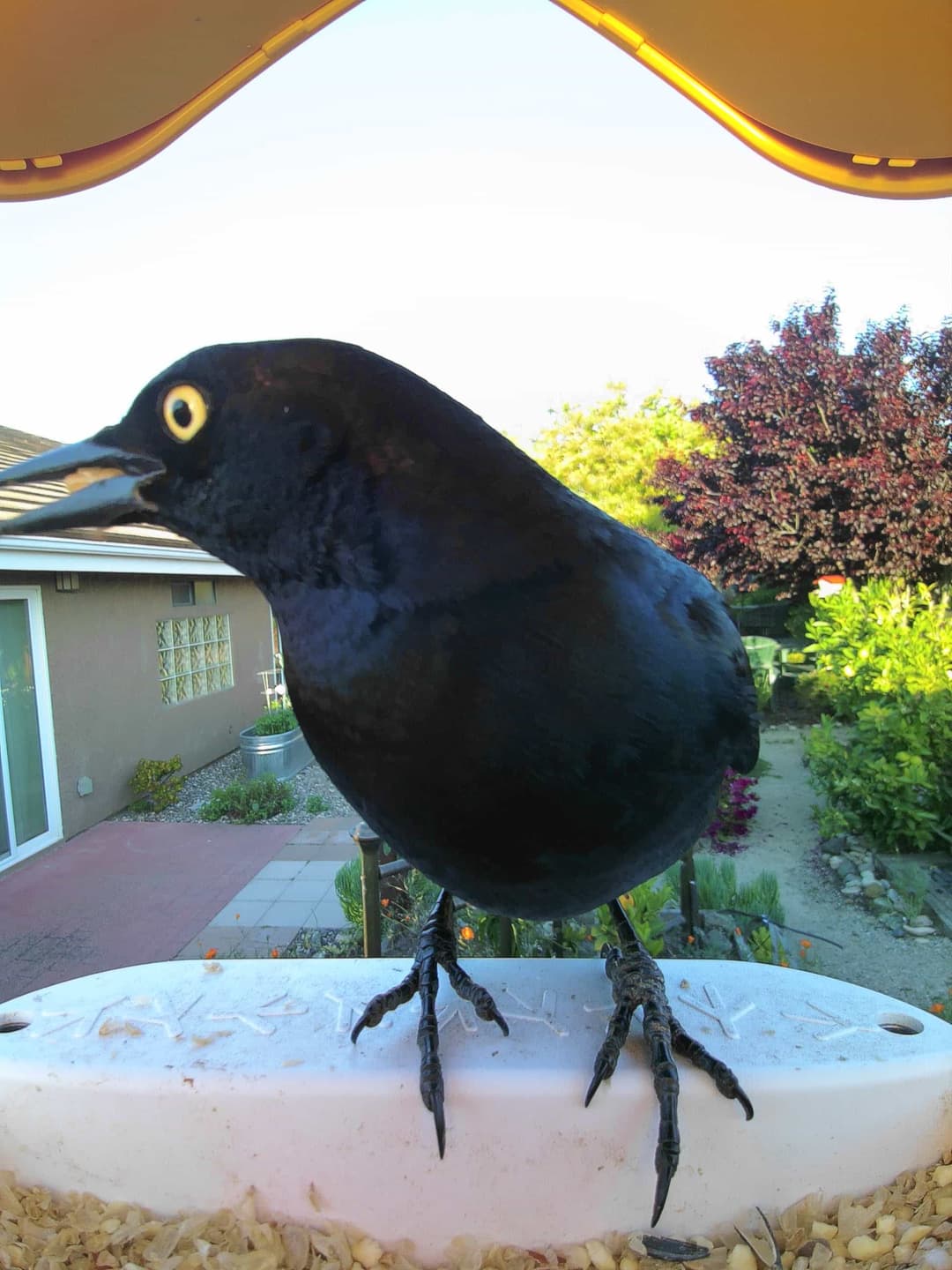
The Boat-Tailed Grackle is generally smaller with a more rounded tail compared to the Great-Tailed Grackle. The Boat-Tailed's voice is more piercing, while the Great-Tailed produces a variety of whistles and squawks. Look for the Boat-Tailed's coastal habitats unlike the more widespread environments of the Great-Tailed.
Common Grackle vs Boat-Tailed Grackle
Both grackles have iridescent plumage, but the Boat-Tailed Grackle has a more uniform dark appearance and a robust, keel-shaped tail. Common Grackles have a noticeably longer tail and a less robust body. Boat-Tailed Grackles prefer wetter coastal areas, whereas Common Grackles are widespread in varied habitats.
Fish Crow vs Boat-Tailed Grackle
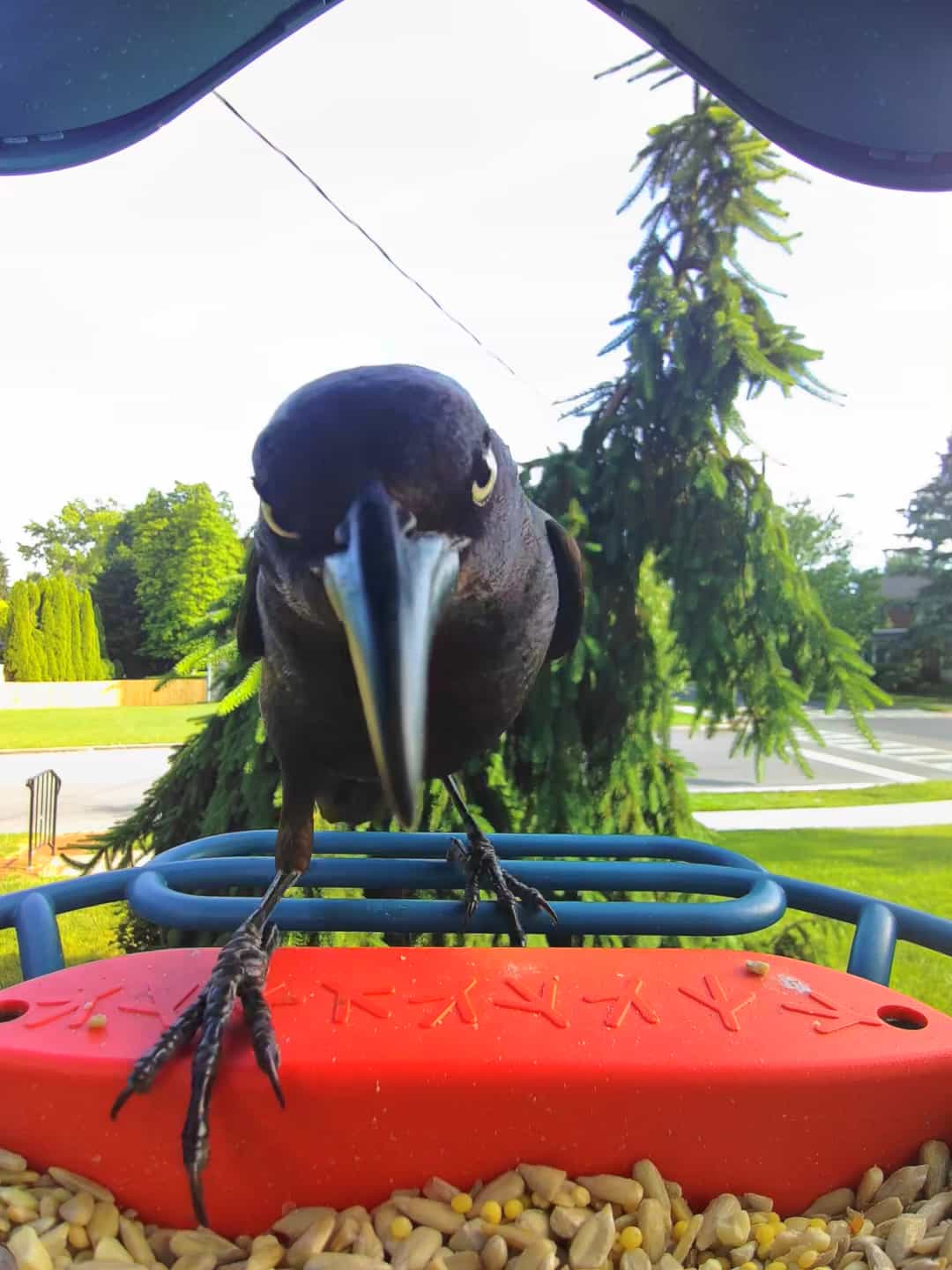
Boat-Tailed Grackles are larger with longer tails and a more slender, elongated body compared to the smaller Fish Crow. The Fish Crow has a distinct nasal call, while the Boat-Tailed's call is a series of harsh notes. Note the grackle's glossy, iridescent plumage versus the more subtle sheen of the crow.
Breeding and nesting habits of the boat-tailed grackle
Mating behaviors
Boat-tailed grackles exhibit complex courtship behaviors, with males performing display flights and vocalizations to attract females. Dominant males often establish territories, where they showcase iridescent plumage and loud calls to deter rivals and entice potential mates.
Nesting details
Nests are typically constructed in dense vegetation, commonly in marshes or near bodies of water, using grasses, leaves, and twigs. Occasionally, grackles will nest in gardens if suitable shrubbery for concealment is available. They prefer tall trees or thick bushes to ensure the safety of nests from predators. To attract grackles, maintain tall native plants and small water features.
Eggs and chick-rearing
Females lay 2-5 eggs, which are pale with spots. The incubation period is around 13 days, carried out solely by the female. Chicks are altricial, requiring extensive care; the female assumes most of the feeding responsibilities while males protect the territory. Chicks fledge in about 20 days, during which they are fed insects and seeds.
What does a boat-tailed grackle like to eat?
Aquatic animals
Berries
Bird eggs
Birds
Fruits
Insects
Plants
Scraps
Seeds
Small animals
Snails
Natural diet
The boat-tailed grackle is omnivorous, primarily sourcing its diet from water. It consumes a variety of aquatic food such as insects, snails, crayfish, crabs, mussels, shrimp, tadpoles, frogs, and small fish. On land, it eats insects like grasshoppers and caterpillars, and occasionally the eggs and young of other birds. Seasonally, seeds and grains also play a significant role in its diet.
Bird feeders
Common foods that boat-tailed grackles might consume at bird feeders include grain, seeds, and sometimes nuts or suet. They are also known to eat various types of birdseed blends offered at these feeders.
Offer delicious snacks
Boat-tailed grackles are omnivorous and enjoy a variety of food. Supplying feeders with Bird Buddy seeds, rich in nutrients, can quickly grab their attention and tempt them into your yard. These seeds are expertly chosen for the season, ensuring the grackles get what they love the most. Provide other suitable snacks such as sunflower seeds, corn, and fresh fruits to keep them coming back.
Use open style feeders
Boat-tailed grackles prefer open style feeders where they can see their surroundings clearly. They are particularly attracted to large, platform feeders which make picking seeds easier. Ensure the feeders are sturdy and spacious to accommodate these larger birds.
Provide water sources
A birdbath or a shallow dish of fresh water can be an irresistible invitation for grackles. They enjoy bathing and drinking clean water. Having a water source near your feeder not only can tempt them into your yard, but it can also keep them there for longer.
Make some moves
Grackles love to sing. Play a recording of their melodious calls to first attract them into your yard. Once they are comfortable, you can also enjoy singing with them for a fun time.
Where can you find boat-tailed grackles?

Primary habitat
The boat-tailed grackle primarily inhabits marshes, beaches, and areas close to the coast. They're also found near bodies of water like flooded fields and mudflats, and in drier fields in coastal regions.
Additional range
Unexpectedly, the grackle may occupy areas quite inland in Florida, though they're typically found near marshes and lakes.
Do they migrate?
The boat-tailed grackle is generally a permanent resident, meaning most of its population remains in the same area year-round. However, some of the northern breeders within this species may exhibit migratory behavior and move south during the fall. These movements are not long-distance migrations; rather, they are local or regional shifts to nearby southern areas. The boat-tailed grackle primarily resides in coastal marshes, wetlands, and urban areas across the southeastern United States. The population that breeds in the northern parts of its range, including areas like the mid-Atlantic coast, may relocate to more southern locales during cooler months. This southward movement generally occurs in the fall as temperatures drop and resources become scarcer in northern regions. They often move to areas where food and open water are more reliably available during the winter months. Key locations for the boat-tailed grackle include coastal areas of the southeastern U.S., especially Florida, where they are a permanent sight. Southern movements might include shifts further into peninsular Florida or along the Gulf Coast, though precise routes are not extensively documented due to the localized nature of their migration.
What is the role of boat-tailed grackles in nature and how to protect them?
Conservation status
The boat-tailed grackle is very common within its range and has expanded its breeding territory northward along the Atlantic Coast in recent decades. It is not considered vulnerable or endangered. While there are no significant conservation efforts specifically aimed at this species due to its stable population, it does benefit from general wetland conservation initiatives. Potential threats include habitat destruction and pollution, which could impact populations indirectly. However, the species' adaptability has helped it thrive in diverse environments, suggesting it is currently secure and not at immediate risk.
Ecological role of boat-tailed grackles
Its role in the ecosystem
The Boat-tailed Grackle plays a significant role in managing the ecosystem. As an omnivorous bird, its diet largely comprises aquatic insects, snails, crayfish, crabs, mussels, shrimp, tadpoles, frogs, and small fish. This broad diet makes it a primary component in pest control, as it keeps the populations of these species in check, preventing potential overpopulation and imbalance in the ecosystem. Moreover, the Grackle also consumes seeds and grains, which aids in seed dispersal, contributing to plant proliferation and the propagation of various species. The bird's opportunistic feeding behavior, which sometimes includes stealing food from larger birds and feeding on unguarded eggs, introduces an uncommon dynamic to the environment that can influence species interactions and population stability in intriguing ways. Nesting close to the water in various vegetation types also provides the bird with shelter, while its waste can contribute to nutrient cycles.
How to help protect boat-tailed grackles
Preservation tips
Habitat preservation strategies
To support boat-tailed grackle conservation, maintain and protect their habitats, primarily marshes, wetlands, and coastlines. Avoid land development in these areas. Promote the preservation of native plants, which provide vital food and cover. Litter control is also crucial as these birds are easily harmed by pollution.
Community science initiatives
Involve the community in citizen science projects like bird counts, to monitor grackle populations and migration patterns. Awareness campaigns can also help educate the public about the importance of these birds and the threats they face. Adopt-a-mangrove or other initiatives can directly engage people in habitat restoration. Consider hosting workshops to build artificial nesting platforms and feeders.