Orange-Crowned Warbler or Chipping Sparrow?
Here's how to tell the difference
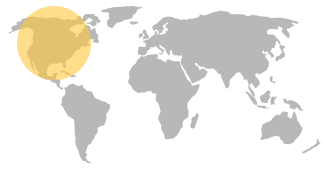
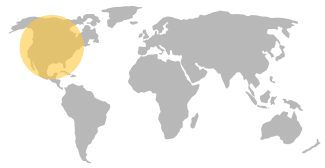
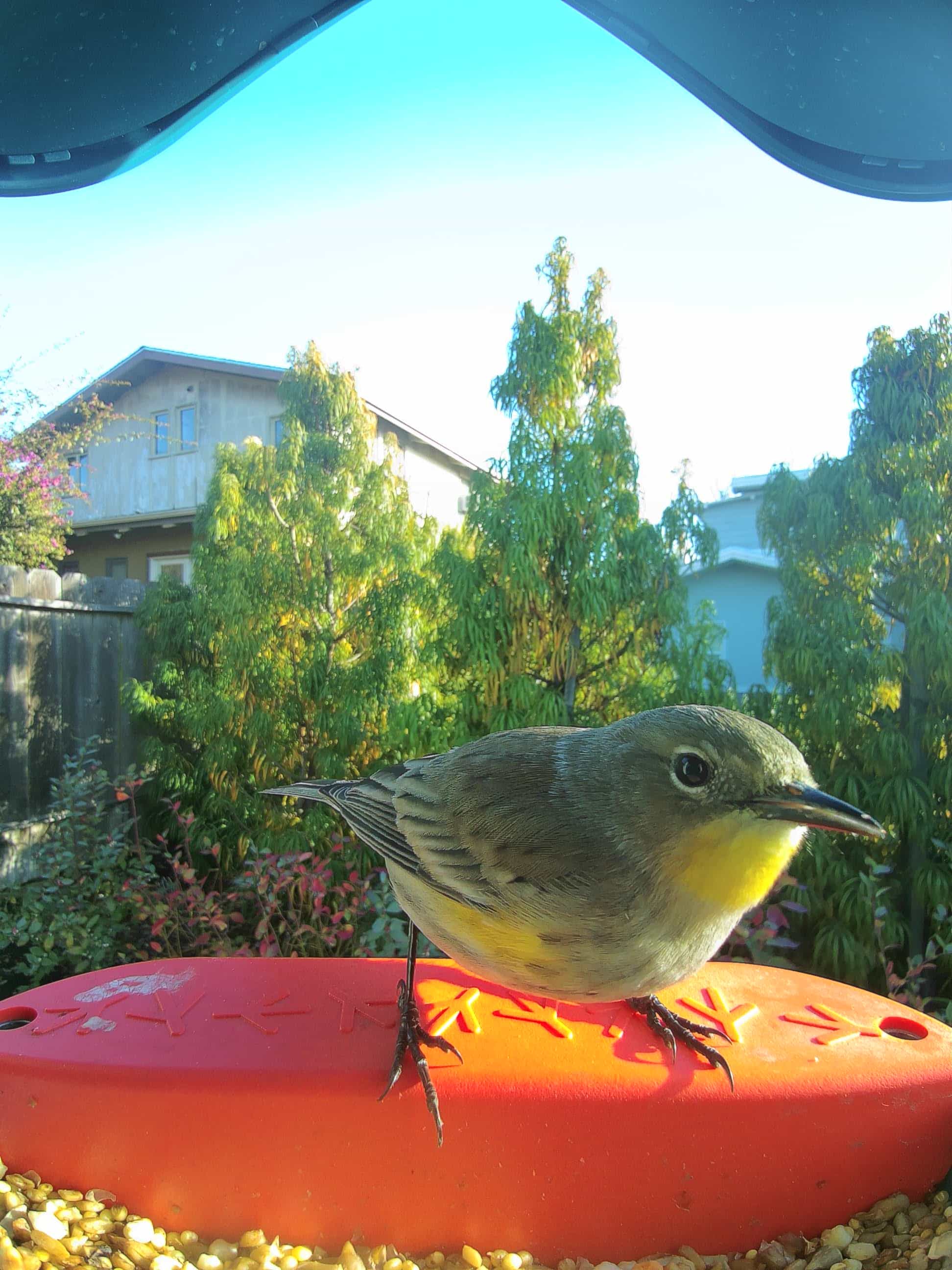


Orange-Crowned Warbler
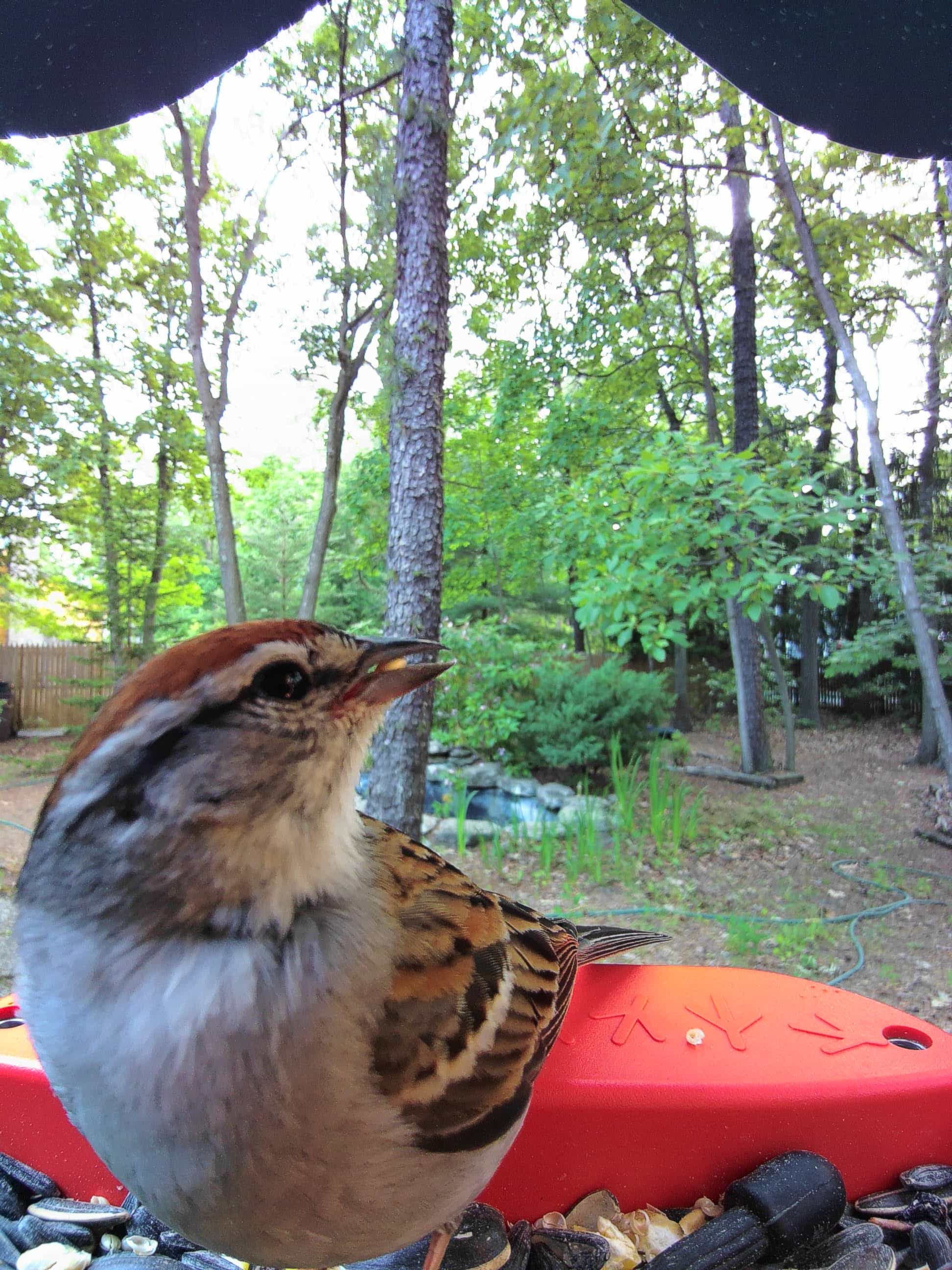


Chipping Sparrow
Orange-Crowned Warbler
Leiothlypis celata
General appearance
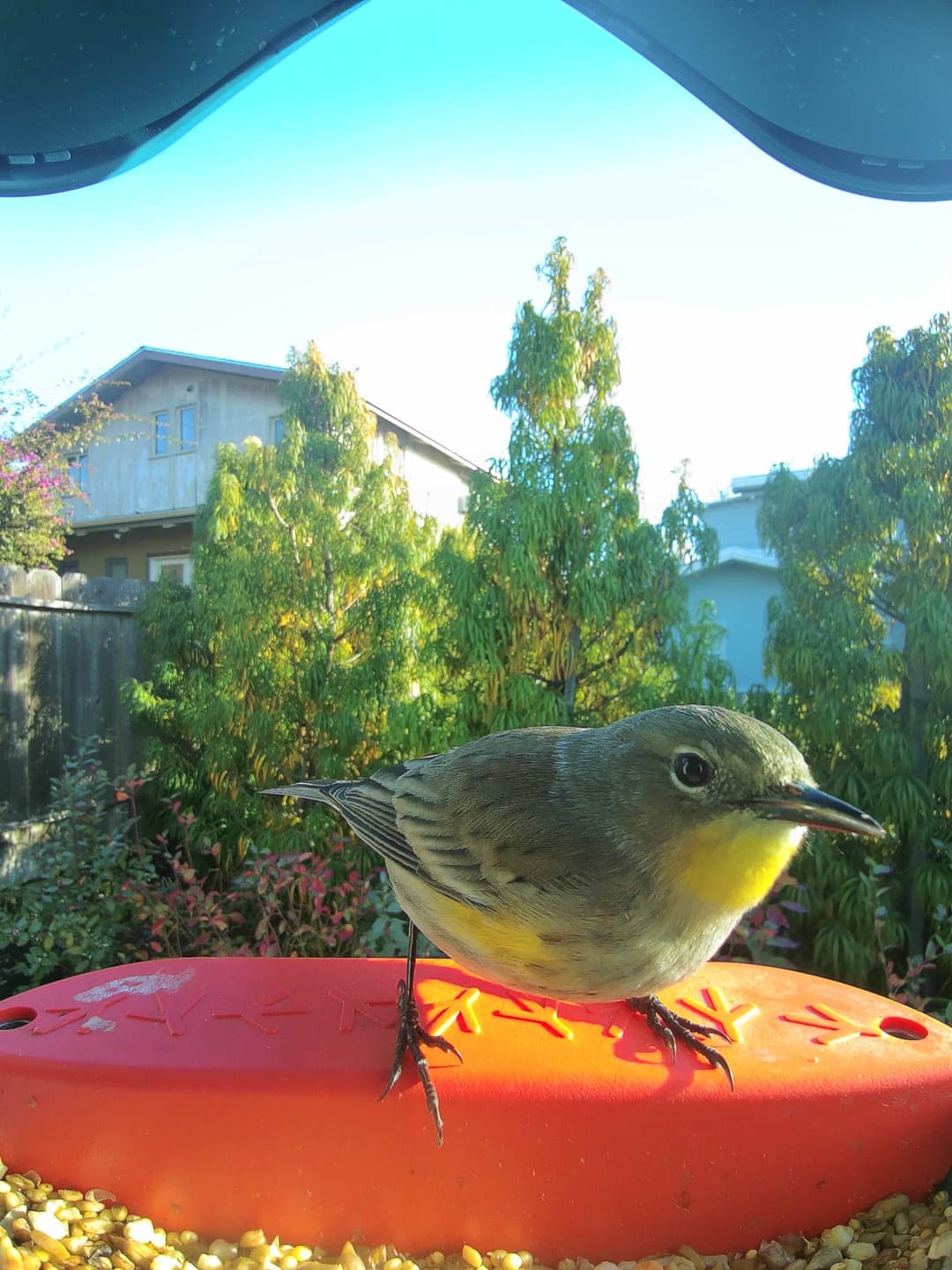
The orange-crowned warbler is a small songbird with an inconspicuous orange patch on the crown, often hidden and rarely visible. Its plumage is generally olive-green with a yellowish undertone. The underparts are paler with a duller yellow, and the bird typically exhibits an indistinct eyeline and a faint wing bar. Its compact body and thin, pointed bill are distinctive physical traits. Observers might note its slight flicking tail movements.
Male vs female
Males and females are similar in appearance, both sporting the same overall color scheme. However, males may sometimes possess a more vivid yellow underbelly than females. The orange crown is typically less prominent in females. Both sexes share olive-brown upperparts and a lack of prominent wing bars.
Juvenile
Juvenile orange-crowned warblers resemble adults but with duller plumage. Their yellowish underparts and olive hues are less pronounced, appearing more grayish. Juveniles also lack the subtle orange crown, which only becomes visible as they mature. In the wild, they may be identified by their subtler color and less energetic behavior.
Size
4.3 - 5.5 in/0.3 - 0.4 oz
There's more to learn about Orange-Crowned Warbler
View full detailsChipping Sparrow
Spizella passerina
General appearance
The Chipping Sparrow is a small 5-5 1/2 inch bird, equivalent to 13-14 cm. Sporting a blend of black, brown, gray, red, and white colors, it has a distinctive chestnut cap, white eyebrow, and black eyeline. Its wings are broad and the tail shape varies from notched, rounded to square-tipped. The bird's rump is gray, distinguishing it from Clay-Colored and Brewer's Sparrows that have brown rumps.
Male vs female
The Chipping Sparrow doesn't exhibit significant sexual dimorphism, meaning males and females have similar appearance. They both have less contrast in winter with their chestnut color partly obscured.
Juvenile
Young Chipping Sparrows are initially streaky and retain some of these streaks into fall. Dull fall juveniles can suggest Clay-Colored Sparrow and Brewer's Sparrow, but the gray rump identifies them as Chipping Sparrows. As they age, they acquire the characteristic colors and patterns of adult Chipping Sparrows.
Size
4.7 - 5.9 in/0.4 - 0.6 oz
There's more to learn about Chipping Sparrow
View full detailsHow to tell the Orange-Crowned Warbler from the Chipping Sparrow
Visual differences
The Orange-Crowned Warbler is smaller (4.3-5.5 inches, 0.28-0.35 oz) with olive-green plumage and a subtle orange crown, rarely visible, with an inconspicuous eyeline and faint wing bars. Its thin, pointed bill and compact body are distinctive. The Chipping Sparrow is slightly larger (5-5.5 inches, 0.39-0.56 oz), identifiable by its chestnut cap, white eyebrow, and black eyeline. It sports a mix of black, brown, gray, red, and white colors with a gray rump. Its broad wings and variable tail shape aid in identification.
Key differences and behavior
The Orange-Crowned Warbler and Chipping Sparrow display distinct behaviors that aid in field identification. The warbler nests on the ground within shrubby, vegetated habitats, while the sparrow prefers open woods and adapted urban areas, nesting in conifers or deciduous trees. During breeding, Orange-Crowned Warblers form "song neighborhoods" and are monogamous, whereas Chipping Sparrows show polygamous tendencies. Both feed mainly on insects but differ in diet adaptation; warblers consume sap and berries in winter, while sparrows favor seeds. At feeders, warblers eat suet and peanut butter; sparrows prefer seeds like sunflower and millet. Weighing slightly more, Chipping Sparrows (0.39-0.56 oz) differ slightly in size from the warblers (0.28-0.35 oz).
Still not sure? Here are more lookalikes!
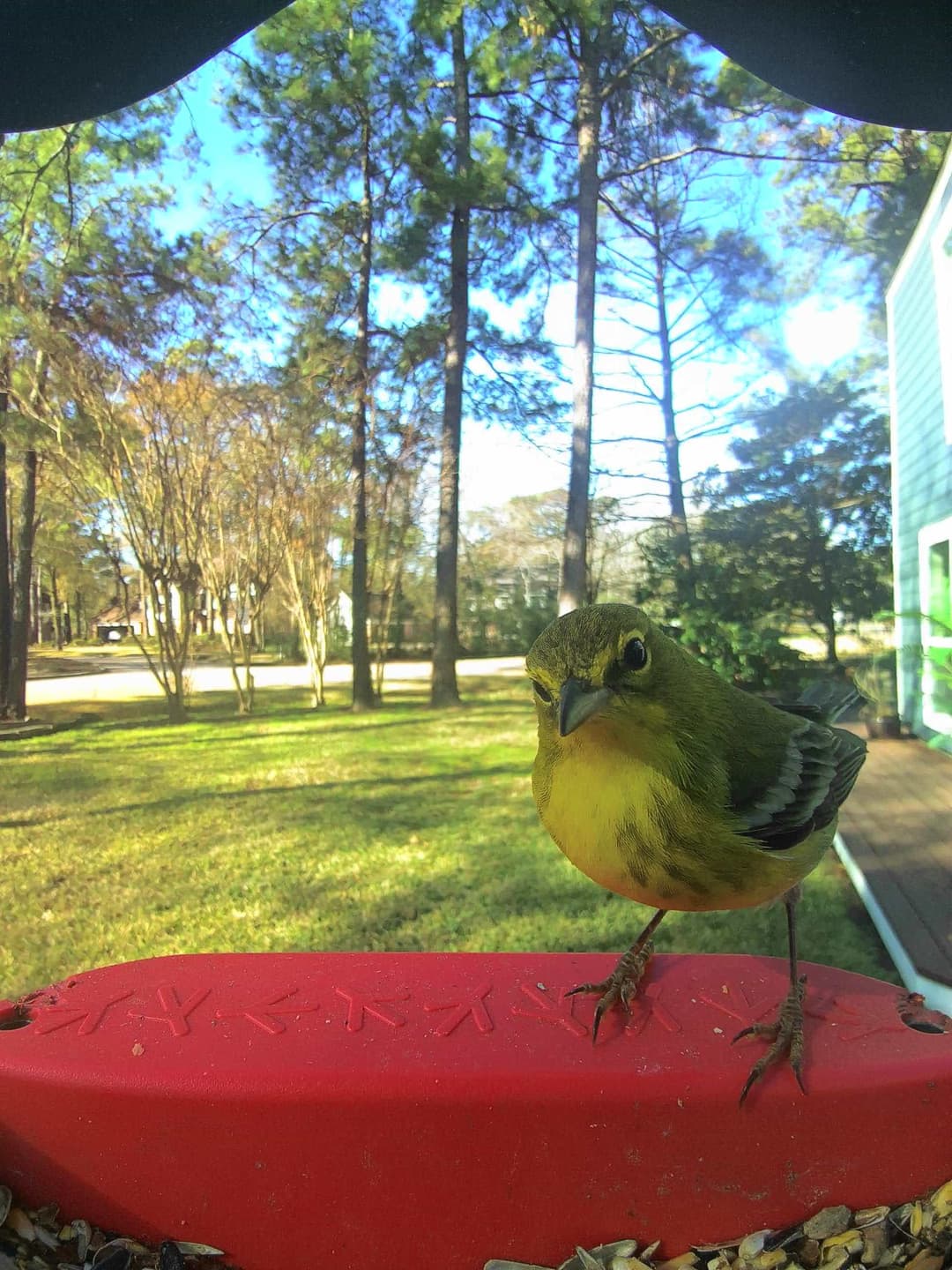
Orange-Crowned Warbler vs Tennessee Warbler
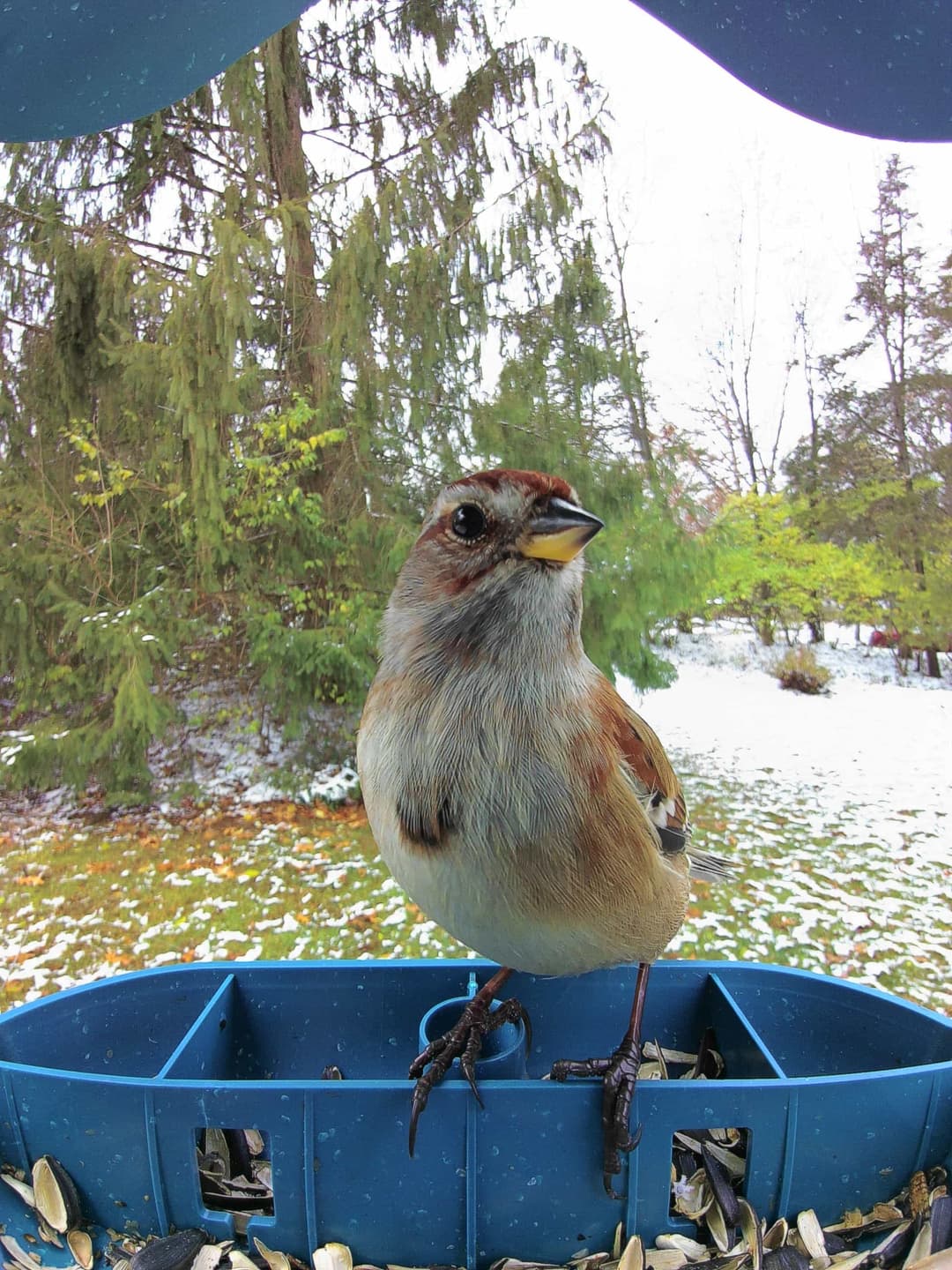
Chipping Sparrow vs American Tree Sparrow
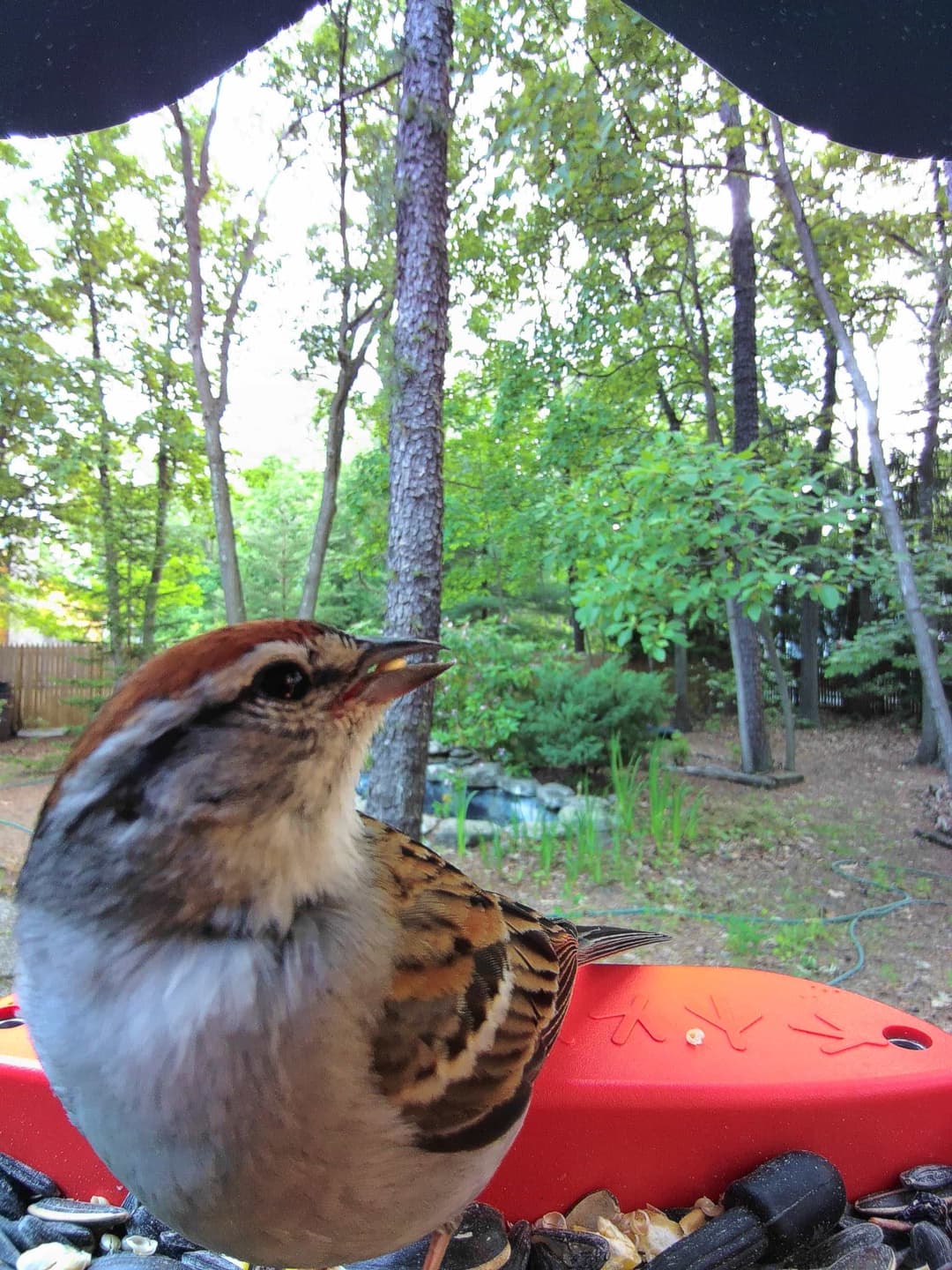
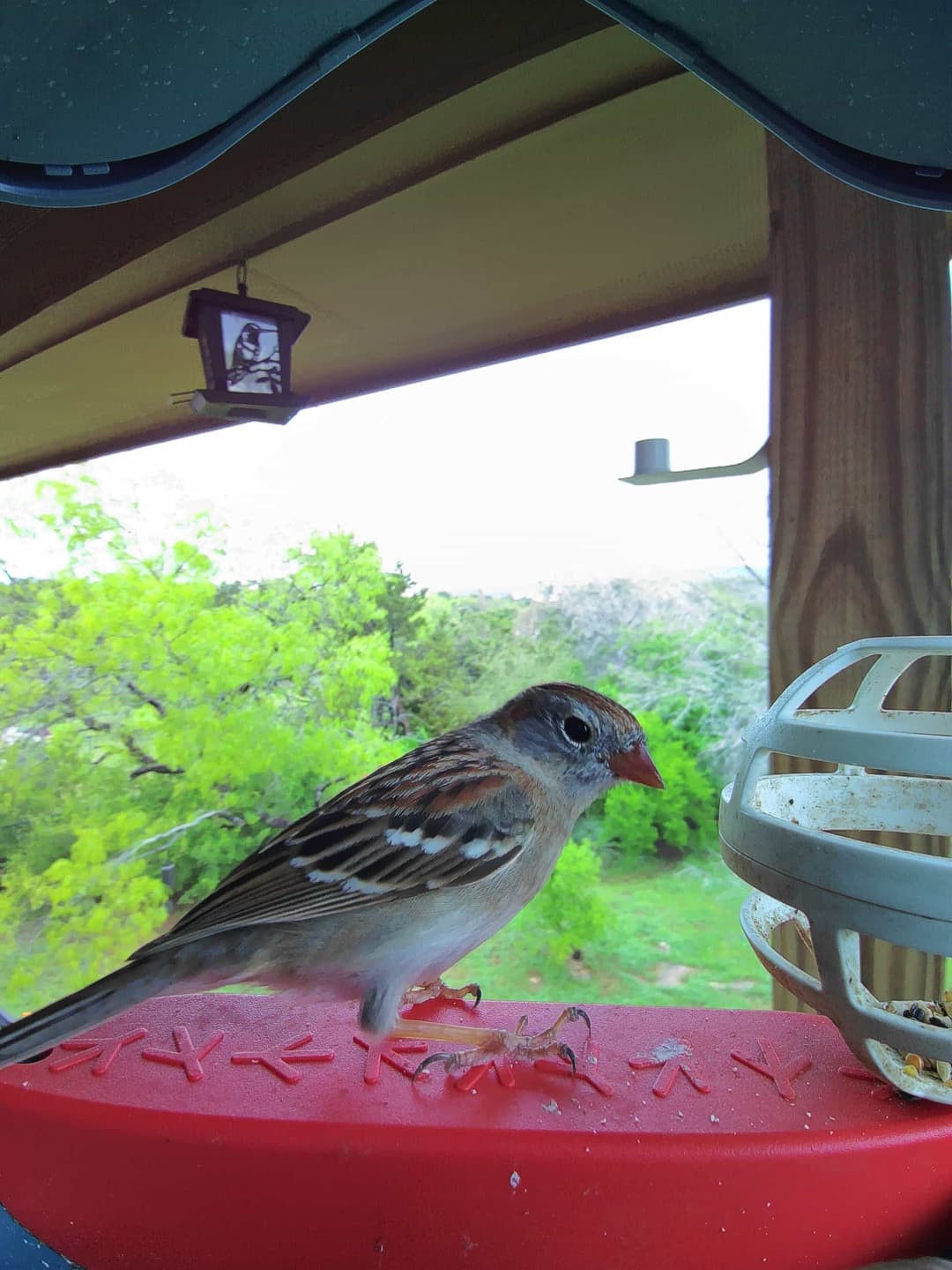
Chipping Sparrow vs Field Sparrow
Orange-Crowned Warbler vs [Select a bird]

[Select a bird]
Pick a bird to compare
Chipping Sparrow vs [Select a bird]
[Select a bird]
Pick a bird to compare