
Orange-Crowned Warbler
Orange-Crowned Warbler
Leiothlypis celata


Quick Identification guide
Quick Identification guide
- •
The subtle olive-green plumage contrasts with the understated orange crown, which may be difficult to see
- •
Features a slender, pointed beak suited for insect foraging
- •
Lacks distinctive wing bars, but has a plain yet elegant appearance with a uniform coloration
What does an orange-crowned warbler sound like?
The orange-crowned warbler's vocalizations are distinct but simple. Its song is a delicate trill that ascends or descends the scale, notably toward the end. The call is a sharp 'stik', reflecting its crisp, short sound. The pattern of the call tends to fall, with a flat, chirp or chip-like quality. Some also describe the call or song as a 'hi, trill', suggesting a higher, more extended trill sound. Thus, this little bird presents a melodious blend of rising or falling trills alongside sharper, concise call notes.


Description
Each of the four subspecies of orange-crowned warbler inhabits a particular area and varies in colour – from grey to yellow and green. Unlike most other Pirulidae warblers, they tend to nest on the ground to avoid nest-robbers. Their song is extremely variable and they are known to form so-called 'song neighbourhoods'!
The orange-crowned warbler can weigh between 8to10grams and be from11to14centimeters tall.
The Orange-crowned Warbler has a lifespan of around 8.5 years, although some have been known to live up to 11.5 years, which matches closely with related species like the Yellow-rumped Warbler. Despite high juvenile mortality, adults can often enjoy relatively long lives, theoretically due to a lifestyle characterized by low predation risk and plentiful food sources.
Did you know?
Most popular questions about orange-crowned warbler
How to recognise an orange-crowned warbler?
General appearance
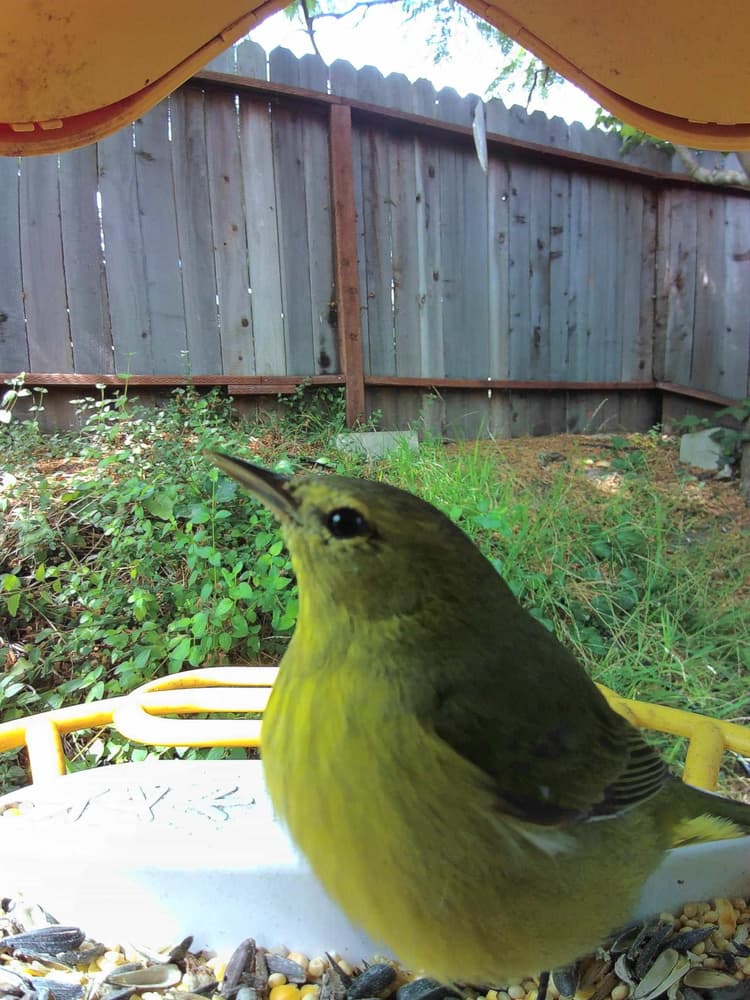
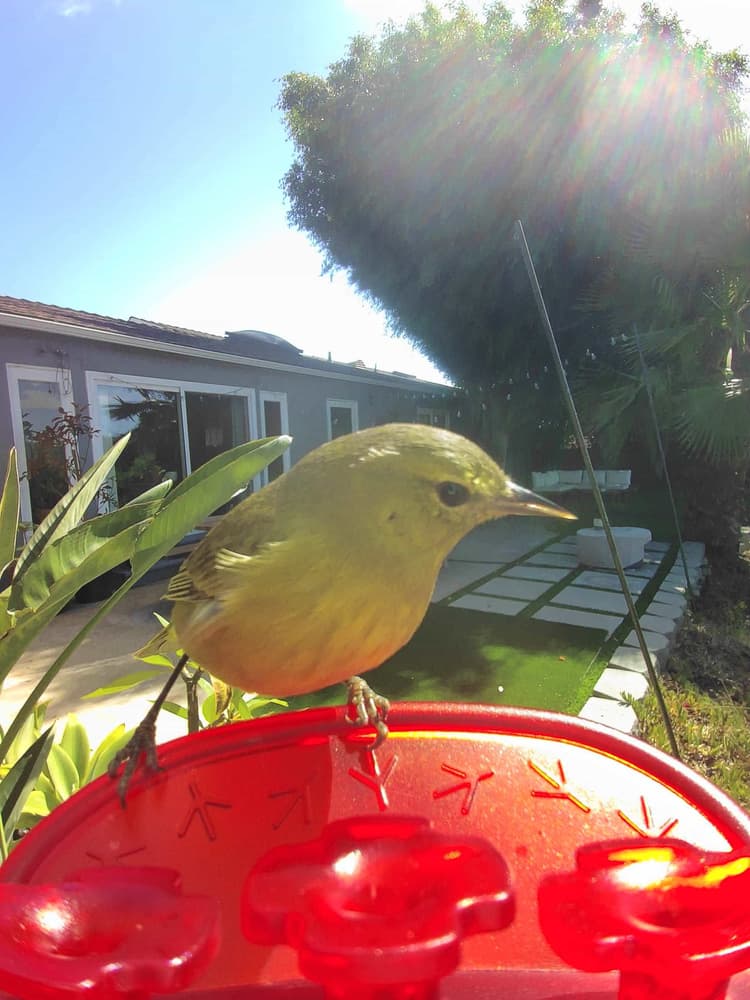
The orange-crowned warbler is a small songbird with an inconspicuous orange patch on the crown, often hidden and rarely visible. Its plumage is generally olive-green with a yellowish undertone. The underparts are paler with a duller yellow, and the bird typically exhibits an indistinct eyeline and a faint wing bar. Its compact body and thin, pointed bill are distinctive physical traits. Observers might note its slight flicking tail movements.
Male vs female
Males and females are similar in appearance, both sporting the same overall color scheme. However, males may sometimes possess a more vivid yellow underbelly than females. The orange crown is typically less prominent in females. Both sexes share olive-brown upperparts and a lack of prominent wing bars.
Juvenile
Juvenile orange-crowned warblers resemble adults but with duller plumage. Their yellowish underparts and olive hues are less pronounced, appearing more grayish. Juveniles also lack the subtle orange crown, which only becomes visible as they mature. In the wild, they may be identified by their subtler color and less energetic behavior.
Often mistaken for
Chipping Sparrow vs Orange-Crowned Warbler
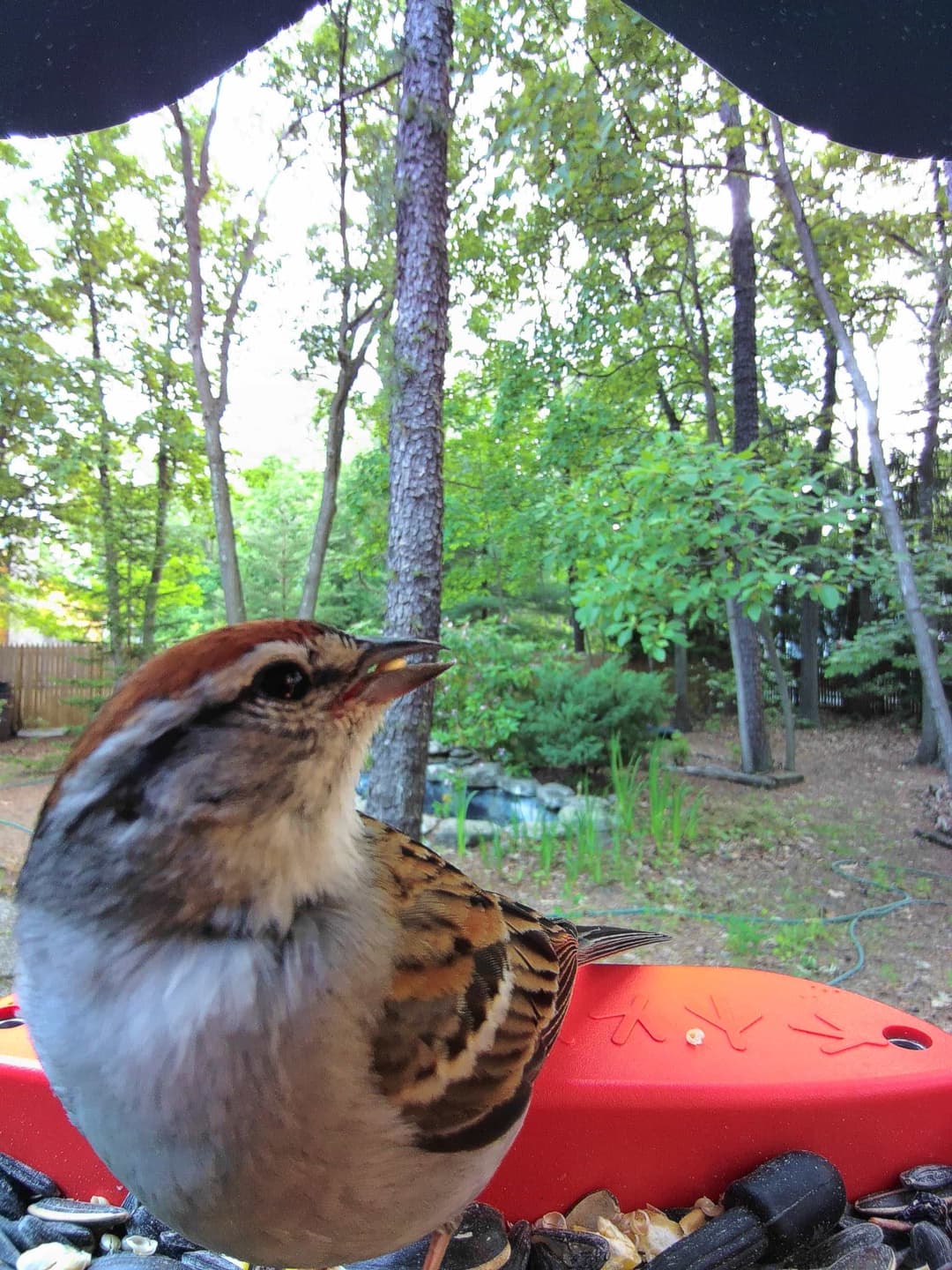
Chipping Sparrow can be mistaken for the Orange-Crowned Warbler due to its small size and overall brownish coloration. However, the Chipping Sparrow has a distinctive rufous crown and a clear black eye line, while the Orange-Crowned Warbler has an olive-green color with a faint orange crown patch.
Tennessee Warbler vs Orange-Crowned Warbler
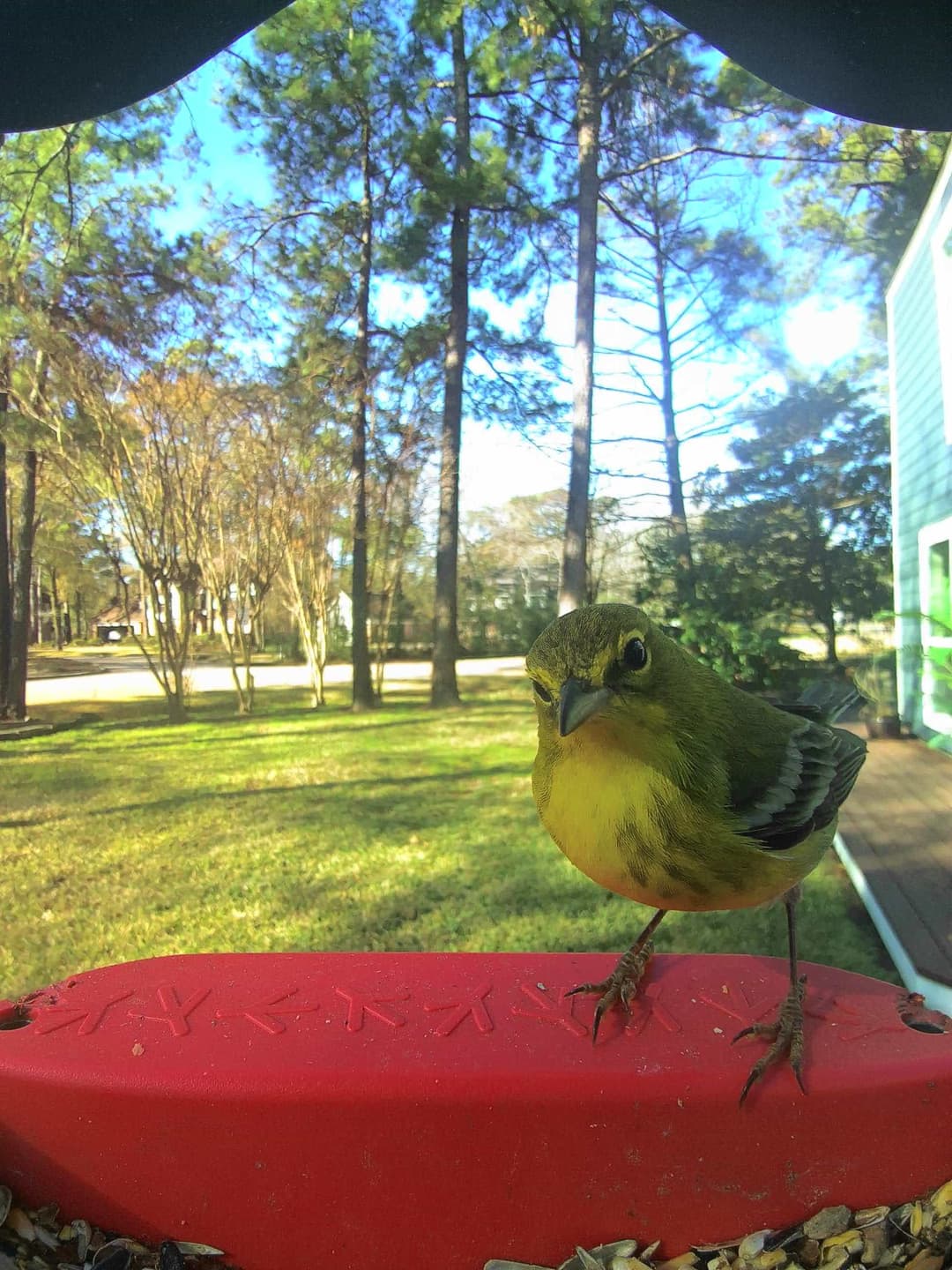
Both Tennessee Warbler and Orange-Crowned Warbler are similar in size and shape. Tennessee Warbler is typically more uniformly green with a whitish underbelly, while the Orange-Crowned Warbler has a more yellow-olive tone and a faint orange crown that is not easily visible.
Breeding and nesting habits of the orange-crowned warbler
Mating behaviors
Males arrive on the breeding grounds before females and establish territories by singing. They typically return to territories defended the previous year. The male accompanies the female closely during the courtship period, though he does not assist in nest building.
Nesting details
Nests are protected from above by overhanging vegetation, often placed on the ground in small depressions or on steep banks and occasionally in low shrubs or trees. The female constructs a small, open cup nest using leaves, fine twigs, bark, coarse grass, and moss, lining it with dry grass or animal hair. Creating a suitable habitat involves providing areas with dense vegetation for protection.
Eggs and chick-rearing
The female lays eggs in the nest she builds, while the male continues to closely accompany her. Both parents typically participate in feeding and raising the chicks once hatched, ensuring their growth and survival until they are able to fledge and become independent.
What does an orange-crowned warbler like to eat?
Berries
Fruits
Insects
Nectar
Sap
Spiders
Suet
Natural diet
The orange-crowned warbler primarily consumes insects, with a particular focus on insect larvae during the summer months when feeding nestlings. In the winter, this bird's diet shifts as it feeds on the sap from wells drilled in tree bark by sapsuckers or other woodpeckers. On its tropical wintering grounds, its diet is more varied and includes insects, nectar, and berries.
Bird feeders
At bird feeders, the orange-crowned warbler is known to consume suet and peanut butter, making these common sources of nutrition when natural food is less available.
Serve favorite snacks
The Orange-crowned Warbler is particularly drawn to insects and caterpillars. However, they also have a sweet tooth for fruits, especially oranges. During winter, they opt for suet. Bird Buddy seeds are your best bet as they are expertly chosen to suit the needs of the bird for the season.
The right feeder
These warblers prefer simple tray or platform feeders. They feed in a scattered, flitting pattern so a feeder with an ample platform is best. Also, placing the feeder amongst dense foliage can give them enough cover to feel safe.
Fun tricks to tempt them
Planting native plants with seeds, fruits or simply a bug habitat can attract these Warblers. Additionally, providing a clean water source or bird bath with a slow drip or sprinkler feature can be quite enticing. It becomes even more inviting if it is nestled in among some shrubs. Warblers are known to enjoy a little sing-along, so playing bird song recordings can attract them to your yard, too.
Try bird buddy seeds
Bird Buddy seeds stand out due to their expert selection. They are chosen specifically for the season and can thus cater to the dietary needs of the birds effectively. Consistently stocking your feeder with these seeds can have the best results for tempting the orange-crowned warbler.
Where can you find orange-crowned warblers?

Primary habitat
The orange-crowned warbler prefers shrubby vegetation, specifically deciduous undergrowth in habitats like spruce and fir-aspen forests, streamside thickets, and chaparral with partly shaded ground.
Additional range
During migration and winter, it uses brushy tangles in similar habitats, and can also be found in gardens and parks.
Do they migrate?
The orange-crowned warbler is a migratory bird species that demonstrates distinct migratory patterns. In spring, it is notable for migrating relatively early compared to most other warblers. The species primarily breeds in North America, ranging from Alaska and Canada down through the western United States. During fall migration, its patterns vary geographically. In the eastern regions, where it is less common, the fall migration occurs relatively late but tends to be more condensed. However, in the western areas, the migration spans a longer period. This extensive timing is typical in the west, where the orange-crowned warbler is more prevalent. The warblers migrate to wintering grounds that extend from the southern United States, through Mexico, and into Central America. Key locations during migration include the Pacific Coast and various woodland and scrub habitats that provide stopover resources. These birds are adapted to taking advantage of a variety of habitats during migration, allowing them to spread over a broad geographical area. This migration pattern ensures that the orange-crowned warbler can exploit different ecological niches and take advantage of seasonal food availability in its diverse breeding, stopover, and wintering habitats.
What is the role of orange-crowned warblers in nature and how to protect them?
Conservation status
The orange-crowned warbler is considered stable and common, with its numbers showing stability. Unlike some other warblers, this species is unlikely to be significantly affected by the cutting of tropical forest habitats due to its wintering range and habitat preferences. There are no immediate significant threats or specific conservation efforts noted for this warbler, as its population does not currently classify as vulnerable or endangered. Its resilience to habitat changes contributes to its stable conservation status.
Ecological role of orange-crowned warblers
Its role in the ecosystem
The Orange-crowned Warbler plays an important role in ecosystems by controlling insect populations and aiding in plant pollination. Their diet consists mainly of insects, feeding themselves and their nestlings almost exclusively on insect larvae, thereby regulating insect populations and preventing overpopulation of these species. This helps maintain balance in the ecosystem by curbing potential pest outbreaks. In addition, they feed on nectar by piercing the bases of flowers, contributing to pollination which is crucial for plant reproduction. During winter, they feed on oozing sap from wells drilled in tree bark by sapsuckers or other woodpeckers, and on tropical wintering grounds, their diet extends to berries alongside insects and nectar. This dietary habit suggests their role in seed dispersal, further aiding in plant propagation. Additionally, they use leaves, twigs, bark, coarse grass, and moss to build their nests, indirectly facilitating decomposition and nutrient cycling. Thus, the Orange-Crowned Warbler provides multifaceted contributions to its ecosystem from insect control, to pollination, seed dispersal, and nutrient cycling.
How to help protect orange-crowned warblers
Preservation tips
Habitat preservation strategies
To support the conservation of the orange-crowned warbler, habitat preservation is key. Identify vital habitats and work with local authorities to establish protected areas, avoiding deforestation and disruption. Enhance habitat quality by planting native vegetation that provides food and nesting space for the warbler. Encourage sustainable farming and forestry practices in neighboring lands.
Community science initiatives
Engage local communities in science initiatives to monitor the warbler population and raise awareness. Promote citizen science programs that involve public in bird-watching and data collection. Share findings with wildlife preservation organizations for further study and action. Use education programs to impart knowledge on the importance of biodiversity and the role of the orange-crowned warbler in the ecosystem.