Orange-Crowned Warbler or Tennessee Warbler?
Here's how to tell the difference

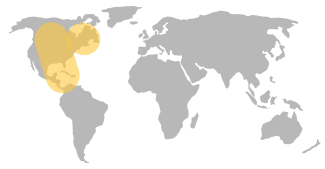
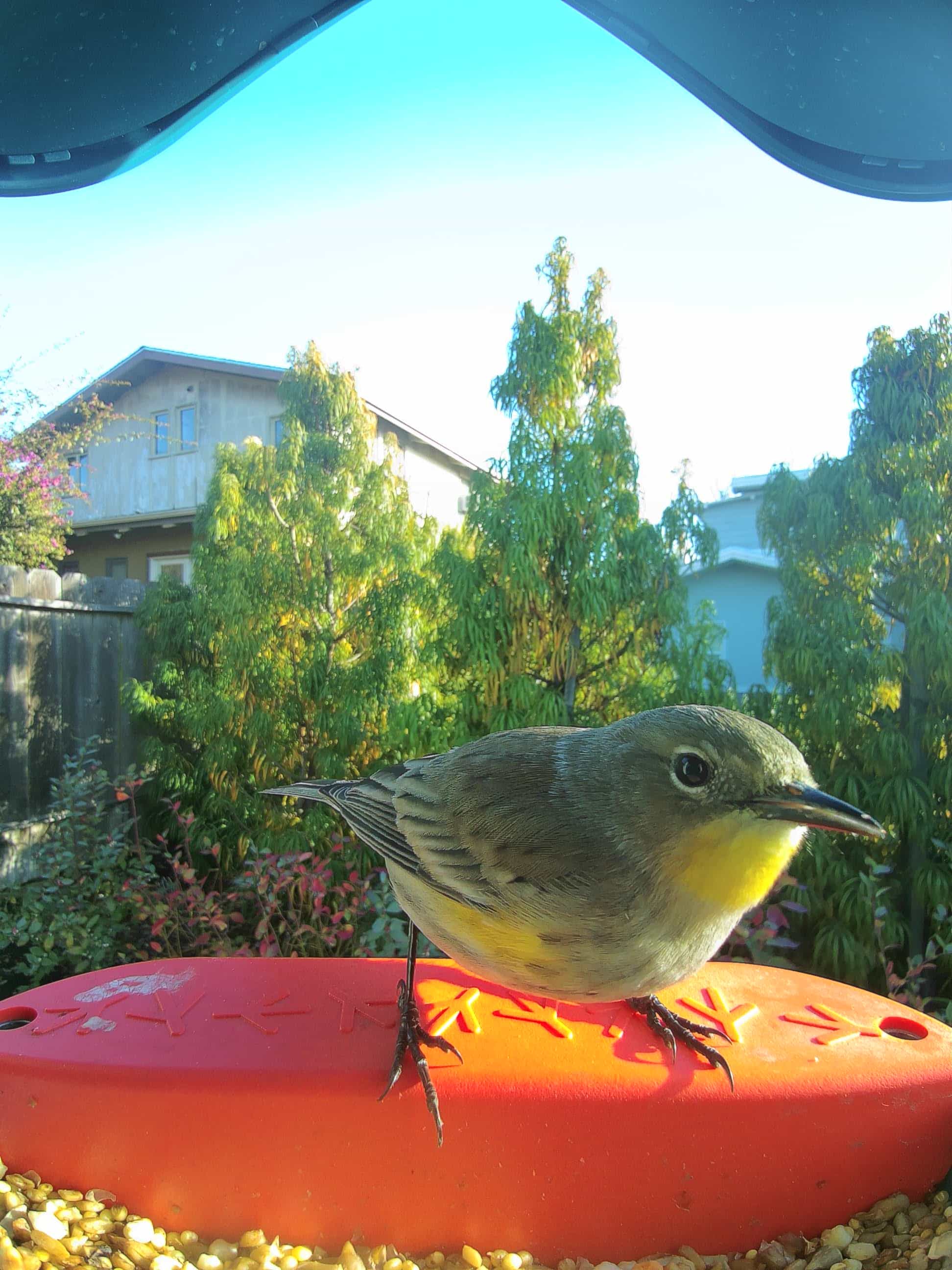


Orange-Crowned Warbler


Tennessee Warbler
Orange-Crowned Warbler
Leiothlypis celata
General appearance
The orange-crowned warbler is a small songbird with an inconspicuous orange patch on the crown, often hidden and rarely visible. Its plumage is generally olive-green with a yellowish undertone. The underparts are paler with a duller yellow, and the bird typically exhibits an indistinct eyeline and a faint wing bar. Its compact body and thin, pointed bill are distinctive physical traits. Observers might note its slight flicking tail movements.
Male vs female
Males and females are similar in appearance, both sporting the same overall color scheme. However, males may sometimes possess a more vivid yellow underbelly than females. The orange crown is typically less prominent in females. Both sexes share olive-brown upperparts and a lack of prominent wing bars.
Juvenile
Juvenile orange-crowned warblers resemble adults but with duller plumage. Their yellowish underparts and olive hues are less pronounced, appearing more grayish. Juveniles also lack the subtle orange crown, which only becomes visible as they mature. In the wild, they may be identified by their subtler color and less energetic behavior.
Size
4.3 - 5.5 in/0.3 - 0.4 oz
There's more to learn about Orange-Crowned Warbler
View full detailsTennessee Warbler
Leiothlypis peregrina
General appearance
The Tennessee warbler (Leiothlypis peregrina) is a small songbird with a wingspan of about 8.5 inches. It features an olive-green back, gray to whitish underparts, and a pale eyebrow stripe. The wings are relatively plain with no wing bars. It has a sharp, short bill ideal for feeding on insects and nectar.
Male vs female
Males and females are visually similar, but males may exhibit slightly brighter olive-green coloration, especially during the breeding season. Both sexes display the characteristic pale eyebrow and lack distinct markings on their wings, making them challenging to differentiate.
Juvenile
Juvenile Tennessee warblers look similar to adults but tend to have a duller overall coloration. Their underparts may appear slightly buffy, and their plumage lacks the bright luster of adult birds. These differences lessen as the bird matures.
Size
3.9 - 5.1 in/0.3 - 0.4 oz
There's more to learn about Tennessee Warbler
View full detailsHow to tell the Orange-Crowned Warbler from the Tennessee Warbler
Visual differences
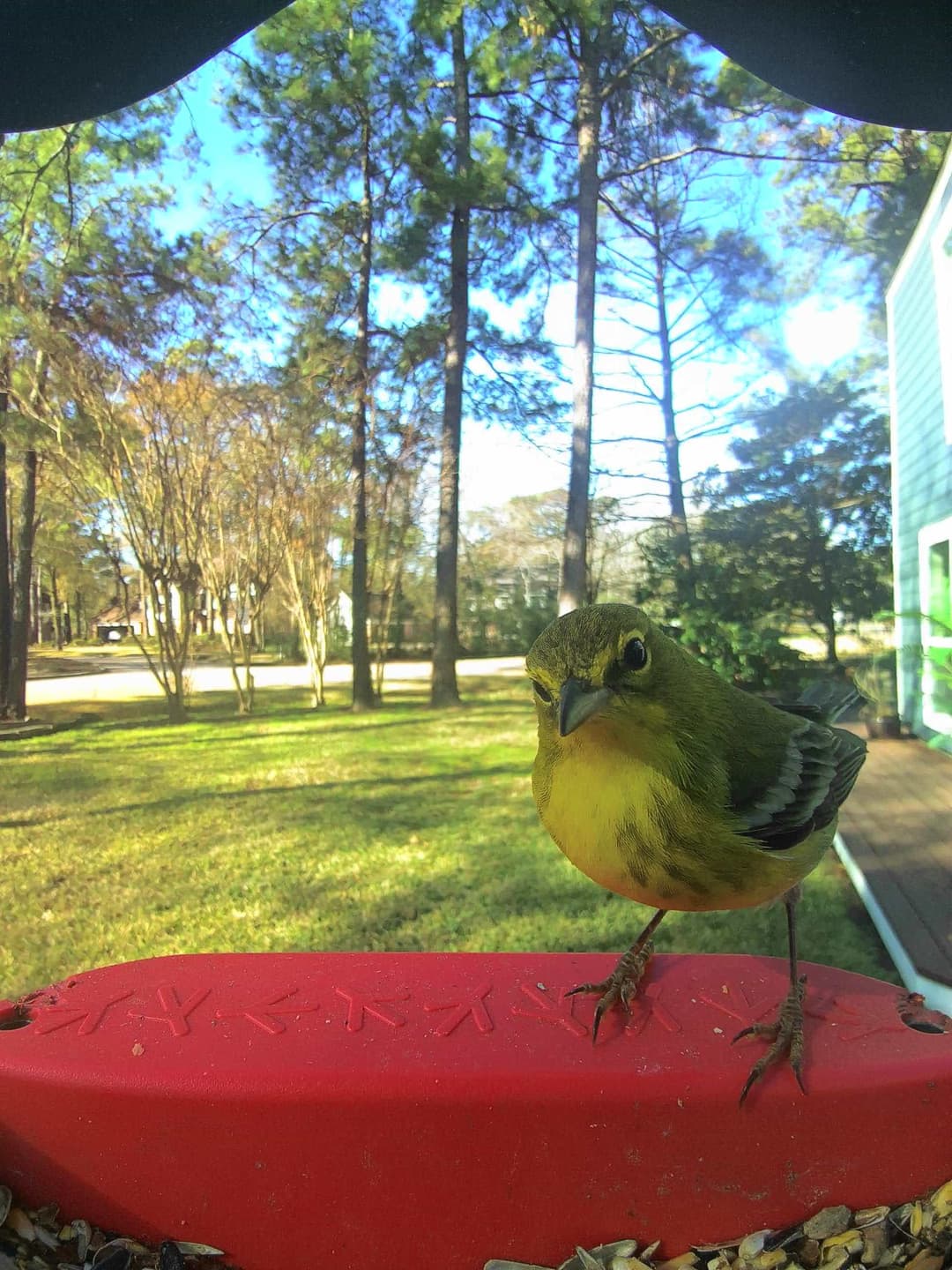
The Orange-Crowned Warbler (4.3–5.5 inches, 0.3–0.4 ounces) displays olive-green plumage with yellow undertones and a faint orange crown, often hidden. It has a thin, pointed bill, indistinct eyeline, and faint wing bar. In contrast, the Tennessee Warbler (3.9–5.1 inches, 0.3–0.4 ounces) features an olive-green back, grayish underparts, a distinctive pale eyebrow, and lacks wing bars. Its bill is sharp and short. Both species are similar in size and coloration, but the Tennessee Warbler's eyebrow stripe and overall lack of yellowish hues distinguish it.
Key differences and behavior
Orange-Crowned Warblers and Tennessee Warblers exhibit notable behavioral differences. Orange-Crowned Warblers prefer shrubby, deciduous habitats and nest on the ground, with males returning early to defend territories through song. Their diet includes insects and nectar, adapting to available food like suet in winter. Conversely, Tennessee Warblers thrive in deciduous and mixed forests, particularly near bogs. Males court females via song and flight displays, with ground or low shrub nesting. Their diet emphasizes caterpillars and nectar, including berries and nectar in tropical winters. While both species consume insects and nectar, Orange-Crowned Warblers frequent feeders more than Tennessee Warblers. Orange-Crowned Warblers establish song neighborhoods, while Tennessee Warblers aren't typical bird feeder visitors despite occasionally being drawn by nectar or fruit offerings.
Still not sure? Here are more lookalikes!
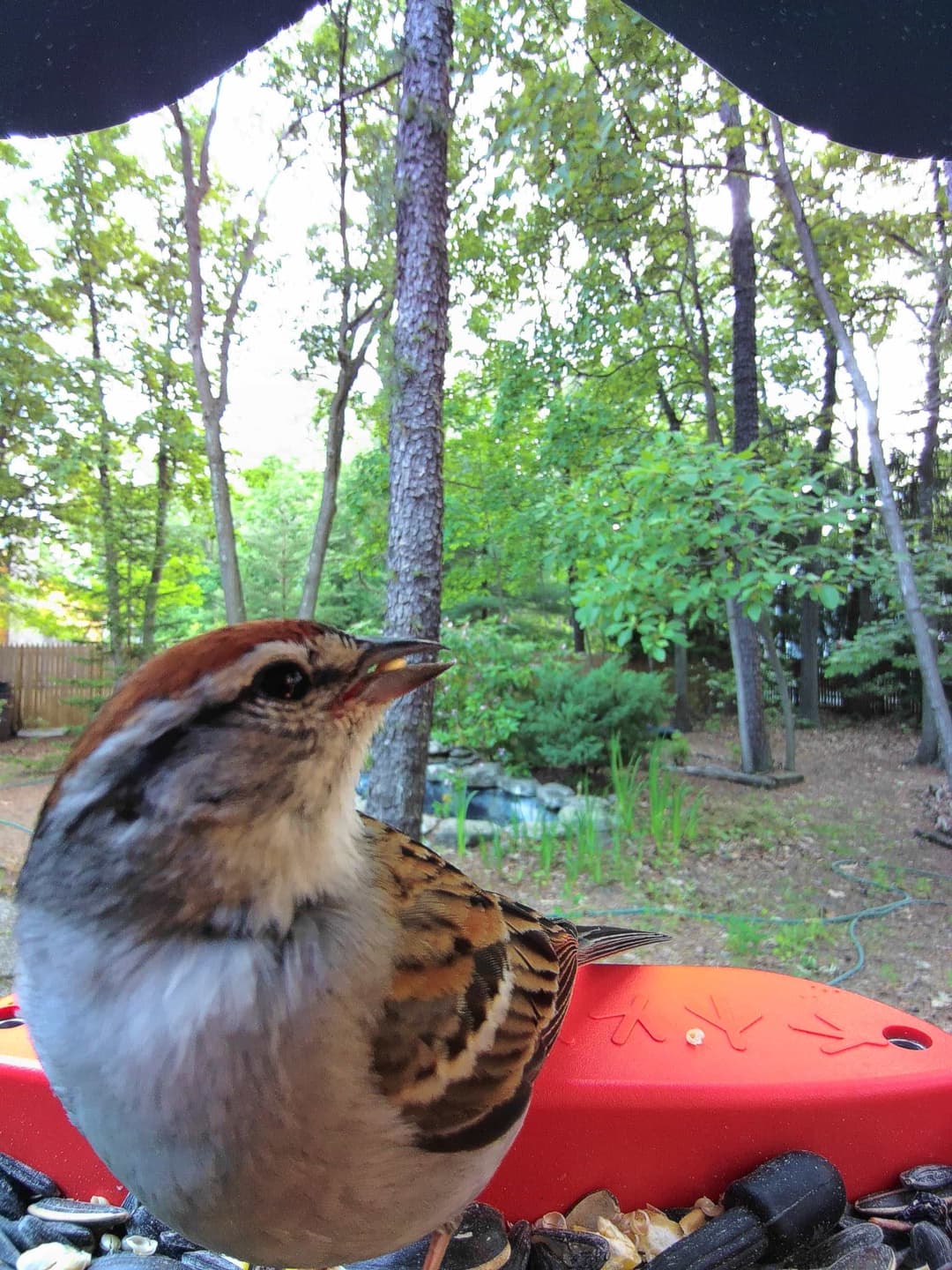
Orange-Crowned Warbler vs Chipping Sparrow
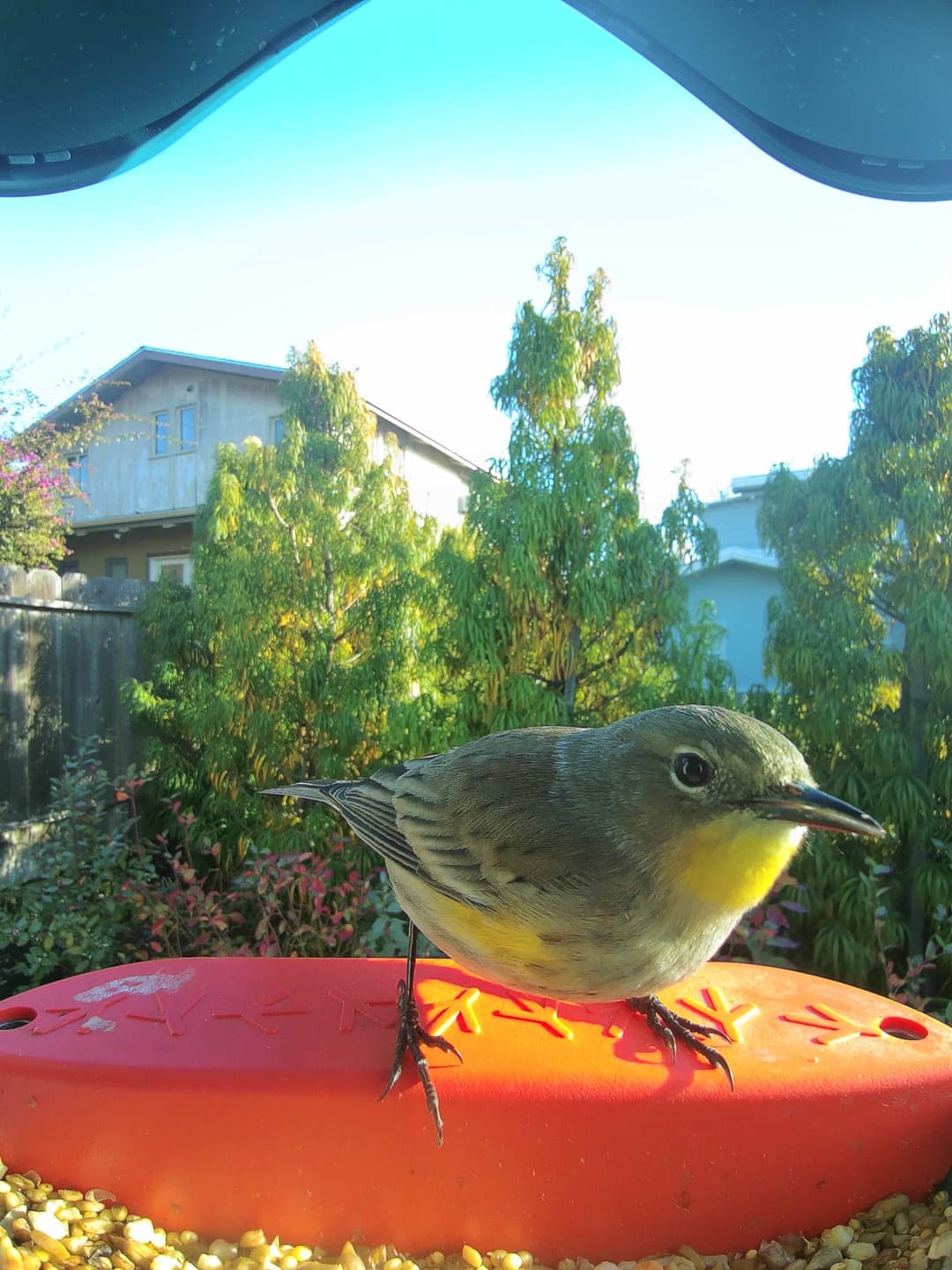
Orange-Crowned Warbler vs [Select a bird]

[Select a bird]
Pick a bird to compare
Tennessee Warbler vs [Select a bird]
[Select a bird]
Pick a bird to compare