Willow Tit or Carolina Chickadee?
Here's how to tell the difference




Willow Tit
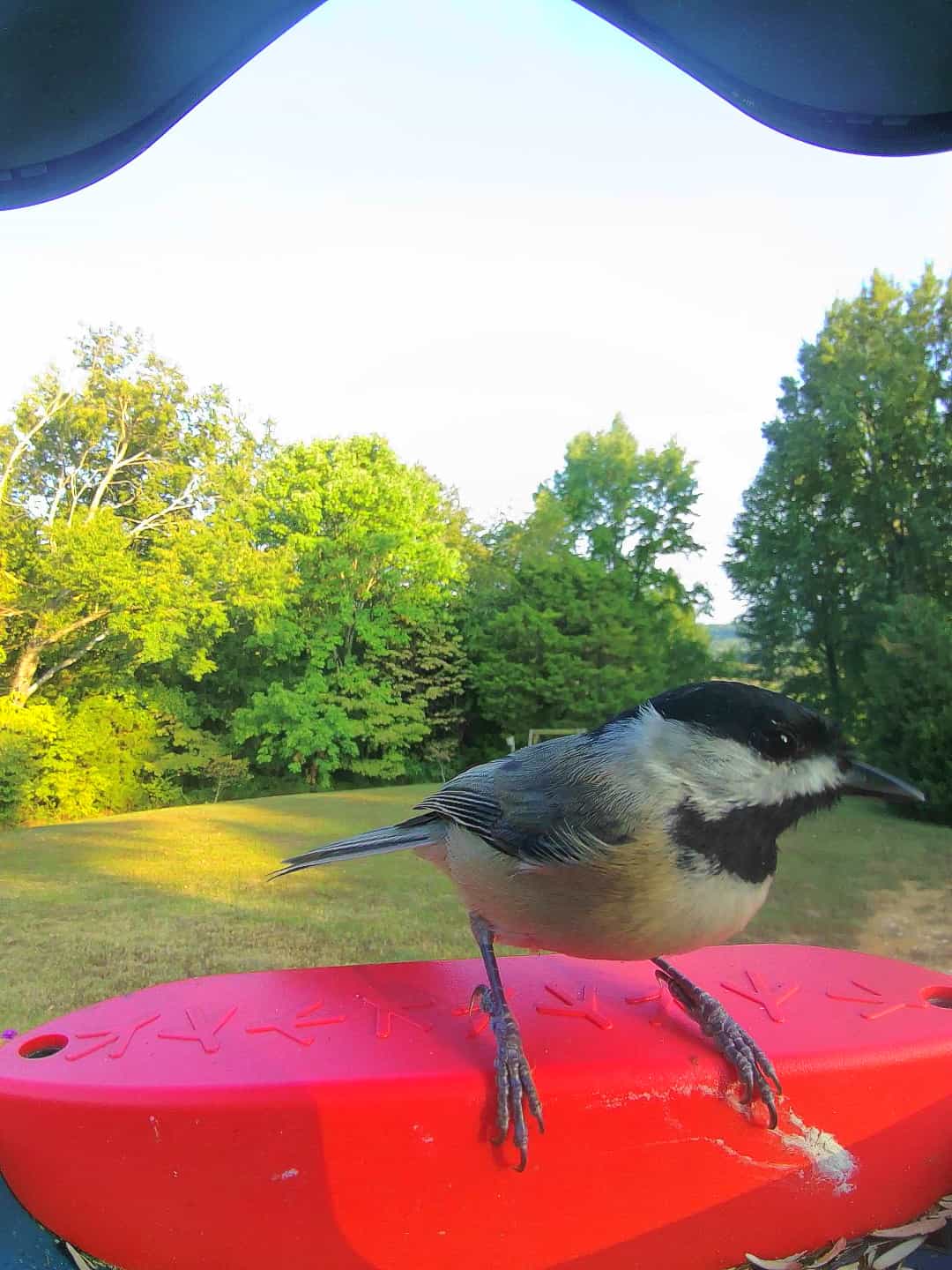


Carolina Chickadee
Willow Tit
Poecile montanus
General appearance
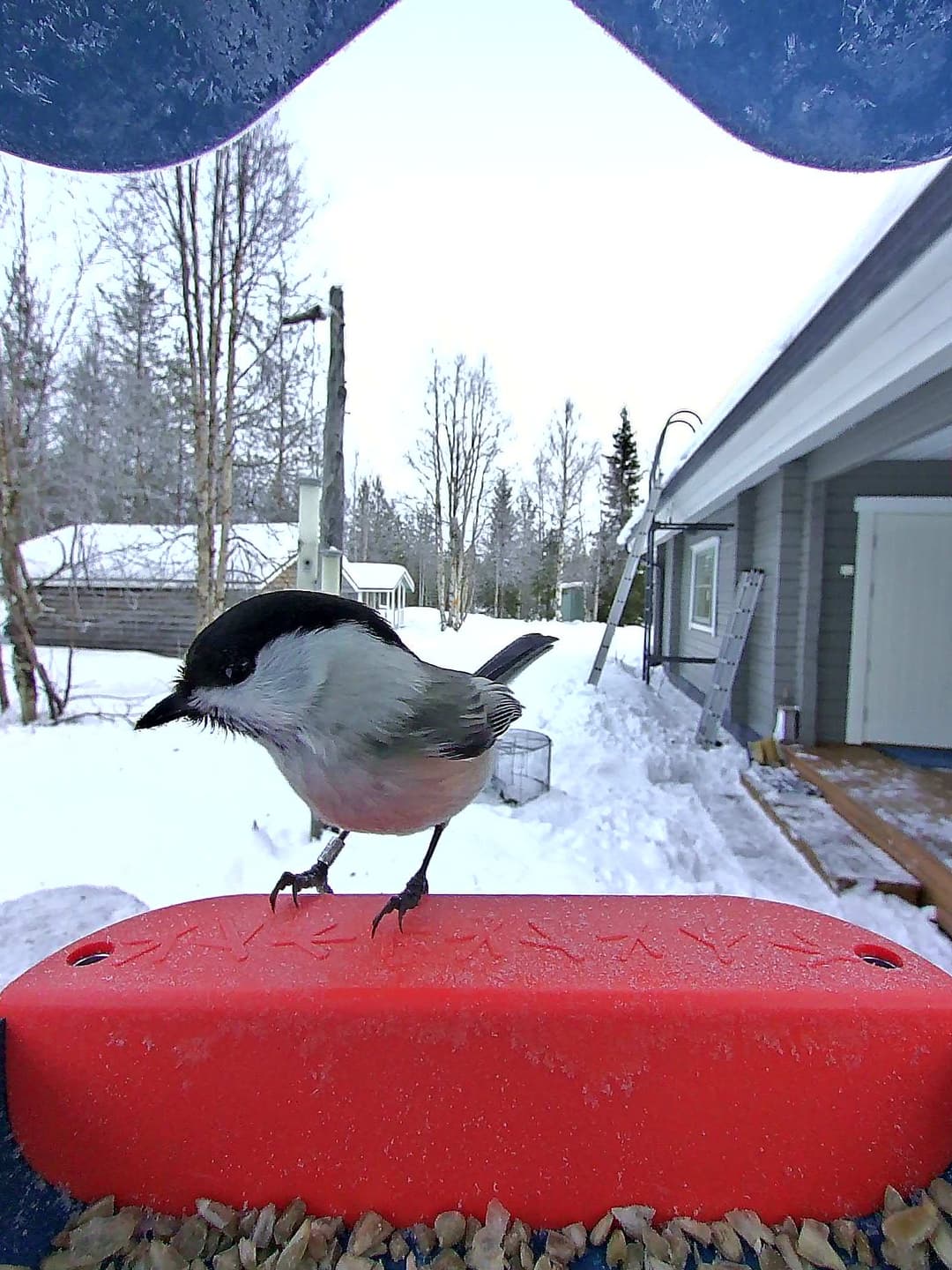
The Willow Tit (Poecile montanus) is a small, plump songbird with a robust body. Its plumage primarily consists of grey, brown, and white shades. The head is capped in glossy black extending to the nape, contrasting sharply with the pale cheeks. The upperparts are brownish-grey while the underparts are white, with sides tinged buff-brown. Its wings and tail boast a darker hue. An essential characteristic is a small black bib under its chin.
Male vs female
There is minimal sexual dimorphism in Willow Tits, making it hard to distinguish males from females by appearance. Both sexes have similar coloration and size. Thus, identification between genders is generally achieved through their distinct vocalizations.
Juvenile
Juvenile Willow Tits resemble the adults, but the glossy black cap is duller and they lack the black bib of mature birds. Additionally, juveniles exhibit a paler plumage with a more yellowish-brown hue. As they age, the coloration gradually darkens, approaching the adult appearance by their first winter.
Size
4.3 - 4.7 in/0.3 - 0.5 oz
There's more to learn about Willow Tit
View full detailsCarolina Chickadee
Poecile carolinensis
General appearance
The Carolina chickadee is a small songbird, about 4.5 to 5 inches long with a wingspan of 6 to 8 inches. Its most distinctive features include a black cap and bib, white cheeks, and a soft gray back. The underparts are mostly pale gray with a slightly buffy hue on the sides. They have short, stout bills and rounded wings. Spotting them in the wild, one can often notice their characteristic calls and acrobatic movements through tree branches.
Male vs female
Males and females of the Carolina chickadee are very similar in appearance, making them difficult to differentiate by plumage alone. Both sexes share the same coloration pattern, lacking distinctive sexual dimorphism. Behavioral observations during the breeding season, such as males being more vocal and active in territory defense, may help distinguish them.
Juvenile
Juvenile Carolina chickadees resemble adults but with duller and less distinct coloration. Their black cap and bib may appear slightly browner, and their overall plumage is softer and fluffier. As they mature, these differences gradually fade, and they develop the crisp contrast seen in adults. Juveniles learn to forage and join mixed-species flocks after fledging.
Size
4.5 - 5.1 in/0.3 - 0.4 oz
There's more to learn about Carolina Chickadee
View full detailsHow to tell the Willow Tit from the Carolina Chickadee
Visual differences
The Willow Tit and Carolina Chickadee are similar in appearance, but key visual differences include their size and plumage patterns. The Carolina Chickadee is slightly larger at 4.5-5 inches long and has a black cap and bib with white cheeks, pale gray underparts, and a buffy hue on the sides. The Willow Tit is 4.3-4.7 inches long, with a black cap extending to the nape, dark buff-brown sides, and a small black bib. Additionally, the Willow Tit's upperparts are brownish-gray, differing from the chickadee's softer gray back.
Key differences and behavior
Willow Tits and Carolina Chickadees, both small songbirds, display distinct behaviors and preferences that facilitate field identification. Willow Tits, inhabiting damp deciduous forests, are solitary nesters forming lasting pairs and primarily excavate nesting sites in rotten wood. In contrast, Carolina Chickadees, found in mixed woodlands and suburbs, form more permanent flocks with some flock-switching behavior, and often use pre-existing cavities for nests, occasionally enlarging them. Both species consume insects, seeds, and berries, with Willow Tits preferring invertebrates during breeding and Carolina Chickadees adjusting to more seeds in winter. At feeders, both enjoy sunflower seeds and suet. The Willow Tit participates equally in post-fledging care, whereas Carolina Chickadee females primarily incubate eggs with shared parental feeding duties. Both exhibit minimal sexual dimorphism, though males of the Carolina Chickadee may be more vocal during the breeding season.
Still not sure? Here are more lookalikes!
Willow Tit vs Marsh Tit
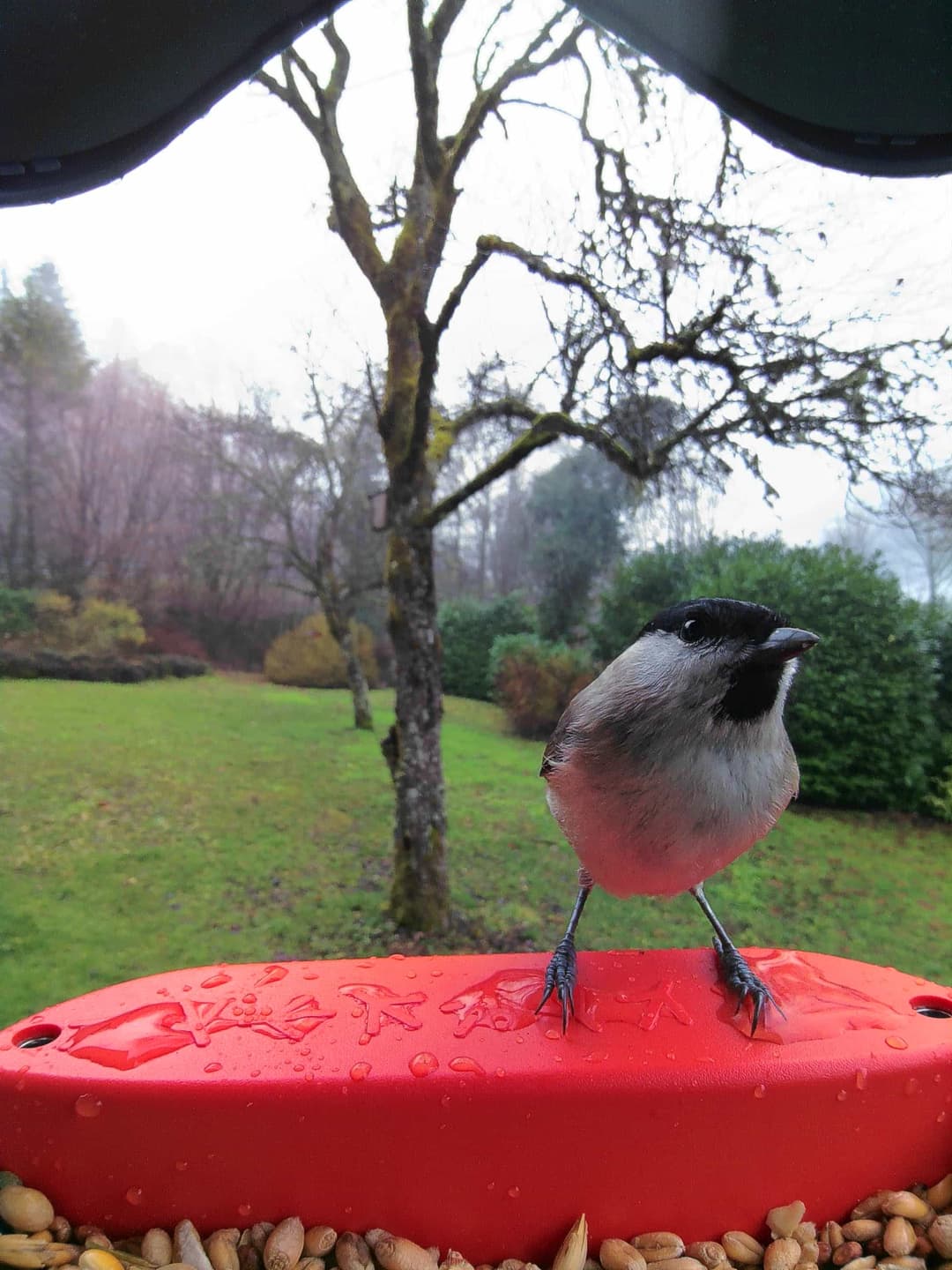
Willow Tit vs Black-Capped Chickadee
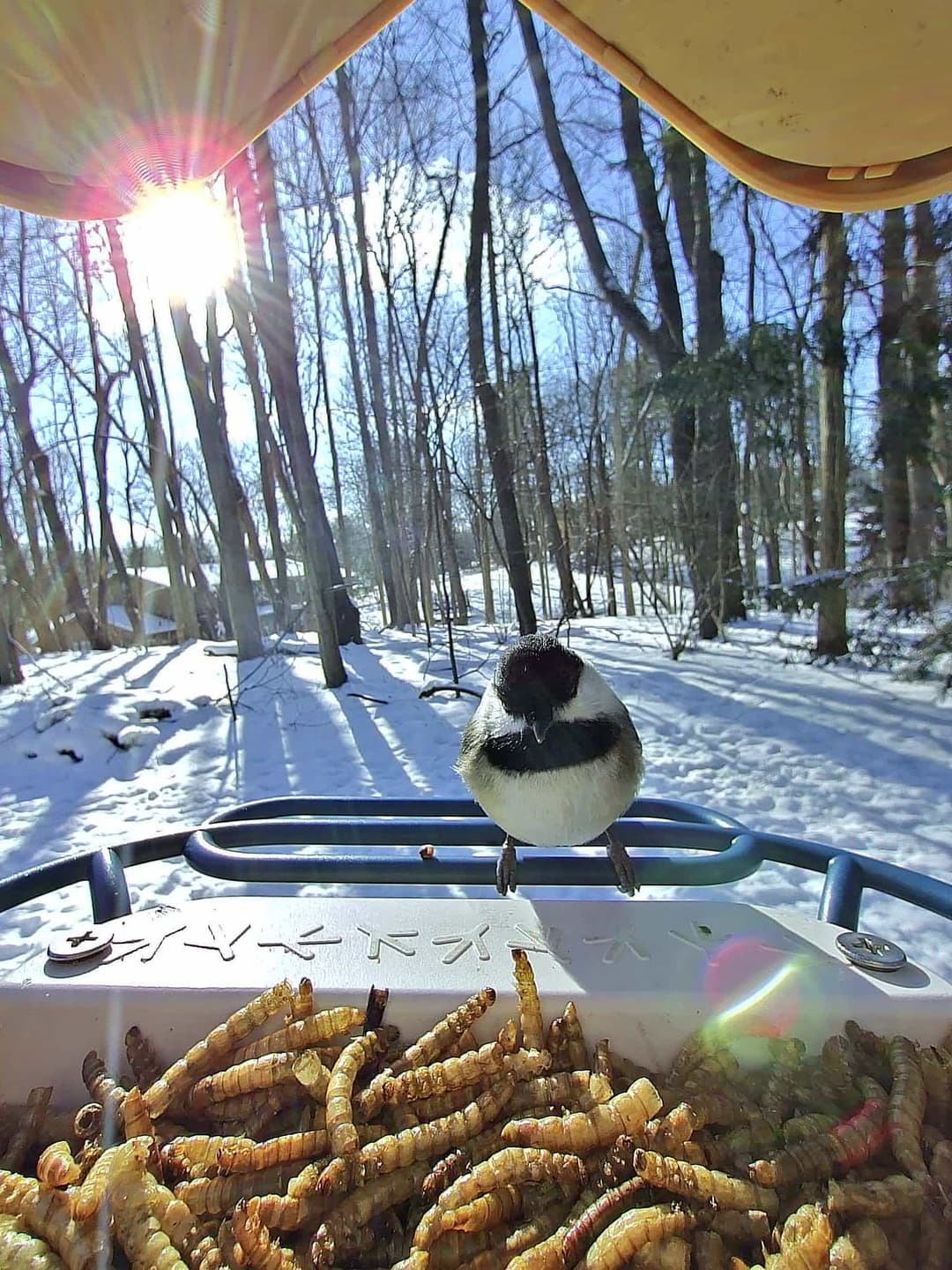
Carolina Chickadee vs Black-Capped Chickadee
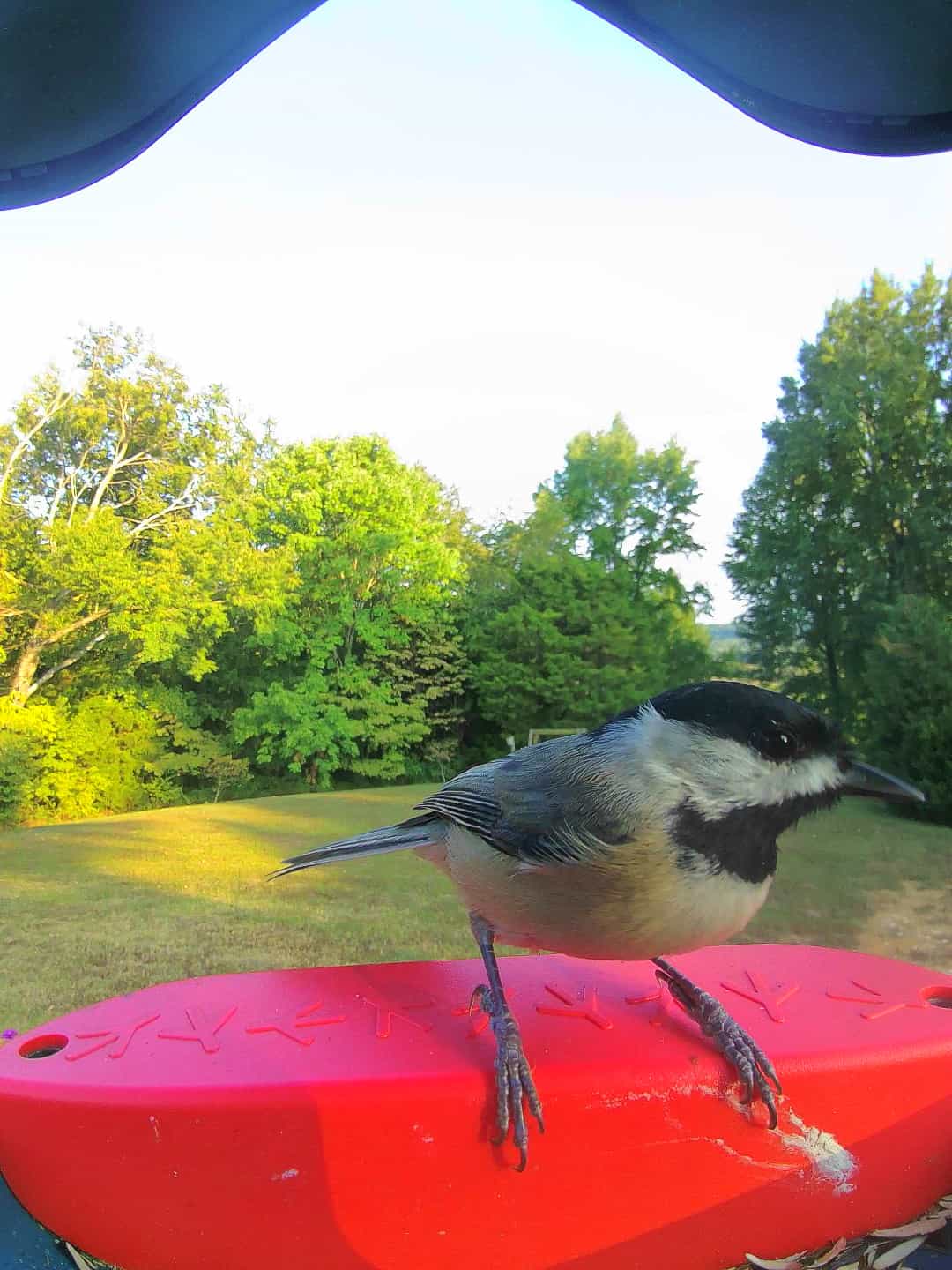
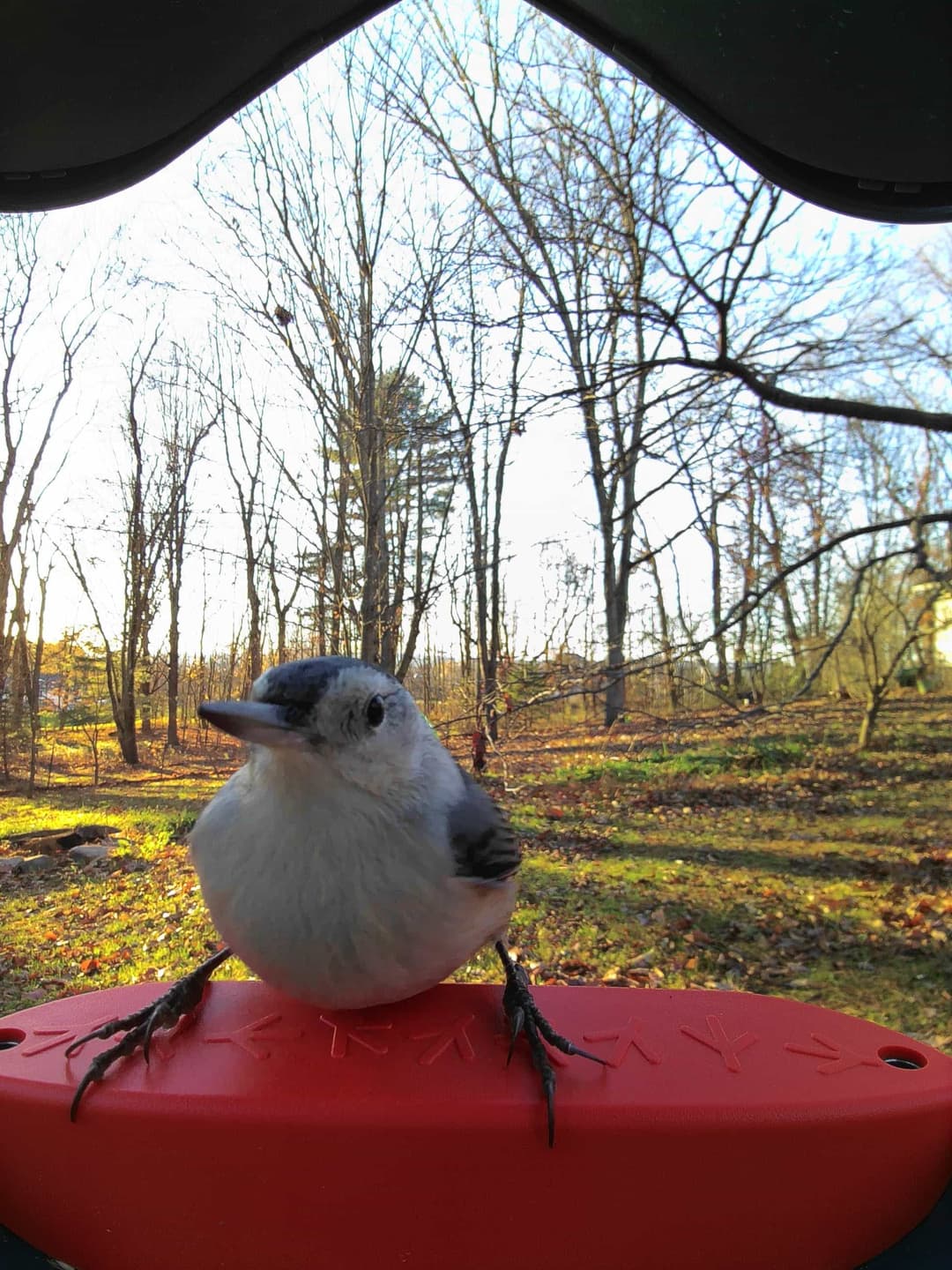
Carolina Chickadee vs White-Breasted Nuthatch
Willow Tit vs [Select a bird]

[Select a bird]
Pick a bird to compare
Carolina Chickadee vs [Select a bird]
[Select a bird]
Pick a bird to compare