Mountain Chickadee or Carolina Chickadee?
Here's how to tell the difference

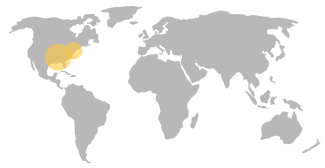
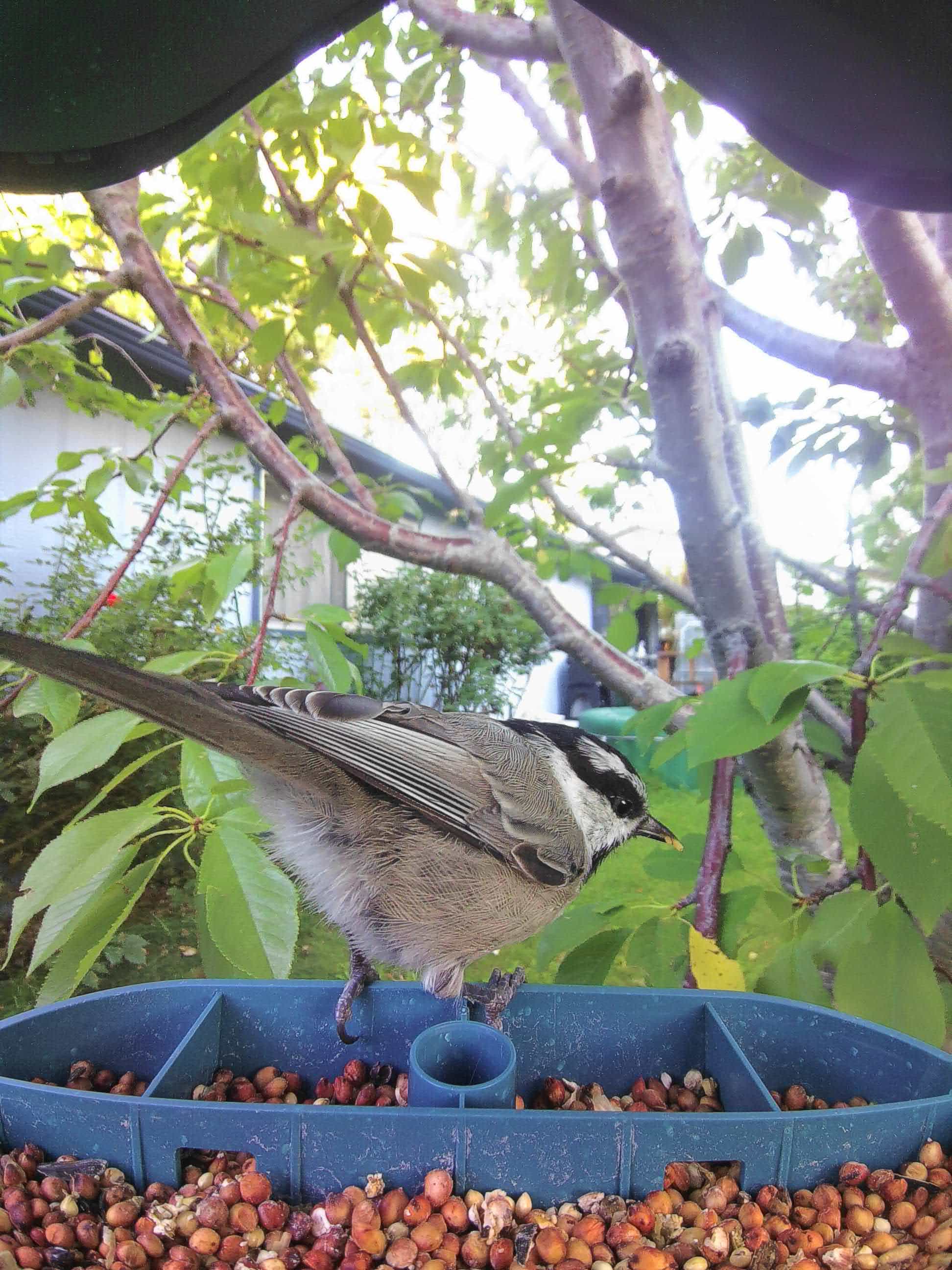


Mountain Chickadee
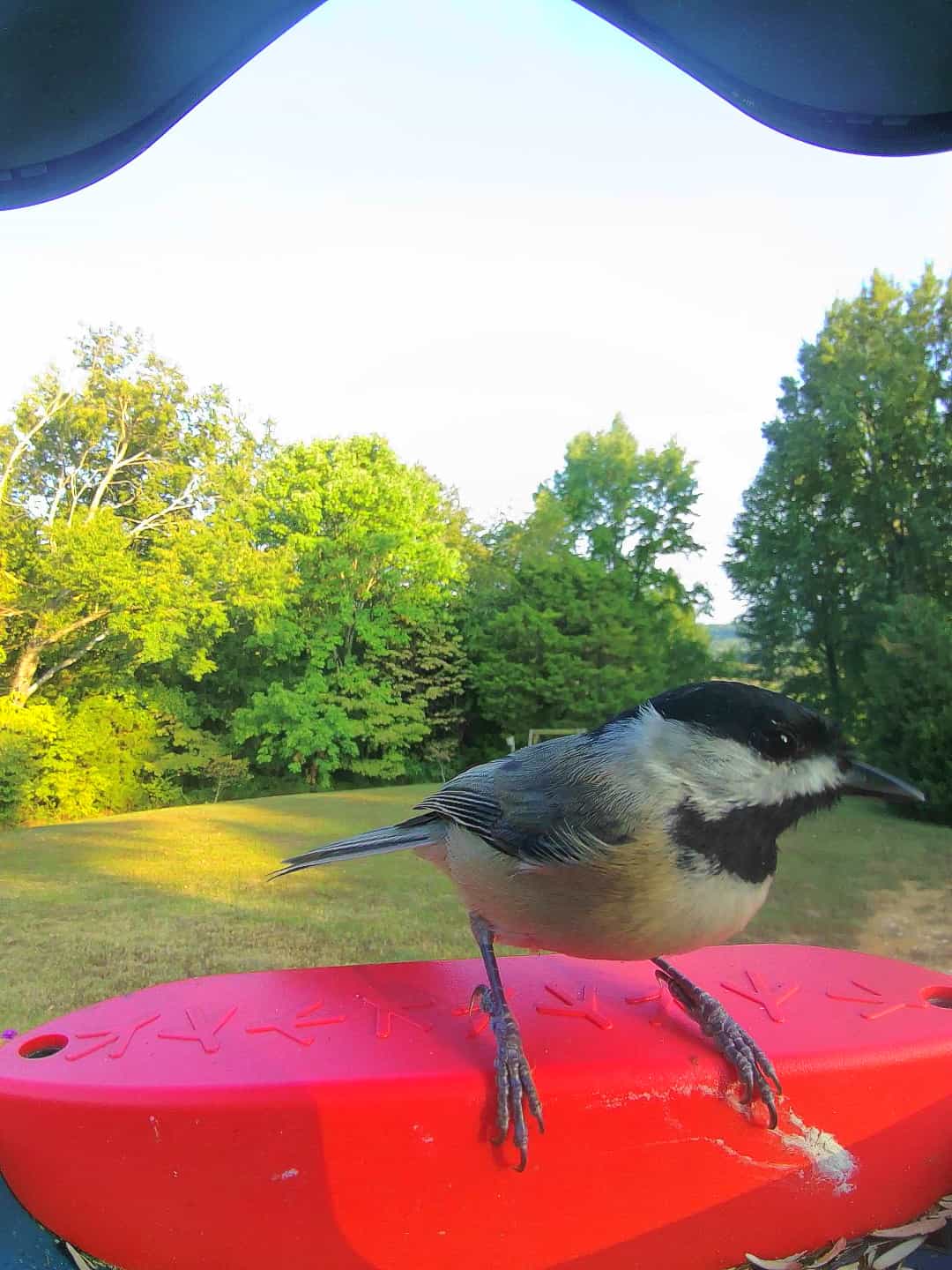


Carolina Chickadee
Mountain Chickadee
Poecile gambeli
General appearance
The mountain chickadee is approximately 5-5 3/4 inches (13-15 cm) long, roughly the size of a sparrow. Its characteristic features include a black cap and bib. A distinctive white eyebrow, which may be broad or narrow, breaks the black cap. Their wings are rounded while the tail shape varies from notched to rounded or square-tipped. They sport the colors of nature: black, gray, and white.
Male vs female
Males and females of the mountain chickadee species are identical in their physical appearance and there are no significant size or color variations between the two. They both sport the same black cap, whites eyebrow, and gray body coloration.
Juvenile
Young mountain chickadees resemble adults, but their plumages may be less vibrant and the distinct white eyebrow may be difficult to make out. Depending on the season, the plumage of all mountain chickadees, including juveniles, may be in worn condition, making the white eyebrow particularly difficult to see.
Size
4.7 - 5.9 in/0.3 - 0.5 oz
There's more to learn about Mountain Chickadee
View full detailsCarolina Chickadee
Poecile carolinensis
General appearance
The Carolina chickadee is a small songbird, about 4.5 to 5 inches long with a wingspan of 6 to 8 inches. Its most distinctive features include a black cap and bib, white cheeks, and a soft gray back. The underparts are mostly pale gray with a slightly buffy hue on the sides. They have short, stout bills and rounded wings. Spotting them in the wild, one can often notice their characteristic calls and acrobatic movements through tree branches.
Male vs female
Males and females of the Carolina chickadee are very similar in appearance, making them difficult to differentiate by plumage alone. Both sexes share the same coloration pattern, lacking distinctive sexual dimorphism. Behavioral observations during the breeding season, such as males being more vocal and active in territory defense, may help distinguish them.
Juvenile
Juvenile Carolina chickadees resemble adults but with duller and less distinct coloration. Their black cap and bib may appear slightly browner, and their overall plumage is softer and fluffier. As they mature, these differences gradually fade, and they develop the crisp contrast seen in adults. Juveniles learn to forage and join mixed-species flocks after fledging.
Size
4.5 - 5.1 in/0.3 - 0.4 oz
There's more to learn about Carolina Chickadee
View full detailsHow to tell the Mountain Chickadee from the Carolina Chickadee
Visual differences
The Mountain Chickadee is slightly larger (5-5.75 inches) than the Carolina Chickadee (4.5-5 inches). Mountain Chickadees have a distinctive white eyebrow breaking their black cap, unlike the Carolina Chickadee's uninterrupted black cap. Both have black caps and bibs, but Carolina Chickadees have softer gray backs and a slightly buffy hue on the sides. Their plumage patterns are similar, with Mountain Chickadees exhibiting sharper contrasts. Both species have rounded wings and short bills, with Mountain Chickadees showing more variability in tail shape.
Key differences and behavior
Mountain Chickadees and Carolina Chickadees differ significantly in behavior and habitat preferences. Mountain Chickadees, found in high-altitude coniferous forests, exhibit acrobatic foraging, such as hanging upside-down. They often wander to lowlands in winter but remain adaptable, visiting feeders for seeds and suet. Carolina Chickadees inhabit mixed and deciduous woods, forming flocks and potentially hybridizing with Black-capped Chickadees. They are adaptable to suburban areas and prefer lower elevations. Both chickades engage in mutual nesting behaviors, though Mountain Chickadees often reuse sites, while Carolina Chickadees may mate for life, forming pairs in fall. Dietarily similar, they both shift from insects in warmer months to seeds in winter, frequently visiting feeders.
Still not sure? Here are more lookalikes!
Mountain Chickadee vs Black-Capped Chickadee
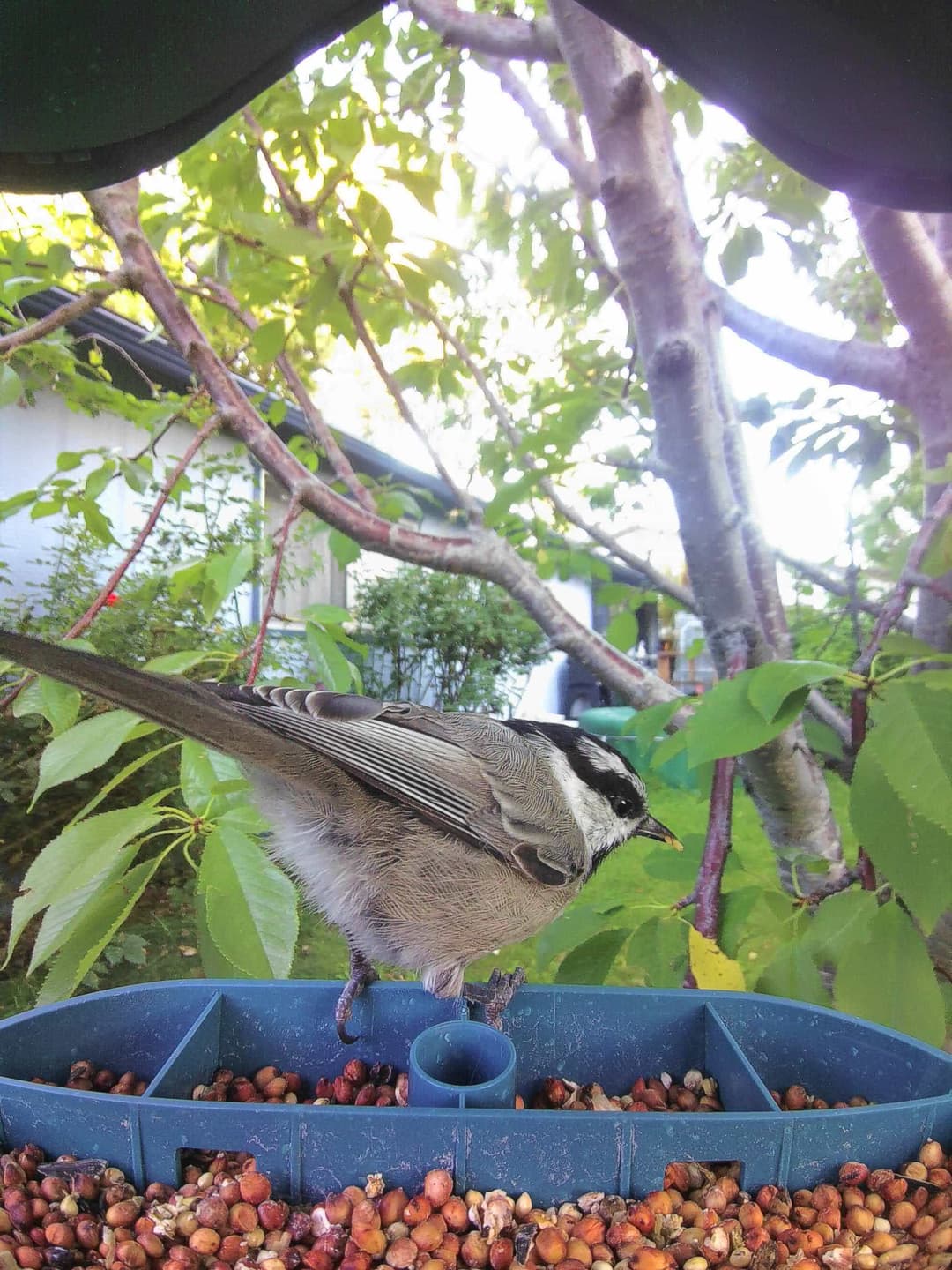
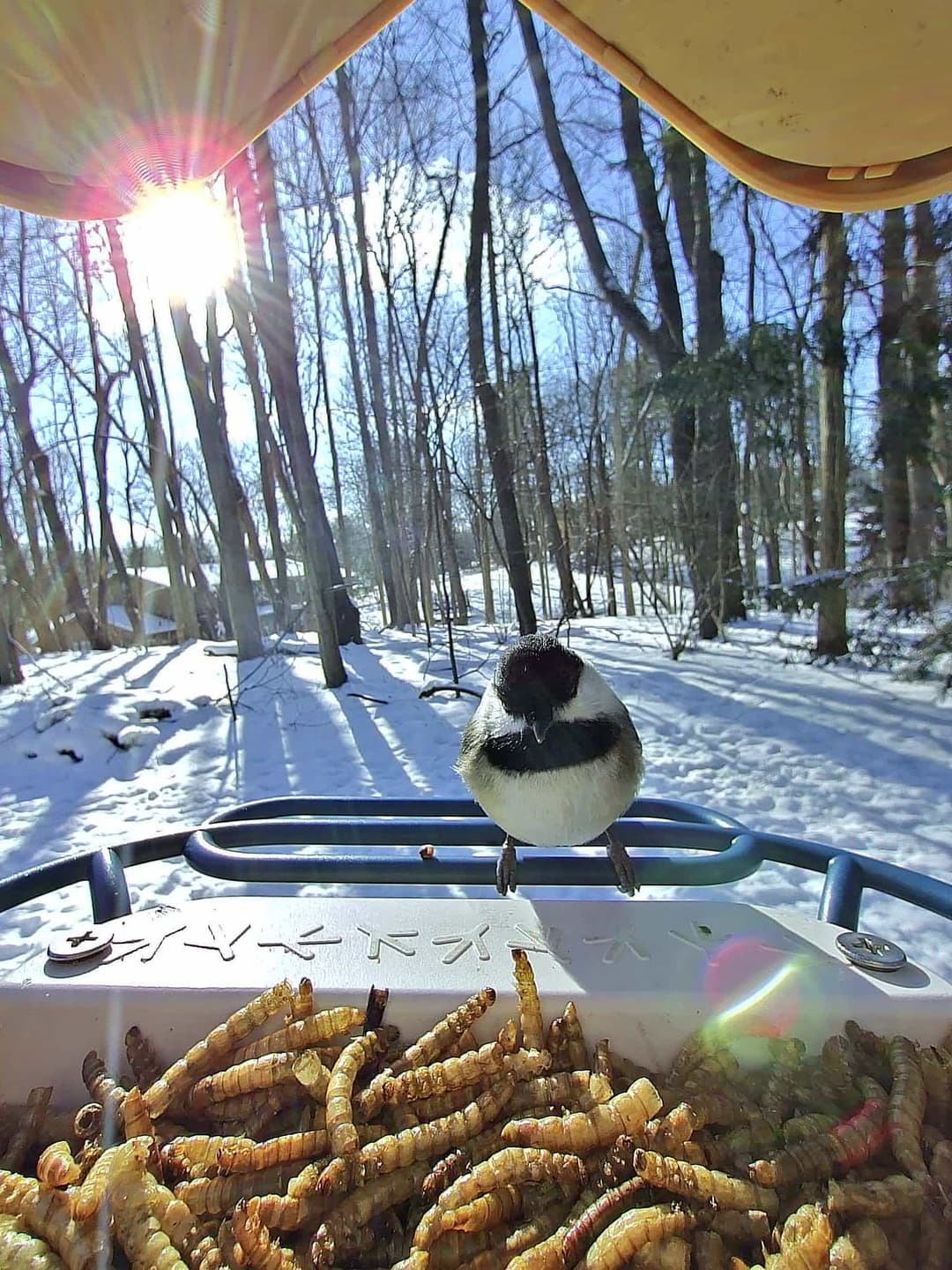
Mountain Chickadee vs Bridled Titmouse

Mountain Chickadee vs Boreal Chickadee
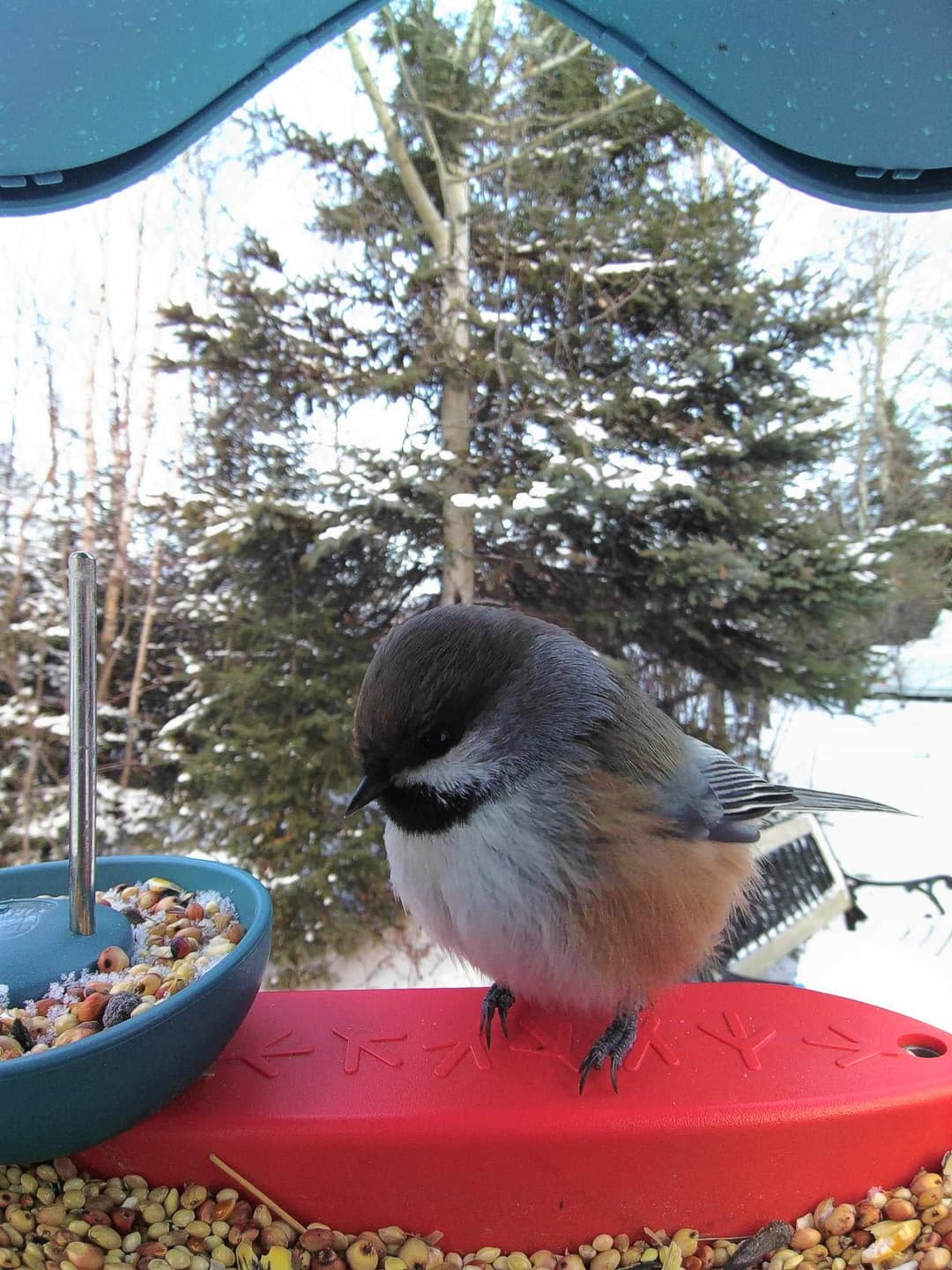
Mountain Chickadee vs Chestnut-Backed Chickadee
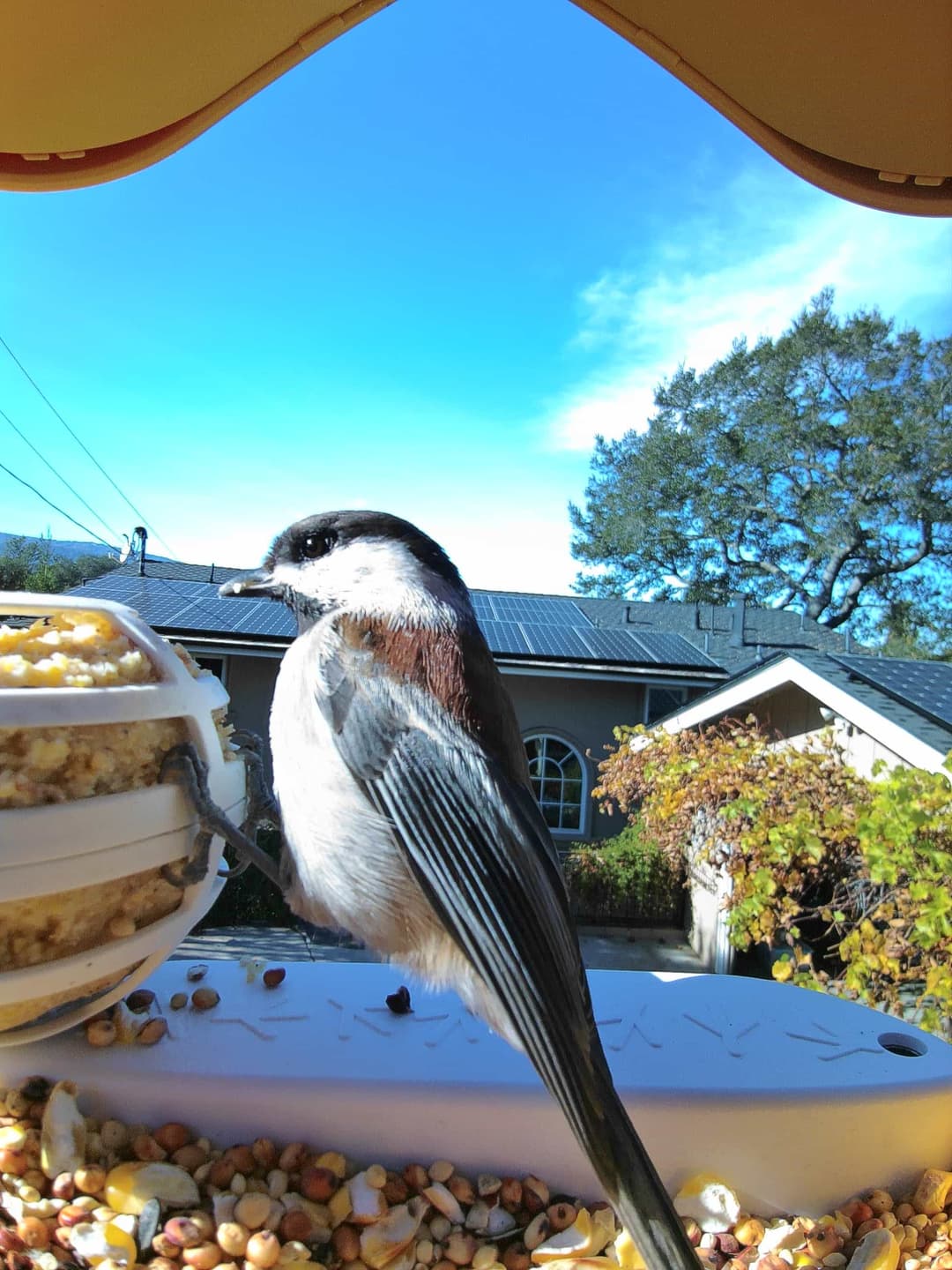
Carolina Chickadee vs Black-Capped Chickadee
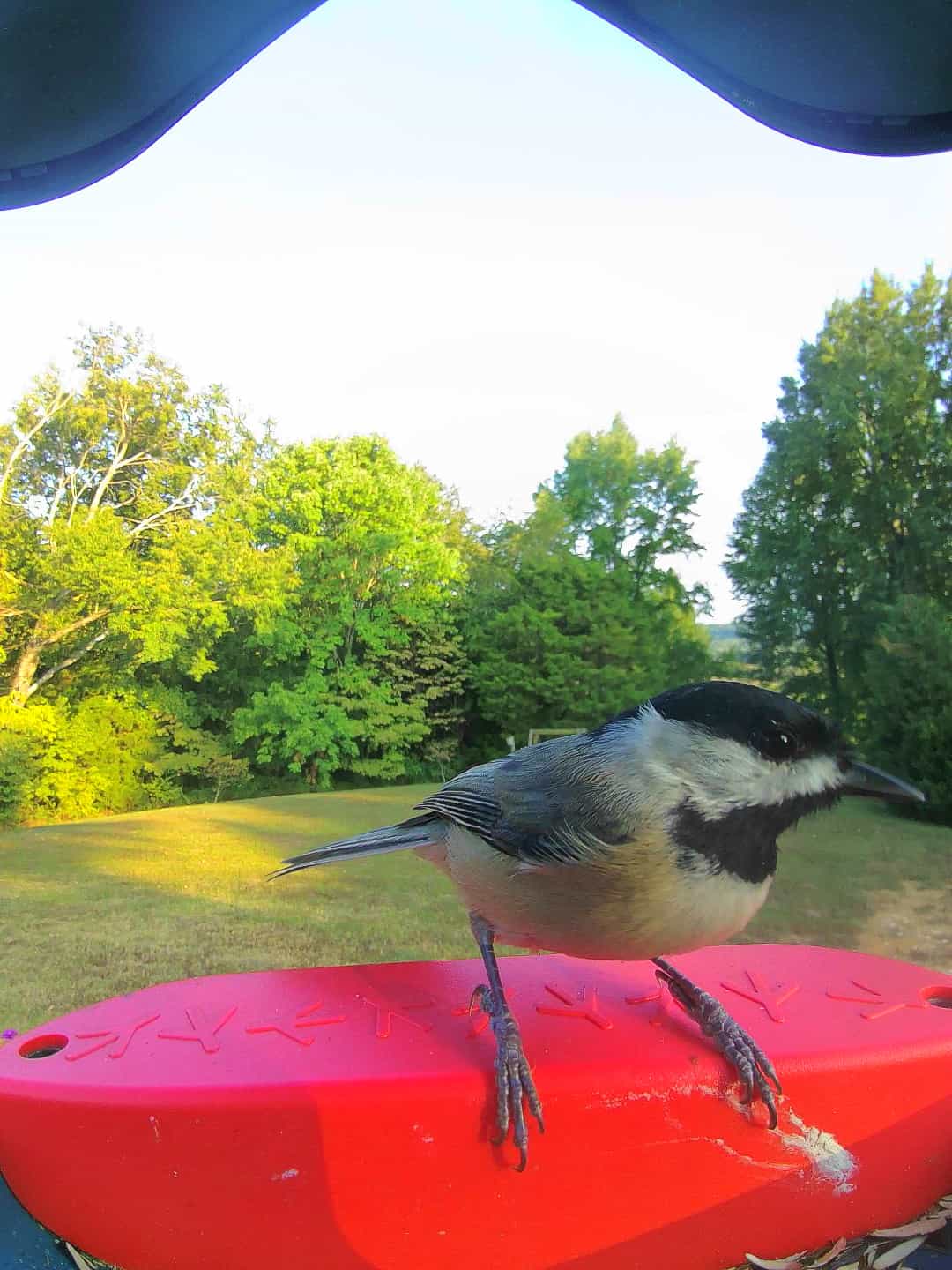
Carolina Chickadee vs White-Breasted Nuthatch
Mountain Chickadee vs [Select a bird]

[Select a bird]
Pick a bird to compare
Carolina Chickadee vs [Select a bird]
[Select a bird]
Pick a bird to compare