Mockingbird or Brown Thrasher?
Here's how to tell the difference


Mockingbird


Brown Thrasher
Mockingbird
Mimus
General appearance
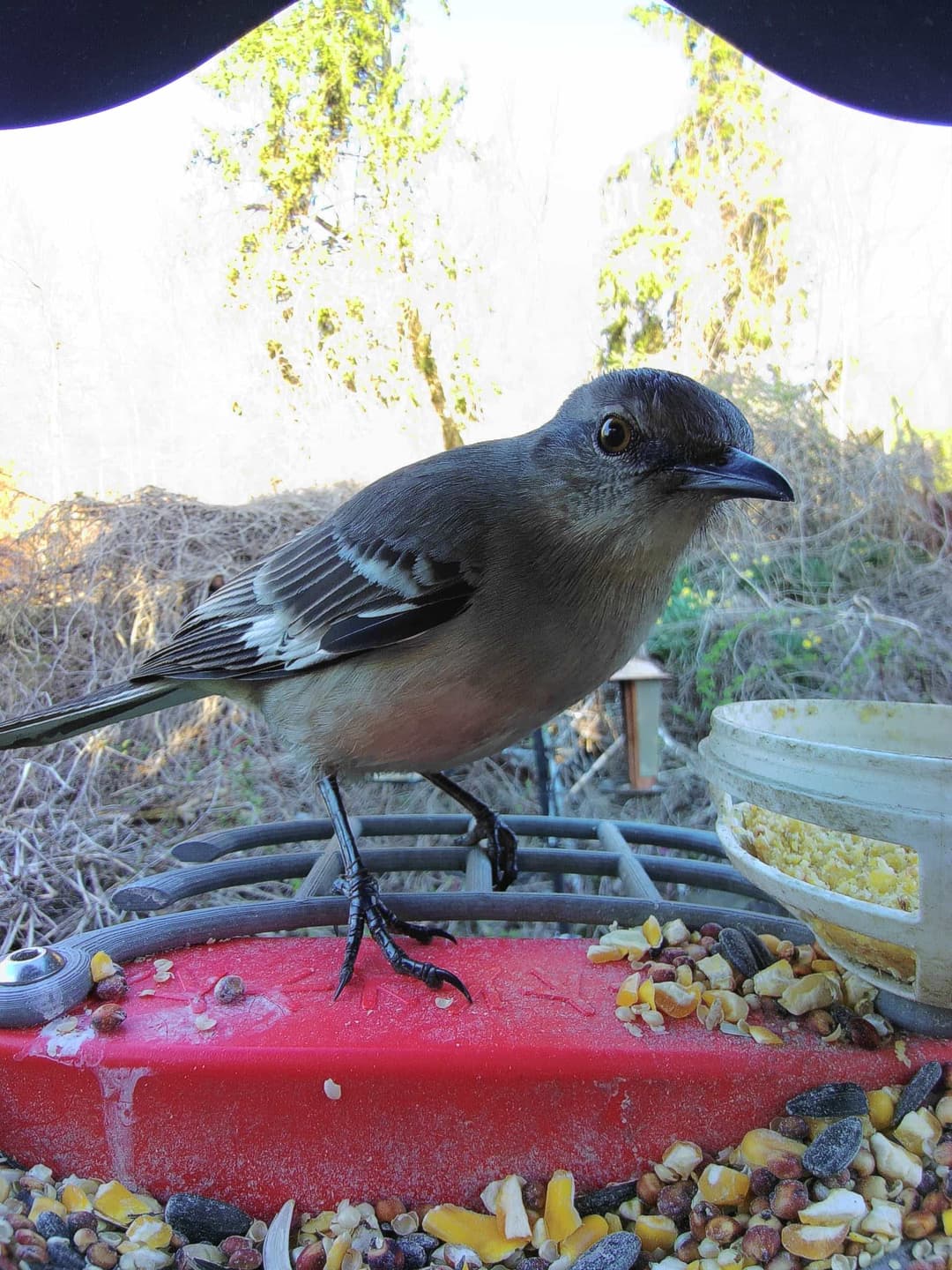
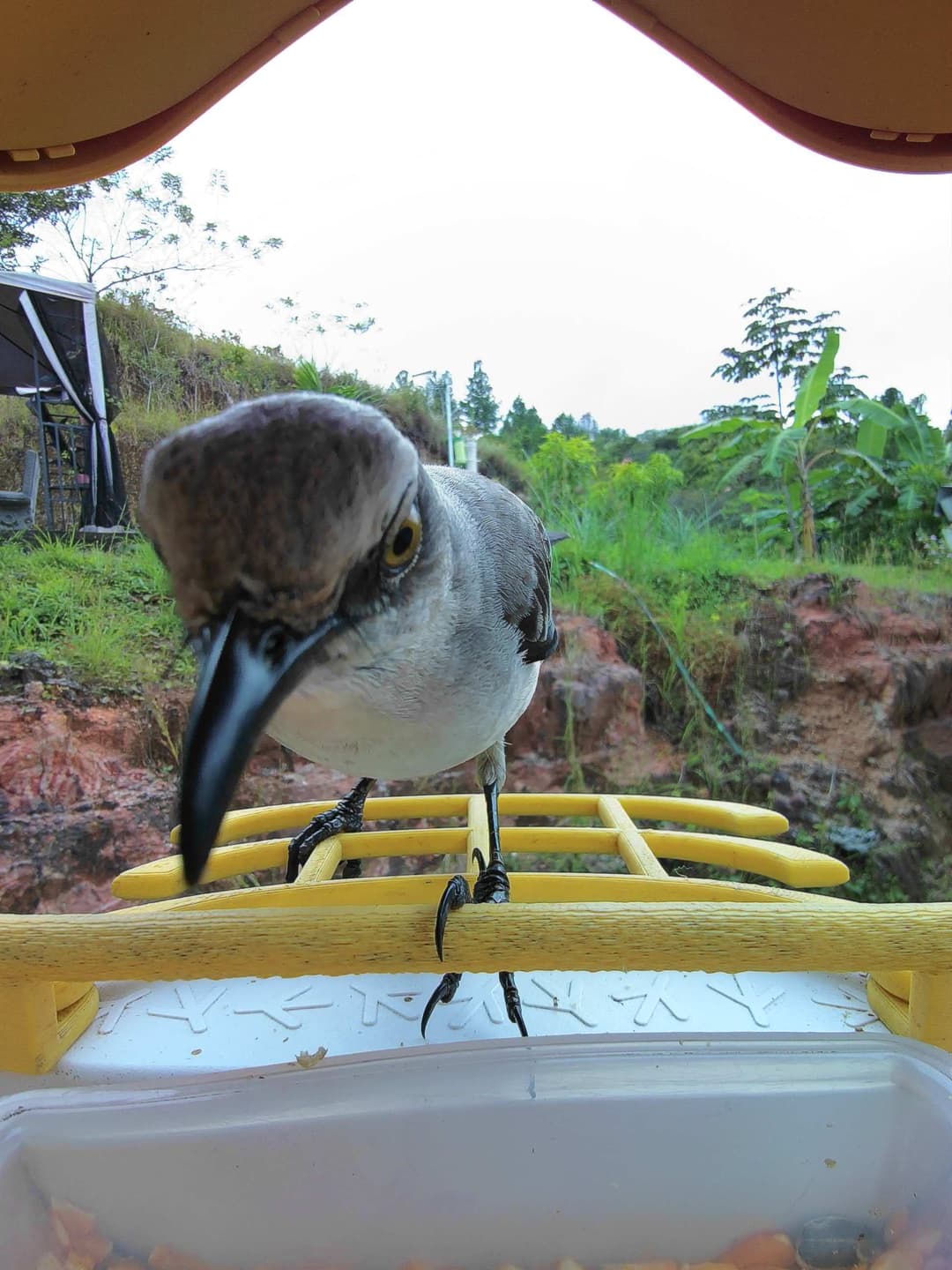
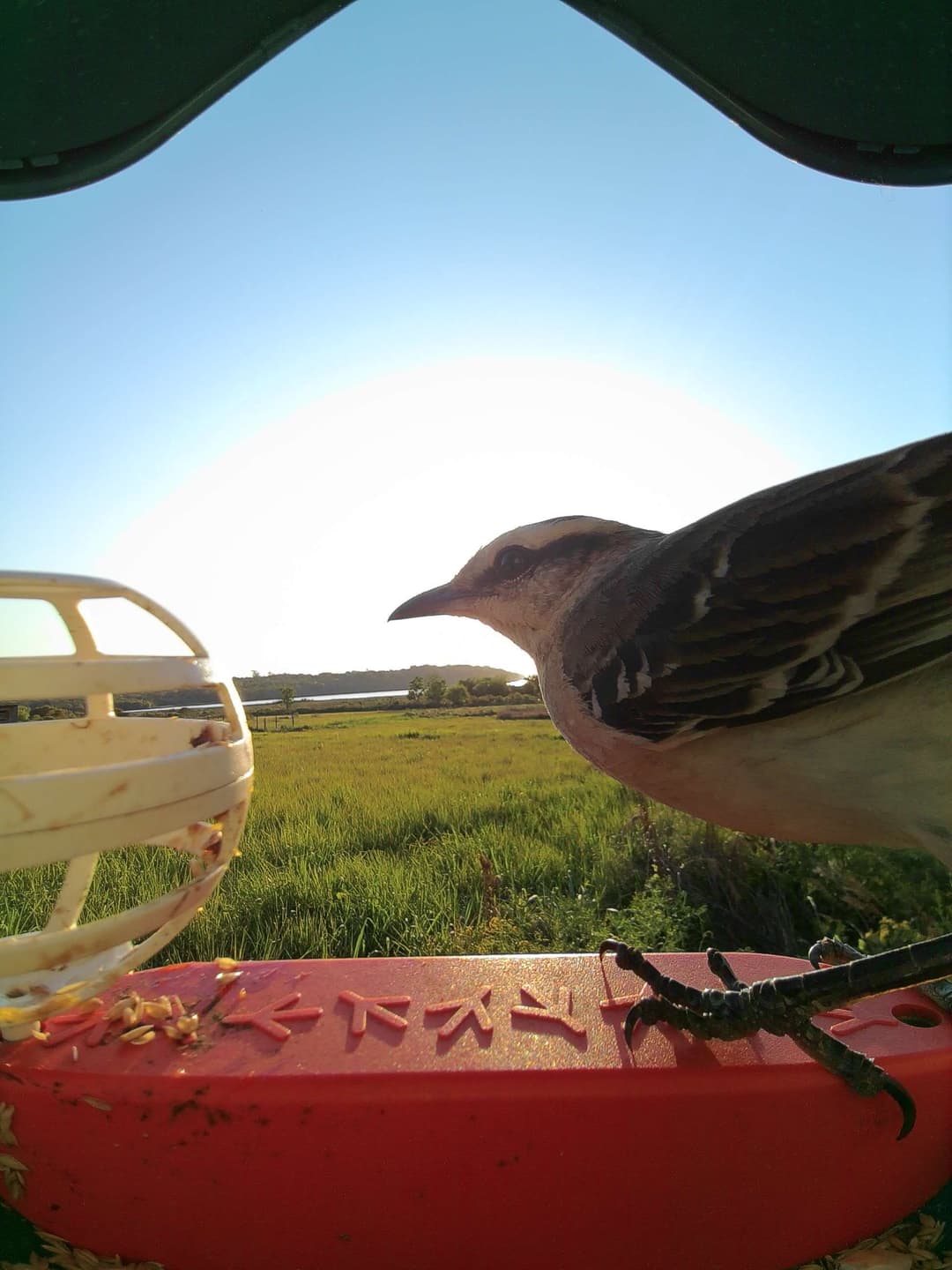
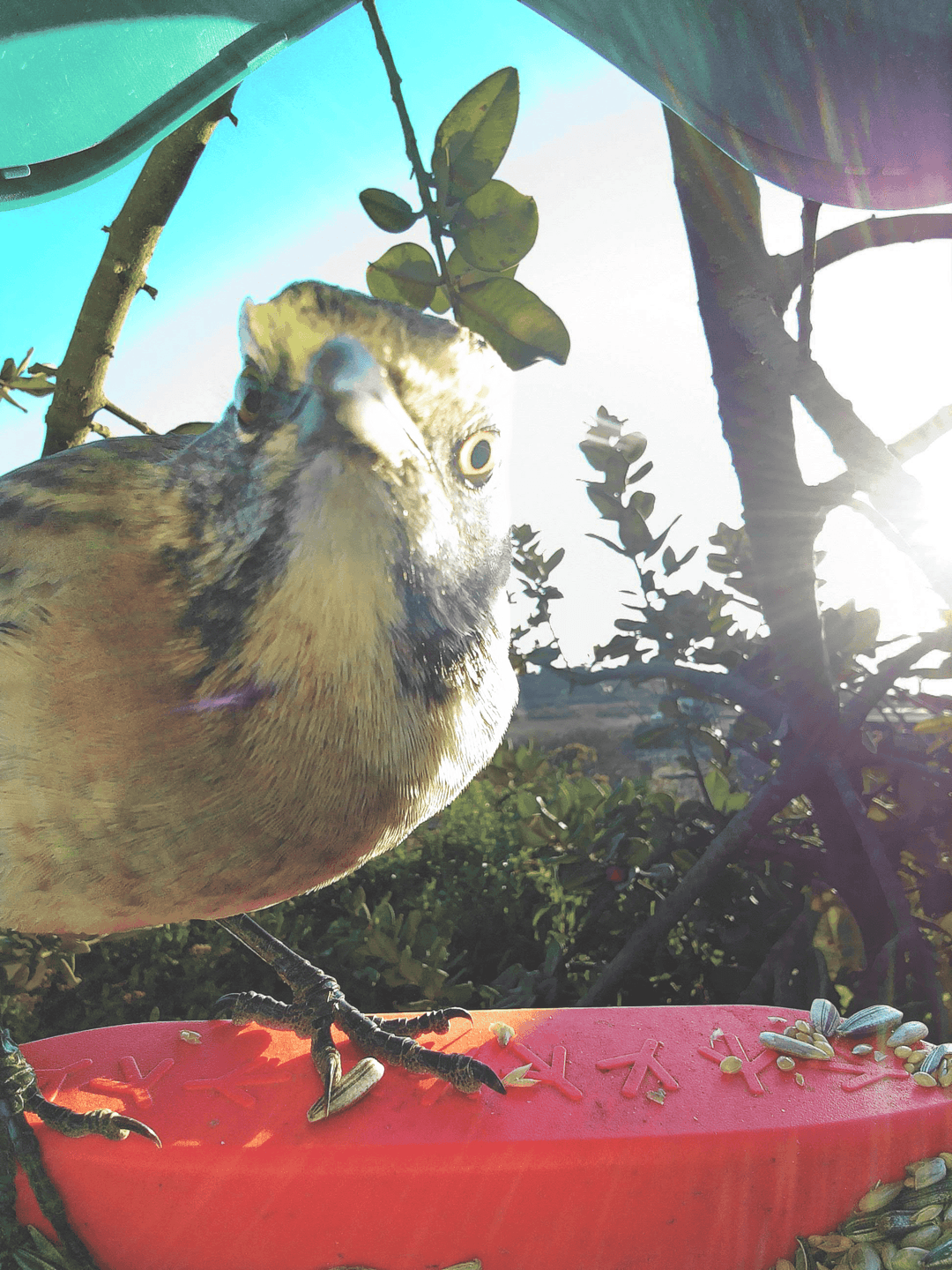
Mockingbirds are medium-sized birds, typically about 10 inches in length. Most notable are their gray coloration and prominent white patches on the wings and tail, visible during flight. Their bills are thin and slightly curved, while their eyes are yellow or orange. They are agile and active, often seen hopping and flitting among branches.
Male vs female
Mockingbirds exhibit limited sexual dimorphism, making males and females difficult to identify based on physical characteristics. Both genders are similar in size and share the similar gray and white coloration. However, males tend to be slightly larger and may have slightly brighter eye color. Male Mockingbirds are also more vocal than females, often heard mimicking a variety of sounds.
Juvenile
Juvenile Mockingbirds have similar coloration to adults, but they may appear duller, with a mottled or streaky appearance due to their immature feathers. Their eyes are typically darker than adults, often brown rather than the yellows or oranges seen in mature birds. Juveniles may also have a lighter or pinkish bill compared to the darker bills of adults.
Size
7.9 - 11.4 in/1.4 - 2.6 oz
There's more to learn about Mockingbird
View full detailsBrown Thrasher
Toxostoma rufum
Also known as: Brown Thrush
General appearance
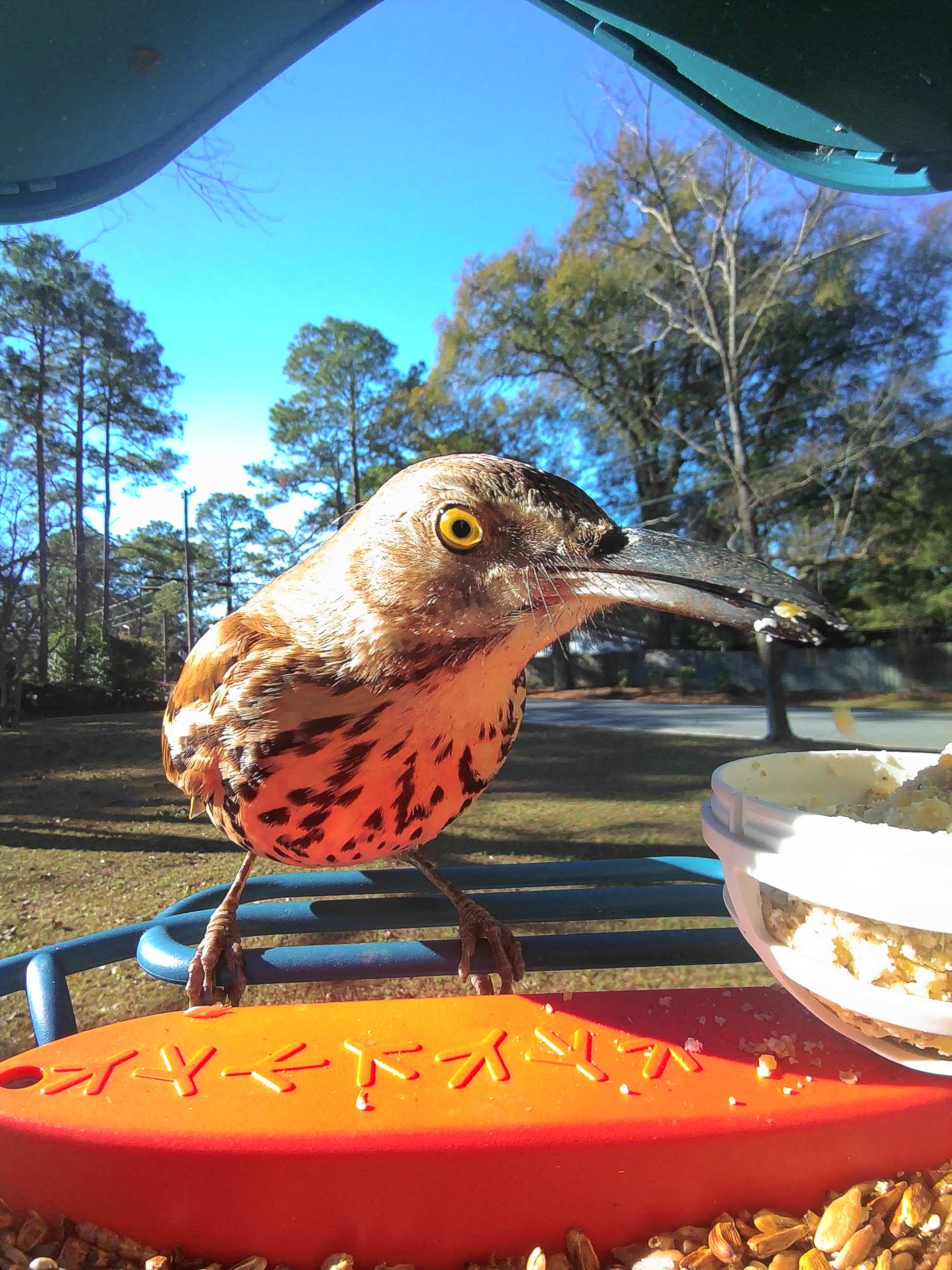
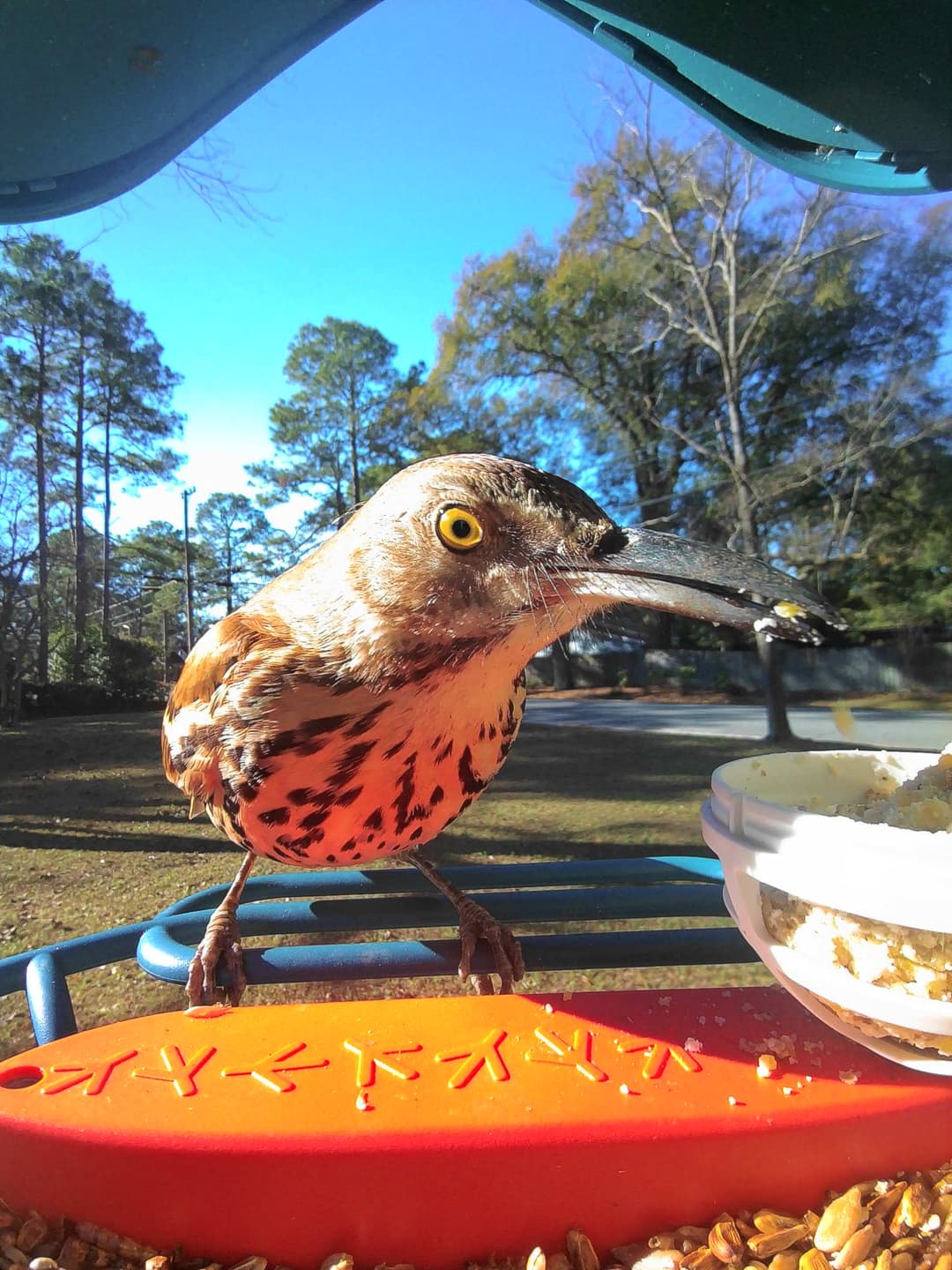
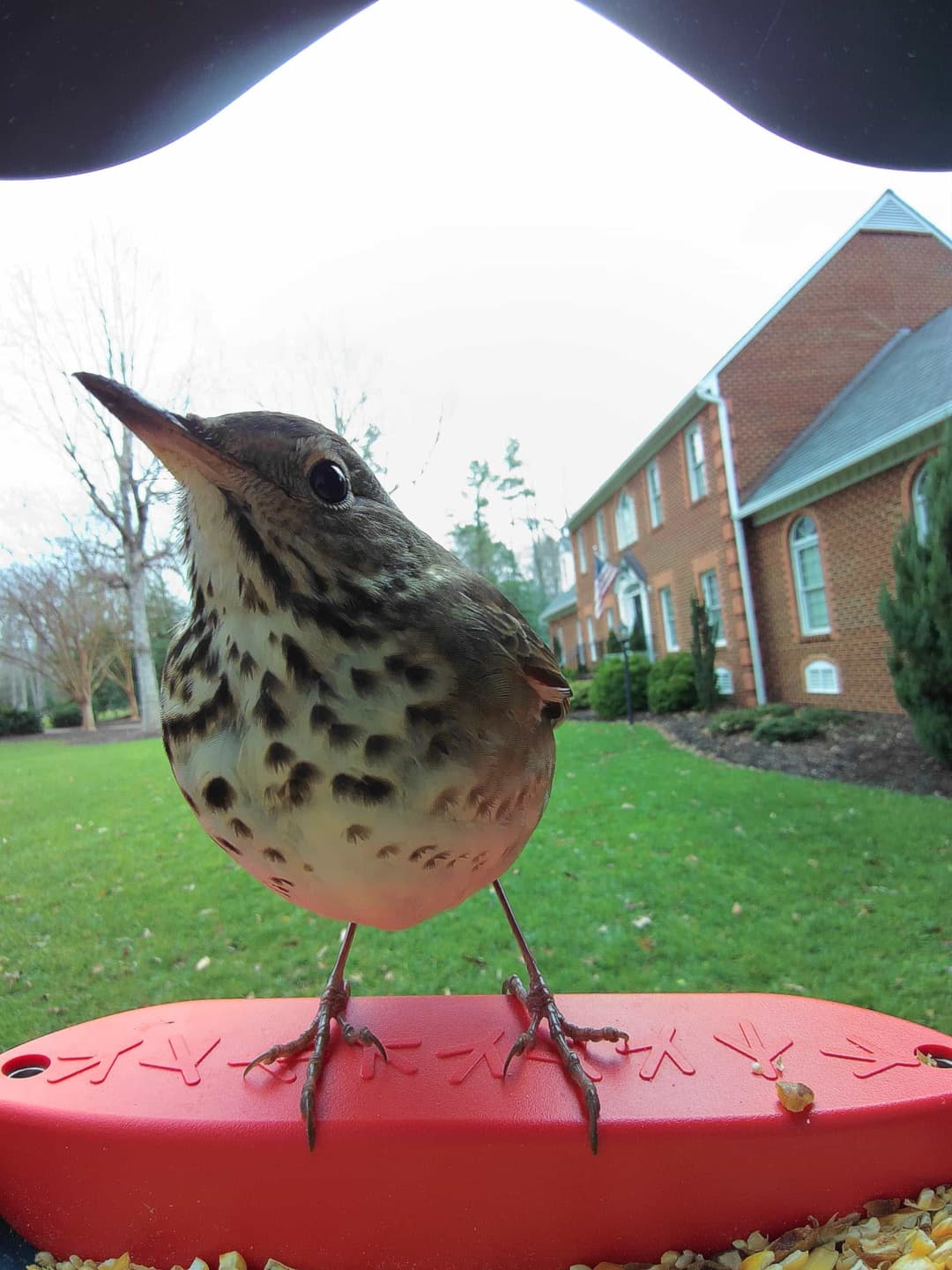
The Brown Thrasher is an approximately 11 1/2 inch (29 cm) bird, with a rufous-brown color above and a striped pattern below. It is notable for its long tail, yellow eyes, and a size comparative to a crow or robin. Its wings are broadly shaped with a long, rounded, wedge-shaped tail.
Male vs female
In the Brown Thrasher species, sexual dimorphism is not significant. Both males and females share similar physical traits and coloration, making it a challenge to differentiate them visually. They are both rufous-brown above and have black stripes.
Juvenile
As with many bird species, juvenile Brown Thrashers are similar to adults but have some differences. They may have a more muted or less defined coloration and patterning compared to adults, but they will develop the distinct adult plumage as they mature.
Size
9.3 - 12.0 in/2.2 - 3.1 oz
There's more to learn about Brown Thrasher
View full detailsHow to tell the Mockingbird from the Brown Thrasher
Visual differences
Mockingbirds are about 10 inches in length and gray with white wing and tail patches. They have thin, slightly curved bills and yellow or orange eyes. Brown Thrashers are approximately 11.5 inches long, with rufous-brown upperparts, black stripes below, and yellow eyes. They have long, wedge-shaped tails. Mockingbirds' overall coloration is more uniform compared to the patterned Brown Thrashers. The Brown Thrasher's coloration and heavier weight (up to 3.14 oz) compared to the Mockingbird's lighter build (up to 2.57 oz) are key distinctions.
Key differences and behavior
Mockingbirds and Brown Thrashers, both skilled mimics, differ notably in behavior and habitat. Mockingbirds (10 inches long) are agile and active, often seen in open grasslands and urban areas, where they sing and mimic sounds extensively. Their courtship involves elaborate song displays and building nests in urban shrubs. Diet-wise, they are omnivorous, eating insects, fruits, and berries, and they frequent bird feeders for suet and fruits. In contrast, the slightly larger Brown Thrasher (11.5 inches) is territorial and aggressive, thrashing the ground for food in dense thickets and shrubs. During courtship, they sing loudly, building nests in dense vegetation. Their varied diet includes insects, small fruits, and nuts, with less frequent visits to feeders. While both species share vocal mimicry, mockingbirds are more urban-adapted and active at feeders, whereas brown thrashers prefer dense, quieter habitats.
Still not sure? Here are more lookalikes!
Mockingbird vs Gray Catbird
Brown Thrasher vs Long-Billed Thrasher

Brown Thrasher vs Wood Thrush
Mockingbird vs [Select a bird]

[Select a bird]
Pick a bird to compare
Brown Thrasher vs [Select a bird]
[Select a bird]
Pick a bird to compare