
Brown Thrasher
Brown Thrasher
Also known as: Brown Thrush
Toxostoma rufum


Quick Identification guide
Quick Identification guide
- •
Distinguished by its rich brown upperparts and heavily streaked white underparts, providing excellent camouflage in leaf litter
- •
Features a slender, slightly downcurved bill that aids in foraging
- •
Possesses yellow eyes and long legs, which support its large, thrush-like body and long tail
What does a brown thrasher sound like?
The Brown Thrasher produces a mixture of complex musical phrases, each typically repeated twice. Its vocalizations include sharp smacks named PatternComplex and diverge into Falling, Rising, and Undulating calls. The bird's versatile call types encompass a range of sounds from chirps and chips to flutes, trills, and whistles. Its songs showcase ranges, pitch shifts, and various rhythmic patterns, making it a unique songbird.


Description
Male brown thrashers can sing more songs than any other North American bird, over 1,100! They are proper little divas and can get extremely aggressive and protective of their territory. They are called thrashers because they find food by thrashing their bills on the ground in search of food. They are the state bird of Georgia.
The brown thrasher can weigh between 61to89grams and be from23.5to30.5centimeters tall.
The Brown Thrasher typically lives up to 12 years. This is roughly average for thrashers, but longer than many smaller songbirds. For instance, the related Gray Catbird usually lives up to 7 years. However, larger thrashers like the Coopers Hawk can live over 20 years. Therefore, the Brown Thrasher presents an intermediate lifespan within related species.
Did you know?
Most popular questions about brown thrasher
How to recognise a brown thrasher?
General appearance
The Brown Thrasher is an approximately 11 1/2 inch (29 cm) bird, with a rufous-brown color above and a striped pattern below. It is notable for its long tail, yellow eyes, and a size comparative to a crow or robin. Its wings are broadly shaped with a long, rounded, wedge-shaped tail.
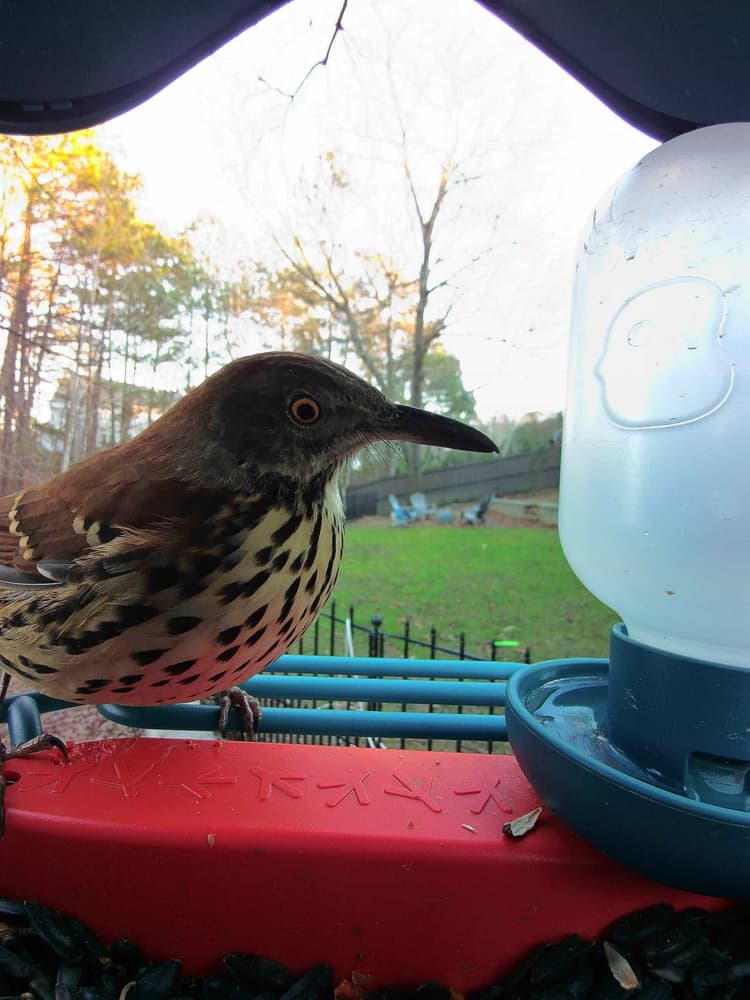
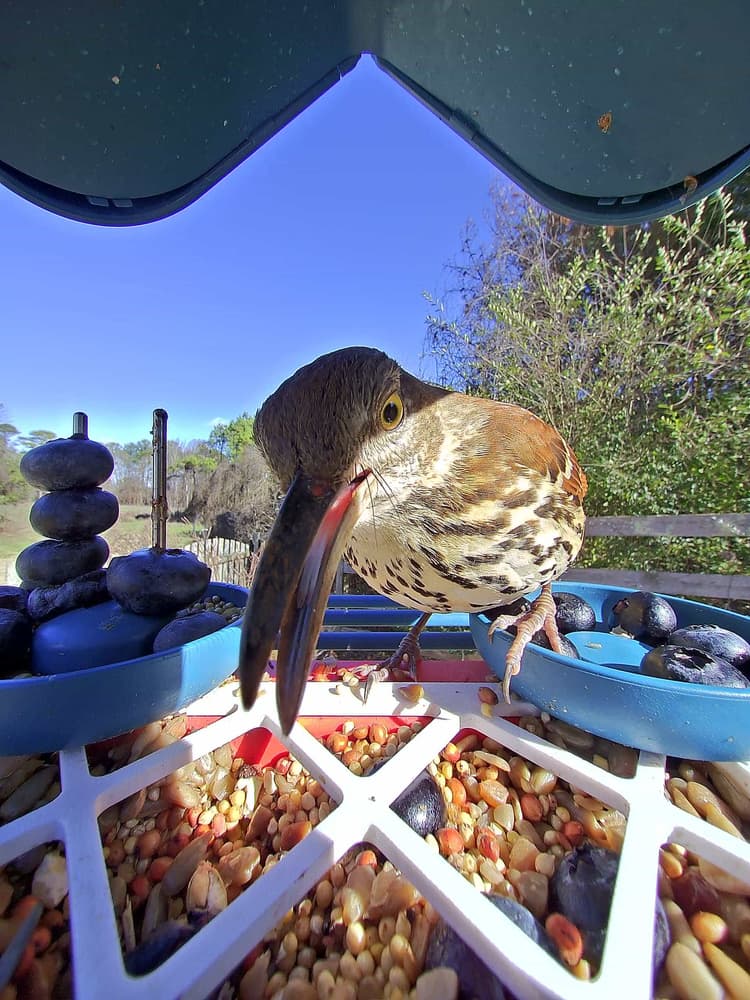
Male vs female
In the Brown Thrasher species, sexual dimorphism is not significant. Both males and females share similar physical traits and coloration, making it a challenge to differentiate them visually. They are both rufous-brown above and have black stripes.
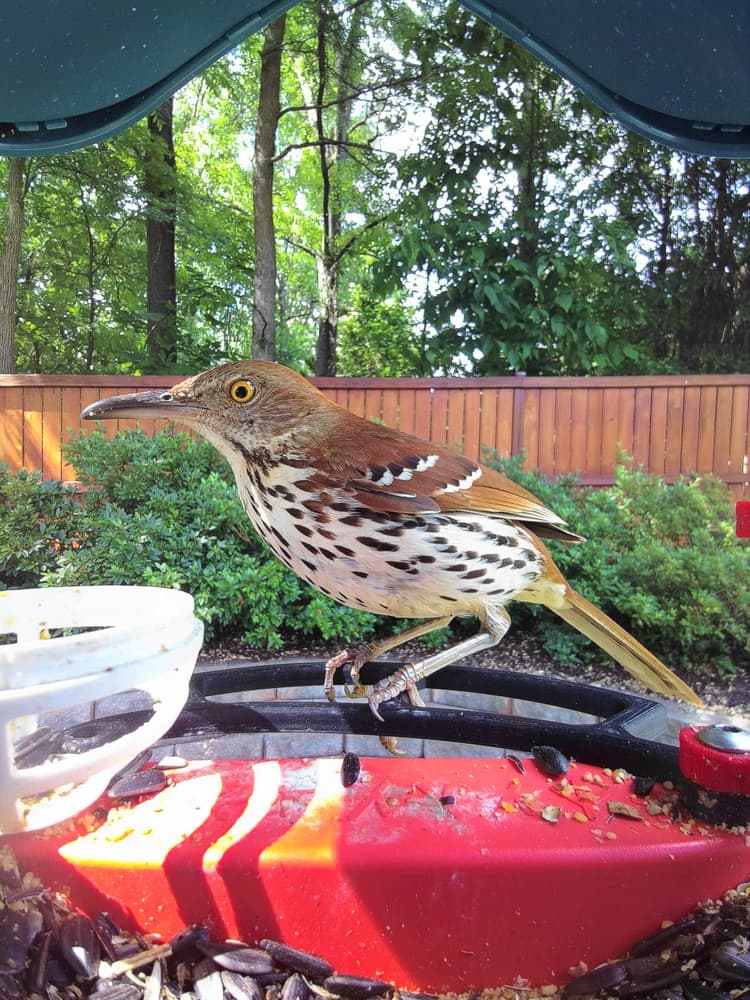
Male Brown Thrasher
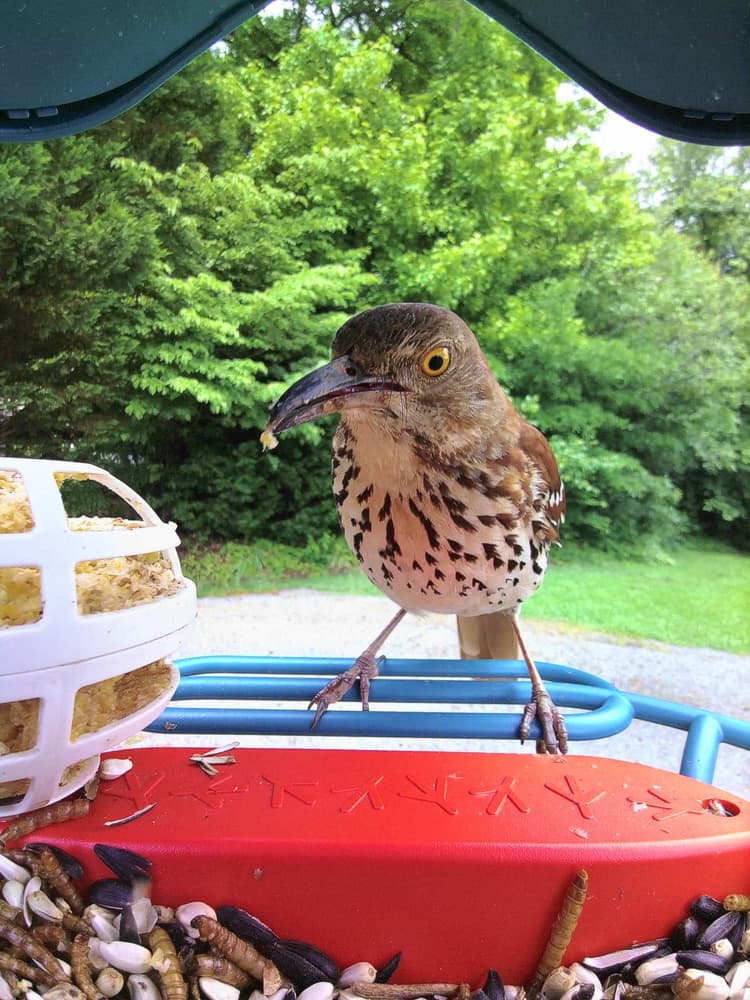
Female Brown Thrasher
Juvenile
As with many bird species, juvenile Brown Thrashers are similar to adults but have some differences. They may have a more muted or less defined coloration and patterning compared to adults, but they will develop the distinct adult plumage as they mature.
Often mistaken for
Long-Billed Thrasher vs Brown Thrasher
Brown Thrasher has a slightly sleeker body and a distinctly longer tail compared to the Long-Billed Thrasher. While both have similar brown coloration, the Brown Thrasher features more prominent streaks on its chest and a brighter rufous color on its upper parts. Their bill is also slightly shorter than that of the Long-Billed Thrasher.

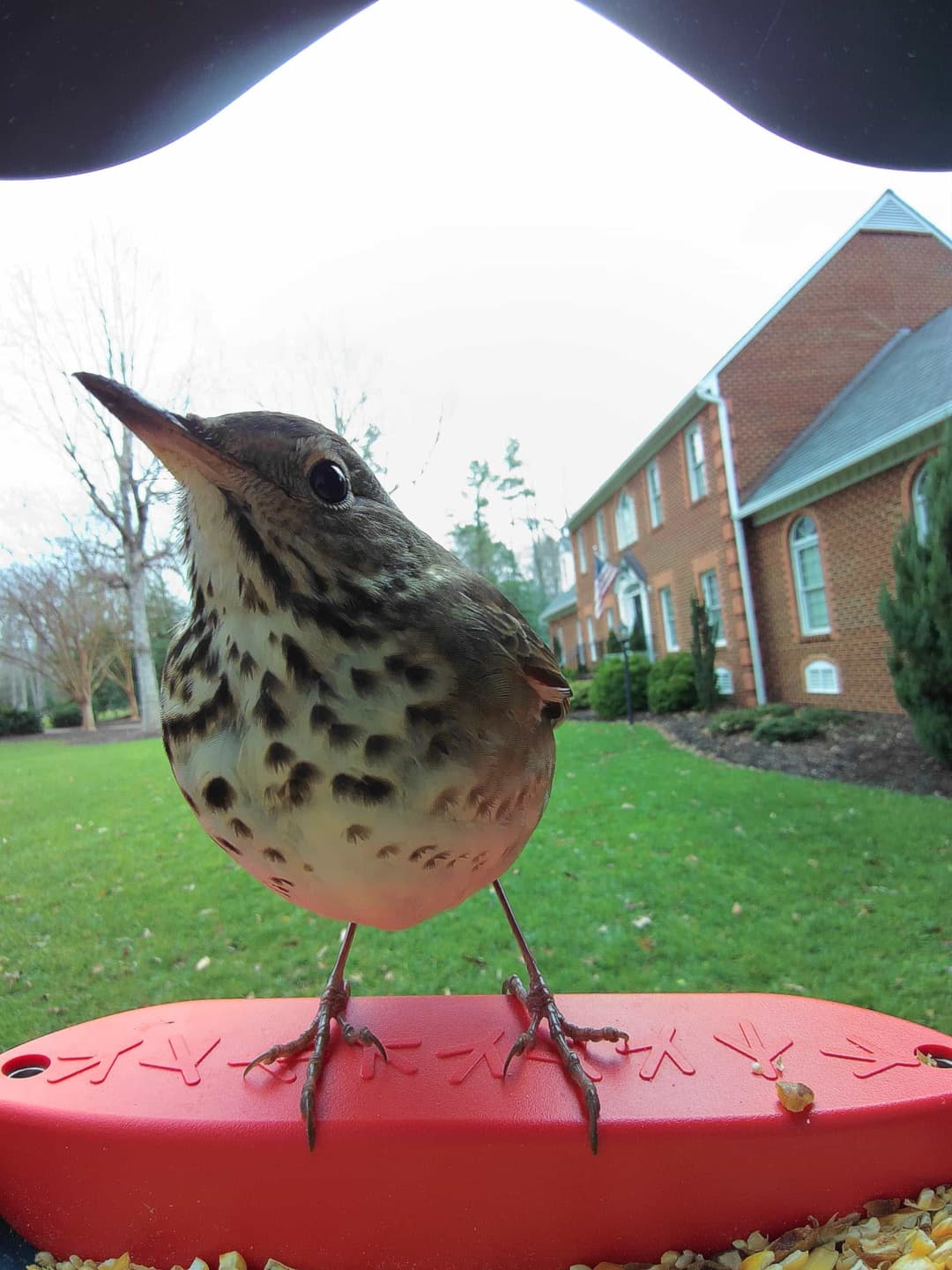
Wood Thrush vs Brown Thrasher
The Brown Thrasher is larger with a longer tail and a more elongated body shape than the Wood Thrush. While both have spotting on their underparts, the Brown Thrasher's spots are more elongated and streak-like. The Brown Thrasher is a richer reddish-brown, while the Wood Thrush has a warmer brown coloration with a distinctly different face pattern.
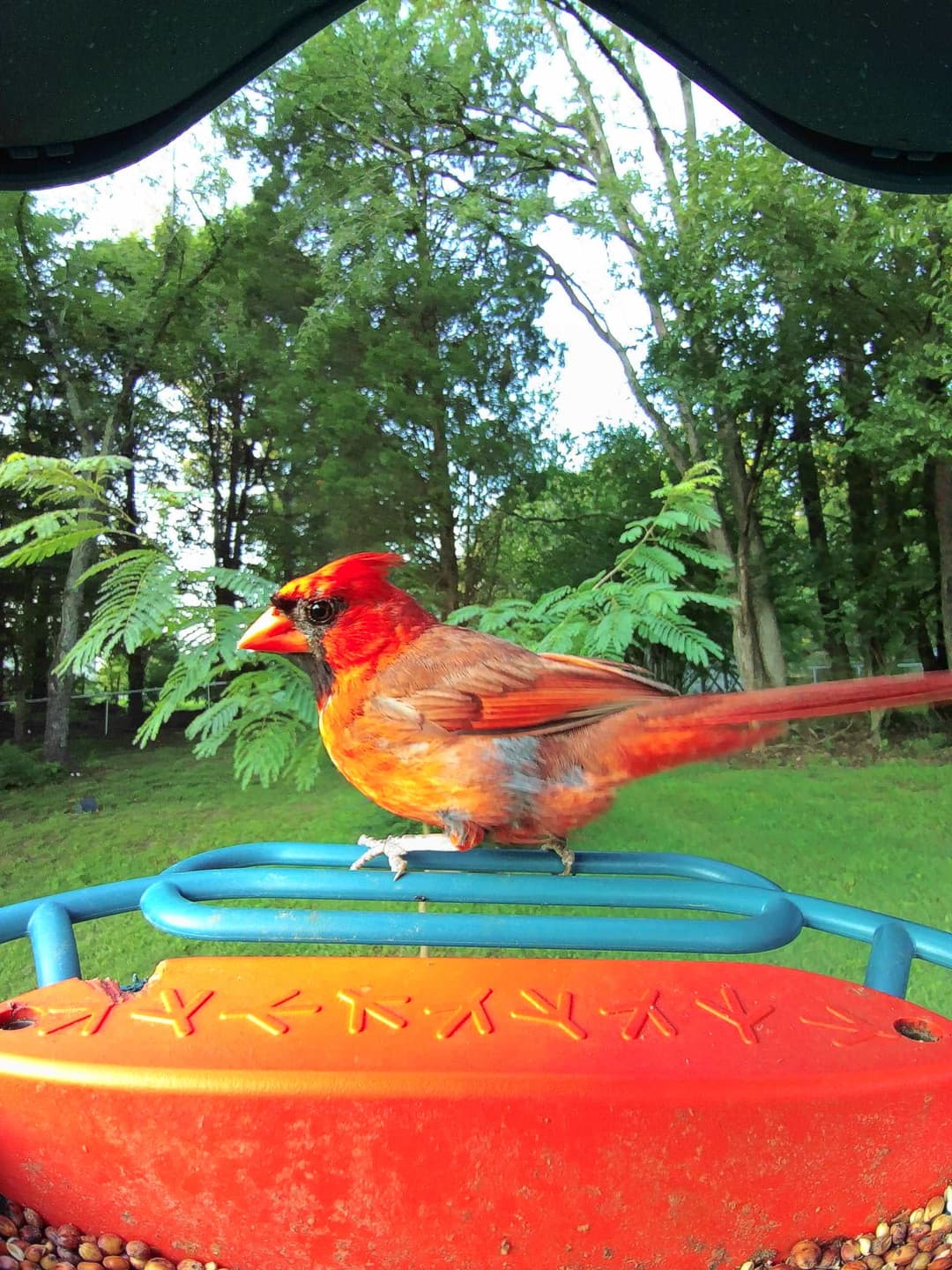
Northern Cardinal vs Brown Thrasher
Brown Thrasher differs from the Northern Cardinal with its strikingly streaked chest and rich, warm brown upperparts. Unlike the vibrant red plumage of the Cardinal, the Brown Thrasher has a more subdued, rusty color. Also, the Brown Thrasher has a longer tail and a unique, slightly decurved bill, compared to the Cardinal's strong and conical red bill.
Breeding and nesting habits of the brown thrasher
Mating behaviors
Male brown thrashers defend their territory by singing loudly from prominent perches. During courtship, the male approaches the female while singing softly. Both birds may engage in the behavior of picking up and presenting leaves or sticks to one another.
Nesting details
Nests are usually placed 2-7 feet above the ground in dense shrubs, vine tangles, or low trees, though occasionally on the ground under dense cover or up to 12 feet high. Both sexes build the nest, which is a bulky structure with a foundation of sticks supporting a loose cup of twigs, leaves, weeds, grass, and bark fibers, and lined with finer materials like grass or rootlets.
Eggs and chick-rearing
Brown thrashers typically lay 3-5 eggs per clutch. Both parents share responsibilities in incubating the eggs and feeding the chicks after hatching. To attract nesting brown thrashers, consider planting dense shrubs and keeping areas of the garden undergrowth untamed to provide ideal nesting sites.
What does a brown thrasher like to eat?
Berries
Fruits
Insects
Nuts
Seeds
Small animals
Snails
Spiders
Natural diet
The brown thrasher's diet is varied, with a significant portion consisting of insects, including beetles, caterpillars, true bugs, grasshoppers, and cicadas. It also consumes spiders, sowbugs, earthworms, snails, crayfish, and occasionally lizards and frogs. In addition to its animal-based diet, berries and small fruits are important, especially in the fall and winter. It also eats many nuts and seeds, with a particular fondness for acorns.
Bird feeders
The brown thrasher may visit bird feeders, although it is not a primary feeder visitor. When it does, it is likely to be attracted to fruit, seeds, and nuts offered in the feeders. Providing a variety of such foods might entice the brown thrasher to visit those locations.
Attract brown thrasher with ideal snacks
Brown Thrashers enjoy a variety of fruits, berries, and nuts. Apples, oranges, and grapes can attract them to your yard. Peanuts and sunflower seeds, ideally those from Bird Buddy (chosen by experts for the season), are also favourites. Scatter them in open areas to attract these songbirds.
Choose the best feeder for brown thrashers
Brown Thrashers are ground feeders. Hence, platform feeders or simply scattering seeds on the ground work best. But remember to place the feeders in quiet, low-traffic areas. A low hanging bird bath could also work wonders as Brown Thrashers enjoy water.
Encourage thrasher visits with specially designed habitat
Brown Thrashers love thickets and dense brush which provides them cover and a space to build nests. Plant native shrubs and small trees around your yard to make it more appealing. Also, try to keep cats and other predators away from your yard to make it a safe haven for these birds. You will be rewarded with their unique two-part song!
Where can you find brown thrashers?

Primary habitat
The brown thrasher typically inhabits areas with dense low growth like thickets, shrubbery and brush around the edges of deciduous or mixed woods, swamps, and open pine woods.
Additional range
It also occupies suburban areas with many shrubs and hedges in addition to similar habitats during the winter, which may include environments with dense brush.
Do they migrate?
The brown thrasher's migratory behavior varies depending on geographic location. In the southern parts of its range, it tends to be a permanent resident, meaning these birds generally stay in one place throughout the year. In contrast, populations in the northern parts of the range are mostly migratory. The migration of these northern birds typically involves moving southward for the winter. Where exactly the birds migrate can vary, but they generally head to regions in the southeastern United States. During migration, some may choose to remain in the northern most parts if sufficient food sources like feeders or dense thickets with berries are available. Additionally, individual strays can appear well west of their typical range during fall, winter, and spring, indicating some irregularity in their migratory patterns. Overall, the primary migration route for the brown thrasher is a north-to-south movement in the fall, with a return north in the spring. Key locations include the southeastern United States, where plenty of food is available during the winter months. Timing for this movement usually aligns with the cooling temperatures and changing food availability in fall and spring.
What is the role of brown thrashers in nature and how to protect them?
Conservation status
The brown thrasher is common and widespread in most areas, though it faces declining numbers in some regions. While not currently considered vulnerable or endangered, ongoing monitoring is essential. Key threats include habitat loss due to urbanization and agricultural expansion. Conservation efforts focus on preserving natural habitats and promoting environmental awareness. Maintaining green spaces and supporting reforestation are crucial to ensuring the long-term stability of the species' populations. Overall, while the brown thrasher is not at immediate risk, continued conservation efforts are necessary to address localized declines.
Ecological role of brown thrashers
Its role in the ecosystem
The Brown Thrasher contributes significantly to the ecosystem in a couple of ways. Primarily, its diet of insects, including beetles, caterpillars, bugs, grasshoppers, cicadas, and others, makes them beneficial for pest control. Consuming a vast variety of insects helps maintain a balance in the insect population and reduces the risks of pest-related damages to plants and crops. Additionally, the Brown Thrasher also feeds on berries, nuts, and small fruits. The feeding habit contributes to the dispersal of seeds, thus assisting in the propagation of various plant species. Nestlings are also nurtured by both parents, which helps in maintaining their population, thus ensuring their continual presence in the ecosystem. Occasionally, this bird's diet extends to lizards and frogs, indicating a role in the broader food web. Also, by nesting in shrubs, vines, and low trees, they aid the growth of these plants by providing necessary nutrients to the soil through their droppings.
How to help protect brown thrashers
Preservation tips
Habitat preservation strategies
Preserve or recreate the brown thrasher's primary habitats such as thickets, brush piles, and hedgerows in urban and rural areas. Promote organic farming and less intensive agriculture to reduce the loss of insects that they feed on. Implement controlled burns to maintain their preferred habitats, as brown thrashers thrive in disturbed environments.
Community science initiatives
Engage the community in citizen science projects like NestWatch, where people can report sightings or nest data. Create awareness campaigns about the ecological importance of the brown thrasher and ways to help conserve them. Encourage locals to participate in habitat restoration efforts such as planting native plants that the brown thrasher prefers for nesting and feeding.