Mockingbird or Tropical Mockingbird?
Here's how to tell the difference

Mockingbird


Tropical Mockingbird
Mockingbird
Mimus
General appearance
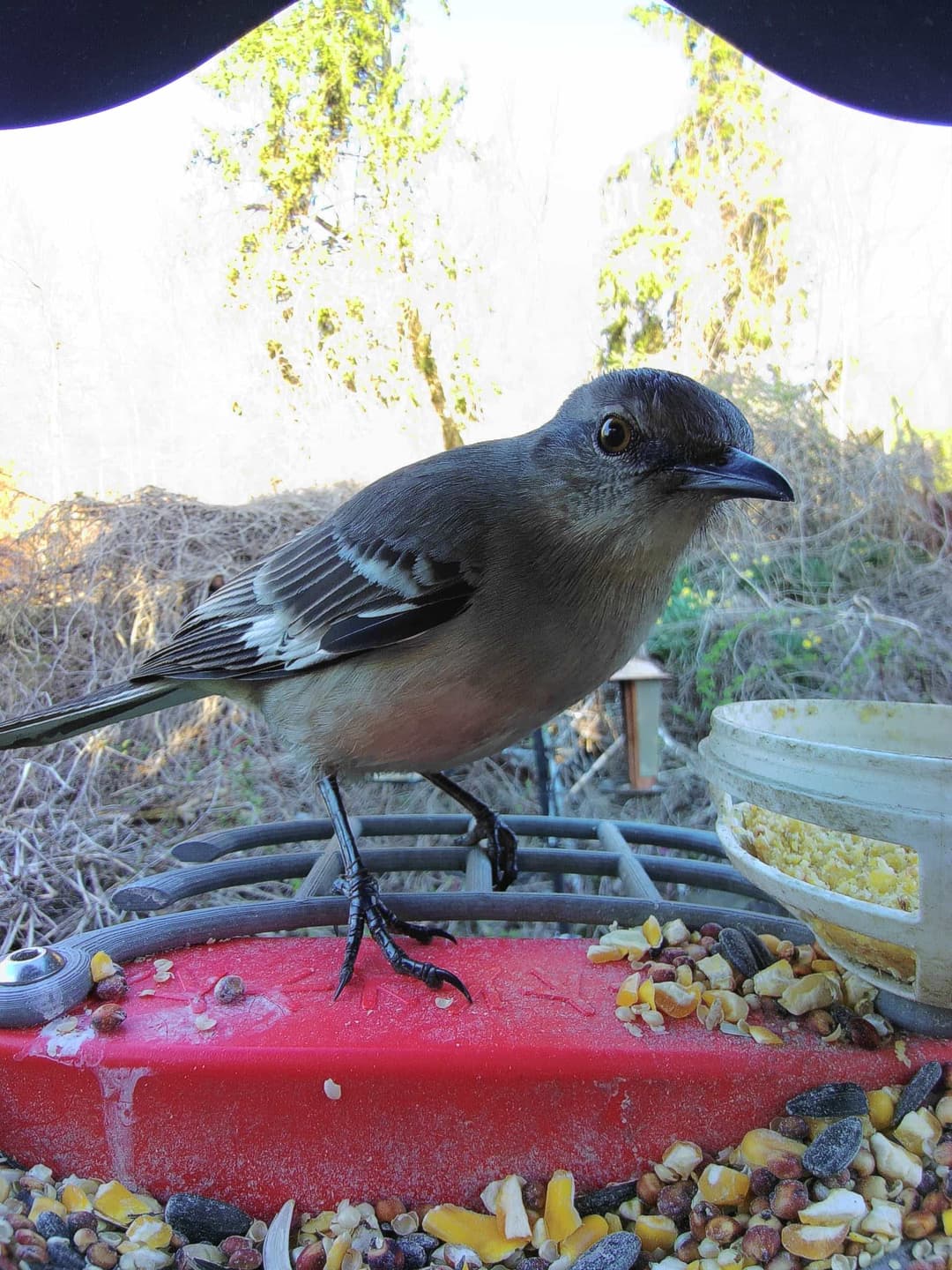
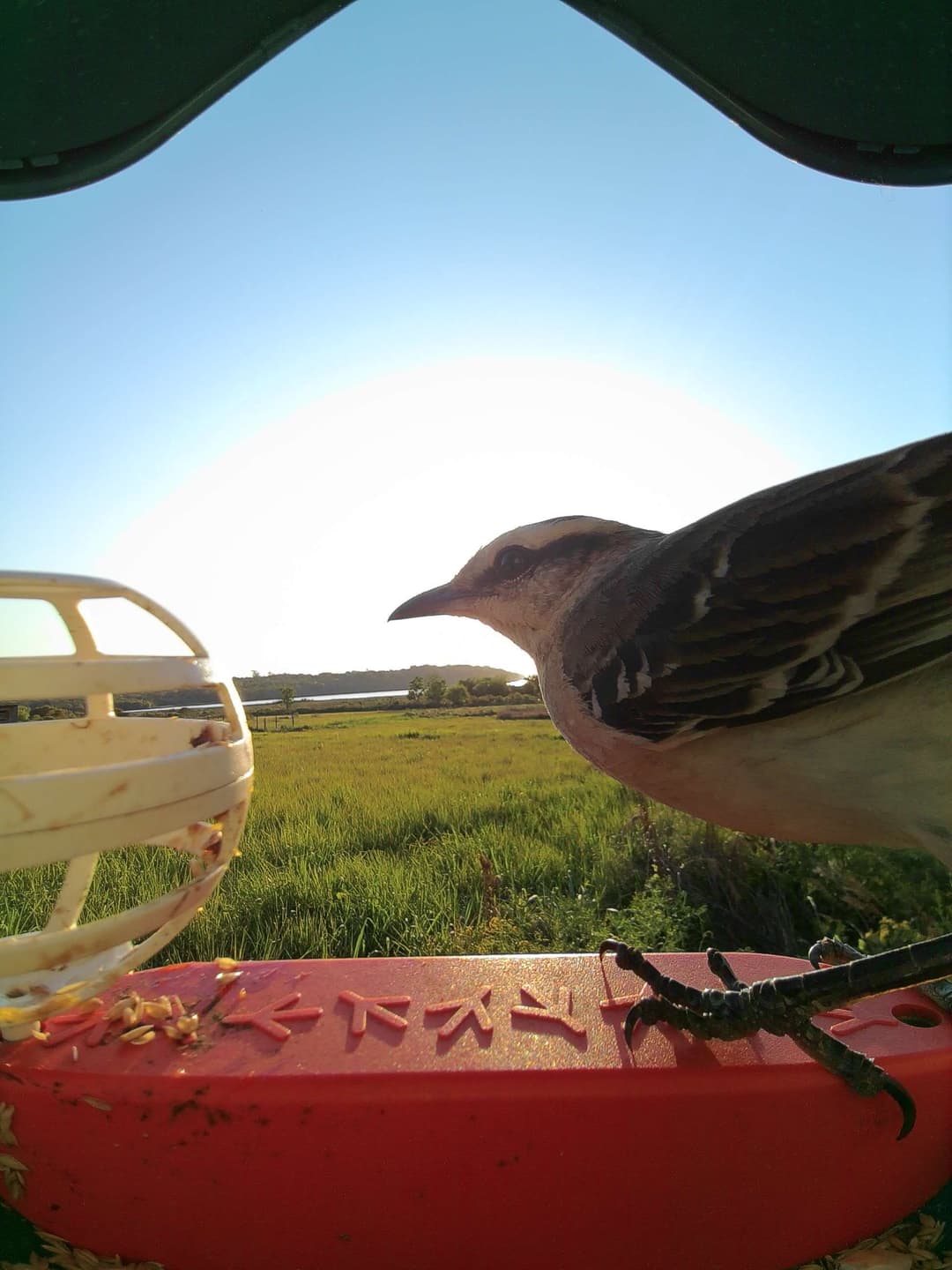
Mockingbirds are medium-sized birds, typically about 10 inches in length. Most notable are their gray coloration and prominent white patches on the wings and tail, visible during flight. Their bills are thin and slightly curved, while their eyes are yellow or orange. They are agile and active, often seen hopping and flitting among branches.
Male vs female
Mockingbirds exhibit limited sexual dimorphism, making males and females difficult to identify based on physical characteristics. Both genders are similar in size and share the similar gray and white coloration. However, males tend to be slightly larger and may have slightly brighter eye color. Male Mockingbirds are also more vocal than females, often heard mimicking a variety of sounds.
Juvenile
Juvenile Mockingbirds have similar coloration to adults, but they may appear duller, with a mottled or streaky appearance due to their immature feathers. Their eyes are typically darker than adults, often brown rather than the yellows or oranges seen in mature birds. Juveniles may also have a lighter or pinkish bill compared to the darker bills of adults.
Size
7.9 - 11.4 in/1.4 - 2.6 oz
There's more to learn about Mockingbird
View full detailsTropical Mockingbird
Mimus gilvus
General appearance
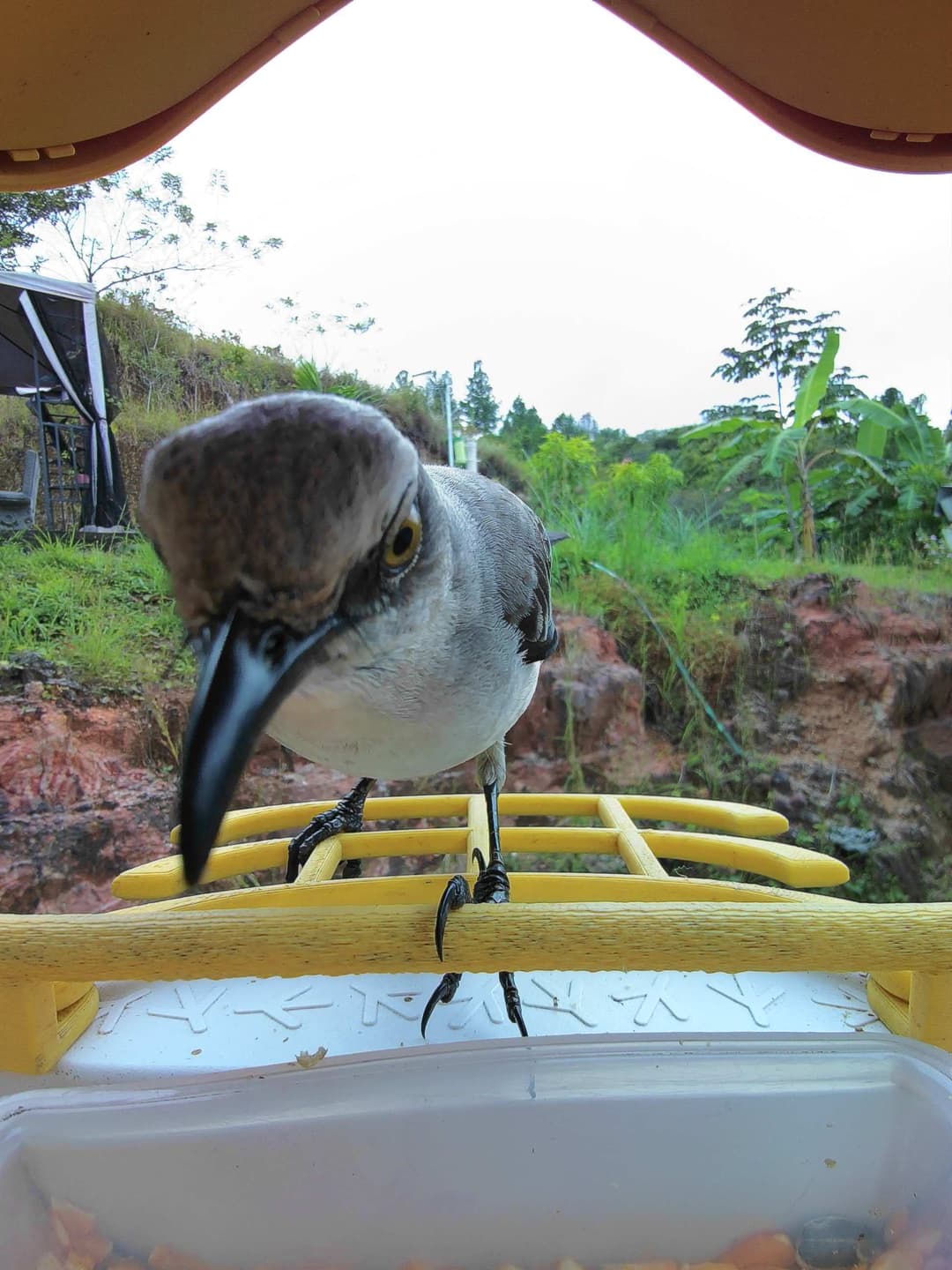
The Tropical Mockingbird is medium-sized bird with a body length of about 25cm. Its overall color is gray, with the underside being a lighter shade than the upper parts. Its wings are adorned with distinct white patches visible during flight. The tail is long, with white edges visible on the outer feathers only. It has slim legs and a long, slender, slightly decurved beak which is black in color.
Male vs female
There is little sexual dimorphism in the Tropical Mockingbird, making it difficult to differentiate between males and females based on physical appearance alone. Both sexes share similar size, shape, and plumage coloration. However, males are often more vocal and exhibit more complex song patterns than females, especially during the breeding season.
Juvenile
Juvenile Tropical Mockingbirds closely resemble adults, but their plumage is slightly duller and may have a slight rufous wash. They often have less-defined wing patches and their tails may lack the white outer edges of adults. As they mature, juveniles develop the more distinct, contrasting color patterns of adult birds.
Size
9.1 - 10.0 in/1.5 - 2.1 oz
There's more to learn about Tropical Mockingbird
View full detailsHow to tell the Mockingbird from the Tropical Mockingbird
Visual differences
The Mockingbird (20-29cm/8-11.4in) and Tropical Mockingbird (23-25.5cm/9-10in) are similar in size but differ visually. Mockingbirds have prominent white patches on their wings and tail visible in flight, and a thin, slightly curved bill with yellow or orange eyes. Tropical Mockingbirds have a slightly duller gray color with lighter undersides, distinct white wing patches, and white tail edges only on the outer feathers. They possess a long slender, slightly decurved black bill. Juvenile mockingbirds may have streaky plumage and darker eyes, while juveniles of both species exhibit duller plumage.
Key differences and behavior
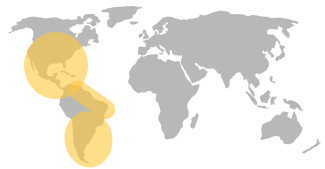
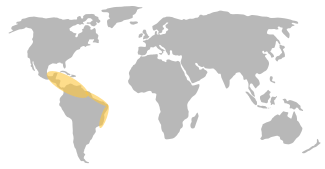
The Mockingbird and Tropical Mockingbird both belong to the Mimus genus but differ subtly in behavior and habitat preference. Mockingbirds are highly vocal mimics and thrive in North America's open grasslands, thickets, and urban areas, while the Tropical Mockingbird, found from Mexico to northern South America, sings distinct songs, often throughout the night, in subtropical woodlands and urban settings. Both species exhibit minimal sexual dimorphism, with males leading elaborate courtship through song and displays. In feeding, both are omnivorous, consuming insects and fruit, though the Tropical Mockingbird tends less toward seed consumption. Mockingbirds generally construct solid, shrub-based nests, while Tropical Mockingbirds build open cup-shaped nests. Notably, Tropical Mockingbirds involve previous offspring in raising chicks, unlike the more independently nesting Mockingbirds.
Still not sure? Here are more lookalikes!
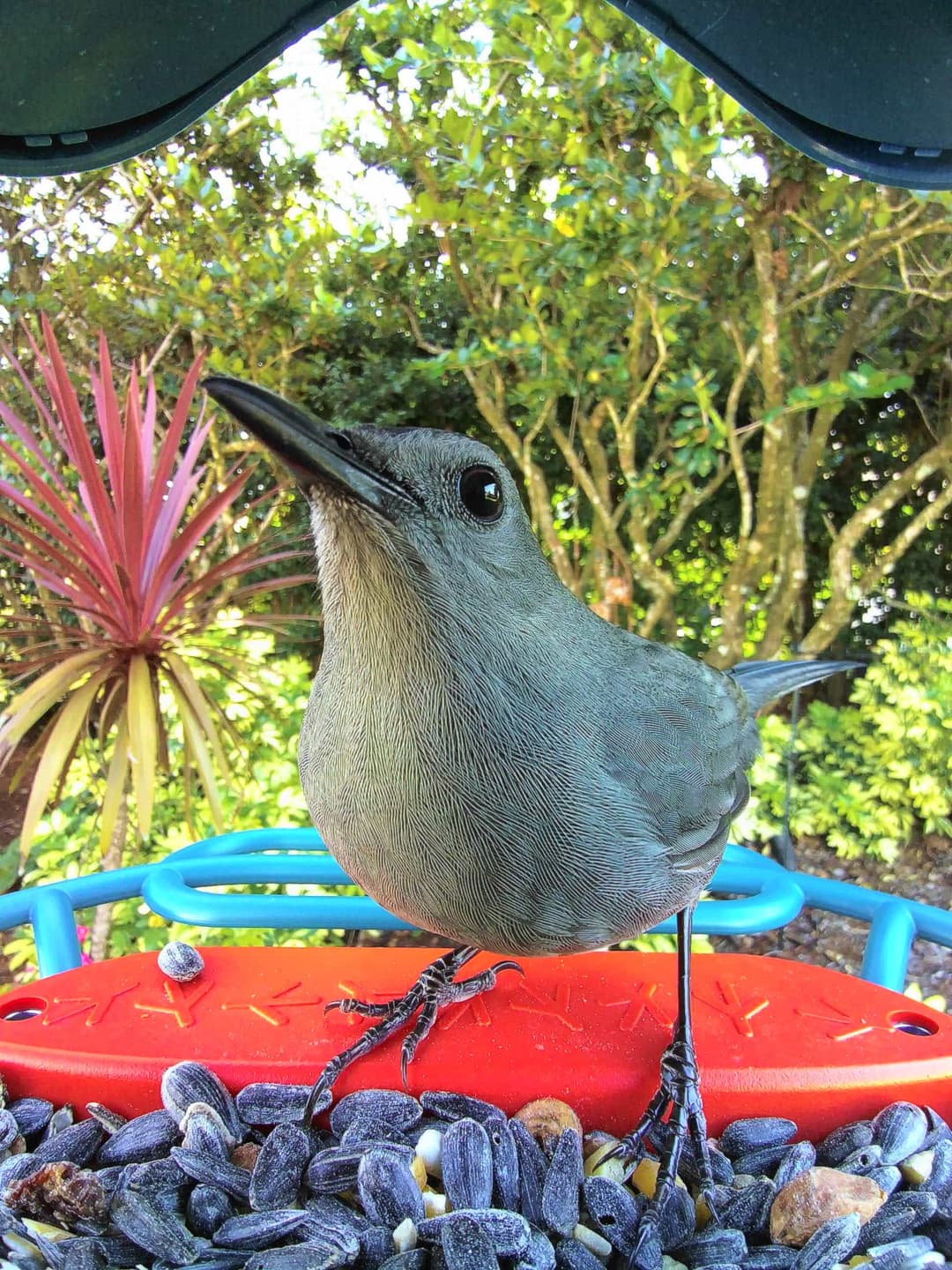
Mockingbird vs Gray Catbird
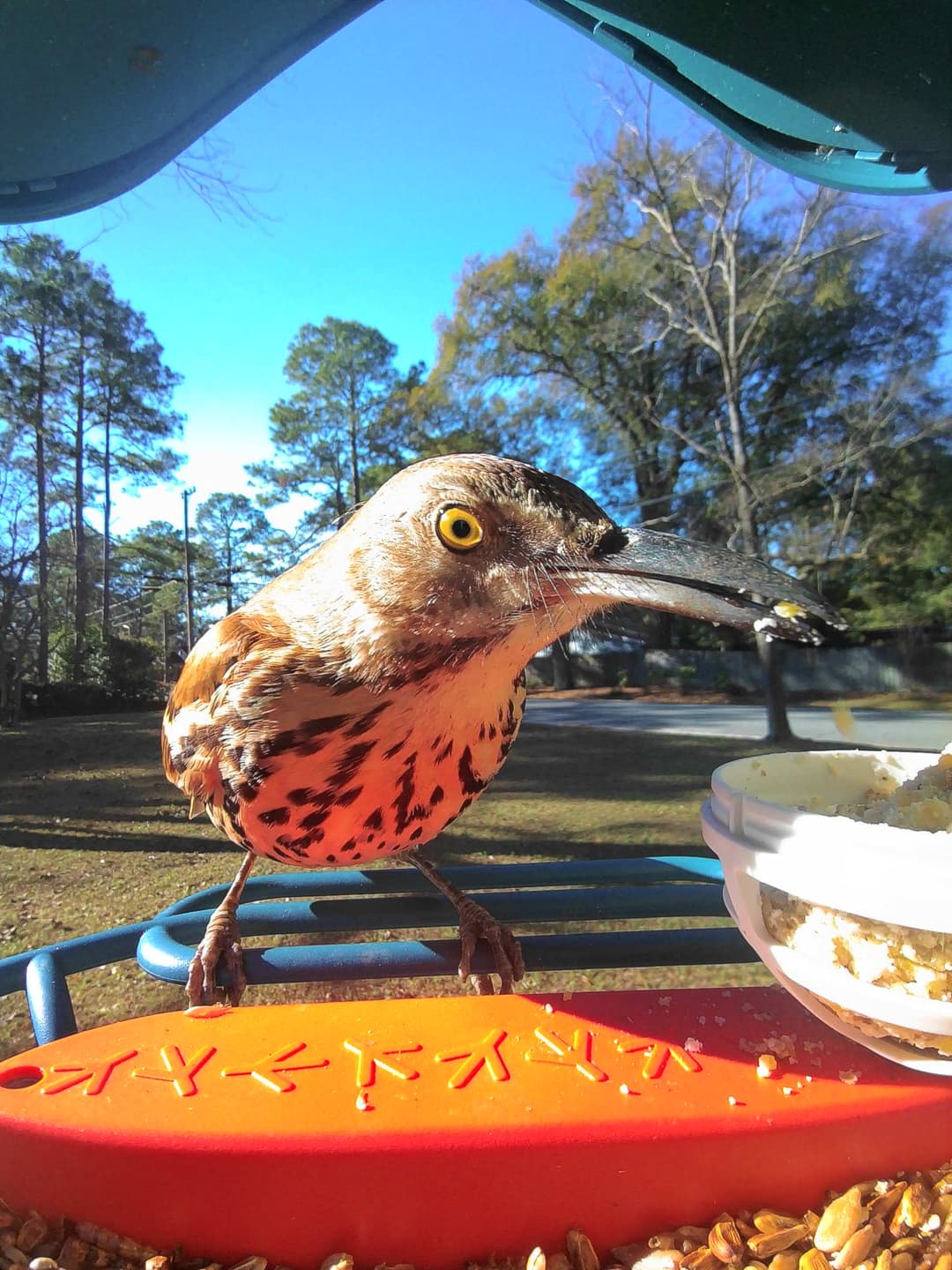
Mockingbird vs Brown Thrasher
Mockingbird vs [Select a bird]

[Select a bird]
Pick a bird to compare
Tropical Mockingbird vs [Select a bird]
[Select a bird]
Pick a bird to compare