
Feral Pigeon
Feral Pigeon
Also known as: City Dove, City Pigeon, Streen Pigeon
Columba livia domestica


Quick Identification guide
Quick Identification guide
- •
Displays a variety of colors, predominantly shades of gray with iridescent green and purple neck feathers
- •
Possesses a small, slender black beak ideal for pecking at seeds
- •
Compact and rounded body structure with a short tail and broad wings
What does a feral pigeon sound like?
Awake with the dawn, feral pigeons chime their delight in a chorus of coos and flutters. A cascading, rhythmic melody of soft throaty rumbles and occasional high pitch coos is their language of love. Crackling wing beats intermingle, like rustic wind chimes serenading the morning sun. Then, there is the 'clap-clap', a celebratory dance in the sky; performed by males, their wingtips kiss, creating a hushed applause. Mingle all these delightful sounds with the urban hum in the background, and it's just another pigeon-fronted symphony, bringing their cheerful buoyancy even into the busiest city's heartbeat.


Description
Pigeons, unfortunately, haven't got a great reputation despite having been our companions for millennia. The wild rock pigeon, the feral pigeon's ancestor, was domesticated in the Middle East 6,000 years ago! They were used as messengers during the two World Wars and more recently in Orissa, India, where the Police Pigeon Service was only retired in 2002.
The feral pigeon can weigh between 230to370grams and be from29to35centimeters tall.
Feral pigeons typically live for approximately 3 to 5 years in the wild. This lifespan is noticeably shorter in comparison to some domesticated pigeons, which can live up to 15 years under favourable conditions. Further comparative analysis reveals that the lifespan of a feral pigeon is also slightly shorter than other related city-dwelling species such as crows, which can survive for about 7 to 8 years.
Did you know?
Most popular questions about feral pigeon
How to recognise a feral pigeon?
General appearance
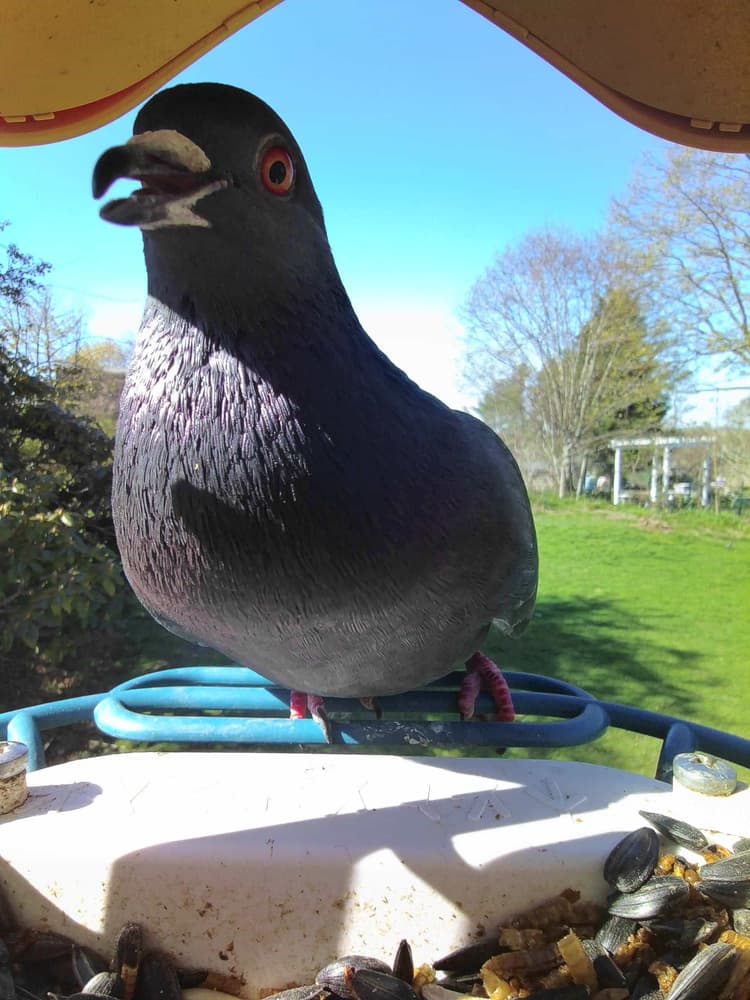
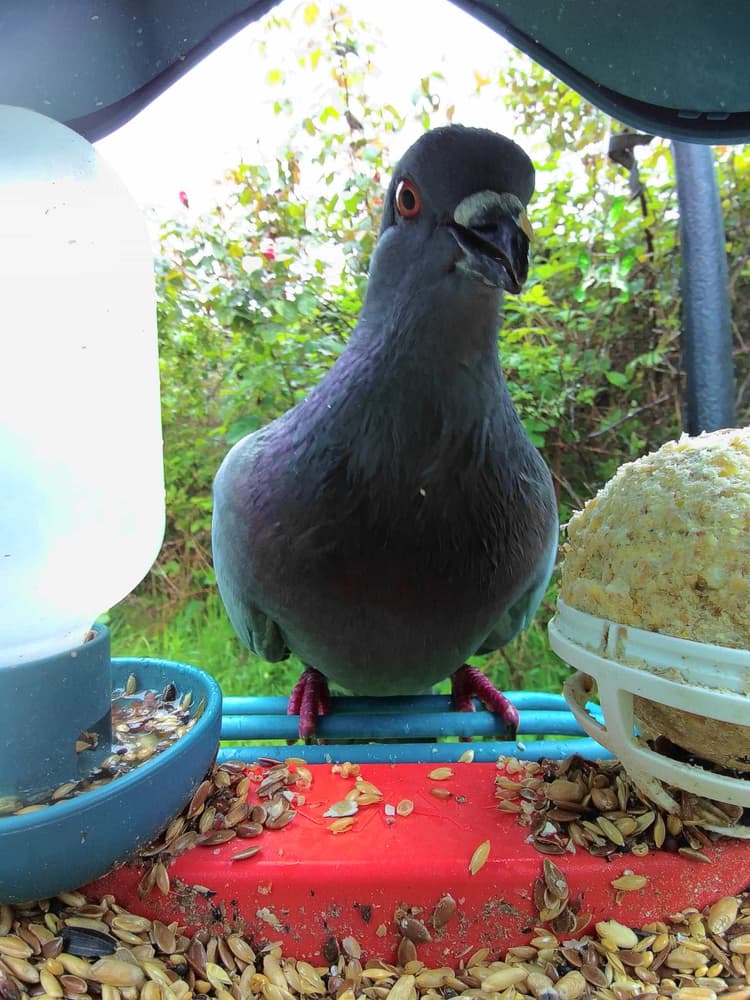
The feral pigeon is a bird with generally stocky body, and short, stout beak. Its plumage is variable, often blue-grey but can have a wide range of colors due to interbreeding. Its feathers often have iridescent neck feathers and a broad, rounded tail.
Male vs female
Males and females largely look alike, making it difficult to distinguish between the two. Both sexes generally share the same physical characteristics. However, males may have a slightly wider body and a more pronounced iridescence at the neck.
Juvenile
Juvenile feral pigeons exhibit less glossy neck feathers and have a duller, less variegated plumage than adults. They usually attain their adult coloration after their first molt. Also, their eyes are generally darker compared to the bright, orange-red eyes of the adults.
Often mistaken for
Mourning Dove vs Feral Pigeon
The Mourning Dove is slimmer with a longer tail, unlike the plumper Feral Pigeon. It has a distinctive soft cooing call and pointed tail with white edges.

Eurasian Collared Dove vs Feral Pigeon
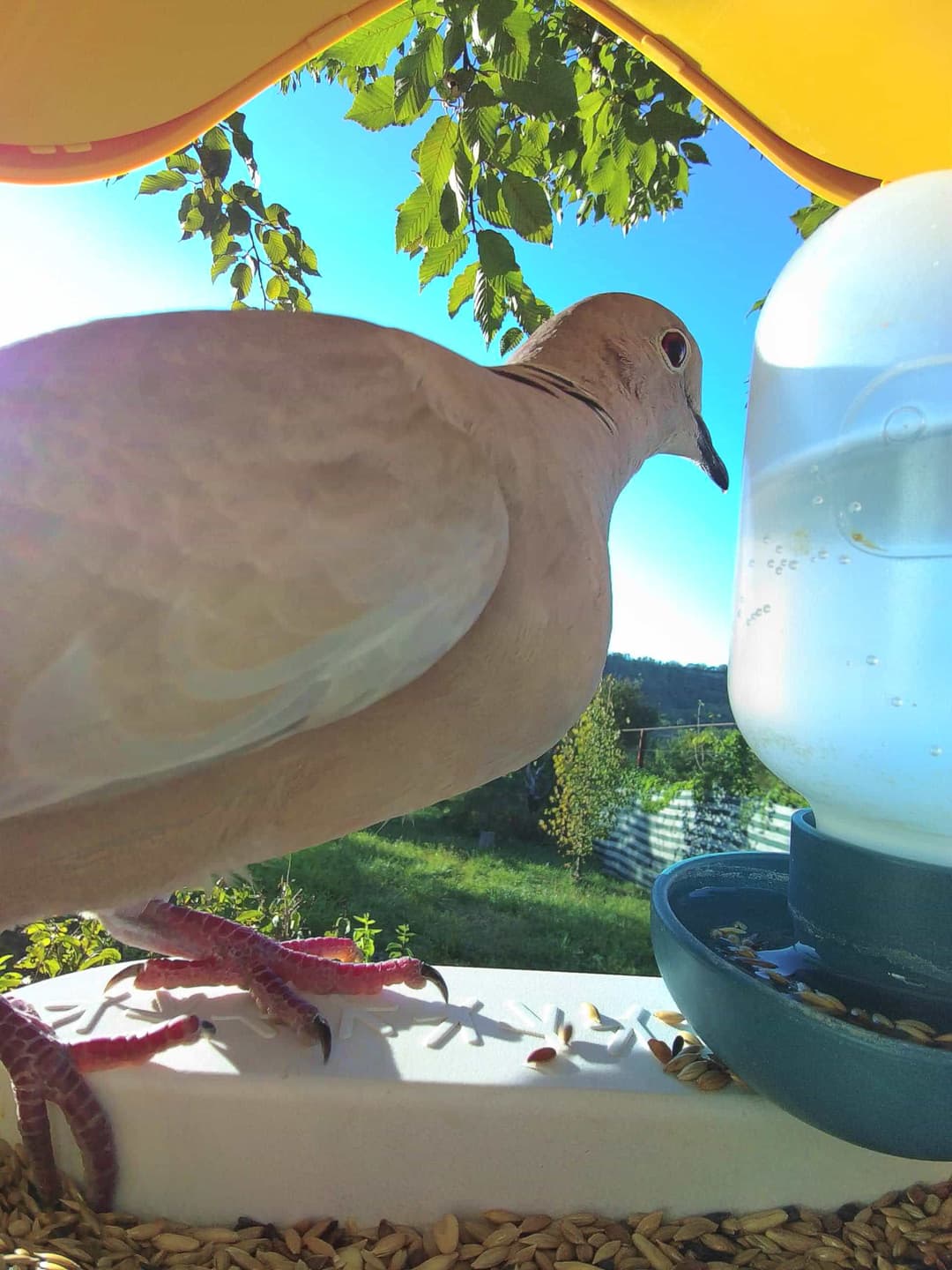
The Eurasian Collared Dove has a distinctive black neck collar and is generally more slender and uniformly colored compared to the Feral Pigeon's variety of colors and lack of neck markings.
Common Wood Pigeon vs Feral Pigeon
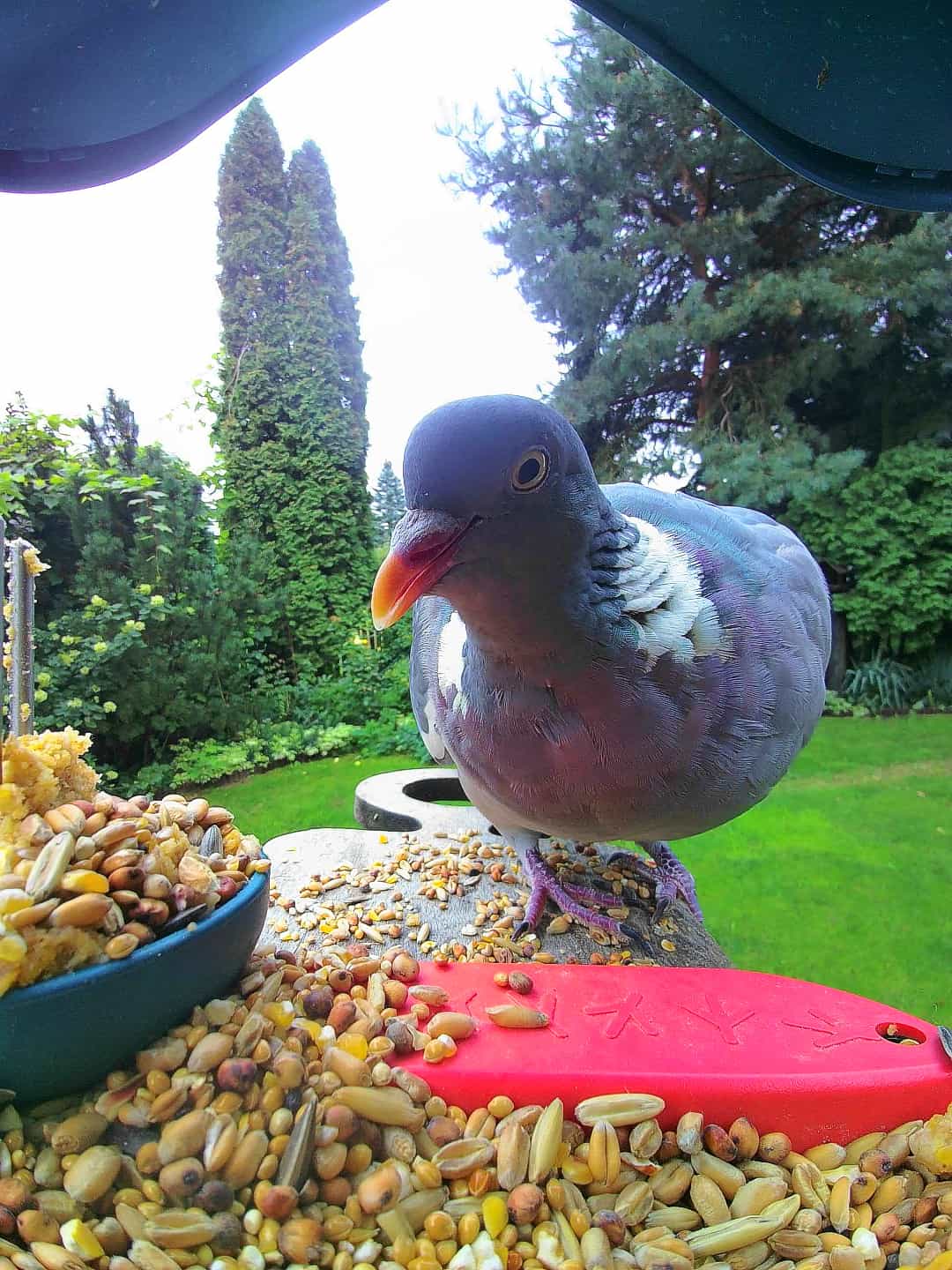
The Common Wood Pigeon is larger and bulkier than the Feral Pigeon. It is mainly gray and sports a distinctive white neck patch and wing patches.
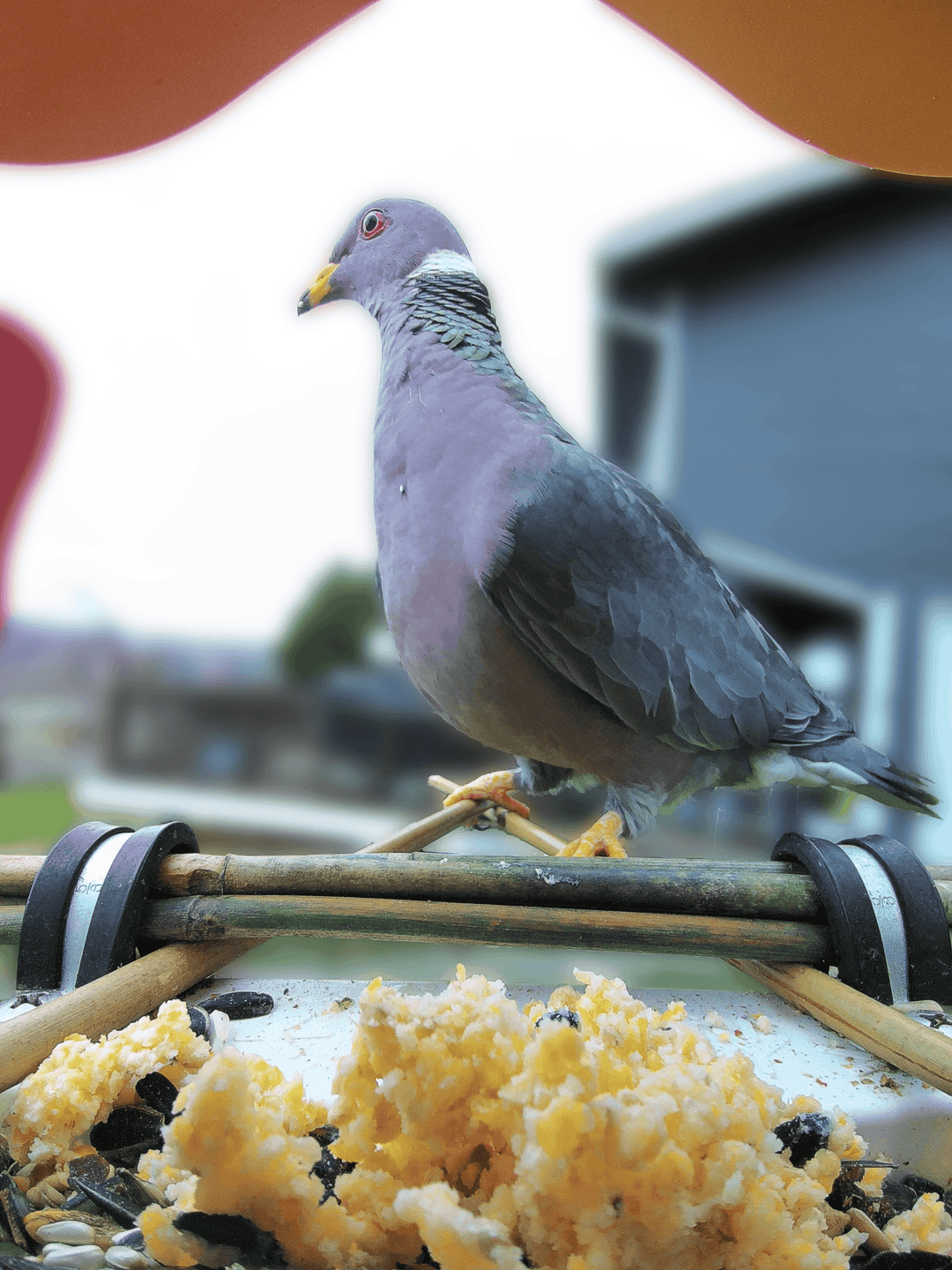
Band-Tailed Pigeon vs Feral Pigeon
The Band-Tailed Pigeon is larger and features a band on the tail and a white crescent on the nape, setting it apart from the Feral Pigeon's varied plumage.
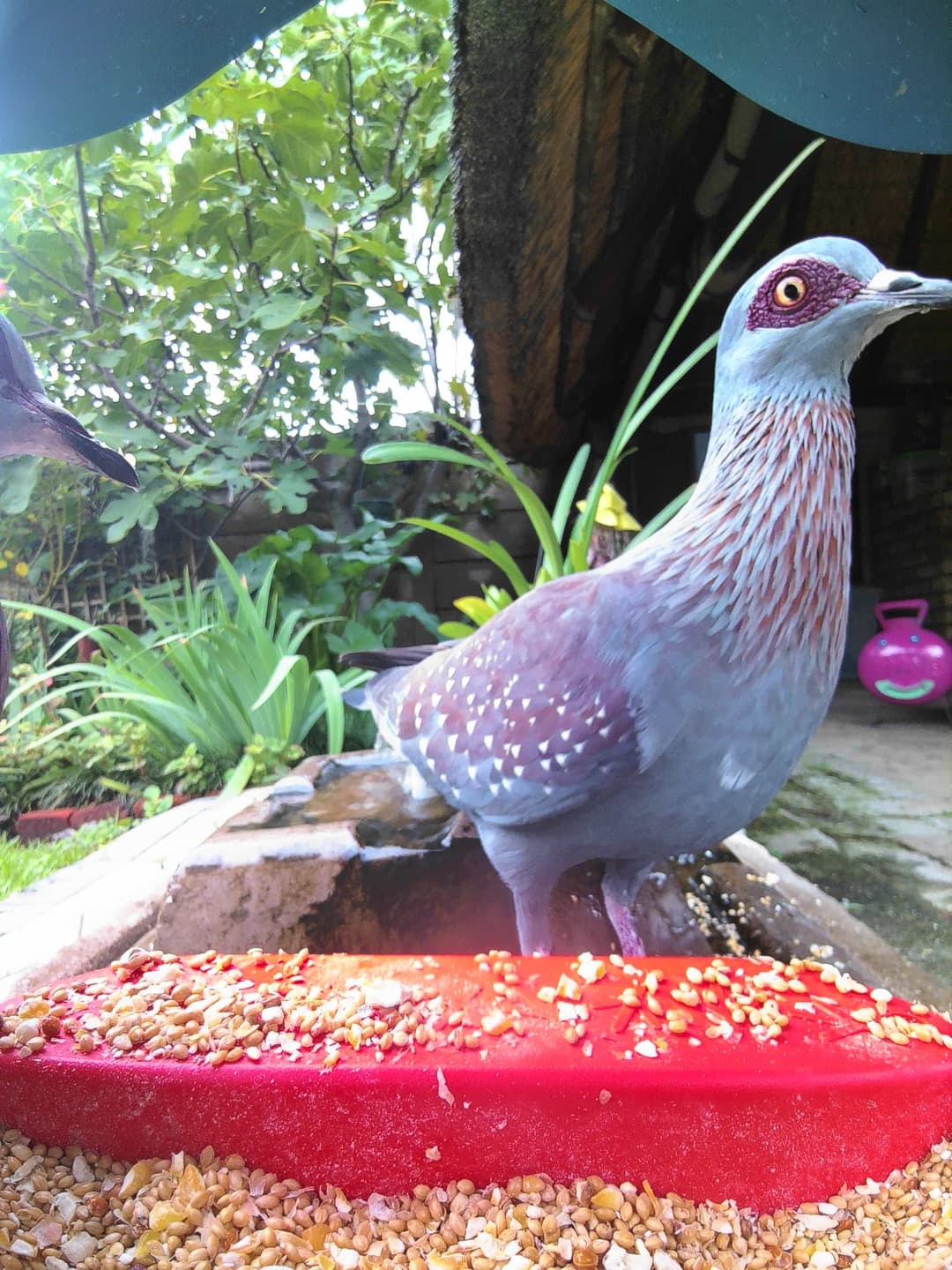
Speckled Pigeon vs Feral Pigeon
The Speckled Pigeon is recognized by its speckled wing coverts and red eye rings, whereas the Feral Pigeon exhibits a range of colors and lacks such markings.
Breeding and nesting habits of the feral pigeon
Mating behaviors
Feral pigeons engage in elaborate courtship involving head-bobbing, cooing, and tail-fanning displays. Males pursue females and perform aerial and ground displays to attract mates.
Nesting details
Nesting occurs in ledges, rooftops, and building niches, as well as cliff edges in natural settings. They build simple nests using twigs, grass, and debris. In gardens, providing flat surfaces like shelves or nesting boxes can attract nesting pairs.
Eggs and chick-rearing
Feral pigeons typically lay two white eggs per clutch. Both parents incubate eggs for about 18 days. Chicks are fed pigeon milk, a nutrient-rich regurgitated substance, and fledge within 4-6 weeks after hatching.
What does a feral pigeon like to eat?
Berries
Fruits
Insects
Nuts
Scraps
Seeds
Snails
Natural diet
Feral pigeons primarily consume seeds and grains, which they forage from fields and urban environments. They are known to eat a variety of seeds, including those from grasses and cereals. Pigeons also feed on fruits and berries when available, and occasionally consume small insects and larvae.
Bird feeders
At bird feeders, feral pigeons often consume a wide range of foods provided for other birds. They are particularly attracted to bread crumbs, seeds, and grains commonly found in birdseed mixes. Sunflower seeds, cracked corn, and millet are frequently consumed by pigeons at feeders.
Inviting feral pigeons to your yard
If you want to tempt a feral pigeon to visit your yard, try to provide them with an inviting and safe habitat. Keep any pets that might scare them away indoors, and be sure your yard space is open, so they can see any predators approaching.
Feeding feral pigeons
Pigeons love seeds and grains, and Bird Buddy seeds are a top choice for enticing them. These seeds are expertly chosen for each season, so they'll always be irresistible to our feathery friends. You can scatter them on the ground or use a bird feeder. Variety of seeds is key, try incorporating sunflower seeds, corn, barley, and oats as well.
Feeder types
A platform feeder or a hanging bird feeder works well for pigeons. If using a hanging bird feeder, make sure it's sturdy enough to hold a pigeon's weight. The tray of a platform feeder should be large and flat, providing ample room for the birds to land and feed.
Fun tricks to encourage visits
Try adding a birdbath or a fountain to your yard. Pigeons are attracted to the sound of water and will appreciate a place to drink and bathe. Lastly, consider adding some bird-friendly plants or trees for them to perch on or nest in. These additions will make your yard even more inviting for pigeons.
Where can you find feral pigeons?
Based on Birdbuddy sighting data. The heatmap shows where Birdbuddy users have spotted this species.
Embed this map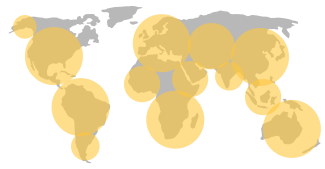
This map shows the full native range based on scientific range data.
Primary habitat
Feral pigeons thrive in urban environments worldwide, especially in city centers and around buildings. They are descendants of domesticated rock pigeons, adapted to human settlements.
Additional range
They occupy various climates, from tropical to temperate regions, and are found on every continent except Antarctica. Unexpectedly, they can also adapt to coastal cliffs similar to their wild ancestors.
Do they migrate?
Feral pigeons, also known as city or urban pigeons, generally do not migrate. They are descendants of the domesticated rock dove, which has adapted to live in urban and suburban areas. These pigeons are typically sedentary and remain in the same areas throughout the year, taking advantage of abundant food and shelter that cities provide. Feral pigeons are opportunistic feeders and can subsist on a wide range of food sources, from discarded human food to seeds and small insects. Urban environments offer consistent resources, which diminishes the need for seasonal migration. Additionally, these pigeons often roost on buildings, bridges, and other structures, which provide safety from predators and harsh weather conditions. In contrast to migratory birds, feral pigeons exhibit site fidelity, meaning they tend to stay close to their birthplace or area they have settled in. This instinct stems from their domesticated ancestors, which were bred for homing and racing abilities. Consequently, there is no specific migratory route, timing, or key locations associated with feral pigeons. They adapt well to various environments, which allows them to thrive year-round in urban landscapes across the globe.
What is the role of feral pigeons in nature and how to protect them?
Conservation status
The feral pigeon is classified as a common species and is not considered vulnerable or endangered. Widespread in urban areas globally, these birds thrive in cities where food and nesting sites are abundant. They face few significant threats, largely due to their adaptability and prolific breeding. Despite their stable status, conservation efforts focus on humane population control and mitigating health risks related to their droppings. Ensuring biodiversity in urban environments supports pigeon's coexistence with other wildlife. Generally, their status is stable, with no current urgency for extensive conservation measures.
Ecological role of feral pigeons
Its role in the ecosystem
Feral pigeons, also known as city doves, are often viewed as pests due to their propensity for urban life but they do have ecological significance. One of the roles they play is that they assist in organic matter decomposition by foraging and scattering organic litter, which helps break it down faster. In terms of seed dispersal, pigeons can help spread certain types of plants. This can aid in the propagation of certain plant species and also contribute to biodiversity. Pigeons are also a critical link in the food chain for urban predators like falcons and hawks. In some cases, they can reduce the population of pests like insects by feeding on them. However, it's important to note that while they do offer some benefits to local ecosystems, they can cause problems when their populations get out of control mainly due to their lack of natural predators in urban environments and an abundance of food sources.
How to help protect feral pigeons
Preservation tips
Habitat preservation for feral pigeon
Uphold existing habitats of feral pigeons by shielding urban areas and built structures from demolition. Additionally, consider building artificial nesting platforms to provide safe places for feral pigeons to breed and nest. Use non-toxic building materials to prevent harm to the pigeon population.
Community science initiatives for feral pigeon conservation
Promote community involvement to support the conservation of the feral pigeon. Organize educational programs and birdwatching events to raise awareness about the importance of preserving the pigeon population. Encourages volunteers to participate in pigeon feeding programs. Additionally, establish a citizen-led monitoring system to report sightings and keep track of the local pigeon population.