
Common Wood Pigeon
Common Wood Pigeon
Also known as: Wood Pigeon, Cushat
Columba palumbus


Quick Identification guide
Quick Identification guide
- •
Distinguished by a pale grey head and breast contrasting with its pinkish-brown body
- •
Features a white neck patch and distinctive iridescent green and purple hues on the sides of the neck
- •
Displays a broad, rounded tail with a characteristic black band near the tip and white edges
What does a common wood pigeon sound like?
The common wood pigeon vocalizes with characteristic cooing sounds. Its song, primarily comprised of five elements, sounds like "coo-COO-coo, coo-coo". Initially softer, the second phrase is often louder and more emphatic. This species usually repeats its song every 1.5-2 seconds. The males typically use these songs for courtship or territorial declarations. The common wood pigeon also produces various clucking and clicking noises, especially during flight, created by its wings’ unique structural design.


Description
The common wood pigeon is a bird of many names, also called woody, cushat, cushy-do, quist, ringdow and ring-dove. They are considered agricultural pests. And no wonder; a large field must look like quite a banquet. Their knack for spotting food from far away makes them a farmer's worst nightmare. Despite their size, they can be surprisingly agile.
The common wood pigeon can weigh between 284to690grams and be from41to45centimeters tall.
The common wood pigeon typically lives for about 6 years, though individuals have been known to survive up to 17 years in the wild. Compared to related species, this is quite long-lived; for instance, the rock pigeon generally lives 3-5 years. Factors affecting lifespan can include predation, disease, and adverse environmental conditions.
Did you know?
Most popular questions about common wood pigeon
How to recognise a common wood pigeon?
General appearance
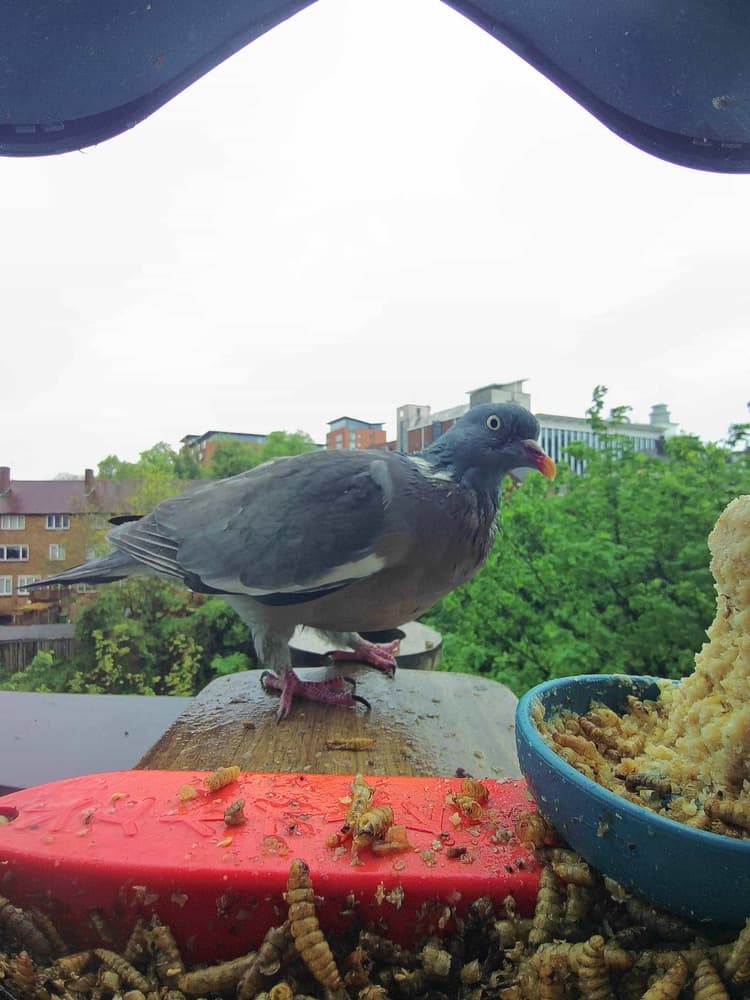
The Common Wood-Pigeon is a large, robust bird with a low, growling song. Its coloration is primarily subtle shades of lilac and gray. However, adults also have noticeable white or tan neck patches that are trimmed with green iridescence. A key identifying feature is the broad white bands in the wing that become evident in flight.
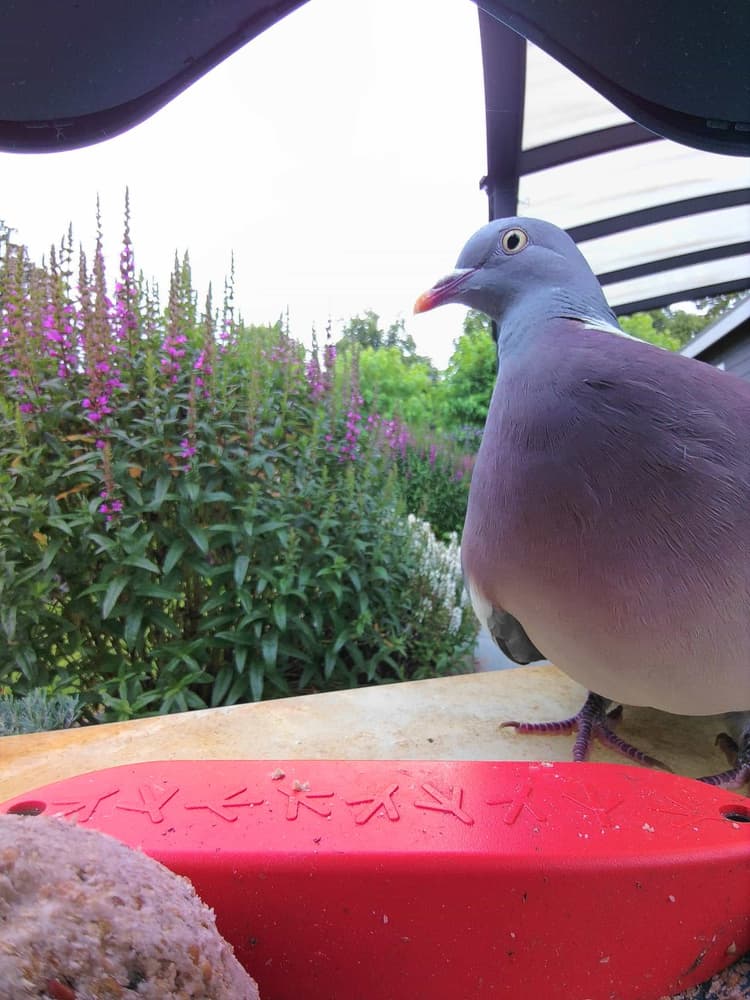
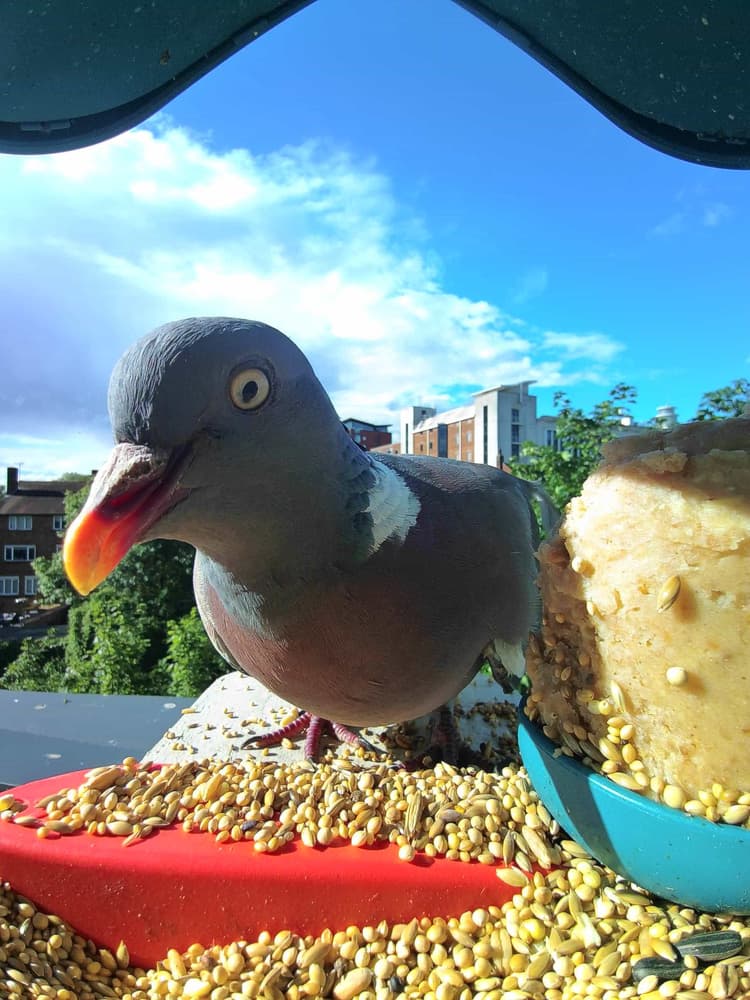
Male vs female
The text does not provide specific distinctions between male and female Common Wood-Pigeons. In many bird species, males are often more brightly colored or larger than females. However, precise differences in this species would require further research and observation.
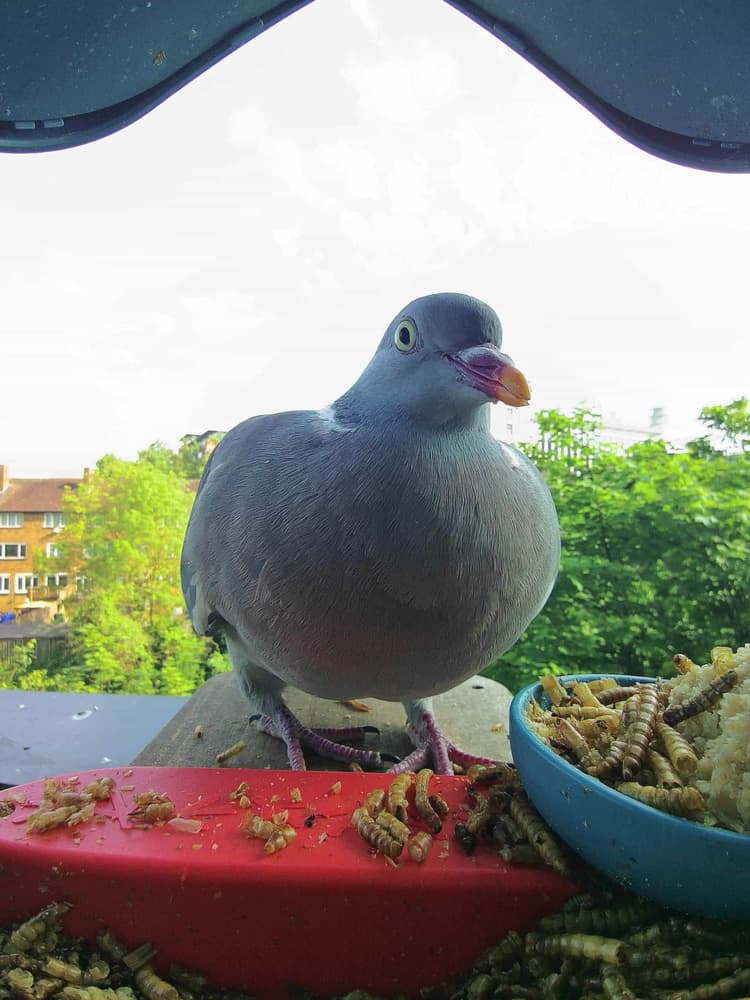
Male Common Wood Pigeon
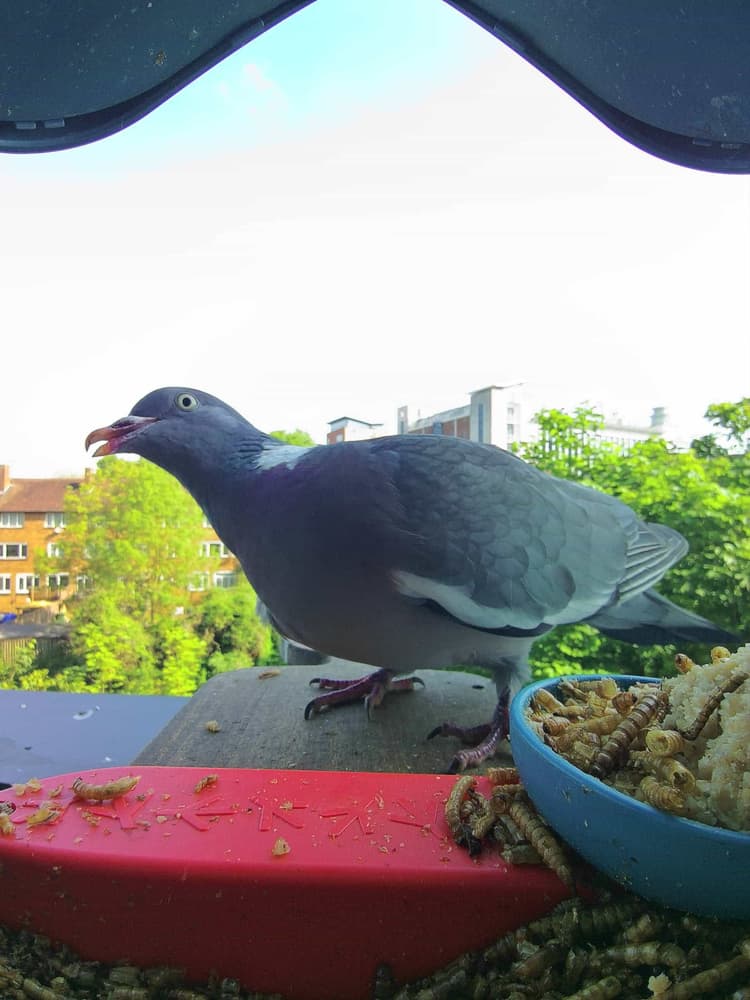
Female Common Wood Pigeon
Juvenile
Information on juvenile Common Wood-Pigeons isn't provided in the text. However, in common with many bird species, juveniles may lack the full adult coloration and distinctive markings, such as the white neck patches and wing bands. Further detail on these young birds would need more study.
Often mistaken for
Mourning Dove vs Common Wood Pigeon
The Mourning Dove is smaller in size compared to the Common Wood Pigeon and lacks the distinct white neck patch. It has a more slender build and pointed tail.

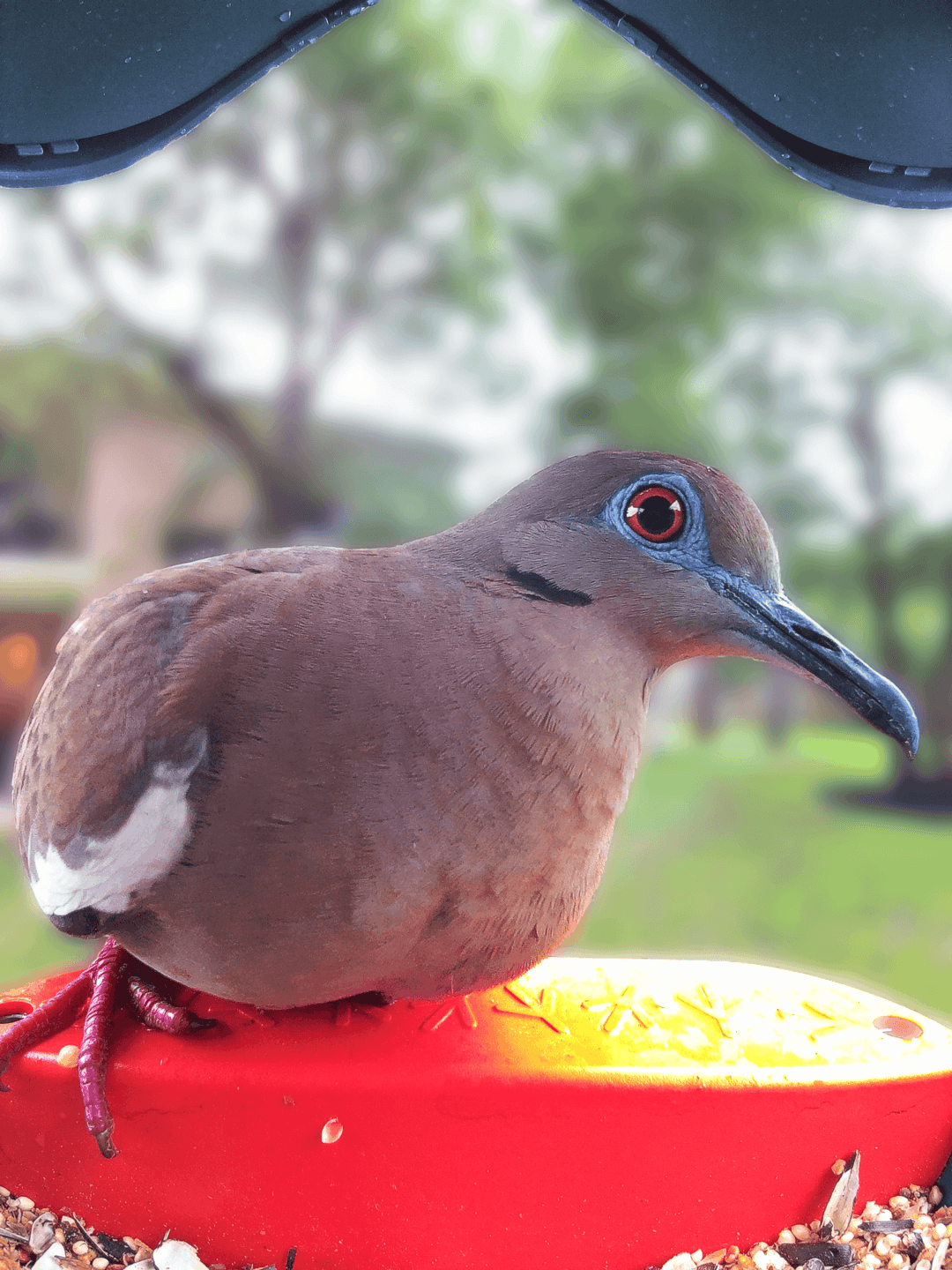
White-Winged Dove vs Common Wood Pigeon
The White-Winged Dove has distinctive white wing patches that are visible in flight, which the Common Wood Pigeon does not have. It also has a narrower body and tail.
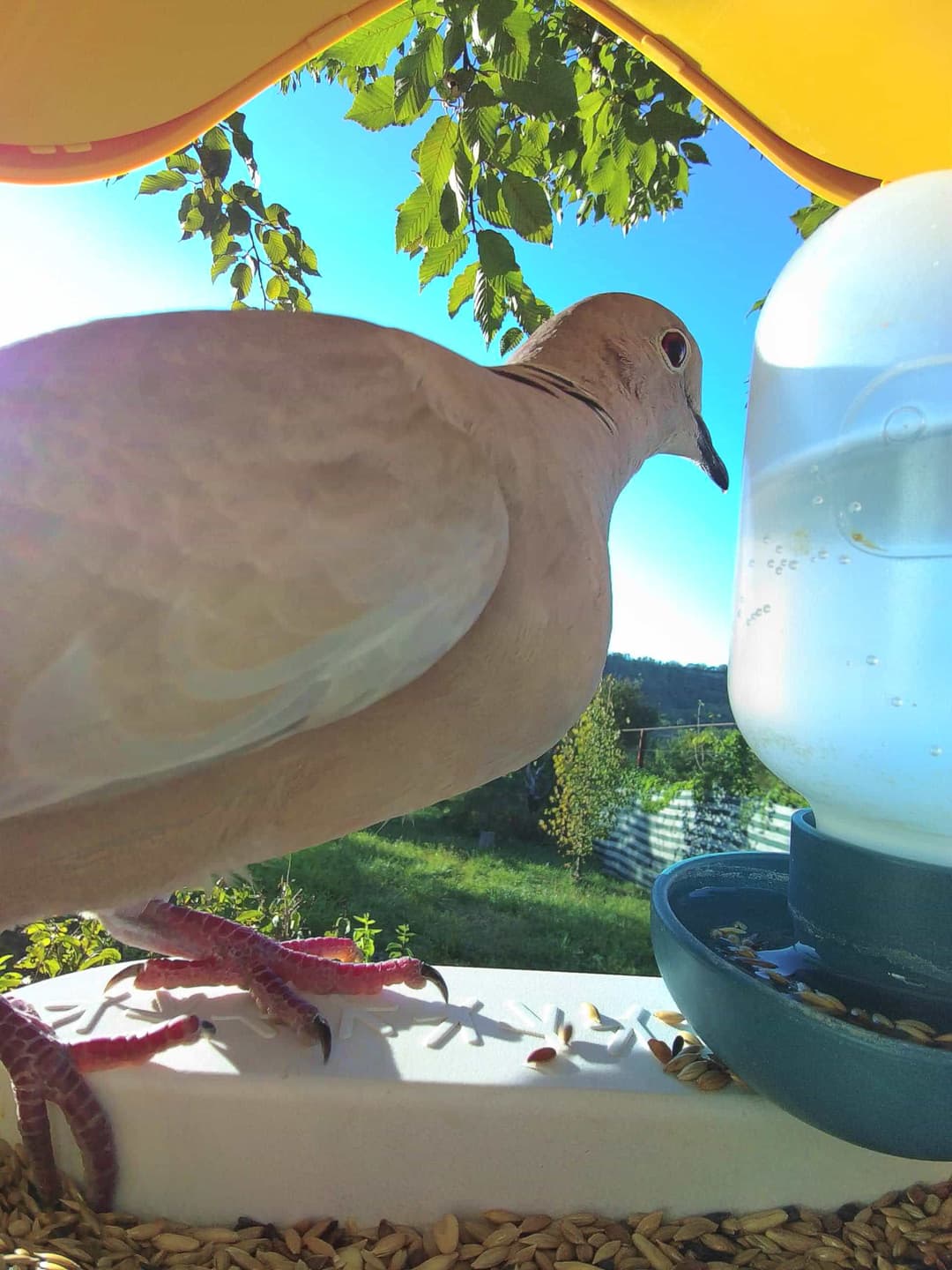
Eurasian Collared Dove vs Common Wood Pigeon
The Eurasian Collared Dove is similar in color but smaller and has a distinctive black 'collar' around its neck, which helps differentiate it from the Common Wood Pigeon.
Breeding and nesting habits of the common wood pigeon
Mating behaviors
Common wood pigeons engage in a series of courtship displays, including head-bobbing and wing-clapping. Males often perform a graceful display flight to attract mates, featuring clapping their wings twice before gliding downwards.
Nesting details
Nests are typically located in trees, placed on branches or forks about 2 meters above the ground. These nests are simple structures made of sticks and lined with smaller twigs, grasses, and leaves. Some nests are reused, with birds adding new materials each breeding season. To accommodate pigeons in gardens, provide trees or shrubs that allow for nesting about 2 meters high.
Eggs and chick-rearing
The female usually lays two eggs, which both parents incubate for about 17 to 19 days. After hatching, both parents also share in feeding the chicks on 'pigeon milk,' a nutrient-rich substance. The fledglings leave the nest around 30 days after hatching, although they may still depend on parents for food for a short period.
What does a common wood pigeon like to eat?
Berries
Flowers
Fruits
Plants
Seeds
Snails
Spiders
Worms
Natural diet
The common wood pigeon primarily feeds on a variety of plant materials found in its natural habitat. It consumes seeds, grains, and young shoots of crops, which include cereals like wheat, barley, and oats. Additionally, it eats buds, leaves, and flowers from trees and shrubs, particularly during spring. Fruits and berries, such as those from ivy, holly, and elder, become important parts of their diet, especially in autumn and winter. Occasionally, they may consume small invertebrates, but these are a lesser component of their diet.
Bird feeders
At bird feeders, wood pigeons are less picky and often enjoy a variety of foods offered. They commonly consume mixed seeds, grains, and peanuts provided at the feeders. Occasionally, they will eat suet and fat balls, particularly in colder months when they seek high-energy foods. Bread and kitchen scraps are also readily consumed, though such foods are not recommended as they provide limited nutrition.
Feeding preferences of wood pigeons
Wood pigeons have a wide variety of tastes, but they particularly love seeds, grains, and peas. They are also fans of Bird Buddy seeds, specially curated by bird experts to suit each season. Toss a handful of these seeds in your yard or feeder, and you're bound to see wood pigeons dropping by for a snack and perhaps a song.
Choosing the right feeder
Wood pigeons are larger bird species, so they prefer feeders where they can comfortably perch and feed. Platform feeders or tray feeders work best. Make sure it's sturdy and securely fastened, as wood pigeons can be quite hefty. Offer a mix of Bird Buddy seeds to make the feeder more enticing.
Make your yard inviting
Apart from food, provide a water source and natural cover. The pigeons would appreciate a birdbath where they could drink and bathe. And trees or shrubs can provide the perfect escape routes for these shy creatures. With a pleasant environment and a regular supply of Bird Buddy seeds, your yard will become a favorite spot for the local wood pigeons.
Fun tricks to attract wood pigeons
Drawing wood pigeons to your yard can be fun. Try scattering the seeds in a trail leading to the feeder. Once the pigeons discover the seed trail, they are likely to follow it straight to the feeder. Another fun trick is to create a little jingle with the seeds on the feeder tray. The birds might soon associate the sound with feeding time and will be encouraged to visit and maybe even join in a sing-along.
Where can you find common wood pigeons?
Based on Birdbuddy sighting data. The heatmap shows where Birdbuddy users have spotted this species.
Embed this map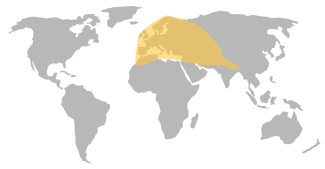
This map shows the full native range based on scientific range data.
Primary habitat
Common wood pigeons prefer woodlands, parks, and gardens across Europe and western Asia, favoring temperate climates.
Additional range
They adapt to urban environments and may be found in farmlands and coastal areas, showing some tolerance for varied climates.
Do they migrate?
The common wood pigeon exhibits varying migratory behaviors depending on its geographical location. In much of western Europe, including the British Isles, wood pigeons are largely resident, staying in one place throughout the year. However, populations in northern and eastern Europe are more migratory. During autumn, wood pigeons from Scandinavia, the Baltic region, and Russia migrate southwest to escape harsh winter conditions. This migration typically begins in September and continues through November. The birds travel in flocks, sometimes numbering in the thousands. Key migratory routes include crossing the North Sea and the English Channel, with significant stopover locations in western Europe, such as the Netherlands, Germany, and France. Many of these migratory wood pigeons winter in southern Europe, including the Iberian Peninsula and southern France, where milder climates offer ample food resources. In spring, the return migration occurs from March to May, with birds heading back to their breeding grounds in northern and eastern Europe. These seasonal movements ensure that wood pigeons can exploit different habitats and food sources throughout the year, adapting to seasonal changes in climate and availability.
What is the role of common wood pigeons in nature and how to protect them?
Conservation status
The common wood pigeon is listed as "Least Concern" by the International Union for Conservation of Nature, indicating it is not vulnerable or endangered. This status is due to its extremely large population, estimated between 51–73 million mature individuals, and a wide geographic range. The population trend is increasing, suggesting a stable outlook for the species. There are no significant threats currently impacting the common wood pigeon, and specific conservation efforts are generally not necessary given its stable status.
Ecological role of common wood pigeons
Its role in the ecosystem
The Common Wood-Pigeon plays an essential role in the ecosystem. Its most significant ecosystem service is seed dispersal, which is crucial for the survival and growth of different plant species and for the regeneration of forests. As they feed on various seeds and fruits, they selectively influence the composition and structure of plant communities. The pigeon's feces can also enrich the soil with essential nutrients, boosting plant growth. In urban settings, these birds may even function as rudimentary pest controllers, preying upon smaller harmful insects. Their breeding behavior and the extended nesting season mean that the wood pigeon population can grow relatively quickly. This can be a double-edged sword - while it ensures that they sustain their population, it can also lead to conflicts with farmers as they sometimes feed on crops causing agricultural damage. However, it's clear that their role in maintaining biological diversity and enhancing natural regeneration processes makes them an integral part of their ecosystem.
How to help protect common wood pigeons
Preservation tips
Habitat preservation strategies
Enhance conservation efforts for the common wood pigeon by maintaining and improving their habitats. This includes preserving woodland areas, which they largely depend on for nesting and food sources, limiting deforestation and implementing reforestation programs where necessary. Encourage the growth of native plants, which provide food and shelter for these birds. Restrict the use of pesticides as they can contaminate food sources.
Community science initiatives
Promote community-led initiatives to aid in the conservation of the common wood pigeon. Implement citizen science programs that can track the population size, behavior, and migration pattern. These initiatives can engage the public in bird watching and reporting sightings. Education programs can also be set up in local schools and communities to raise awareness about the importance of cohabiting with and conserving the common wood pigeon and their habitats.