Feral Pigeon or Band-Tailed Pigeon?
Here's how to tell the difference


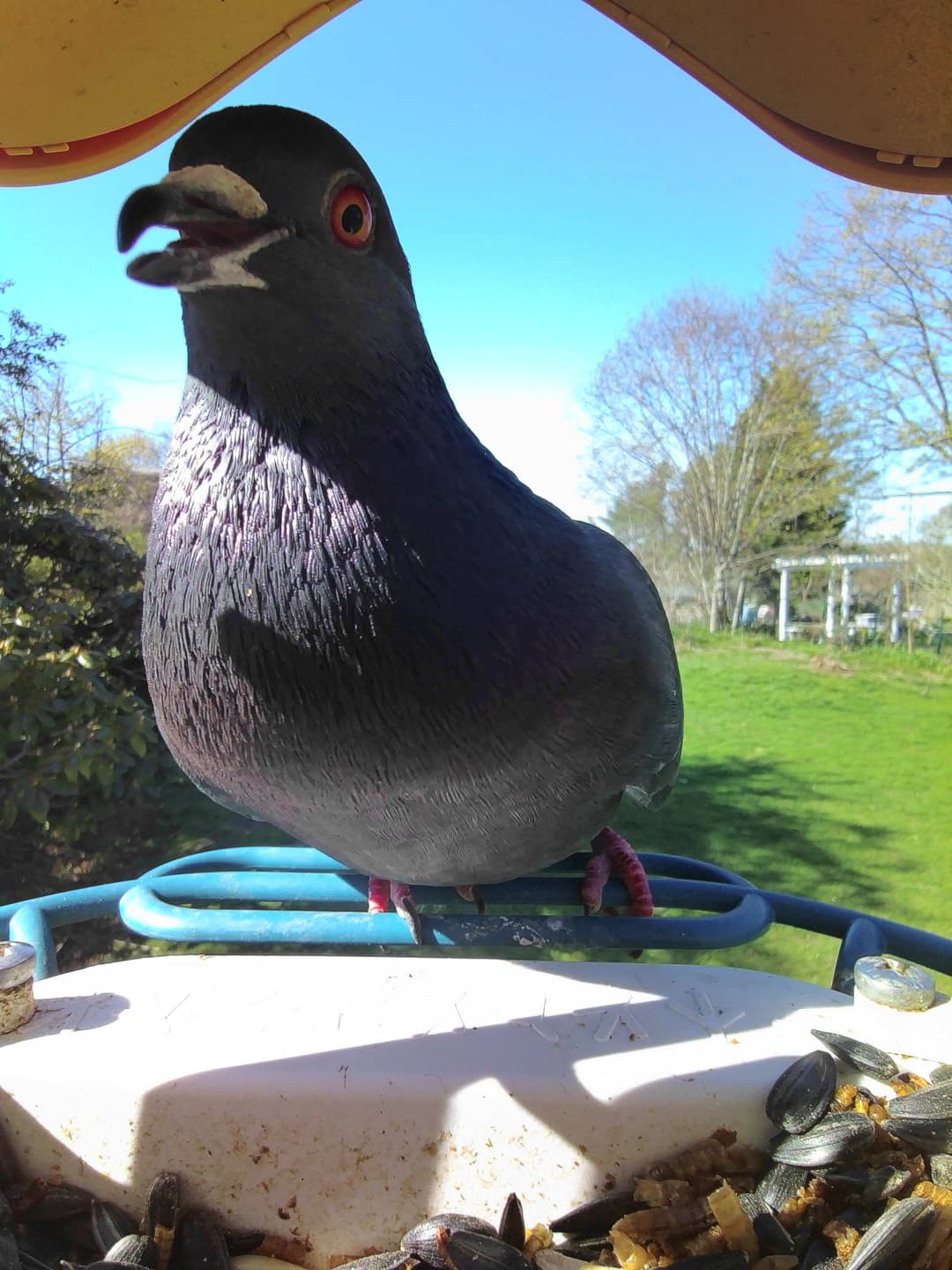
Feral Pigeon


Band-Tailed Pigeon
Feral Pigeon
Columba livia domestica
Also known as: City Dove, City Pigeon, Streen Pigeon
General appearance
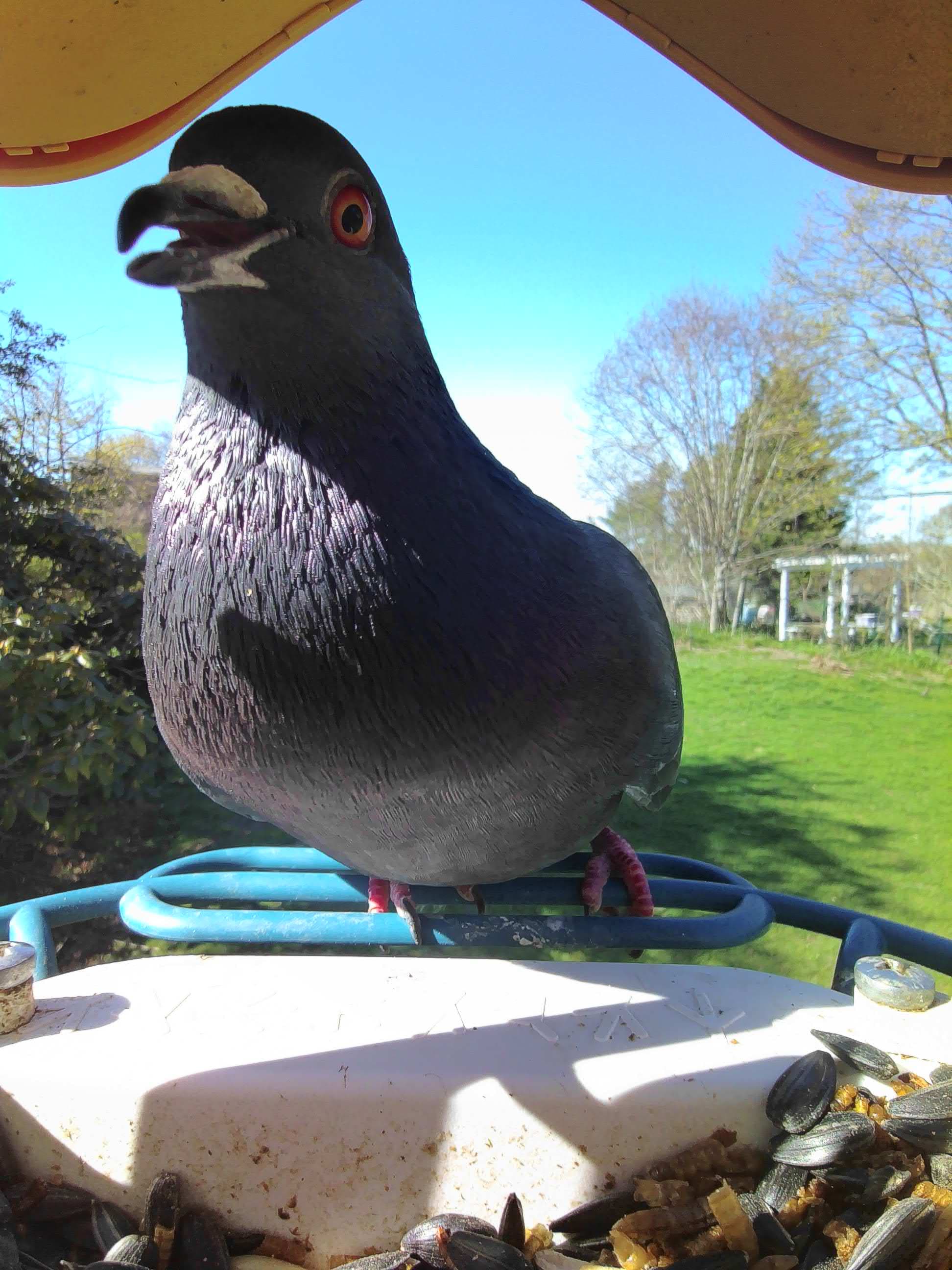
The feral pigeon is a bird with generally stocky body, and short, stout beak. Its plumage is variable, often blue-grey but can have a wide range of colors due to interbreeding. Its feathers often have iridescent neck feathers and a broad, rounded tail.
Male vs female
Males and females largely look alike, making it difficult to distinguish between the two. Both sexes generally share the same physical characteristics. However, males may have a slightly wider body and a more pronounced iridescence at the neck.
Juvenile
Juvenile feral pigeons exhibit less glossy neck feathers and have a duller, less variegated plumage than adults. They usually attain their adult coloration after their first molt. Also, their eyes are generally darker compared to the bright, orange-red eyes of the adults.
Size
11.4 - 13.8 in/8.1 - 13.1 oz
There's more to learn about Feral Pigeon
View full detailsBand-Tailed Pigeon
Patagioenas fasciata
General appearance
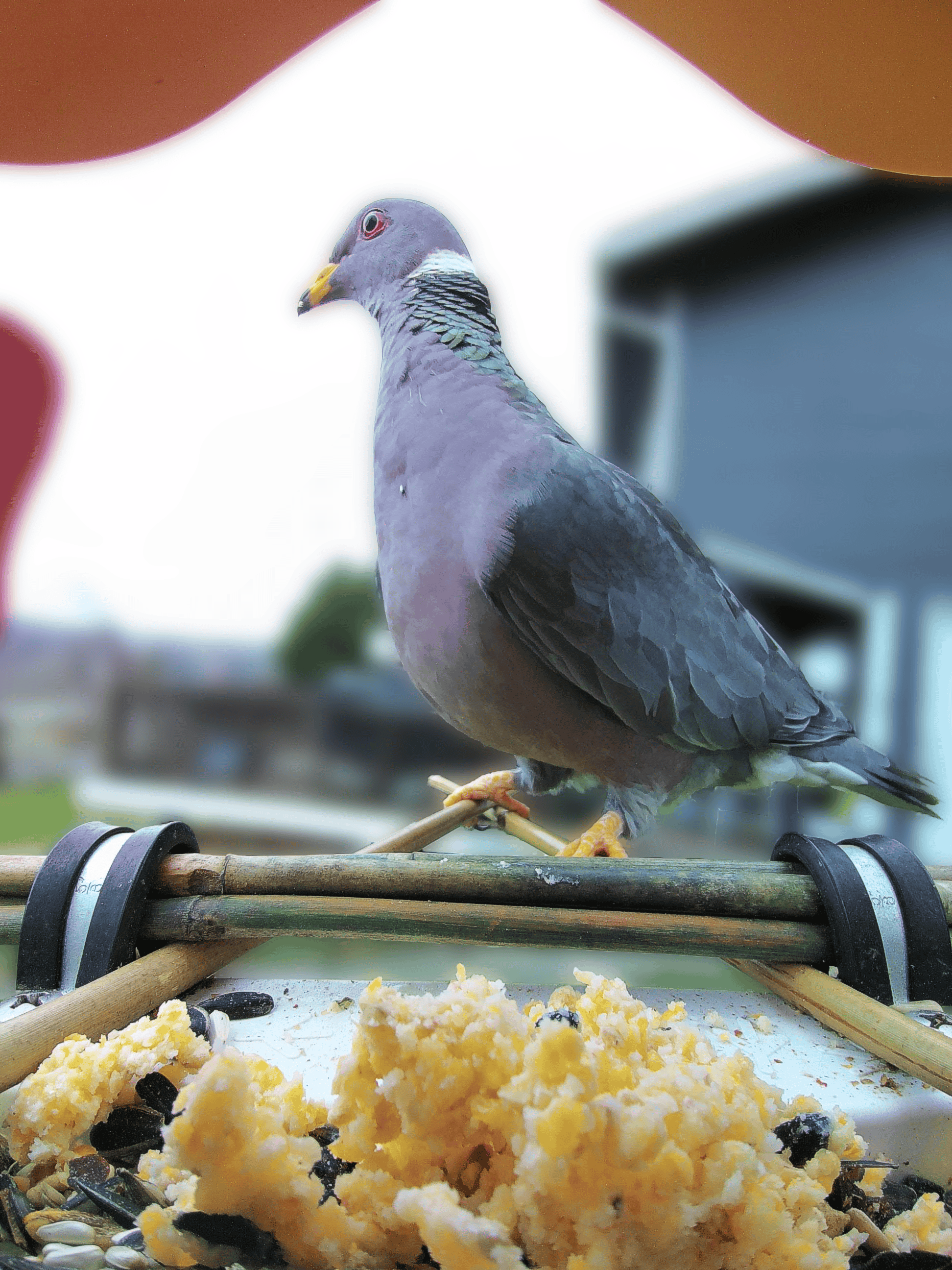
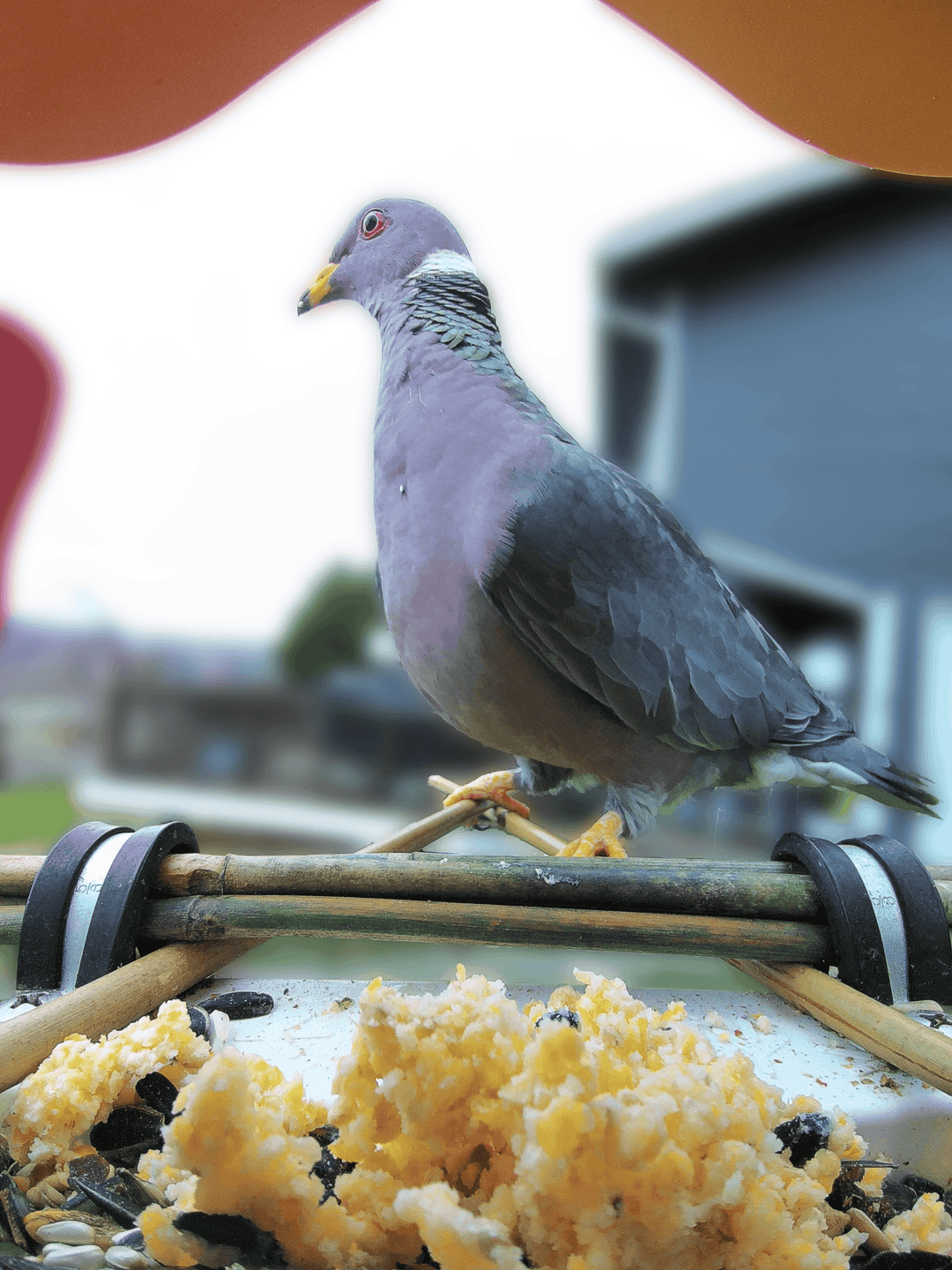
The band-tailed pigeon is a large, vibrant bird measuring around 14-15 1/2 inches or 36-39 cm. It showcases striking coloration, showcasing black, gray, purple, white, and yellow hues. A notable physical trait is the narrow white band across its nape. The bill base is yellow, while the tail possesses a broad gray band. The pigeon's head and chest are clothed in purplish-pink colors, and its neck displays hints of green iridescence.
Male vs female
There is no significant physical difference in color and size between male and female band-tailed pigeons that can be used for easy identification in the wild. Both genders exhibit similar coloration and physical features.
Juvenile
Juveniles of this species exhibit subtle differences compared to adults. They lack the distinguishing narrow white band across the nape which is a key characteristic of mature band-tailed pigeons. With time, as they mature, they will gradually acquire the vibrant adult coloration and physical traits.
Size
12.6 - 15.7 in/12.1 - 12.8 oz
There's more to learn about Band-Tailed Pigeon
View full detailsHow to tell the Feral Pigeon from the Band-Tailed Pigeon
Visual differences
Feral pigeons (11-13 inches, 8-13 oz) are stocky with variable blue-gray plumage and iridescent neck feathers. They have a short, stout beak. In contrast, band-tailed pigeons (14-15.5 inches, 12-13 oz) are larger, with a purplish-pink head and chest, a white nape band, and a yellow bill base. Their tail features a broad gray band. Both genders of each species are similar in appearance, but juveniles differ slightly.
Key differences and behavior
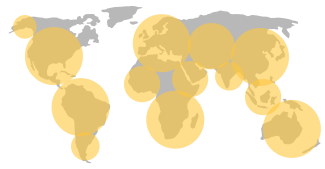
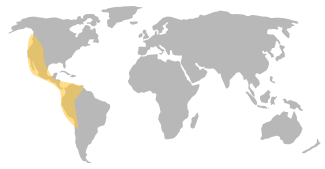
Feral Pigeons (Columba livia domestica) thrive in urban areas, building simple nests on ledges and consuming an opportunistic diet of seeds, grains, and scraps, enabling them to easily adapt to human environments worldwide. Their mating rituals involve elaborate ground displays and both parents partake in chick-rearing. Band-Tailed Pigeons (Patagioenas fasciata), on the other hand, inhabit wooded and mountainous regions, travelling up to three miles for food, which includes seeds, berries, and acorns. They exhibit aerial courtship, nesting in trees, often in colonies, and employ a similar parenting strategy as feral pigeons. While the size difference between sexes in both species is minimal, differentiating them behaviorally, the Band-Tailed Pigeon tends to be more localized to natural environments compared to the urban-adapted Feral Pigeon. Both species utilize "crop milk" to feed their young.
Still not sure? Here are more lookalikes!
Feral Pigeon vs Mourning Dove

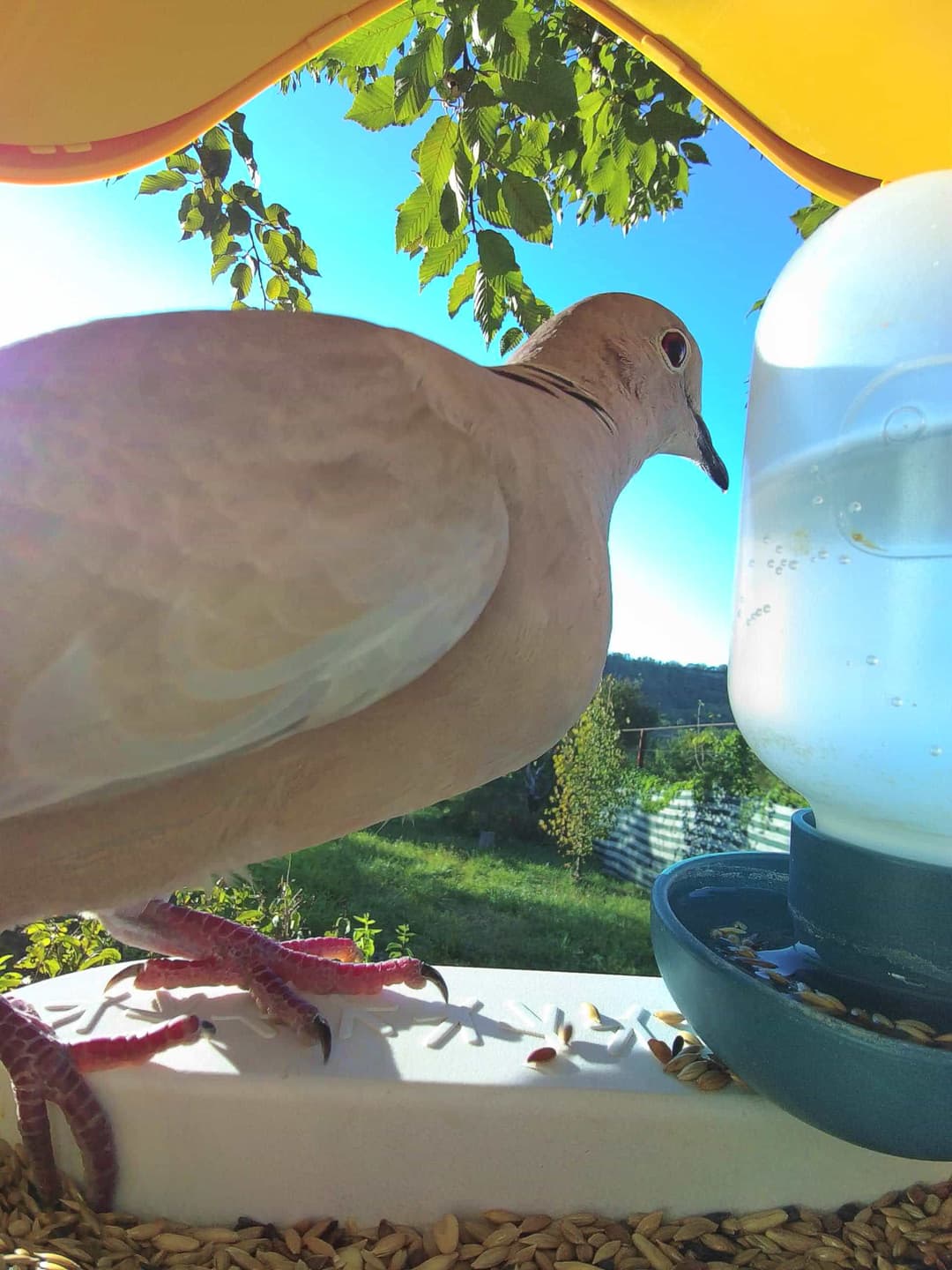
Feral Pigeon vs Eurasian Collared Dove
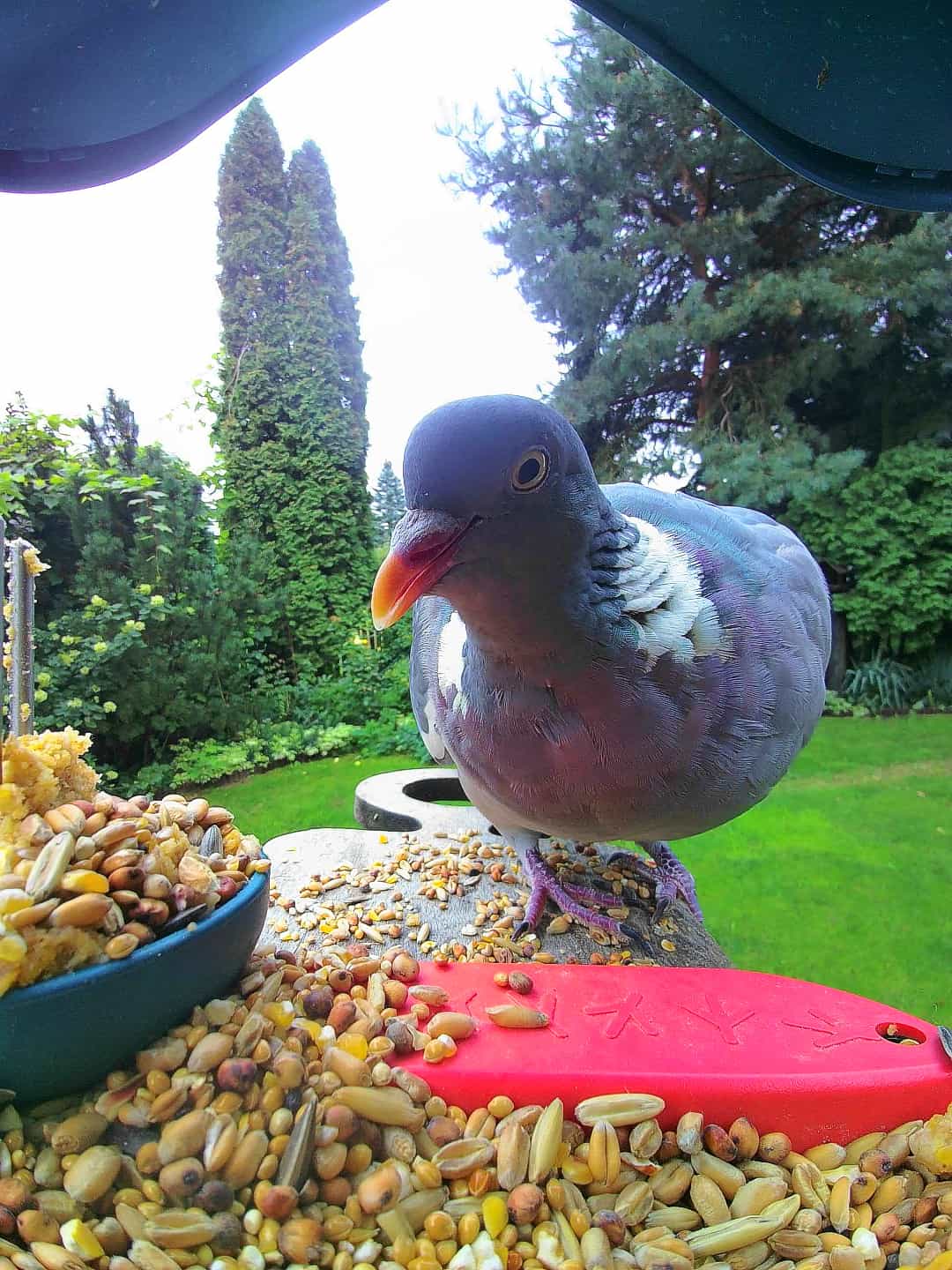
Feral Pigeon vs Common Wood Pigeon
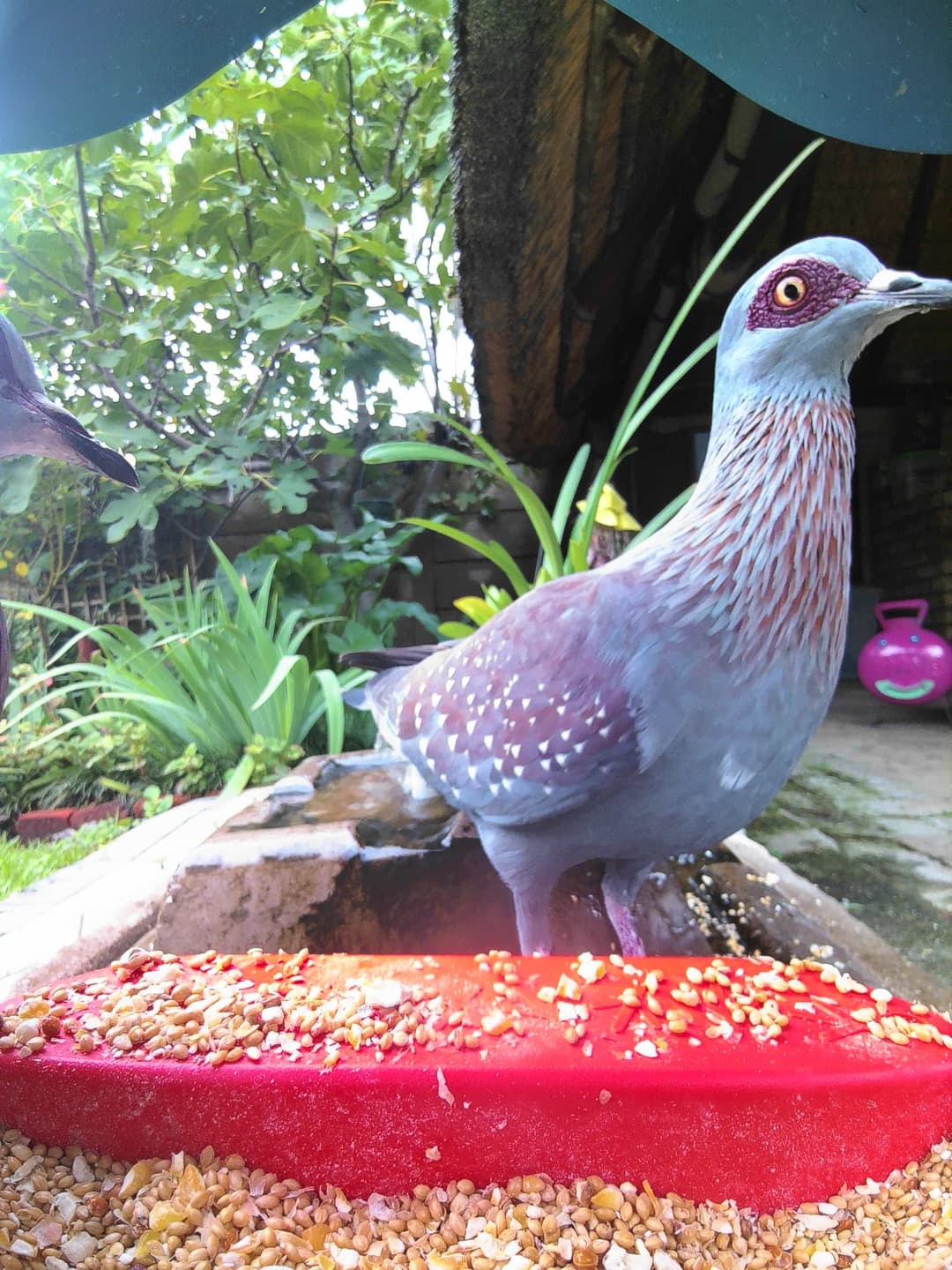
Feral Pigeon vs Speckled Pigeon
Band-Tailed Pigeon vs Eurasian Collared Dove
Band-Tailed Pigeon vs Mourning Dove
Band-Tailed Pigeon vs White-Winged Dove
Feral Pigeon vs [Select a bird]

[Select a bird]
Pick a bird to compare
Band-Tailed Pigeon vs [Select a bird]
[Select a bird]
Pick a bird to compare