
Speckled Pigeon
Speckled Pigeon
Also known as: African Rock Pigeon, Guinea Pigeon
Columba guinea


Quick Identification guide
Quick Identification guide
- •
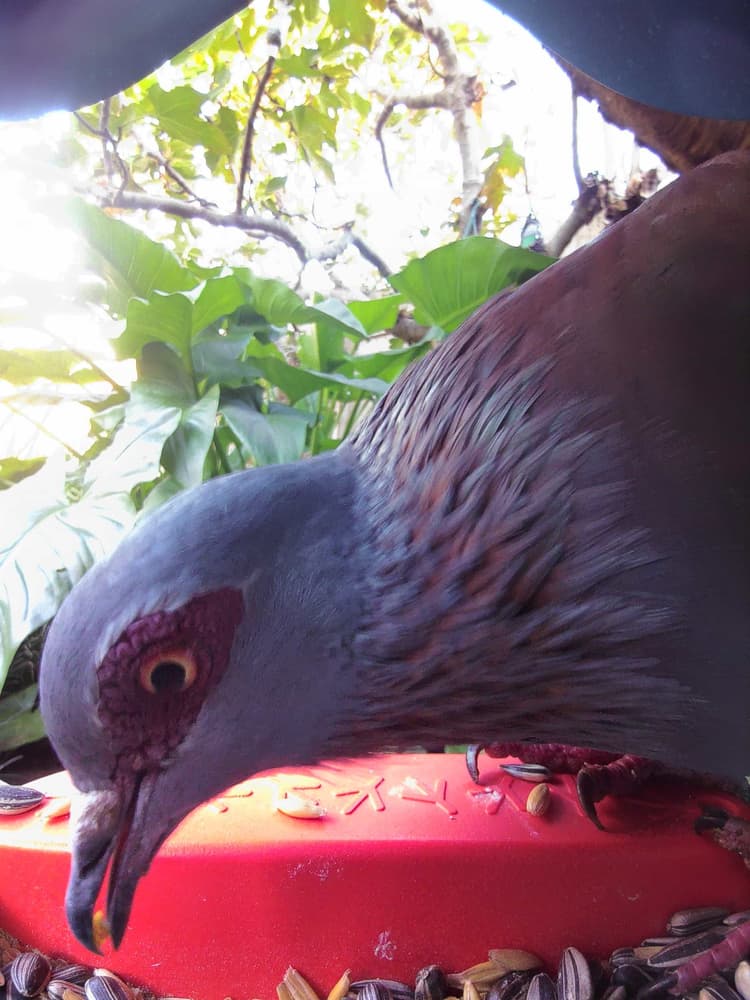
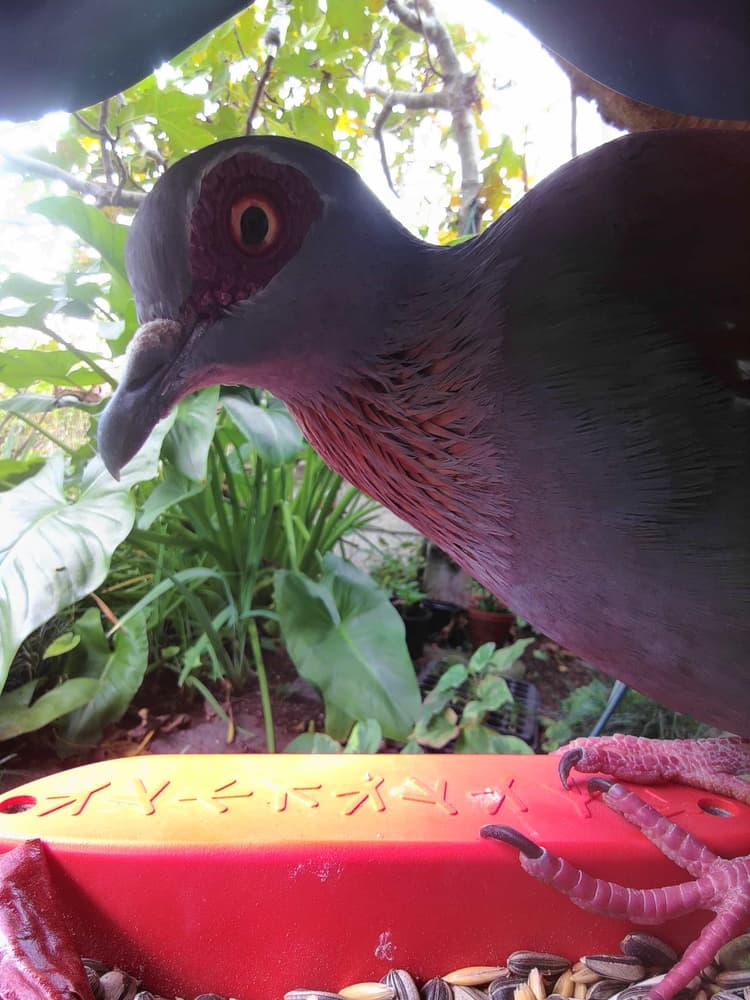
Shows off reddish-brown wings adorned with distinct white speckling, giving rise to its name
- •
Possesses a slate-gray head with a conspicuous white eye patch and a red eye-ring
- •
Exhibits a sturdy, pale gray body contrasted by a slightly darker tail
What does a speckled pigeon sound like?
The Speckled Pigeon produces several vocalizations each distinct in variety and rhythm. Their primary call resembles a cooing sound, repetitive and soothing in nature, often heard as a soft 'Coo-coooo-coo'. Their song typically comprises shorter coos interspersed with longer ones and the pace often accelerates towards the end. Both genders participate in the singing, although males are notably more vocal during the mating season. Additionally, flapping their wings during flight also produces a conspicuous clatter.


Description
Speckled pigeons are no strangers to humans or cities. In fact, they frequently nest in towns! They aren't born with the big red patch of skin that surrounds their eyes. Juveniles have to first grow up to be big and strong before developing the species' signature mark.
The speckled pigeon can weigh between 219to390grams and be from32to34centimeters tall.
The Speckled Pigeon, typically, has a lifespan of about 15 years in the wild. This longevity is relatively average when compared to other related Columbidae species, such as the Rock Dove, which also has a lifespan averaging 15 years, and the Band-tailed Pigeon typically living between 10 to 20 years.
Did you know?
Most popular questions about speckled pigeon
How to recognise a speckled pigeon?
General appearance
The Speckled Pigeon is a medium to large bird with a unique speckled-patterned feather coat. It is mainly grey with a pinkish hue at the chest, a white neck patch, and a metallic green back and wings spotted with white. The key identifying trait is the double black band on the tail feather.
Male vs female
In the Speckled Pigeon species, sexual dimorphism is not striking. Both sexes share the same characteristic plumage and coloration. However, males may be slightly larger than females, although this difference is hardly noticeable unless the birds are compared side-by-side.
Juvenile
Young speckled pigeons, often referred to as squabs, have a more dull grey plumage compared to adults and lack the speckled pattern. The striking white neck patch and tail band markings develop as they mature into adulthood.
Often mistaken for
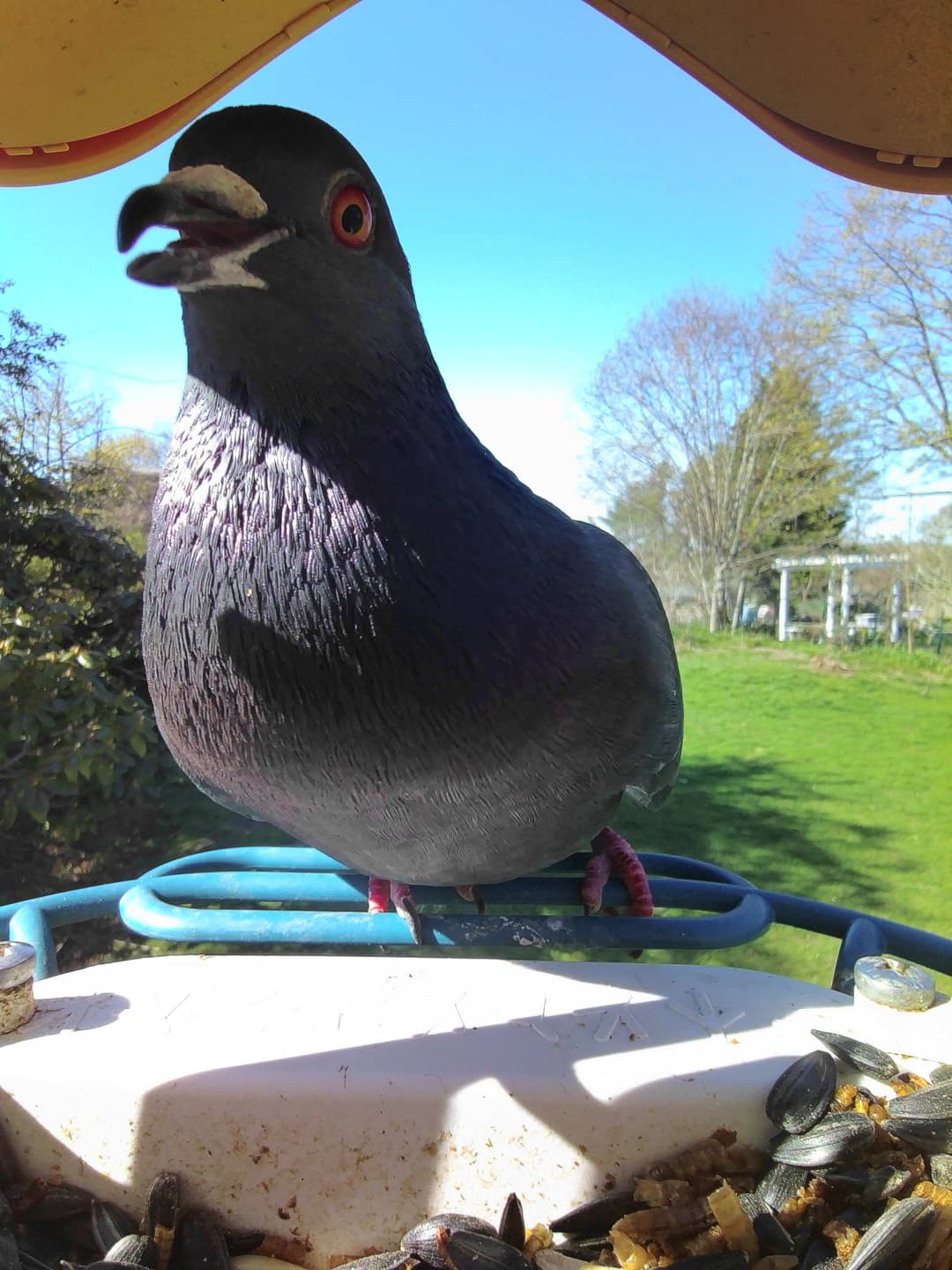
Feral Pigeon vs Speckled Pigeon
Similar size and general body shape, but the Speckled Pigeon has distinctive markings on its wings and a speckled chest, which the Feral Pigeon lacks.
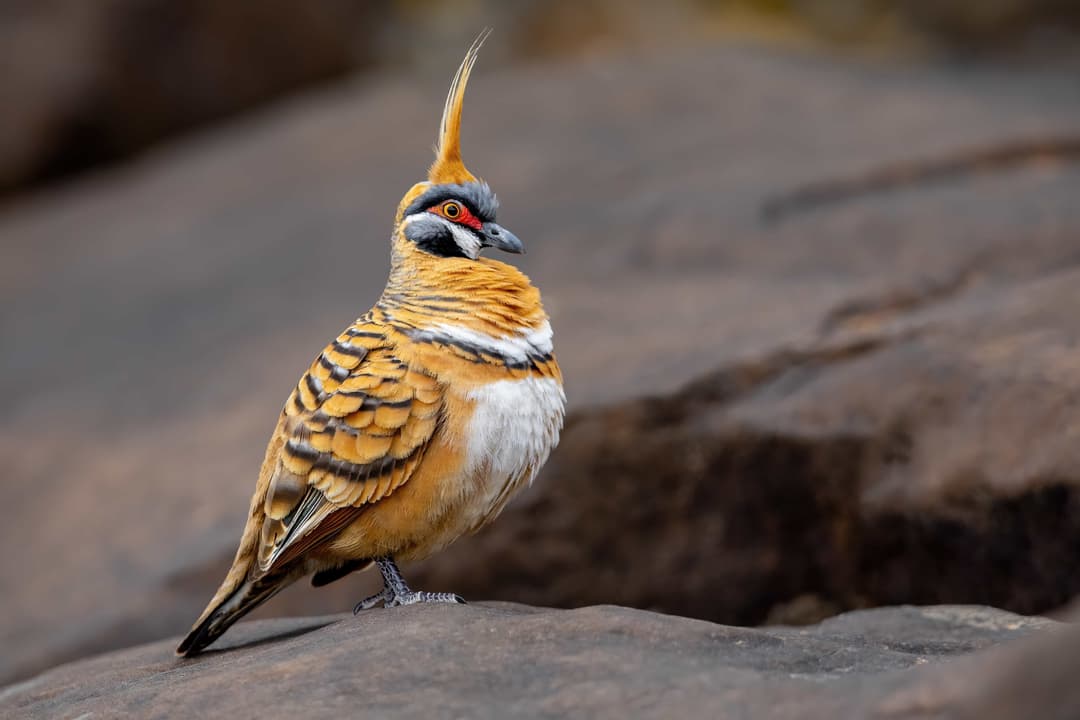
Spinifex Pigeon vs Speckled Pigeon
Like the Speckled Pigeon, the Spinifex Pigeon has a similar size and general body shape, but it is distinctly marked with bright orange markings on the face and lacks the speckled pattern on the chest.
Breeding and nesting habits of the speckled pigeon
Mating behaviors
Speckled pigeons engage in mutual preening and head-bobbing during courtship displays. The male often bows and coos to attract the female, sometimes performing short flights.
Nesting details
These pigeons nest in a variety of locations, including rocky ledges and urban structures. The nests are typically made of twigs and grasses, forming a simple platform.
Eggs and chick-rearing
A typical clutch consists of two white eggs. Both parents incubate the eggs and later feed the chicks 'pigeon milk'. Fledging occurs within 3-4 weeks, as the chicks grow rapidly under parental care.
What does a speckled pigeon like to eat?
Seeds
Snails
Natural diet
The speckled pigeon primarily feeds on seeds and grains found in its natural environment. It frequently consumes seeds from grasses, cereals, and small fruits found on trees and shrubs. Occasionally, it may also eat small insects and other invertebrates. These birds typically forage on the ground or low vegetation, seeking out food items that are readily available in their habitats.
Bird feeders
At bird feeders, the speckled pigeon is commonly seen eating grains and seeds provided by bird enthusiasts. They are attracted to a variety of seeds, including millet, cracked corn, and sunflower seeds. Additionally, they may feed on leftover breadcrumbs or other food items available at feeding stations. Their adaptability makes them frequent visitors to urban and suburban feeders.
Creating the perfect environment
Making your yard attractive to speckled pigeons is not a difficult task. These birds love a clean and peaceful environment. Make sure your yard or patio is clean and quiet. Too much noise or activity can scare them away.
Setting up a pigeon feeder
Investing in a sturdy and clean bird feeder is crucial. Speckled pigeons prefer feeders that are off the ground and can be placed either hanging from a tree branch or mounted on a pole.
Favourite snacks & bird buddy seeds
Speckled pigeons are fans of grains and seeds. A mix of wheat, barley and corn are favourites. Bird Buddy seeds are highly recommended as they have been chosen by experts for the season, thus yielding the best results.
Fun tricks to attract the speckled pigeons
Add simple bird baths or water features alongside your feeders. The sight and sound of water can attract these birds. Lastly, patience is key! It may take some time for the pigeons to find and be comfortable with your yard.
Where can you find speckled pigeons?
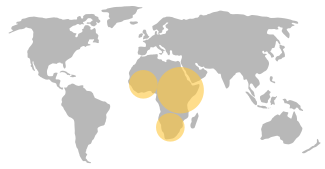
Primary habitat
The Speckled Pigeon, native to Sub-Saharan Africa, prefers rocky cliffs and mountainous terrains, including areas with human architecture and habitation.
Additional range
It has broadly adapted to urban areas, inhabiting cities and towns, adapting to buildings as nesting sites, resembling its natural rocky habitat.
Do they migrate?
The speckled pigeon (Columba guinea) is primarily a non-migratory bird, meaning it typically stays in the same region throughout the year. This bird species is widely distributed across Sub-Saharan Africa, where it inhabits a variety of environments including urban areas, open woodlands, and savannas. Although some bird species migrate to take advantage of seasonal resources, the speckled pigeon's adaptation to diverse habitats allows it to maintain a relatively stable presence in its regions year-round. This sedentary behavior is supported by its ability to exploit a wide range of food sources, such as seeds and grains, which can be found throughout the year in its habitat. In some instances, localized movements may occur, primarily driven by changes in food availability or environmental conditions, but these are not long-distance migrations. Overall, the speckled pigeon's adaptability and wide distribution in Africa support a consistent residency without the need for significant migratory behavior.
What is the role of speckled pigeons in nature and how to protect them?
Conservation status
The speckled pigeon is classified as "Least Concern" by the IUCN, indicating it is common and not currently at risk of extinction. This bird is widely distributed across sub-Saharan Africa and adapts well to urban and rural environments. Key conservation efforts are minimal due to its stable population. However, habitat destruction and urban expansion could pose future threats if not managed sustainably. Despite these potential threats, the speckled pigeon remains abundant, and no significant immediate conservation actions are required.
Ecological role of speckled pigeons
Its role in the ecosystem
The speckled pigeon, also known as the African Rock Pigeon, plays a critical role in the ecosystem through seed dispersal and pest control. Pigeons consume a variety of fruits, seeds, and nuts, thereby aiding in the dispersion of these plant materials over large geographic areas in their droppings. This significantly contributes to plant diversity and forest regeneration. Additionally, speckled pigeons also feed on insects and pests, helping to control their population which can often be a menace to agriculture. Their nests, built in cliff faces or tall city structures, provide shelter to other organisms and often contribute to the vital nesting habitats. The presence of these pigeons can also serve as indicators of local biodiversity health. Therefore, the preservation of the speckled pigeon population is essential for maintaining the ecological balance.
How to help protect speckled pigeons
Preservation tips
Habitat preservation strategies
Safeguard the natural ecosystem where speckled pigeons are found. Limiting deforestation and maintaining urban green spaces are important. Improve food availability by planting native trees and bushes producing berries and seeds. Limit use of harmful pesticides affecting the bird's food supply.
Community science initiatives
Encourage citizen science programs to monitor speckled pigeon populations and participate in scientific research. Promote awareness about the speckled pigeon and its conservation needs through educational events and materials. Encourage the local community to build bird houses to provide safe nesting spaces for this species.