
Ruby-Throated Hummingbird
Ruby-Throated Hummingbird
Archilochus colubris


Quick Identification guide
Quick Identification guide
Male
- •
Brilliant ruby-red throat that shimmers in the light
- •
Metallic green upperparts with a white underbelly
- •
Straight, slender beak ideal for feeding on nectar
Female
- •
Plain white throat contrasting with the green upperparts
- •
Metallic green back with a greyish white underbelly
- •
Long, pointed beak similar to the male
What does a ruby-throated hummingbird sound like?
The ruby-throated hummingbird communicates through mouse-like, twittering squeaks. Its vocalizations typically follow a flat call pattern. The different types of calls it uses range from a buzzing sound to chirps and chips, and even trills. These remarkable sounds create a unique language for this diminutive bird.


Description
Did you know hummingbirds and swifts belong to the Apodiformes order? This means “without feet”, because it was believed they didn't have any! Well, turns out they all do, although ruby-throated hummingbirds' legs are so short they can neither walk nor hop. Only shuffle. Every day they're shuffling, as the kids would say. They're pretty cool in other ways, too! Did you know they beat their wings 53 times a second?
The ruby-throated hummingbird can weigh between 2to6grams and be from7to10centimeters tall.
The typical ruby-throated hummingbird can live up to 9 years, but most only survive 5-6 years. This longevity is higher compared to some related species like the Rufous hummingbird, which only lives 3-5 years. However, other species, like the broad-tailed hummingbird, can live similarly up to 12 years, reflecting significant lifespan variation within the hummingbird genus.
Where can you find ruby-throated hummingbirds?
Based on Birdbuddy sighting data. Bubbles represent reported bird sightings over the past years.
Embed this mapPrimary habitat
The ruby-throated hummingbird favors semi-open habitats, which include open woods, forest clearings and edges, gardens, and city parks. It typically resides in these areas during the summer.
Additional range
During winters, it's usually found in open or dry tropical scrub, avoiding rain forests. While migrating, it may rest in any open habitat with flowers.
Do they migrate?
The ruby-throated hummingbird is a migratory bird, undertaking impressive biannual migrations between its breeding and wintering grounds. In the fall, the vast majority of these birds leave their breeding areas in North America, which span from the eastern United States to southern Canada, and head south to their winter habitats in Mexico, Costa Rica, and Panama. During this migration, some ruby-throated hummingbirds undertake a challenging non-stop flight across the Gulf of Mexico, which can span up to 500 miles. However, a significant number choose a more terrestrial route by traveling around the Gulf, concentrating along the Texas coast before continuing their journey southward. In the spring, the migration pattern changes slightly; males typically begin their journey north earlier than females. This early departure allows them to establish and defend territories in their breeding grounds before the females arrive, enhancing their chances of successful mating. The return migration sees ruby-throated hummingbirds re-entering North American regions to breed and raise their young, completing the incredible migratory cycle. This northward journey is timed to coincide with the bloom of flowers and emergence of insects, providing vital food resources for the birds upon their return.
Did you know?
Most popular questions about ruby-throated hummingbird
How to recognise a ruby-throated hummingbird?
General appearance
The ruby-throated hummingbird is a small bird with iridescent green plumage on its back and head, and white underparts. It has a slender, straight bill designed for feeding on nectar. Its wings are narrow and enable rapid, agile flight, making a buzzing sound that is often the first indicator of its presence in the wild.
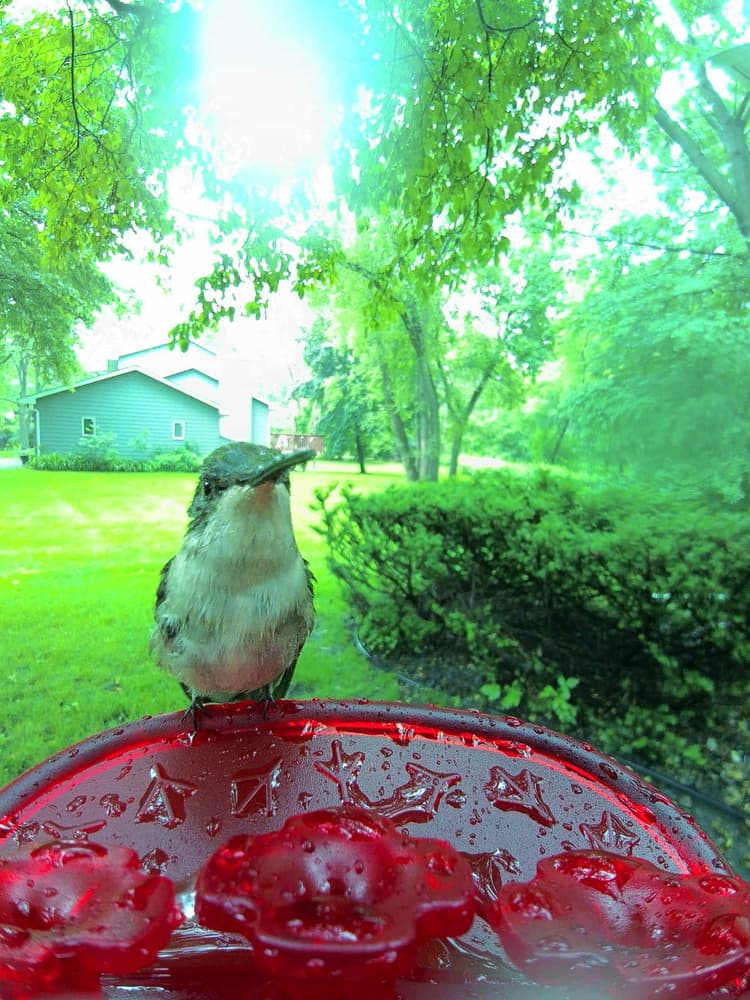
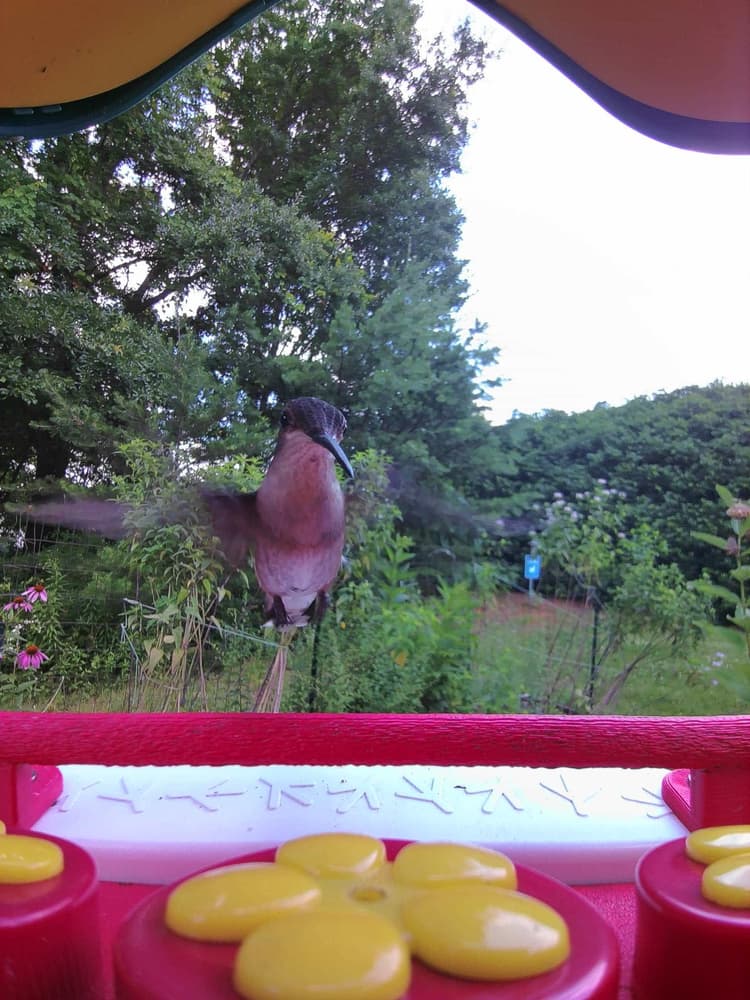
Male vs female
Males are distinguished by their striking ruby-red throat patch, known as a gorget, which can appear black in poor lighting. Their tail feathers are forked with a dark, iridescent blue-green. Females lack the bright throat patch and instead have white underparts with a light spotting or streaking. Their tail feathers are rounded and edged with white.
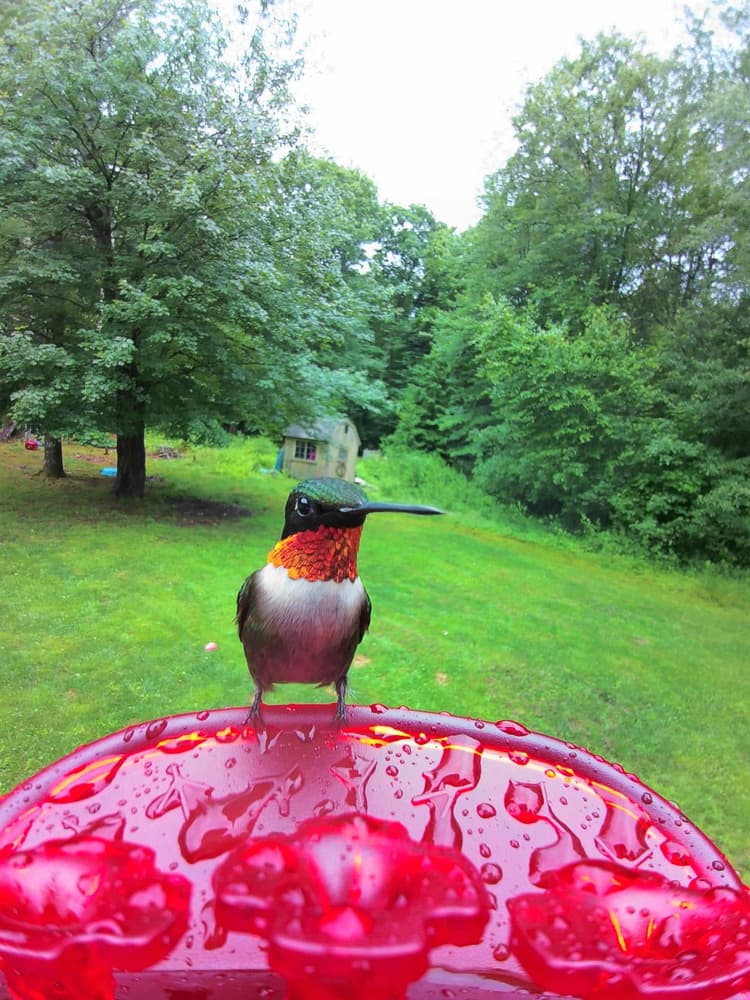
Male Ruby-Throated Hummingbird
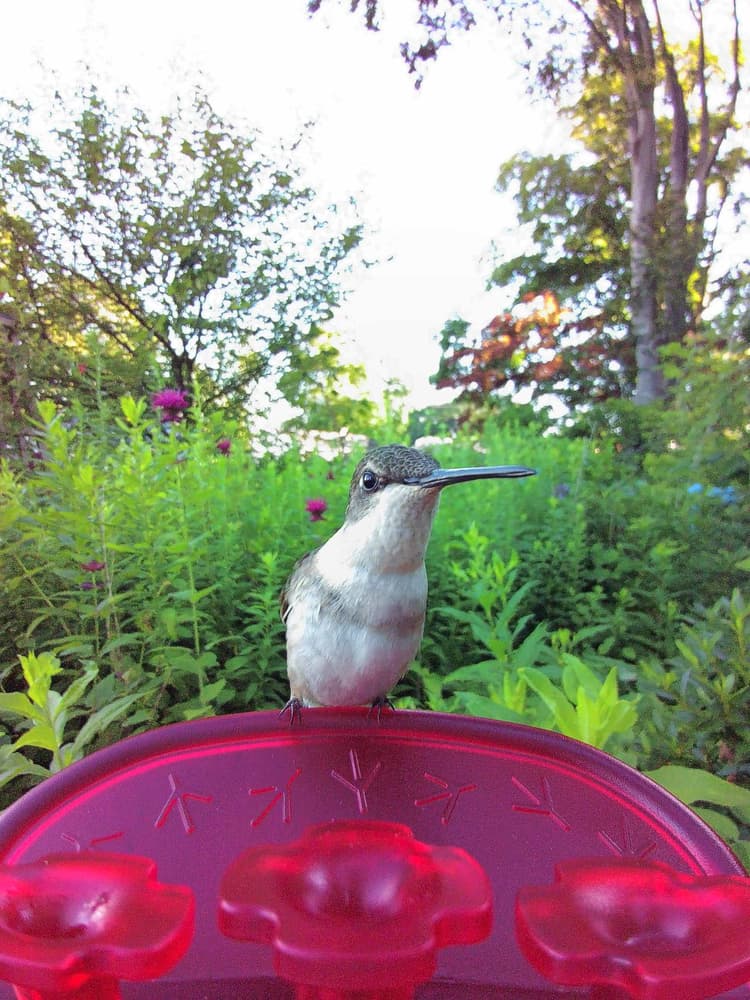
Female Ruby-Throated Hummingbird
Juvenile
Juveniles resemble adult females with similar green and white coloring. They lack the distinctive gorget of adult males. As they mature, young males begin to develop the red throat feathers that gradually replace the white of their juvenile plumage. Juveniles have buffy edges to their plumage, especially noticeable on the breast.
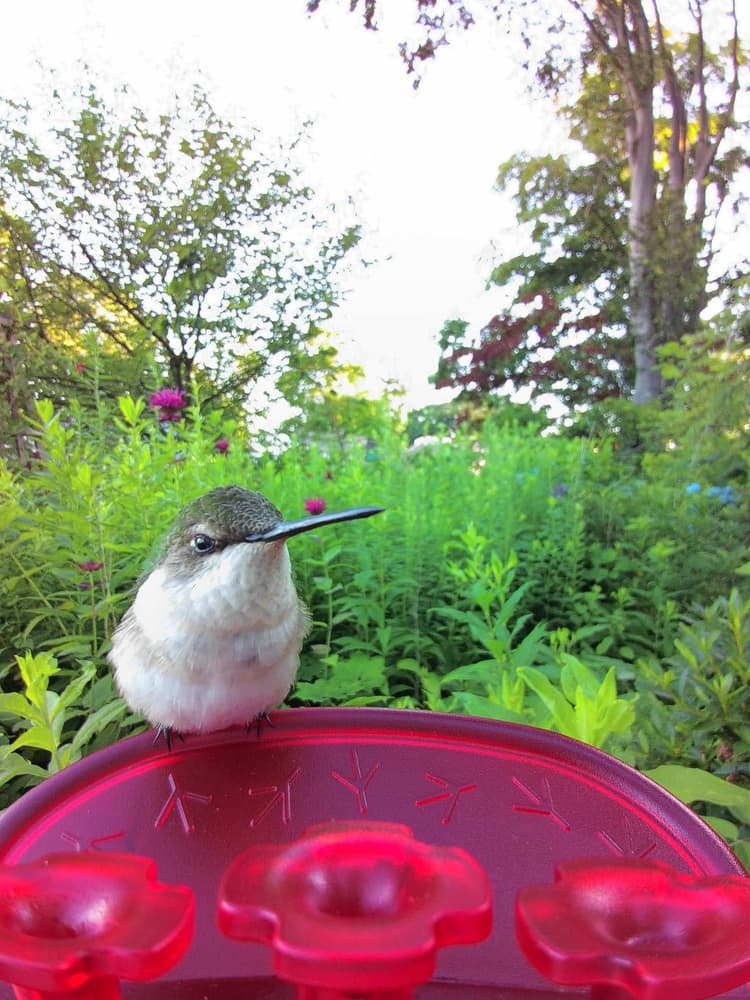
Often mistaken for
Black-Chinned Hummingbird vs Ruby-Throated Hummingbird
Ruby-Throated has a bright ruby-red throat in males, whereas the Black-Chinned features a more subtly iridescent purple throat band. Black-Chinned has a black chin and throat, contrasting with its white collar, while Ruby-Throated lacks this distinctive feature.
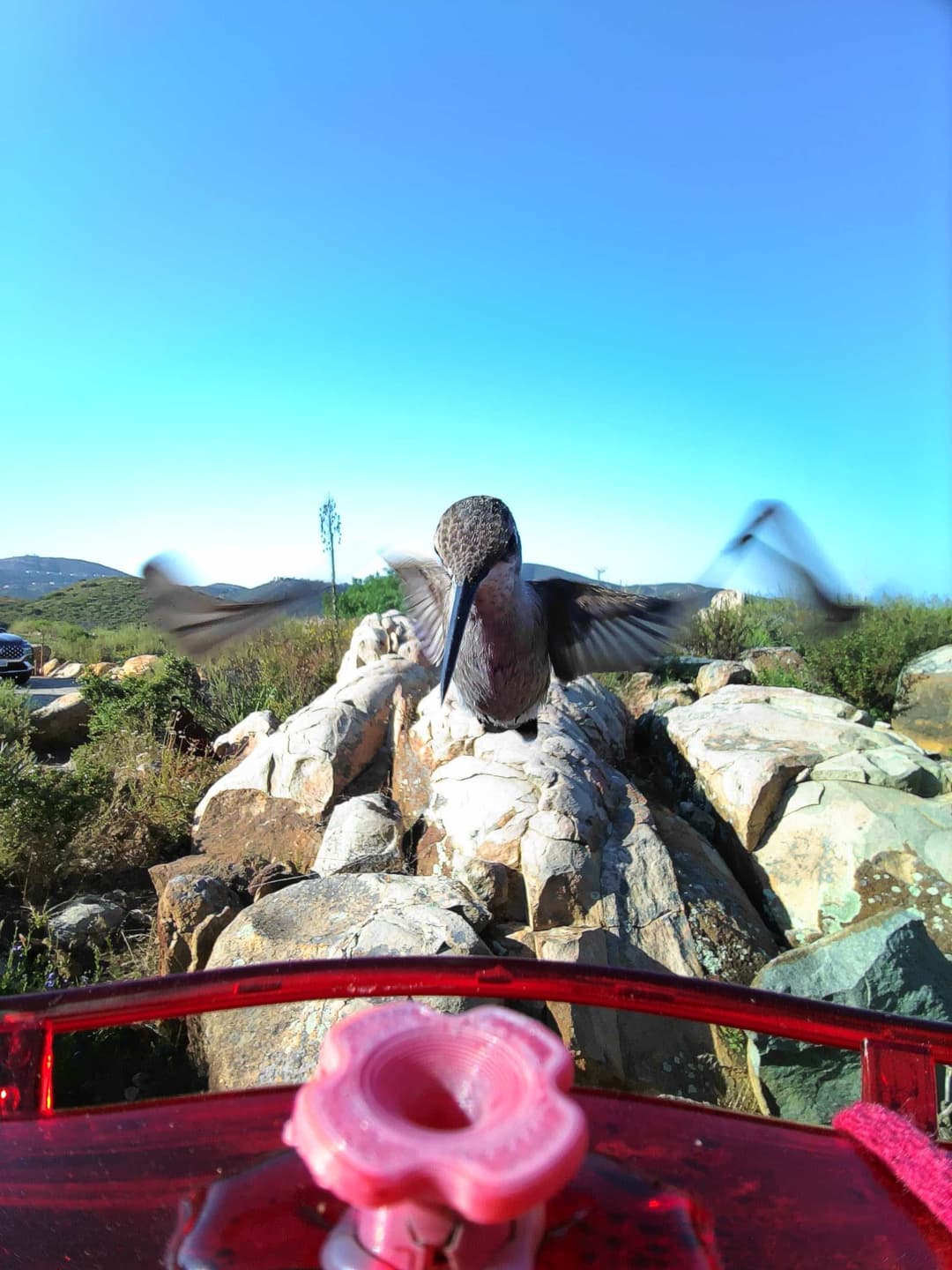
Broad-Tailed Hummingbird vs Ruby-Throated Hummingbird
The Ruby-Throated is smaller with a vivid ruby throat in males, differentiating it from the Broad-Tailed whose males have a rose-magenta throat. The Broad-Tailed produces a unique metallic wing trill in flight which Ruby-Throated lacks.
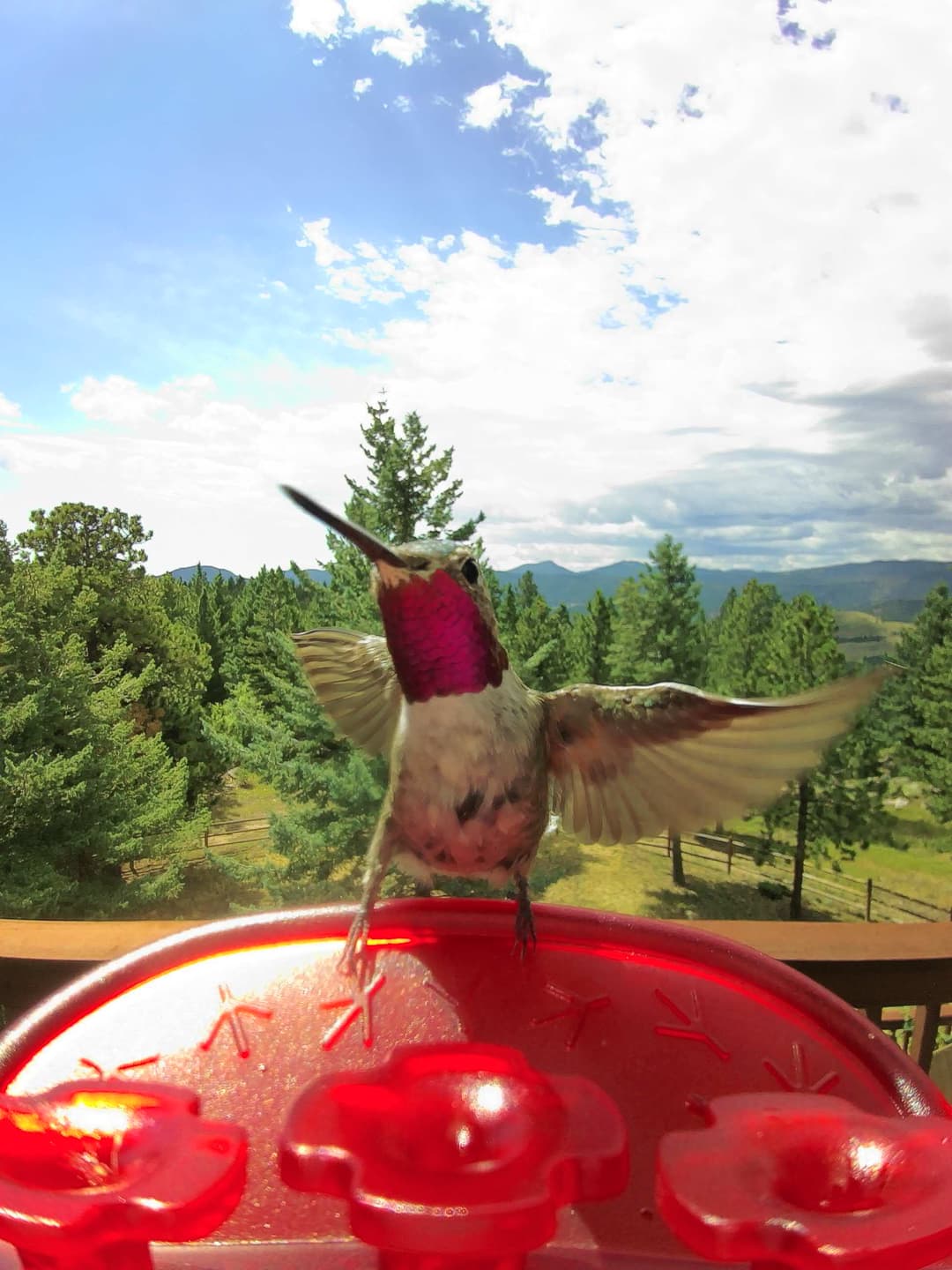
Anna's Hummingbird vs Ruby-Throated Hummingbird
Ruby-Throated males have a brilliant ruby throat and green back, contrasting with Anna's bright rose-pink throat and crown. Anna's prefers coastal regions, offering further geographical distinction.
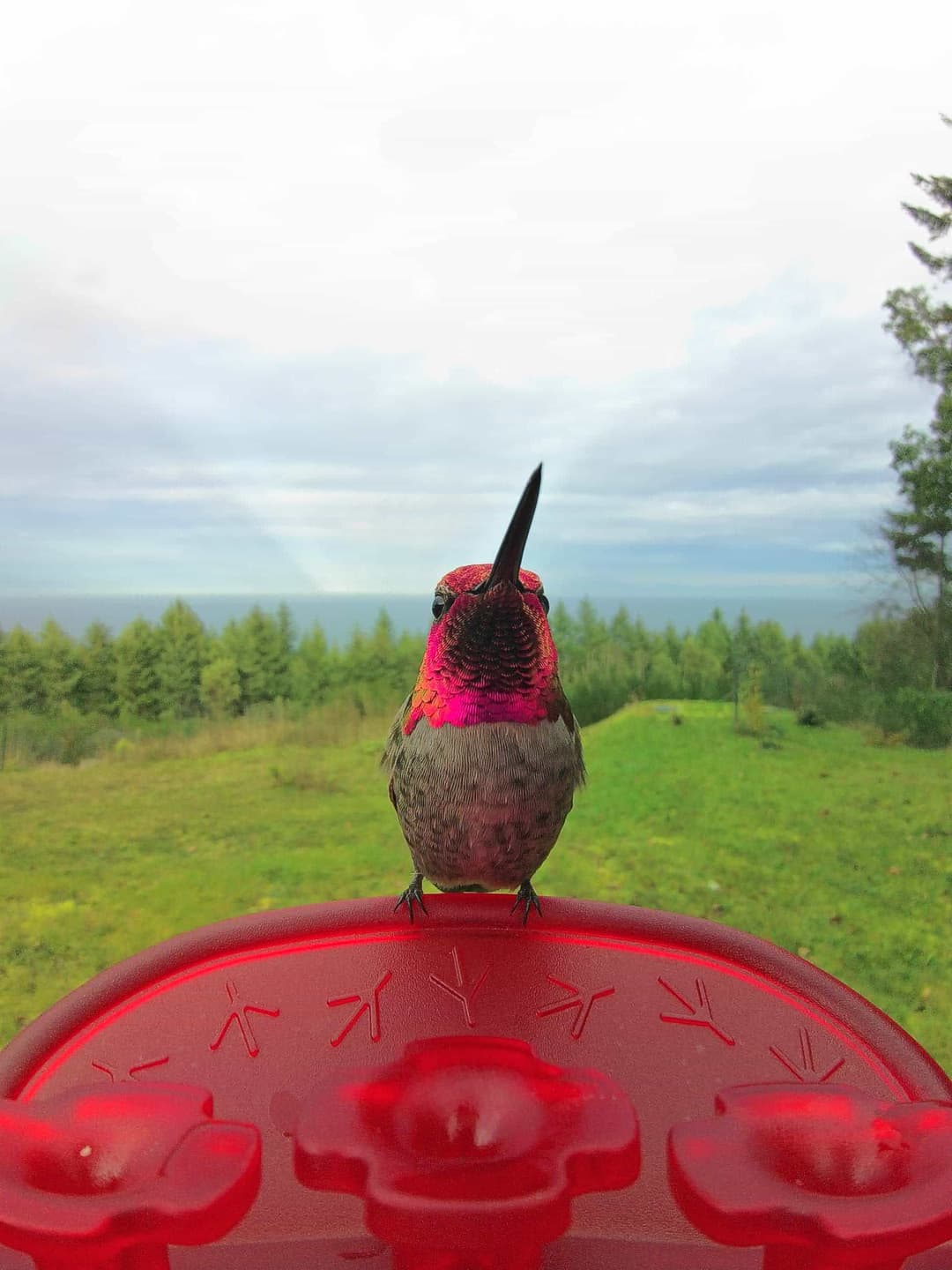
Rufous Hummingbird vs Ruby-Throated Hummingbird
Ruby-Throated displays a ruby throat (males) and green upperparts, differing from the Rufous which boasts rufous coloring on its back and belly. Rufous has a more aggressive territorial behavior often noted at feeders.
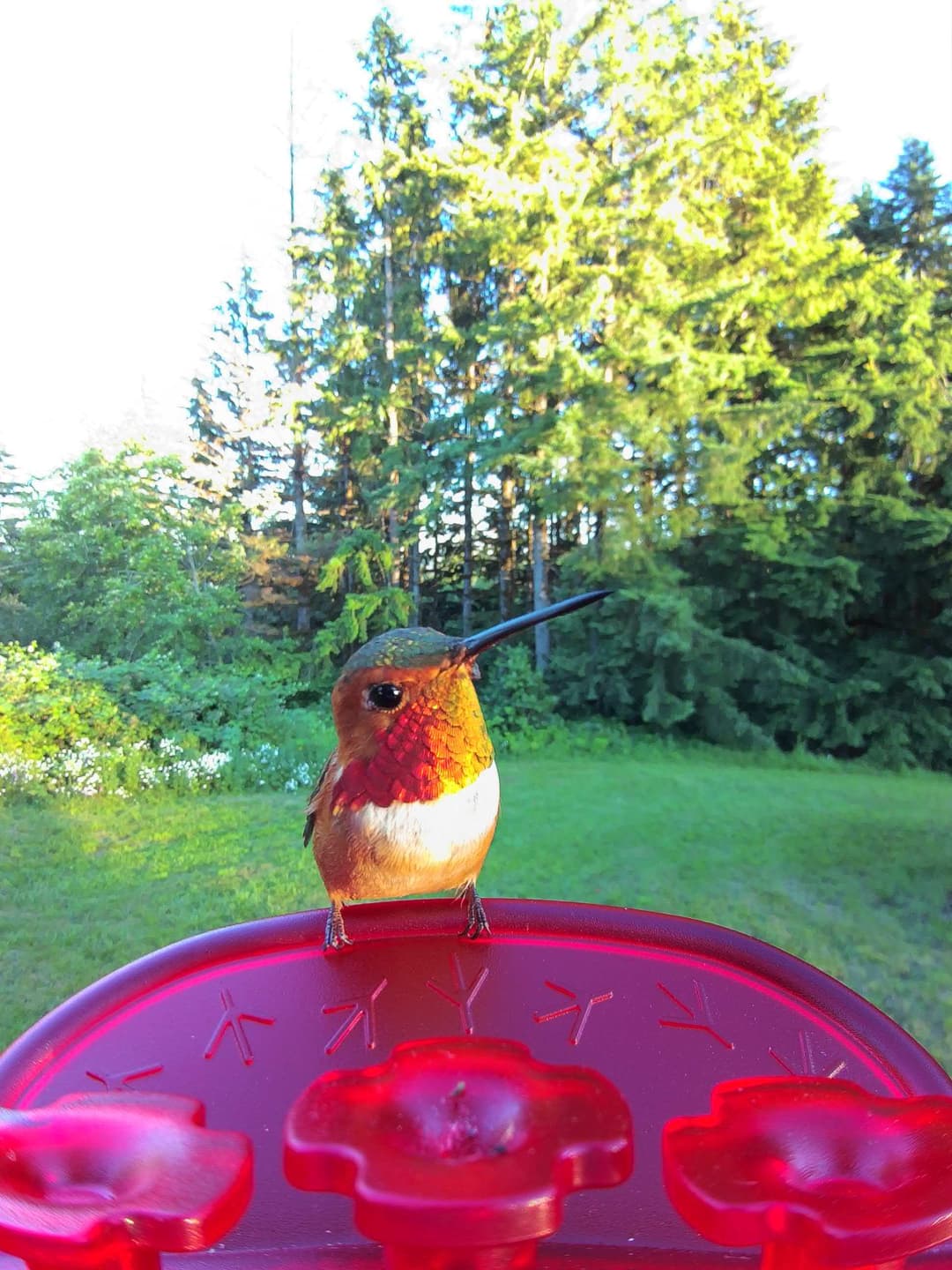
Breeding and nesting habits of the ruby-throated hummingbird
Mating behaviors
Male ruby-throated hummingbirds perform a courtship display that involves flying back and forth in front of the female in a wide U-shaped 'pendulum' arc while making a whirring sound during each dive. They also buzz back and forth in short passes in front of the perched female.
Nesting details
Nesting sites are typically located in trees or large shrubs, at a height of 5-50 feet above the ground, commonly 10-20 feet. Nests are constructed on horizontal branches or ones sloping down from the tree, often surrounded by leafy cover. The female builds a compact cup-shaped nest using grasses, plant fibers, and spider webs, lining it with plant down. The outside is camouflaged using lichens and dead leaves.
Eggs and chick-rearing
The female ruby-throated hummingbird is responsible for laying and incubating the eggs, as well as feeding and rearing the chicks. She ensures the nest is well-hidden and provides warmth and food to the chicks until they fledge.
What does a ruby-throated hummingbird like to eat?
Insects
Nectar
Sap
Spiders
Natural diet
The ruby-throated hummingbird primarily consumes nectar and insects. It collects nectar from flowers, showing a preference for tubular flowers such as those of the trumpet vine. Additionally, this bird supplements its diet by feeding on tiny insects.
Bird feeders
At bird feeders, the ruby-throated hummingbird is commonly attracted to sugar-water mixtures, which mimic the nectar it finds in nature.
Attracting ruby-throated hummingbirds
One of the best ways to attract these dainty fliers is by installing a hummingbird feeder in your yard. Choose a feeder with a bright red colour, as hummingbirds are attracted to this hue. Make sure it is clean and fill it with a homemade nectar mix - 4 parts water, 1 part white granulated sugar - and avoid using any artificial red dye.
Favorite snacks for hummingbirds
Ruby-Throated Hummingbirds are attracted to sweet snacks. Consider planting nectar-bearing plants like trumpet creeper, bee balm, and petunias. These provide a natural food source and can be a fun addition to your yard. For optimum results, supplement these with Bird Buddy seeds, handpicked by experts for the season.
More tricks to make your yard irresistible
In addition to feeders and nectar plants, provide perching spots for these little birds to rest and sing. Place the feeders near windows where you can observe their beautiful display. Remember, the key is consistency in having fresh nectar and seeds. Following these tips might not just encourage your feathered friends to drop by, but also to stick around for your own little backyard sing-along.
What is the role of ruby-throated hummingbirds in nature and how to protect them?
Conservation status
The ruby-throated hummingbird is considered common and not currently vulnerable or endangered. While some surveys suggest declines in certain regions, there is no distinct overall downward trend. Key conservation efforts focus on habitat preservation, particularly in breeding and migratory stopover sites. Threats to the species include habitat loss due to development and climate change, which can disrupt migratory patterns and breeding. Public education and community-based habitat restoration projects are vital in supporting these hummingbirds by providing nectar-rich flowering plants and safe migratory routes.
Ecological role of ruby-throated hummingbirds
Its role in the ecosystem
The Ruby-Throated Hummingbird plays an integral role in ecosystem services through its feeding behavior and reproductive habits. Its diet primarily consists of nectar from flowers and small insects. By cross-pollination, during nectar feeding, it contributes to plant reproduction and diversity. The insects it consumes, including ones it plucks from spider webs, contribute to pest control, thereby maintaining ecological balance. Despite its small size, its preferential feeding on tubular flowers like the trumpet vine signifies its role in the dispersion of specific types of seeds. Furthermore, the construction of multiple nests per year, also contributes to the ecosystem by recycling organic material.
How to help protect ruby-throated hummingbirds
Preservation tips
Habitat preservation
Encourage the planting of native plants to attract ruby-throated hummingbirds and provide nectar, particularly red flowering species. Enhance the habitat by keeping a water source, providing nesting materials, and using feeders with a four-to-one water to sugar ratio. Avoid the use of pesticides which can harm hummingbirds directly or can deplete their insect food source.
Community science initiatives
Participate in community science programs such as 'Hummingbirds at Home' which track hummingbird sightings and behaviors. The collected data aids research and conservation efforts. Additionally, educating local communities about the birds' role in pollination and the ecosystem helps increase awareness and support for their conservation.