Red-Breasted Sapsucker or Yellow-Bellied Sapsucker?
Here's how to tell the difference

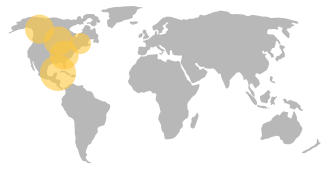
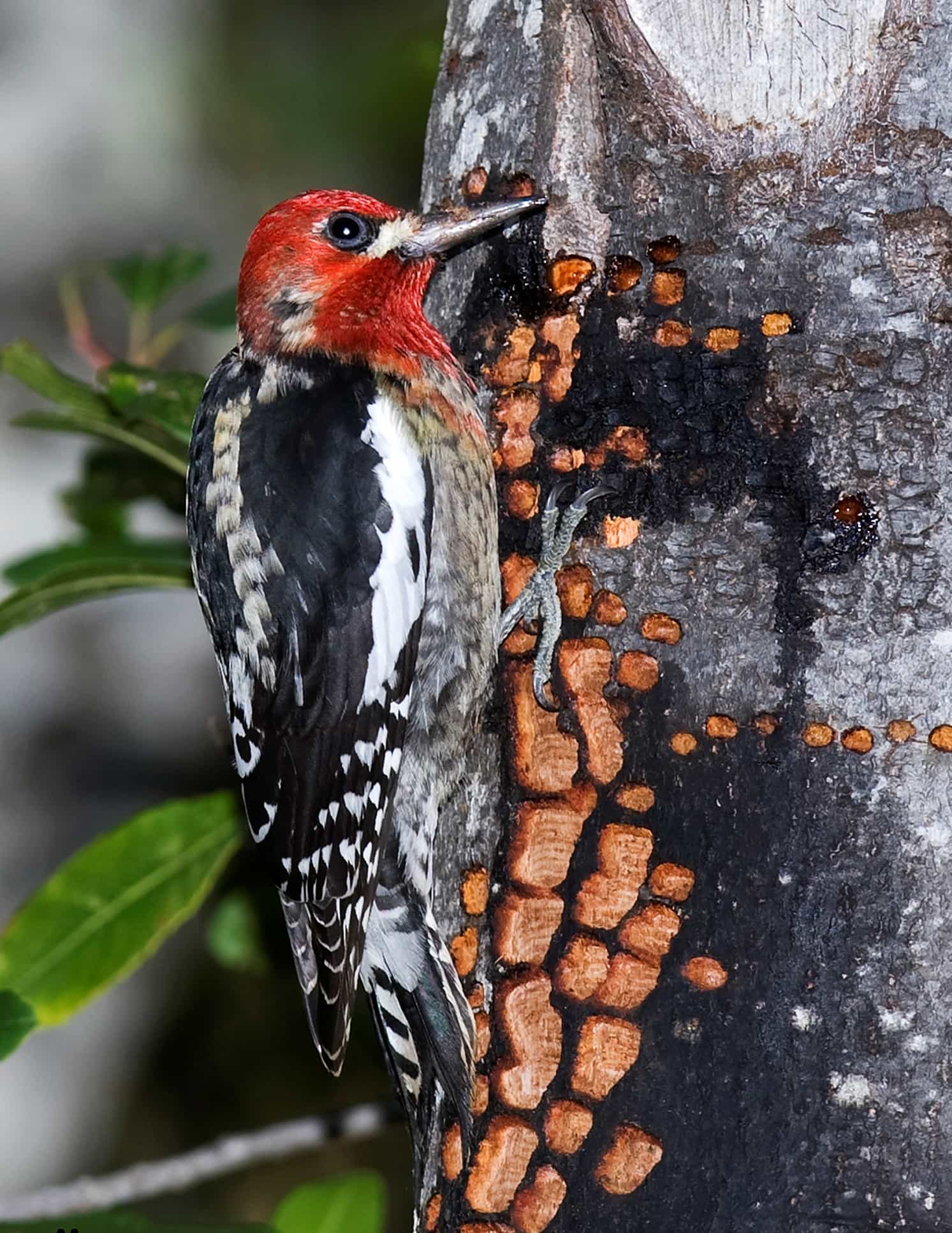
Red-Breasted Sapsucker
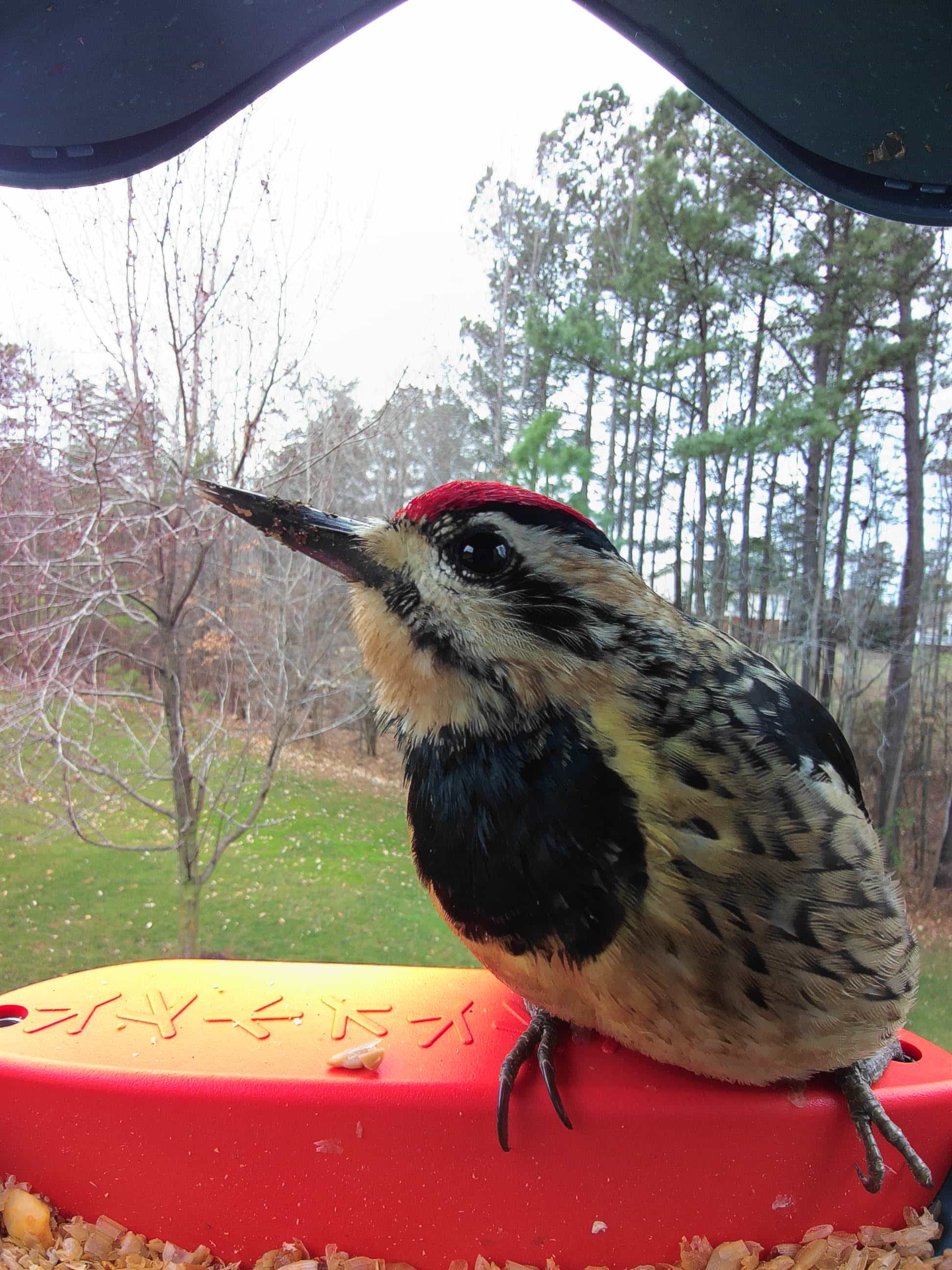


Yellow-Bellied Sapsucker
Red-Breasted Sapsucker
Sphyrapicus ruber
General appearance
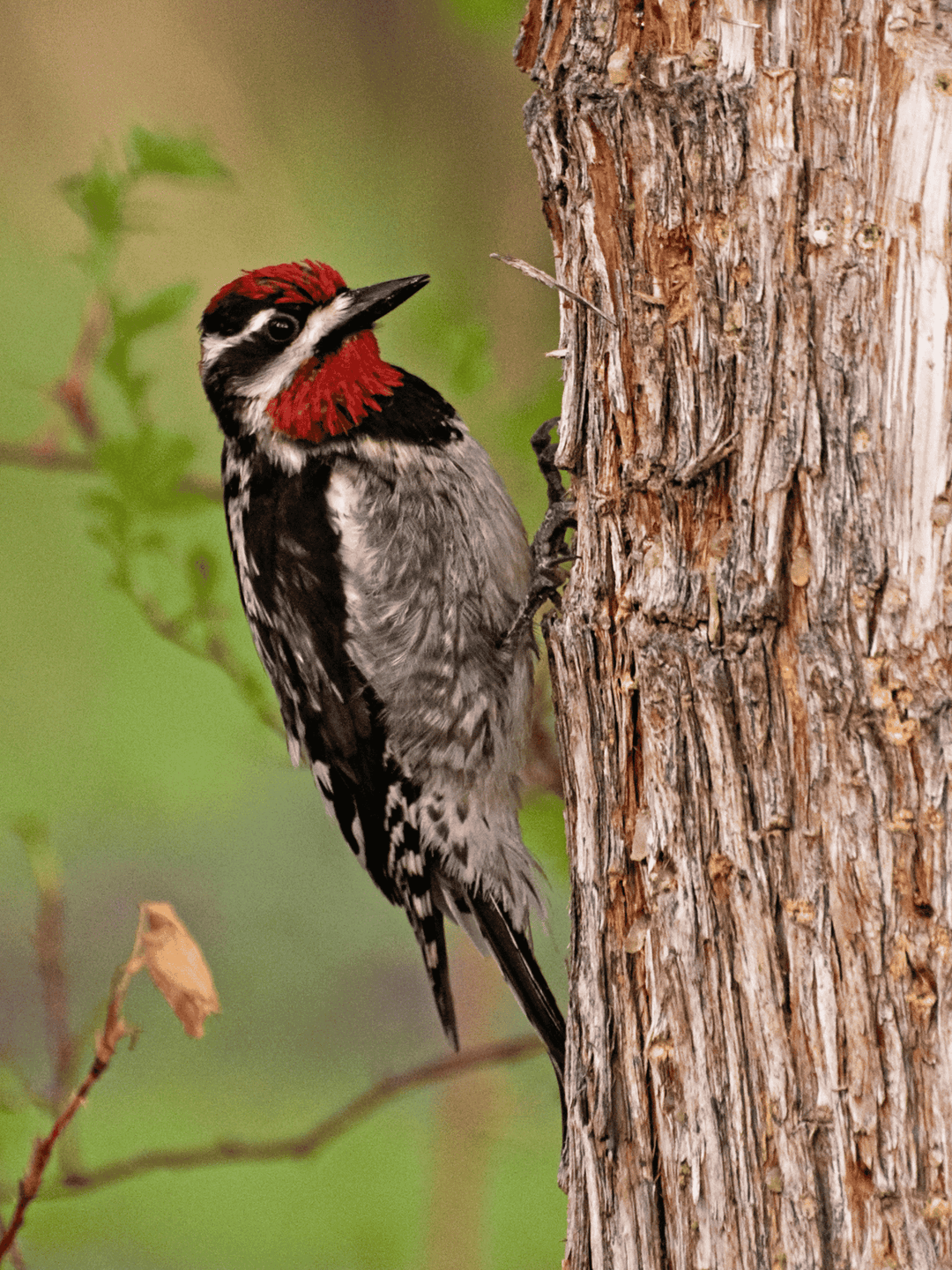
The red-breasted sapsucker is a medium-sized woodpecker known for its vivid red head, throat, and chest. Its back is predominantly black with white barring, while the wings are black with white spots. Underparts are pale, and its tail is black with white outer feathers. It has a sturdy bill, ideal for drilling into trees.
Male vs female
The red-breasted sapsucker exhibits minimal sexual dimorphism, making it difficult to distinguish between males and females in the field. Both sexes appear similar in size and coloration. Generally, the red coloration is slightly more intense in males, but this can be challenging to observe without direct comparison.
Juvenile
Juveniles are less vibrantly colored than adults, featuring a mottled mix of brown and gray on their heads and less prominent red on their throats and breasts. The back and wings display the typical patterns but are duller. As they mature, juveniles gradually acquire the distinctive adult plumage.
Size
7.9 - 8.7 in/1.4 - 2.4 oz
There's more to learn about Red-Breasted Sapsucker
View full detailsYellow-Bellied Sapsucker
Sphyrapicus varius
General appearance
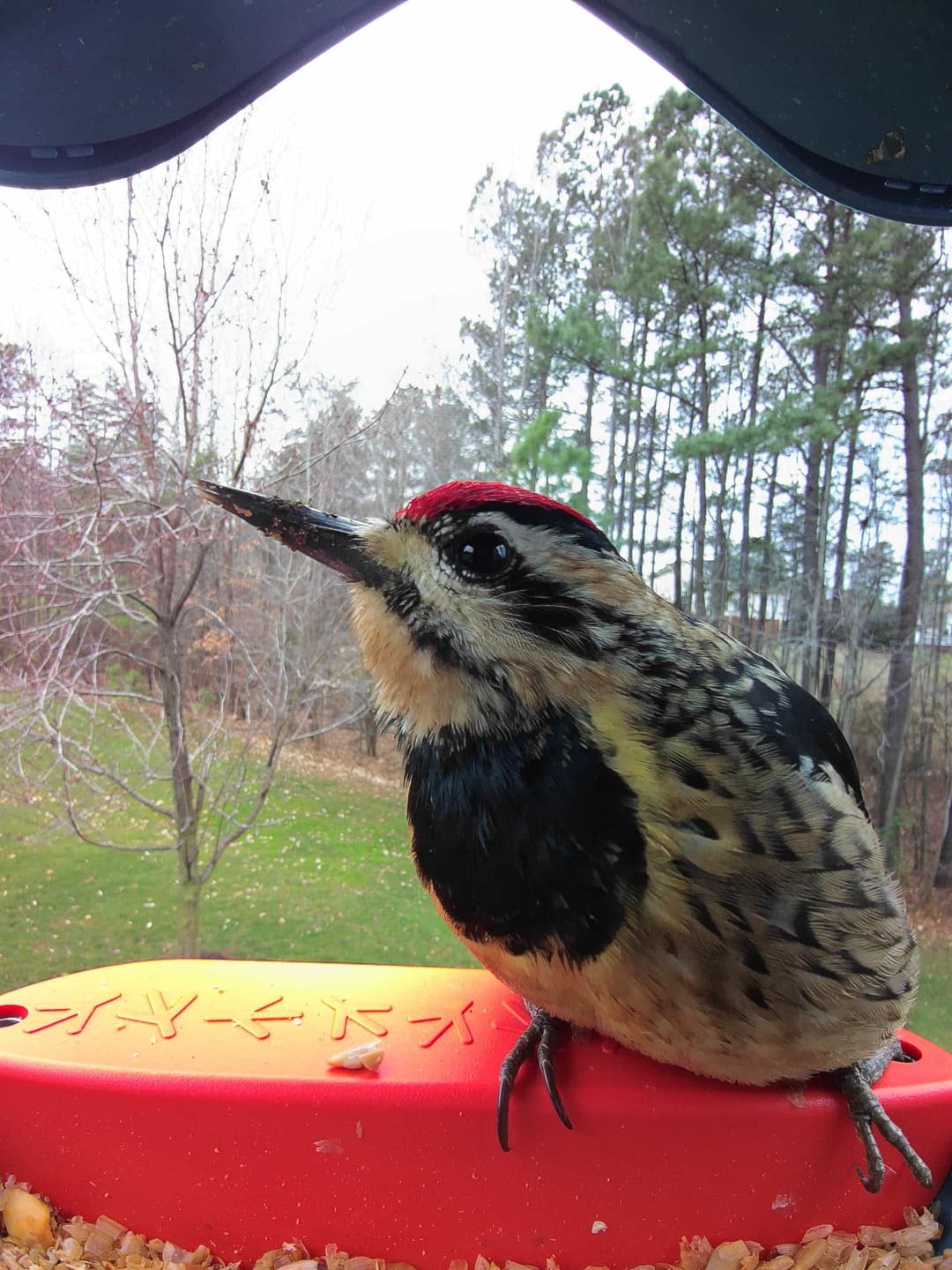
The yellow-bellied sapsucker, about the size of a Robin, features a striking 8 1/2 inch (22 cm) long white stripe on its folded wing. The bird's back is mottled, and its face is striped. Its wings are broad and rounded, and it bears a distinctive, multi-pointed, wedge-shaped tail.
Male vs female
There are distinguishable differences between the male and female yellow-bellied sapsuckers. Primarily, the throat color varies, with males boasting a red throat while females have a white one. Both sexes exhibit a mix of black, brown, red, white, and yellow in their overall coloration.
Juvenile
Young yellow-bellied sapsuckers in their juvenile stage have brown heads in the fall season. As the season progresses towards late winter, the young birds gradually molt, their appearance shifting to closely resemble that of the adults.
Size
8.3 - 8.7 in/1.6 - 1.9 oz
There's more to learn about Yellow-Bellied Sapsucker
View full detailsHow to tell the Red-Breasted Sapsucker from the Yellow-Bellied Sapsucker
Visual differences
The Red-Breasted Sapsucker exhibits a vivid red head, throat, and chest, with a predominantly black back and white barring. In contrast, the Yellow-Bellied Sapsucker has a striped face, a mottled back, and distinctive white wing stripes. Males have a red throat, females a white one. Both birds are similar in size, about 8.0-8.7 inches (20-22 cm) in length, with the Yellow-Bellied Sapsucker distinguished by its unique 8.5-inch (22 cm) striking white stripe on the wing. Both species have sturdy bills for drilling, essential for sap extraction.
Key differences and behavior
The Red-Breasted Sapsucker and Yellow-Bellied Sapsucker exhibit distinct behavioral patterns. The Red-Breasted Sapsucker, thriving in the American Northwest, often shares its sap-rich drillings with Rufous Hummingbirds. In contrast, the Yellow-Bellied Sapsucker, prevalent in mixed woodlands, uses distinctive drumming to claim territory and may favor manmade structures for this display. Both species feed on insects and tree sap, but the Yellow-Bellied, widespread in migration, utilizes systematic sap holes, favoring diversity in habitat and diet. Breeding in both occurs in tree cavities, yet the Red-Breasted shows less courtship display flamboyance compared to the Yellow-Bellied’s elaborate patterns. These nuanced differences, more than visual cues, assist in field identification.
Still not sure? Here are more lookalikes!
Red-Breasted Sapsucker vs Red-Naped Sapsucker
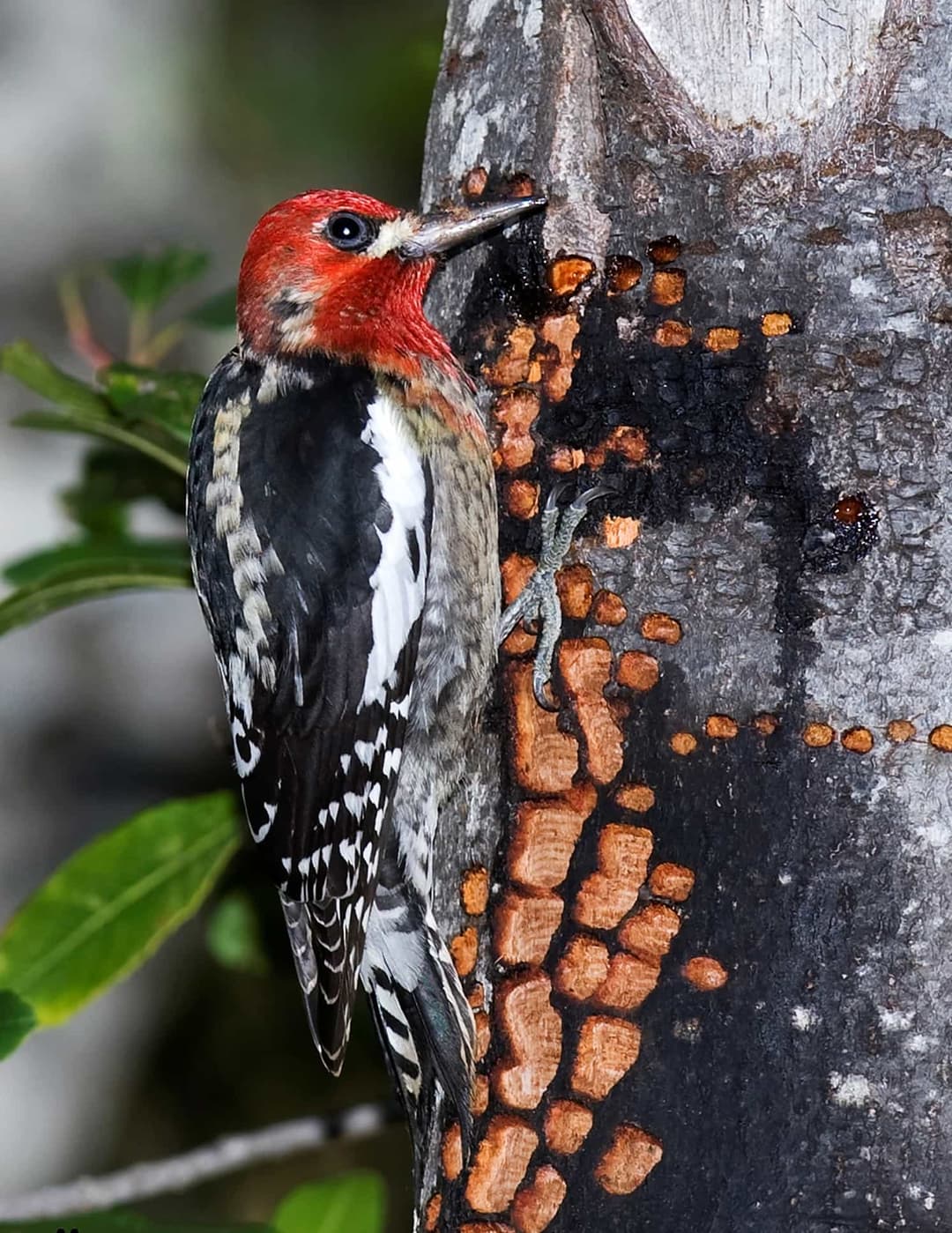
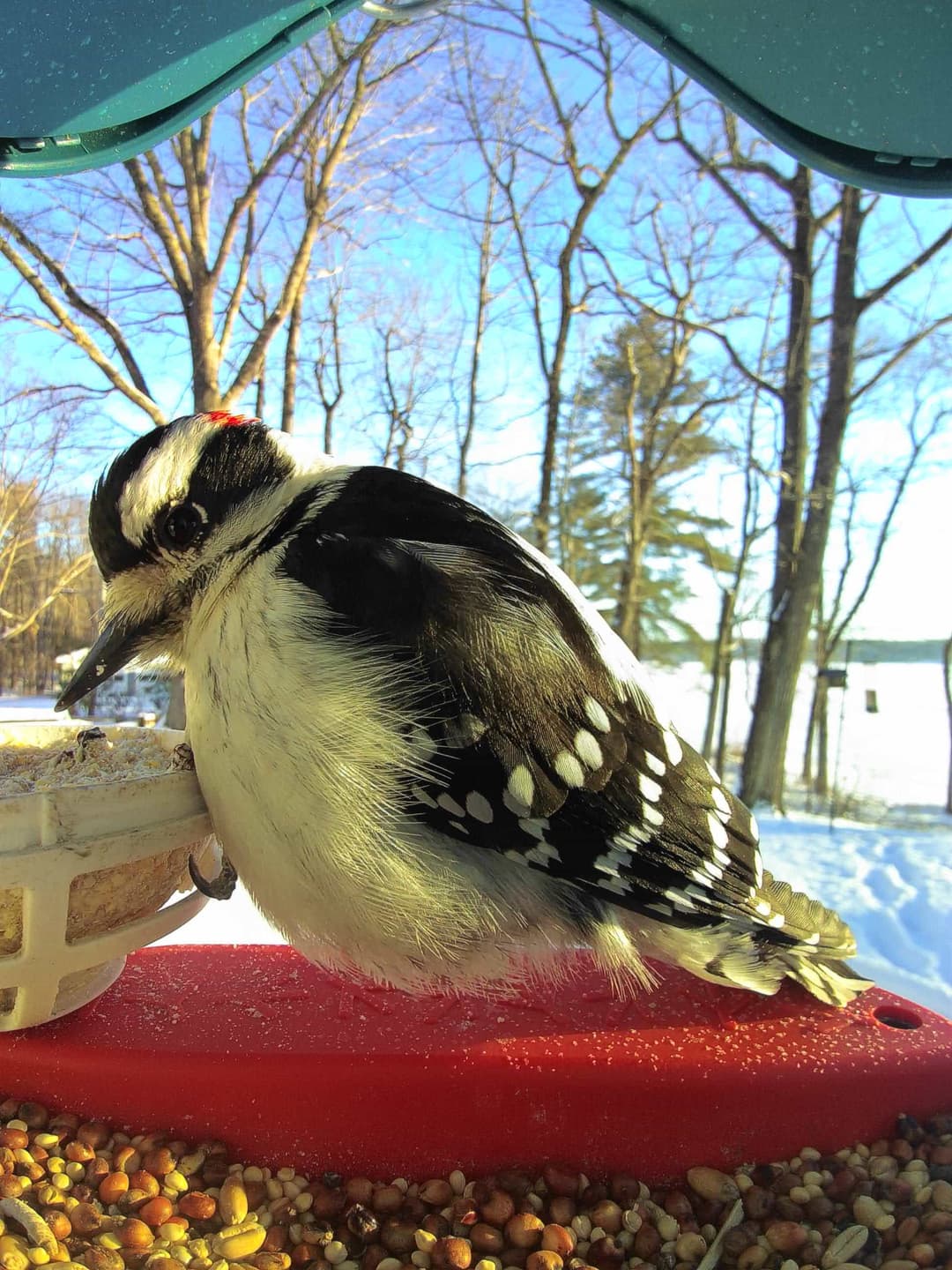
Yellow-Bellied Sapsucker vs Downy Woodpecker
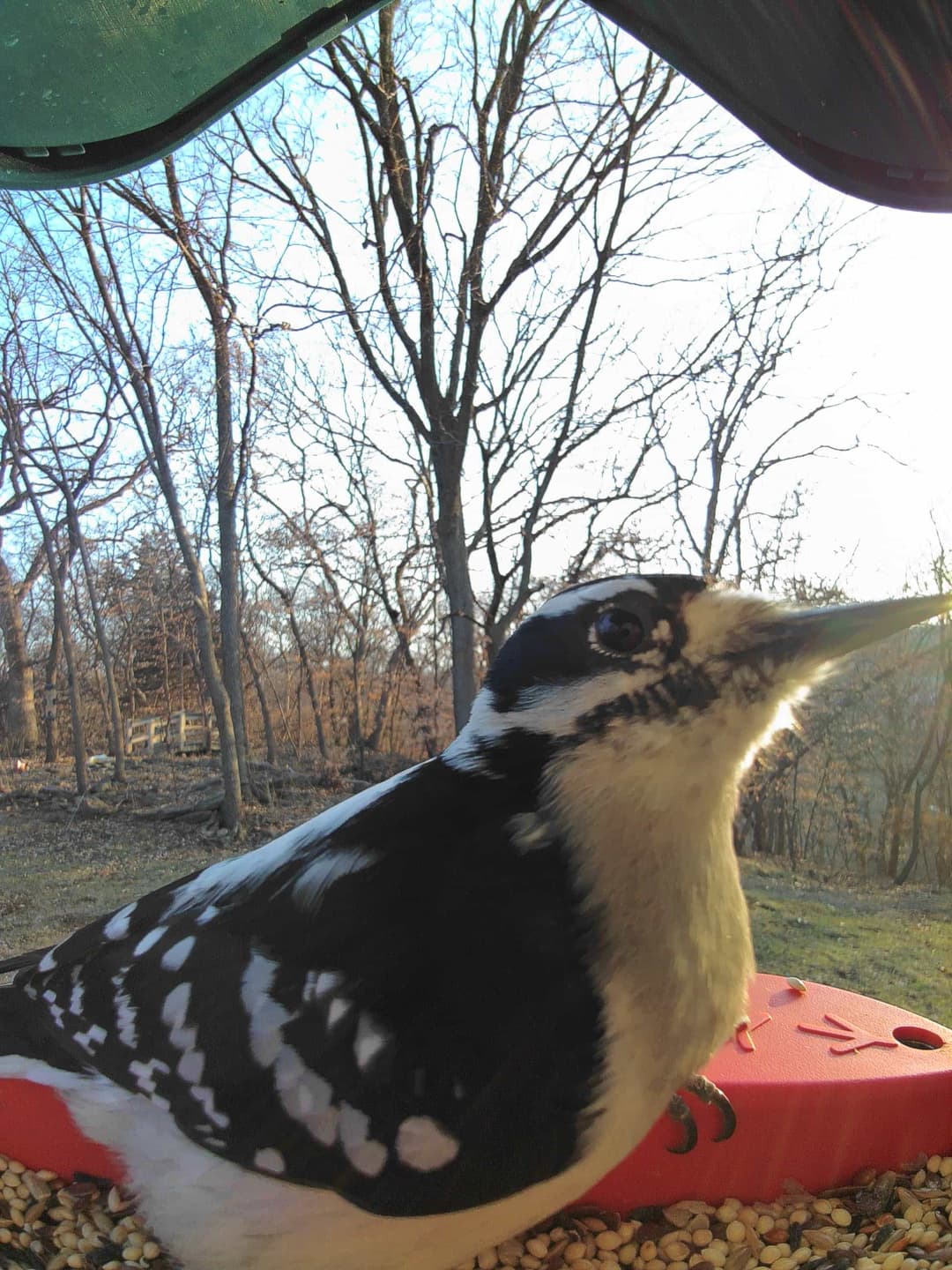
Yellow-Bellied Sapsucker vs Hairy Woodpecker
Yellow-Bellied Sapsucker vs Red-Naped Sapsucker
Red-Breasted Sapsucker vs [Select a bird]

[Select a bird]
Pick a bird to compare
Yellow-Bellied Sapsucker vs [Select a bird]
[Select a bird]
Pick a bird to compare