
Red-Breasted Sapsucker
Red-Breasted Sapsucker
Sphyrapicus ruber
Quick Identification guide
Quick Identification guide
- •
Features a brilliant red head and breast, creating a distinctive and vibrant appearance
- •
Exhibits black and white barring on the back and wings, providing a contrasting pattern
- •
Has a medium-sized body with a straight, chisel-like beak ideal for tapping into trees
What does a red-breasted sapsucker sound like?
The Red-breasted Sapsucker typically produces soft, slurred whee-ur or mew-like calls that are reminiscent of the Red-naped Sapsucker's call. The call pattern is falling and flat. The bird's vocalizations can be classified into types such as a chirp or chip, a drumming sound, a rattle, and even a scream. These diverse sounds make up the complex language of the Red-breasted Sapsucker.
Description
These birds use their strong beaks to drill into trees, having a preference for willow, birch and orchard crops. They then slurp the sap out of these trees; incidentally, a group of sapsuckers is called a slurp! Where there's a red-breasted sapsucker, there is also a rufous hummingbird. These little birds will follow them around to drink the sap leaking out of the holes that the bigger bird makes! Sharing really is caring.
The red-breasted sapsucker can weigh between 39to68grams and be from20to22centimeters tall.
The lifespan of a Red-breasted Sapsucker is typically about seven years. This is comparatively shorter than other closely related species like the Yellow-bellied Sapsucker, which can live up to 10 years. The longevity of Red-breasted Sapsuckers, however, can be impacted by factors like predation and habitat loss.
Did you know?
Most popular questions about red-breasted sapsucker
How to recognise a red-breasted sapsucker?
General appearance
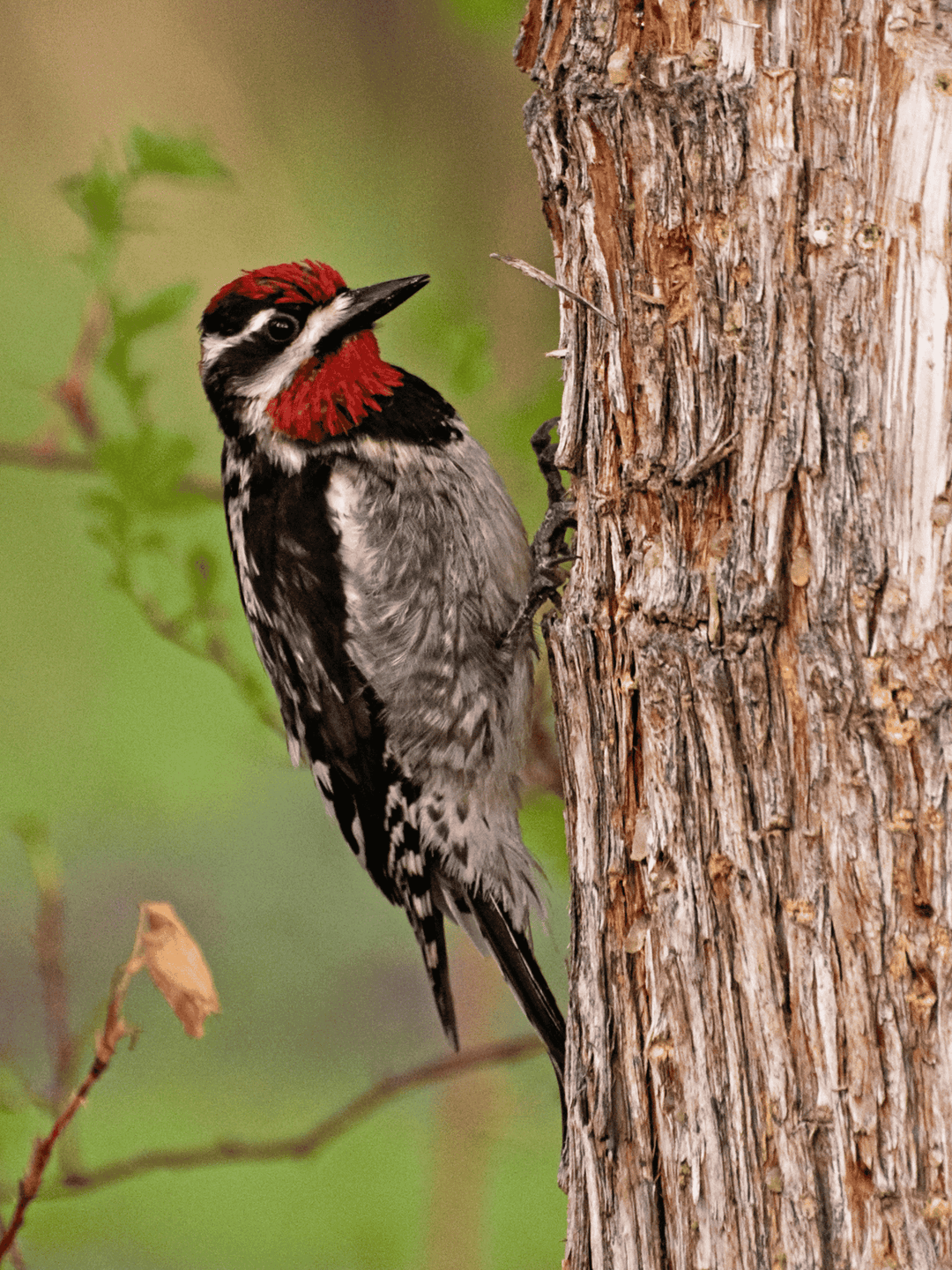
The red-breasted sapsucker is a medium-sized woodpecker known for its vivid red head, throat, and chest. Its back is predominantly black with white barring, while the wings are black with white spots. Underparts are pale, and its tail is black with white outer feathers. It has a sturdy bill, ideal for drilling into trees.
Male vs female
The red-breasted sapsucker exhibits minimal sexual dimorphism, making it difficult to distinguish between males and females in the field. Both sexes appear similar in size and coloration. Generally, the red coloration is slightly more intense in males, but this can be challenging to observe without direct comparison.
Juvenile
Juveniles are less vibrantly colored than adults, featuring a mottled mix of brown and gray on their heads and less prominent red on their throats and breasts. The back and wings display the typical patterns but are duller. As they mature, juveniles gradually acquire the distinctive adult plumage.
Often mistaken for
Red-Naped Sapsucker vs Red-Breasted Sapsucker
The Red-Breasted Sapsucker has a completely red head and breast, whereas the Red-Naped Sapsucker features a prominent red nape with a mostly black and white face and throat. In flight, the Red-Breasted displays a consistent red color, while the Red-Naped has a more distinct red, black, and white pattern.
Yellow-Bellied Sapsucker vs Red-Breasted Sapsucker
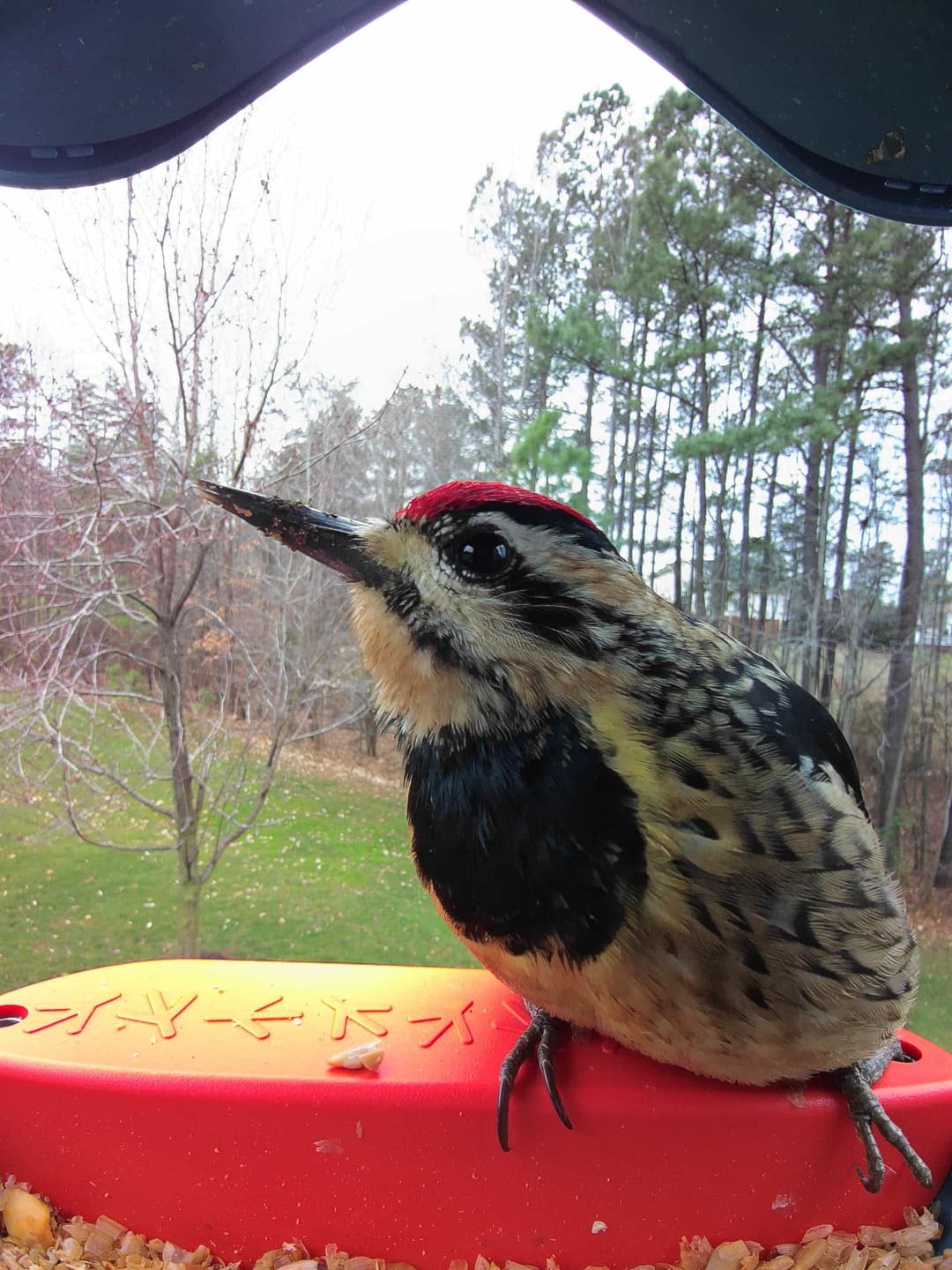
The Red-Breasted Sapsucker is distinguished by its vibrant red head and breast, which are more uniform compared to the Yellow-Bellied Sapsucker's black and white striped face with a small red forehead and chin. Additionally, the Red-Breasted has a darker overall appearance and lacks the Yellow-Bellied's yellow wash on the belly.
Breeding and nesting habits of the red-breasted sapsucker
Mating behaviors
Red-breasted sapsuckers engage in courtship displays that include pointing their bill up and swaying from side to side to attract mates.
Nesting details
Their nests are typically found in deciduous trees such as aspen, alder, cottonwood, or willow, but also in firs and other conifers. The nest cavity is often high, about 50-60 feet above ground. Both sexes participate in excavating the nest and may use the same tree in subsequent years, though not the same nest cavity.
Eggs and chick-rearing
After mating, the female lays eggs in the nest cavity. Both parents are involved in incubating the eggs and feeding the chicks once they hatch, ensuring the young birds receive adequate care until they are ready to fledge.
What does a red-breasted sapsucker like to eat?
Berries
Fruits
Insects
Plants
Sap
Seeds
Natural diet
The red-breasted sapsucker primarily feeds on a wide variety of insects, which includes many ants found on tree trunks. It also regularly consumes tree sap, which is a significant part of its diet. In addition to insects and sap, it feeds on various fruits and berries available in its natural habitat.
Bird feeders
Common foods for the red-breasted sapsucker at bird feeders might include suet, fruits, and sometimes sugar water, which mimics the sugary sap they consume naturally. These foods can attract them to residential areas where they can be observed more easily.
Setting up the perfect feeder
To attract the red-breasted sapsucker, you'll want to set up a suet feeder. This type of feeder holds a high-energy, calorie-rich food that this bird loves. Additionally, position this feeder about 5 to 10 feet off the ground and preferably in a quiet, sheltered spot. For best results, opt for Bird Buddy seeds which are chosen by experts for the season.
Offering the ideal snacks
Red-breasted sapsuckers are attracted to a variety of foods, but their favorite snacks are insects, tree sap, and fruit. You can spread some peanut butter on tree bark and sprinkle it with Bird Buddy seeds to entice them. Alternatively, an orange cut in half and placed on a spike feeder or tray can also be a sweet treat.
Creating a welcoming environment
Keep your garden or backyard filled with native trees and shrubs as these not only provide food but are also perfect nesting sites for this species of birds. Water is also a key attraction for red-breasted sapsuckers, so consider having a bird bath or a shallow water dish for them to drink from and bath in. Lastly, keep feeder clean and refill regularly to ensure they keep coming back.
Jam session with red-breasted sapsuckers
Did you know? The red-breasted sapsucker is known to engage in 'drumming' on trees to create musical sounds. If you're lucky, you might even start a woodland chorus in your backyard!
Where can you find red-breasted sapsuckers?

Embracing the wild northwest
The red-breasted sapsucker thrives here, in the moss-laden forests of the American Northwest. Amid dense canopies, it delights in the rain-kissed air and chill of the forests, its rhythmic pecking echoing through the silent woods.
Unexpected urbanites
Surprisingly, these crimson-chested birds can turn urban too! Parkland with old trees is their city haunt, adding a dash of wild berry red to the city’s concrete canvas. They’re little pioneers, carving homes in the heart of human hustle.
Do they migrate?
The red-breasted sapsucker, inhabiting a relatively temperate climate, is the least migratory among the sapsucker species. In the Pacific Northwest, its migratory behavior varies slightly between different populations. Birds from interior regions may move toward the coast or southward during winter, while coastal birds are often permanent residents and may stay in one place all year. Southern populations, however, might shift to lower elevations or a short distance south in the colder months. While specific migratory routes are not extensively documented, the movement pattern for those that do migrate appears to be relatively short and localized rather than long-distance. Typically, these birds do not exhibit the extensive migrations seen in many other bird species. Instead, their movements are often influenced by the availability of food sources and suitable temperate habitats during winter. Thus, key locations include coastal areas of the Pacific Northwest where some of the population may reside year-round, and more southern, lower elevation areas where some may seek milder winter conditions. Overall, this species exhibits a mix of residency and short-distance migration based on local environmental conditions.
What is the role of red-breasted sapsuckers in nature and how to protect them?
Conservation status
The red-breasted sapsucker is considered fairly numerous but faces some population decline primarily due to deforestation in the northwest. While it is not classified as endangered, the reduction in its habitat presents a vulnerability that needs monitoring. Conservation efforts focus on preserving forest habitats to prevent further declines. The main threat to the species is habitat loss from logging activities. Maintaining and restoring forested areas are crucial for sustaining their population levels and ensuring their continued presence in their native regions.
Ecological role of red-breasted sapsuckers
Its role in the ecosystem
The Red-breasted Sapsucker plays a significant role in maintaining the ecological balance of its habitat. By drilling holes into tree bark and feeding on the emitted sap, it controls the sap levels which could otherwise cause tree diseases. As part of its diet, it consumes a variety of insects, which include many ants that could devastate tree populations. This consumption helps control pest population and supports in preserving their habitats. The sapsucker's habit of catching insects in the air also contributes to pest control. Additionally, it contributes to seed dispersal. The Red-breasted Sapsucker feeds on fruits and berries all year round, dispersing seeds from digested fruits in its droppings and promoting plant diversity and growth. The birds' use and reuse of nests in trees, particularly deciduous trees and conifers, may also assist in the dispersal of tree species through the ecosystem.
How to help protect red-breasted sapsuckers
Preservation tips
Habitat preservation strategies
Support the continuation of the red-breasted sapsucker by promoting and participating in forest conservation efforts. These birds thrive in mature forest habitats, so protecting these areas from deforestation and degradation is critical. Lobby local authorities to implement policies dissuading unnecessary tree removal. Foster the growth of native tree species in your yard, particularly conifers, in which sapsuckers often nest.
Community science initiatives
Get involved in community science initiatives such as 'The Cornell Lab's Project FeederWatch' which tracks bird populations. It provides invaluable data on sapsuckers and other bird species, which guides conservation actions. You can also participate in local bird count events or connect with nature conservation organizations to take part in their monitoring initiatives. Sharing your sightings on platforms like eBird can also contribute valuable data to help scientists protect the red-breasted sapsucker and its habitat.