
Downy Woodpecker
Downy Woodpecker
Dryobates pubescens


Quick Identification guide
Quick Identification guide
Male
- •
black-and-white plumage with a distinctive checkered pattern on wings
- •
bright red patch on the nape
- •
short, chisel-like beak and a petite body size
Female
- •
black-and-white plumage with a checkered pattern similar to the male
- •
Lacks the red nape patch seen in males
- •
short, chisel-like beak and diminutive stature
What does a downy woodpecker sound like?
The vocalizations of the Downy Woodpecker consist of a discrete "pik" sound, often described as quiet. Another characteristic sound they produce is a descending rattle. Their call pattern has a falling, flat tone. The type of calls they make can be categorized into chirps or chips, drums, rattles, and trills. Thus, their vocalization repertoire is quite varied, enabling them to communicate effectively in their habitat.


Description
Downy woodpeckers are the smallest North American woodpecker! They don't sing, they drum. Many think they do that to find food but the birds are actually pretty quiet when they feed. Hear a drumming inside your walls? It might be one of these guys! They've been known to nest inside building walls.
The downy woodpecker can weigh between 21to28grams and be from14to17centimeters tall.
The Downy Woodpecker, one of the smallest North American woodpeckers, typically lives approximately 1-2 years in the wild although the maximum lifespan recorded is 11 years. Compared to its larger relative, the Hairy Woodpecker, which lives an average of 7-10 years, its life expectancy is relatively shorter. Factors impacting lifespan include predation, habitat degradation, and food availability.
Did you know?
Most popular questions about downy woodpecker
How to recognise a downy woodpecker?
General appearance
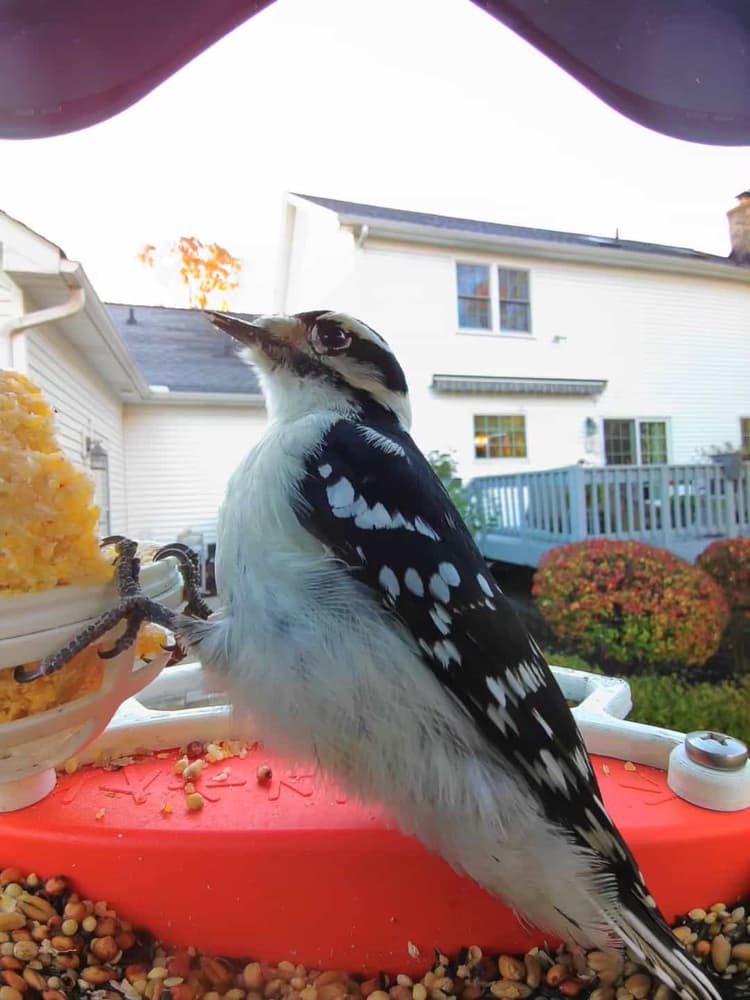
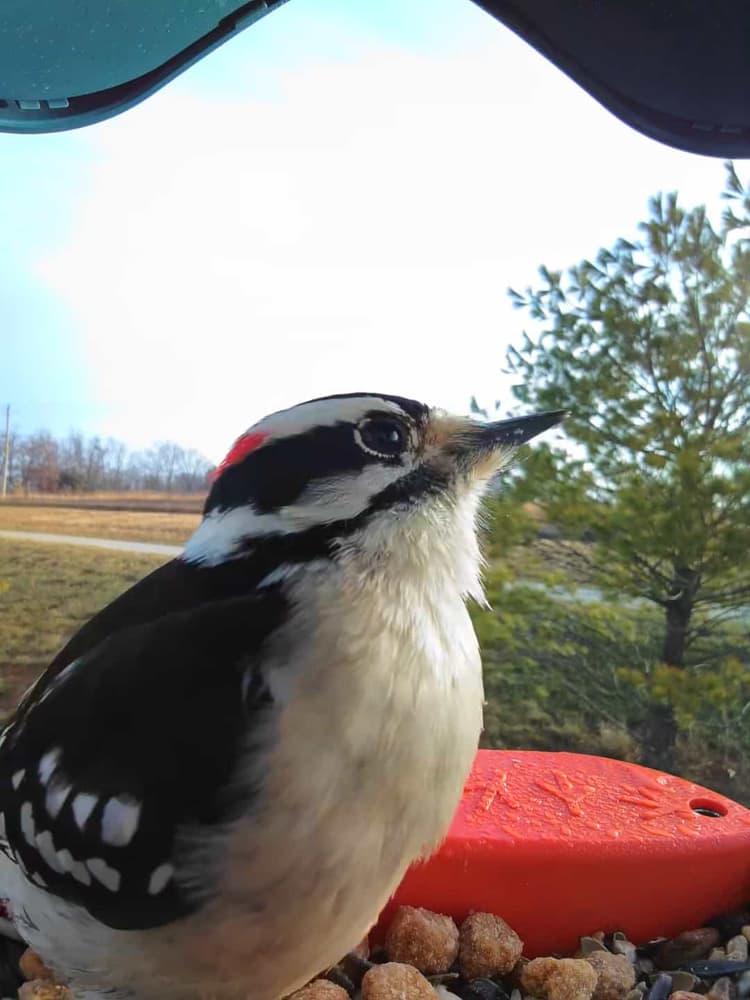
The downy woodpecker is a small bird with a length of about 6 to 7 inches and a wingspan of 9 to 12 inches. It features a black and white color pattern, with a predominantly white belly and black wings that have white spots. The bird has a black tail with outer feathers that are white and often contain black barring. Its head is striped with black and white, featuring a distinctive white stripe down the center of the back and a white throat.
Male vs female
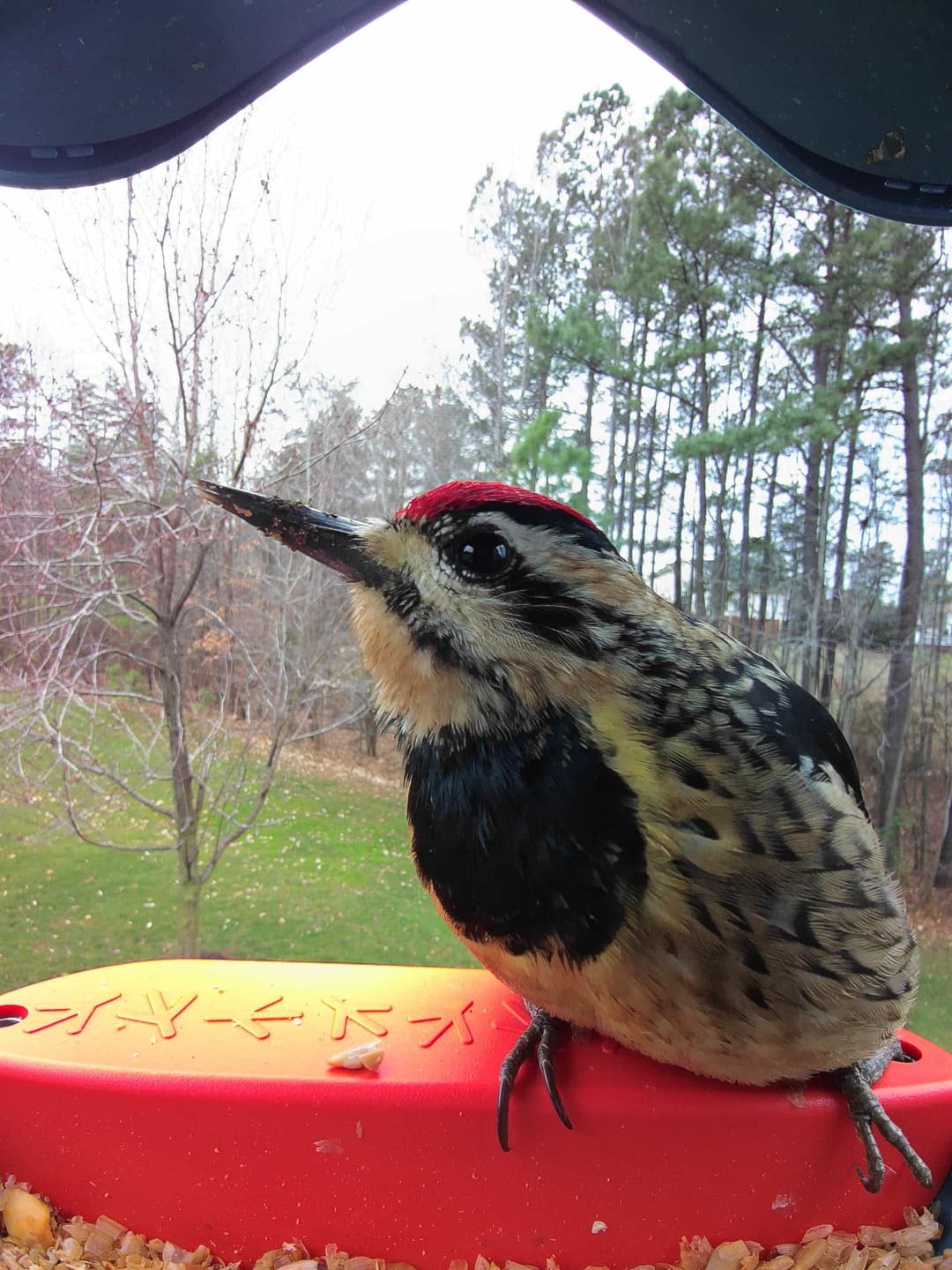
Males and females of the species can be differentiated by a red patch on the nape of the male's head, absent in females. Both sexes share a similar body patterning and coloration, although the male’s red marking is the primary distinguishing feature for identification in the field.
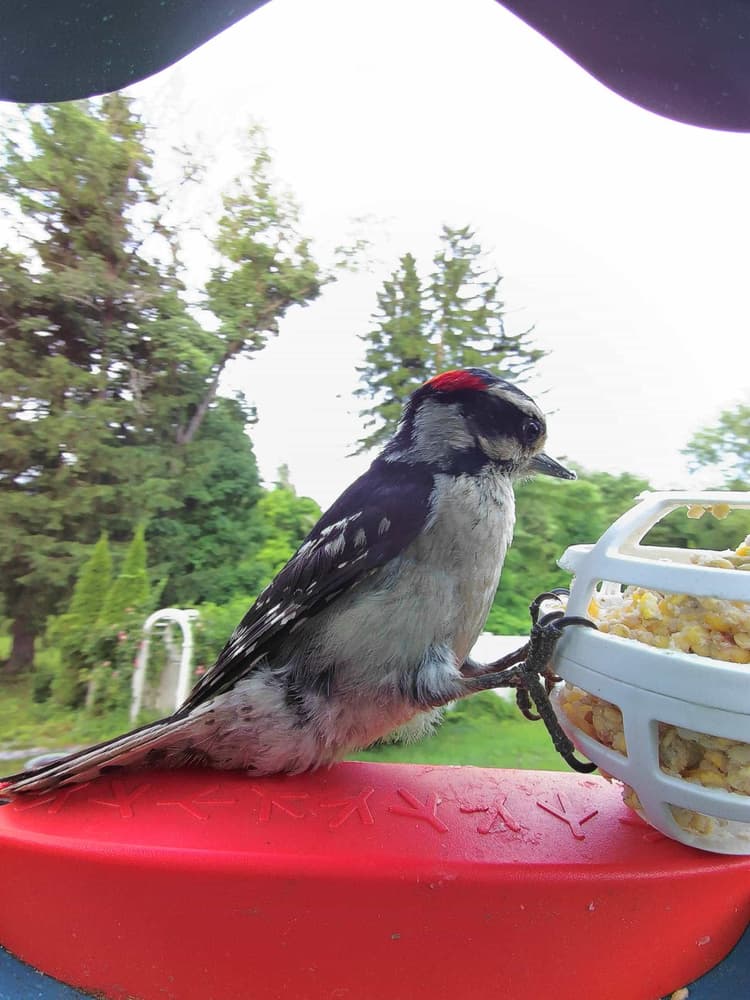
Male Downy Woodpecker
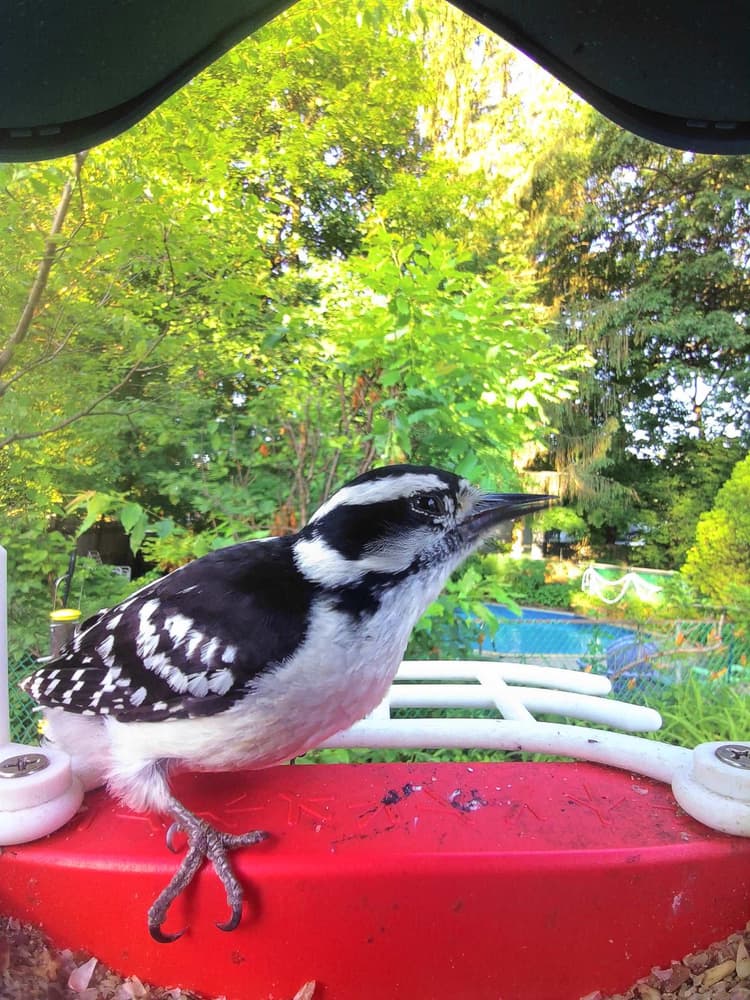
Female Downy Woodpecker
Juvenile
Juvenile downy woodpeckers resemble adults but may have less defined plumage markings. They often have a more brownish tint across their feathers. Juvenile males may show a hint of red on top of their head instead of the nape, providing a subtle distinction from adult males. Their overall body pattern is similar to adult birds.
Often mistaken for
Hairy Woodpecker vs Downy Woodpecker
Downy Woodpecker is smaller with a shorter bill. The outer tail feathers have black bars, unlike Hairy's plain white.
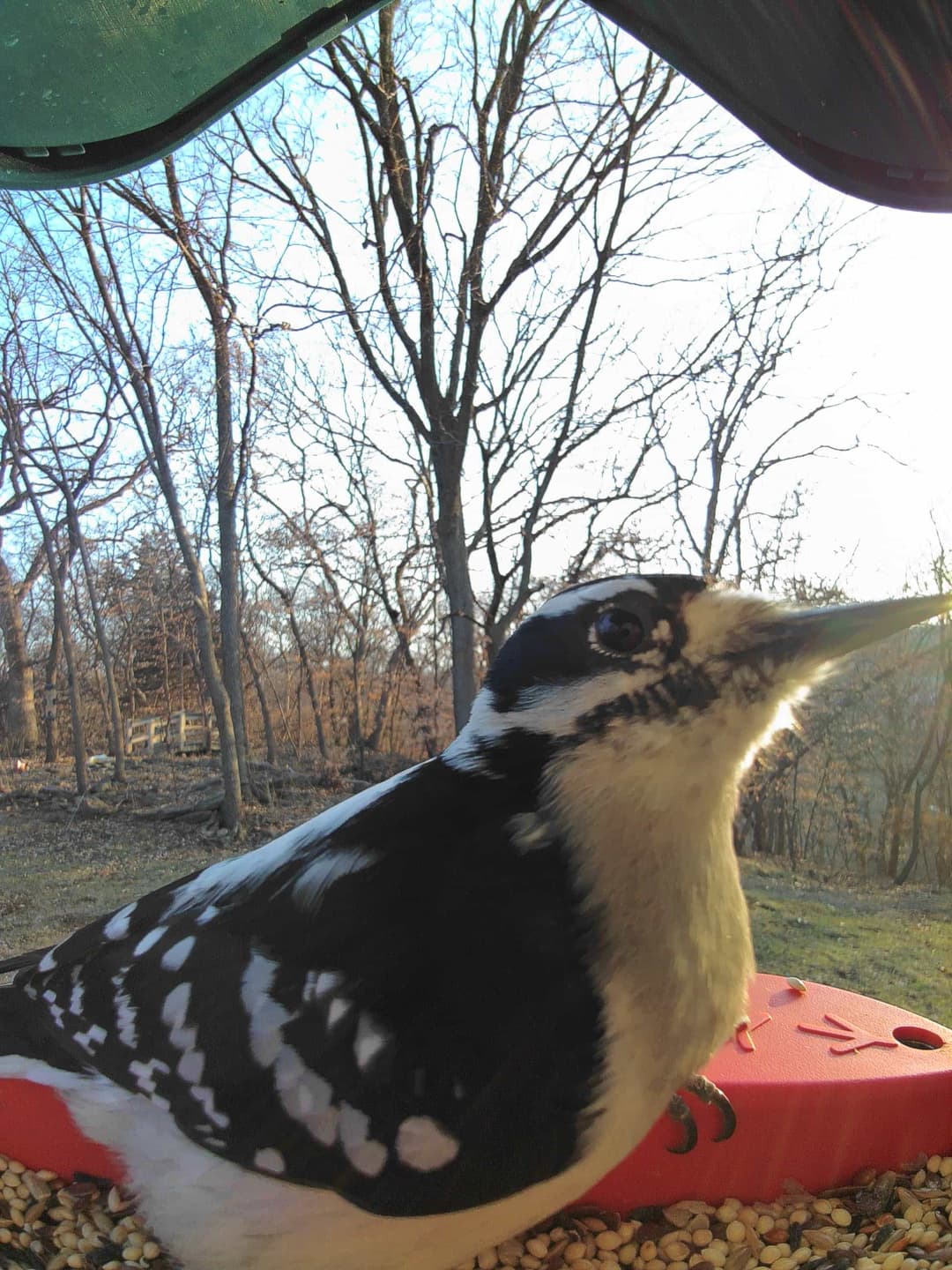
Red-Cockaded Woodpecker vs Downy Woodpecker
Downy Woodpecker has white spots on its black wings, while Red-Cockaded has a more uniform black and white pattern and lacks the Downy's red patch.
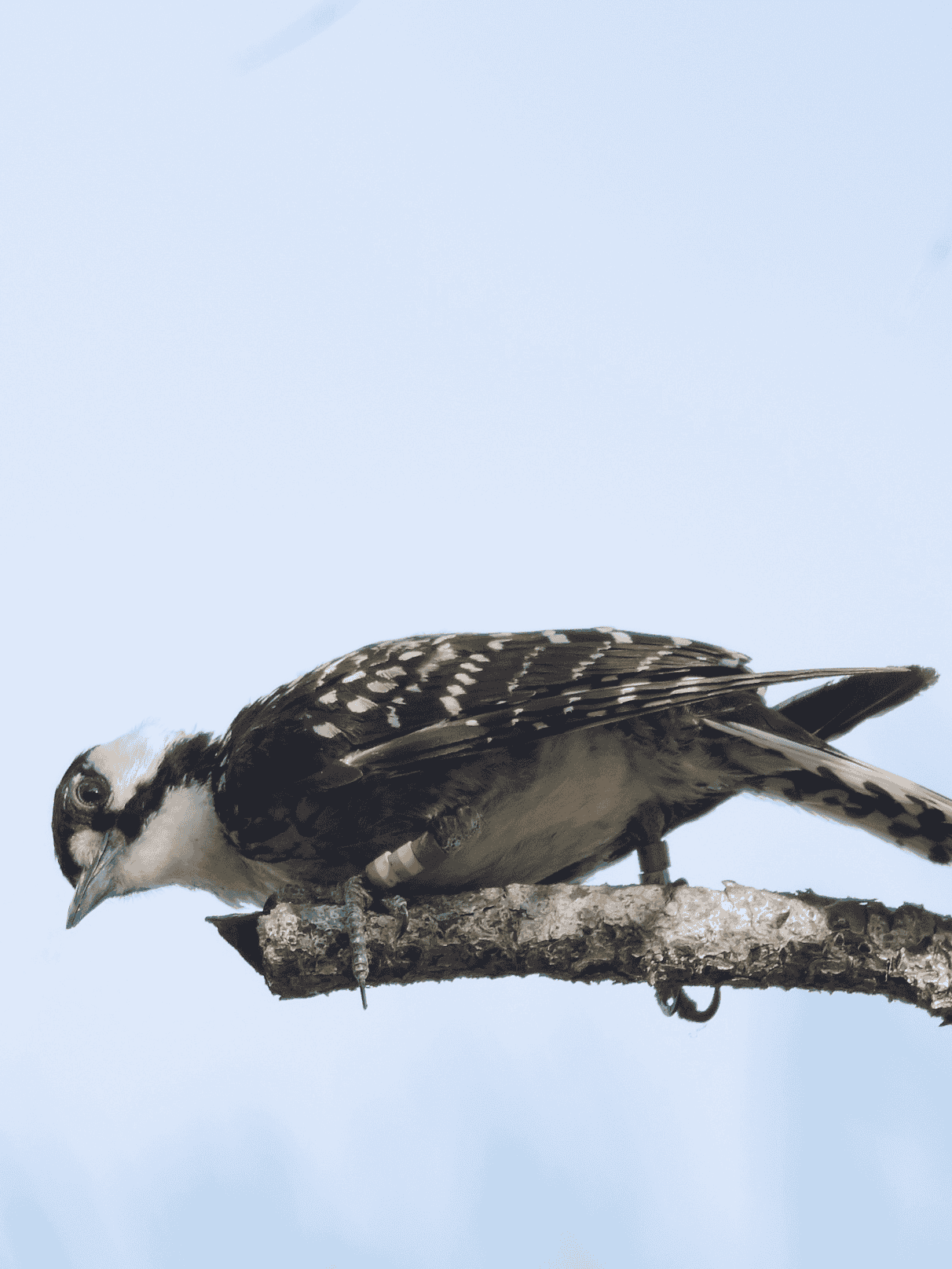
Ladder-Backed Woodpecker vs Downy Woodpecker
Downy is generally found in eastern woodlands. Ladder-Backed has more ladder-like barring on its back and is common in southwestern US.
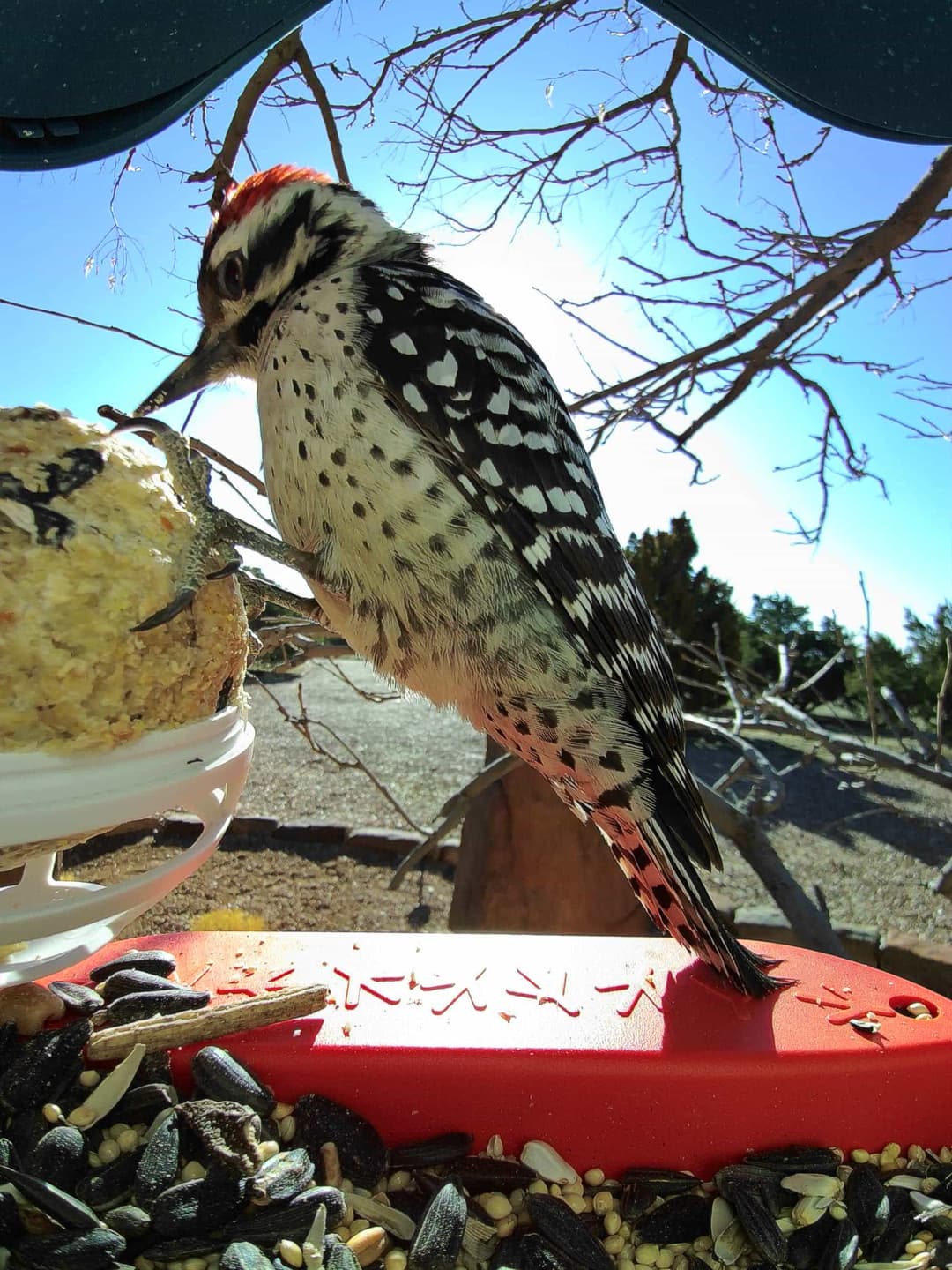
Nuttall’s Woodpecker vs Downy Woodpecker
Downy Woodpecker's range does not overlap much with Nuttall's, which has a barred back and a black mustache stripe absent in Downy.
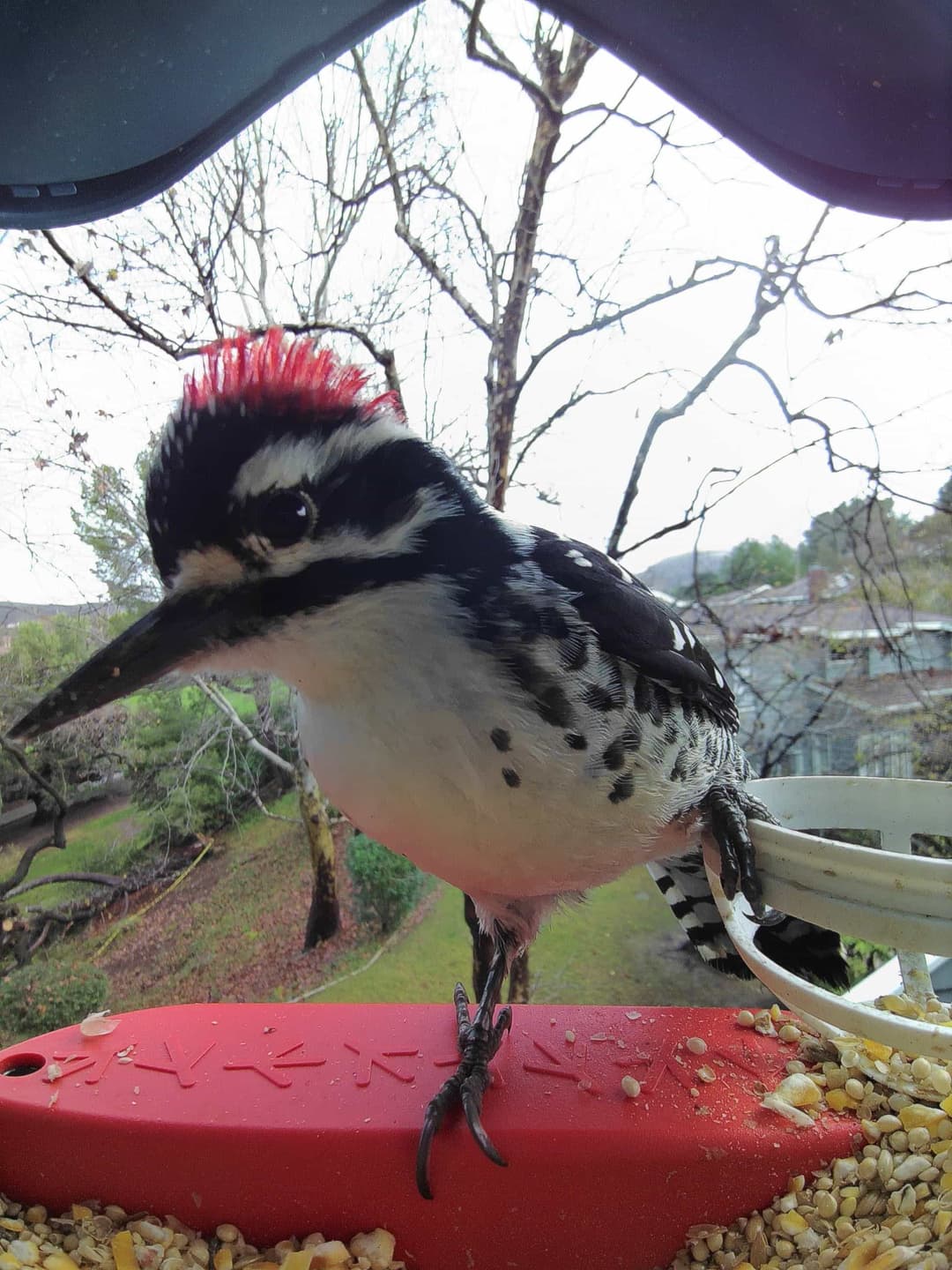
Yellow-Bellied Sapsucker vs Downy Woodpecker
Downy lacks the Yellow-Bellied's distinctive red crown and throat. Sapsuckers also have a more prominent pattern of white on their wings.
Breeding and nesting habits of the downy woodpecker
Mating behaviors
Downy woodpeckers establish separate feeding territories in fall and early winter. Pairs form by late winter, as males and females engage in drumming displays on dead limbs within their territories. Males gradually approach the females as part of courtship.
Nesting details
The nest site is a cavity excavated by both sexes in a dead limb or tree, typically between 12-30 feet above ground. Occasionally, they may nest as low as 5 feet or as high as 60 feet. The entrance often features a ring of fungus or lichen to camouflage the site.
Eggs and chick-rearing
After mating, the female lays eggs in the excavated cavity. Both parents share the responsibility of incubating the eggs and subsequently feeding the hatchlings. They alternate these duties to ensure the chicks receive adequate care and protection.
What does a downy woodpecker like to eat?
Fruits
Insects
Nuts
Plants
Seeds
Snails
Spiders
Natural diet
The downy woodpecker primarily feeds on a variety of insects, with a particular preference for beetles and ants. It also consumes other insects such as gall wasps and caterpillars. In addition to insects, its diet includes seeds and berries.
Bird feeders
At bird feeders, the downy woodpecker is known to eat suet, which provides a supplementary food source alongside its natural diet.
Choose the right food for downy woodpeckers
Downy Woodpeckers are known for their love of nuts and seeds -- particularly suet, sunflower seeds, peanuts, and corn. They also enjoy a variety of insects in their diet. For optimal results, choose Bird Buddy seeds -- expertly chosen seeds for optimum feeding in each season. Additionally, you can occasionally provide mealworms as a special treat.
Provide suitable feeder types
Choose feeders that are equipped with large perches or feeding platforms to attract Downy Woodpeckers. They prefer either hopper style feeders or suet cages. Hoppers are perfect for sunflower seeds and peanuts, while suet cages are specifically designed for suet blocks. Place these feeders near tree trunks or vegetation walls to make them feel safe and comfortable.
Use fun tricks to encourage their visit
To make your backyard more inviting, include a birdbath, as woodpeckers enjoy water for both drinking and bathing. Play soft woodpecker sounds, which can mimic the presence of their species and stimulate curiosity. Make sure always to keep the feeding stations clean and fresh, as birds prefer clean feeders. And who knows, they may just stay for a delightful birdy sing-along!
Where can you find downy woodpeckers?
Based on Birdbuddy sighting data. The heatmap shows where Birdbuddy users have spotted this species.
Embed this map
This map shows the full native range based on scientific range data.
Primary habitat
The downy woodpecker is commonly found in deciduous tree-centric areas including forests, woodlands, orchards, and shade trees. It thrives in wilderness areas, second-growth woods, and suburban yards.
Additional range
While typically found in deciduous areas, in the far north and mountains, where conifers dominate, the downy woodpecker can be restricted to groves of aspen or willow trees.
Do they migrate?
The downy woodpecker is generally a permanent resident across much of its range, meaning it typically stays in one place throughout the year. However, certain populations, particularly those in northernmost areas and high-altitude regions like the Rockies and other western mountains, may exhibit some migratory behavior. During the winter, these birds often move to lower elevations, such as valleys, to escape harsher conditions. Additionally, some of these northern birds may move short distances southward to find more favorable environments during colder months. There is no long-distance or large-scale migration pattern for downy woodpeckers akin to that of some other bird species. Instead, their movement is more of a local adjustment to environmental conditions, primarily driven by the necessity to find adequate food resources and milder climates. This localized dispersal ensures survival during winter without following a distinct migratory route or involving specific key stopover locations. Overall, while most downy woodpeckers are non-migratory, certain populations adapt to seasonal changes through limited, opportunistic movement.
What is the role of downy woodpeckers in nature and how to protect them?
Conservation status
The downy woodpecker is very common and widespread, with no evidence of population declines, indicating it is not currently vulnerable or endangered. This suggests a stable conservation status. Key conservation efforts focus on preserving their natural habitats, such as forests and wooded areas, which support their nesting and foraging behaviors. Although habitat destruction could pose a future threat, the current lack of significant threats reinforces their stable status. Efforts to maintain healthy forest ecosystems indirectly benefit this species, ensuring its continued abundance.
Ecological role of downy woodpeckers
Its role in the ecosystem
The Downy Woodpecker plays a significant role in the ecosystem. As a primary consumer, it contributes to pest control by feeding on a variety of insects, especially beetles and ants, gall wasps, and caterpillars. This helps in maintaining the balance and health of various habitats. Beyond pest control, the Downy Woodpecker also assists in seed dispersal. It feeds on seeds and berries, and through its foraging activity, it disperses seeds across its territory contributing to plant propagation. Moreover, its unique feeding behavior, not only on trunks and major limbs of trees but also on minor branches, twigs, shrubs and weed stalks, supports the species diversity in the ecosystem. The woodpecker's habit of excavating cavities in dead limbs or trees for nesting also benefits other species, providing homes for various other birds and animals that are unable to create such spaces themselves. Thus, the Downy Woodpecker plays a crucial multifaceted role in the overall biodiversity of the ecosystems they inhabit.
How to help protect downy woodpeckers
Preservation tips
Habitat preservation strategies
To support the conservation of the downy woodpecker, prioritizing its natural habitat preservation is crucial. Implement programs to prevent deforestation and promote the growth of native tree species, as downy woodpeckers heavily depend on them. Restrict land development activities that might destroy nests or disturb breeding. Advocate for policies to ensure residual trees are left after logging to maintain suitable habitat.
Community science initiatives
Community involvement is key to successful conservation. Build awareness through educational programs about the importance of downy woodpecker and its role in the ecosystem. Encourage neighborhood science initiatives where citizens can participate in bird counts, monitor nearby woodpecker populations, and document changes. Collaborate with local schools, colleges, and clubs to initiate research and monitoring projects. Above all, promote a culture that respects wildlife and values biodiversity.