
Red-Naped Sapsucker
Red-Naped Sapsucker
Sphyrapicus nuchalis
Quick Identification guide
Quick Identification guide
- •
Distinguished by its black and white striped face complemented by a prominent red crown and nape
- •
Features a medium-length, straight beak, perfectly adapted for sapsucking tasks
- •
Possesses a mostly black back with distinctive large white wing patches that stand out in flight
What does a red-naped sapsucker sound like?
The red-naped sapsucker's vocalizations are diverse, featuring a soft, slurred whee-ur or mew that generally falls flat. The call pattern is often falling and presented in a distinctive, flat manner. It produces different types of sounds ranging from a chirping or chipping noise, a drumming sound that serves as a territorial signal, a rattling sound, to an alarm-like scream. Overall, its calls and songs make use of various pitch levels and intensities to communicate with its peers.
Description
Red-naped sapsuckers don't actually suck sap! They are specialised in drinking it, though. That is also why their tongues are shorter than those of other woodpeckers. To get to their delicious, sweet drink, they drill several holes in trees but don't worry: most trees survive the process!
The red-naped sapsucker can weigh between 32to66grams and be from19to21centimeters tall.
The red-naped sapsucker, a species of woodpecker, typically lives up to 5-6 years. In comparison, the related yellow-bellied sapsucker can live up to 7 years, and the downy woodpecker can reach up to 11 years old. These lifespans are average for small to medium-sized woodpecker species.
Did you know?
Most popular questions about red-naped sapsucker
How to recognise a red-naped sapsucker?
General appearance
The red-naped sapsucker is a medium-sized bird with considerable variety in its coloration. It is about the size of a robin, roughly 8 to 9 inches, or 20 to 23 cm in length. The bird showcases a mix of black, brown, red, white, and yellow colors. It typically has red markings on its upper nape. Its wings are broad, long, and rounded, while the tail shape is multi-pointed and wedge-shaped.
Male vs female
There are distinct differences between the male and female red-naped sapsucker. The male usually bears more red on the throat area compared to the female. Conversely, the female’s throat is only partly red, not entirely white. So, the male has an extensively red throat while the female shows a mix of red and white in the same area.
Juvenile
Juvenile birds in late fall closely resemble their adult counterparts in color and size. Unlike other species, the young red-naped sapsuckers are not brown-headed. Thus, young birds of this species share more direct physical similarities with adults compared to some other species.
Often mistaken for
Red-Breasted Sapsucker vs Red-Naped Sapsucker
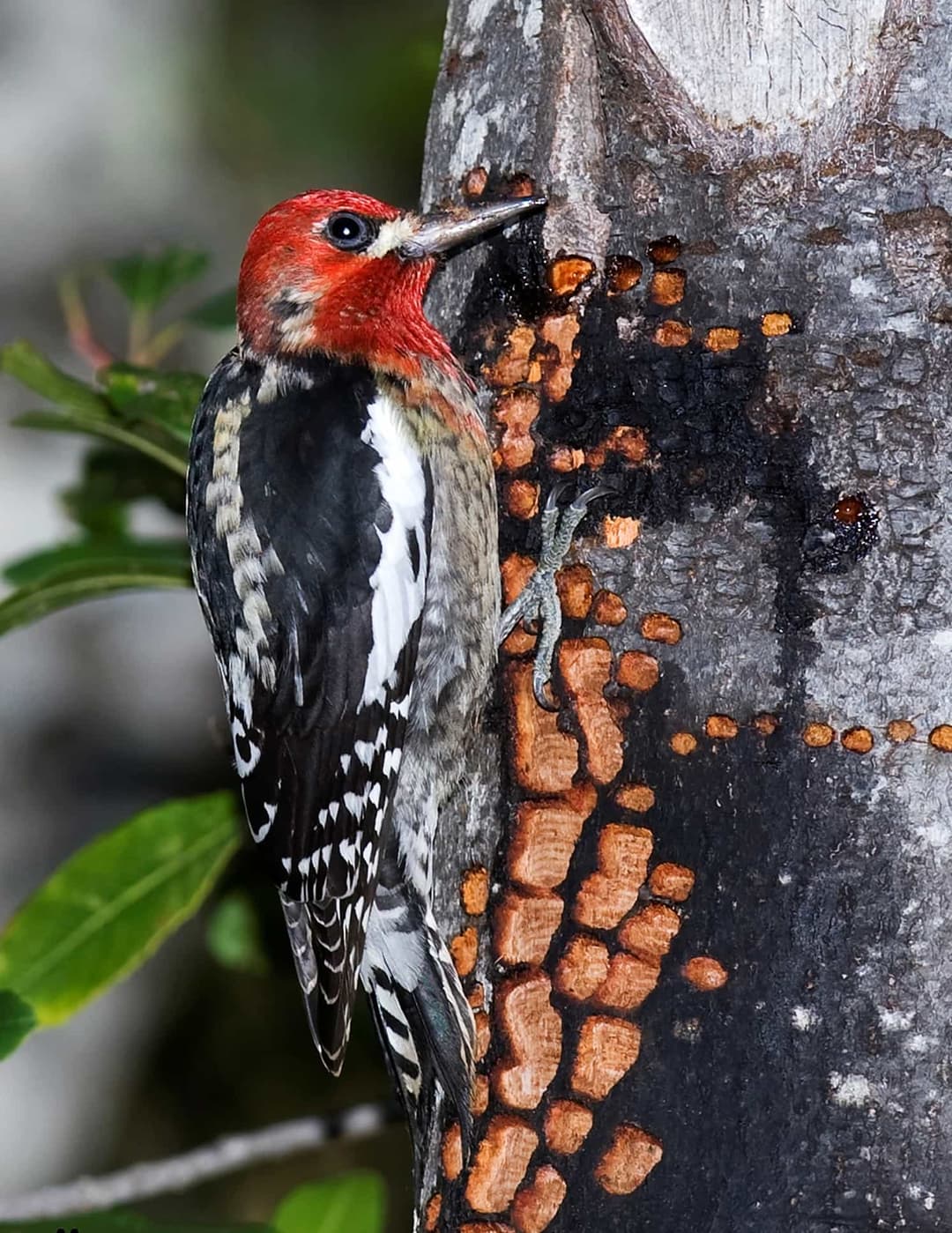
The Red-Naped Sapsucker and Red-Breasted Sapsucker can be distinguished by their nape markings. The Red-Naped has a distinct red patch on the back of its head, whereas the Red-Breasted lacks this marking, showcasing a more uniformly red head. Additionally, Red-Naped Sapsuckers have a white wing stripe which is less prominent in Red-Breasted Sapsuckers.
Yellow-Bellied Sapsucker vs Red-Naped Sapsucker
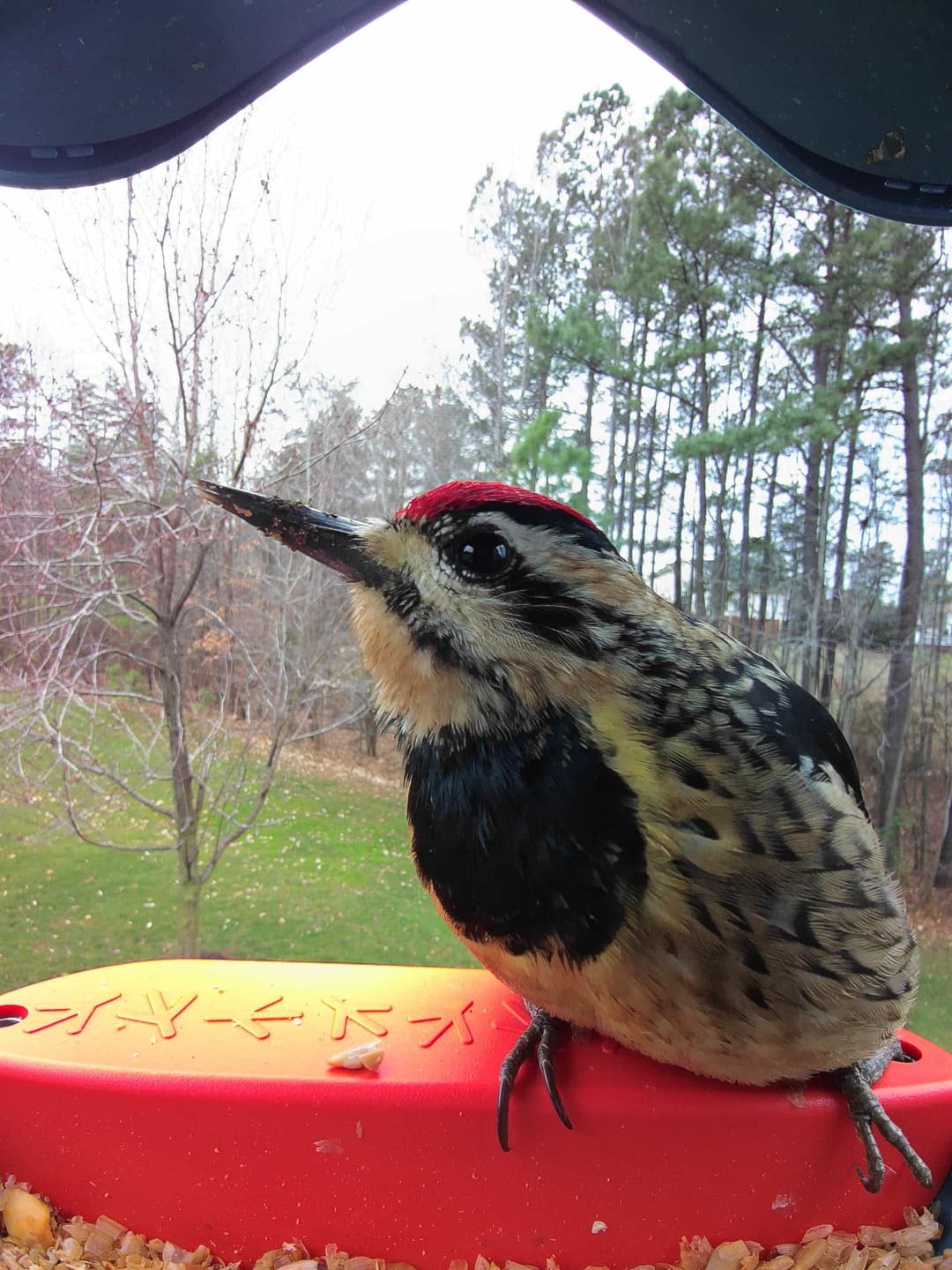
The Red-Naped and Yellow-Bellied Sapsuckers appear similar, but key differences can be noted. The Red-Naped has a red nape spot and more extensive red on the throat, whereas the Yellow-Bellied shows only faint red touches. Furthermore, the Yellow-Bellied typically has a paler, more yellowish underside compared to the Red-Naped.
Breeding and nesting habits of the red-naped sapsucker
Mating behaviors
Red-naped sapsuckers engage in courtship displays that include pointing their bills upwards to showcase their colored throat patch. They also perform ritualized tapping at potential nest sites.
Nesting details
These birds prefer nesting in cavities within trees, commonly in deciduous trees like aspen or poplar, ranging from 6 to 60 feet above ground. They often return to the same tree and sometimes the same nest hole each year. They favor live trees affected by heartwood decay fungus but may also nest in dead or dying conifers. Both males and females participate in excavating the nest cavity.
Eggs and chick-rearing
Red-naped sapsuckers lay eggs in the cavities they excavate. Both parents partake in rearing the chicks, which involves feeding and protecting them until they are ready to fledge the nest.
What does a red-naped sapsucker like to eat?
Fruits
Insects
Plants
Sap
Seeds
Spiders
Natural diet
The red-naped sapsucker primarily feeds on insects, tree sap, and fruit. It consumes a wide variety of insects, including many ants that are often taken from tree trunks. Tree sap is another significant component of its diet, along with various berries and fruits.
Bird feeders
Common foods that the red-naped sapsucker may consume at bird feeders include suet, a high-energy food that many woodpeckers are drawn to. Additionally, it might be attracted to feeders offering fruit or sugar water.
Attract sapsuckers with their favorite snacks
Red-naped sapsuckers have a penchant for sap, insects, fruits, and berries. They particularly enjoy sap from trees like Birch, Willow, and Alders. Providing a mix of fruits like apples and oranges in your feeder can also attract these birds. Bird Buddy seeds are especially effective as they are chosen by experts for the season.
Choosing the right feeder
While Red-naped sapsuckers primarily drill trees for sap, they are known to visit feeders. A suet feeder with Bird Buddy seeds is sure to entice them. Place the feeder near a tree or large shrub, but avoid areas with heavy human traffic to help the sapsuckers feel safe and comfortable.
Encourage sapsuckers with fun tricks
Mimicking the drumming sound that sapsuckers make when they tap on trees can pique their curiosity and draw them closer. You can also play recorded sapsucker calls to attract them. Just remember not to use these tricks excessively as it can cause unnecessary stress to the birds. Once they drop by, enjoy their beautiful song.
Where can you find red-naped sapsuckers?
Primary habitat
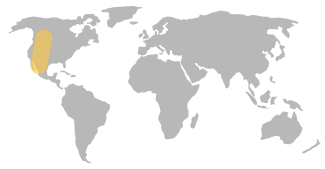
The red-naped sapsucker mainly inhabits woodlands, aspen groves and mixed coniferous and deciduous forests, primarily in mountainous regions during summer.
Additional range
In winter, it expands its range to lowland areas, including deciduous trees, riverside willow groves, pine-oak woods, and orchards.
Do they migrate?
The red-naped sapsucker is a short-distance migrant. During the winter months, it migrates from the southern edge of its breeding range and moves south into Mexico. This migration pattern generally follows a north-south trajectory, with the birds seldom deviating east or west of their main range. In terms of timing, the red-naped sapsucker’s migration typically occurs in response to seasonal changes, with birds leaving their breeding territories as temperatures drop in the fall. They head towards their wintering grounds, which offer milder climates and accessible food sources. Conversely, in the spring, the birds make their return journey northward to their breeding habitats. Key locations in this migration route include various forested areas in the western United States and mountain ranges that provide suitable habitats such as mixed coniferous and deciduous woodlands. Given its preference for specific habitats and the short-distance nature of its migration, the red-naped sapsucker remains relatively localized compared to some more extensively traveling bird species. Its precise route and timing can vary slightly depending on weather conditions and availability of resources in a given year.
What is the role of red-naped sapsuckers in nature and how to protect them?
Conservation status
The red-naped sapsucker is considered common and widespread, despite experiencing some habitat loss. It is not currently classified as vulnerable or endangered. Key threats to this species include deforestation and changes in land use that impact its natural habitats. Conservation efforts focus on preserving wooded areas and ensuring sustainable forestry practices to support its population. Continued monitoring is essential to maintain its status and address potential future threats effectively.
Ecological role of red-naped sapsuckers
Its role in the ecosystem
The red-naped sapsucker, a type of woodpecker, has a unique feeding behavior, drilling tiny holes in tree barks from where sap oozes out. This sapsucker feeds on a variety of insects, notably ants, many of which are attracted to the sap. This potentially contributes to pest control by limiting insect populations. In addition to insects and sap, these birds consume fruits and berries at all times of the year. The eating and subsequent dispersal of seeds from these fruits potentially aid in the propagation of these plant species. Nesting on decaying deciduous trees, they also possibly play a role in the natural process of wood decomposition and encourage the growth of decomposer organisms like fungus. Catering to their young, they also contribute to the continuation of their species and maintain their roles in these respective ecological functions. Overall, red-naped sapsuckers exhibit behaviors that contribute significantly to their ecosystems, contributing to functions like pest control, seed dispersal, and decomposition.
How to help protect red-naped sapsuckers
Preservation tips
Habitat preservation strategies
Limit activities that damage trees, especially dead and dying ones, in which sapsuckers nest and feed. Implement sustainable logging practices, conserve wetlands and maintain diversity in forests and woodland edges. Avoid use of pesticides that may harm the birds or their food sources.
Community science initiatives
Engage in citizen science initiatives such as NestWatch and eBird to monitor sapsucker populations and share data with scientists. Organize community events to educate about the red-naped sapsucker, its habitat needs, and threats. Advocate for local and national policies for protection of woodland habitats.