
Hairy Woodpecker
Hairy Woodpecker
Leuconotopicus villosus


Quick Identification guide
Quick Identification guide
Male
- •
black and white plumage with a distinct white back
- •
Features a red patch on the back of the head
- •
Long, chisel-like bill perfect for pecking
Female
- •
black and white plumage similar to the male
- •
Lacks the red patch on the back of the head
- •
Solid-white underparts with contrasting black wings
What does a hairy woodpecker sound like?
The Hairy Woodpecker has two primary vocalizations: a loud call similar to “peek” or “pee-ik,” often repeated four or five times, and a sharp, high-pitched "kik" sound. These drumming patterns serve to communicate territory boundaries or attract mates. The bird also creates slower, lower frequency “shrill churr” sounds and fast rapping noises with its beak against tree bark, mostly used as feeding mechanisms or to signal distress when threatened.


Description
Did you know that hairy woodpeckers have hairy noses? Well, sort of. They have a tuft of feathers covering their nostrils to keep out wood chips. They need it, too, because they can hammer out around 100 blows per minute. That sounds stressful for the poor skull but no need to worry – theirs is shock-absorbent, like a helmet! To reach all the delicious bugs in the trees, they have a tongue at least twice as long as their beak.
The hairy woodpecker can weigh between 40to95grams and be from18to26centimeters tall.
The typical lifespan of a hairy woodpecker is approximately 7-10 years. This is longer than some woodpecker species, like the downy woodpecker, which lives for about 2 years on average, but shorter compared to others like the red-headed woodpecker, which can live up to 12 years. However, the maximum recorded lifespan for a hairy woodpecker is around 15 years.
Did you know?
Most popular questions about hairy woodpecker
How to recognise a hairy woodpecker?
General appearance
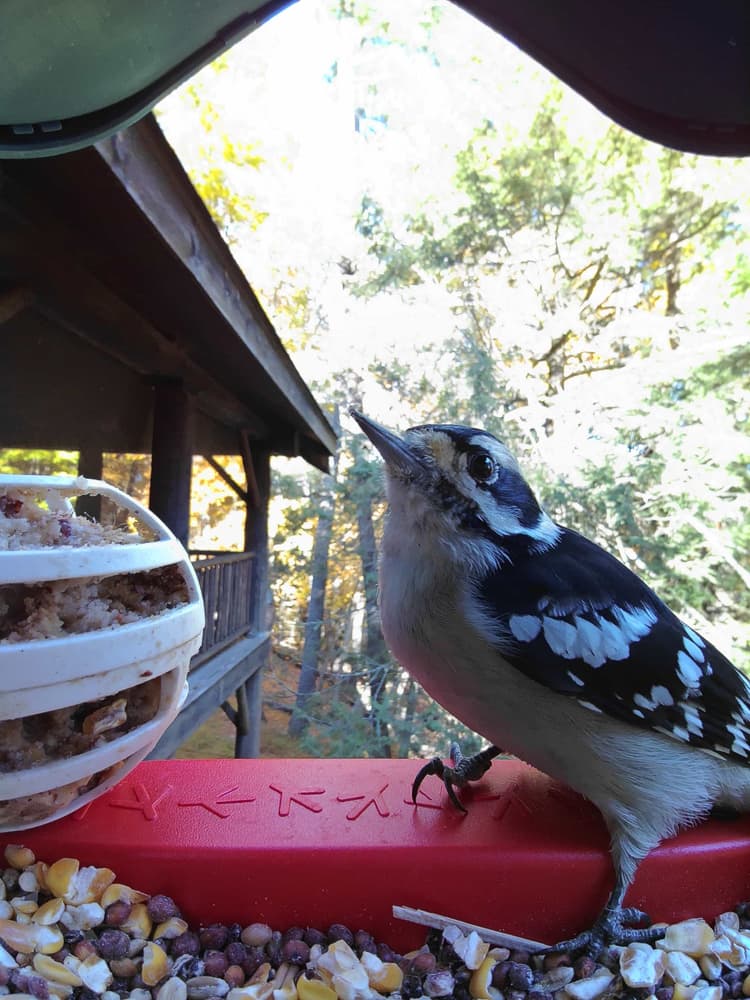
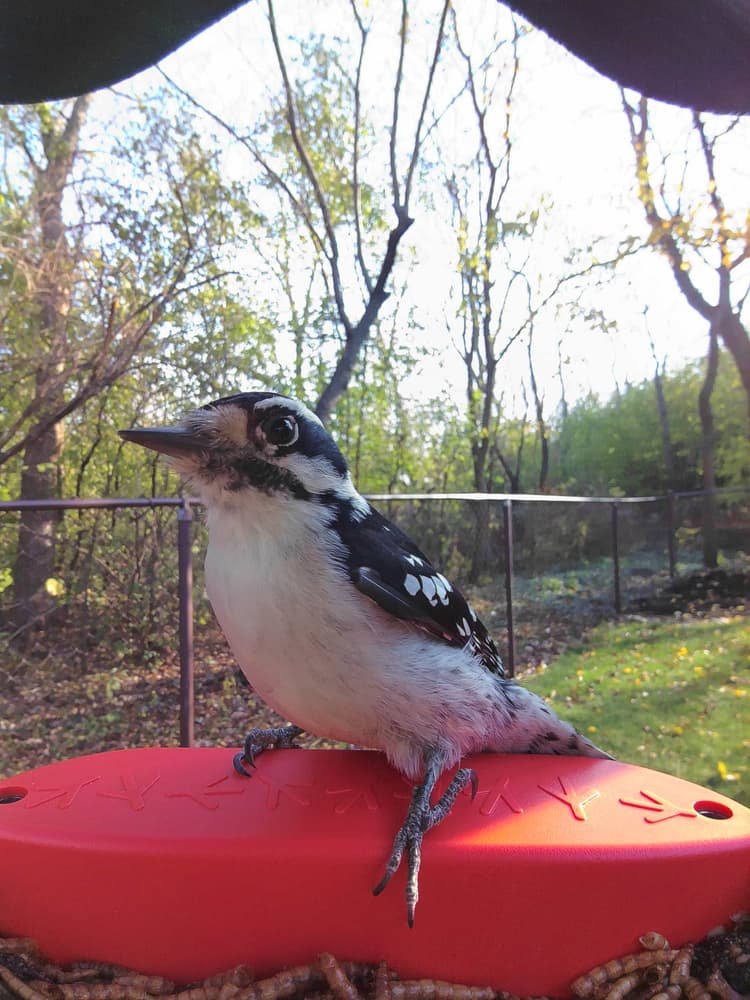
The hairy woodpecker is a medium-sized bird, featuring black and white plumage. Its back is predominantly black with white undersides and a white patch running down the center. The woodpecker's head is marked by bold black and white stripes. Hairy woodpeckers have a sharp, pointed beak, ideal for pecking into wood, and robust claws for gripping tree trunks.
Male vs female
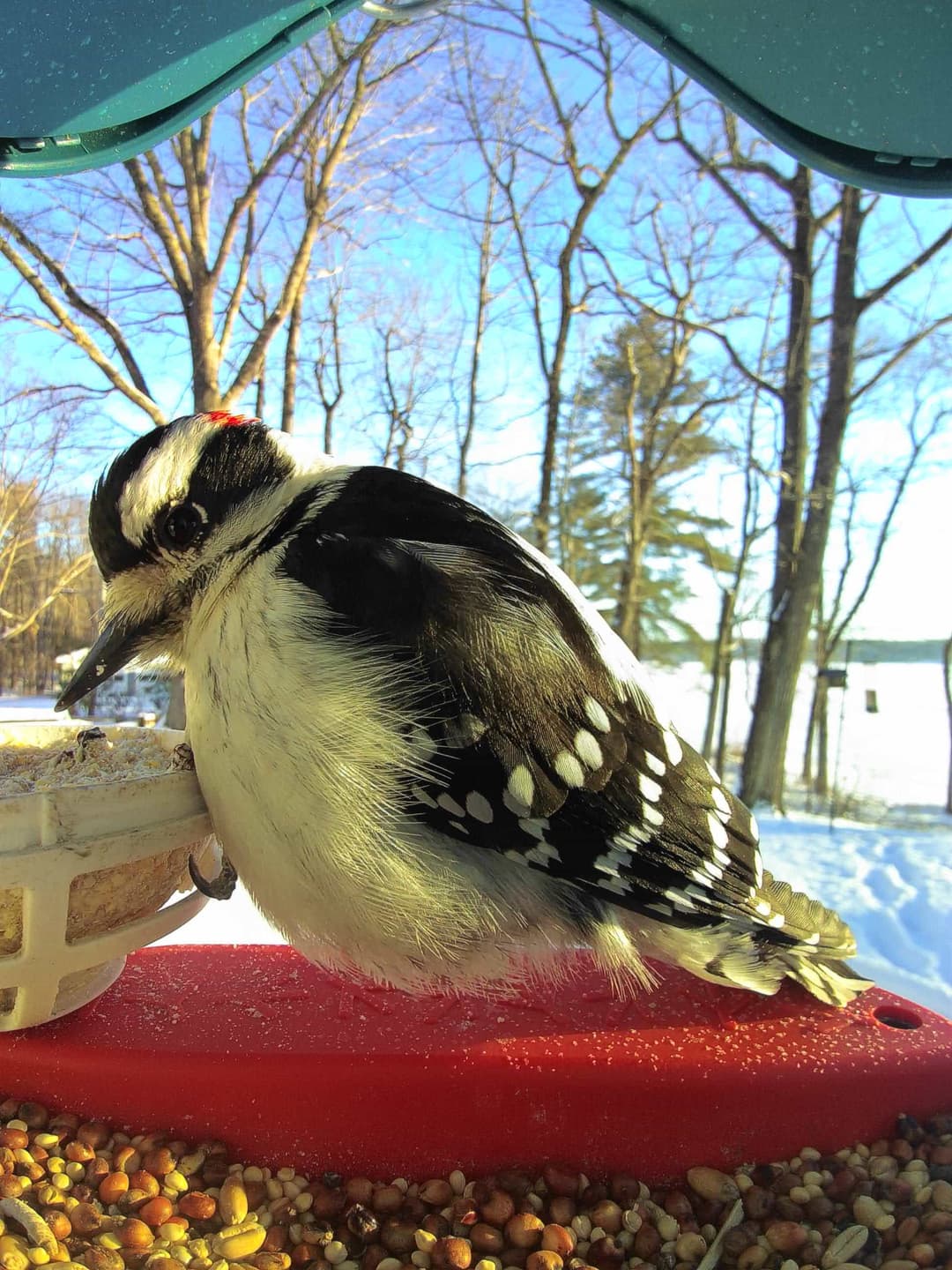
Males and females are similar in size and coloration; however, a key difference is the presence of a red patch on the back of the male's head, something females lack. In addition, the male's 'mustache' stripe tends to be black, while it is often gray or absent in females.
Juvenile
Juvenile hairy woodpeckers closely resemble adults, but they exhibit a red crown during their first year. As they mature, the red crown recedes, retained only by males as a small red patch on the back of the head. Apart from this, juveniles share the same black and white coloration as adults.
Often mistaken for
Downy Woodpecker vs Hairy Woodpecker
Downy Woodpeckers are smaller in size compared to Hairy Woodpeckers. They have a shorter bill which is about one-third the length of their head, whereas the Hairy Woodpecker's bill is about the same length as the head. Additionally, the overall body size of Downy is smaller.
Breeding and nesting habits of the hairy woodpecker
Mating behaviors
Hairy woodpeckers perform drumming and call sounds for courtship. Males and females engage in mutual tapping and chasing displays to establish pair bonds before selecting nesting sites.
Nesting details
These woodpeckers typically choose dead trees or limbs for nesting. They excavate round cavities lined with wood chips. Preferred locations include forested areas, wooded urban parks, and occasionally garden trees. To attract them to gardens, leave dead trees standing and consider installing nest boxes at least 12 feet above the ground.
Eggs and chick-rearing
The female lays 3 to 6 white eggs. Both parents share incubation duties, lasting about two weeks. After hatching, both parents feed the chicks insects and continue to care for them until they fledge in about a month.
What does a hairy woodpecker like to eat?
Fruits
Insects
Nuts
Sap
Seeds
Spiders
Natural diet
The hairy woodpecker primarily feeds on insects and their larvae, which it extracts from tree bark using its strong bill. Common insect prey includes beetles, ants, and caterpillars. It also consumes spiders and various other invertebrates. Additionally, the hairy woodpecker supplements its diet with fruits, seeds, and nuts, particularly during the non-breeding season when insect availability is lower.
Bird feeders
At bird feeders, the hairy woodpecker is commonly attracted to suet, which provides high energy content ideal for its active lifestyle. It may also consume other offerings such as sunflower seeds, peanuts, and nut pieces. These birds are less likely to consume grains or typical birdseed mixes focused on smaller seed types, preferring instead nutrient-dense options.
Pick the right feed
Hairy woodpeckers are particularly fond of fatty, protein-rich foods. Bird Buddy seeds, chosen by experts for the season, will often yield the best results. These birds also enjoy eating insects, nuts, and berries. Having a varied diet in your feeders can be a great way to attract these birds to your yard.
Install suitable feeders
Hairy woodpeckers prefer feeders that they can cling to. Suet feeders, which are typically made of wire mesh and hung from trees, are an excellent choice. These birds also do well with platform feeders or any feeder that allows them to cling and peck. Remember to locate the feeders near tree trunks or thick branches to make them more attractive to the woodpeckers.
Create a bird-friendly environment
In addition to food, consider creating an environment that is appealing to woodpeckers. Leave dead trees or limbs in place (if safe to do so) as they are natural feeding sites for these birds. Installing bird baths and nesting boxes can also encourage them to visit and potentially stay.
Fun tricks to attract woodpeckers
Woodpeckers are known to be curious and fairly brave birds. Try placing shiny objects around your feeder as they can be attracted to the reflections. They are also drawn to the sounds of other woodpeckers, so playing a recording can make them feel like they're in familiar territory. And who knows, they might even stay for a little sing-along!
Where can you find hairy woodpeckers?

Primary habitat
The hairy woodpecker predominantly inhabits mature forests, mixed woodlands, and scrub in North America.
Additional range
They can also adapt to human-altered habitats like orchards, parks, and suburban areas. Their climate preferences are diverse, spanning from northern boreal forests to tropical regions.
Do they migrate?
The hairy woodpecker primarily stays in one place all year and is considered a non-migratory or resident bird across much of its range. This woodpecker is found throughout the forests of North America, from Alaska and Canada down to Florida and parts of Central America. While they do not undertake long-distance migrations, some northern populations may move slightly southward in response to severe winter conditions or food shortages, but this is generally considered irruptive behavior rather than true migration. Throughout the year, hairy woodpeckers remain in their established territories, consistently foraging for insects beneath the bark of trees and occasionally visiting bird feeders. The adaptability of their diet and habitat helps them to maintain their presence in a wide geographic range without the need for migration. Their sedentary nature allows them to also raise their young in the same locations where they spend much of their life. Overall, the hairy woodpecker’s lifestyle exemplifies a species well-adapted to its environment, negating the necessity for extensive seasonal movement.
What is the role of hairy woodpeckers in nature and how to protect them?
Conservation status
The hairy woodpecker is classified as a common species and is not currently considered vulnerable or endangered. It thrives in various habitats across North America, including forests, woodlands, and suburban areas. Key conservation efforts focus on preserving its natural habitat, particularly through the maintenance and management of mature forests, which are crucial for nesting and foraging. Significant threats include habitat loss due to urban development and deforestation. Conservation strategies emphasize sustainable forestry practices and habitat restoration to ensure the species continues to thrive in its natural environment.
Ecological role of hairy woodpeckers
Its role in the ecosystem
The Hairy Woodpecker plays a significant ecological role particularly in pest control. It helps manage populations of harmful insects like beetle larvae and tree-boring insects that damage woods and trees, which in turn, significantly helps maintaining the health of forests. In addition, this bird contributes to seed dispersal. As it consumes fruits and berries during certain seasons, it's well positioned for scattering seeds during its movements and actions, thereby assisting in plant propagation. Furthermore, the Hairy Woodpecker is known for excavating cavities in trees for nesting which are often used by other species after the woodpeckers leave, hence playing an important role in providing habitats for various species. Therefore, the Hairy Woodpecker is not just a bird of interest for birdwatchers, but also a vital player in maintaining ecosystem balance.
How to help protect hairy woodpeckers
Preservation tips
Habitat preservation strategies
Promote and participate in reforestation efforts to combat loss of woodpecker habitat. Implement responsible forestry practices such as leaving dead and dying trees standing. These trees provide essential nesting spaces for the hairy woodpecker. Support policies that protect mature forests from logging and urbanization as these are crucial habitats for the hairy woodpecker.
Community science initiatives
Encourage involvement in citizen science projects like the Cornell Lab of Ornithology's Project FeederWatch, which helps track bird population trends. Participate in local bird counts or surveys to gather data on the hairy woodpecker's population in your area. Advocate for educational programs in schools and local communities about the importance of conserving bird species and their habitats.