Eastern Bluebird or Mountain Bluebird?
Here's how to tell the difference
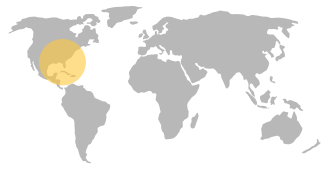
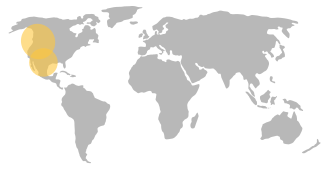



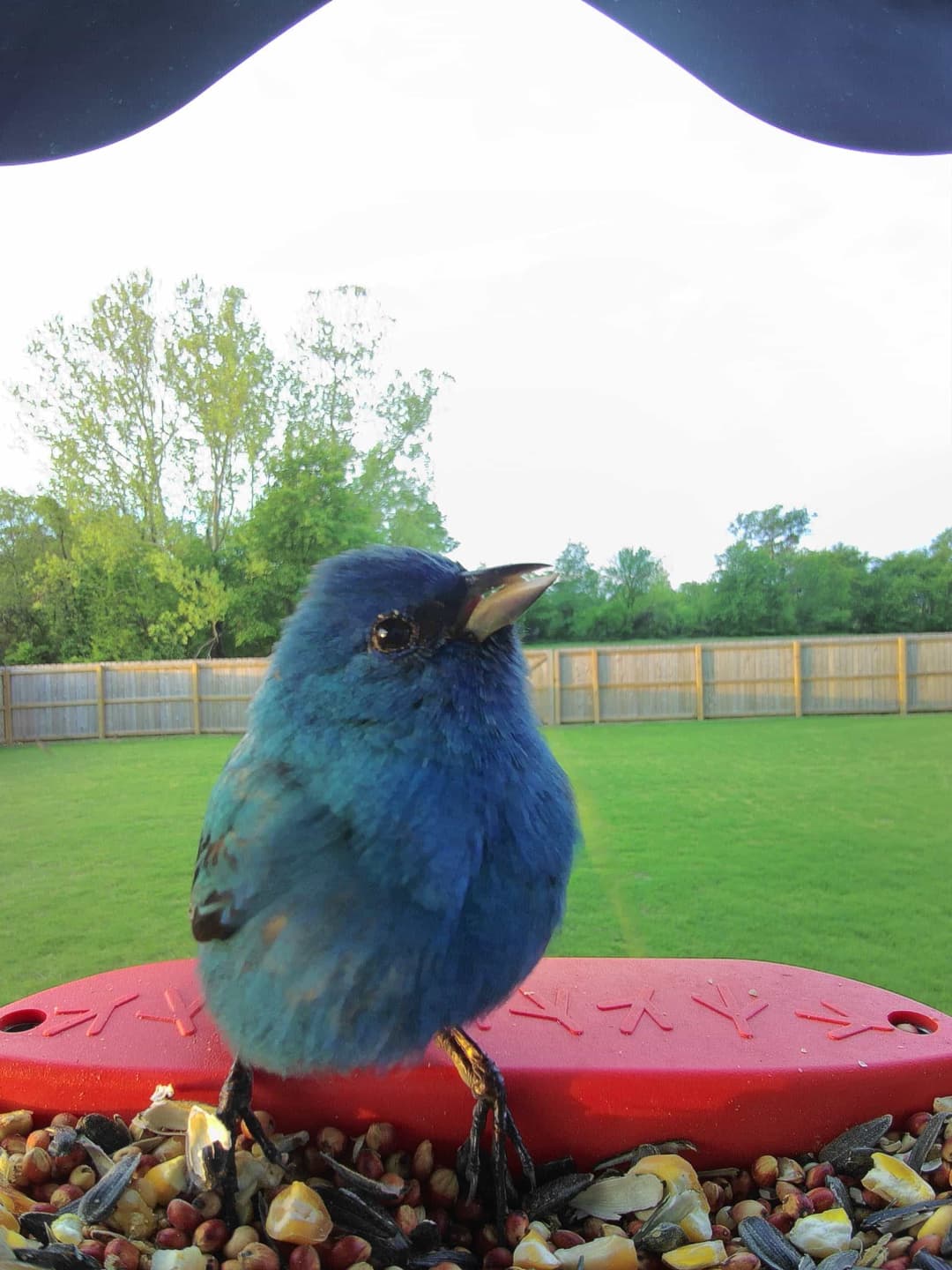
Eastern Bluebird
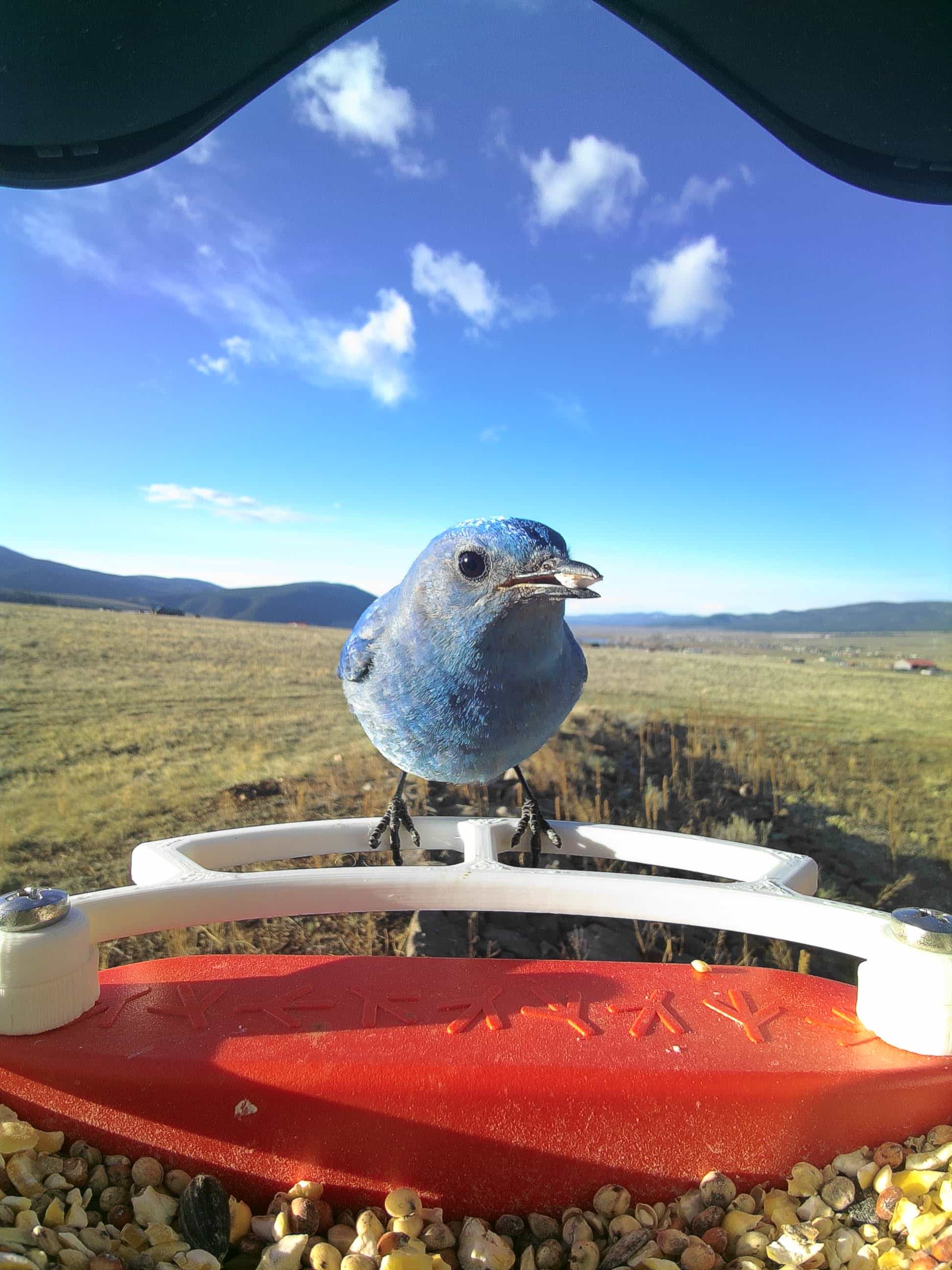

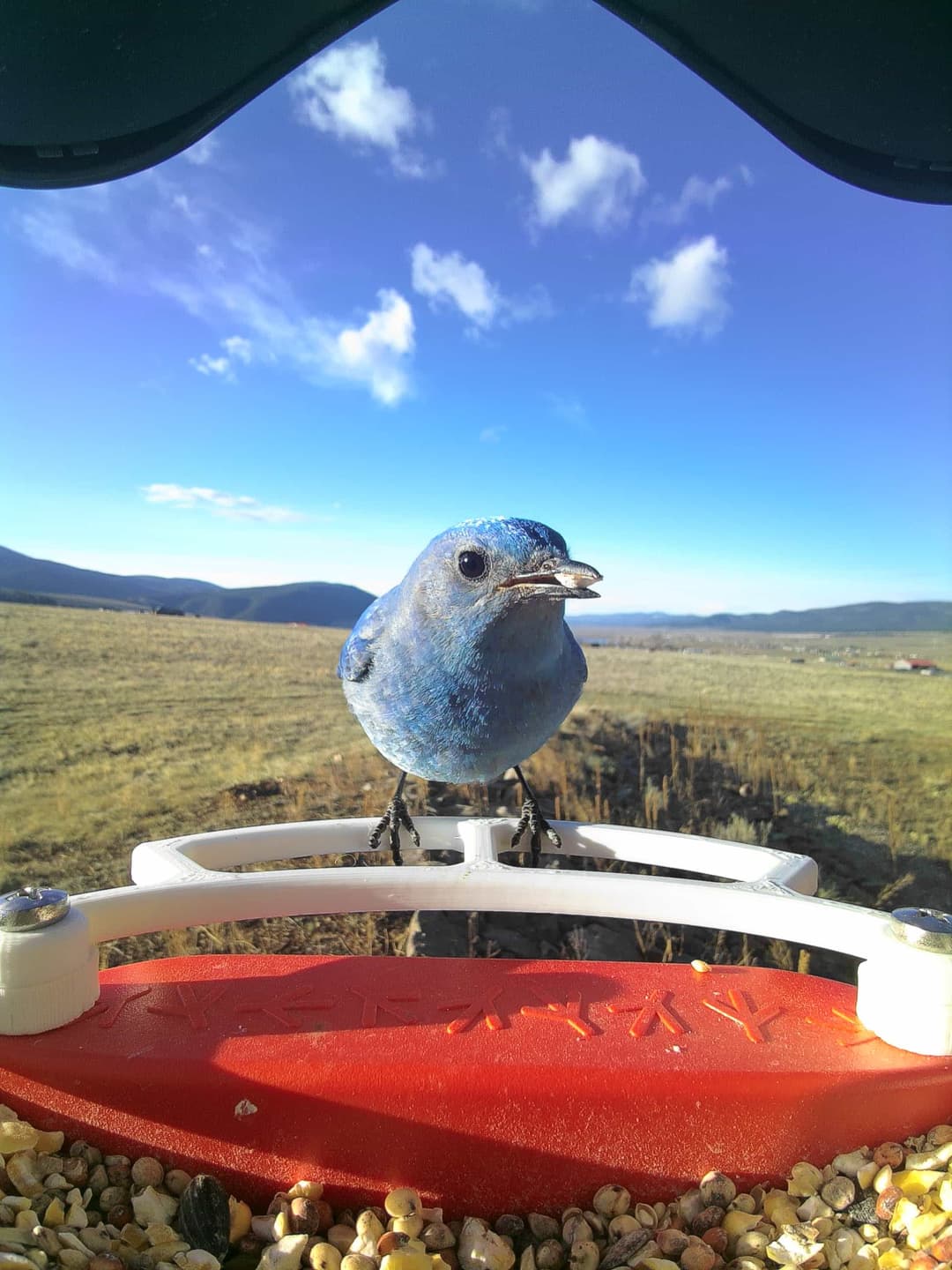
Mountain Bluebird
Eastern Bluebird
Sialia sialis
General appearance
The eastern bluebird is a small bird around 17cm long, roughly the size of a Robin or a Sparrow. Its most distinctive features are its bright blue back and wings and its reddish-brown throat and chest. The bird's belly is white with the overall wing shape being rounded. Its tail is either notched or ends with a square tip.
Male vs female
Both male and female eastern bluebirds share the same general features, though the female is generally paler and duller than the male. Delicate variations in hues are a key way to differentiate between the sexes.
Juvenile
Juvenile eastern bluebirds can be identified by their spotted appearance, which is significantly heavier than that of adults. They also have tell-tale traces of blue above, indicative of the bright blue coloration they will develop as adults.
Size
6.3 - 8.3 in/1.0 - 1.1 oz
There's more to learn about Eastern Bluebird
View full detailsMountain Bluebird
Sialia currucoides
General appearance
The Mountain Bluebird is a medium-sized bird, around 18 cm in length, comparable in size to a Robin or a Sparrow. It has a long, pointed wing shape, and a notched and square-tipped tail. Its general coloration is sky-blue or gray.
Male vs female
Male and female Mountain Bluebirds have discernible differences in color. Males boast a striking sky-blue color which distinguishes them from other blue birds; other blue birds, such as the Indigo Bunting, are characteristically darker. In contrast, females carry a gray hue interspersed with blue tinges. Their gray flanks contrast with their white bellies. Females have comparatively longer wings and tails than the other bluebirds.
Juvenile
A comprehensive description for the juvenile mountain bluebirds wasn't provided. However, it would be reasonable to infer that they might show less vibrant coloration than adults, as it is common in many bird species. Also, juveniles may possess less noticeable gender-specific traits.
Size
6.1 - 7.1 in/0.8 - 1.3 oz
There's more to learn about Mountain Bluebird
View full detailsHow to tell the Eastern Bluebird from the Mountain Bluebird
Visual differences
Eastern Bluebirds are about 6.3–8.3 inches long with bright blue backs and reddish-brown throats and chests, while their underside is white. Their wings are rounded, and tails are notched or square-tipped. Male Mountain Bluebirds are 6.1–7.1 inches long and exhibit a striking sky-blue color with long, pointed wings, and a notched, square-tipped tail. Females are gray with blue tinges and longer wings. Mountain Bluebirds are generally less patterned and have a more uniform blue compared to the bicolor marking of Eastern Bluebirds.
Key differences and behavior
Eastern Bluebirds and Mountain Bluebirds demonstrate distinct behavioral and habitat preferences. Eastern Bluebirds thrive in farmlands and suburban areas with scattered trees, where they hunt from perches, spotting insects up to 50 yards away. In contrast, Mountain Bluebirds prefer open terrains such as prairies and alpine zones. While Eastern Bluebirds nest low in trees, Mountain Bluebirds may use diverse sites, including cliff crevices. Both species consume insects and berries, but Mountain Bluebirds engage in hawk-like hovering to catch insects in open fields, unlike Eastern Bluebirds, who prefer ground foraging. Courtship behaviors differ as well, with Eastern males singing and feeding females, whereas Mountain Bluebirds don't share such elaborate rituals. Both birds adapt to winter by relying heavily on berries when insects are scarce.
Still not sure? Here are more lookalikes!
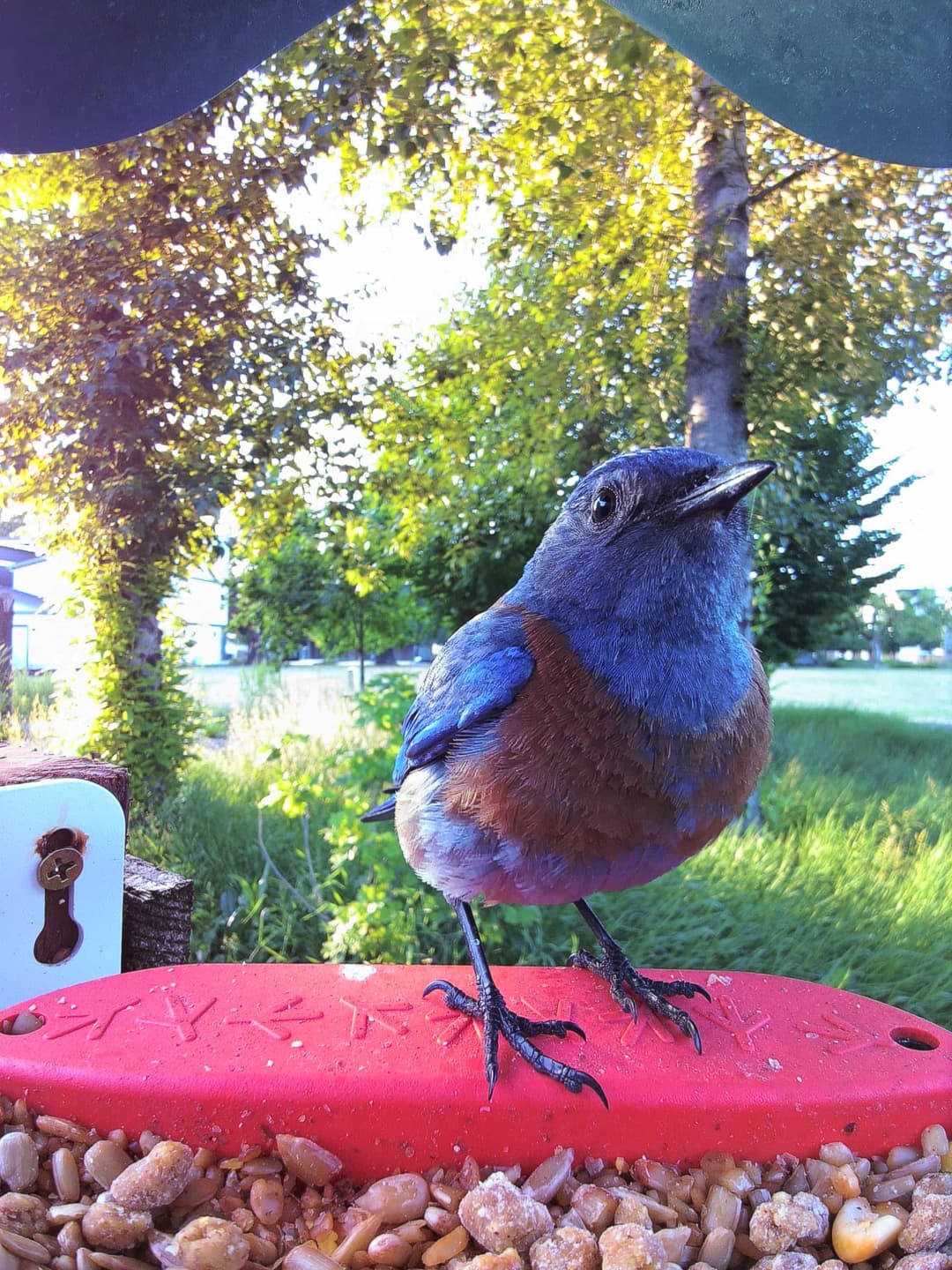
Eastern Bluebird vs Western Bluebird

Eastern Bluebird vs Indigo Bunting
Eastern Bluebird vs [Select a bird]

[Select a bird]
Pick a bird to compare
Mountain Bluebird vs [Select a bird]
[Select a bird]
Pick a bird to compare