
Mountain Bluebird
Mountain Bluebird
Sialia currucoides

Quick Identification guide
Quick Identification guide
- •
The brilliant sky-blue plumage covers the head, back, and wings, creating a striking contrast against the landscape
- •
Males and females differ slightly; males generally exhibit an even more vibrant blue than the slightly duller females
- •
A slender body and pointed wings are paired with a thin, straight bill, perfect for their insect-centric diet
What does a mountain bluebird sound like?
The mountain bluebird vocalizes using soft warbling notes and displays several call patterns, including falling, flat, and undulating. It typically expresses itself through varied types of calls such as chirp or chip calls as well as whistle calls. These diverse vocalizations make its sound fairly distinguishable.

Description
This beautiful bird is the bluest of all North American bluebirds and the state bird of Idaho and Nevada. These guys are closely related to robins. When looking for food, they hover in the air like a hawk. A small, blue hawk, that is. In the Navajo tradition, they were regarded as spirits in animal form that were closely associated with the rising sun.
The mountain bluebird can weigh between 24to37grams and be from15.5to18centimeters tall.
The typical lifespan of a Mountain Bluebird is about 6-10 years. This is relatively long compared to other small bird species. For instance, related species such as the Eastern Bluebird typically live up to 6-7 years, while the Western Bluebird can live up to 8 years. However, survival rates for all these species can significantly decrease due to predation, harsh weather and disease.
Did you know?
Most popular questions about mountain bluebird
How to recognise a mountain bluebird?
General appearance
The Mountain Bluebird is a medium-sized bird, around 18 cm in length, comparable in size to a Robin or a Sparrow. It has a long, pointed wing shape, and a notched and square-tipped tail. Its general coloration is sky-blue or gray.
Male vs female
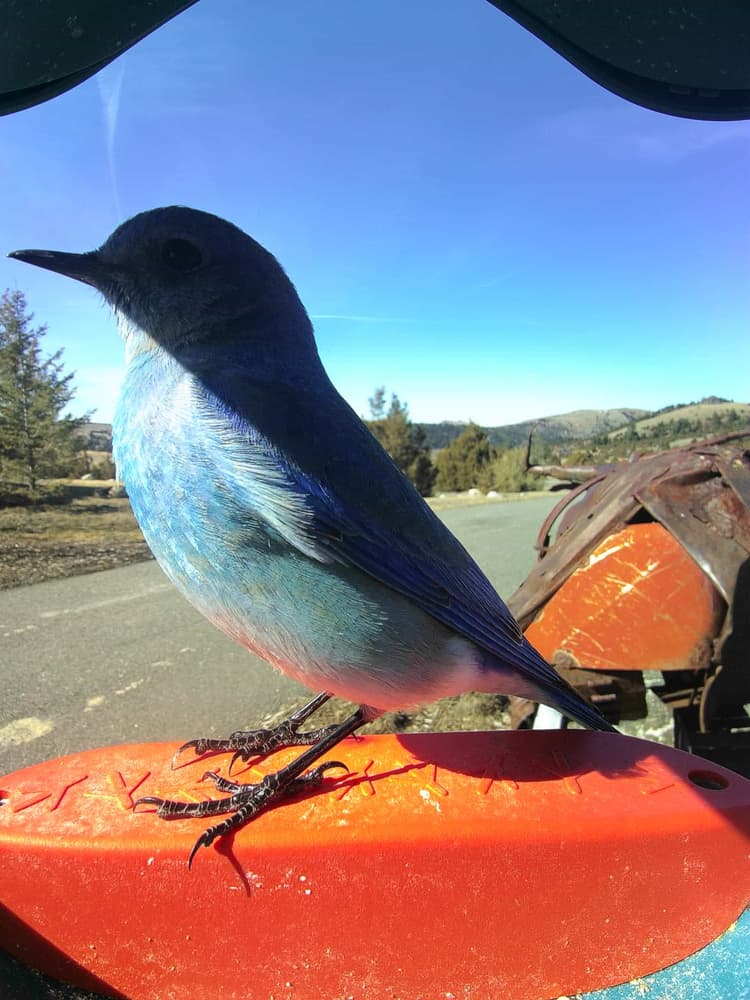
Male and female Mountain Bluebirds have discernible differences in color. Males boast a striking sky-blue color which distinguishes them from other blue birds; other blue birds, such as the Indigo Bunting, are characteristically darker. In contrast, females carry a gray hue interspersed with blue tinges. Their gray flanks contrast with their white bellies. Females have comparatively longer wings and tails than the other bluebirds.
Juvenile
A comprehensive description for the juvenile mountain bluebirds wasn't provided. However, it would be reasonable to infer that they might show less vibrant coloration than adults, as it is common in many bird species. Also, juveniles may possess less noticeable gender-specific traits.
Often mistaken for
Eastern Bluebird vs Mountain Bluebird
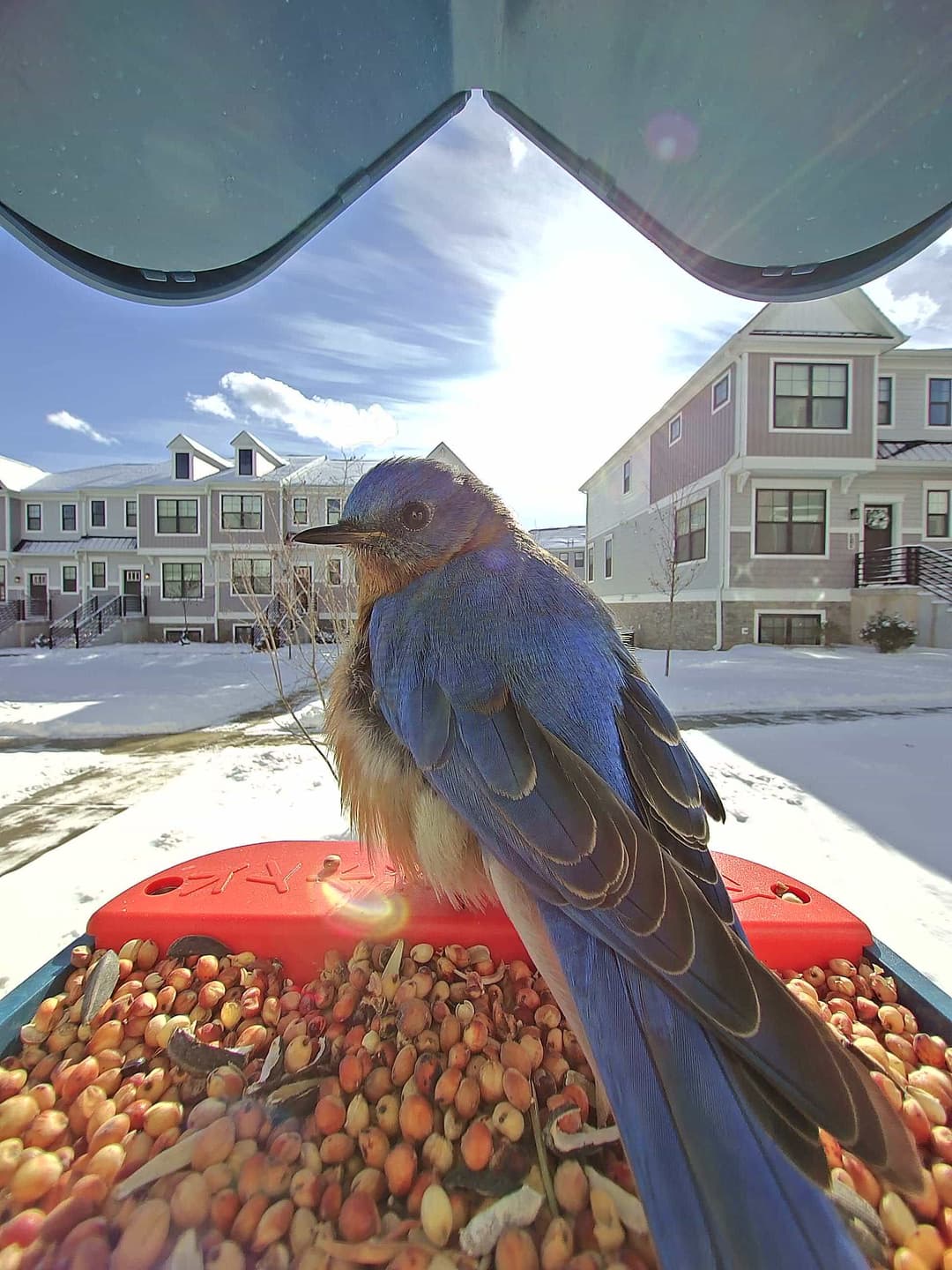
The Mountain Bluebird is overall brighter sky blue, while the Eastern Bluebird has a vivid blue head and back with an orange throat and chest. Look for a mostly white belly on the Mountain Bluebird, unlike the Eastern Bluebird’s orange. The Mountain Bluebird is also found more in open, mountainous regions, whereas the Eastern prefers woodlands and gardens.
Western Bluebird vs Mountain Bluebird
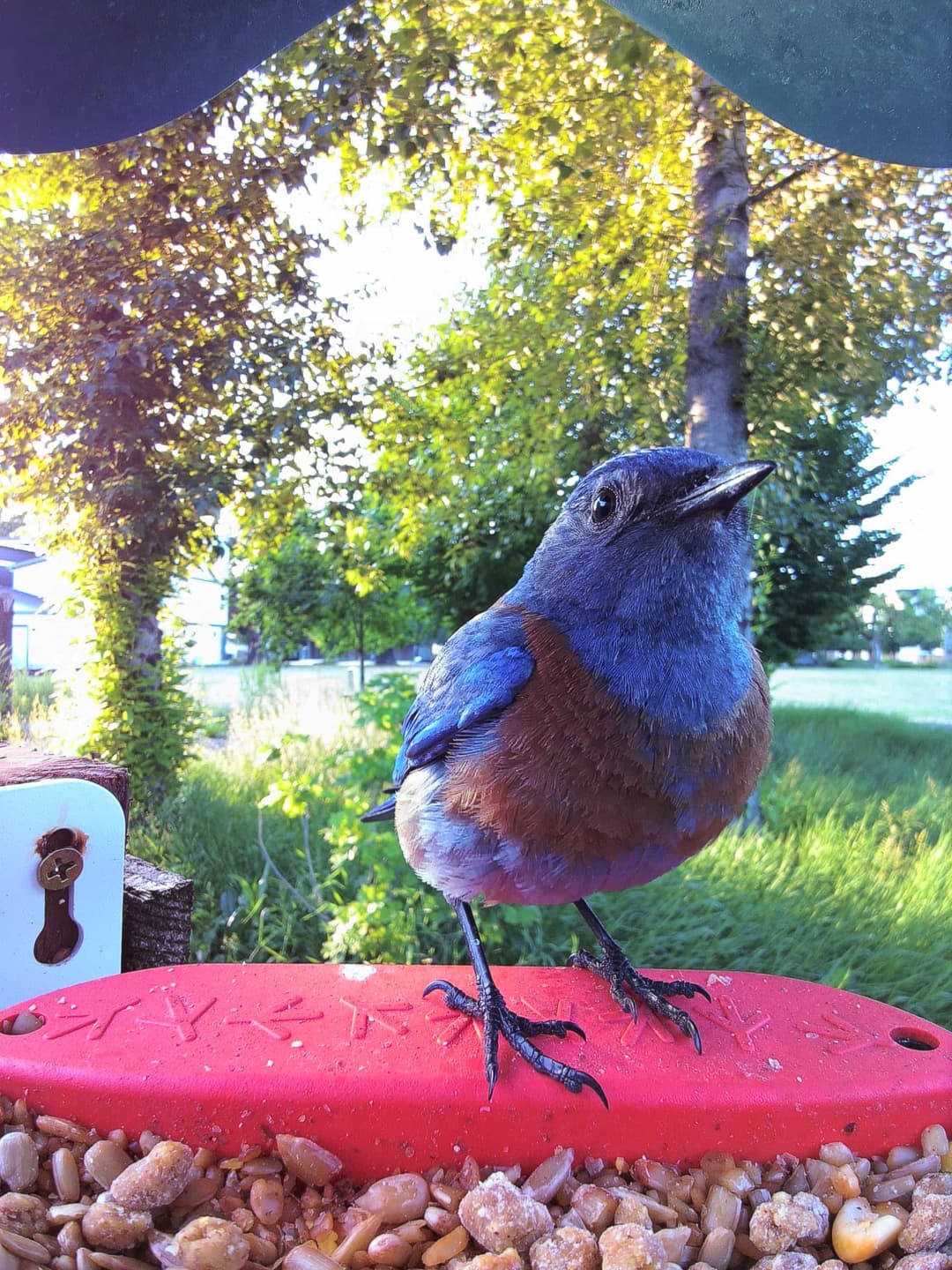
Mountain Bluebirds are a lighter skylark blue compared to the deeper blue of Western Bluebirds, which also have a noticeable rusty-colored shoulder band and blue throat. In contrast, the Mountain Bluebird lacks the rusty coloring and has a more consistent light blue across the body. The Mountain prefers open habitats while the Western is more flexible with its habitat preferences.
Breeding and nesting habits of the mountain bluebird
Mating behaviors
Mountain bluebirds sometimes interbreed with Eastern Bluebirds in overlapping ranges. The female typically selects the nesting site.
Nesting details
Nests are located in cavities such as natural hollows, old woodpecker holes, or birdhouses. They may also nest in dirt banks, cliff crevices, buildings, or old nests of other bird species. The nest is a loose cup made from weed stems, grass, twigs, rootlets, and pine needles, sometimes lined with animal hair or feathers.
Eggs and chick-rearing
The female lays eggs in the nest cavity and both parents may be involved in the nesting process. After hatching, both parents feed and care for the chicks until they are ready to fledge.
What does a mountain bluebird like to eat?
Berries
Fruits
Insects
Seeds
Spiders
Natural diet
The mountain bluebird primarily feeds on insects and berries. During warmer months, it consumes a variety of insects including beetles, grasshoppers, caterpillars, crickets, ants, and bees. These insects constitute a significant portion of their diet, providing necessary protein and nutrients. In the winter months, when insects are less abundant, mountain bluebirds rely heavily on berries. They eat berries from mistletoe, juniper, hackberry, and other plants. Berries become particularly crucial in winter, supplying them with essential carbohydrates.
Bird feeders
Mountain bluebirds are not commonly attracted to bird feeders, as they primarily hunt for insects in the wild. However, during scarce times, they might occasionally visit feeders that offer mealworms or berries, which mimic their natural diet to some extent.
Attracting mountain bluebirds: food
Mountain Bluebirds love to dine on insects, berries, and fruits. If you want to attract these beautiful birds to your yard or feeder, consider getting Bird Buddy seeds. Chosen by experts for the season, these seeds are sure to catch the eye (and the appetite) of any Mountain Bluebird nearby.
Attracting mountain bluebirds: feeder types
Bluebirds are attracted to feeders that simulate their natural feeding habits. Opt for a tray or platform feeder, which allows the birds to scan the area for predators while they dine. And, remember to keep the feeder clean and stocked!
Attracting mountain bluebirds: fun tricks
To encourage Mountain Bluebirds to drop by (and maybe even stay for a sing-along), consider these fun tricks: 1) Maintain a water source, such as a shallow dish or bird bath. 2) Create a safe environment free from predators and outdoor pets. 3) Plant native trees and shrubs that provide cover and attract insects. Happy birdwatching!
Where can you find mountain bluebirds?

Primary habitat
Mountain bluebirds enjoy open country; typically places with some trees or even treeless terrains. They prefer less crowded spaces than other bluebirds, from lowland prairies and sagebrush flats to alpine zones.
Additional range
In winter, it's common for these bluebirds to inhabit pinyon-juniper woods. However, they can also be found in unexpected environments like open grassland, desert, farmland, and even barren plowed fields.
Do they migrate?
The mountain bluebird is a migratory bird that does not stay in one place all year. It tends to migrate relatively late in the fall and early in the spring. The migration timing is closely linked to the availability of food, with its winter range varying annually based on food supplies. During its migratory journey, the mountain bluebird may depart from its breeding grounds in the high-altitude regions of western North America, including areas such as the Rocky Mountains and the Sierra Nevada. As it heads south for the winter, its range can extend into the southwestern United States and parts of northern Mexico. A distinctive characteristic of their migration is the tendency for flocks to sometimes wander east across the Great Plains. On rare occasions, lone strays have been observed reaching as far as the Atlantic Coast. Such straying behavior may be influenced by searching for food sources or favorable weather conditions. As spring approaches, mountain bluebirds migrate back to their breeding grounds, completing their seasonal journey. Their flexible migration patterns, driven by food availability, contribute to their survival across the varied landscapes they inhabit, demonstrating adaptability to changing environmental conditions.
What is the role of mountain bluebirds in nature and how to protect them?
Conservation status
The mountain bluebird is currently stable in population, largely due to its nesting habits in remote areas, reducing competition for nest sites with Starlings and other invasive species. It is not considered vulnerable or endangered. While no major threats are noted, continued monitoring is essential, as is protection of its habitat from encroachment and disturbance. Conservation efforts focus on maintaining suitable nesting sites and minimizing habitat destruction, ensuring this species remains thriving in its natural environment.
Ecological role of mountain bluebirds
Its role in the ecosystem
The Mountain Bluebird plays a crucial ecological role in maintaining balance in the ecosystem. As insectivores, they feed heavily on a variety of insects including beetles, grasshoppers, caterpillars and many more, thereby acting as a natural pest control. By controlling the insect population, they help to impede the spread of diseases and limit the potential destruction of vegetation caused by overpopulation of certain insects. Additionally, Mountain Bluebirds contribute to seed dispersal, particularly during the winter, when their diet incorporates more berries from various plants such as mistletoe, juniper and hackberry. This feeding behavior aids in the propagation of these plant species, as the birds spread the seeds via their droppings. Furthermore, their nesting habits, which include reusing old nests of other bird species or nesting in natural hollows or man-made birdhouses, have further implications on ecosystem dynamics, such as promoting reutilization and cycling of organic materials.
How to help protect mountain bluebirds
Preservation tips
Habitat preservation strategies
To conserve the mountain bluebird, it is crucial to protect and restore its natural habitat - open woodlands. Avoid deforestation and encourage native plant growth that offers sufficient food supply for the birds. Installation of nest boxes can aid in providing safe breeding sites, as they often suffer from habitat loss.
Community science initiatives
Engage in community science projects such as the Audubon Society’s Bluebird Recovery Program, which promotes bluebird conservation. Teach communities about the importance of bluebirds and provide guidance on setting up nest monitoring protocols. Use platforms to record bird sightings, like eBird, promoting citizen participation in conservation.