Dark Blue Jay or Woodhouse’s Scrub-Jay?
Here's how to tell the difference
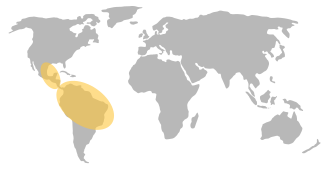


Dark Blue Jay
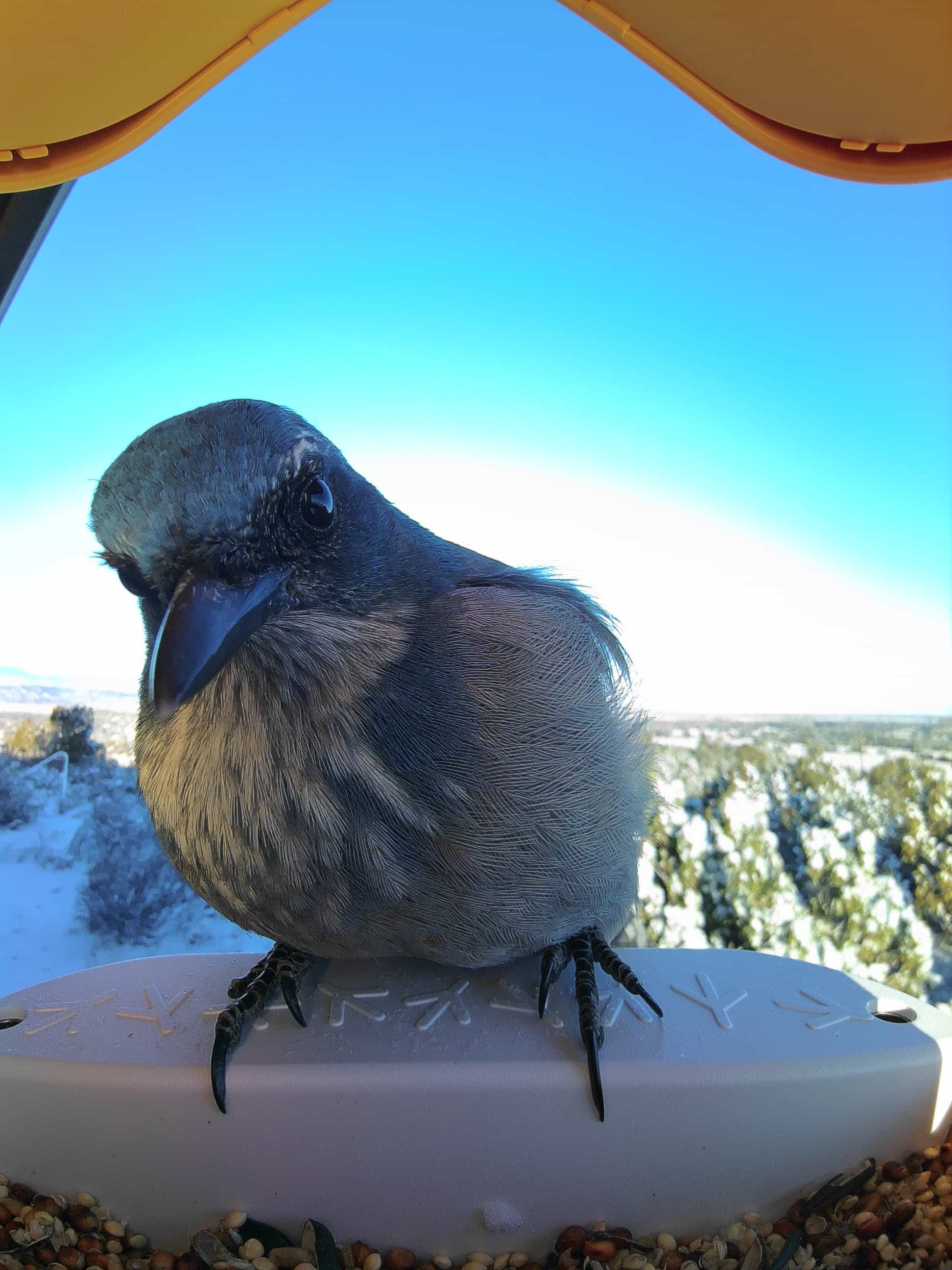


Woodhouse’s Scrub-Jay
Dark Blue Jay
Cyanocorax
General appearance
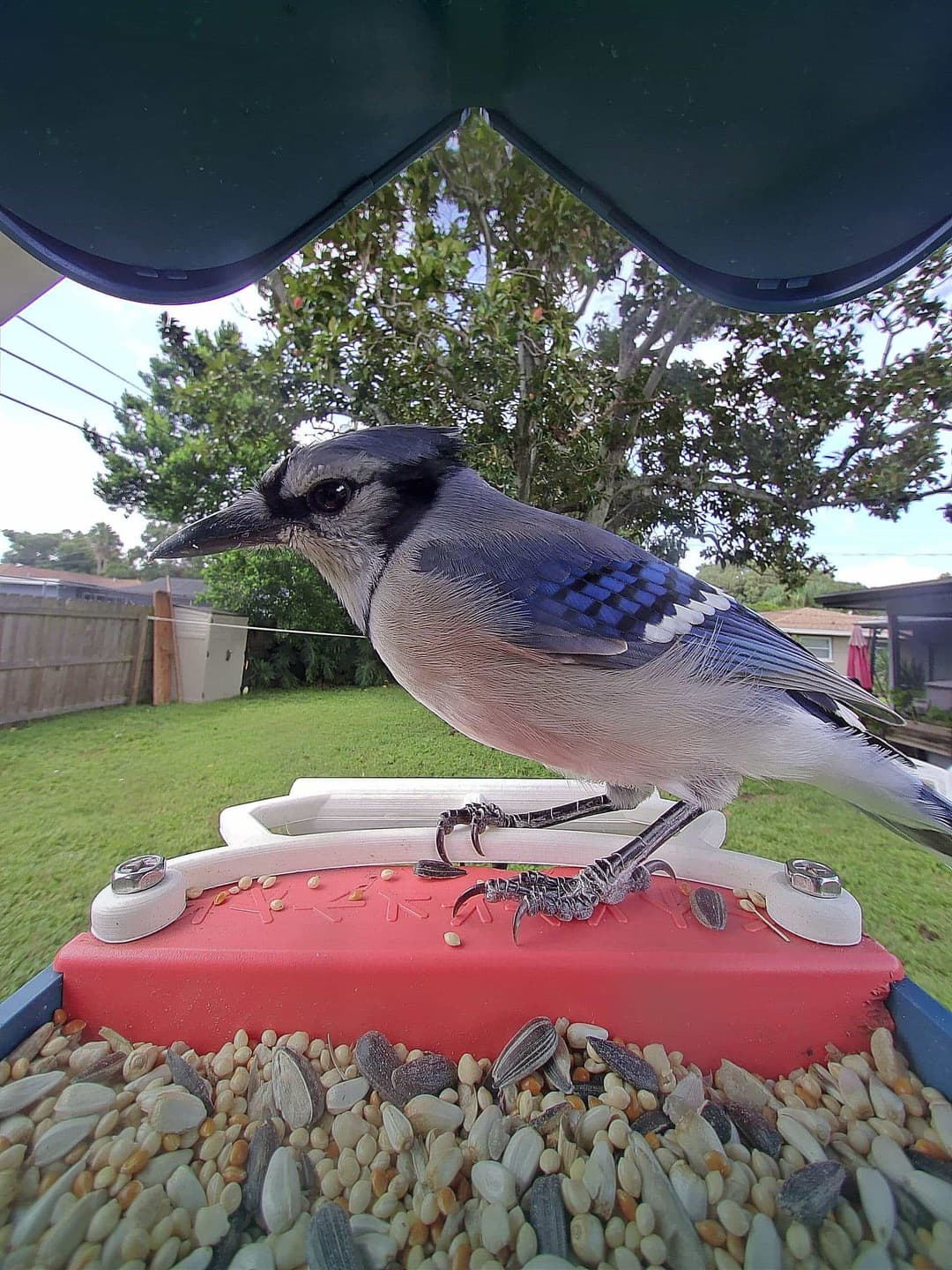
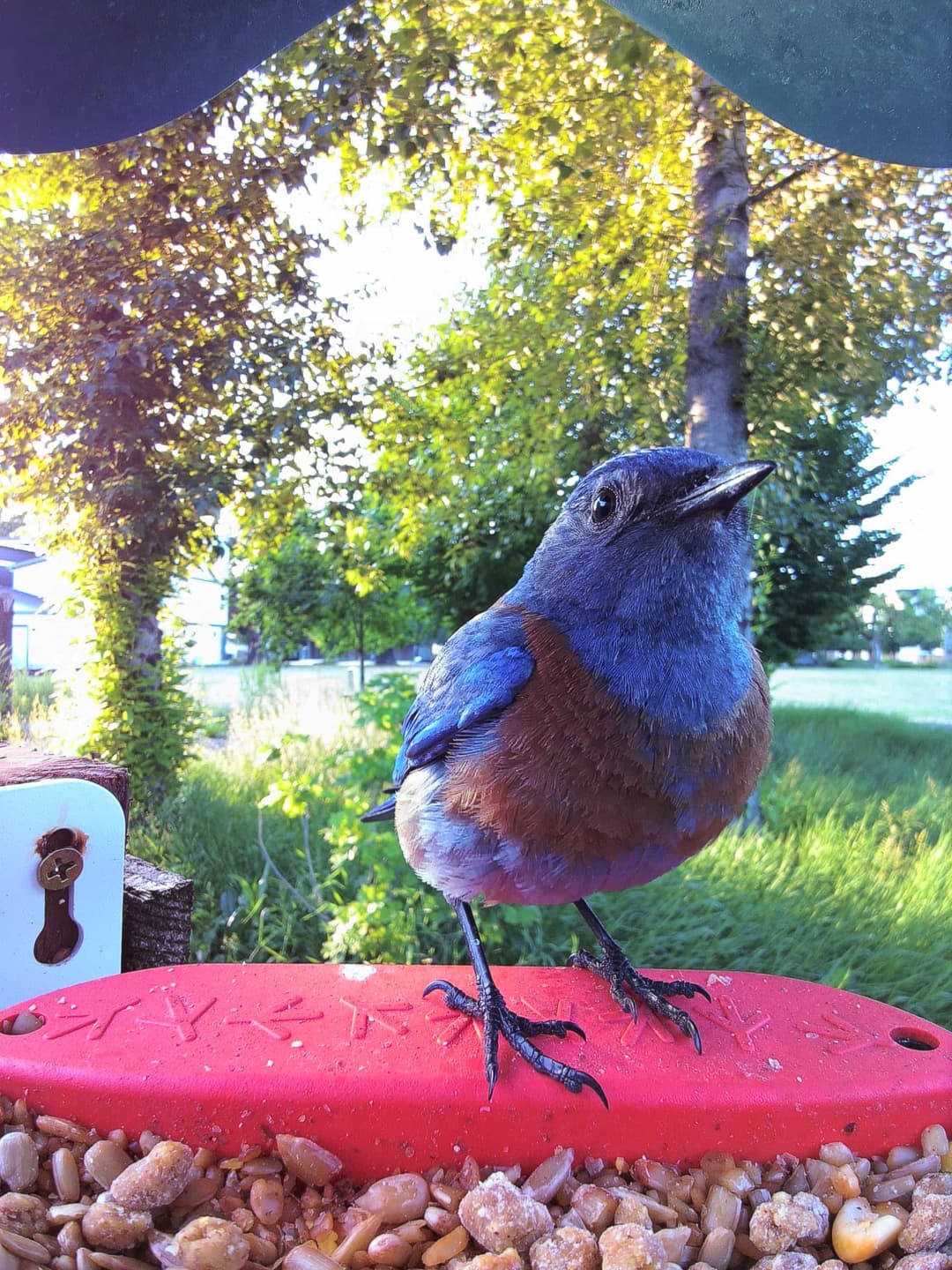
Dark Blue Jays encompass deep blue to purplish-blue plumage with a strong black barring on their tail and wings. The throat, chin and upper breast showcases lighter blue shades with traces of grayish white. Their stout, robust build, black beak and feet, and an average length of 11-12 inches are conspicuous traits.
Male vs female
Sexual dimorphism isn't prominent in Dark Blue Jays, making it hard to distinguish between males and females. Both share identical color patterns and physical traits, females might be slightly smaller in size. Behavioral indications during breeding season might assist in discernment.
Juvenile
Juvenile Dark Blue Jays possess a duller coloration compared to adults until they complete their first molt. The immature birds have lighter blue to gray fluff with less distinct barring on tails and wings. The juvenile's eyes, initially a subtle blue-gray, brighten to a more pronounced white as they mature.
Size
9.8 - 15.7 in/2.3 - 9.6 oz
There's more to learn about Dark Blue Jay
View full detailsWoodhouse’s Scrub-Jay
Aphelocoma woodhouseii
Also known as: Woodhouse's Jay
General appearance
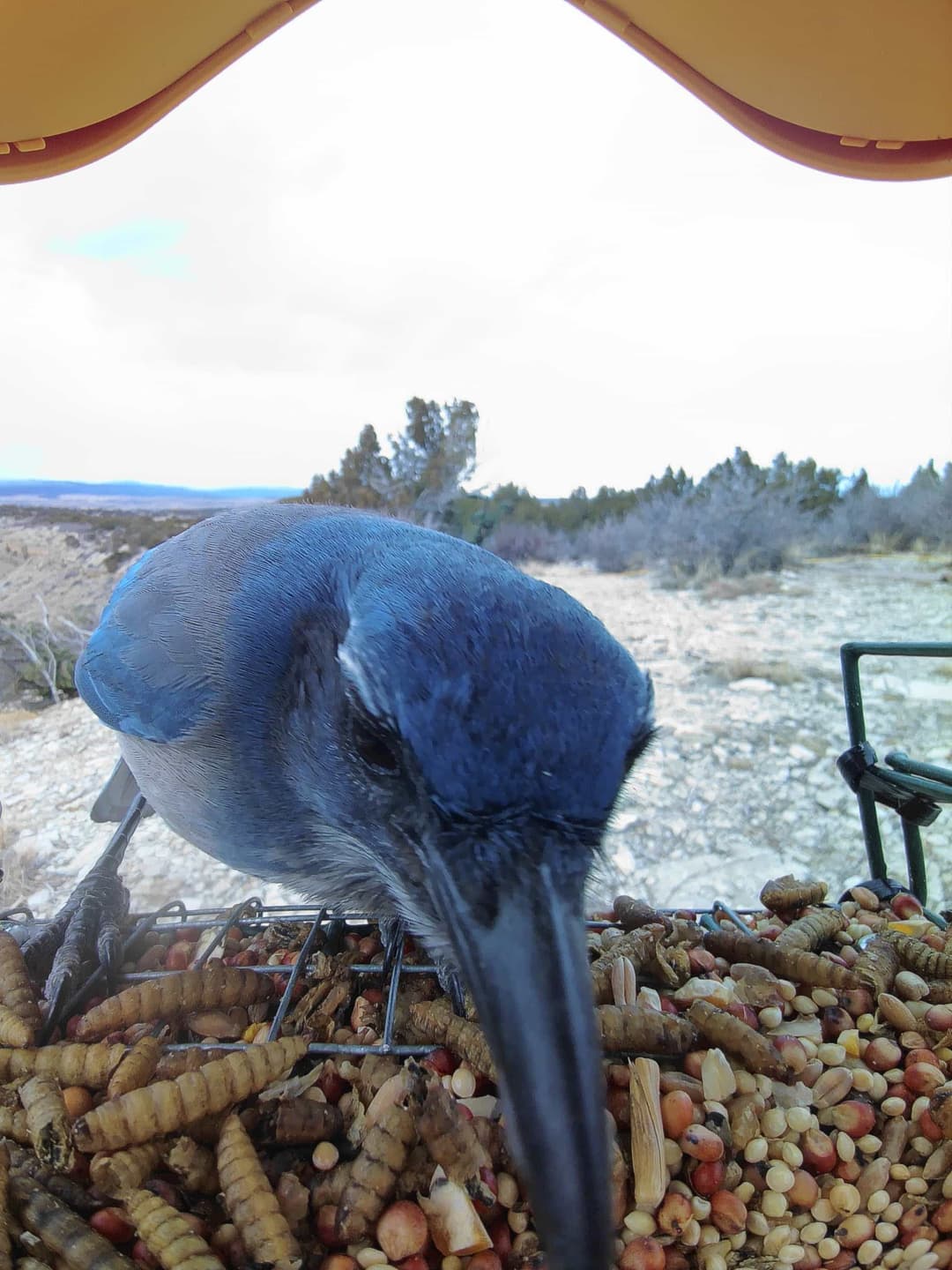
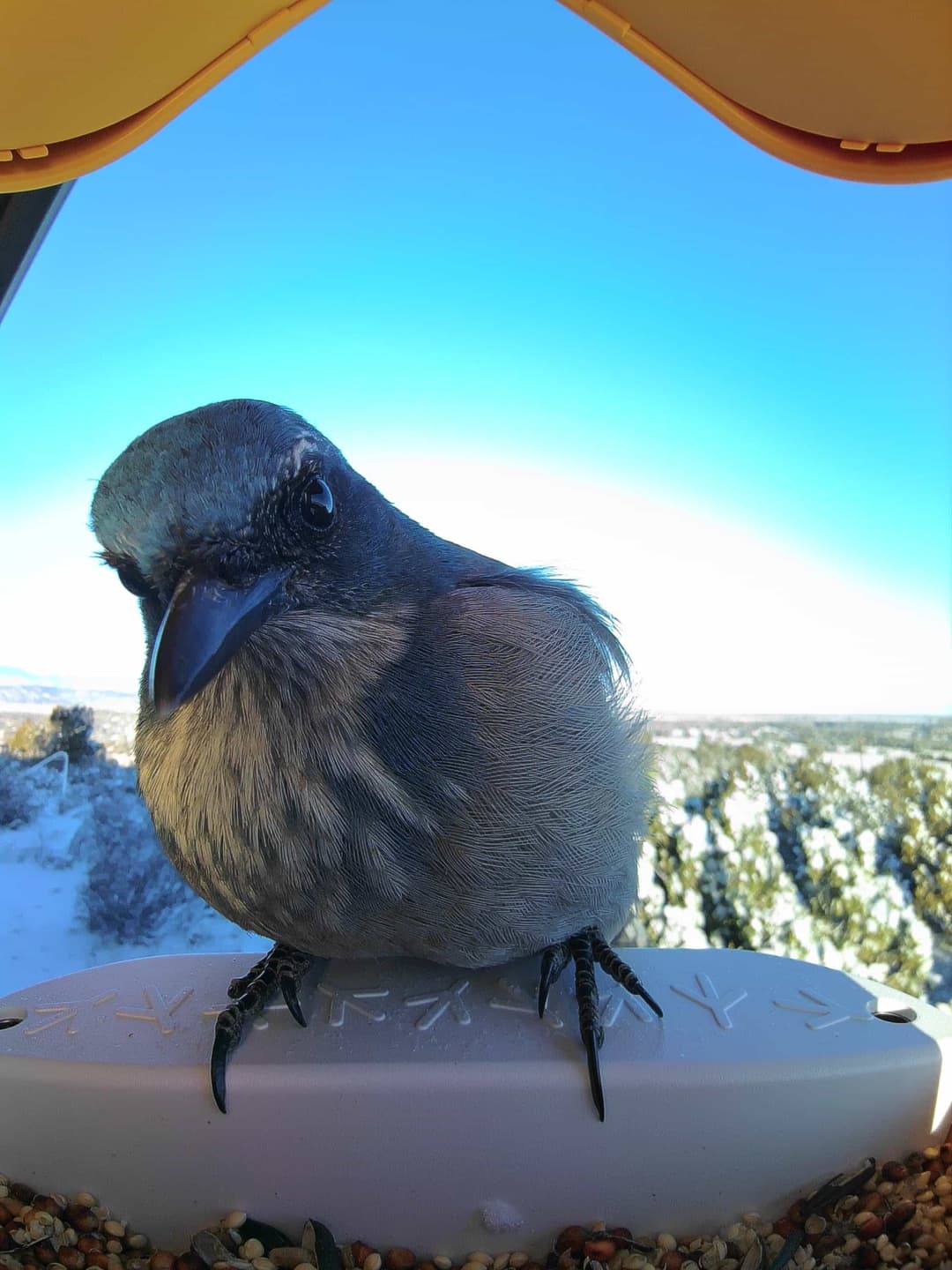
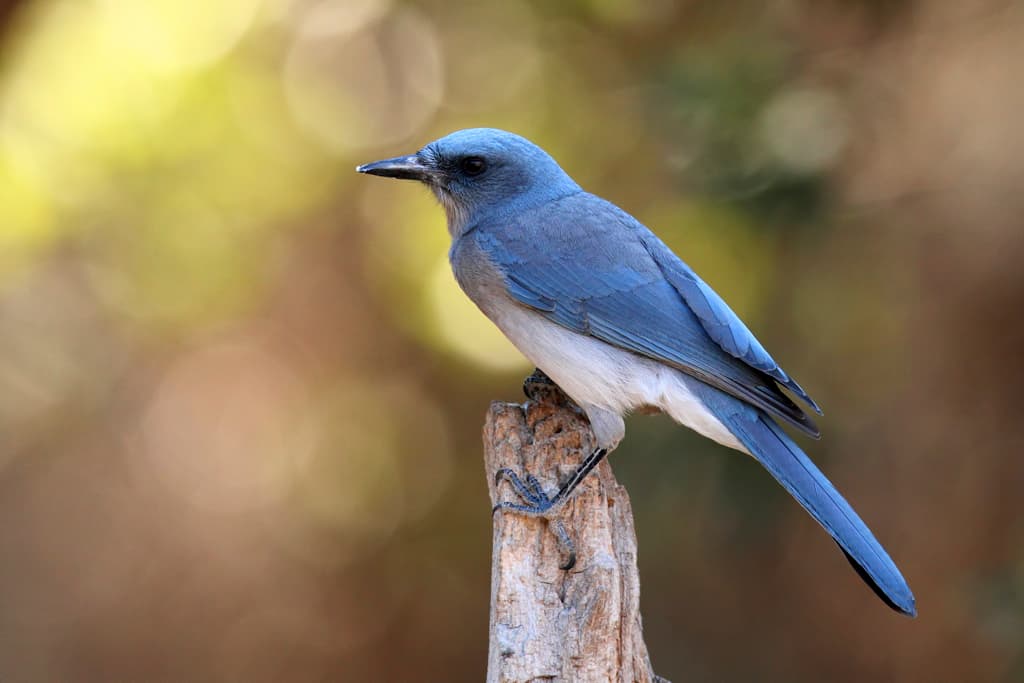
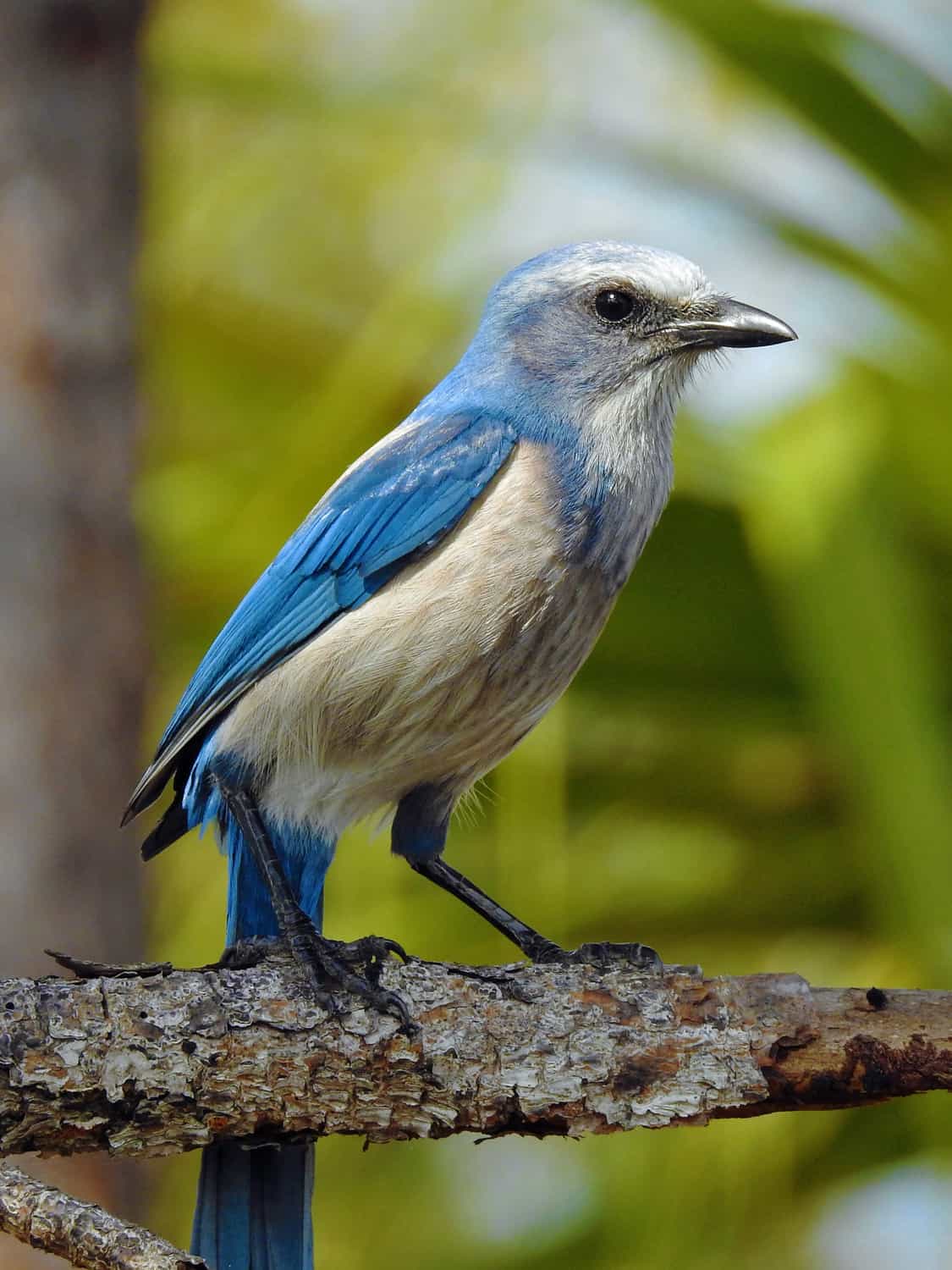
The Woodhouse’s scrub-jay stands roughly 11 1/2 inches tall, about the size of a crow. Sporting a slim build and a moderately long tail, this bird presents a blend of dull blue color on its head, wings, and tail with a grayer tone in the center of its back. Its underparts are mostly light gray, with a hint of a blue chest band that sets off its slightly paler throat. Its wings are broad and rounded, while its tail can appear long, rounded, and wedge-shaped.
Male vs female
The description provided does not indicate any significant differences in size, color, or markings between male and female Woodhouse’s scrub-jays. Both genders appear to share the same general physical attributes and coloration.
Juvenile
The description provided does not provide specific details regarding the appearance of juvenile Woodhouse’s scrub-jays. Generally, juveniles may show somewhat subdued coloring compared to adults until they reach maturity.
Size
10.6 - 12.2 in/2.5 - 3.5 oz
There's more to learn about Woodhouse’s Scrub-Jay
View full detailsHow to tell the Dark Blue Jay from the Woodhouse’s Scrub-Jay
Visual differences
Dark Blue Jays (Cyanocorax) exhibit deep blue to purplish-blue plumage with strong black barring on tail and wings, and lighter blue with grayish-white on throat and upper breast. They have a stout build and a robust black beak. In contrast, Woodhouse's Scrub-Jay (Aphelocoma woodhouseii) features a dull blue head, wings, and tail, with a grayer back and light gray underparts, including a blue chest band. Scrub-Jays are slimmer with a long, wedge-shaped tail and a more moderate beak. Both average around 11-12 inches in length.
Key differences and behavior
Dark Blue Jays are highly social, often forming large flocks, while Woodhouse's Scrub-Jays are more solitary, existing in monogamous pairs. The jays inhabit temperate forests in North America, adapting to urban areas if trees are plentiful. In contrast, scrub-jays prefer arid woodlands and foothills, moving to lowlands in winter. Woodhouse's Scrub-Jays are opportunistic and cunning, noted for stealing acorns and riding mule deer to feed on parasites. In terms of diet, both species are omnivorous, consuming insects, seeds, and nuts, but scrub-jays focus more on acorns. Dark Blue Jays engage in elaborate courtship and communal nesting, whereas scrub-jays maintain exclusive territories for breeding. Both species visit bird feeders but have distinctive feeding habits and habitat preferences.
Still not sure? Here are more lookalikes!
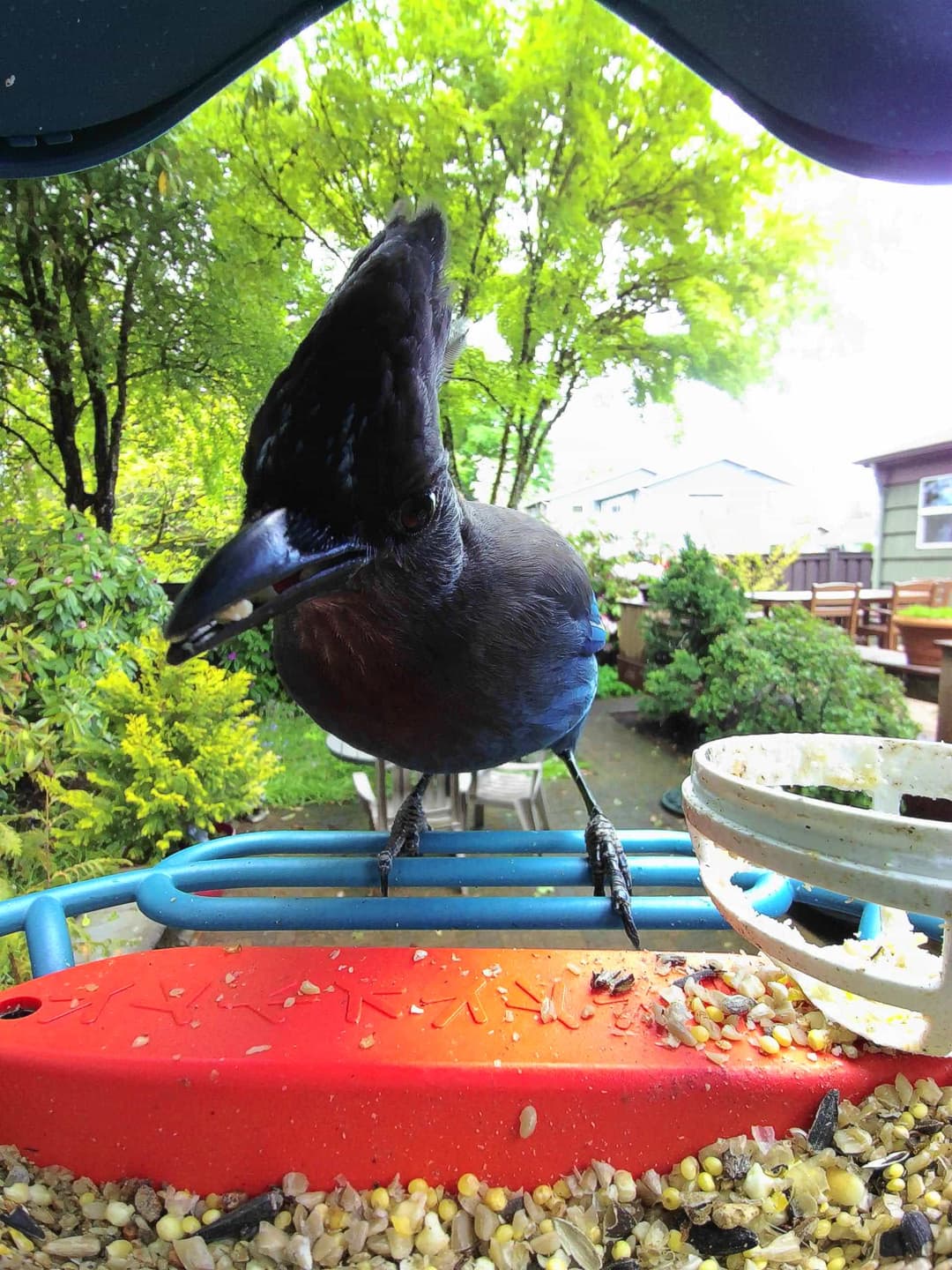
Dark Blue Jay vs Steller’s Jay
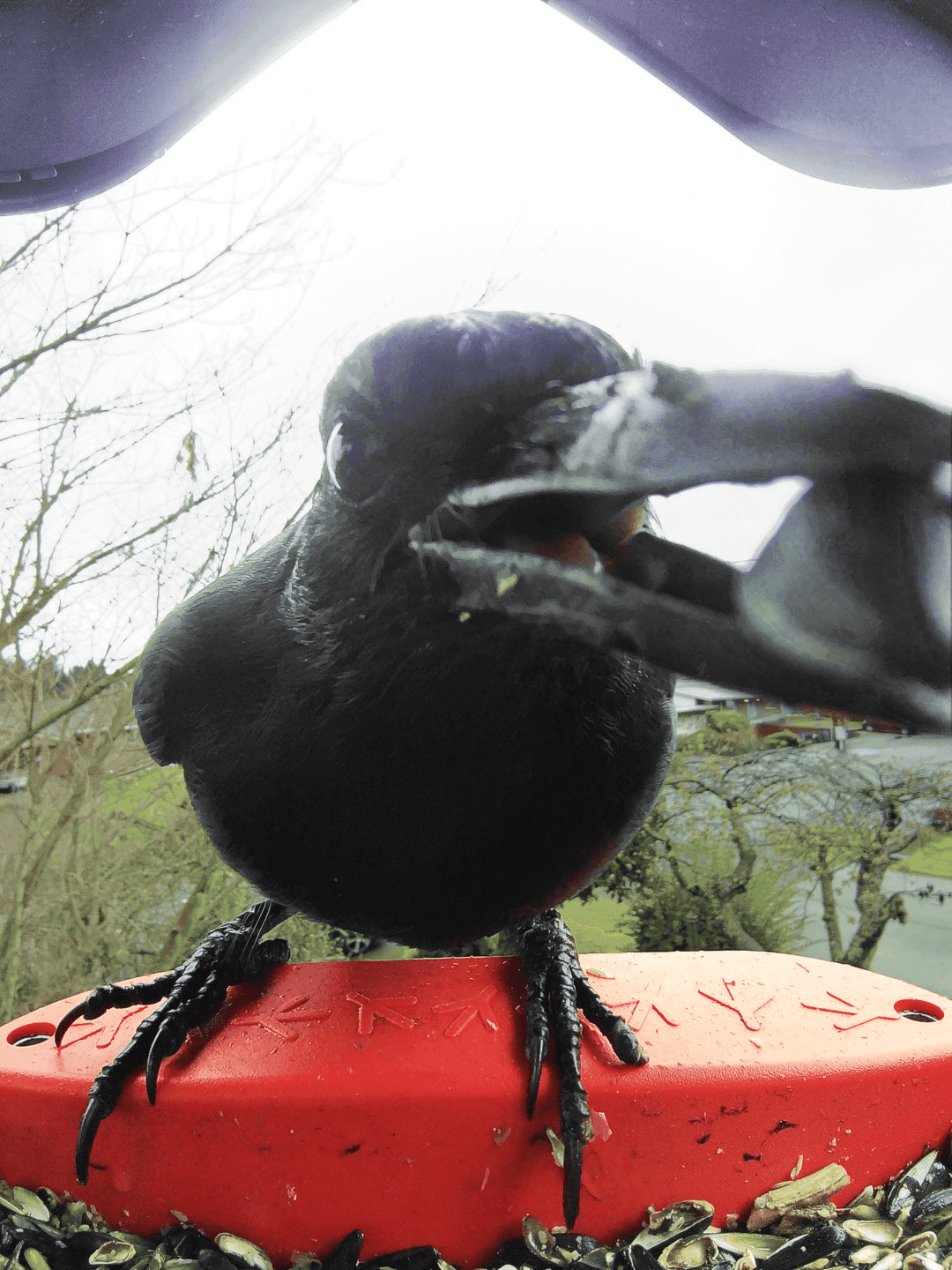
Dark Blue Jay vs California Scrub-Jay

Dark Blue Jay vs Blue Jay
Woodhouse’s Scrub-Jay vs California Scrub-Jay
Woodhouse’s Scrub-Jay vs Pinyon Jay
Woodhouse’s Scrub-Jay vs Mexican Jay
Woodhouse’s Scrub-Jay vs Florida Scrub-Jay
Woodhouse’s Scrub-Jay vs Steller’s Jay
Woodhouse’s Scrub-Jay vs Blue Jay
Woodhouse’s Scrub-Jay vs Western Bluebird
Dark Blue Jay vs [Select a bird]

[Select a bird]
Pick a bird to compare
Woodhouse’s Scrub-Jay vs [Select a bird]
[Select a bird]
Pick a bird to compare