
California Scrub-Jay
California Scrub-Jay
Aphelocoma californica


Quick Identification guide
Quick Identification guide
- •
Exhibits a distinctive blue head, wings, and back with contrasting grayish underparts
- •
Features white eyebrows above its eyes, making its facial expression memorable
- •
Possesses a sturdy, straight beak that's useful for a variety of feeding activities
What does a California scrub-Jay sound like?
The California scrub-jay possesses a loud and throaty voice that is often described as sounding like "jayy" or "jree." Its flight is accompanied by a long, rhythmic series of "check-check-check" notes. The bird's call pattern can be flat or rising in tone, producing sounds that are distinctively buzz-like, rattle-like, raucous, or trill-like in nature. Therefore, its vocalizations are quite distinct and varied, providing a unique acoustic presence in its environment.


Description
Going grey? Well, if you're a California scrub-jay you start off grey and go blue as you age! These mischievous corvids are extra-smart. They even hold funerals for dead jays and caw to summon others to come and pay tribute to their fallen feathered brother. They epitomise working smarter, not harder by standing on the backs of mule deer to eat their parasites. And they get a free ride out of it, too.
The California scrub-Jay can weigh between 70to100grams and be from28to30centimeters tall.
The California scrub-jay typically has a lifespan of up to 9 years, a relatively short life when compared to the 17 years of the related Blue Jay. However, with proper care in captivity, it can live for as long as 15-18 years. This West Coast native is eventually outlived by its Eastern and Northern relatives, Steller's jays and Blue jays respectively.
Did you know?
Most popular questions about California scrub-Jay
How to recognise a California scrub-Jay?
General appearance
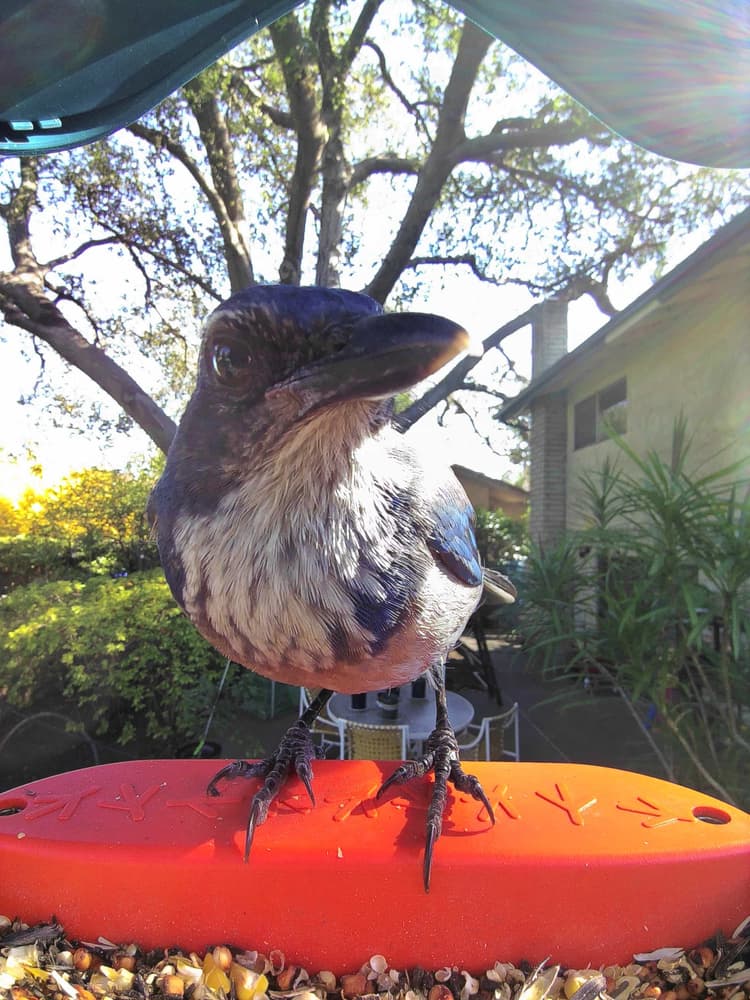
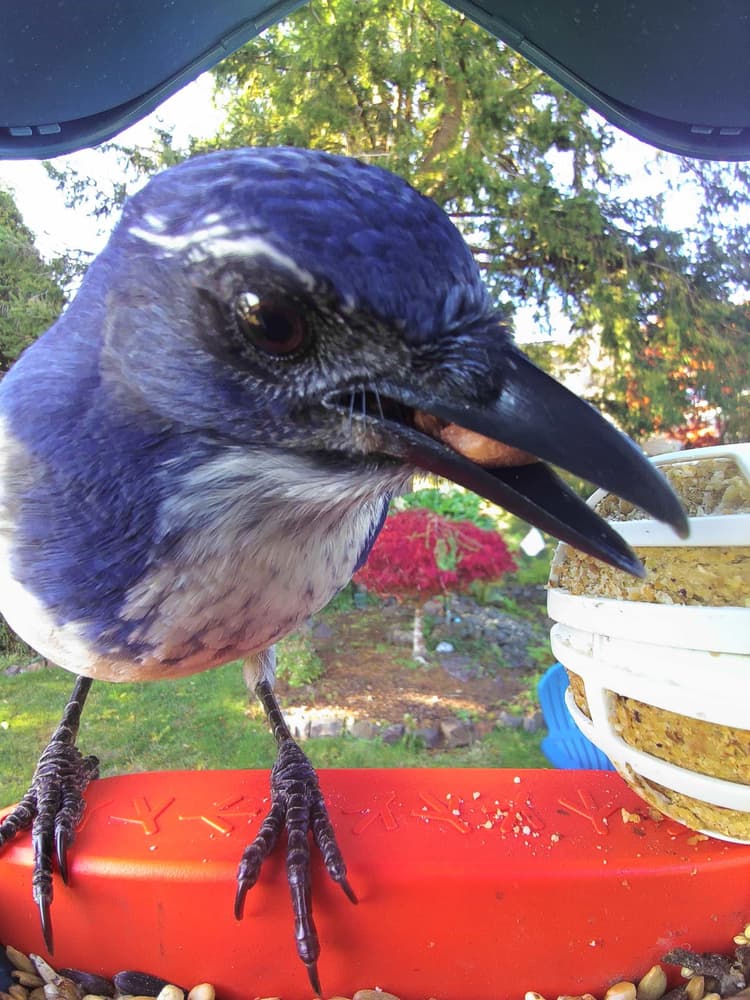
A California scrub-jay is an avian species about the size of a crow or robin, with an impressive wingspan measuring between 28-33 cm. It has a unique coloration pattern, including a white throat framed by a streaked necklace. The bird's back is gray, contrastingly offset by a bold blue head, wings, and tail. Moreover, its tail is distinctive, showcasing a long, rounded, and wedge-shaped figure.
Male vs female
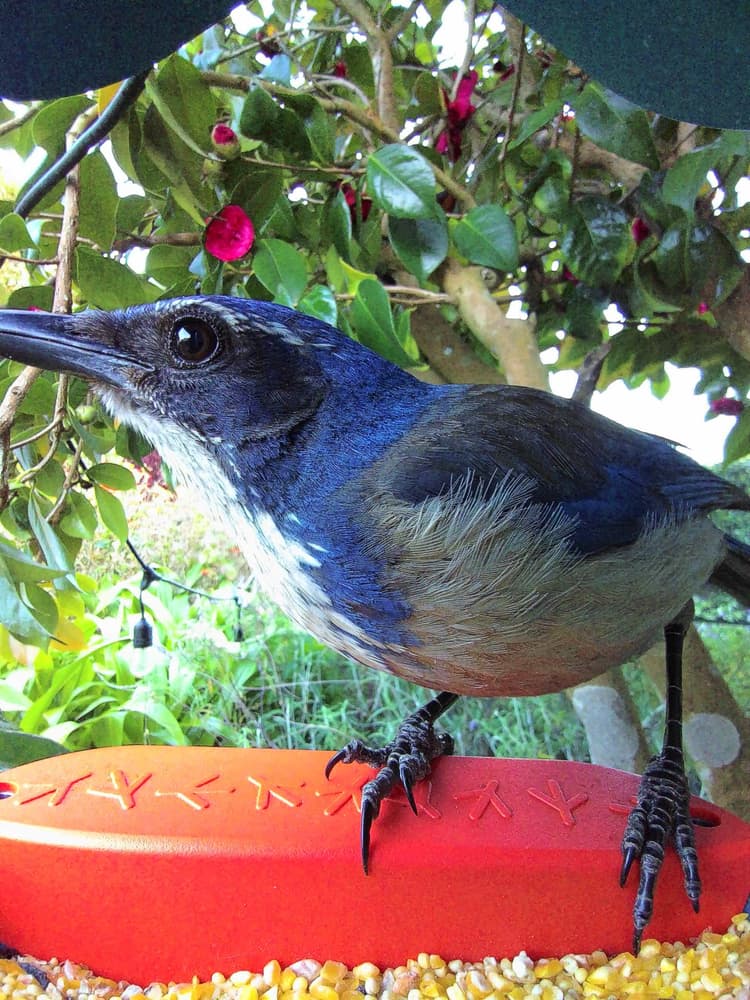
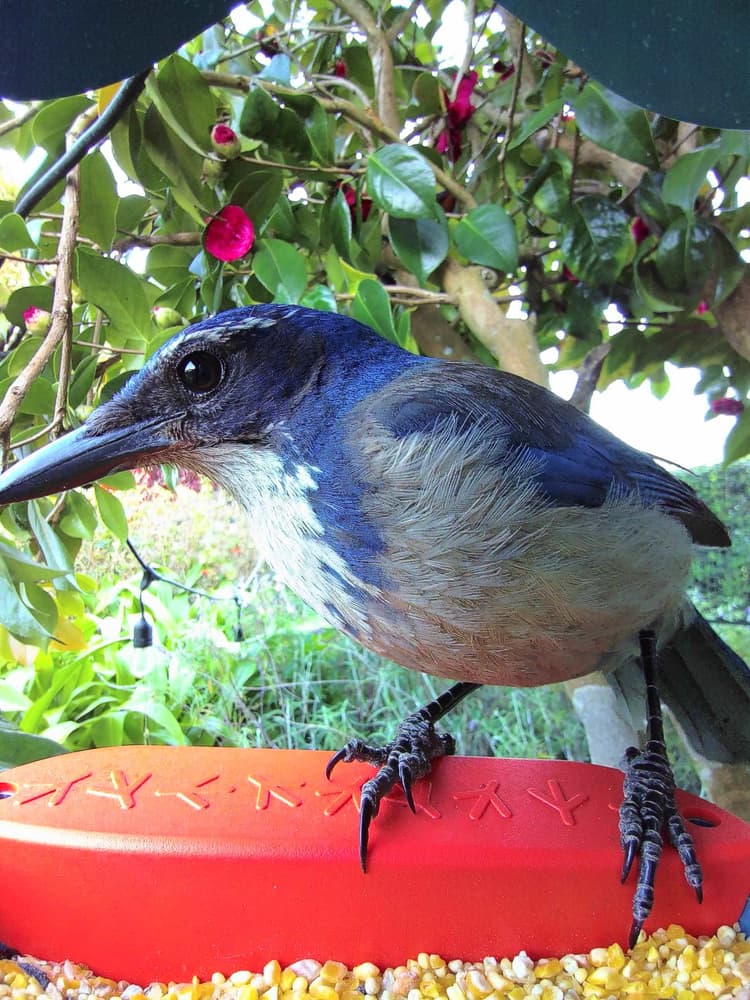
Sexual dimorphism is limited in the California scrub-jay, making it challenging to differentiate males from females based on colour or size alone. Both genders display similar plumage and size. Detailed behavioral observations may be required to accurately distinguish between the two.
Male California Scrub-Jay
Male California Scrub-Jay
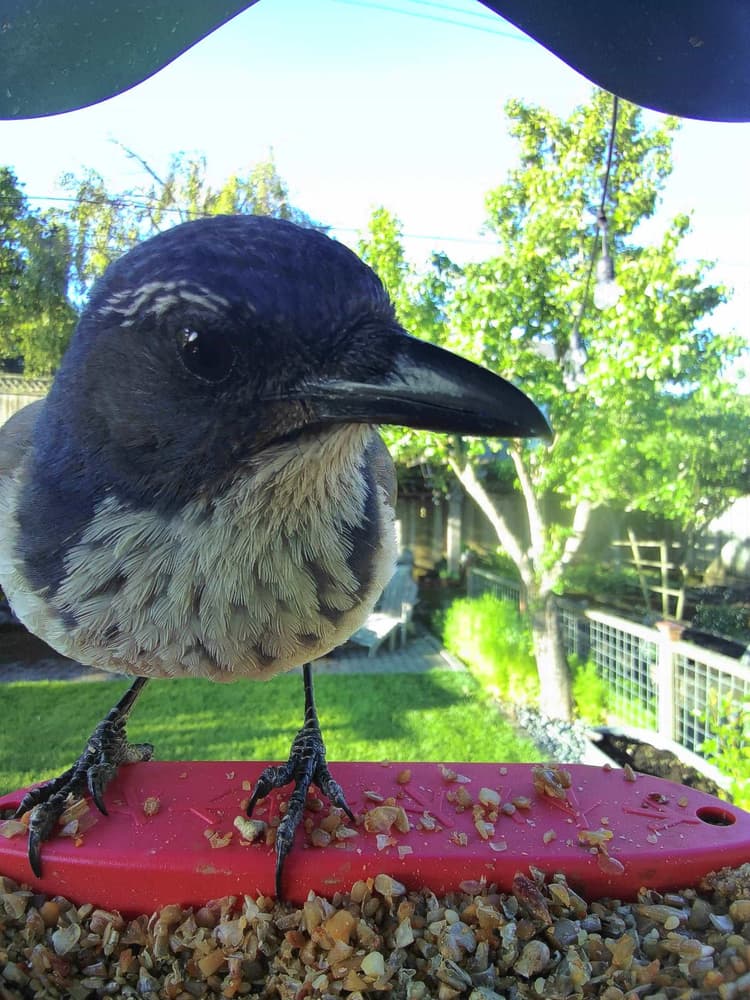
Female California Scrub-Jay
Juvenile
Juvenile California scrub-jays exhibit similar coloration to their adult counterparts, although they may have a more dull and less distinctive plumage. They experience a transition to their classic coloration, with the blue becoming much more vivid as they mature into adulthood.
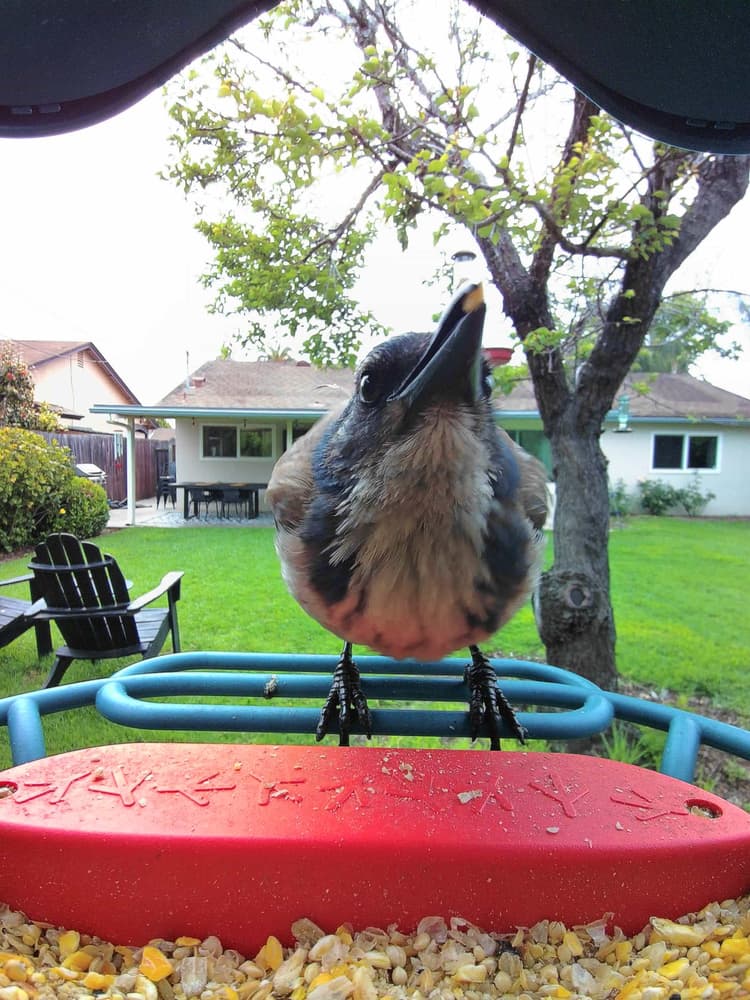
Often mistaken for
Woodhouse’s Scrub-Jay vs California Scrub-Jay
California Scrub-Jay has a brighter blue head and a more distinct white throat. Woodhouse’s lacks the clear white eyebrow seen in the California Scrub-Jay.
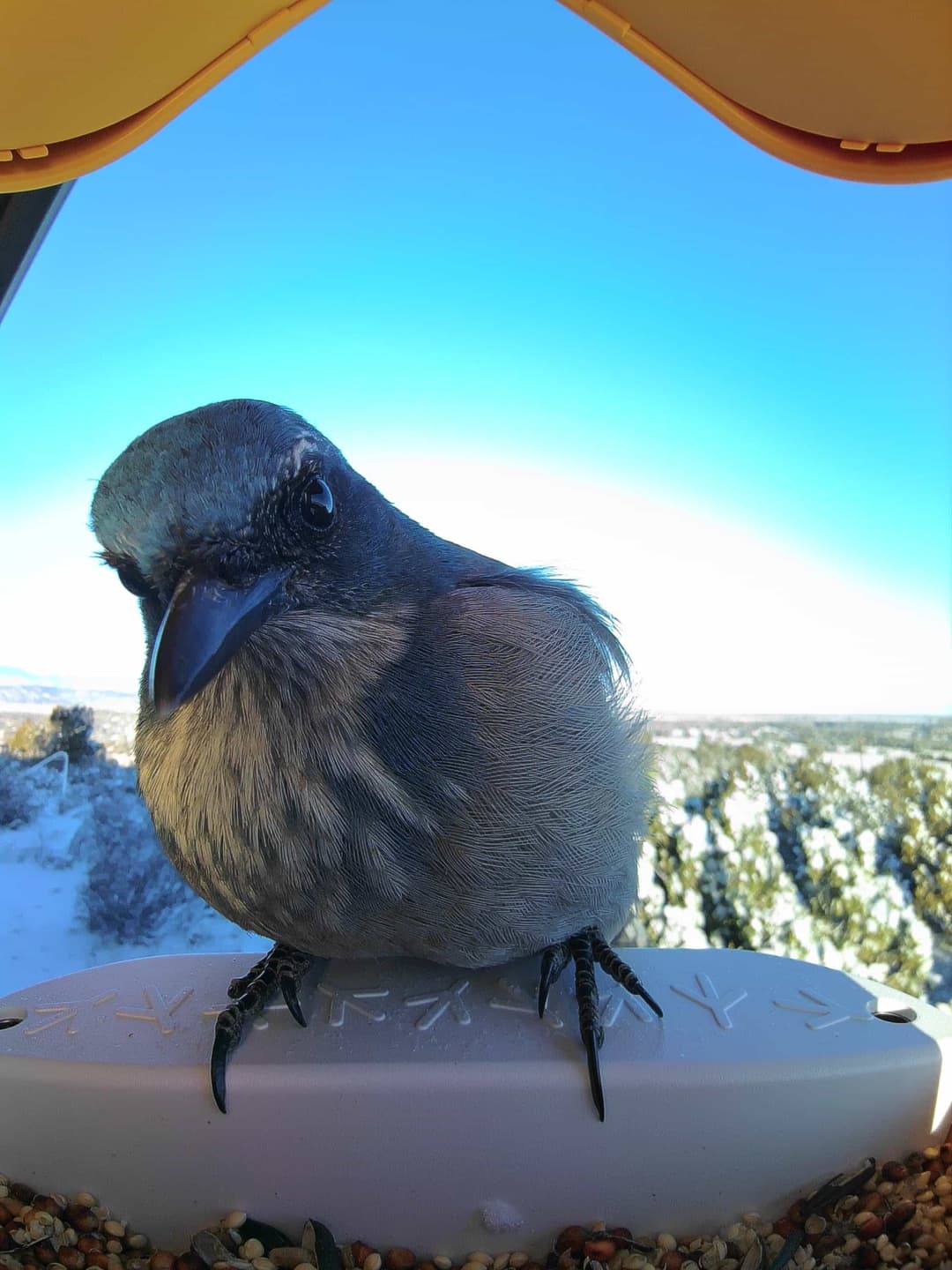
Pinyon Jay vs California Scrub-Jay
Pinyon Jays have a more uniform blue color and lack the distinct white throat patch seen in California Scrub-Jays.
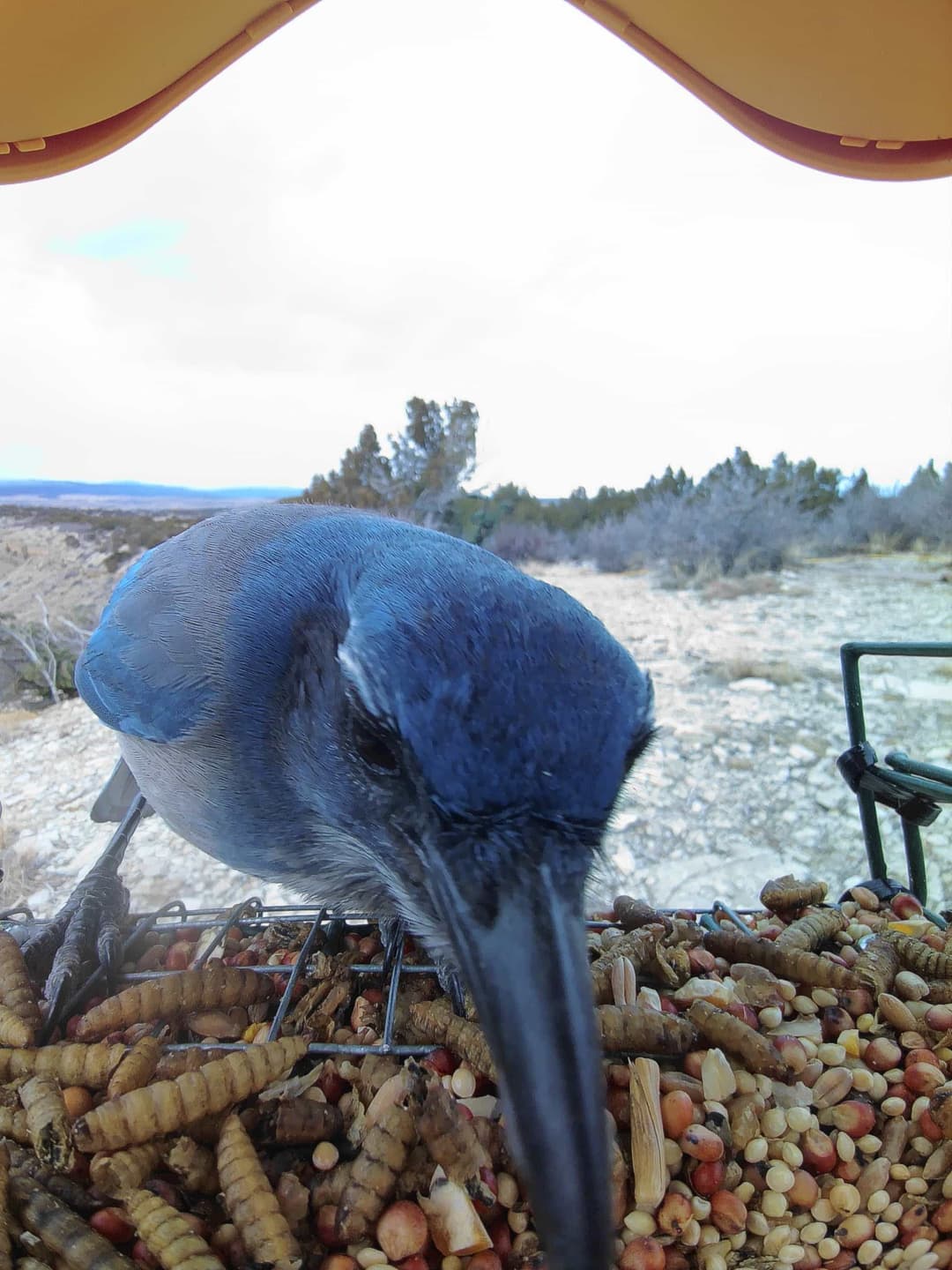
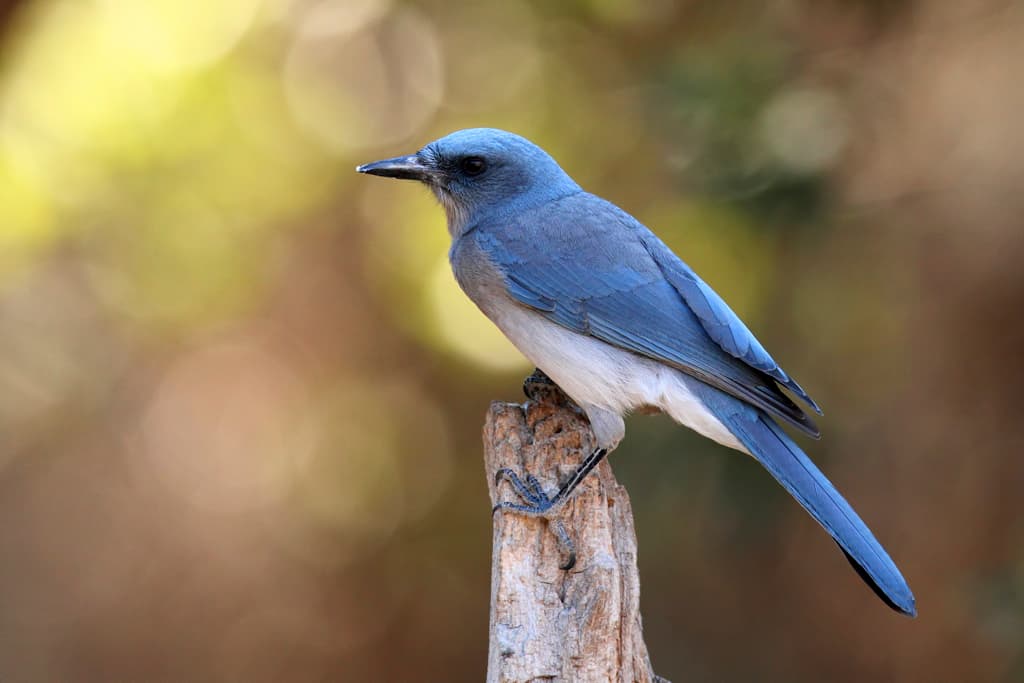
Mexican Jay vs California Scrub-Jay
Mexican Jays lack the prominent white eyebrow and have a more uniform grayish-blue body compared to California Scrub-Jays.
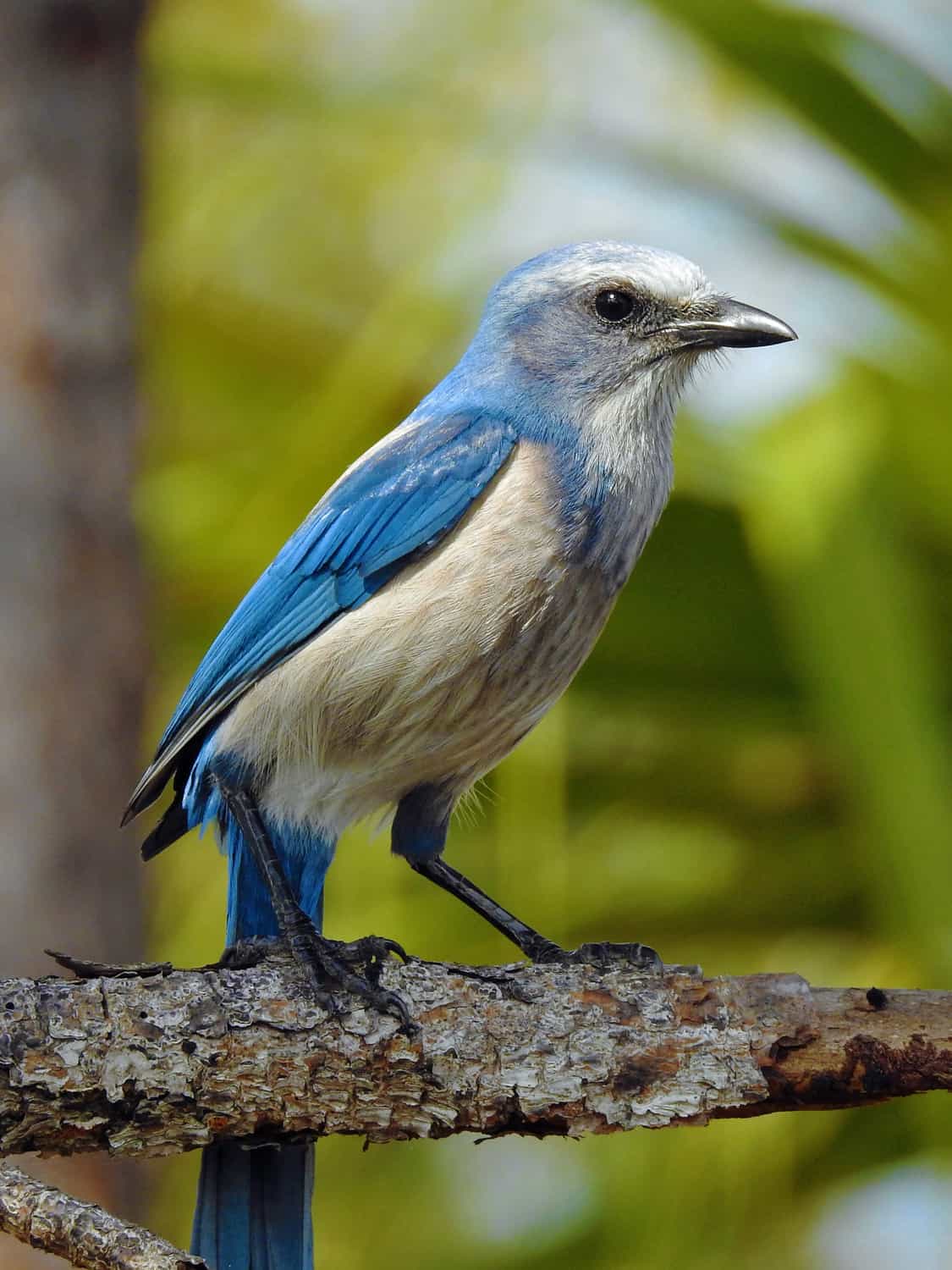
Florida Scrub-Jay vs California Scrub-Jay
Florida Scrub-Jays have a more subdued blue color and a gray collar that contrasts with California Scrub-Jay's brighter blue and white features.
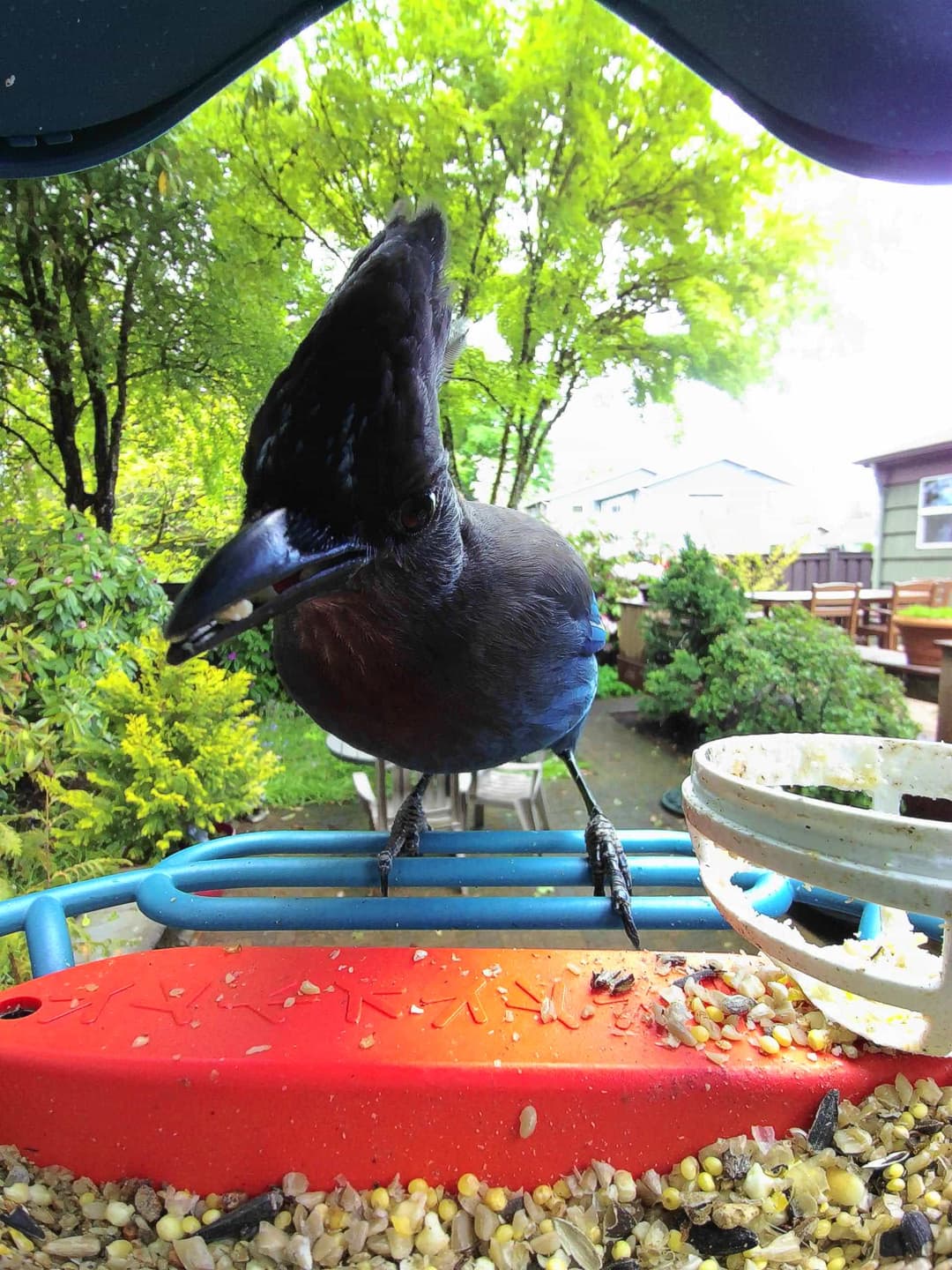
Steller’s Jay vs California Scrub-Jay
Steller’s Jays have a striking black crest and darker blue body, unlike the white-headed California Scrub-Jays.
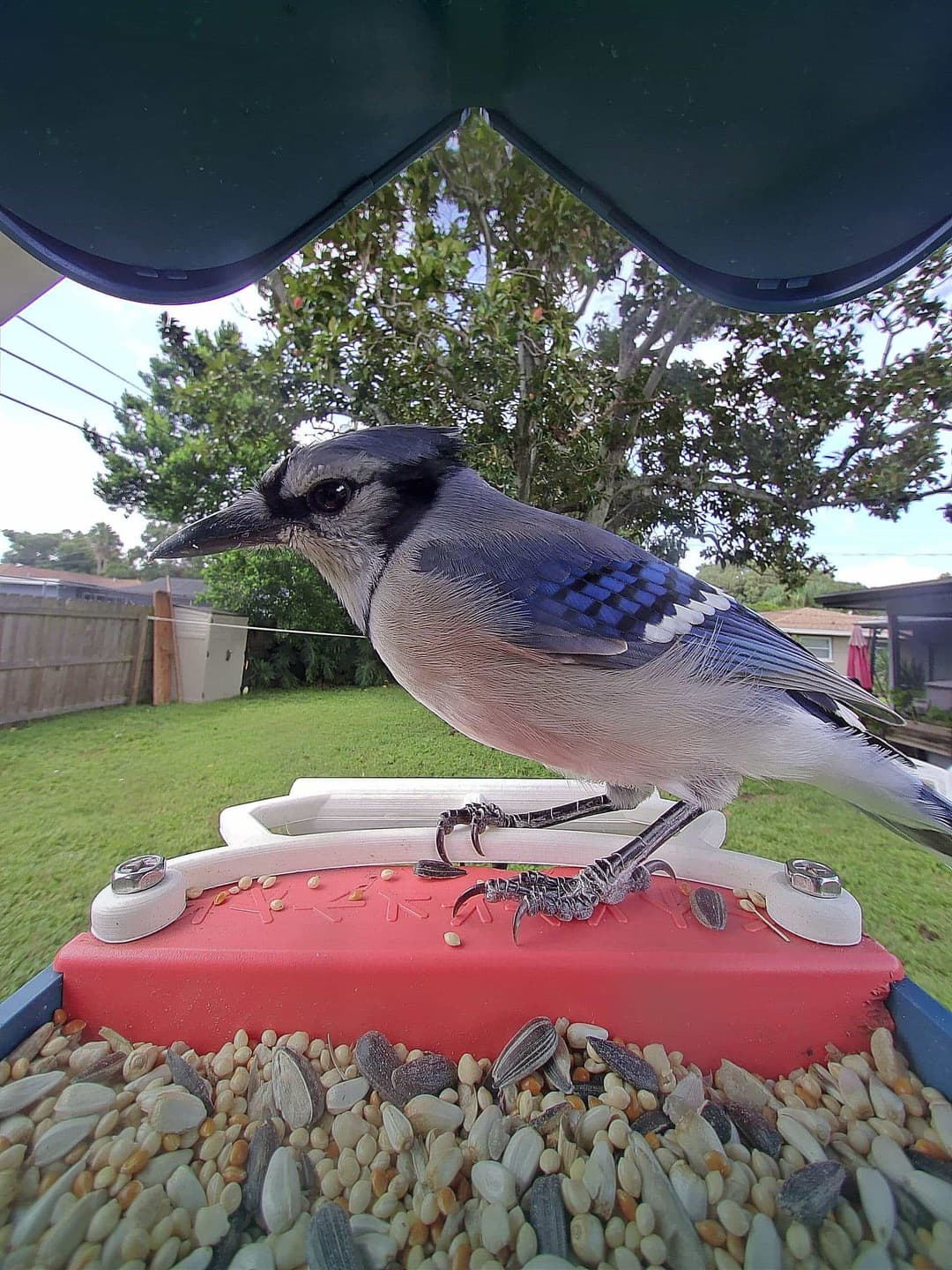
Blue Jay vs California Scrub-Jay
Blue Jays have distinctive black barring and a crest, absent in the smoother-headed California Scrub-Jays.
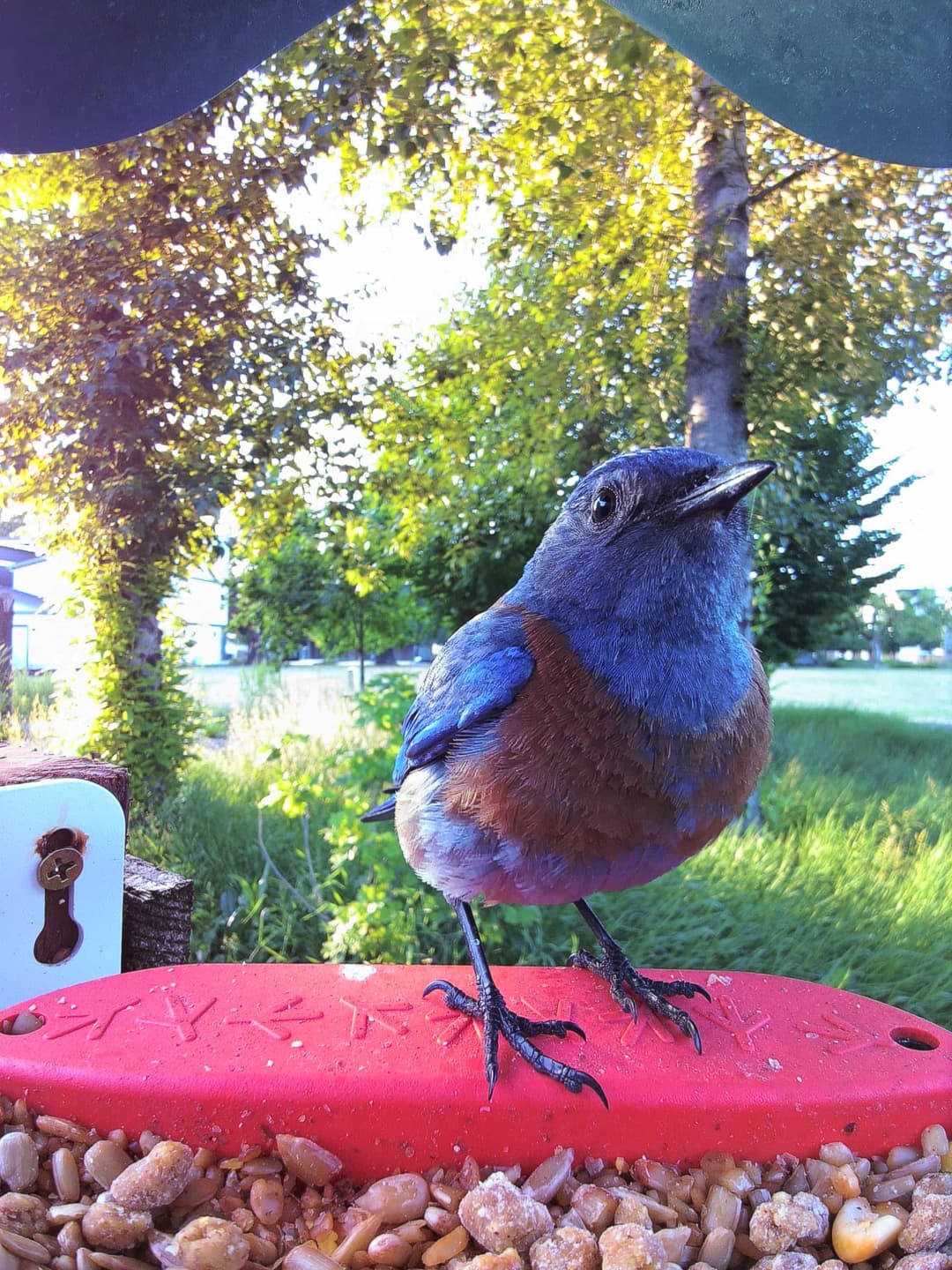
Western Bluebird vs California Scrub-Jay
Western Bluebirds are smaller, with more chestnut and a shorter tail compared to the larger blue and gray California Scrub-Jays.
Breeding and nesting habits of the California scrub-Jay
Mating behaviors
California scrub-jays establish bonds as isolated pairs rather than in flocks, contrasting with some other jay species. These pairs are monogamous and maintain a year-round presence on their established territory, showcasing a strong partnership between mates.
Nesting details
Nests are constructed by both sexes, forming a thick-walled cup primarily from twigs and grass, lined with finer materials like rootlets or animal hair for comfort. Nesting sites are typically located 5-15 feet above ground, often in shrubs or low trees, providing shelter and concealment.
Eggs and chick-rearing
Female California scrub-jays lay clutches of eggs in these sturdy nests. Both parents participate in feeding and watching over the chicks until they reach adequate maturity. The parental care and strategic nesting location ensure high survival rates for their offspring.
What does a California scrub-Jay like to eat?
Berries
Bird eggs
Fruits
Insects
Nuts
Seeds
Small animals
Natural diet
The California scrub-jay is omnivorous, with its diet changing seasonally. In summer, it consumes a wide range of insects, moth caterpillars, a few spiders, and snails, important for feeding young jays. During winter, its diet shifts to mostly acorns, seeds, nuts, and berries. It also eats some rodents, eggs and young birds, and small reptiles and amphibians, adjusting its food intake based on availability.
Bird feeders
At bird feeders, the California scrub-jay typically consumes available seeds and nuts. They are particularly attracted to peanuts, sunflower seeds, and suet. Their adaptable foraging helps them take advantage of food supplies offered by humans in residential areas.
Invite california scrub-jays with favorite snacks
The surefire way to get these brilliant blue birds to visit your yard is to tempt them with their favorite snacks. California scrub-jays can't resist acorns, which they love to gather and cache for later use. Also try peanuts (in the shell) and sunflower seeds to successfully lure them. For the greatest success, try using Bird Buddy seeds, which are expertly chosen for each season to meet the specific needs of birds.
Suitable feeders for california scrub-jays
California scrub-jays are relatively large, so choose a platform or tray feeder that can comfortably accommodate them. This type of feeder allows for easy access to the seeds and will encourage the birds to linger longer in your yard. Scrub-jays are also rather bold and will visit bird tables, or even ground feeders. Additionally, installing a bird bath could be just the ticket to get these birds to visit.
Fun tricks to entice california scrub-jays
California scrub-jays are noted for their intelligence and curiosity. Enhance their visit in your yard with a bit of playful interaction. Install a mirror near the feeding station, as scrub-jays are known to react to their own reflections. Moreover, they are known to be attracted to shiny objects. So, hanging some small wind-chimes or sparkling garden ornaments around your garden might be a clever trick to get their attention. A yard full of singing scrub-jays would certainly be a delightful sight!
Where can you find California scrub-jays?

Primary habitat
The California scrub-jay is typically found in oak woodland, oak scrub, and foothill forests of pinyon pine. These environments provide plenty of cover and abundant food sources.
Additional range
In addition to natural habitats, the California scrub-jay has adapted to human environments. It is often seen in well-wooded suburbs and parks, and also finds riverside woods suitable.
Do they migrate?
The California scrub-jay is primarily a permanent resident, meaning it tends to stay in one place throughout the year. However, it may exhibit some dispersal behavior, particularly during dry years when acorn production by oak trees is poor. This limited movement is not considered true migration but rather a response to food scarcity. During such times, California scrub-jays may move from their typical habitats to other areas in search of food. This dispersal is usually local and does not follow a specific migratory route or involve long-distance travel. It occurs mainly within their regional range which includes California and parts of Nevada. These movements can sometimes lead them to areas like urban gardens, parks, and other habitats where food might be more plentiful. The absence of a dedicated migratory pattern or timing distinguishes these movements from the traditional migration seen in other bird species. The key motivator for these movements is the availability of resources rather than a seasonal migration driven by temperature changes or breeding requirements.
What is the role of California scrub-jays in nature and how to protect them?
Conservation status
The California scrub-jay is considered common and its population is healthy, particularly increasing in the northern part of its range. No significant conservation efforts are necessary at this time as the species is not classified as vulnerable or endangered. Habitat preservation remains important to ensure continued population stability. Potential threats include habitat loss due to urban development and climate change impacts, but these have not severely impacted the overall population thus far. Monitoring bird habitats and minimizing land development in critical areas are key to maintaining their thriving numbers.
Ecological role of California scrub-jays
Its role in the ecosystem
The California scrub-jay plays an important ecological role, particularly in pest control and seed dispersal. Its omnivorous nature leads it to consume a vast variety of insects including moth caterpillars, which are a key component of its dietary contribution towards natural pest control. The scrub-jay's diverse diet also includes acorns, seeds, nuts, and berries. Its unique behavior of harvesting and burying acorns for retrievable purposes assumes a substantial role in seed dispersal. As the bird cannot retrieve all of its buried acorns, it unknowingly aids the growth of new trees and enriches its environment. Moreover, the Florida Scrub-Jay provides food for other predators, as well. The tendency of breeding in isolated pairs rather than cooperative flocks results in less competition for resources and an overall balanced ecosystem. Thus, the California scrub-jay plays a comprehensive part in the maintenance and propagation of its surrounding ecosystem.
How to help protect California scrub-jays
Preservation tips
Habitat preservation strategies
Preserve natural scrub-jay habitats by protecting native shrubs and trees from land development activities. Participate in local tree planting initiatives focusing on oaks and pines, the California scrub-jay's preferred nesting sites. Limit the use of pesticides and promote organic farming to maintain the insect populations that form a significant part of their diet. Encourage legislation that prioritizes habitat preservation for native species.
Supporting community science initiatives
Engage in community science initiatives to study and monitor the California scrub-jay populations. Regularly report sightings to local wildlife databases to help track their population trends. Attend workshops and seminars to understand more about the species and the threats it faces. Advocate and raise awareness about the importance of its conservation within local communities, schools, and social platforms.