
Florida Scrub-Jay
Florida Scrub-Jay
Aphelocoma coerulescens
Quick Identification guide
Quick Identification guide
- •
Features a striking, light blue plumage on its head, wings, and tail, contrasted by a pale grayish-white throat and underparts
- •
Displays a stout bill which is quite prominent and adapted for a variety of feeding tasks
- •
Lacks a crest, offering a sleek head profile, with slim yet strong legs and feet for perching
What does a Florida scrub-jay sound like?
The Florida scrub-jay has a distinctive vocal repertoire characterized by trills and high warbles that form its songs. Its call is a loud, harsh 'shreep' sound, delivered in a flat pattern. Other call types include a raucous rattle and melodious trills, which are unique and easily identifiable features of this bird's communication.
Description
Males and females look exactly alike and are only distinguishable by their song: females make a hiccough sound. You know what they say about a bunch of jays: it's a party! No, seriously, the collective noun for a group of jays is a party. And a 'band'. They sound like fun! Fledglings also tend to stay on as helpers in the community, feeding other nestlings and being on the lookout for predators.
The Florida scrub-jay can weigh between 66to92grams and be from25to30centimeters tall.
Florida scrub-jays typically live up to 15 years in the wild, though some are known to live beyond 20 years in captivity. This is longer than many other scrub-jay species, including the Western scrub-jay which averagely lives 9 years. However, relative to the larger and more resilient blue jay, the Florida scrub-jay's lifespan is shorter, as blue jays can live up to 25 years.
Did you know?
Most popular questions about Florida scrub-jay
How to recognise a Florida scrub-jay?
General appearance
The Florida scrub-jay is a medium-sized bird with a distinctive blue head, wings, and tail. Its back is a soft gray, and it has a whitish forehead and throat. The bird's underparts are paler, with its overall appearance giving it a striking contrast against its natural scrub habitat.
Male vs female
Males and females of the Florida scrub-jay species are monomorphic, meaning they appear similar in coloration and size. Both sexes have the same blue and gray plumage, making it difficult to distinguish between the two in the wild.
Juvenile
Juvenile Florida scrub-jays are similar in shape to adults but have distinct plumage characteristics. Their heads are a more muted gray-brown color, lacking the vibrant blue found in adults. As they mature, their plumage gradually transforms into the brighter adult coloration.
Often mistaken for
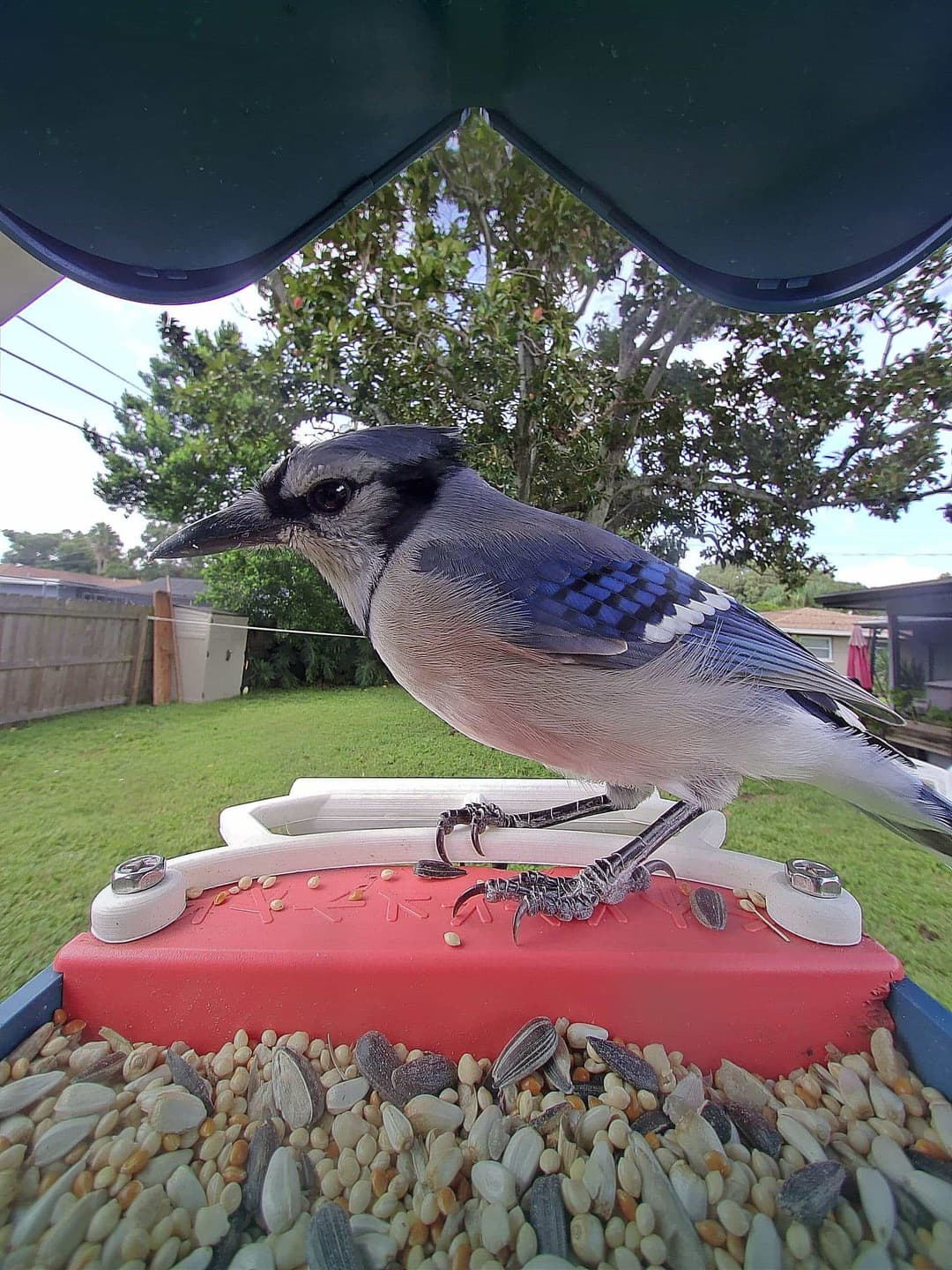
Blue Jay vs Florida Scrub-Jay
Florida Scrub-Jay lacks the Blue Jay's black necklace and has a duller blue color. The Blue Jay has a distinctive crest on its head, while the Florida Scrub-Jay has a smooth head profile. In addition, the Blue Jay is often more vocal and prefers wooded areas as opposed to the scrubby habitats of the Florida Scrub-Jay.
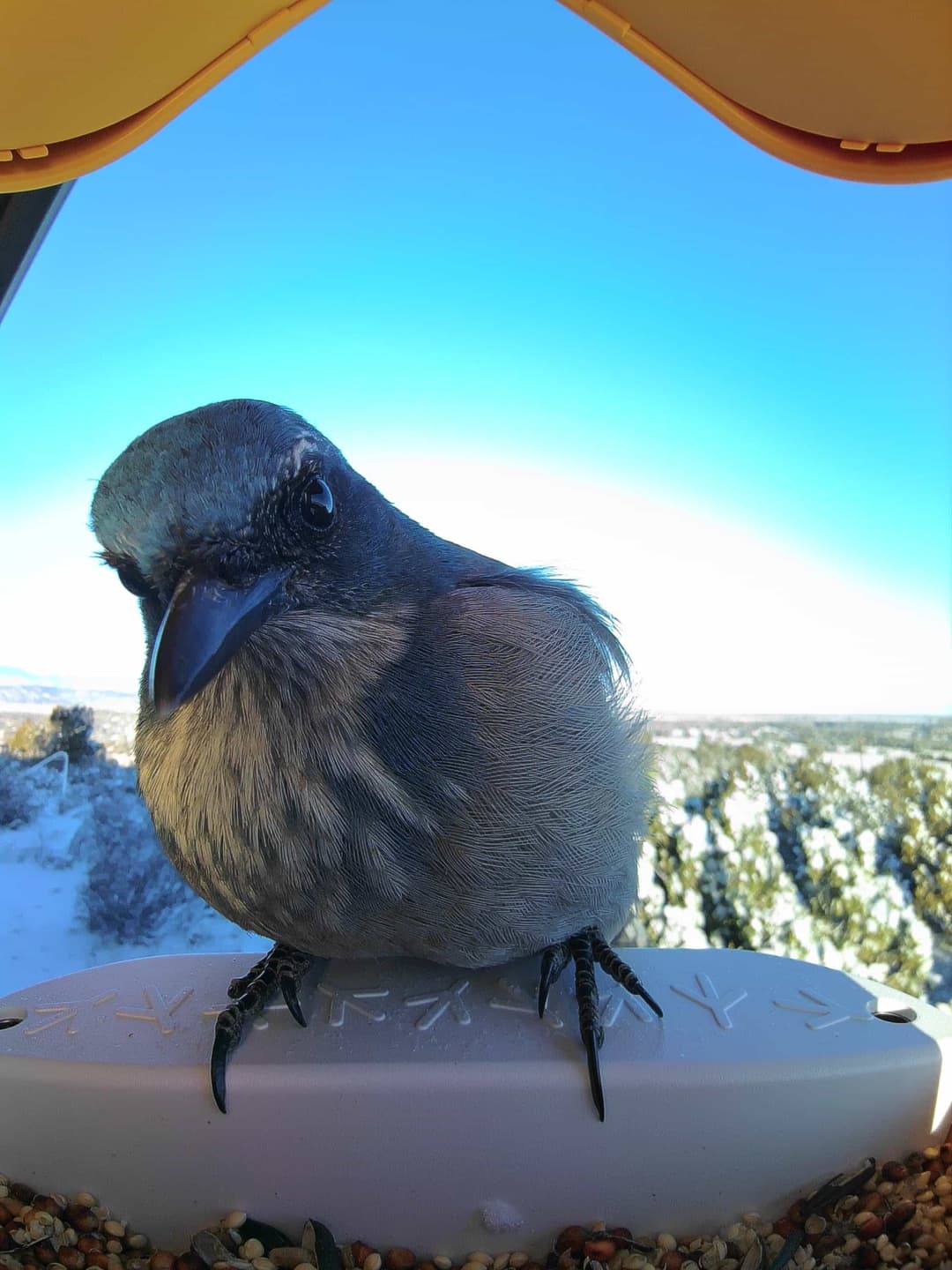
Woodhouse’s Scrub-Jay vs Florida Scrub-Jay
The Florida Scrub-Jay is generally smaller and has a more uniformly blue head and nape compared to Woodhouse's Scrub-Jay's grayish head. The Florida Scrub-Jay is also endemic to Florida, so geographic location can be a key identification factor.
California Scrub-Jay vs Florida Scrub-Jay
California Scrub-Jay has a more pronounced brownish wash on its back and a stronger contrast between the blue and white on its face. In contrast, the Florida Scrub-Jay's coloring is more uniform and softer. Also, pay attention to range: California Scrub-Jays are not found in Florida.

Breeding and nesting habits of the Florida scrub-jay
Mating behaviors
Florida scrub-jays breed in cooperative flocks. Each nesting territory is occupied by an adult pair and often includes one to six 'helpers,' who are usually previous offspring.
Nesting details
Nests are typically built in trees or shrubs, favoring sand live oak, and located 3-4 feet above the ground. The nest is a well-built, thick-walled cup made of twigs, grass, and moss, lined with rootlets and plant fibers.
Eggs and chick-rearing
Helpers assist the adult pair in defending the territory and feeding the young, increasing the likelihood of raising more chicks. The collective effort of the group enhances chick survival rates.
What does a Florida scrub-jay like to eat?
Berries
Bird eggs
Insects
Nuts
Small animals
Spiders
Natural diet
The Florida scrub-jay primarily consumes a diverse natural diet. Acorns are a significant food source throughout most seasons. During the summer months, it supplements its diet with various insects, including arthropods, along with a few spiders and snails. Additionally, the scrub-jay consumes berries, seeds, and certain small vertebrates, which include reptiles, amphibians, rodents, and the eggs and young of smaller birds.
Bird feeders
Common foods for Florida scrub-jays at bird feeders might include seeds and nuts that mimic their natural diet, such as whole peanuts, sunflower seeds, and other nut varieties. They are likely attracted to feeders offering foods that resemble acorns and seeds found in the wild.
Feeder types for attracting florida scrub-jays
To attract Florida Scrub-Jays to your yard, employ platform or tray feeders. These types of feeders offer plenty of space for scrub-jays to comfortably feed and are easy for the birds to spot!
Snacks for florida scrub-jays
These birdies are extremely fond of acorns, but a mix of sunflower seeds, peanuts, and corn will also attract them. Bird Buddy seeds are specially chosen by experts for the season and proven to be a favorite among Florida Scrub-Jays.
Fun tricks to entice florida scrub-jays
Florida Scrub-Jays are curious creatures. Playing recordings of their own songs or employing motion-activated feeders can pique their interest. Once they become familiar with your yard as a safe feeding spot, they may even engage in a sing-along!
Where can you find Florida scrub-jays?

Primary habitat
The Florida scrub-jay inhabits Florida scrublands characterized by short scrubby oaks growing on sandy soil.
Additional range
Its habitat occurs as isolated pockets and the species generally remains in its own patch, making it extremely sedentary.
Do they migrate?
The Florida scrub-jay does not migrate and stays in one place all year round. This bird species is highly sedentary and exhibits limited movement, rarely venturing even short distances away from patches of appropriate habitat. The Florida scrub-jay is endemic to Florida, meaning it is found nowhere else in the world, and its preferred habitats are characterized by scrubby flatwoods and other terrains dominated by low-growing oaks and sandy soils. The bird's territory is relatively small and tightly linked to specific habitat requirements, which it occupies year-round. Consequently, there is no established migratory route, timing, or key locations along a migratory path for the Florida scrub-jay, as its lifestyle is not aligned with seasonal migrations typical of many other bird species. This sedentary nature is an important consideration for the conservation of this species, as habitat loss and fragmentation pose significant threats to their survival. Understanding their immobility helps emphasize the need to protect and manage the remaining scrub habitats in Florida effectively.
What is the role of Florida scrub-jays in nature and how to protect them?
Conservation status
The Florida scrub-jay is endangered, with the population dropping by over 90% since the early 1990s, when about 4,000 pairs were estimated to exist. The primary threat to this species is habitat loss due to development and fire prevention, which disrupts the natural maintenance of its oak scrub habitat. Conservation efforts focus on habitat preservation and management, including controlled burns to restore and maintain suitable environments. However, ongoing development continues to pose a significant threat to the survival of this species.
Ecological role of Florida scrub-jays
Its role in the ecosystem
The Florida scrub-jay, as a part of the ecosystem, has a major ecological significance. It plays a pivotal role in controlling pests by consuming a substantial number of arthropods, such as insects, spiders, and snails, especially during the summer. In doing so, they provide a natural method of pest control, serving as a biological deterrent to pest populations and promoting a healthier ecosystem. The Florida scrub-jay also contributes to seed dispersal, specifically of acorns which are a major part of their diet. By harvesting and burying large numbers of acorns, often forgetting some of them, these birds assist in the growth of new trees, helping forests rejuvenate and maintain their vitality. Their nesting behavior also signifies their social contribution to the avian community by forming cooperative flocks, sharing responsibilities of feeding the young, and defending the territory. Thus, the Florida scrub-jay indirectly influences forest dynamics and mitigates pest infestations while contributing to the overall biodiversity.
How to help protect Florida scrub-jays
Preservation tips
Habitat preservation strategies
To conserve the Florida scrub-jay population, it's crucial to preserve their habitats. This could be achieved through creating protected zones, controlling land-use practices, avoiding extensive development or alteration of scrub habitats, and implementing periodic burning practices to rejuvenate the scrub ecosystem. Preservation of oak scrublands, the bird's preferred habitat, is critical.
Community science initiatives
Engagement and cooperation from local communities also plays a key role in conservation efforts. Encourage participation in citizen science projects such as bird counts, nesting reports and distribution maps. Promote awareness of the Florida scrub-jay's situation through education and public surveys. This could involve local schools, clubs, and community centers. Likewise, support and promote local and national conservation organizations working to preserve the scrub-jay and its natural habitat.