European Robin or Common Redstart?
Here's how to tell the difference
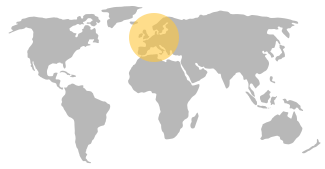


European Robin


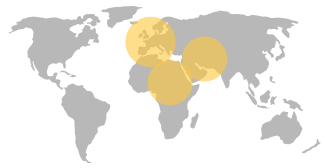
Common Redstart
European Robin
Erithacus rubecula
Also known as: Robin, Robin Redbreast
General appearance
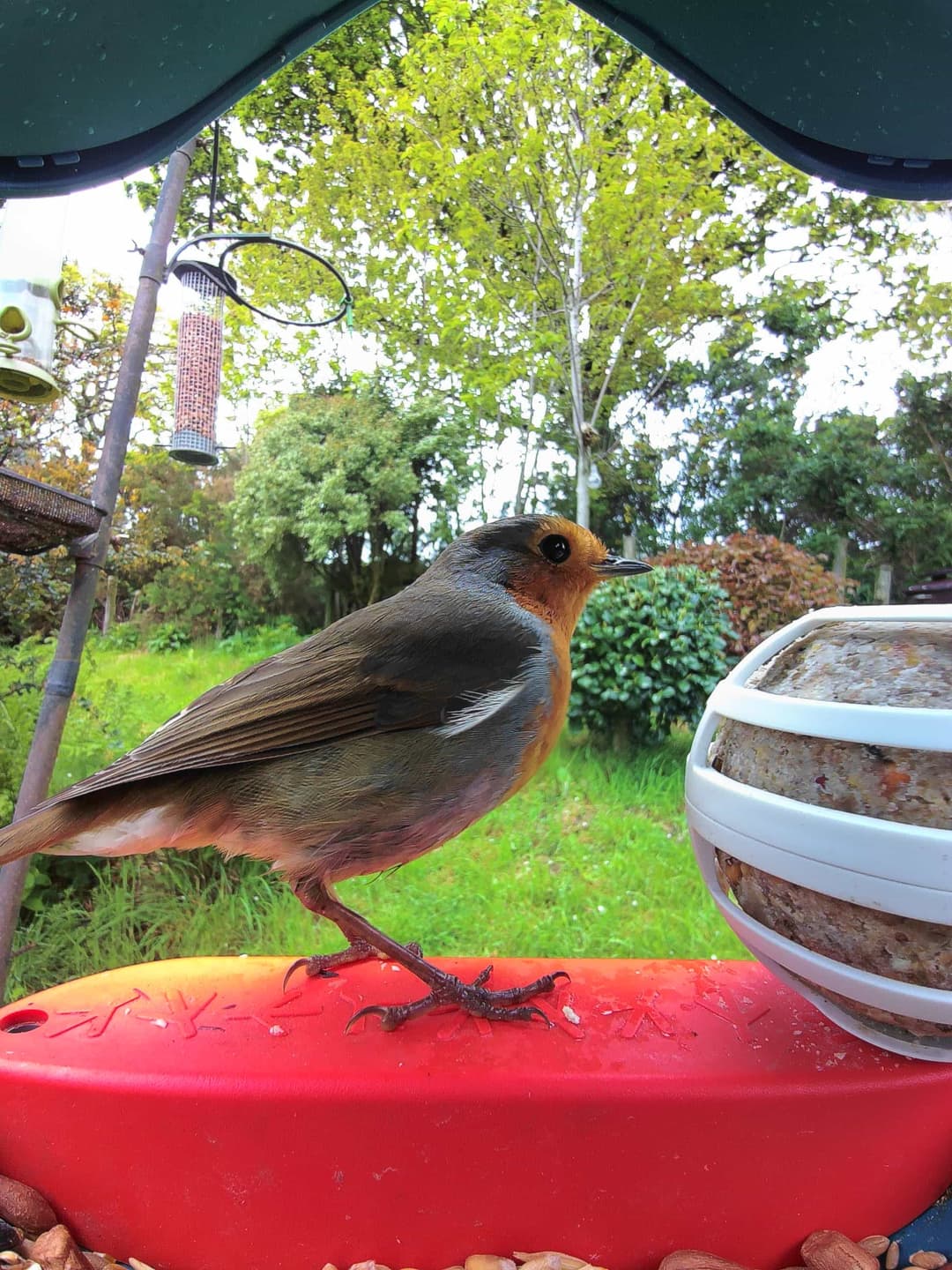
The European robin is a small bird, approximately 12.5–14.0 cm in length. It has a distinctive orange-red face and breast, with a contrasting grey line running from the eyes to the neck. Its upper parts and tail are olive-brown, while the belly is white. This characteristic coloration makes the robin easily recognizable in its habitats, which include gardens, woodlands, and parks.
Male vs female
Male and female European robins are visually similar, with no significant differences in plumage coloration or size. Both genders share the same vibrant orange-red breast and predominantly brown and white bodies. This lack of sexual dimorphism means that it can be challenging to distinguish between male and female robins just by appearance.
Juvenile
Juvenile robins are generally mottled with golden-brown spots instead of the striking orange-red breast seen in adults. This speckled appearance helps them stay camouflaged from predators. As they mature, the juveniles gradually develop the distinctive adult plumage. Seasonal variations do not significantly affect overall appearance, but molting can sometimes make the colors appear more subdued.
Size
4.9 - 5.5 in/0.5 - 0.9 oz
There's more to learn about European Robin
View full detailsCommon Redstart
Phoenicurus phoenicurus
Also known as: Redstart
General appearance
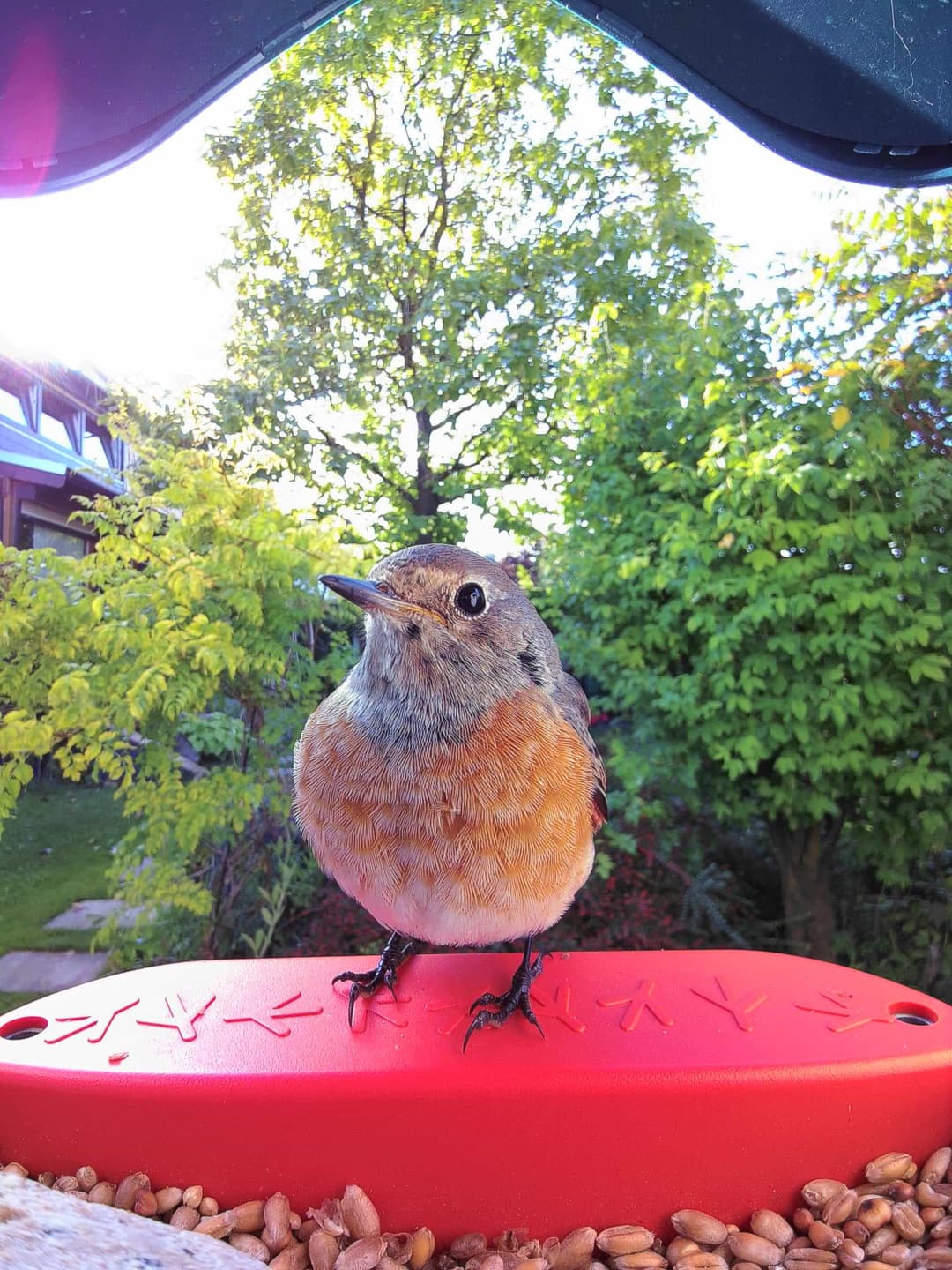
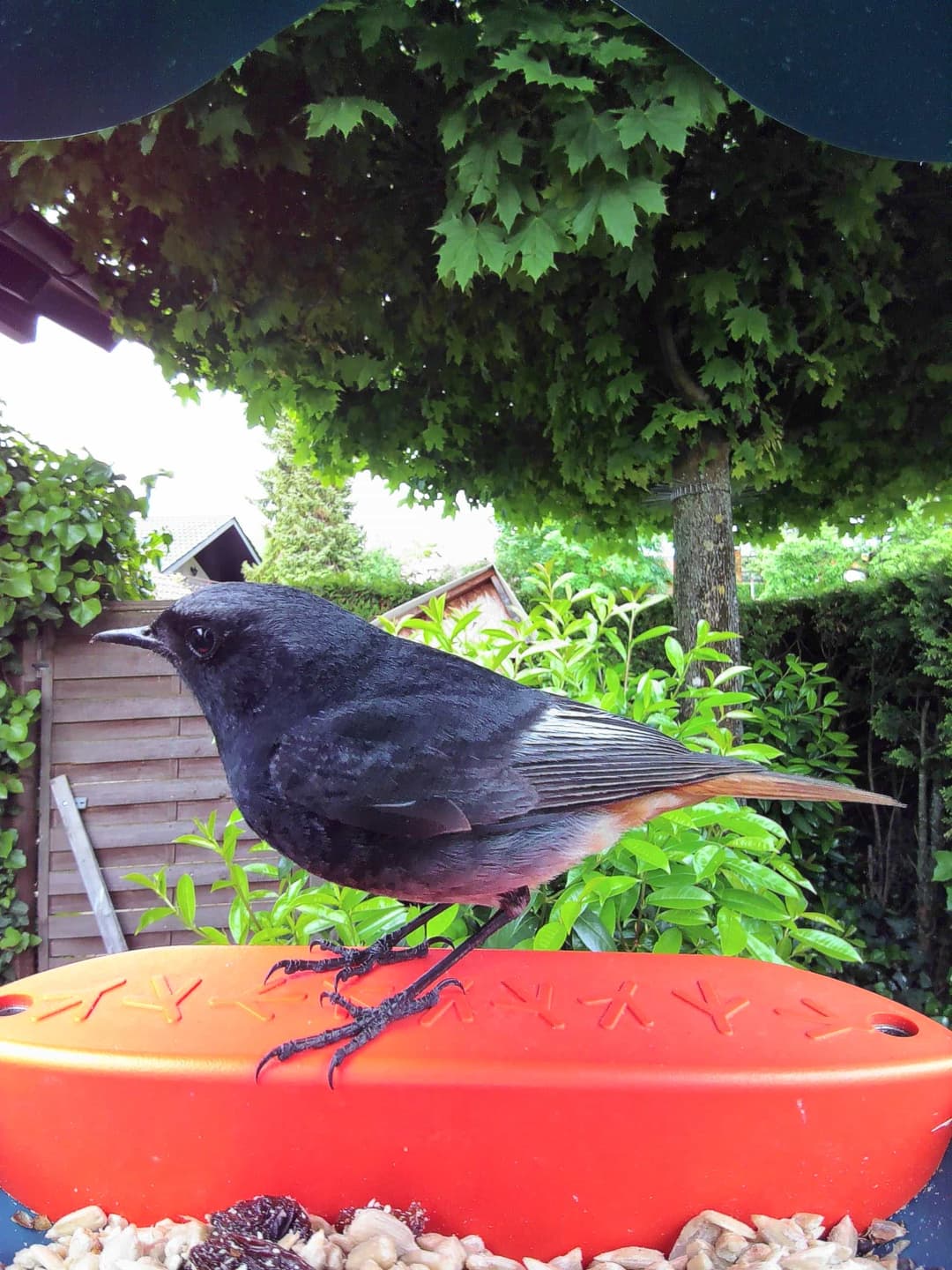
The common redstart (Phoenicurus phoenicurus) is a small bird adorned with distinct, vibrant coloring. It has an overall slate grey upper body, chestnut underparts, and a brilliant red tail that habitually quivers when perched. Its wings are black with white patches that help in identification during flight.
Male vs female
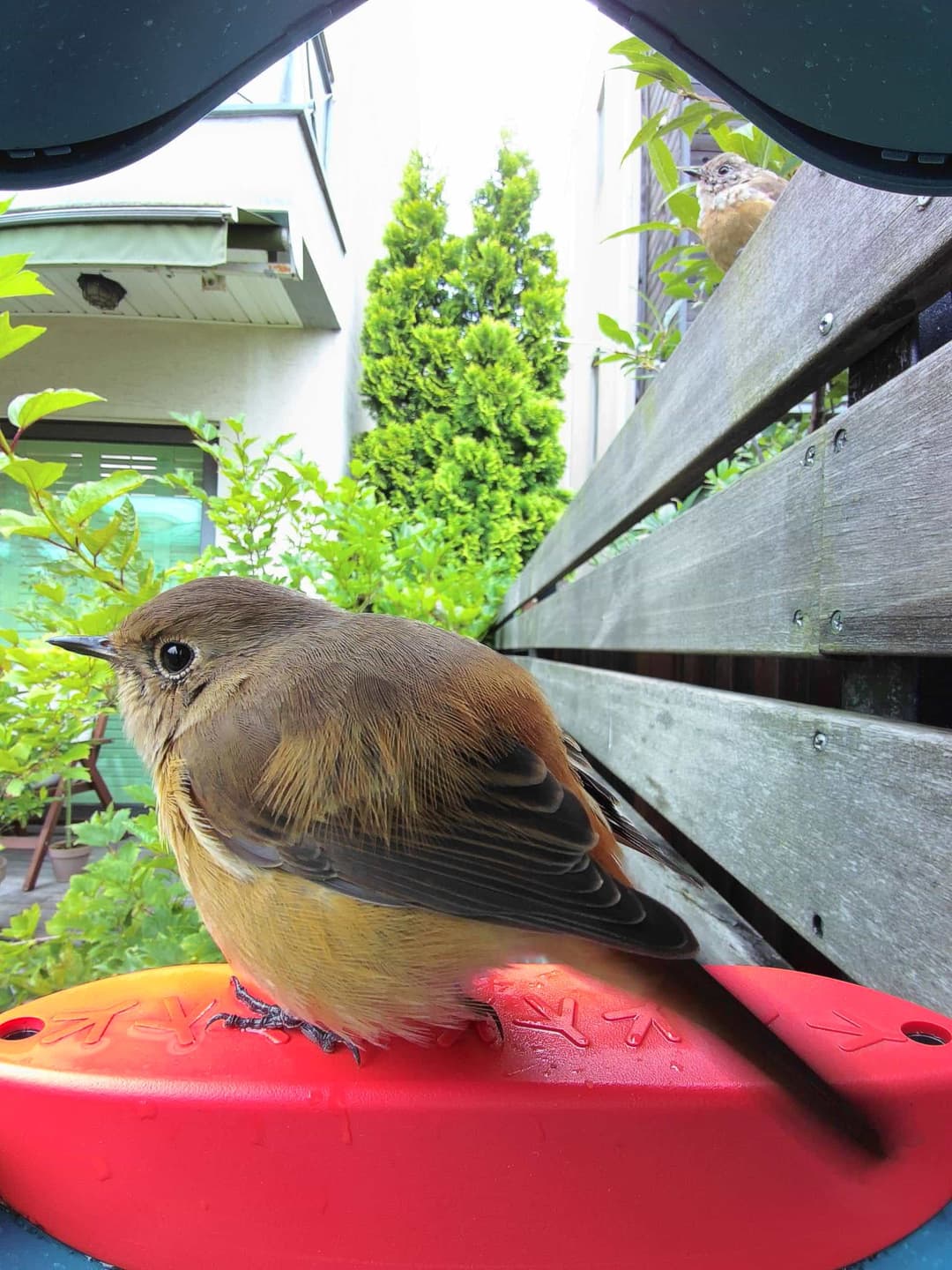
Males possess a distinct black face that extends down to the upper breast and encircles the white forehead. In contrast, females lack the slate grey and black coloring, featuring a light brown color above and dirty white below. Females also have a rusty-red tail, though not as vivid as the male's.
Juvenile
Juveniles largely mirror the appearance of the female but carry a more patchy and mottled aspect to their feathers. Flushed with earthy browns and faint hints of red, they gain their adult plumage after about six months post-fledging. Throughout autumn, they undergo a complete molt, adopting the familiar adult color scheme for their respective sexes.
Size
5.1 - 5.7 in/0.4 - 0.8 oz
There's more to learn about Common Redstart
View full detailsHow to tell the European Robin from the Common Redstart
Visual differences
The European Robin measures around 5.0-5.5 inches and features a distinctive orange-red face and breast with olive-brown upper parts, a white belly, and a contrasting grey line from eyes to neck. The Common Redstart is slightly larger at 5.1-5.7 inches, with a slate-grey upper body, chestnut underparts, and a vivid red tail. Males have a black face extending to a white forehead, unlike the robin's uniform coloring. Redstart females have light brown plumage with a duller rusty-red tail. Both robins and redstarts feature similar sizes, but distinct coloration and patterns aid identification.
Key differences and behavior
The European Robin and Common Redstart exhibit distinct behaviors and preferences. European Robins are highly territorial, often the first to sing at dawn, and known for their sweet tooth, even venturing to steal desserts. They are adaptable to various habitats, including gardens and urban areas, and engage in courtship feeding. Robins primarily feed on insects and occasionally visit feeders for mealworms and fruit. In contrast, Common Redstarts are more elaborate in courtship, featuring fluttering flights and vibrant plumage displays. They often abandon nests if cuckoos are nearby. Preferring mature deciduous woodlands, they are less dependent on feeders, focusing on natural foraging. Both species utilize tree cavities for nesting, but redstarts, known for less territorial aggression, adapt to feeding on available seasonal fruits and insects. Robins are about 5-5.5 inches long and weigh 0.5-0.9 oz, while redstarts are slightly larger at 5.1-5.7 inches and weigh 0.4-0.8 oz.
Still not sure? Here are more lookalikes!
European Robin vs American Robin

European Robin vs [Select a bird]

[Select a bird]
Pick a bird to compare
Common Redstart vs [Select a bird]
[Select a bird]
Pick a bird to compare