
Daurian Redstart
Daurian Redstart
Phoenicurus auroreus


Quick Identification guide
Quick Identification guide
- •
Adult males have a striking orange-red breast and black face, contrasting with the white forehead and grey back
- •
Females display a more subdued appearance with a brownish-grey body, and a slightly paler orange tail and rump
- •
Both sexes possess a medium-sized, slender beak ideal for insect foraging, and the species features a medium-length tail with distinctive orange and black patterning
What does a Daurian redstart sound like?
The Daurian redstart, a small passerine bird, produces a range of vocalizations. Its song is a melodious, complex series of clear whistles, chirps, and trills, particularly high-pitched at the beginning. Its call, typically uttered in flight, is a sharp, metallic 'tsink' or 'tsit', often repeated. Some of its calls can sound like a metallic or electric 'tzeet' or 'tzit'. Overall, the Daurian redstart's vocalizations are distinctive and beautiful.


Description
Did you know that Daurian redstarts are incredibly trusting birds? In Japan, where they are known as jōbitaki, this has earned them a reputation as being stupid. Poor guys. They are rather common and favour open forests, the countryside and also parks and urban gardens. Daurian redstarts are sexually dimorphic! This means males and females look different; males are black and reddish brown with a grey head and a white wing patch, whereas females are a warm brown.
The Daurian redstart can weigh between 11to20grams and be from14to15centimeters tall.
The Daurian redstart typically lives for 11 years. This is longer than some similar species; the American redstart, for example, has an average lifespan of 7 years. The Daurian redstart’s lifespan is comparable to other medium-sized passerines.
Did you know?
Most popular questions about Daurian redstart
How to recognise a Daurian redstart?
General appearance
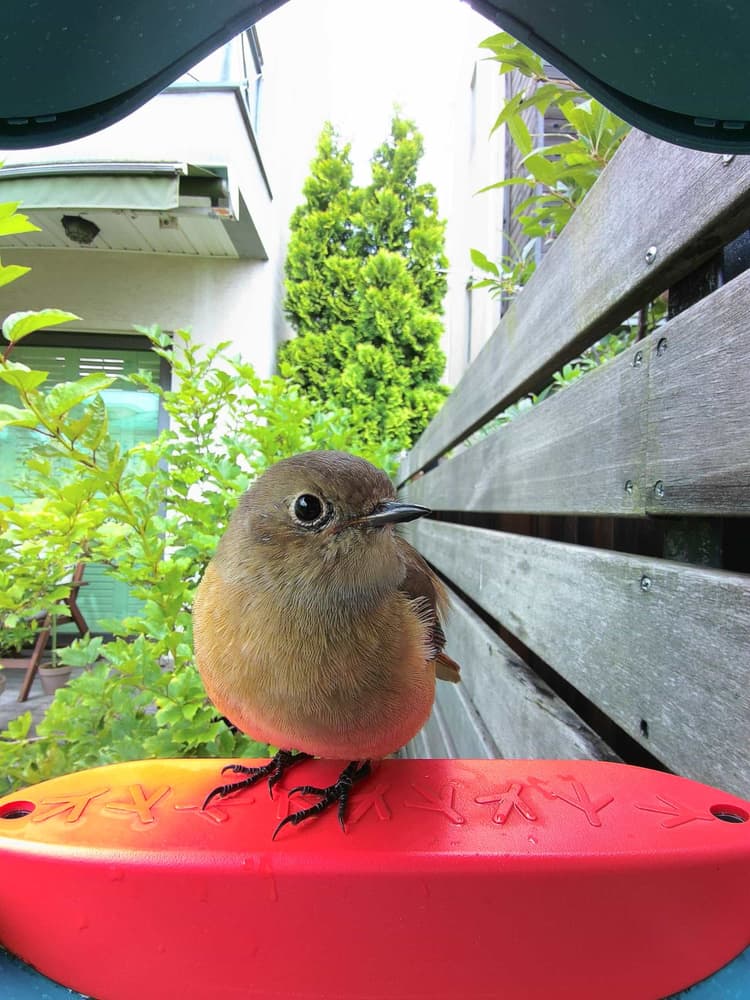
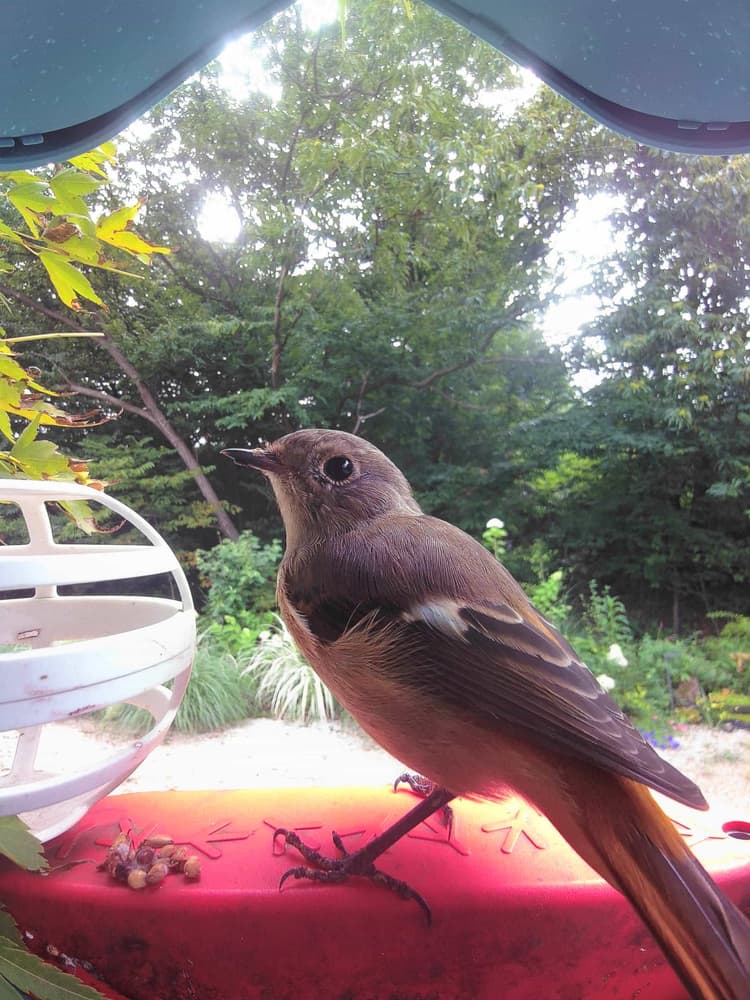
The Daurian redstart is a small bird with striking coloration. It features a prominent white wing patch, a white belly, and a black face and throat. It has an orange-red tail, rump, and flanks, with a light grey crown and nape. The Daurian redstart can be seen in open habitats with trees or shrubs and often perches openly, making it relatively easy to identify in the wild.
Male vs female
Male and female Daurian redstarts are sexually dimorphic, meaning they exhibit different physical appearances. Males have a distinctive black face, throat, and upper breast, and a bright orange-rust colored flanks, lower breast, and tail. Females, on the other hand, feature a softer color palette, with predominantly grey-brown plumage, an orange under-tail, and an off-white belly.
Juvenile
Juvenile Daurian redstarts resemble adult females in coloration, but they are usually duller and browner. Over time, they grow into their distinctive adult plumage. Juveniles can be identified by a muted, scaly pattern on their feathers.
Often mistaken for
Black Redstart vs Daurian Redstart
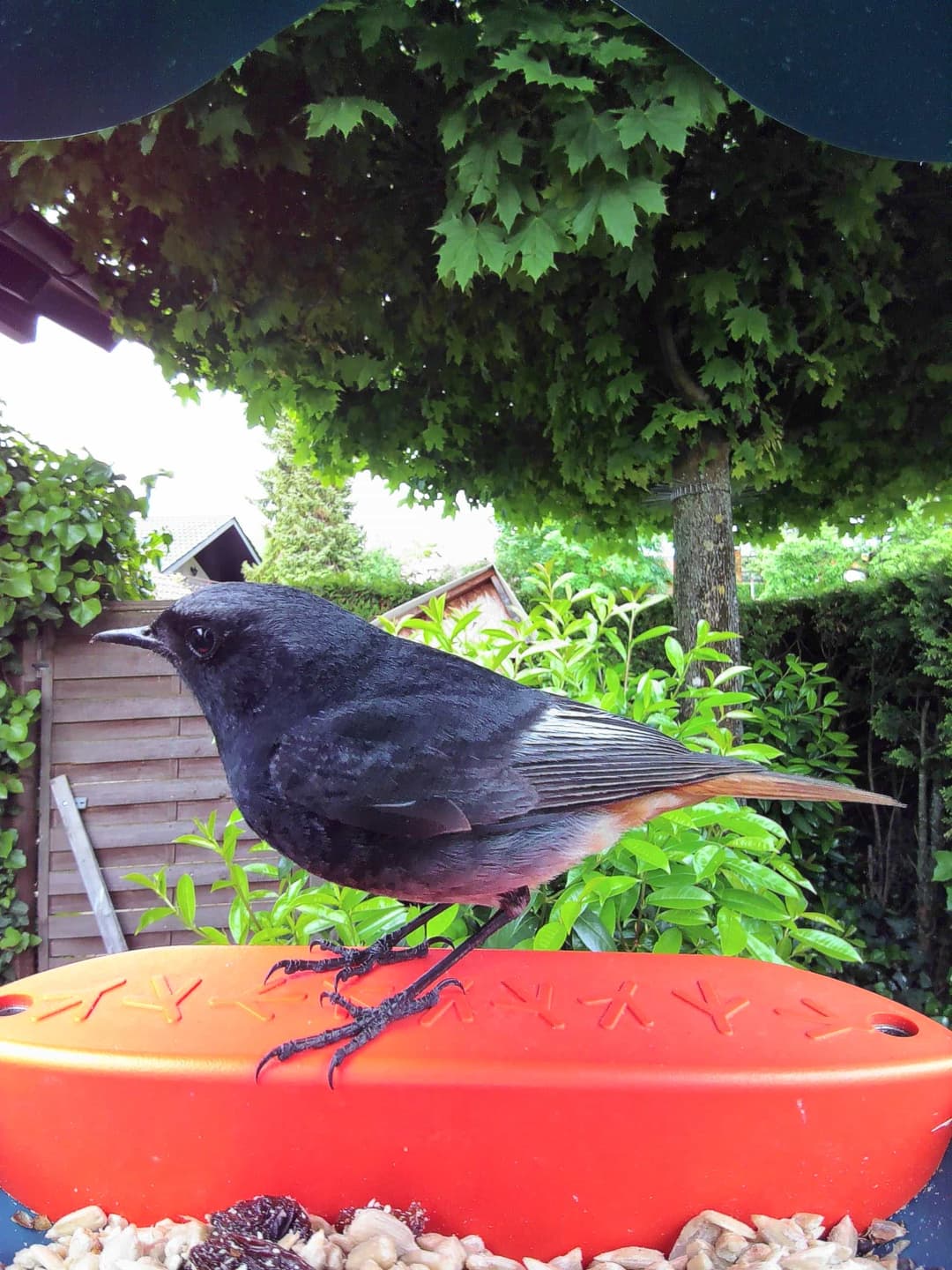
The Black Redstart resembles the Daurian Redstart with its similar size and shape. However, the Black Redstart males have a darker, almost black appearance with a contrasting red tail, while the Daurian Redstart males are characterized by a bright orange underpart and a white patch on the wing.
Common Redstart vs Daurian Redstart
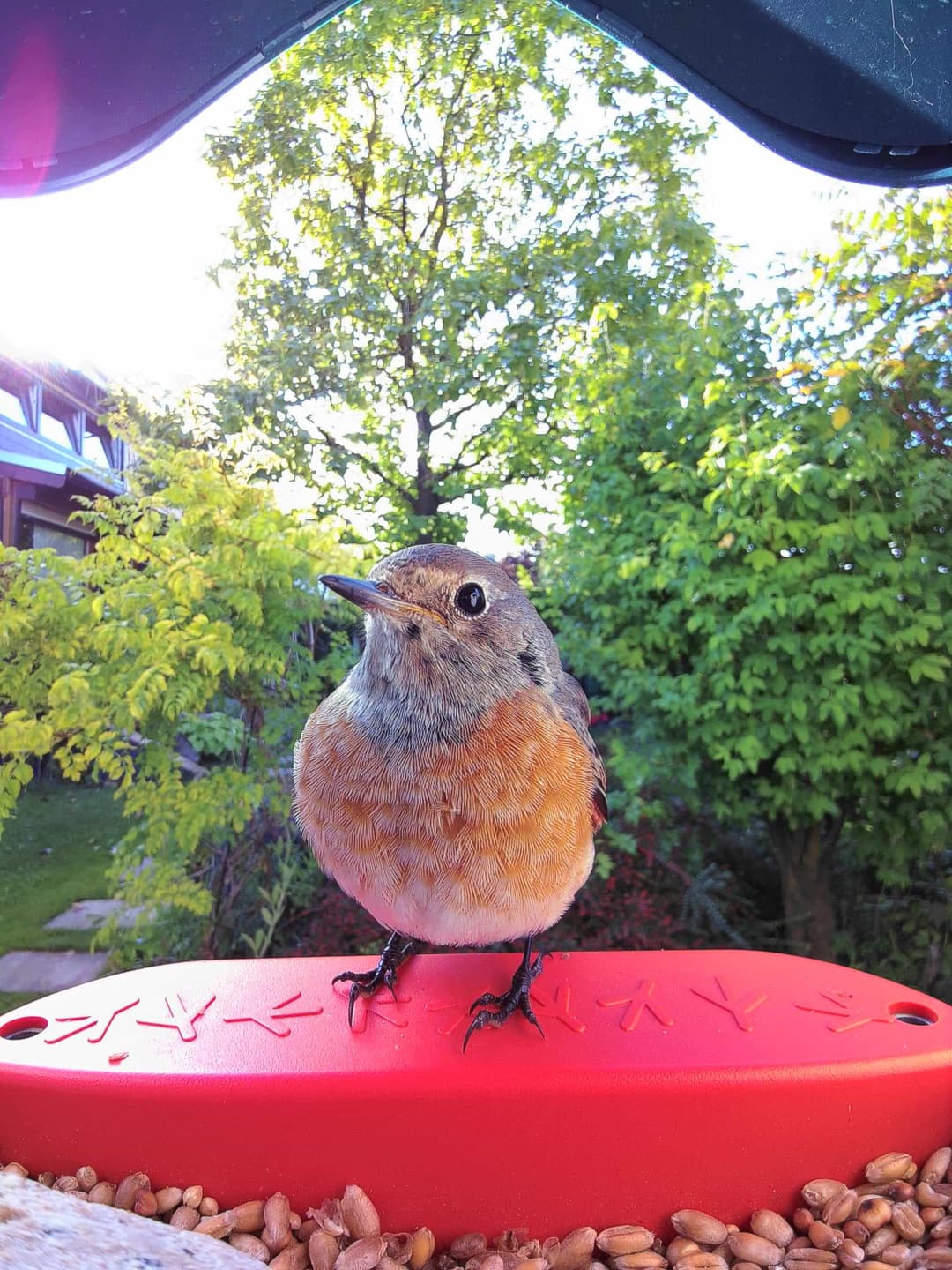
The Common Redstart, like the Daurian Redstart, showcases a striking orange chest and belly. The key difference is that the Common Redstart males have a grey head and back with a white forehead, whereas the Daurian Redstart has a more uniform orange underpart and a distinctly white patch on its wing.
Breeding and nesting habits of the Daurian redstart
Mating behaviors
Daurian redstarts engage in courtship displays where males perform songs to attract females. The males exhibit flapping and posturing to showcase their vibrant plumage. Pair bonds are formed seasonally, with both partners participating in territorial defense.
Nesting details
Nesting sites are typically in tree cavities, crevices, or on building eaves. Redstarts prefer wooded areas, but they also accept garden environments. Nests are constructed using twigs, moss, and lined with feathers. To encourage nesting in gardens, provide shrubs and consider installing nest boxes.
Eggs and chick-rearing
The female lays 3-7 eggs, which are incubated for about two weeks. Both parents feed the chicks, which fledge after approximately two more weeks. Adults continue to care for their fledglings, teaching them to forage before independence.
What does a Daurian redstart like to eat?
Berries
Insects
Seeds
Spiders
Natural diet
The Daurian redstart primarily feeds on a variety of insects, which form the bulk of its diet. These include beetles, flies, caterpillars, and other small arthropods. It also consumes spiders and may occasionally eat other small invertebrates. During autumn and winter, when insect activity decreases, the redstart supplements its diet with berries and small fruits.
Bird feeders
At bird feeders, the Daurian redstart is known to eat mealworms and suet. It may also sample sunflower seeds or other small seeds if available. Though not frequent visitors to feeders, they may occasionally consume small pieces of fruit or peck at soft fruits provided in feeding areas.
Attracting the daurian redstart: the essentials
Daurian Redstarts are attracted to spaces that offer plenty of shrubs, hedges, or trees. Make sure your yard provides a welcoming environment with safe spaces for them to perch, rest, and avoid predators. A source of water such as a bird bath or small pond is also attractive.
Feeder types and food favorites
Tray or platform feeders are the best choice for these birds. As for their food, Daurian Redstarts love insects, berries, and seeds. Bird Buddy seeds are a top choice because they are chosen by bird-feeding experts for the season. These will definitely attract these charming little birds to your yard.
Fun tricks for more frequent visits
Setting up a small bird house or nesting box can encourage Daurian Redstarts to set up home in your yard, leading to more regular visits. Also, keep your yard clean and filled with diverse botanical life. The differing plant life will attract a variety of insects for the redstarts to feed on.
Where can you find Daurian redstarts?

Primary habitat
The Daurian redstart mainly inhabits open woodlands, forests' edges, and cultivated lands in East Asia, including China, Korea, and eastern Mongolia.
Additional range
Apart from its usual habitat, Daurian redstarts can be found in urban parks and gardens. They prefer temperate climates and migrate to Southeast Asia during winter.
Do they migrate?
The Daurian redstart is a migratory bird species. It generally breeds in temperate regions of northeastern Asia, including parts of eastern Russia, Mongolia, Korea, and northern China. During winter, it migrates southward to warmer climates. The migration typically begins in late September to early October as temperatures drop in its breeding habitats. The key wintering regions include southern China, Taiwan, Japan, and parts of Southeast Asia, such as Vietnam and Laos. The birds often travel along specific migratory routes, which can involve crossing mountain ranges and large water bodies. Key stopover locations, like the coastal and riverine areas in eastern China and the Korean Peninsula, provide essential resources for feeding and resting during migration. In spring, around March to April, Daurian redstarts return north to their breeding grounds. Their migratory behavior ensures they exploit different ecological niches seasonally, benefiting from optimal breeding and feeding conditions throughout the year. These migratory patterns are crucial for their survival, as they allow the Daurian redstart to avoid harsh winters while taking advantage of breeding opportunities in temperate climates.
What is the role of Daurian redstarts in nature and how to protect them?
Conservation status
The Daurian redstart is currently classified as a species of Least Concern, indicating it is fairly common and not immediately threatened. It inhabits East Asia, breeding in various habitats including open forests and urban areas. Key threats include habitat loss due to urbanization and deforestation, although these have not severely impacted its population yet. Conservation efforts focus on habitat protection and monitoring population trends. Maintaining a balance between development and nature conservation is crucial to ensure the species' ongoing stability.
Ecological role of Daurian redstarts
Its role in the ecosystem
The Daurian redstart is an ecologically important bird species found in Asia extending to Eastern and Southeastern parts of Russia. Being an insectivorous species, it plays a crucial role in pest control by feeding on a variety of insects that could otherwise damage crops and plants. Additionally, the Daurian redstart also consumes berries and small fruits contributing to seed dispersal. This action aids in the propagation of vegetation across diverse areas, contributing to forest growth and diversification. Other than these ecological roles, its vibrant colors and visually pleasing appearance also have indirect benefits. Birdwatchers and nature enthusiasts often seek the species out, fostering an appreciation for nature and promoting ecotourism. In summary, the Daurian redstart’s pest control and seed dispersal features maintain ecological balance, and its appeal promotes awareness and conservation efforts.
How to help protect Daurian redstarts
Preservation tips
Habitat preservation strategy for daurian redstart
Preserve and restore natural environments such as deciduous woods, parks, and gardens that Daurian Redstarts favor for their habitats. Particularly, dead trees and shrubs which provide for nesting sites. Prevent deforestation and minimize intrusion into their habitats.
Community science initiatives
Promote citizen science projects to track and monitor the population and behavior of Daurian Redstarts. This could include birdwatching events or reporting sightings on bird-focused apps or websites. Enhance community education about the Daurian Redstart, their habitats, and importance in the ecosystem, fostering a collective responsibility towards their preservation.