Black Redstart or Common Redstart?
Here's how to tell the difference
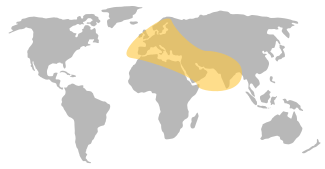


Black Redstart


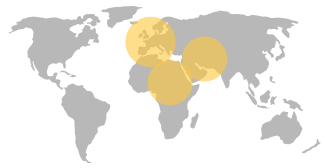
Common Redstart
Black Redstart
Phoenicurus ochruros
Also known as: Tithy's Redstart, Blackstart, Black Redtail
General appearance
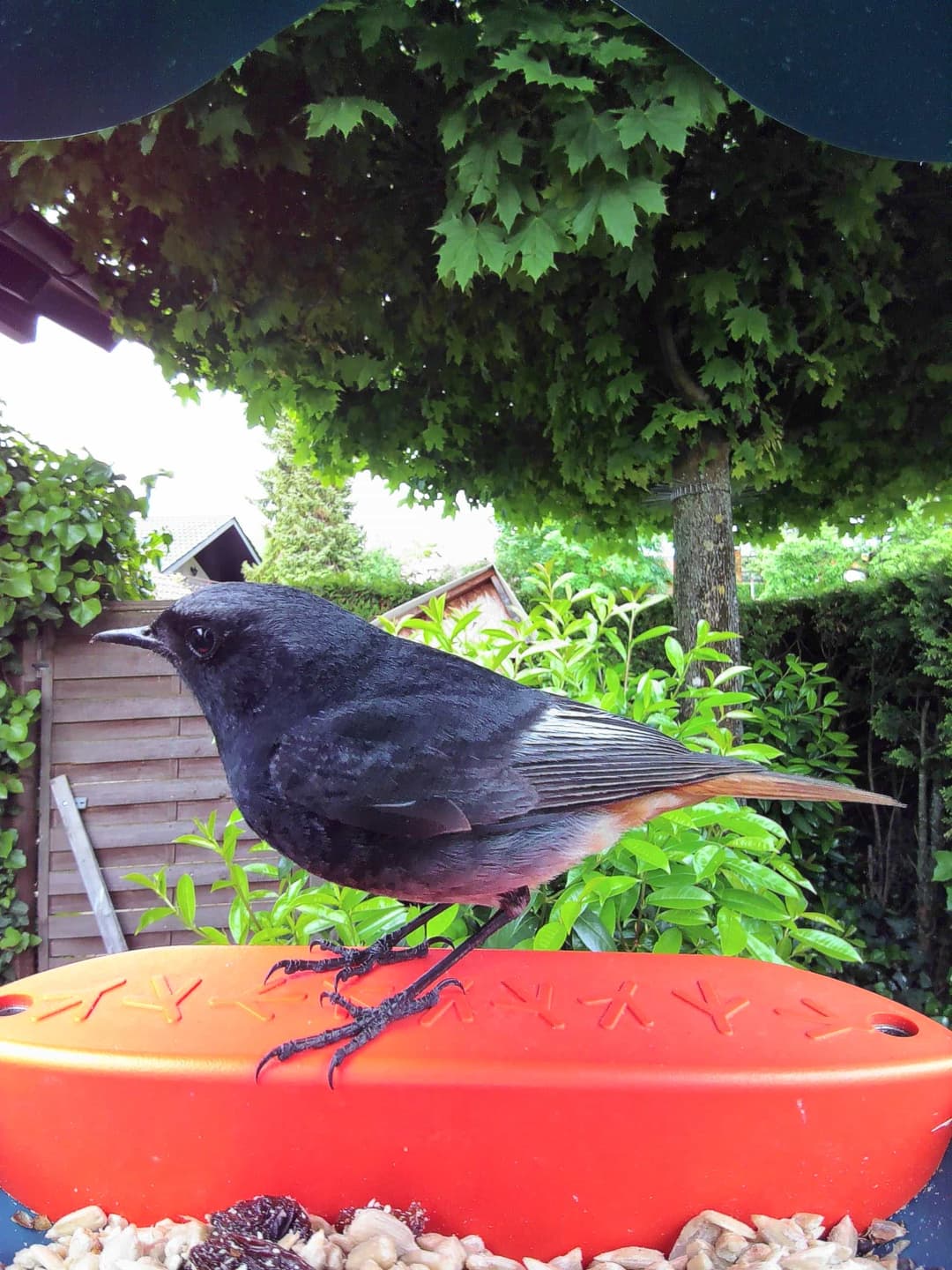
The black redstart is a small passerine bird noted for its distinct coloration. It has a long, blackish tail with white base, and an orange-red undertail and flanks making it a bird of striking contrast. Its size usually varies between 13 to 14.5 cm.
Male vs female
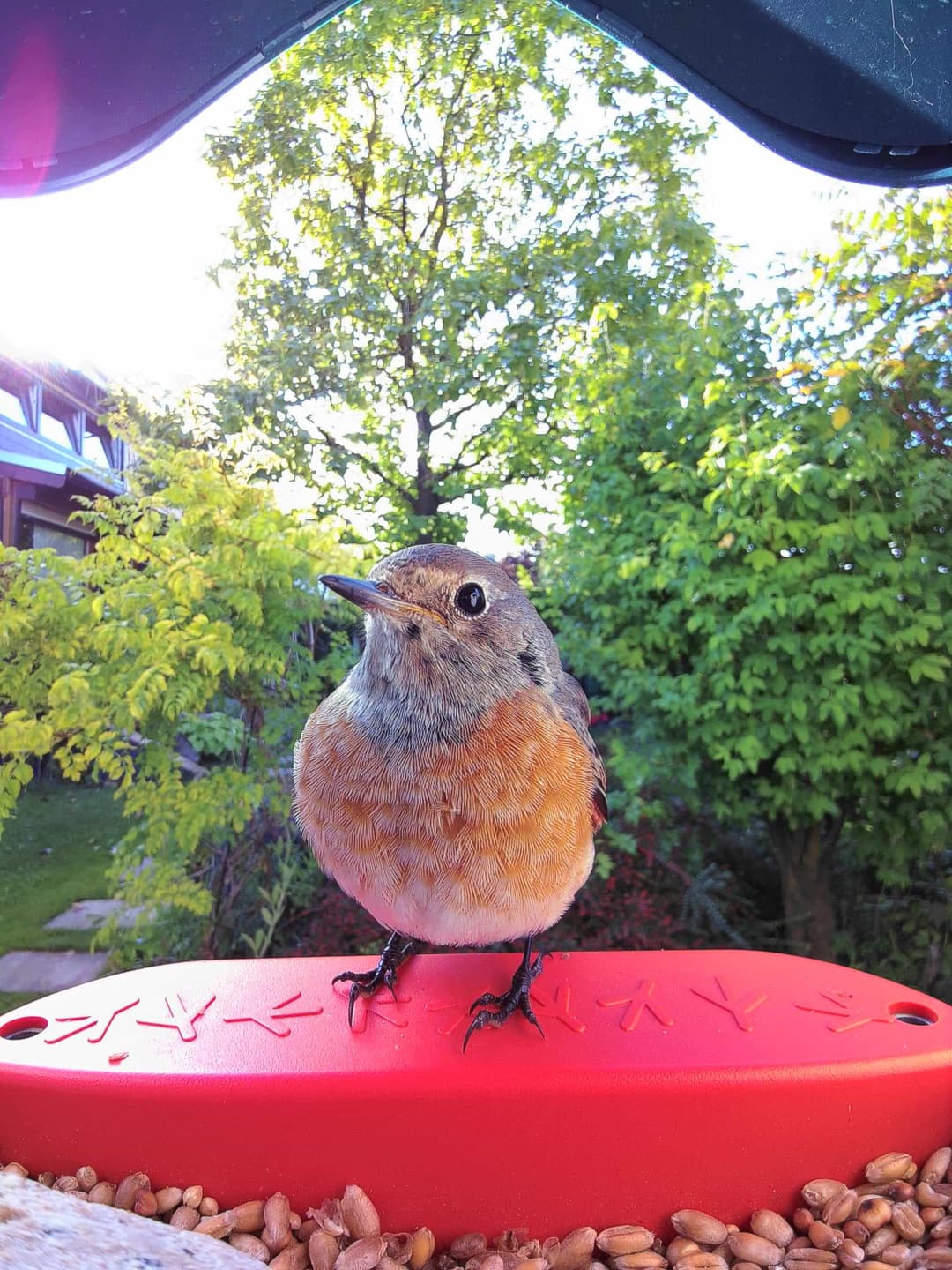
Adult male black redstarts showcase complete black face, throat and upperparts except for a distinct white wing patch. Females and immatures, on the other hand, are quite different from the males in coloration. They have brown grey upperparts and paler underparts retaining the white wing-patch and orange-red color under tail.
Juvenile
Juvenile black redstarts resemble their mothers in terms of coloration but exhibit a stronger pattern of scallops and spots on their upperparts. The distinct orange-red undertail becomes more noticeable as they grow. Changes in plumage are a part of the seasonal variations, particularly during the spring molt upon which juvenile birds take on more adult-like appearances.
Size
5.5 - 5.9 in/0.4 - 0.7 oz
There's more to learn about Black Redstart
View full detailsCommon Redstart
Phoenicurus phoenicurus
Also known as: Redstart
General appearance
The common redstart (Phoenicurus phoenicurus) is a small bird adorned with distinct, vibrant coloring. It has an overall slate grey upper body, chestnut underparts, and a brilliant red tail that habitually quivers when perched. Its wings are black with white patches that help in identification during flight.
Male vs female
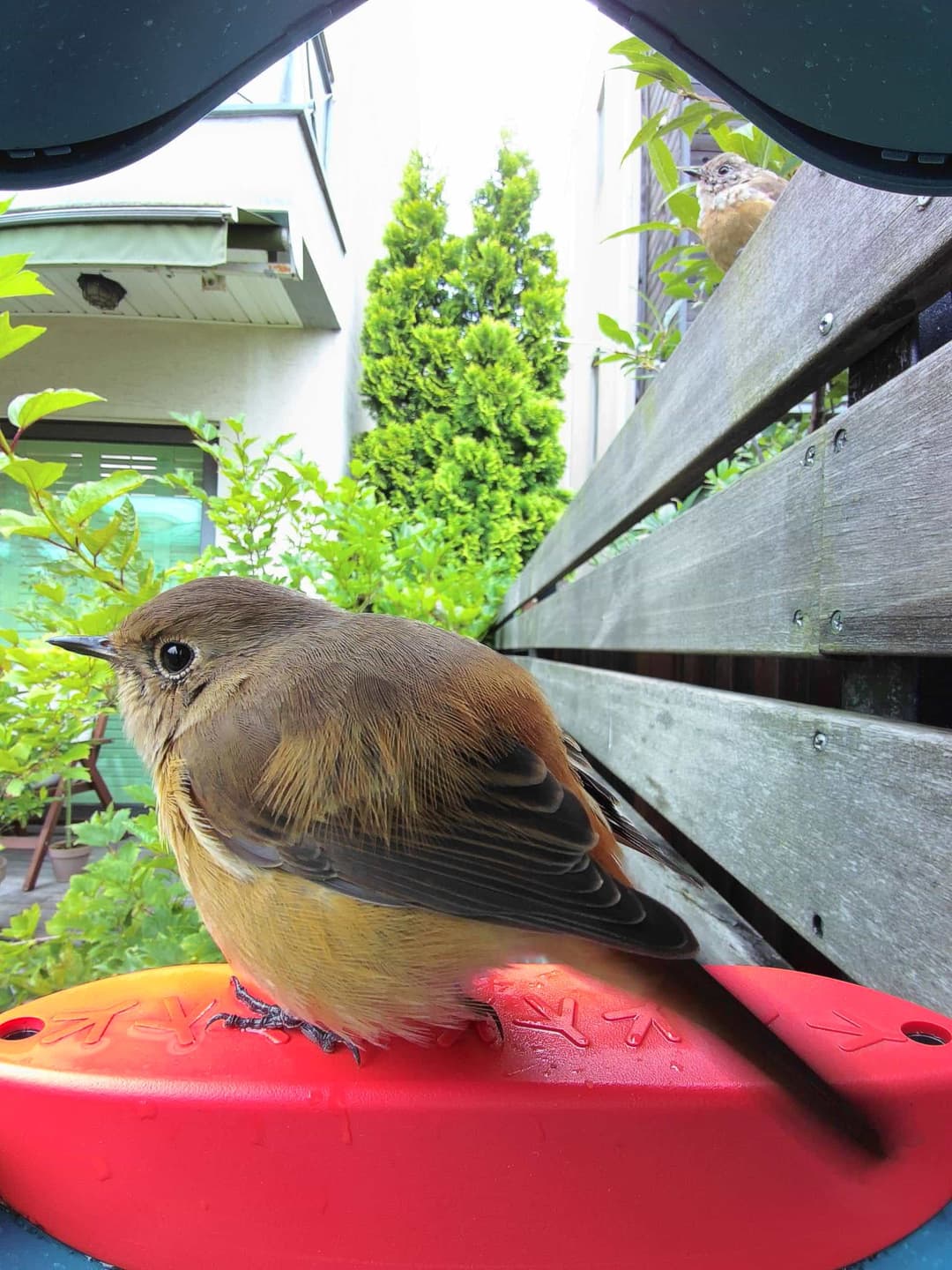
Males possess a distinct black face that extends down to the upper breast and encircles the white forehead. In contrast, females lack the slate grey and black coloring, featuring a light brown color above and dirty white below. Females also have a rusty-red tail, though not as vivid as the male's.
Juvenile
Juveniles largely mirror the appearance of the female but carry a more patchy and mottled aspect to their feathers. Flushed with earthy browns and faint hints of red, they gain their adult plumage after about six months post-fledging. Throughout autumn, they undergo a complete molt, adopting the familiar adult color scheme for their respective sexes.
Size
5.1 - 5.7 in/0.4 - 0.8 oz
There's more to learn about Common Redstart
View full detailsHow to tell the Black Redstart from the Common Redstart
Visual differences
The Black Redstart (5.5-5.7 inches, 0.42-0.71 ounces) has a blackish tail with a white base, and orange-red undertail and flanks. Adult males have a black face and throat with a white wing patch, while females are brown-grey. The Common Redstart (5.1-5.7 inches, 0.39-0.81 ounces) displays a slate-grey upper body, chestnut underparts, and a red tail. Males have a black face and white forehead, whereas females are light brown with a less vivid rusty-red tail. Both juveniles resemble females but differ in specific pattern details.
Key differences and behavior
The Black Redstart and Common Redstart share similarities in diet, primarily consuming insects, but differ behaviorally and ecologically. Black Redstarts thrive in rocky and urban environments, while Common Redstarts prefer open mature woodlands and gardens. Both species engage in elaborate courtship displays, yet Black Redstarts aggressively guard their mates, reflecting their socially monogamous nature, while Common Redstarts abandon nests if cuckoos threaten parasitism. Black Redstarts often nest in urban crevices, contrasting with Common Redstarts that use tree cavities. Although both feed on berries and visit bird feeders in colder months, Black Redstarts adapt more to metropolitan settings, whereas Common Redstarts rely more on natural habitats.
Still not sure? Here are more lookalikes!
Black Redstart vs [Select a bird]

[Select a bird]
Pick a bird to compare
Common Redstart vs [Select a bird]
[Select a bird]
Pick a bird to compare