Azure Jay or Blue Jay?
Here's how to tell the difference



Azure Jay
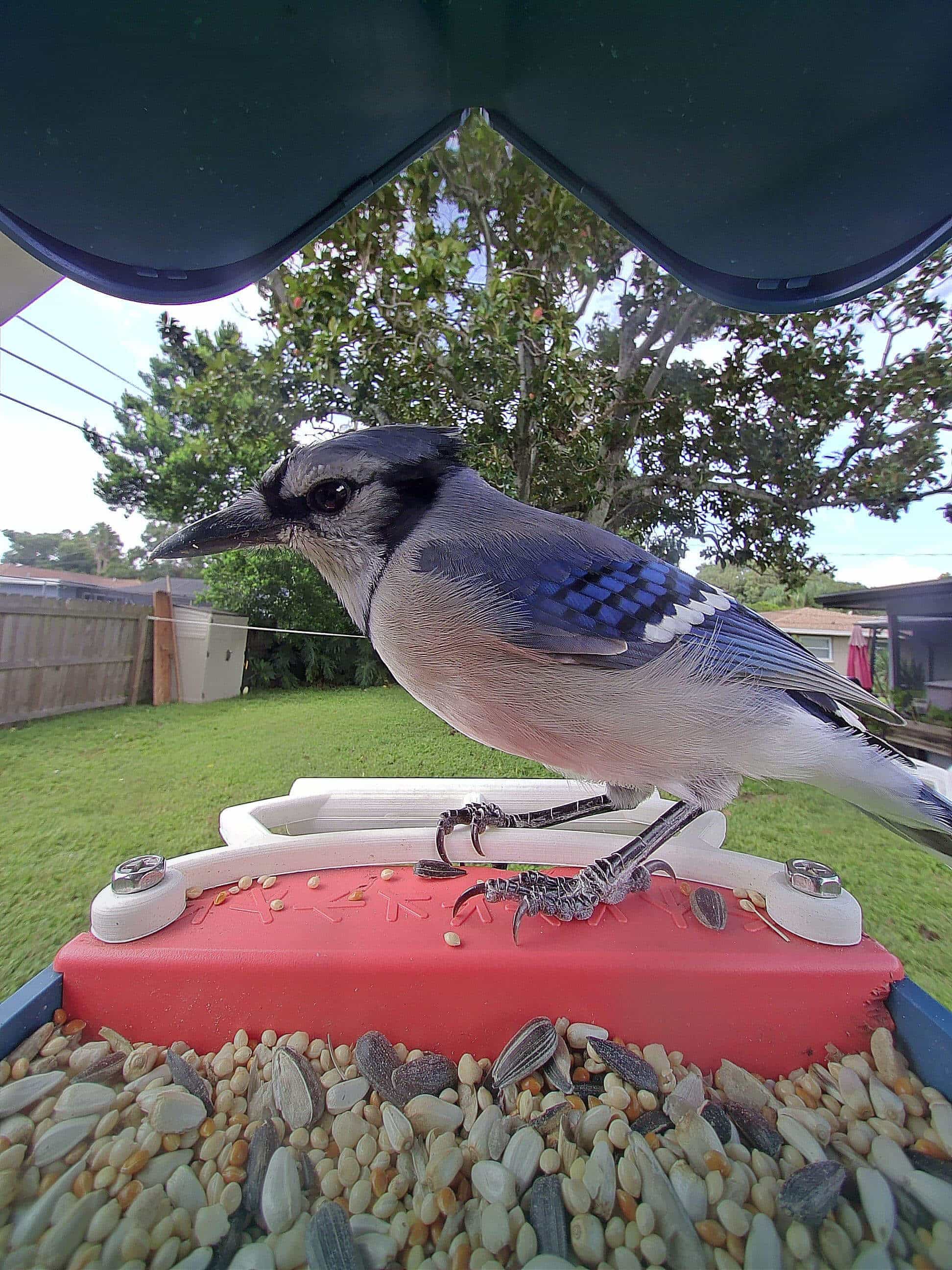


Blue Jay
Azure Jay
Cyanocorax caeruleus
General appearance
The Azure Jay is an eye-catching bird known for its vibrant blue plumage, which covers the majority of its body. Its name is derived from this striking azure coloration, most intensely visible on the head, wings, and tail. The bird's chest and underbelly are also blue, with a lighter shading compared to other areas. Black accents are prominent around the face and throat, creating a well-defined contrast with the blue. The Azure Jay boasts a robust build featuring a strong, straight bill ideal for foraging, and its legs are typically a dark gray to black color. These birds exhibit impressive size for their family, measuring about 30 to 35 centimeters in length.
Male vs female
In the species of Azure Jay, the males and females share remarkable similarities in physical appearance, making gender distinction difficult in the field. Both sexes display the rich azure coloration and share uniform patterns across their bodies. While only slight variations in size might occasionally occur, these differences are minimal and often unnoticed without closer inspection.
Juvenile
Juvenile Azure Jays resemble adults but can be distinguished by their relatively muted coloration. The young birds exhibit more grayish-blue feathers, which lack the vibrancy observed in mature individuals. As they age, their colors become more pronounced, matching the vivid hues of adult birds. Additionally, juveniles may have a shorter tail and slightly softer plumage, which changes as they mature. Recognizing juveniles in the wild usually requires observing these subtle differences in shades and tail length.
Size
13.8 - 15.7 in/8.8 - 9.6 oz
There's more to learn about Azure Jay
View full detailsBlue Jay
Cyanocitta cristata
General appearance
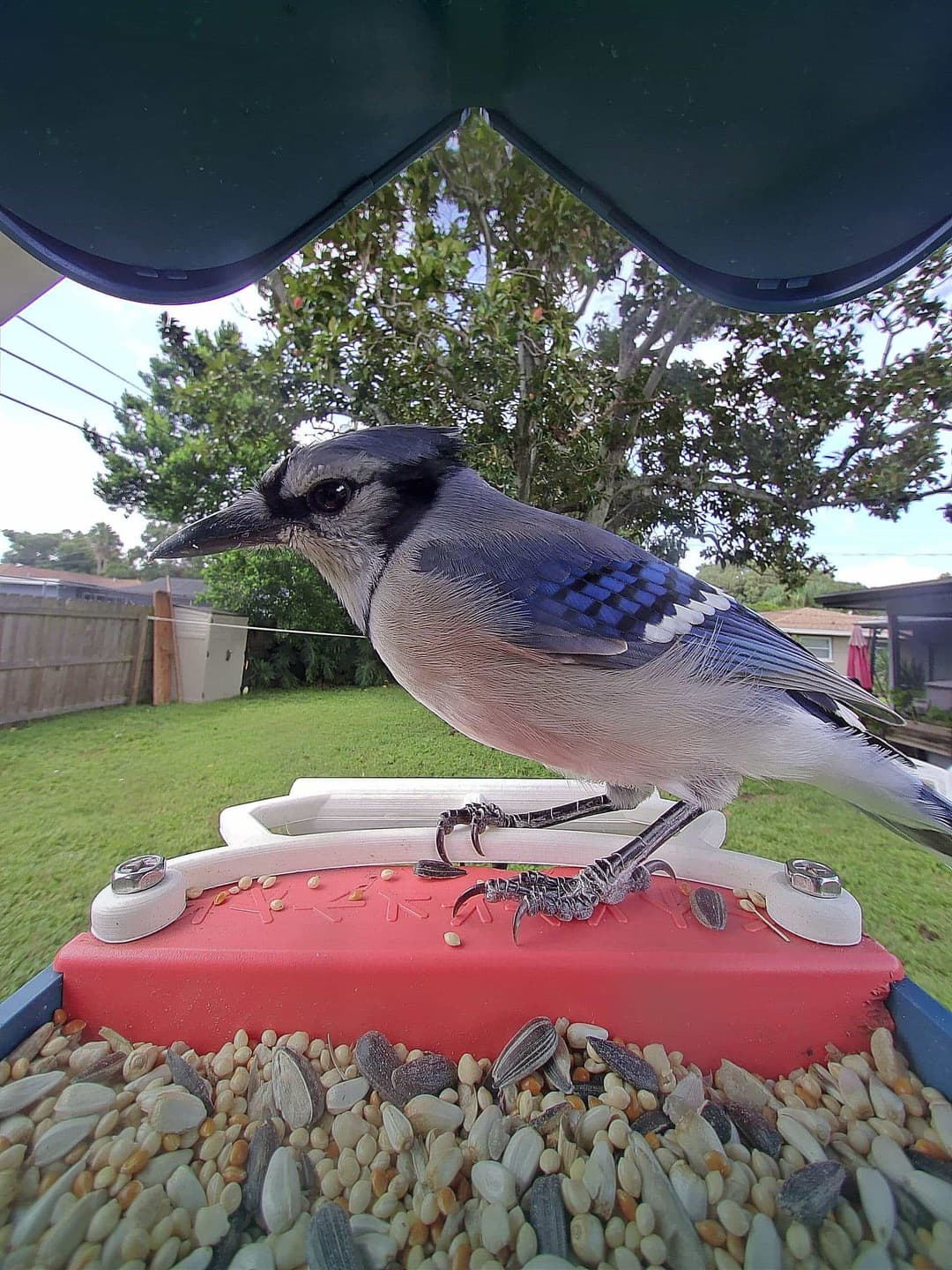
Blue Jays have a distinctive appearance with a size similar to a crow. Their dull blue-gray back contrasts with their bright blue wings and tail. They have a prominent crest, a black necklace and white patterns on their wing-bars and tail corners. The bird's wings are broad, fingered and rounded, possessing a long, rounded and wedge-shaped tail.
Male vs female
Interestingly, there is little to no difference in the physical appearance between male and female Blue Jays. Both sexes exhibit the same coloration and patterns. Any differences are minimal and often indistinguishable to the untrained eye.
Juvenile
Juvenile Blue Jays are similar in appearance to adults but may be slightly duller in color. They also lack the full crest of adult birds until they mature. Still, their inherent blue hue combined with gray, black and white patterns provides a good marker for identification.
Size
9.8 - 11.8 in/2.5 - 3.5 oz
There's more to learn about Blue Jay
View full detailsHow to tell the Azure Jay from the Blue Jay
Visual differences
The Azure Jay (13.8-15.7 inches, 8.8-9.6 oz) is larger than the Blue Jay (9.8-11.8 inches, 2.5-3.5 oz). Azure Jays exhibit vibrant blue plumage with black accents on the face and throat and a robust straight bill. In contrast, Blue Jays have dull blue-gray backs with bright blue wings/tails, a prominent crest, and a black necklace. While both lack sexual dimorphism, juvenile Azure Jays have muted grayish-blue coloring, and juvenile Blue Jays lack a full crest. The Azure Jay's tail is generally longer and the coloration more uniform compared to the Blue Jay's patterned wings and tail.
Key differences and behavior
Azure Jays and Blue Jays differ significantly in behavior and habitat preferences. Azure Jays inhabit the humid subtropical forests of South America and adapt to edge habitats, constructing large nests high in trees and showcasing a complex social structure with varied vocalizations. They are omnivorous, indulging in fruits, seeds, insects, and nuts, adapting to feed in various environments. Conversely, Blue Jays favor deciduous or mixed North American woods, suburban areas, and even parks. They are notable for their “anting” behavior, rubbing ants on feathers before eating. Their diet heavily features acorns and beech nuts, shifting to dominate bird feeders where they exhibit boldness. In courtship, Blue Jays may involve aerial chases, building nests from assorted materials often with unique additions like paper. Both species are monomorphic, making gender distinction challenging in the field. Azure Jays are social and maintain strong pair bonds, while Blue Jays become reserved when nesting, defending territory vocally if needed.
Still not sure? Here are more lookalikes!
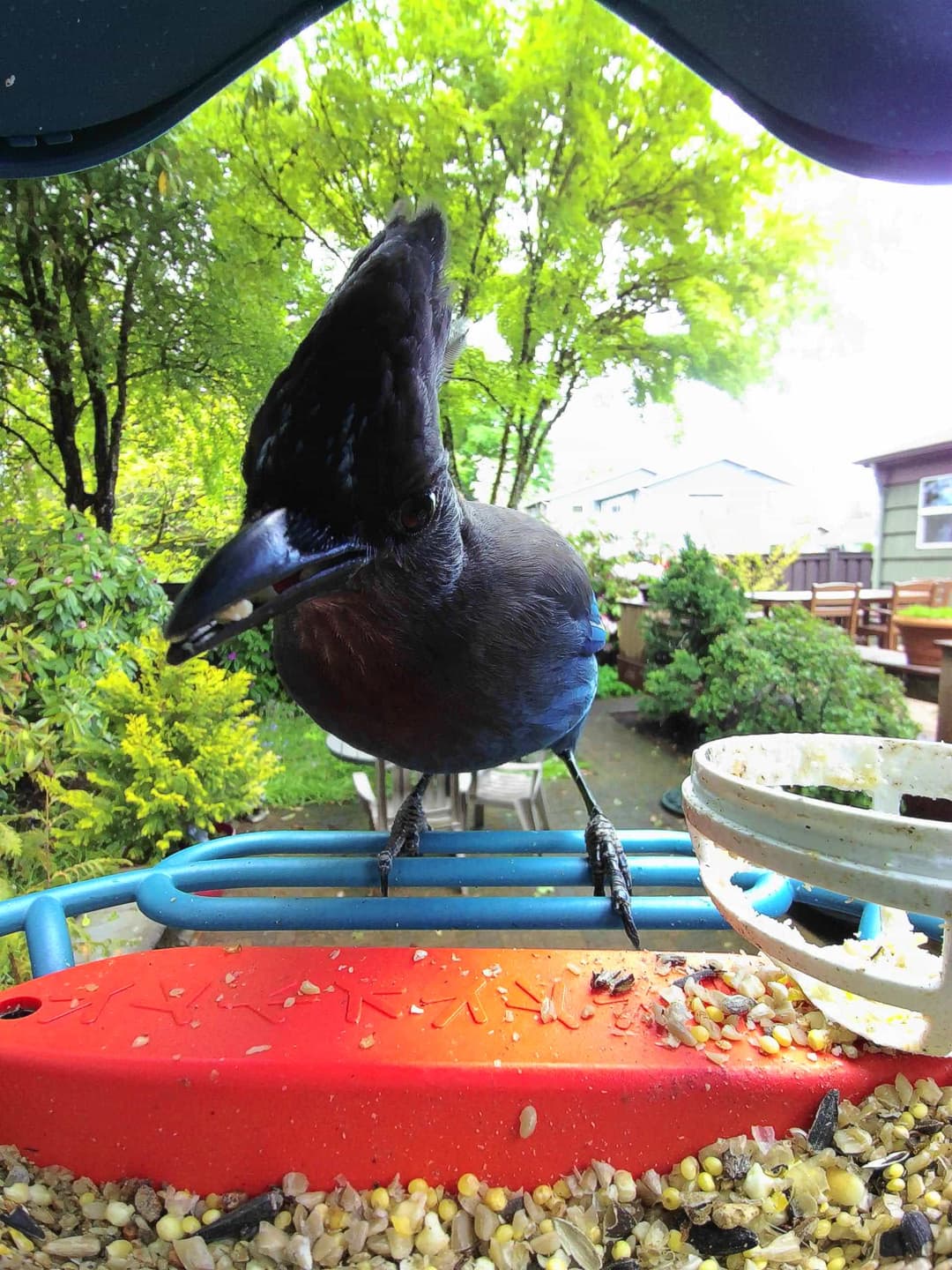
Azure Jay vs Steller’s Jay

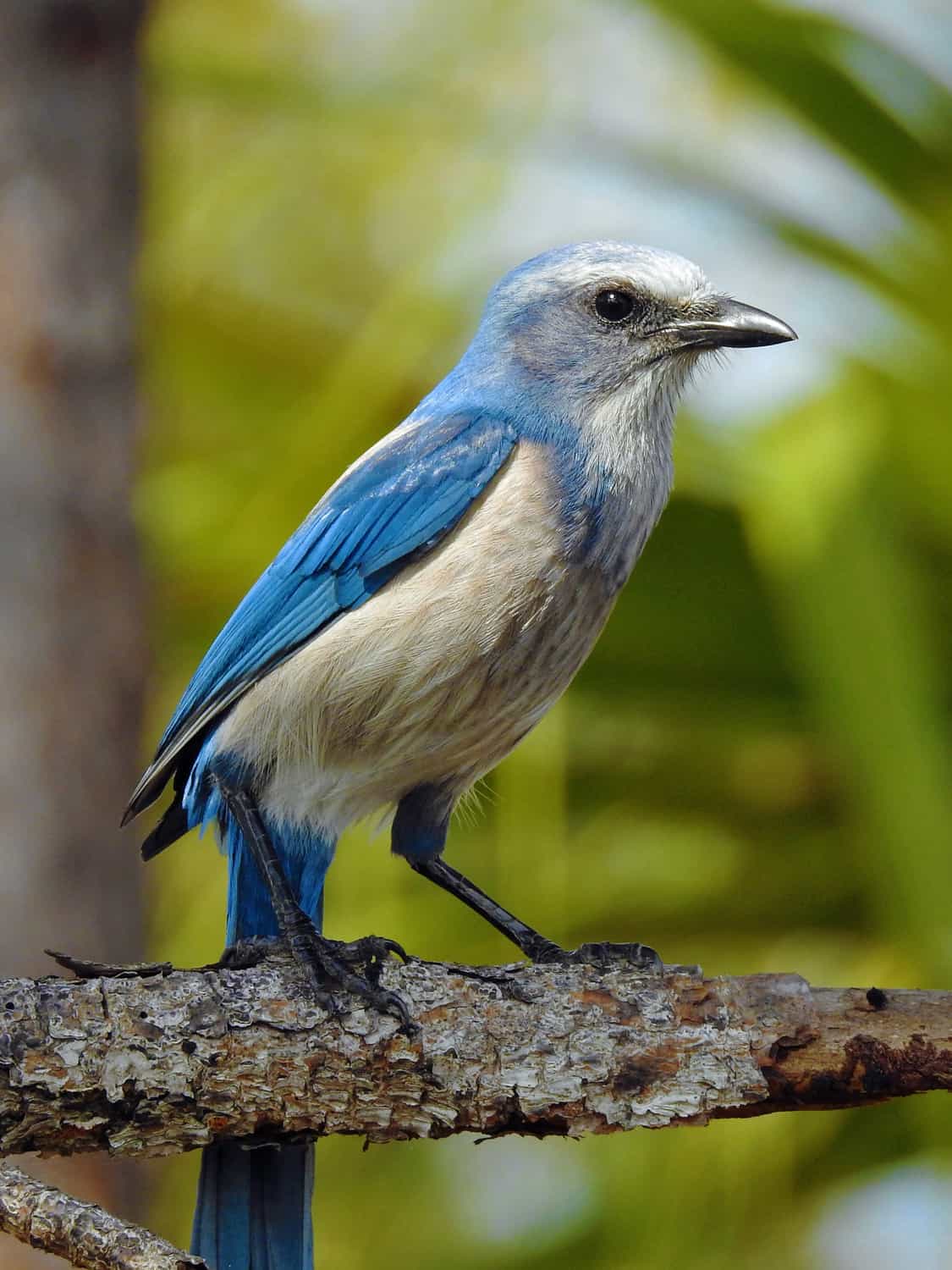
Blue Jay vs Florida Scrub-Jay
Blue Jay vs Steller’s Jay
Blue Jay vs Woodhouse’s Scrub-Jay
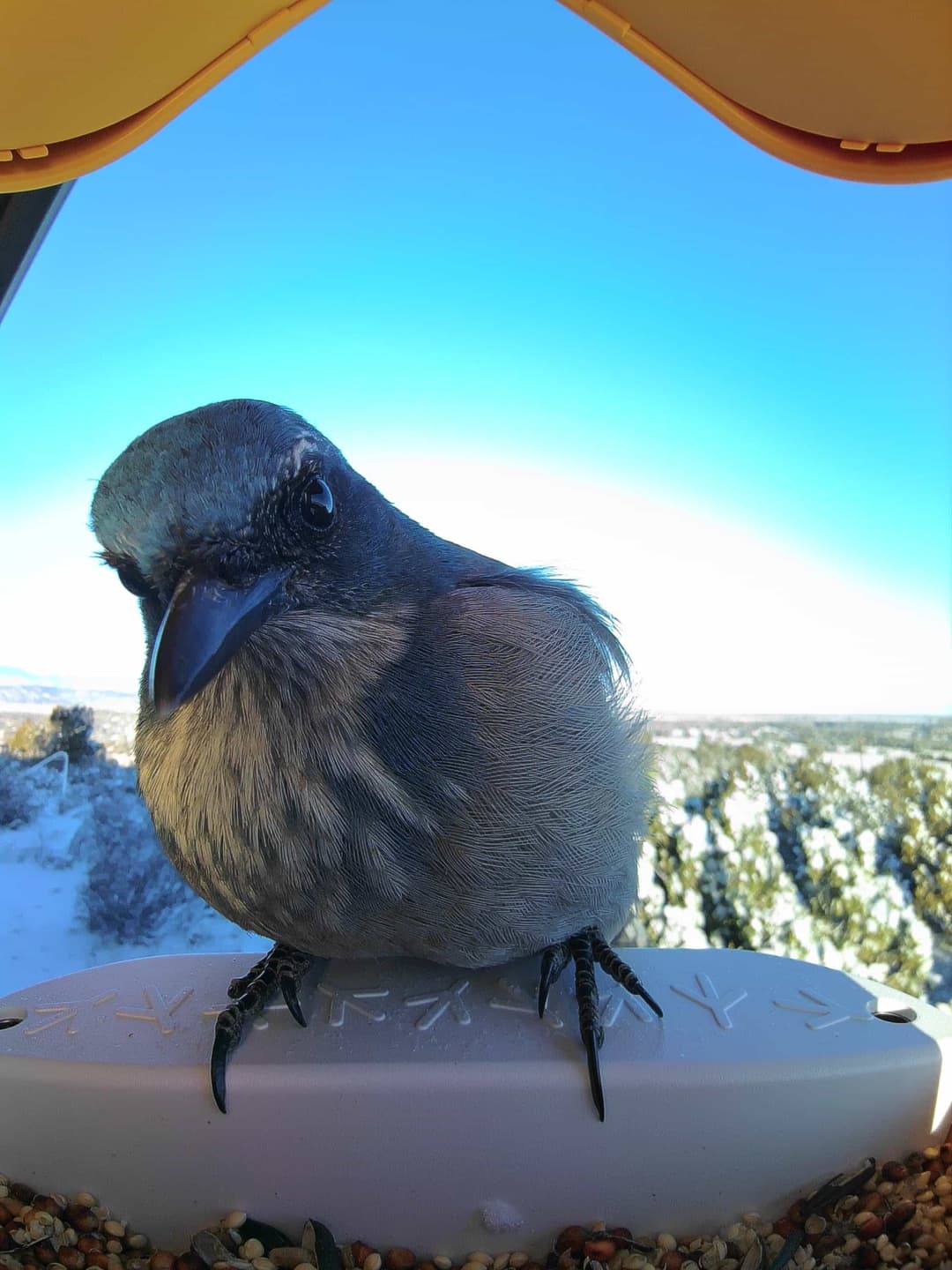
Blue Jay vs California Scrub-Jay

Azure Jay vs [Select a bird]

[Select a bird]
Pick a bird to compare
Blue Jay vs [Select a bird]
[Select a bird]
Pick a bird to compare