Hooded Oriole or Altamira Oriole?
Here's how to tell the difference
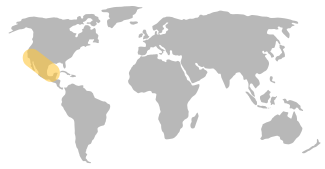



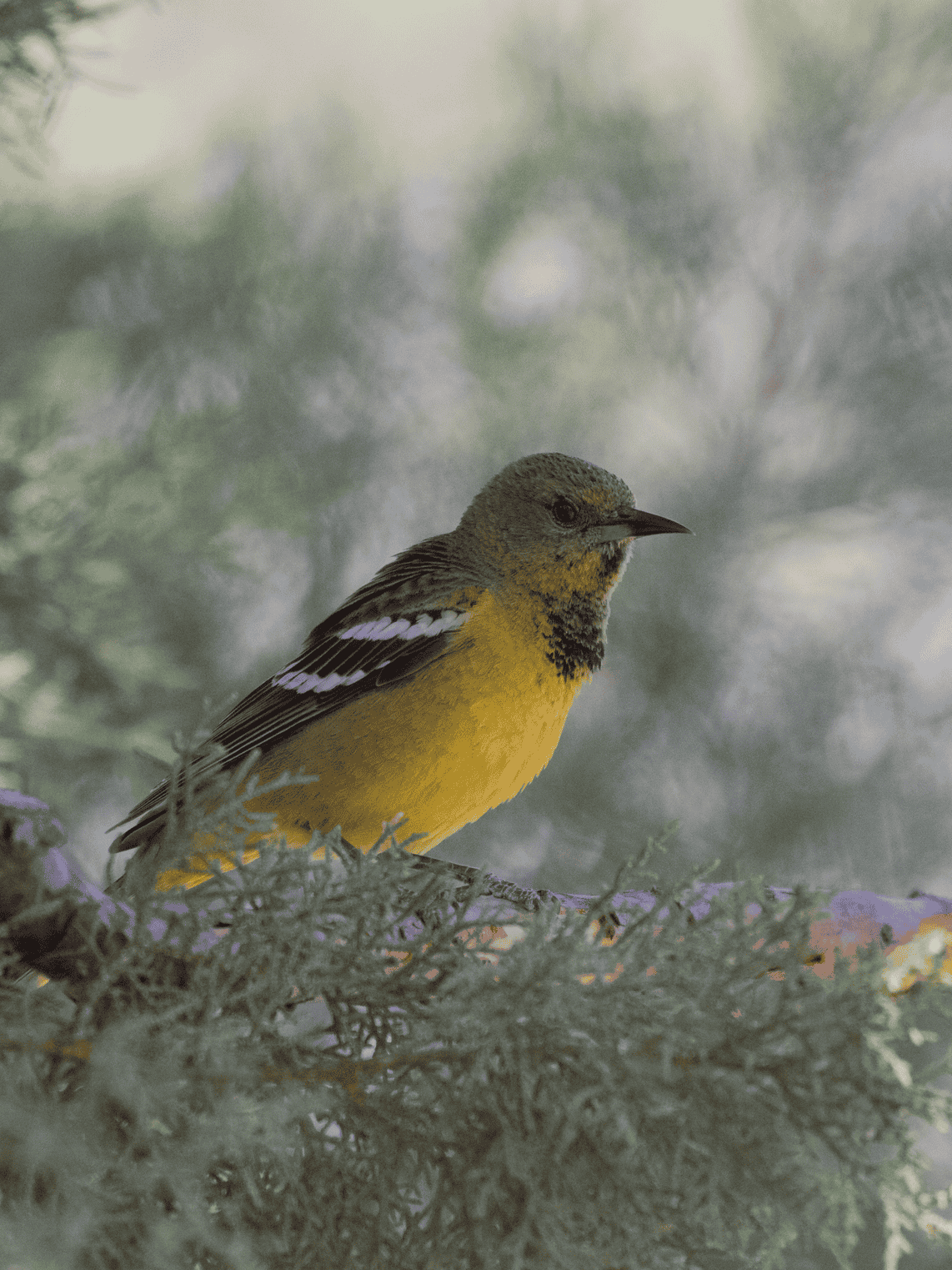
Hooded Oriole

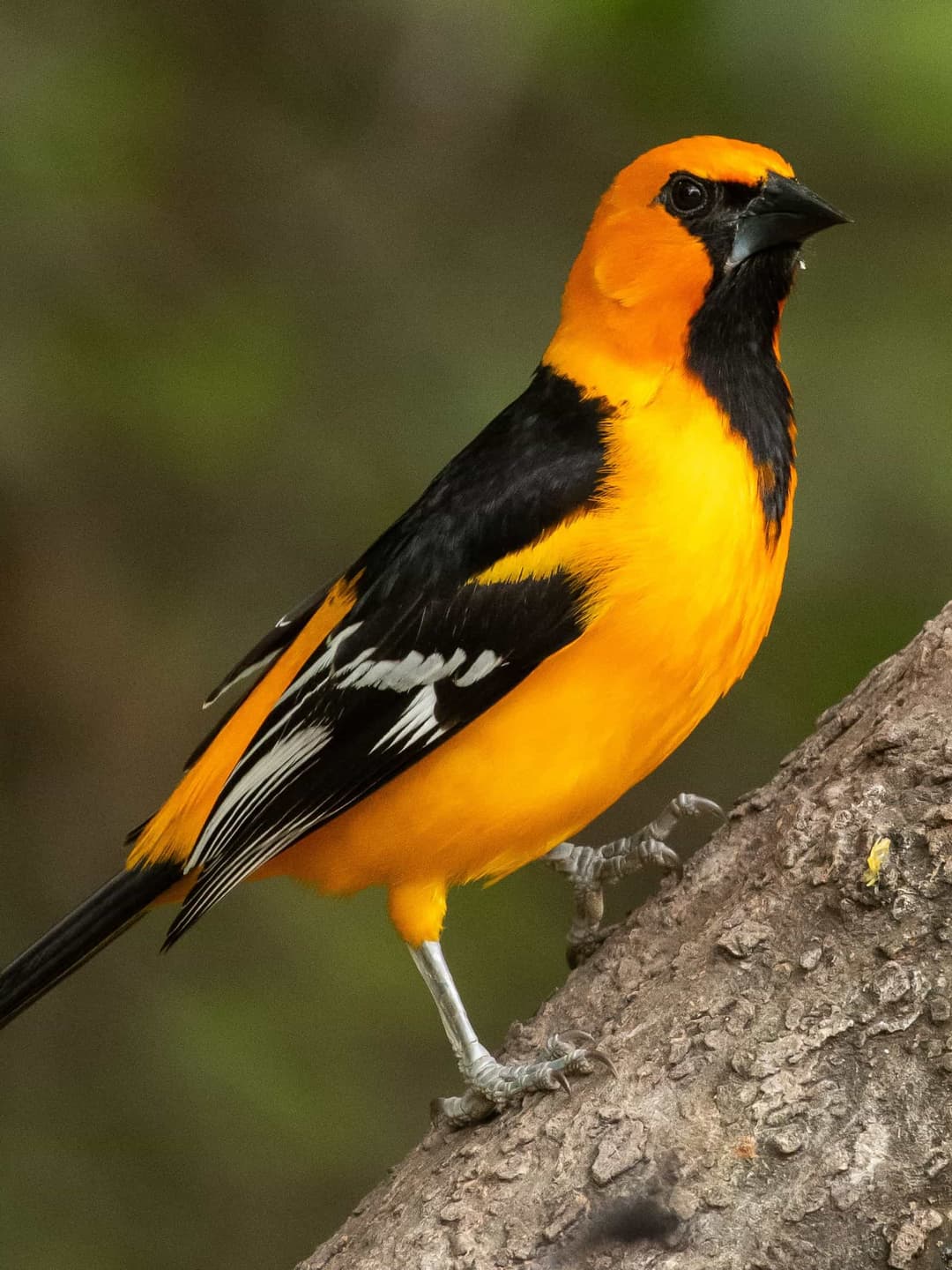
Altamira Oriole
Hooded Oriole
Icterus cucullatus
General appearance
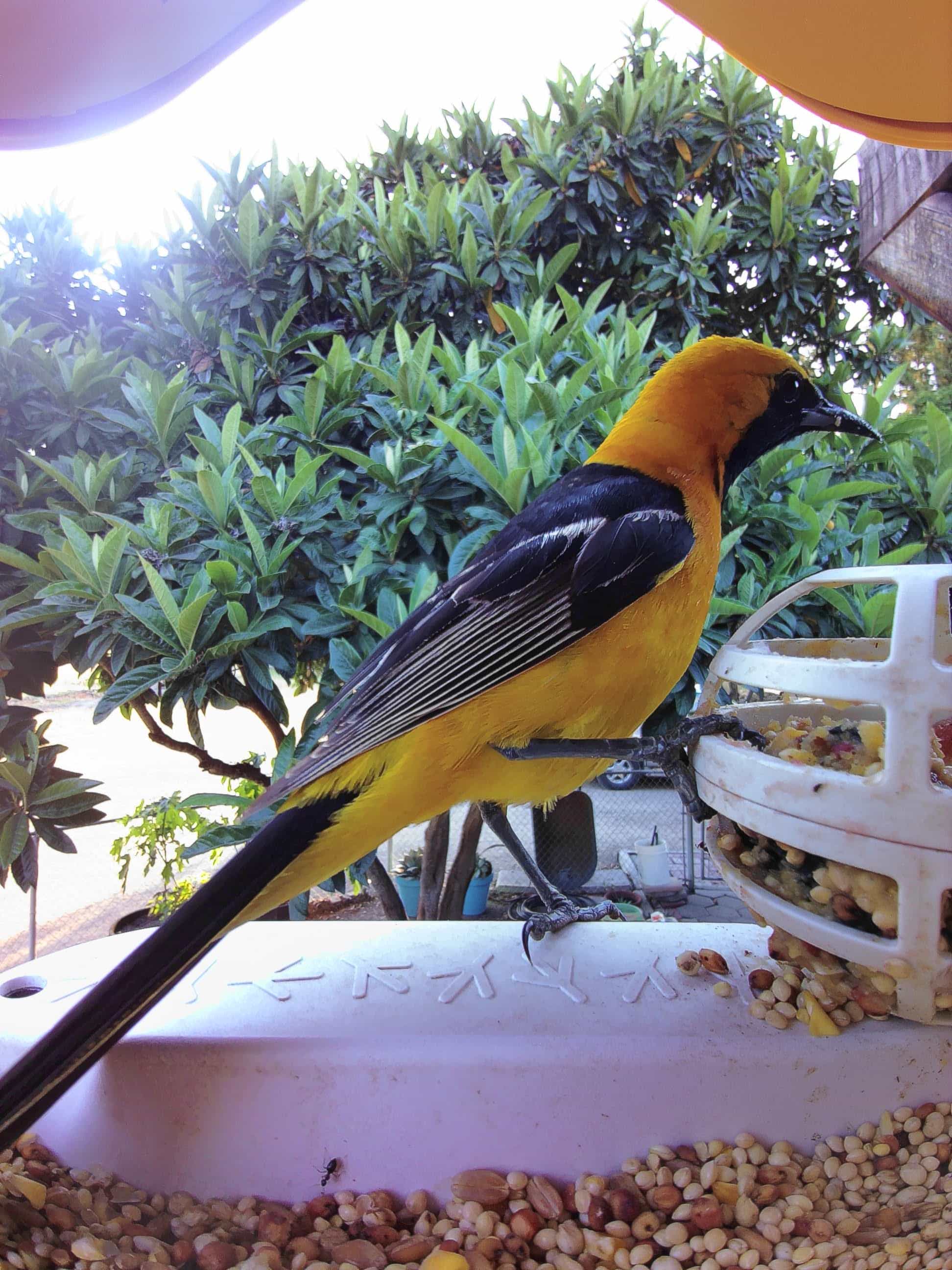
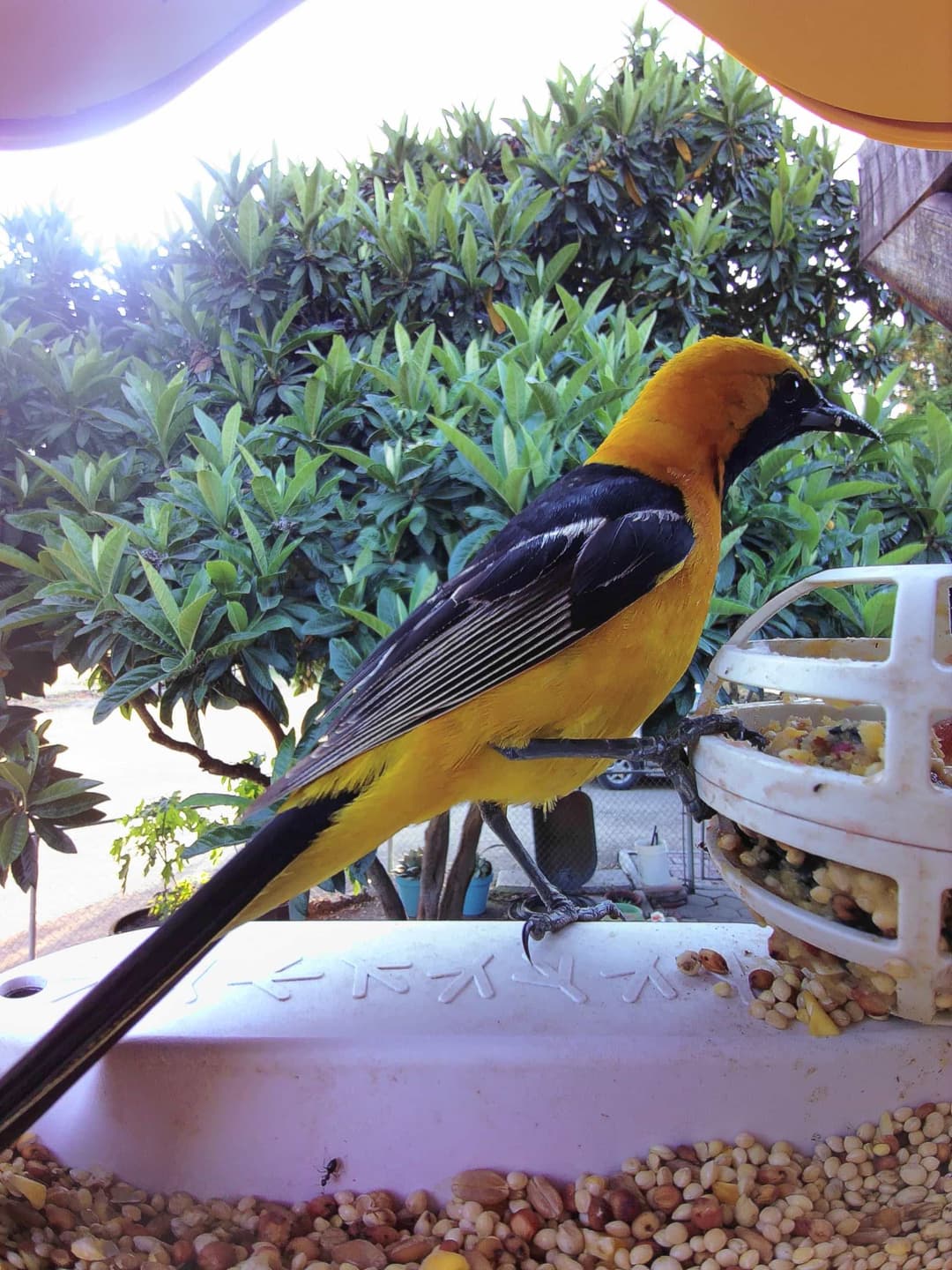
Hooded orioles are slender songbirds with long tails and slightly curved bills. They display a vibrant combination of orange-yellow and black, with distinctive hood-like coloring on the head and neck. The wings and back are predominantly black, creating a stark contrast with their bright bodies.
Male vs female
Male hooded orioles showcase a brighter orange-yellow color overall and have a more pronounced black cap and throat. Females are generally yellow to olive-yellow without the bold black markings found on males. They may exhibit some subtle grayish patterns on their wings, distinguishing them from juvenile males.
Juvenile
Juvenile hooded orioles resemble females in coloration with a yellowish-olive appearance. However, they can be distinguished by a slightly duller hue and inconsistently developed black facial markings. As they mature, young males gradually acquire brighter plumage and the distinctive black hood.
Size
7.1 - 7.9 in/0.7 - 1.2 oz
There's more to learn about Hooded Oriole
View full detailsAltamira Oriole
Icterus gularis
General appearance
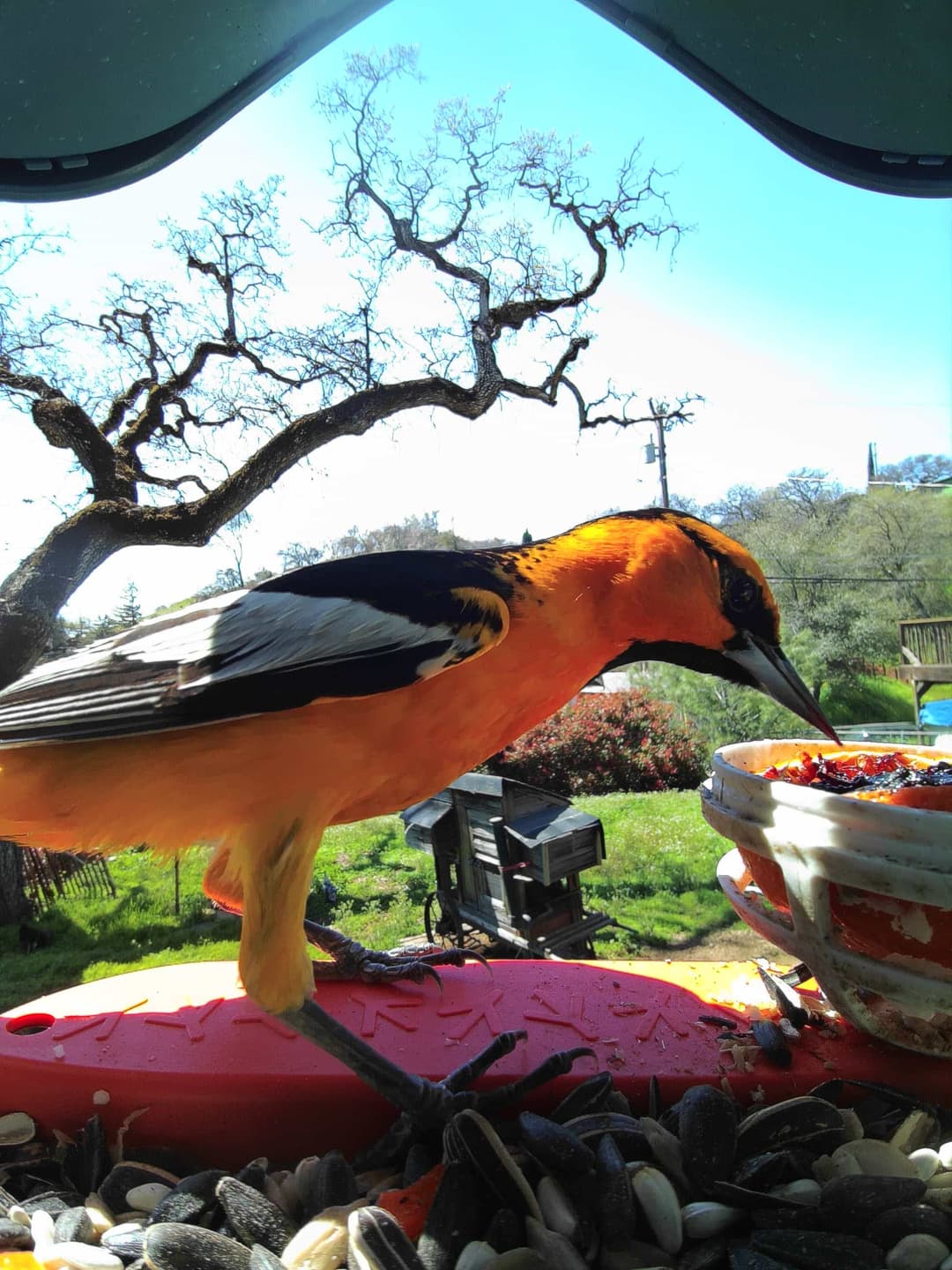
The Altamira oriole is a strikingly colorful bird native to southern Texas and parts of Mexico. It is easily identifiable by its vivid orange-yellow body, contrasting with black wings and tail. The bird's face features a distinctive black throat and eye mask. Its robust build, measuring about 9-10 inches in length, includes a long, slightly curved bill.
Male vs female
Males and females of the Altamira oriole species are similar in appearance, both showcasing the bright orange-yellow and black coloration. However, females may be slightly duller in hue than males, although this difference can be subtle. Both sexes retain their coloration year-round, without significant seasonal variation.
Juvenile
Juvenile Altamira orioles have a more subdued appearance compared to adults. They exhibit a duller yellow-orange plumage and less defined black markings, particularly around the face and throat. As they mature, their coloration gradually intensifies, and the distinctive black facial features become more pronounced.
Size
8.3 - 9.8 in/1.7 - 2.3 oz
There's more to learn about Altamira Oriole
View full detailsHow to tell the Hooded Oriole from the Altamira Oriole
Visual differences
The Hooded Oriole is smaller, measuring 7-8 inches, and has a slender build with a long tail and slightly curved bill. Its plumage is bright orange-yellow with a black hood and black wings. In contrast, the Altamira Oriole is larger at 9-10 inches and has a robust build with a long, slightly curved bill. It features a vivid orange-yellow body with black wings, a black tail, throat, and eye mask. Both sexes of Altamira Orioles have uniform coloration, whereas male Hooded Orioles have more distinct, vibrant coloring than females.
Key differences and behavior
The Hooded Oriole and Altamira Oriole exhibit distinct behaviors and preferences. Hooded Orioles are agile acrobats, adept at foraging upside down, adapting to urban areas and favoring palm trees for nesting. They feed on insects and nectar, even frequenting sugar-water feeders. Their nests are expertly woven into palm or yucca leaves, with courtship involving elegant movements and soft singing. Conversely, Altamira Orioles prefer solitude, nesting about 900 feet apart, and occupy open tropical woodlands. Their diet includes insects, nectar, and fruit, favoring feeders with fruits and grape jelly. Their nests, constructed conspicuously on horizontal branches, are intricate and lengthy, taking weeks to build. Breeding pairs stay together year-round, reinforcing bonds through vocalizations and preening.
Still not sure? Here are more lookalikes!
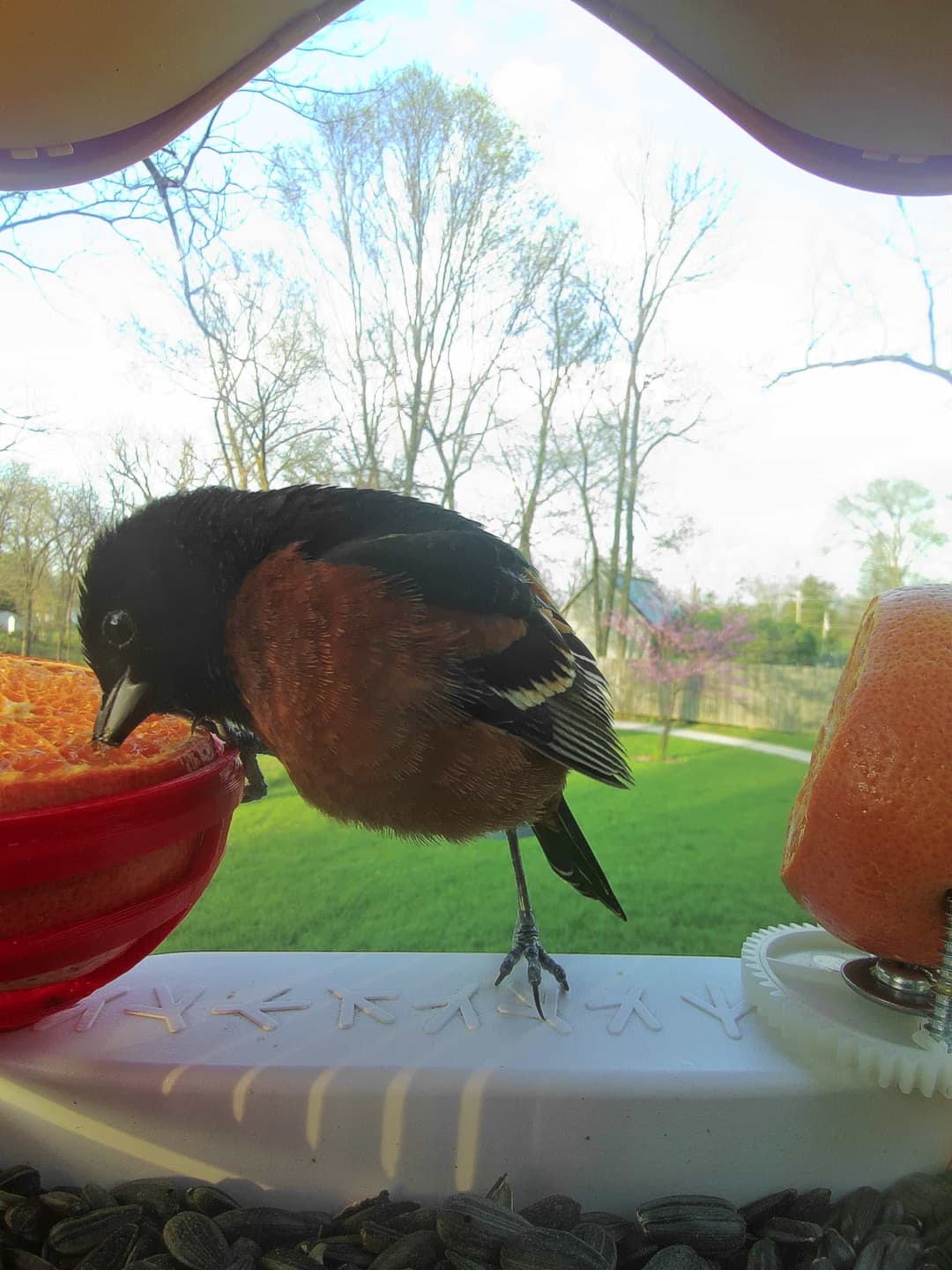
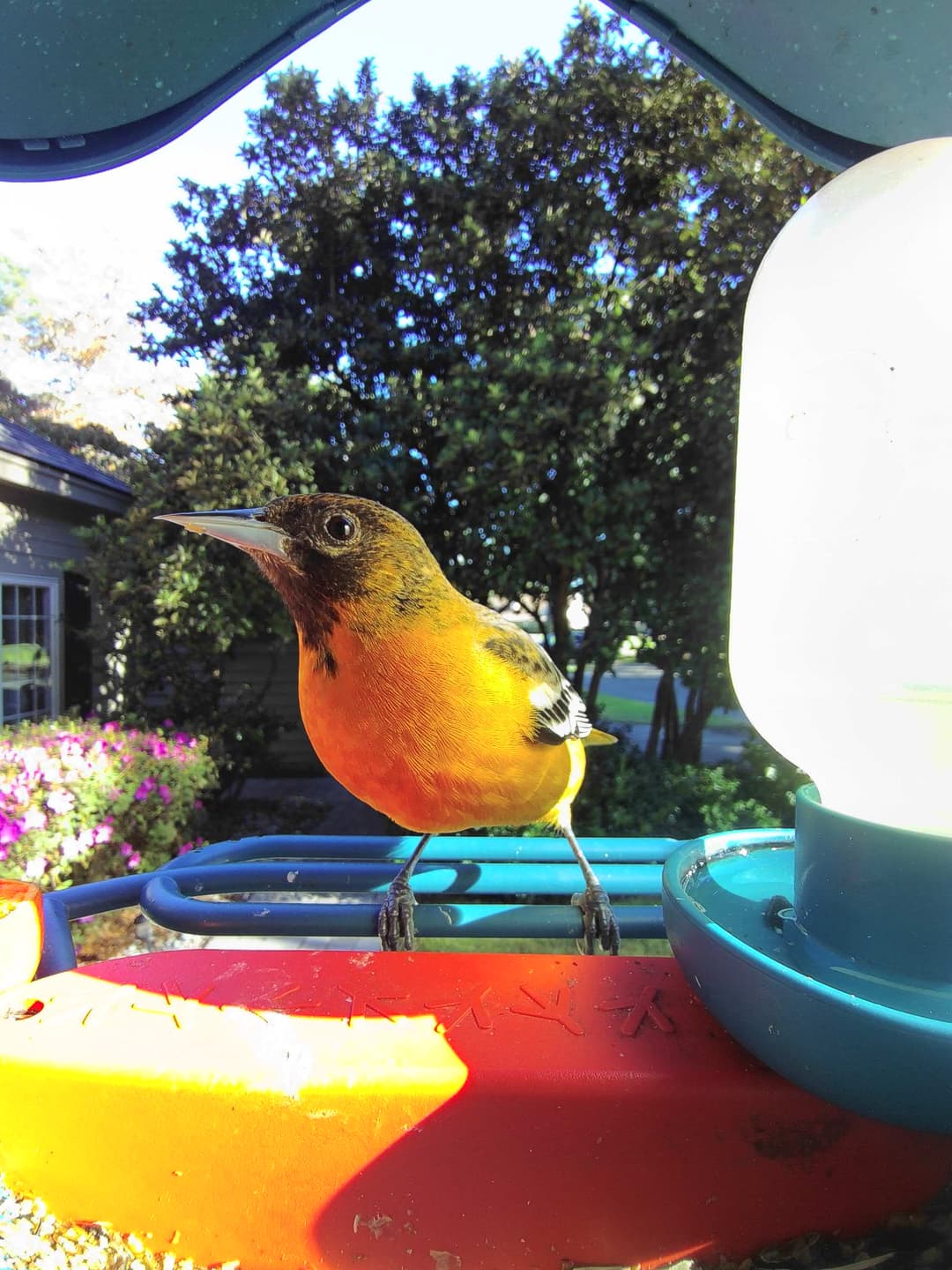
Altamira Oriole vs Baltimore Oriole
Hooded Oriole vs [Select a bird]

[Select a bird]
Pick a bird to compare
Altamira Oriole vs [Select a bird]
[Select a bird]
Pick a bird to compare