Altamira Oriole or Bullock’s Oriole?
Here's how to tell the difference



Altamira Oriole
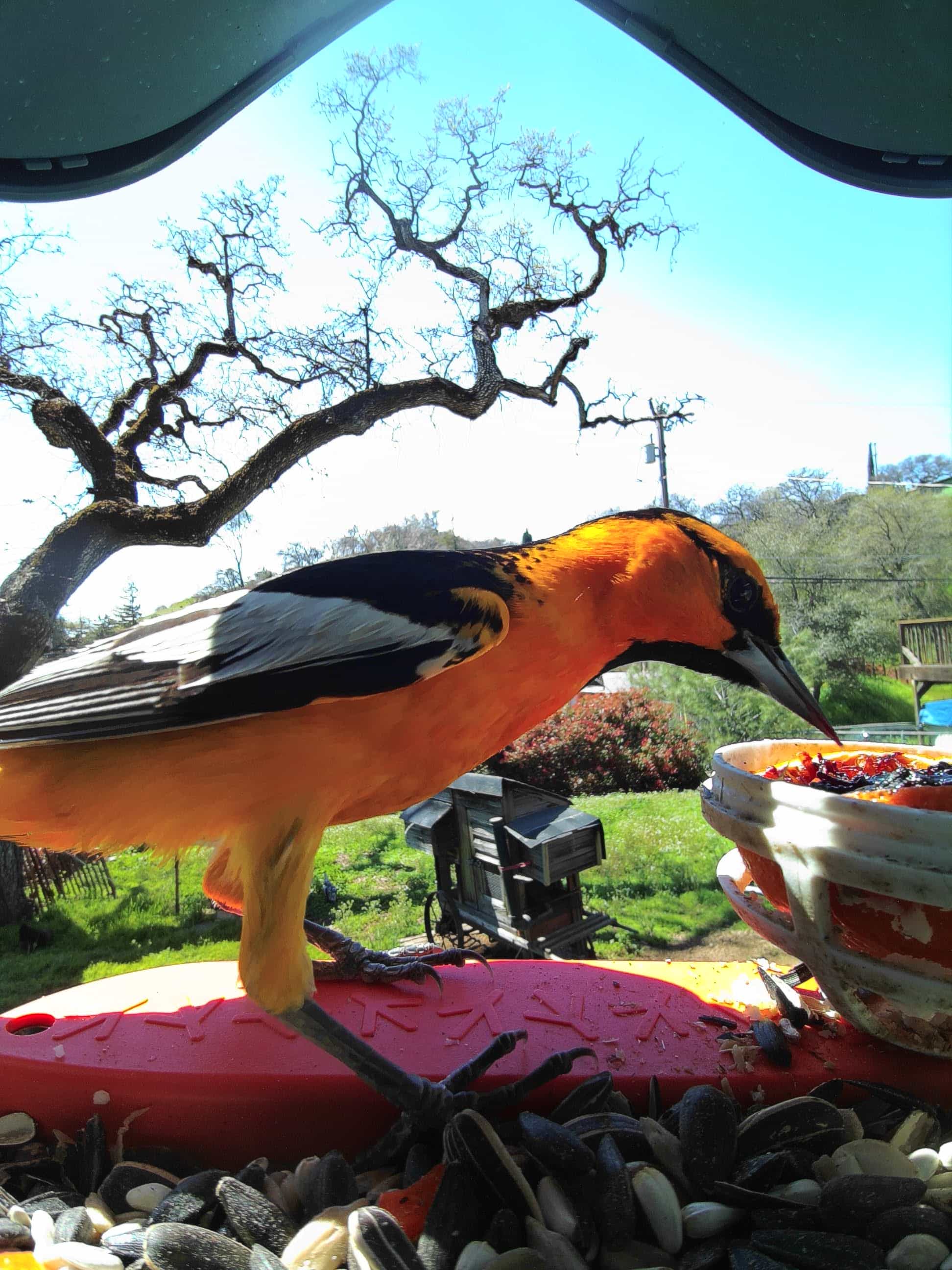


Bullock’s Oriole
Altamira Oriole
Icterus gularis
General appearance
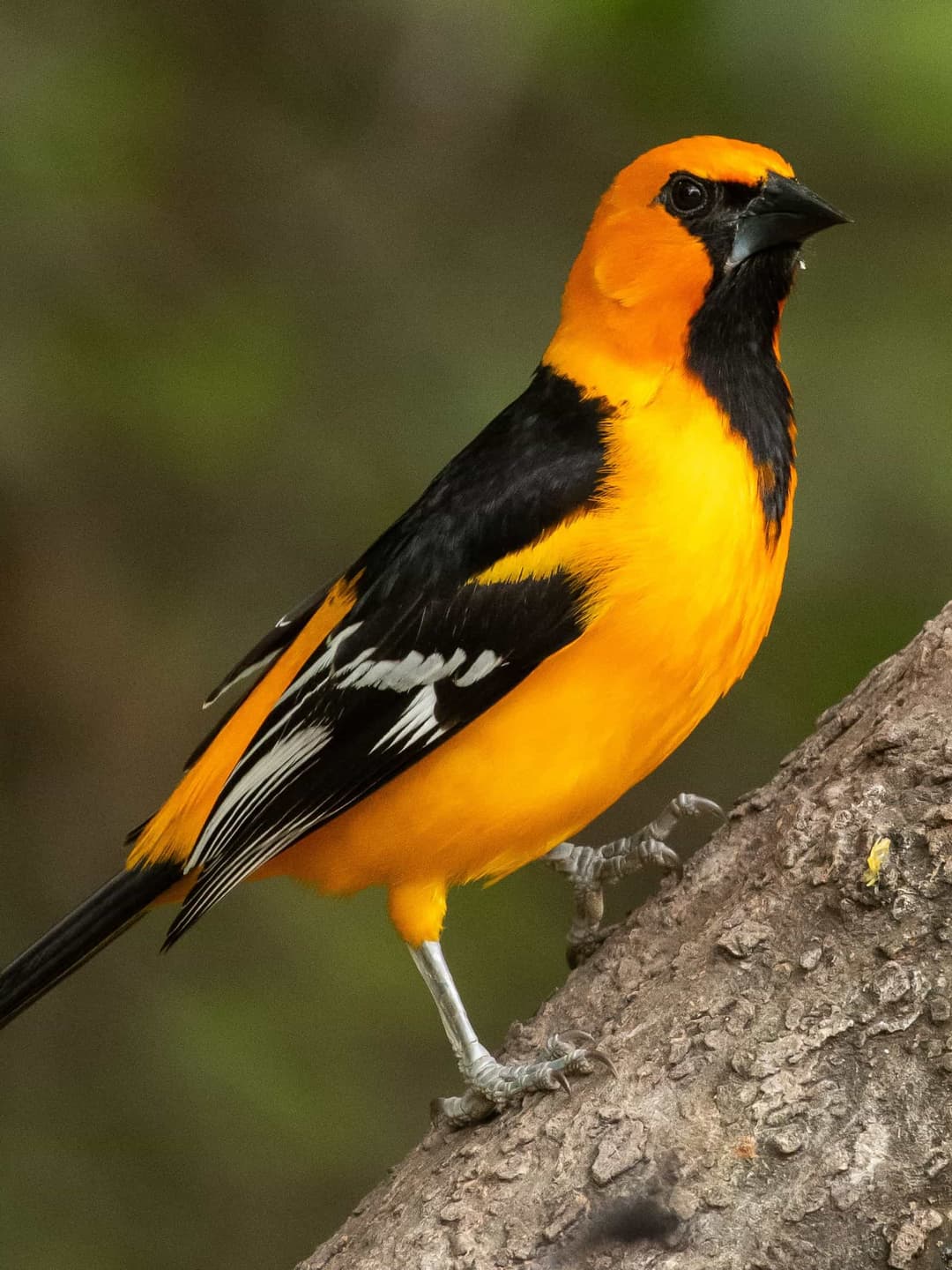
The Altamira oriole is a strikingly colorful bird native to southern Texas and parts of Mexico. It is easily identifiable by its vivid orange-yellow body, contrasting with black wings and tail. The bird's face features a distinctive black throat and eye mask. Its robust build, measuring about 9-10 inches in length, includes a long, slightly curved bill.
Male vs female
Males and females of the Altamira oriole species are similar in appearance, both showcasing the bright orange-yellow and black coloration. However, females may be slightly duller in hue than males, although this difference can be subtle. Both sexes retain their coloration year-round, without significant seasonal variation.
Juvenile
Juvenile Altamira orioles have a more subdued appearance compared to adults. They exhibit a duller yellow-orange plumage and less defined black markings, particularly around the face and throat. As they mature, their coloration gradually intensifies, and the distinctive black facial features become more pronounced.
Size
8.3 - 9.8 in/1.7 - 2.3 oz
There's more to learn about Altamira Oriole
View full detailsBullock’s Oriole
Icterus bullockii
General appearance
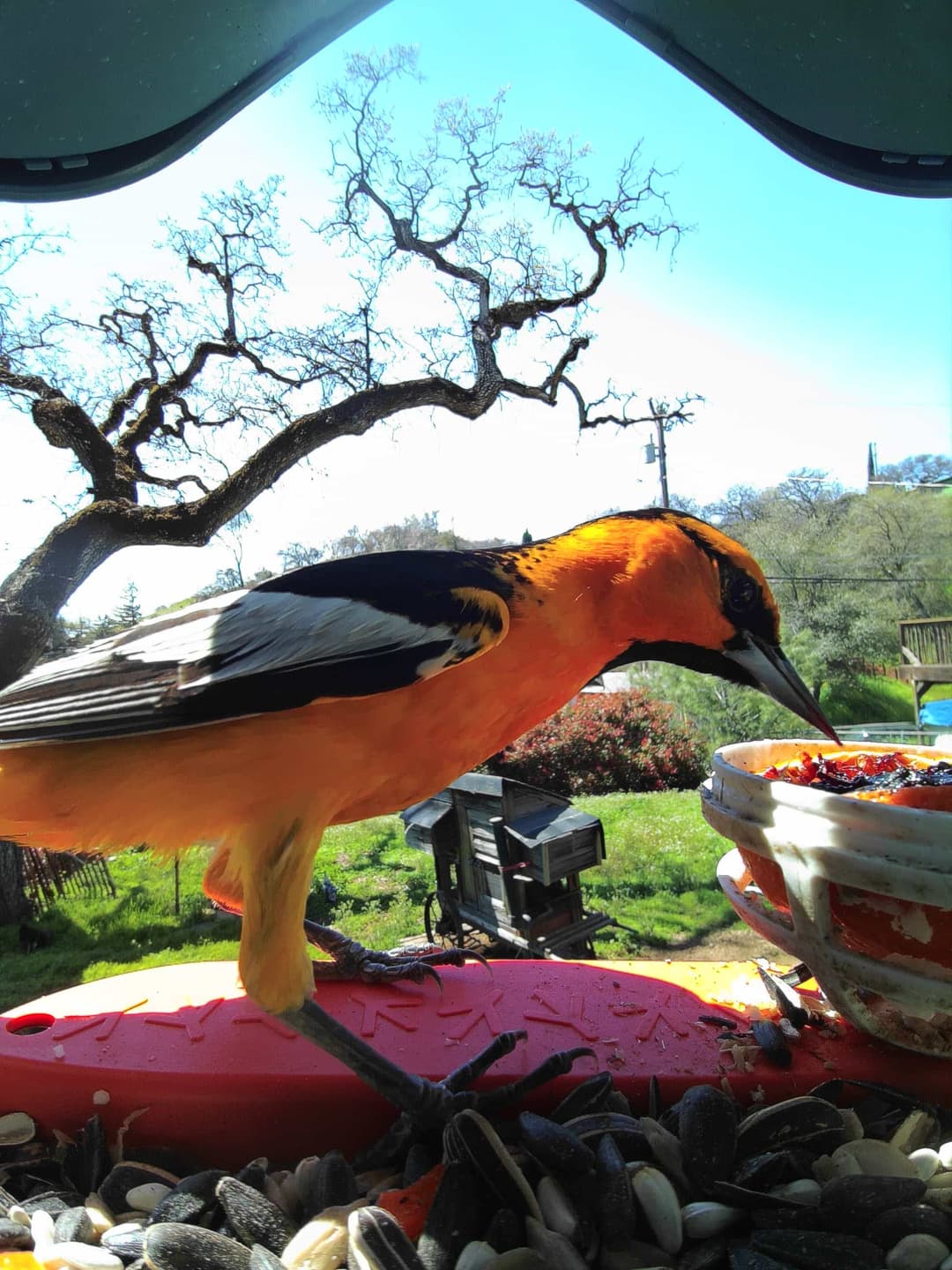
Bullock's Oriole is a medium-sized songbird distinguished by its slender body and sharp, pointed bill. It typically displays vibrant colors with striking contrasts, making it easily recognizable in its natural habitat. Both genders possess a pointed beak, perfect for foraging insects and fruit.
Male vs female
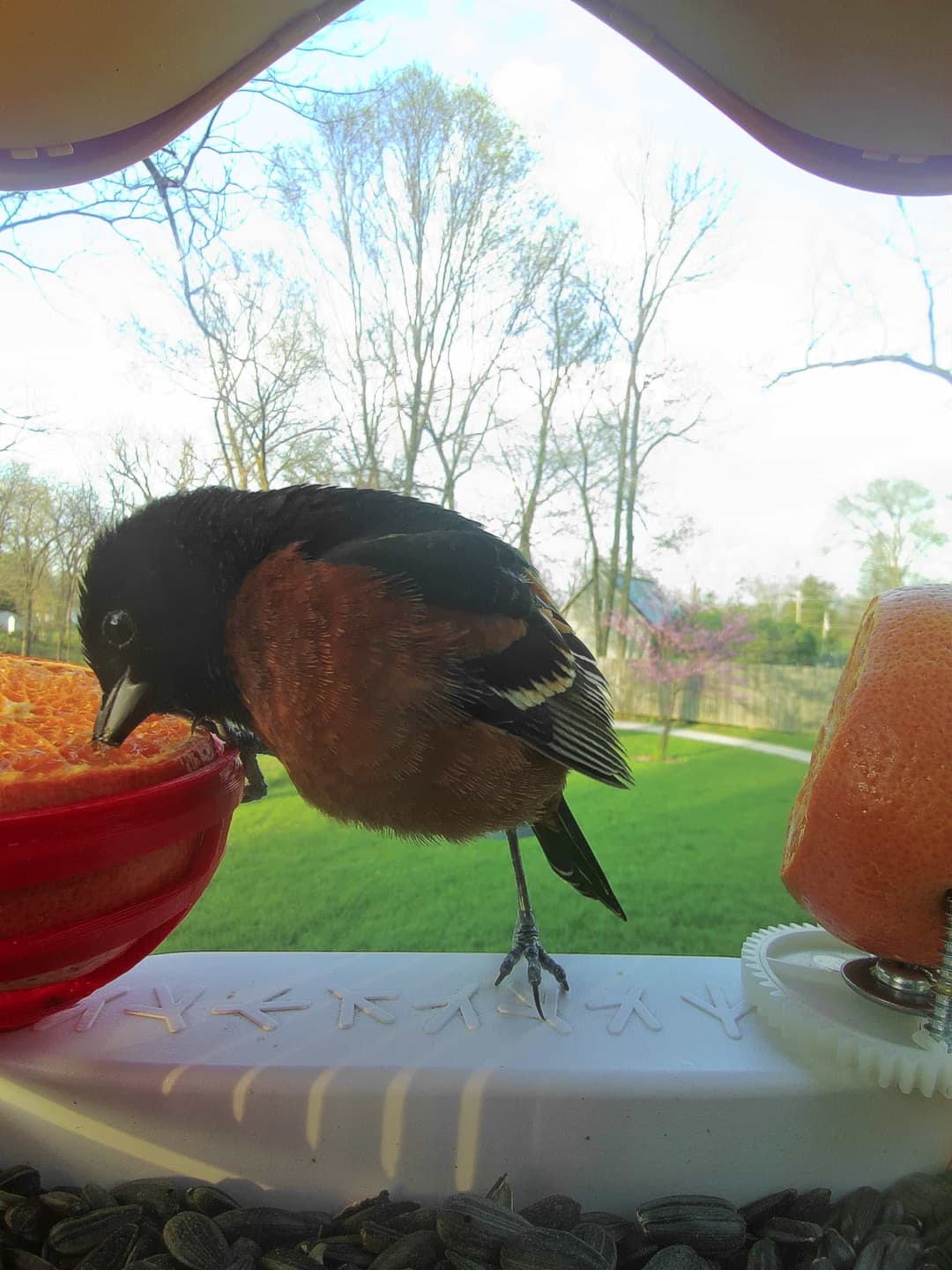
Males are brightly colored with a vibrant orange face and underparts, contrasted by a black cap, throat, and eye-line. They also have a distinctive white patch on the wing. Females are more subdued, showcasing grayish-buff tones with a hint of pale orange on the underparts and lacking the stark black markings seen in males. Their wings are more mottled, featuring less contrast.
Juvenile
Juvenile Bullock's Orioles resemble females but generally exhibit even duller and more muted colors. Young males may begin showing hints of the brighter orange plumage as they mature. Observers can identify juveniles by the mix of adult female-like body coloration and gradually emerging adult male plumage patterns.
Size
6.7 - 7.5 in/1.0 - 1.5 oz
There's more to learn about Bullock’s Oriole
View full detailsHow to tell the Altamira Oriole from the Bullock’s Oriole
Visual differences
The key visual differences between the Altamira Oriole and Bullock's Oriole are as follows: Altamira Orioles are larger, measuring about 8.3-9.8 inches, with a vivid orange-yellow body and a distinctive black throat and eye mask. They have a long, slightly curved bill. In contrast, Bullock's Orioles are smaller, at 6.7-7.5 inches, featuring a slender body with males displaying a vibrant orange face and underparts, black cap and throat, and a white wing patch. Females of Bullock's Oriole are more subdued, showing grayish-buff tones.
Key differences and behavior
Altamira and Bullock's Orioles exhibit distinct behavioral differences. Altamira Orioles are non-territorial, preferring space between nests and remaining with a mate year-round, while Bullock's Orioles are territorial during breeding, with males actively defending nesting areas. Altamiras dwell in open tropical woodlands, whereas Bullock’s inhabit open woods and riverside groves, adapting to some suburban areas. Both species build hanging nests, but Altamira's are more elaborate and higher placed. Diet-wise, Altamira Orioles consume a variety of insects, nectar, and fruit, playing a role in pollination, whereas Bullock’s focus on insects, particularly caterpillars, with some fruit consumption. Both are attracted to sugar-water and fruit offerings at feeders.
Still not sure? Here are more lookalikes!
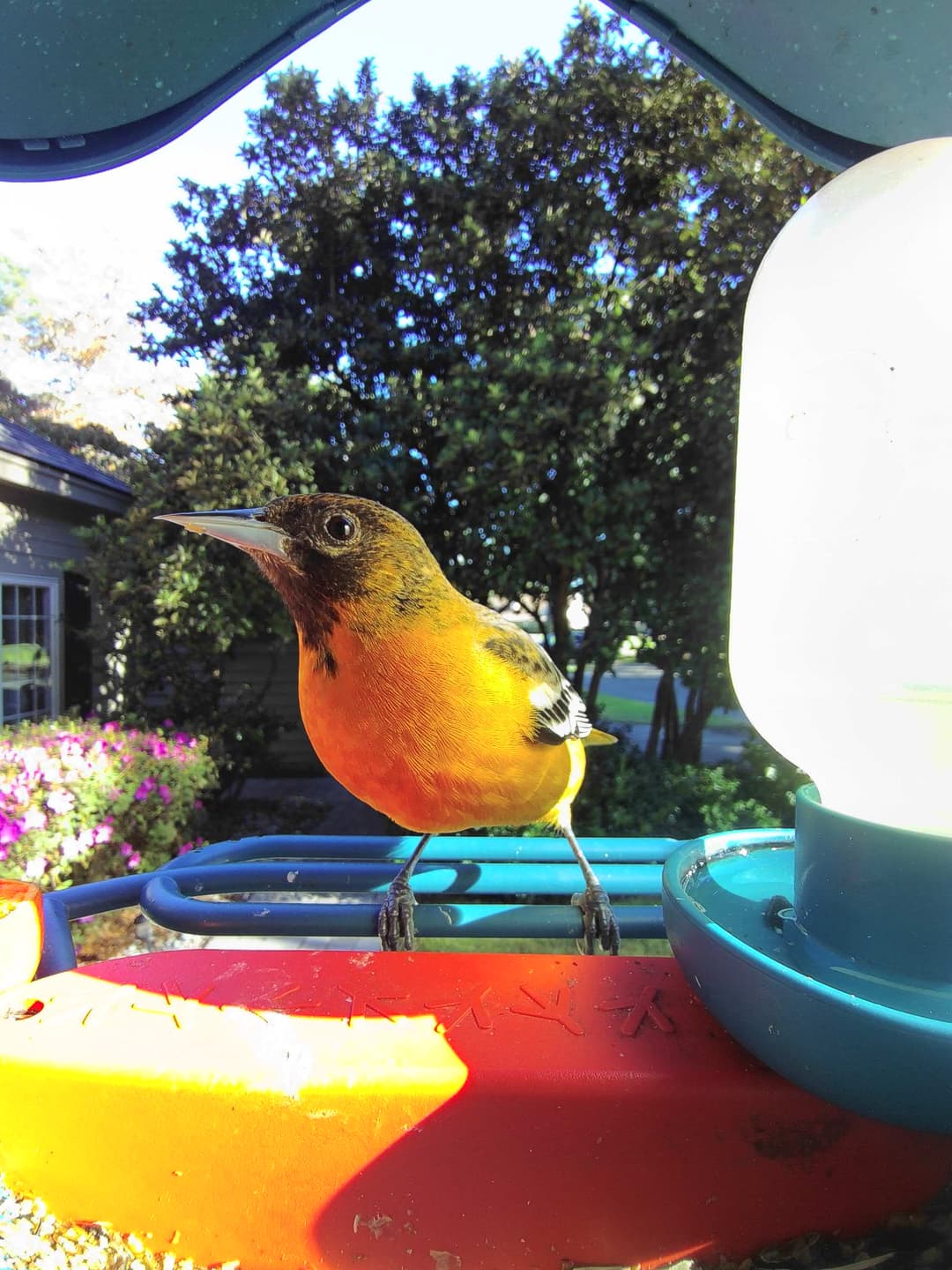
Altamira Oriole vs Baltimore Oriole
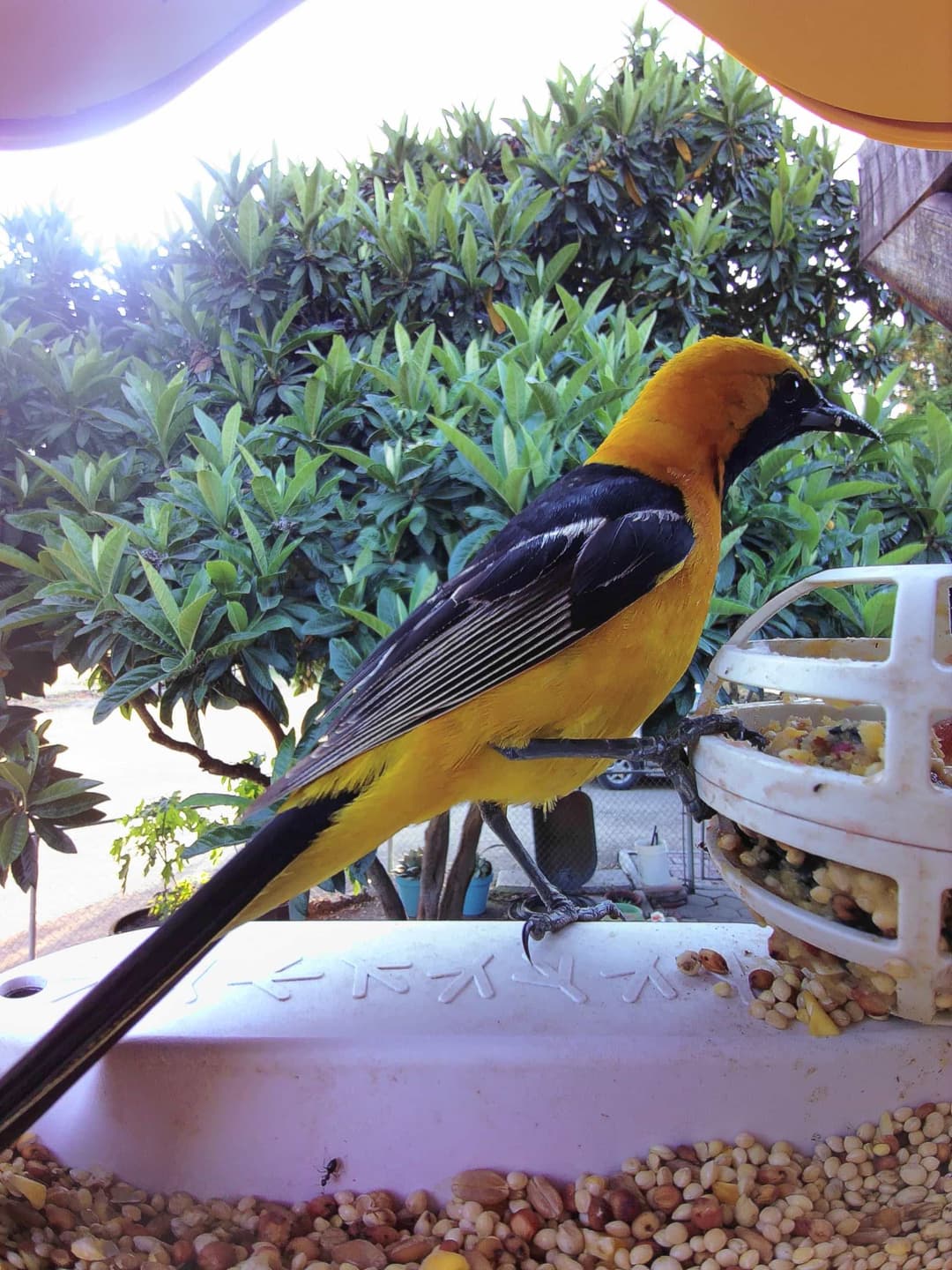
Bullock’s Oriole vs Baltimore Oriole
Altamira Oriole vs [Select a bird]

[Select a bird]
Pick a bird to compare
Bullock’s Oriole vs [Select a bird]
[Select a bird]
Pick a bird to compare