
Black-and-White Warbler
Black-and-White Warbler
Mniotilta varia


Quick Identification guide
Quick Identification guide
- •
Features a distinctive black-and-white striped plumage that runs the length of its body, creating a striking contrast
- •
Exhibits a long, slender body and a sharply pointed beak perfect for probing bark and crevices
- •
Has a characteristic white eyebrow stripe that contrasts with its black crown, enhancing its patterned appearance
What does a black-and-white warbler sound like?
The black-and-white warbler produces unique vocalizations with a thin, high-pitched, undulating and monotonous pattern that resembles the sound of a squeaky wheelbarrow. Its typical calls are characterized as a flat 'chirp' or 'chip', which are usually sharp and clear. It also makes a distinct 'hi' call and emits a type of whistle. All these sounds together make up the signature song of this warbler species.


Description
Black-and-white warblers are known for being unusually aggressive. One of their nicknames is the black-and-white creeper! They are the only members of the genus Mniotilta, which means moss-plucking. If you see a group of them, that is called a dichotomy, a distinction or an integration of warblers!
The black-and-white warbler can weigh between 8to15grams and be from11to13centimeters tall.
The black-and-white warbler typically lives up to 11 years. This is relatively long-lived for a small bird, with many related species like the Northern Parula and American Redstart averaging a lifespan of about 7 years. Thus, the black-and-white warbler's lifespan is about 50% longer than these related species.
Did you know?
Most popular questions about black-and-white warbler
How to recognise a black-and-white warbler?
General appearance
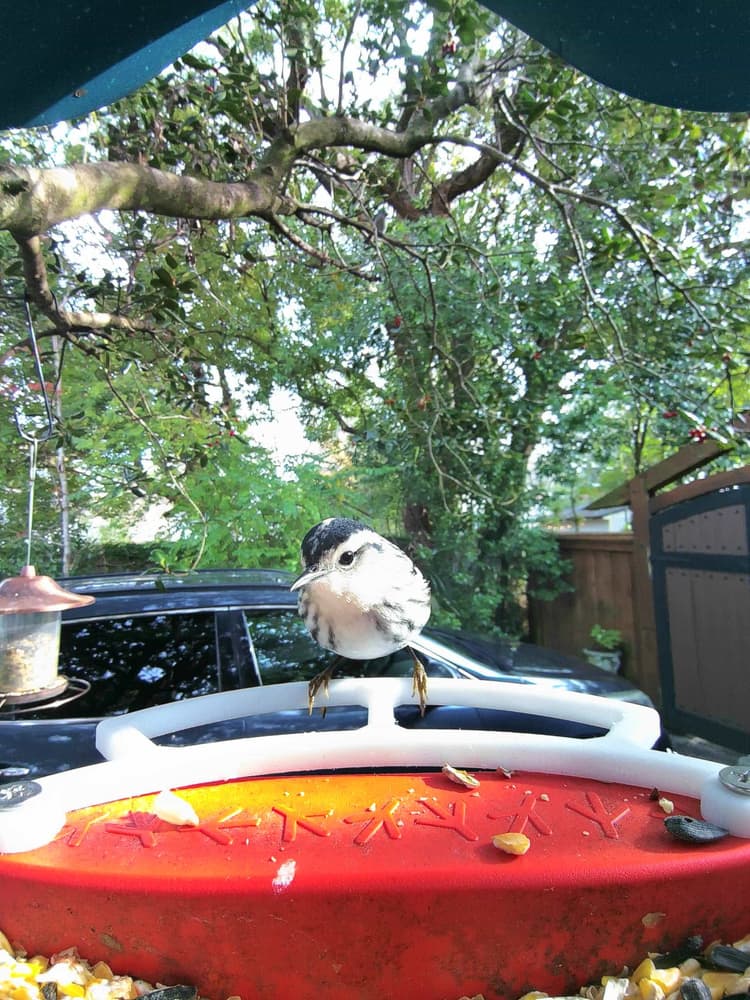
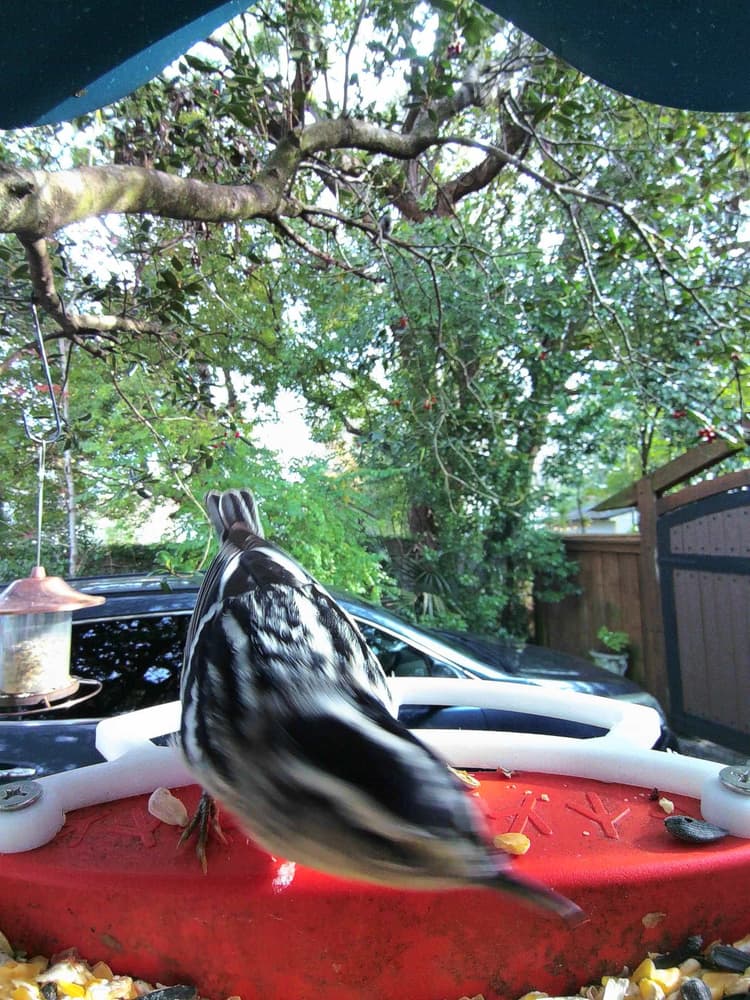
The black-and-white warbler is about the size of a sparrow, around 13 cm. Its body is marked by bold stripes, prominent of which is a white central crown stripe. Black streaks further adorn its back and sides. Its wings are rounded while the tail exhibits a notched, rounded, or square-tipped shape. Its distinguishing behaviour is tree-creeping, much like that of a nuthatch.
Male vs female
There is a nonpareil characteristic between male and female black-and-white warblers. The adult male is distinguishable by its black throat and cheeks. On the other hand, the female is less bold, with a paler or whitish throat and cheeks.
Juvenile
Juveniles of this species closely resemble adult females, as they possess paler or whitish coloration on their throats and cheeks. They gain adult-like plumage as they mature, but it is paler and less distinctive than that of mature males.
Often mistaken for
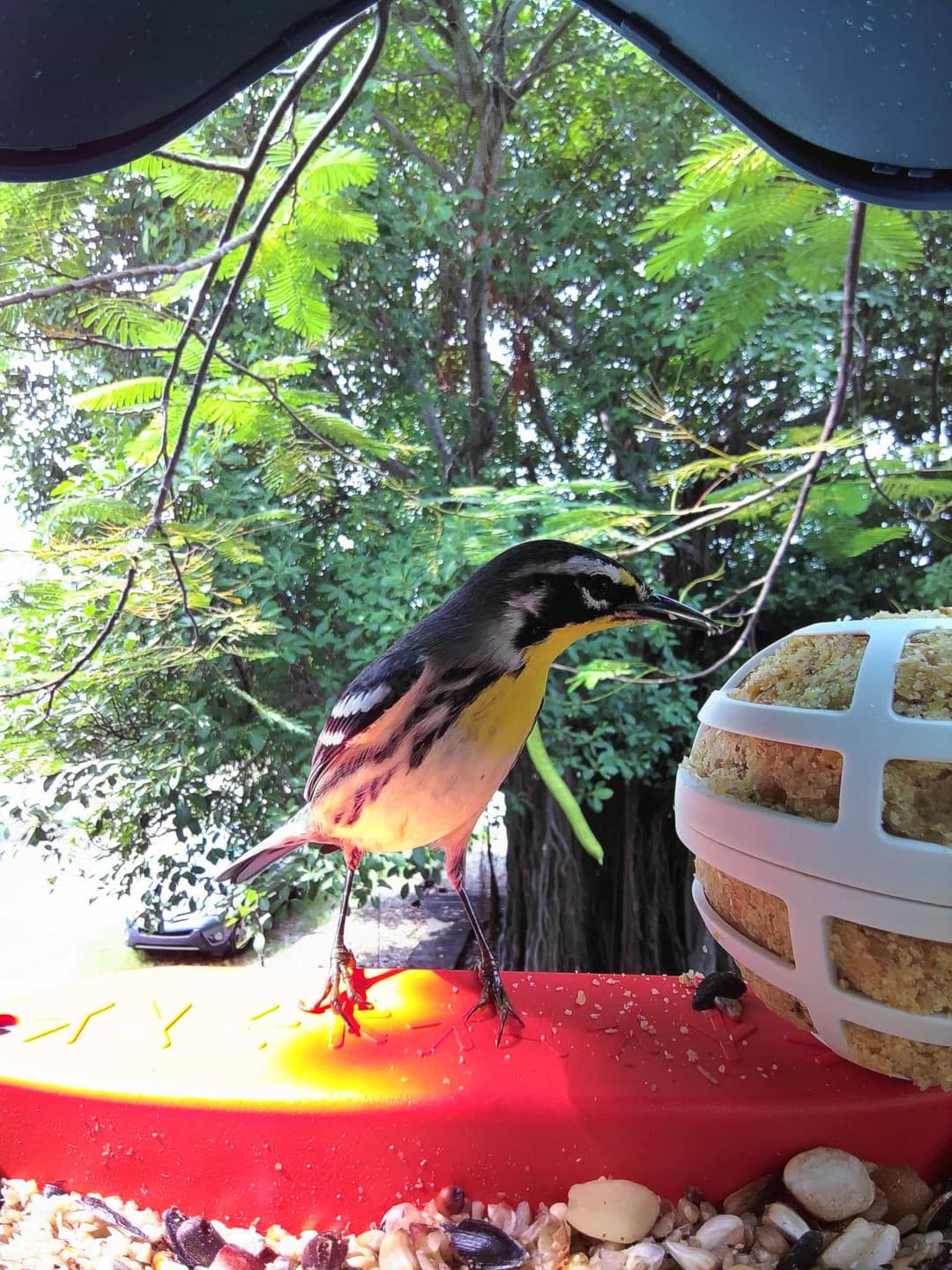
Yellow-Throated Warbler vs Black-and-White Warbler
The Black-and-White Warbler is primarily black and white with distinctive striped patterns, while the Yellow-Throated Warbler sports a vibrant yellow throat and chest with distinct white wing bars absent in the Black-and-White. Look for the Warbler's crawling behavior along tree trunks, a key behavioral trait.
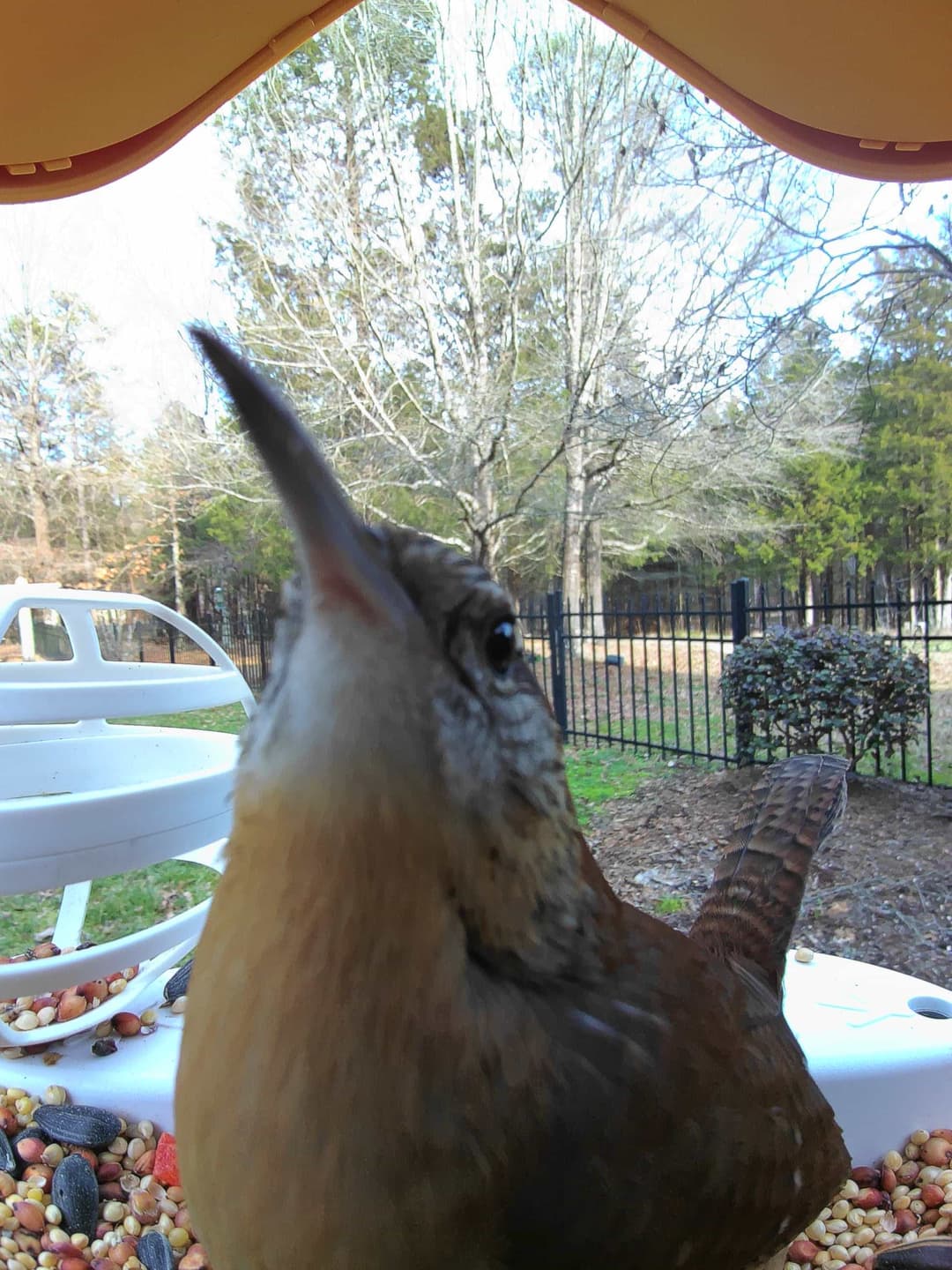
Brown Creeper vs Black-and-White Warbler
The Black-and-White Warbler resembles the Brown Creeper due to its arboreal habits. However, the Brown Creeper has a more cryptic brown and white streaked appearance and a decurved bill, whereas the Warbler has a straight bill and bold black and white striping. Both search for insects on tree trunks but focus on the unique coloration.
Breeding and nesting habits of the black-and-white warbler
Mating behaviors
Males arrive on breeding grounds in late April, ahead of females. During courtship, males chase females with much singing and fluttering to attract them.
Nesting details
Nests are placed on the ground or less than 2 feet up, under dead leaves or limbs, against shrubs, rocks, logs, or trees. They are open cups made by females and constructed with leaves, coarse grass stems, bark strips, pine needles, and rootlets, lined with fine grass or hair. Nests can also be in cavities at the top of stumps or depressions in the ground.
Eggs and chick-rearing
After constructing the nest, the female lays and incubates the eggs. The specifics on egg quantity or incubation periods are not detailed here, but generally, the female tends to the eggs and later assists in feeding and protecting chicks until they are ready to fledge.
What does a black-and-white warbler like to eat?
Insects
Spiders
Natural diet
The black-and-white warbler feeds primarily on insects, consuming a diverse range of caterpillars, including those of gypsy moths. It also eats beetles like bark beetles, click beetles, and wood borers. Additional sources include ants, flies, other bugs, leafhoppers, aphids, spiders, and daddy longlegs, highlighting its insectivorous nature.
Bird feeders
The black-and-white warbler is not a regular visitor to bird feeders. However, during migration or in areas where natural food sources are scarce, it might occasionally visit feeders offering suet or mealworms.
Attracting the black-and-white warbler to your yard
Black-and-white Warblers are interesting birds with their distinct color patterns and beautiful symphony. They are insectivore and love snacking on caterpillars, beetles, and other insects. To attract them, incorporate native plants in your yard which attract these kinds of insects. Providing a birdbath or a water source can also make your yard enticing to them.
Feeder types for black-and-white warbler
Black-and-White Warblers are more prone to perch on tree bark rather than traditional feeder types. Suet feeders are your best bet to attract them. These feeders can contain bird-seed cakes that resemble tree bark and smell like insects, their favorite food.
Encouraging black-and-white warblers to visit regularly
One great way to encourage Black-and-White Warblers to visit your yard regularly is to maintain a steady source of food and water. Keeping your suet feeders full and your birdbaths clean will help. Plus, include native plants in your landscaping and allow some tree bark or dead wood to stay in place.
Using bird buddy seeds for the best results
While Black-and-White Warblers prefer insects, they may also feed on seeds during harsh winters when insects are scarce. Bird Buddy Seeds, chosen by experts for each season, make an excellent choice. Don't forget to stock your suet feeders with these seeds during winter to attract these lovely birds.
Where can you find black-and-white warblers?

Primary habitat
The black-and-white warbler primarily inhabits woods with mature or second-growth forests, often on dry, rocky hillsides, ravines and dry wooded swamps.
Additional range
During migration, these warblers are found on trunks and low branches within woodlands and thickets. In tropical winters, they can occupy trees from sea level to mountain highs.
Do they migrate?
The black-and-white warbler is a migratory bird. It undertakes long-distance migrations, traveling between its breeding grounds in North America and its wintering territories in Central America, the Caribbean, and parts of northern South America. **Route and Key Locations:** During the spring migration, which begins relatively early, black-and-white warblers migrate from their wintering grounds up through the southeastern United States and into their breeding habitats in Canada and the northeastern United States, extending to parts of the Midwest. They are known to migrate predominantly at night, utilizing the cover of darkness. In the fall, they reverse this journey, heading back to their tropical wintering locations. The migration is dispersed over a lengthy period in both spring and fall, which can vary slightly depending on weather conditions and environmental factors. **Timing:** Spring migration typically starts in February and March, with the birds reaching their northern breeding areas by May. Fall migration generally occurs from late August through October. The species is also known for occasionally appearing as strays in the western United States during any season, outside their usual migratory routes.
What is the role of black-and-white warblers in nature and how to protect them?
Conservation status
The black-and-white warbler is still widespread and common, despite having disappeared from some former nesting areas in the South and Midwest. Its conservation status is not considered endangered or vulnerable, but the reduction in certain areas indicates potential localized threats. Key threats may include habitat loss, particularly in breeding areas. While no significant conservation efforts are specifically noted for this species, maintaining and protecting its habitat, alongside general forest conservation measures, would be beneficial to prevent further decline in its population.
Ecological role of black-and-white warblers
Its role in the ecosystem
The Black-and-white Warbler contributes significantly to the ecological system. Its primary diet consists of a wide variety of insects, including caterpillars, beetles, ants, flies, bugs, leafhoppers, aphids, which includes certain harmful species like gypsy moths, bark beetles, click beetles, and wood borers. Therefore, it plays a vital role in pest control by feeding on these insects, thereby maintaining control over their populations. This role in pest control helps to keep a balance in the ecosystem, preserving the health of trees as many of these insects can cause damage to tree trunks and branches. Additionally, as it feeds on insects on tree limbs and trunks, they also act as cleaners, ridding the trees of potentially harmful insects and pests. In early spring, it also feeds on dormant insects, helping to control insect populations before they become too large. Their nests are made of natural materials, integrating them harmoniously without causing harm to the environment.
How to help protect black-and-white warblers
Preservation tips
Habitat preservation for black-and-white warbler
Fortify eco-friendly practices, including restoring degraded habitats and implementing protective zoning laws to prohibit deforestation in the warbler's dwelling zones. Support mature forest ecosystems, as the species thrives in dense tree canopies. Prevention of pesticide exposure is also key, as it negatively impacts their food sources.
Community science initiatives
Engage your local community in citizen science projects monitoring black-and-white warbler populations all year round to provide valuable data for conservation scientists. Organize education programs and awareness-raising activities about the species' importance and threats it is facing. Encourage backyard and balcony birdwatching and bird counts, using apps to log sightings and share data.