
Red-Bellied Woodpecker
Red-Bellied Woodpecker
Melanerpes carolinus

Quick Identification guide
Quick Identification guide
- •
Features a pale, grayish face and underparts contrasted by a vibrant red cap that extends from the nape to the crown
- •
The back and wings display a striking black and white barred pattern, giving a zebra-like appearance
- •
Has a sturdy, chisel-shaped bill and slender body, well-adapted for pecking at tree bark
What does a red-bellied woodpecker sound like?
The red-bellied woodpecker produces various vocalizations, including a pattern that descends in pitch, described as "chuck-chuck-chuck." Their calls are typically loud, falling, and flat, resembling a repeated "churrrr." They also produce sounds classified as chirp or chip, drum, and rattle. These calls and songs are often repeated, making them a distinctive presence in their environment.

Description
Red-bellied woodpeckers have got a long tongue that would give chameleons a run for their money! Its barbed tip and sticky spit is perfect for grabbing prey. If these guys see a nest they like, they just go ahead and take it, especially if it belongs to a red-cockaded woodpecker. However, they themselves often get bullied by European starlings. The circle of life.
The red-bellied woodpecker can weigh between 56to91grams and be from22.9to26.7centimeters tall.
The red-bellied woodpecker typically has a lifespan of around 12 years. Compared to its relative, the Downy woodpecker, which lives up to 20 years, its lifespan is relatively shorter. Meanwhile, the lifespan is significantly longer than the average 2-3 years of the Red-cockaded woodpecker. Factors contributing to these differing lifespans can include predation and habitat conditions.
Did you know?
Most popular questions about red-bellied woodpecker
How to recognise a red-bellied woodpecker?
General appearance
The Red-bellied Woodpecker measures approximately 10 inches (25 cm) in size with a unique coloration. It has narrow black and white bars on its back, a buffy brown chest, and a face with a striking red stripe that extends over the top and back of the head. Its wings are broad, rounded, and short, featuring unique white patches noticeable in flight. The tail shape is multi-pointed and wedge-shaped.
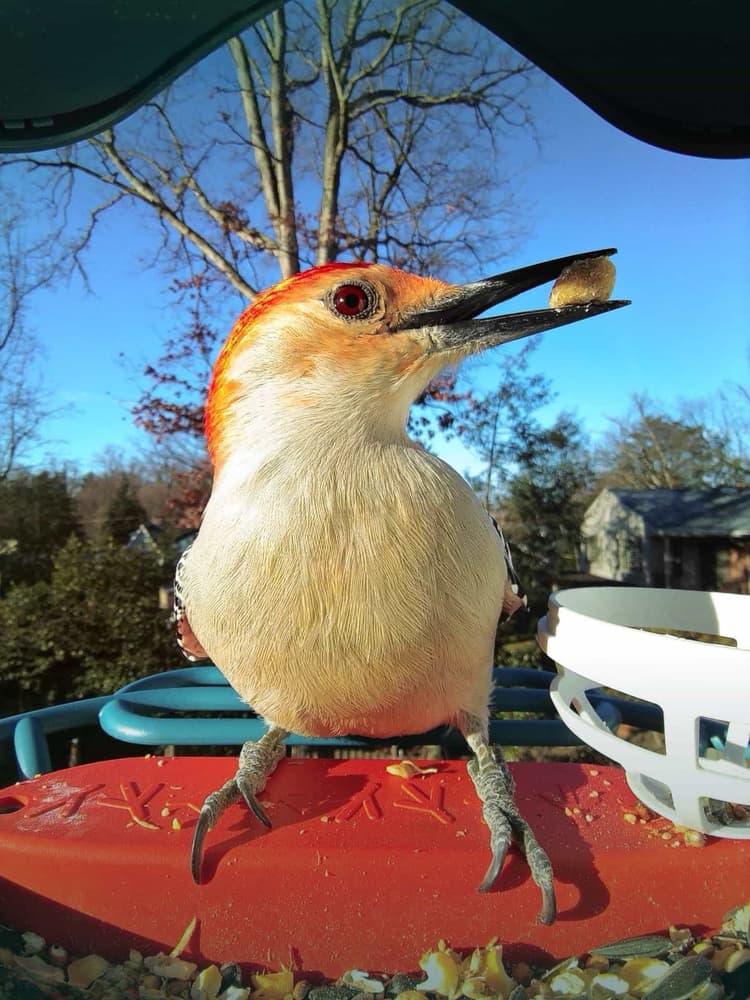
Male vs female
Both males and females possess the same general physical traits including a black, red, tan, and white color scheme. However, marking differences can help distinguish between the two. A notable difference is in the level of red coloration on the head area; while both sexes feature a bright red stripe over the top and back of their heads, females tend to have less red compared to their male counterparts.
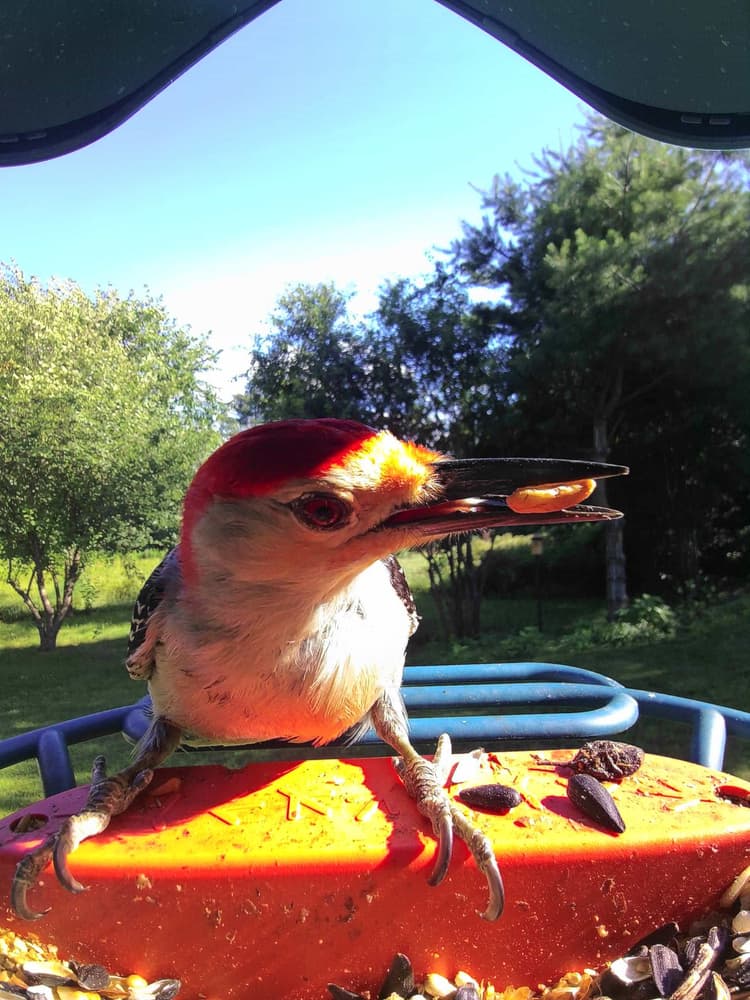
Male Red-Bellied Woodpecker
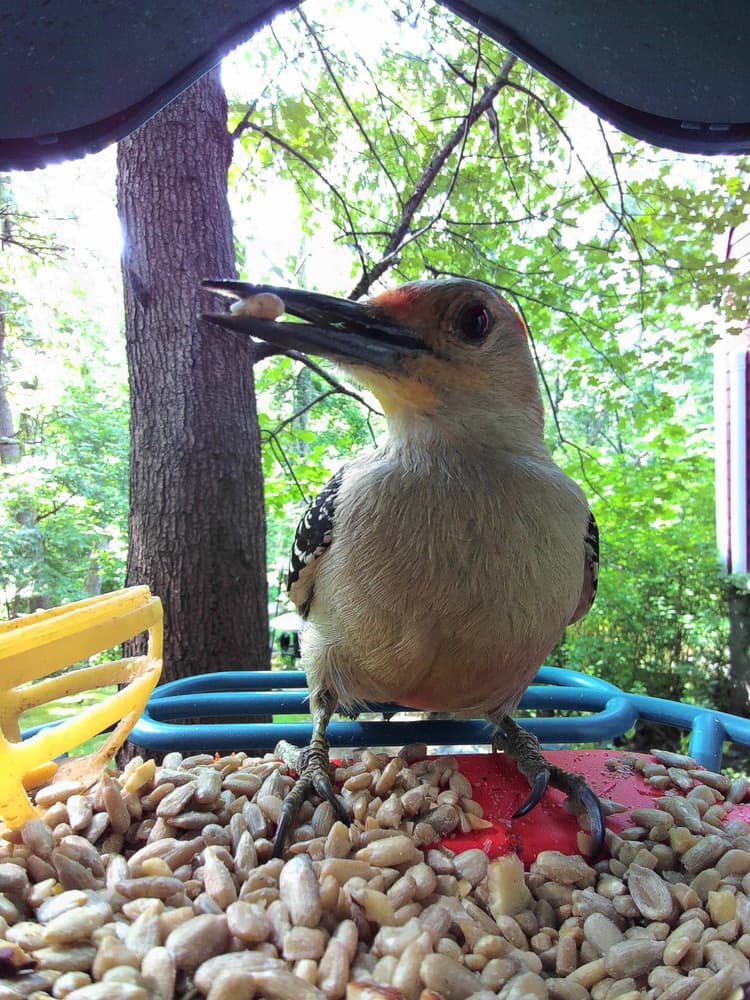
Female Red-Bellied Woodpecker
Juvenile
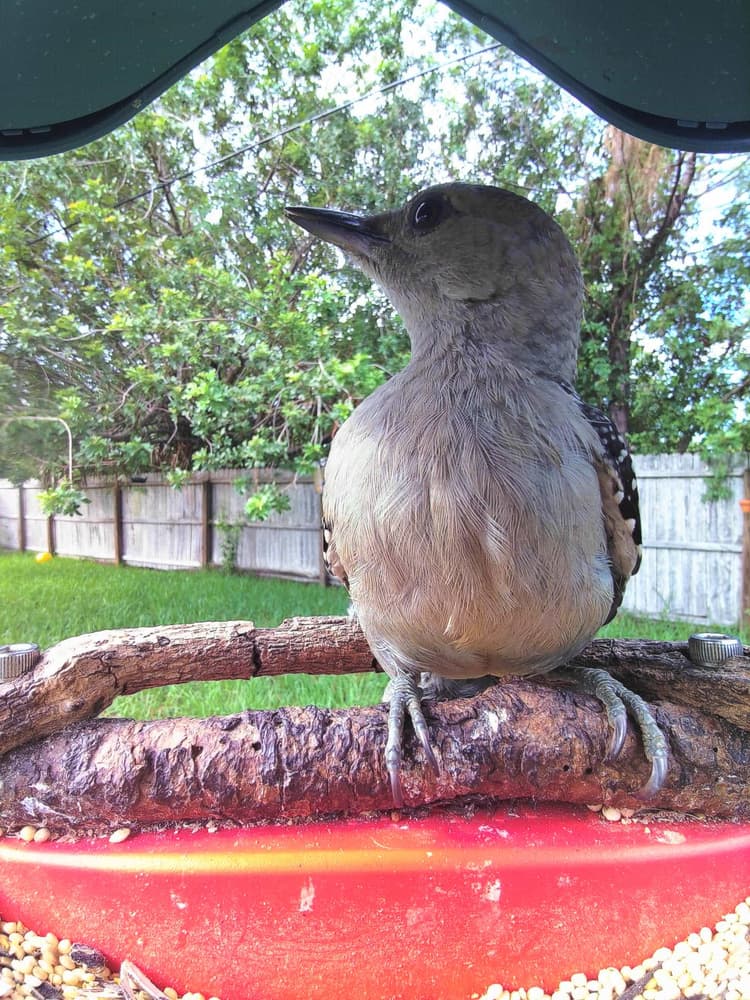
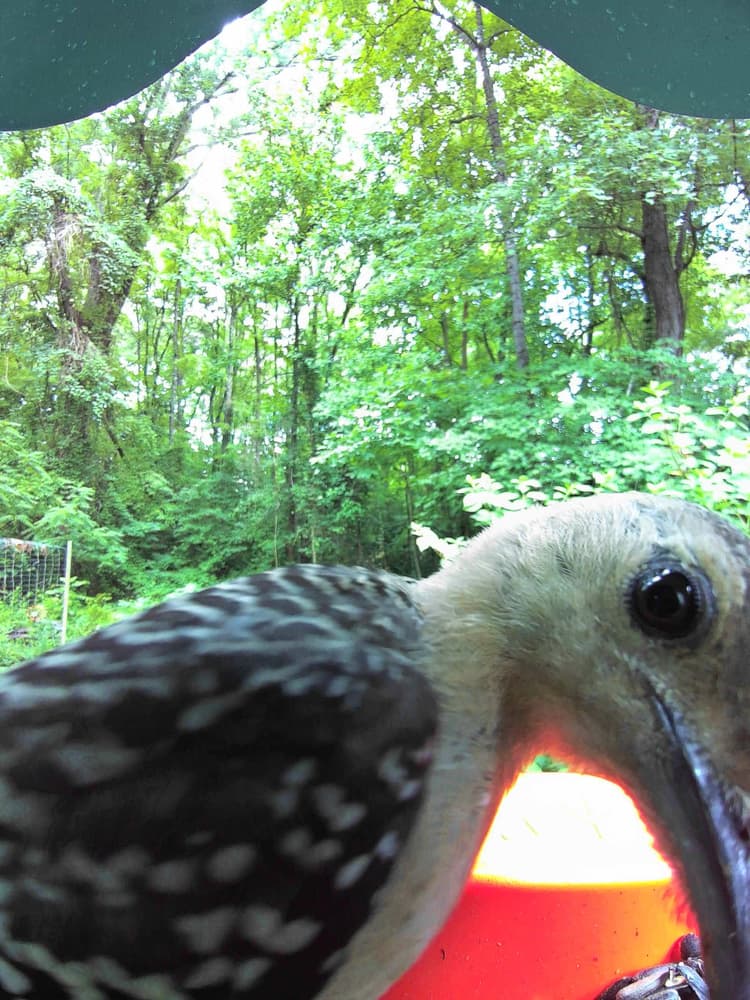
Juvenile Red-bellied Woodpeckers closely resemble the adults in coloration and physical traits, except for the striking red stripe, which typically develops as they mature. Therefore, younger woodpeckers may have a less pronounced red stripe or none at all, compared to adults.
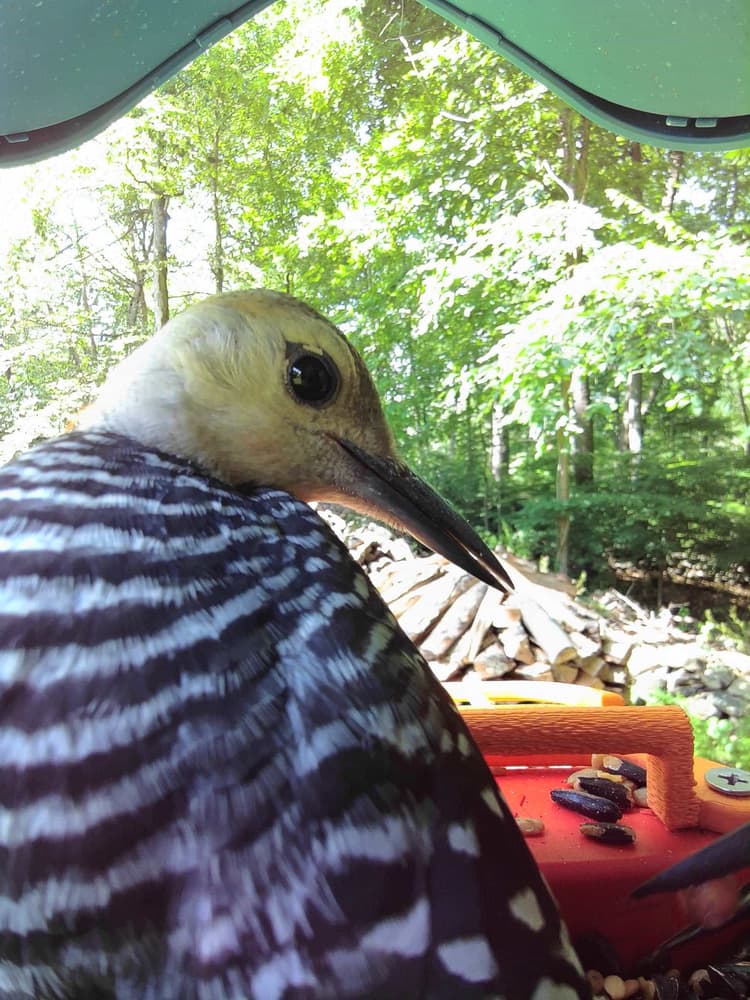
Often mistaken for
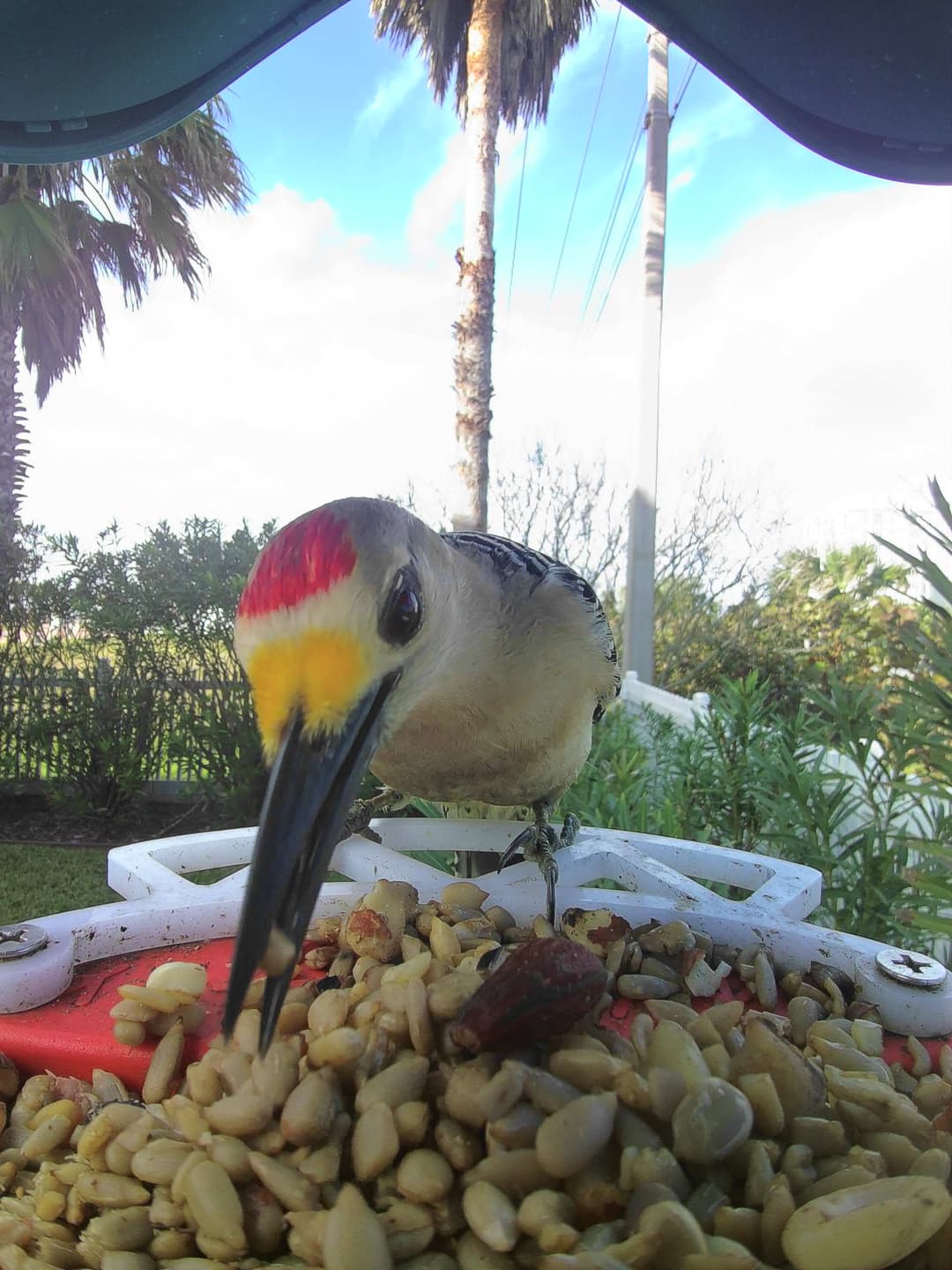
Golden-Fronted Woodpecker vs Red-Bellied Woodpecker
The Golden-Fronted Woodpecker has a yellowish nape instead of the red nape of the Red-Bellied Woodpecker. Its belly is more prominently yellow-orange compared to the subtler red wash on the Red-Bellied.
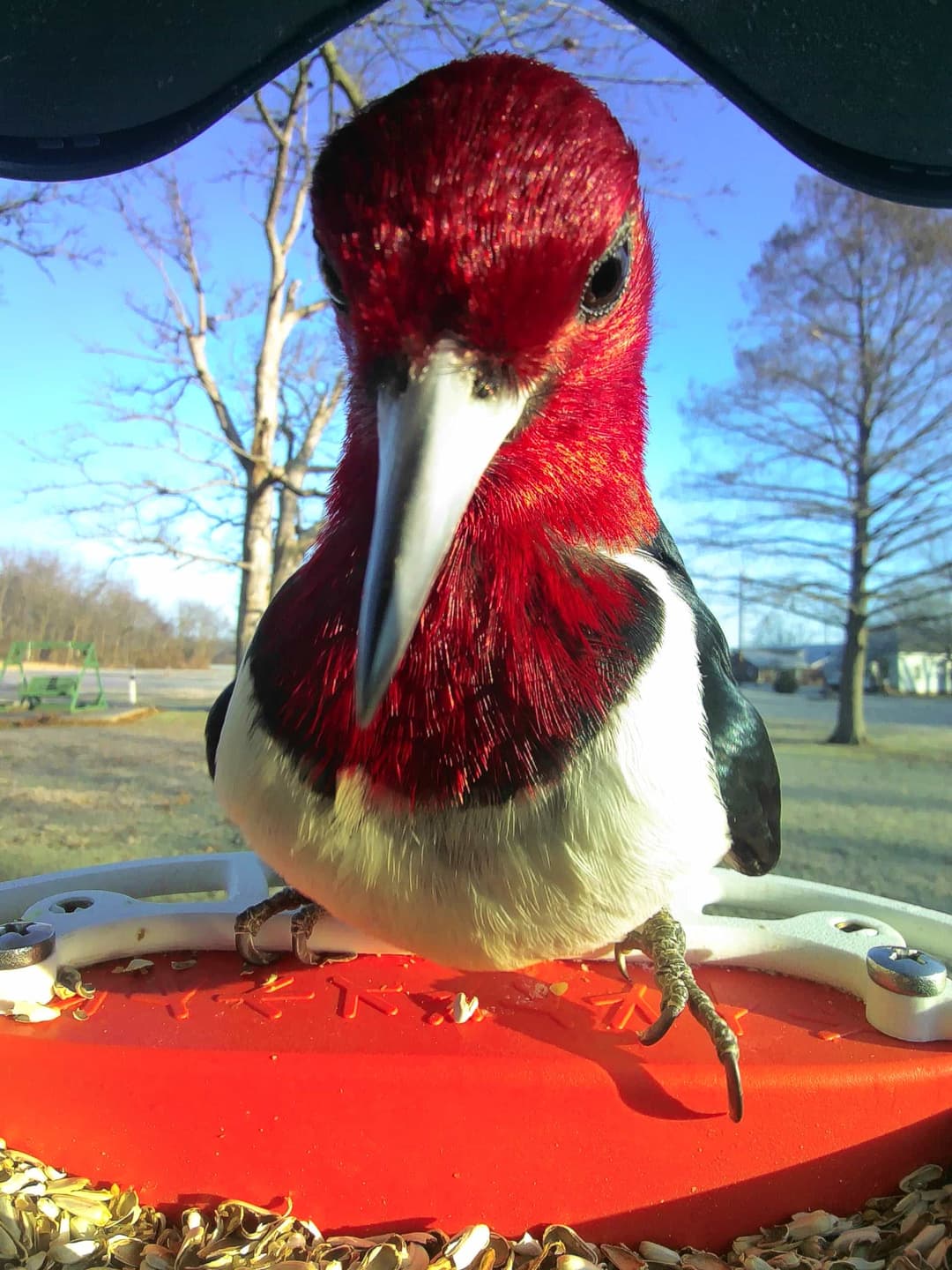
Red-Headed Woodpecker vs Red-Bellied Woodpecker
The Red-Headed Woodpecker boasts a striking full red head, unlike the Red-Bellied's red crown and nape. Its body is color-blocked with bold white and black, lacking the speckled pattern of the Red-Bellied.
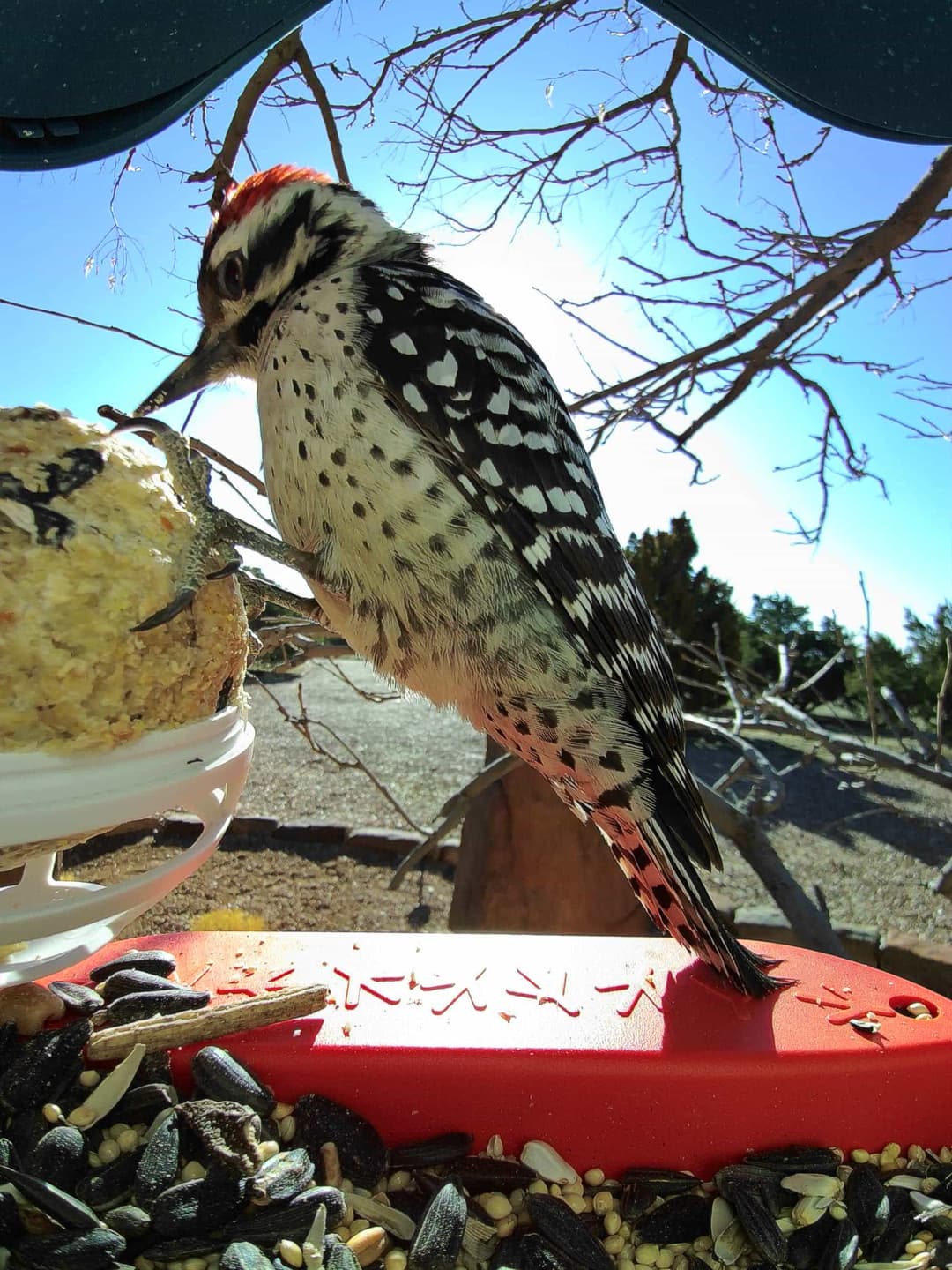
Ladder-Backed Woodpecker vs Red-Bellied Woodpecker
Smaller than the Red-Bellied, the Ladder-Backed features distinctive black and white stripes across its back more pronounced compared to Red-Bellied's barred back.
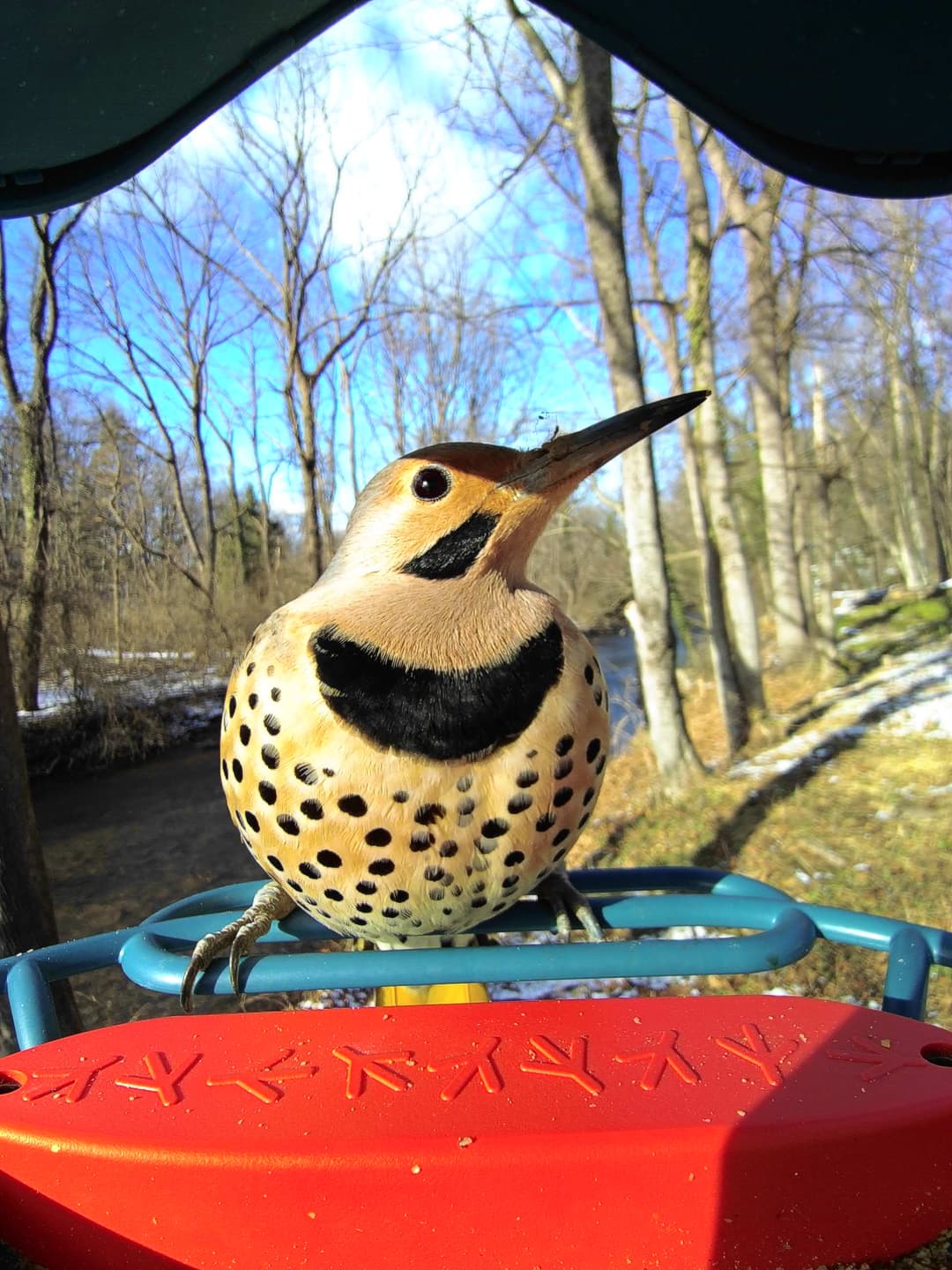
Northern Flicker vs Red-Bellied Woodpecker
Northern Flickers have distinct black bibs and spotted underparts, unlike the Red-Bellied's barred back. The flicker shows a white rump in flight, also absent in Red-Bellied.
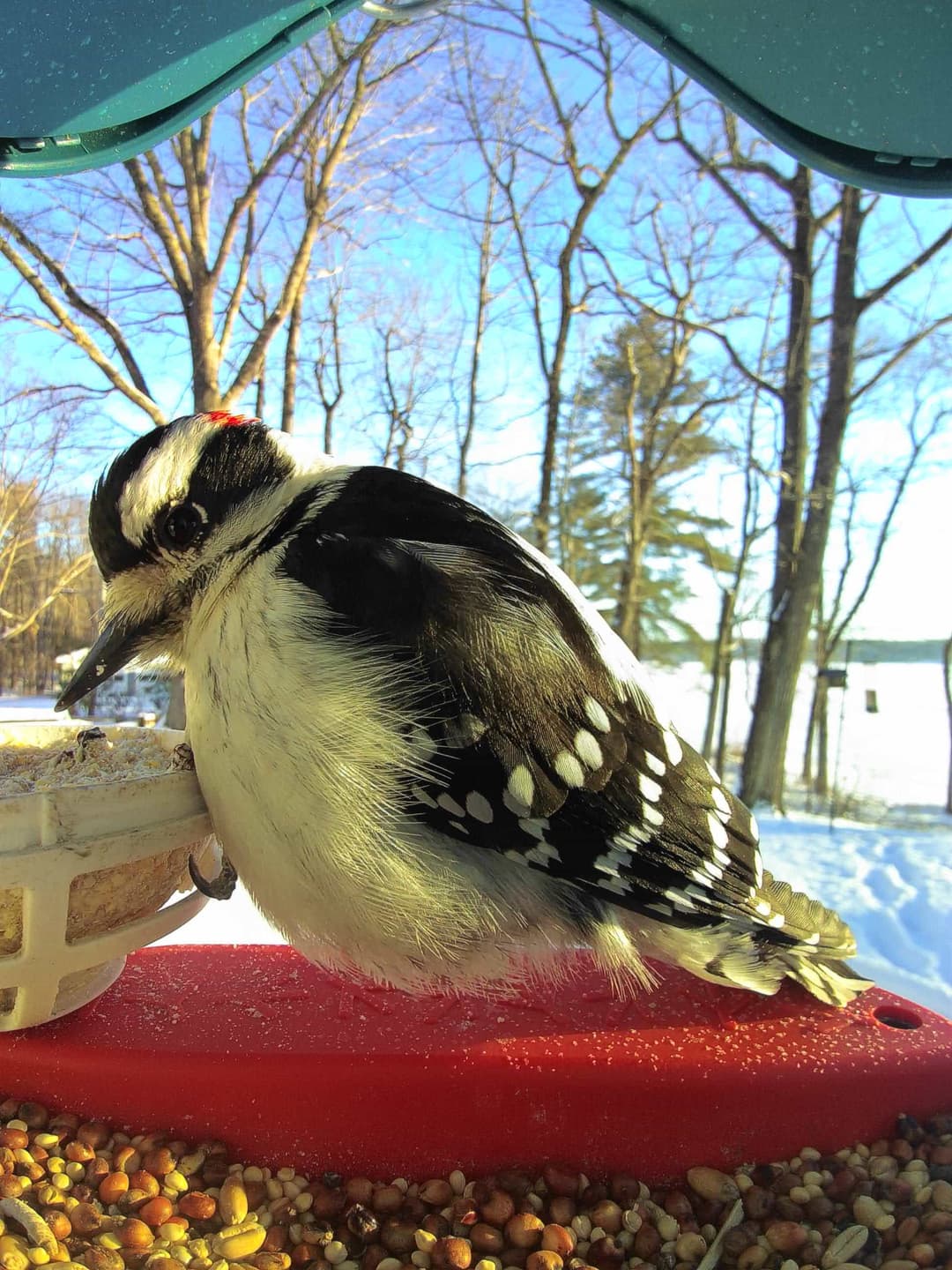
Downy Woodpecker vs Red-Bellied Woodpecker
The Downy is smaller with a shorter bill than the Red-Bellied. Its white back and distinct lack of red on the nape make it a clear contrast.
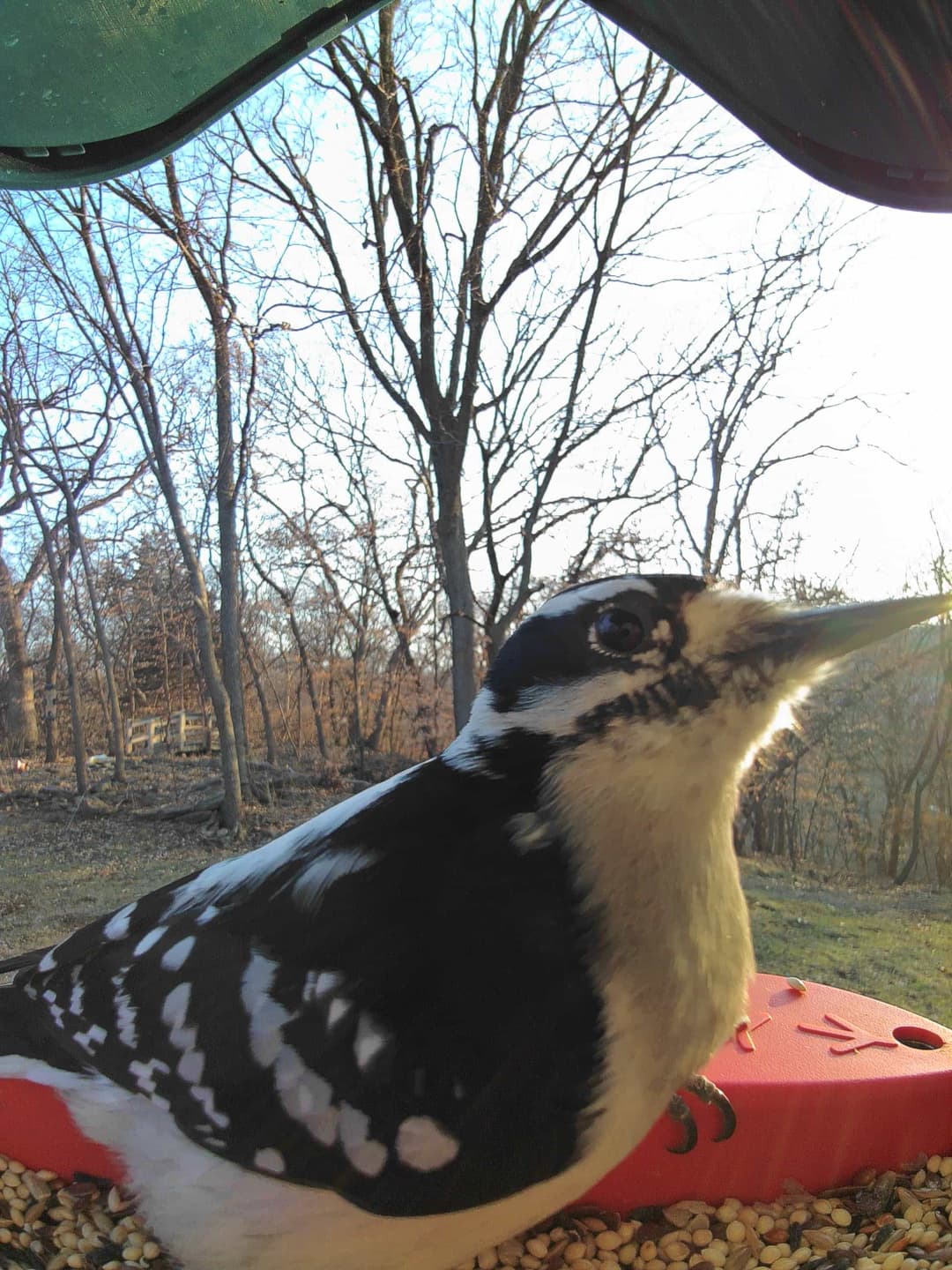
Hairy Woodpecker vs Red-Bellied Woodpecker
Similar to the Downy but larger, the Hairy has a noticeably longer bill and lacks the reddish tinge on the belly found in the Red-Bellied Woodpecker.
Breeding and nesting habits of the red-bellied woodpecker
Mating behaviors
Red-bellied woodpeckers use various antagonistic displays to defend their territory during breeding. These displays include spreading their wings, executing a slow floating flight, and raising their head feathers. Such behaviors contribute to courtship and mate selection.
Nesting details
The red-bellied woodpecker nests in cavities excavated in dead wood such as trees, poles, fence posts, or stumps. These cavities are generally located less than 50 feet above ground, though they can occasionally reach up to 120 feet. The male initiates several potential nest sites, and the female selects which will be completed. They may also use natural cavities or abandoned holes from other woodpeckers, including nest boxes.
Eggs and chick-rearing
After selecting a nest site, the female lays eggs in the cavity. Both parents share the responsibility of incubating the eggs and feeding the hatched chicks. Raising the young is a cooperative effort, with both male and female participating actively in feeding and protecting the chicks until they fledge.
What does a red-bellied woodpecker like to eat?
Birds
Fruits
Insects
Nectar
Nuts
Plants
Sap
Seeds
Small animals
Natural diet
The red-bellied woodpecker is omnivorous. Its diet includes a wide range of insects, which it primarily forages in trees. During certain seasons, more than 50% of its diet consists of plant material like acorns and other nuts, as well as wild and cultivated fruits and seeds. Occasionally, the woodpecker consumes tree frogs, eggs of small birds, oozing sap from trees, and sometimes even small fish.
Bird feeders
At bird feeders, red-bellied woodpeckers commonly eat a variety of offerings such as suet, sunflower seeds, peanuts, and other nuts. Suet and nut-based feeders are particularly popular among these woodpeckers due to their high-fat content, which is beneficial for energy.
Provide preferred snacks
Red-bellied Woodpeckers are particularly fond of nuts and berries but their top favorite are sunflower seeds. Introduce a variety of these in your yard, but to ensure best results, Bird Buddy seeds are the way to go. They're expert-chosen according to season and are ideal in attracting woodpeckers.
Use suitable feeders
Red-bellied Woodpeckers prefer feeders that are easy to cling onto. Suet feeders and platform feeders are a top choice, either hanging or on a pole. Remember to install them away from busy areas to make them feel safe and comfortable.
Add fun tricks
Woodpeckers are attracted to anything that resembles tree bark, such as a bark-butter log. You can also play woodpecker songs which may trick these birds into thinking there is another bird in the area, enticing them to visit your yard for a 'sing-along'.
Where can you find red-bellied woodpeckers?
Based on Birdbuddy sighting data. The heatmap shows where Birdbuddy users have spotted this species.
Embed this map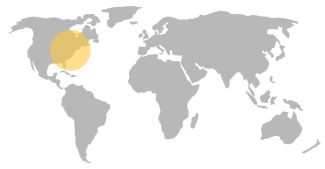
This map shows the full native range based on scientific range data.
Primary habitat
The red-bellied woodpecker primarily favors deciduous forests, frequently found along rivers and swamps, and mixed coniferous and deciduous terrain. They are less likely to be seen in pure pine areas.
Additional range
Uncommonly, they also venture into relatively open areas such as forest edges, clearings, groves on farmland, and suburban shade trees.
Do they migrate?
The red-bellied woodpecker is not truly migratory and generally stays within its range throughout the year. However, some individuals may exhibit partial migration behavior. During the fall, a small number of these woodpeckers might wander northward and remain there through the winter. This behavior is not a structured or long-distance migration but rather local movements likely driven by the availability of food. Outside of the breeding season, red-bellied woodpeckers tend to concentrate in areas where food is plentiful, displaying a form of localized movement rather than complete relocation. They can adjust their range slightly during different seasons based on resource availability, but there is no specific migration route, timing, or key locations that they follow. Instead, their movement patterns are opportunistic and influenced largely by environmental conditions and food supply variations in their habitat. Overall, the red-bellied woodpecker exemplifies a species that thrives within a relatively consistent range year-round, utilizing local resources efficiently to meet its needs across seasons.
What is the role of red-bellied woodpeckers in nature and how to protect them?
Conservation status
The red-bellied woodpecker is currently considered common, with a stable or slightly increasing population. Although it experienced a decline in some northern areas during the first half of the 20th century, its range has recently expanded northward. There are no significant threats to the species at present, and no major conservation efforts are required. Its adaptability to various habitats, including suburban areas, contributes to its stability. The species benefits from the preservation of wooded areas, which supports its continued population growth and range extension.
Ecological role of red-bellied woodpeckers
Its role in the ecosystem
The red-bellied woodpecker plays several critical roles in its ecosystem. First, it contributes to pest control by foraging for and consuming insects, including those on tree trunks and limbs. The woodpecker's insectivorous diet helps curb the population of potentially harmful insect species. Secondly, red-bellied woodpeckers are agents of seed dispersal. The bird's diet includes a large portion of plant material at certain times of the year, particularly acorns, nuts, and seeds. This diet, combined with its foraging behavior, aids in distributing seeds across various locations, contributing to plant diversity and forest regeneration. The red-bellied woodpecker also impacts the ecosystem by excavating holes in wood, creating nested sites that can be used by other species. Further, the red-bellied woodpecker's habit of storing seeds and nuts in bark crevices is likely to ensure a food source during the winter months, enhancing food availability in its habitat.
How to help protect red-bellied woodpeckers
Preservation tips
Habitat preservation strategies
To conserve the red-bellied woodpecker, first ensure preservation of its natural habitat. This includes mature forests with dead or dying trees which are ideal for nest building. Encourage sustainable forestry practices that spare such trees or leave dead snags standing. Legislation can regulate excessive logging and ensure more selective, sustainable practices, which include preserving key habitats for species like the woodpecker.
Community science initiatives
Community involvement can make a substantial difference in conservation efforts. Participate in bird-counts and other citizen science initiatives that contribute to information gathering. This data informs better management of the species. Additionally, public education about the woodpecker and its role in the ecosystem will increase awareness and support for its conservation. Landowners can create suitable habitats by leaving dead trees standing where safe or installing woodpecker-friendly nest boxes.