
Northern Flicker
Northern Flicker
Also known as: Common Fllicker, Yellowhammer, Clape, Gaffer Woodpecker, Harry-Wicket, Heigh-Ho, Wake-Up, Walk-Up, Wick-Up, Yarrup, Gawker Bird
Colaptes auratus


Quick Identification guide
Quick Identification guide
Male
- •
A brownish body with black spots on the underparts, giving a speckled appearance
- •
Distinctive red nape patch behind the head, contrasting with the rest of the plumage
- •
Barred wings and tail in flight, showing a white rump patch when airborne
Female
- •
Similar brownish body with black spots but lacks the male's distinct red nape patch
- •
Presents a gray face and a brown crown, creating a subtle contrast
- •
Displays the same barred wings and tail with a white rump patch visible during flight
What does a northern flicker sound like?
The Northern Flicker vocalizes with a distinct loud, repeated flicker or wicka-wicka-wicka sound, alongside a loud 'kleeer'. Its call pattern tends to stay flat or rise and can vary across a spectrum of chirps, chips, drums, rattles and screams. This rich variety creates a unique soundscape, quickly identifying this bird's presence.


Description
Wicker, wicker, wicker,' it's a northern flicker! These ant-loving birds have tongues specialised for catching their favourite food, covered in sticky spit.
The northern flicker can weigh between 110to178grams and be from28to31centimeters tall.
The typical lifespan of a Northern Flicker is about 5-6 years, making it one of the longer-lived woodpecker species. Comparatively, the Downy Woodpecker has a similar lifespan, while the Pileated Woodpecker can live up to a decade. The Red-bellied Woodpecker, another related species, has an average lifespan of about 7 years.
Did you know?
Most popular questions about northern flicker
How to recognise a northern flicker?
General appearance
The northern flicker is roughly 12 inches in length with a brown back, black chest patch, and spots on the belly. Its wings are broad and rounded, with the tail shape being multi-pointed and wedge-shaped. One noteworthy characteristic is the difference between the 'Yellow-shafted' and 'Red-shafted' forms. The former, found in the East, has bright yellow under wings, a tail, a red crescent on the back of the head, a tan face, and a gray crown. The latter, found in the West, has salmon-pink under wings, a tail, a brown crown, and a gray face.
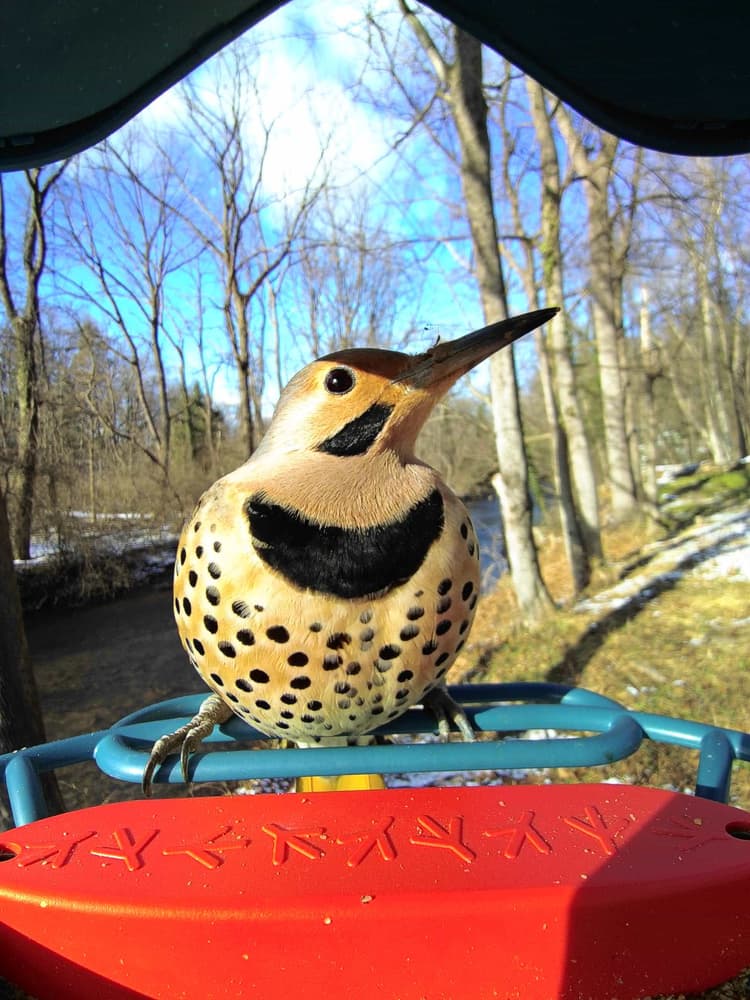
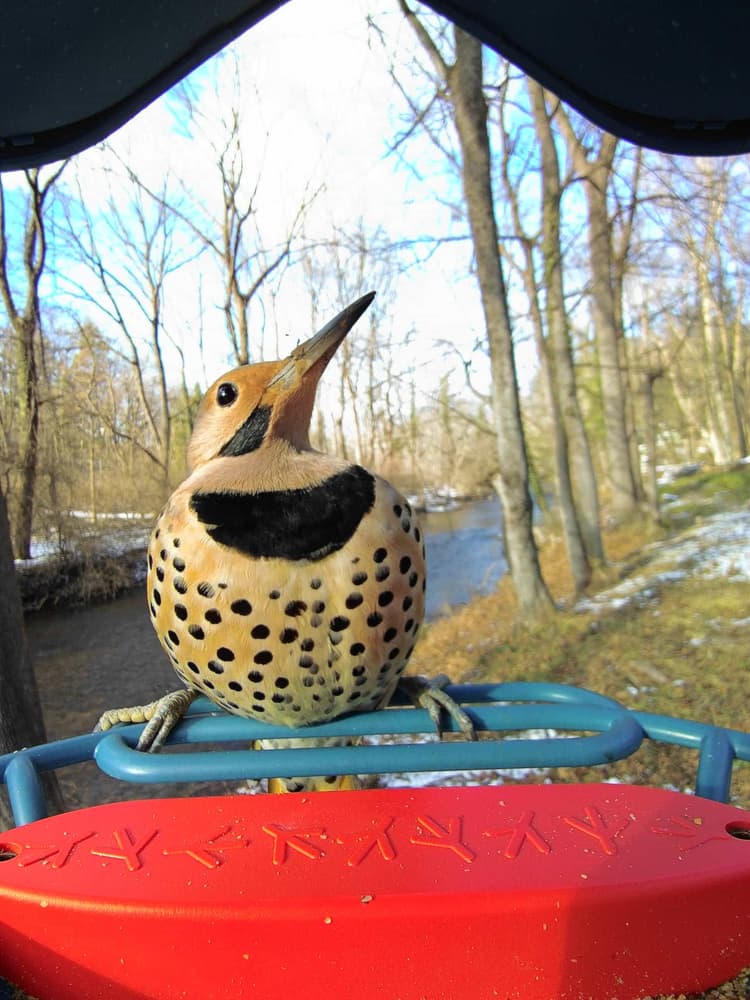
Male vs female
In both geographic forms, male northern flickers can be differentiated by their mustache stripe. Males of the Yellow-shafted form have a black mustache stripe, while those of the Red-shafted form have a red one. No specific distinctions for females are mentioned.
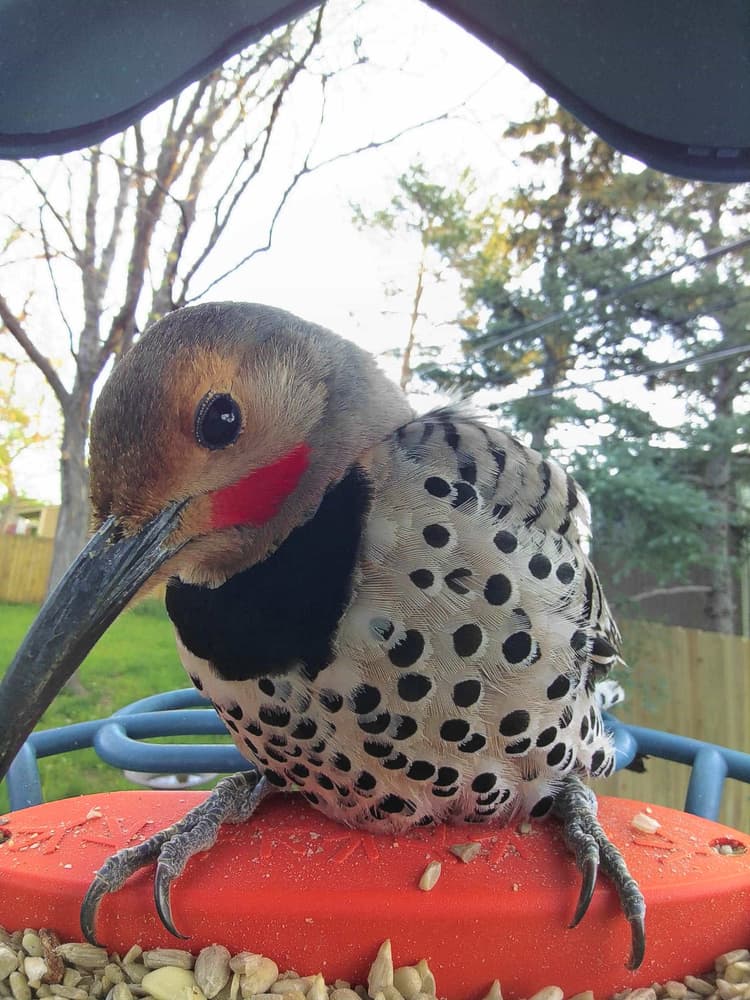
Male Northern Flicker
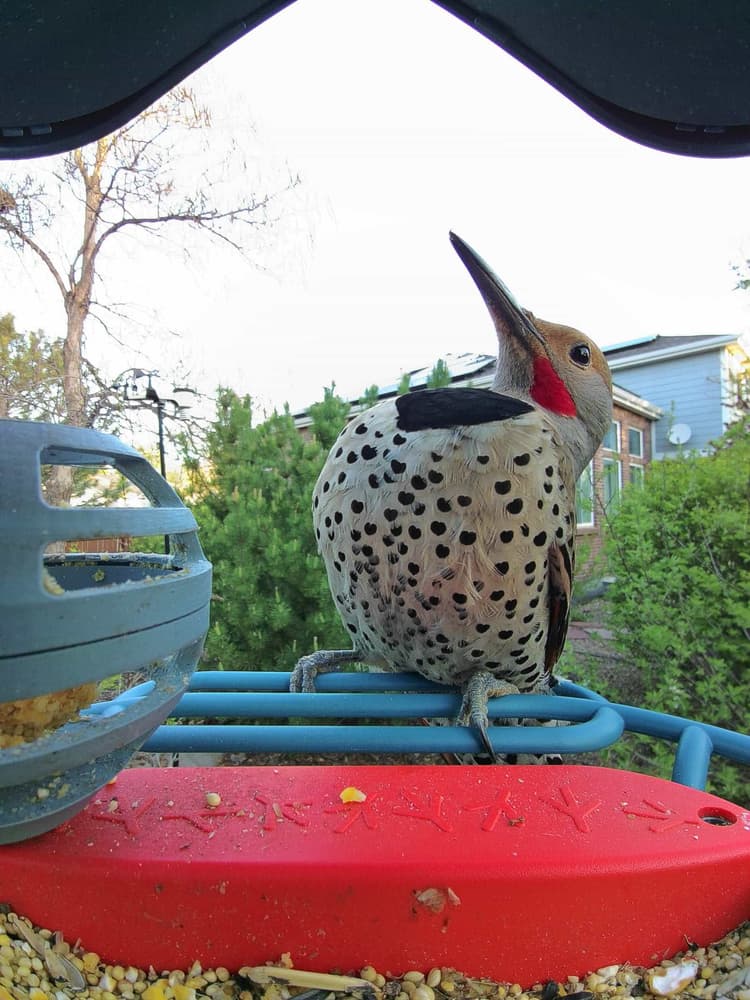
Male Northern Flicker
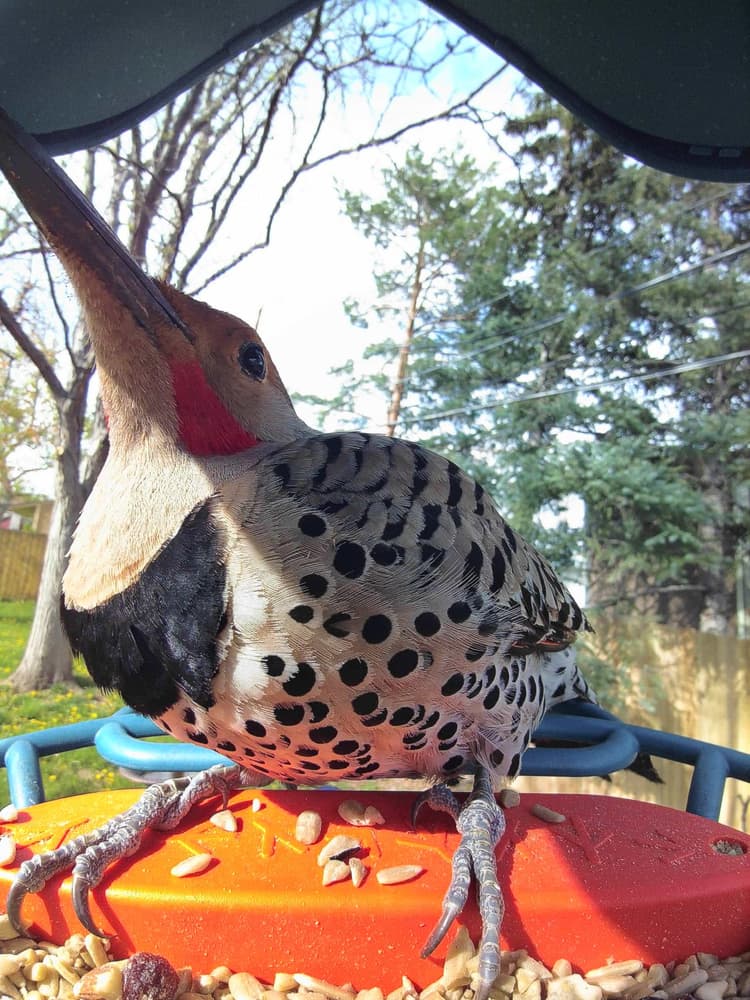
Male Northern Flicker
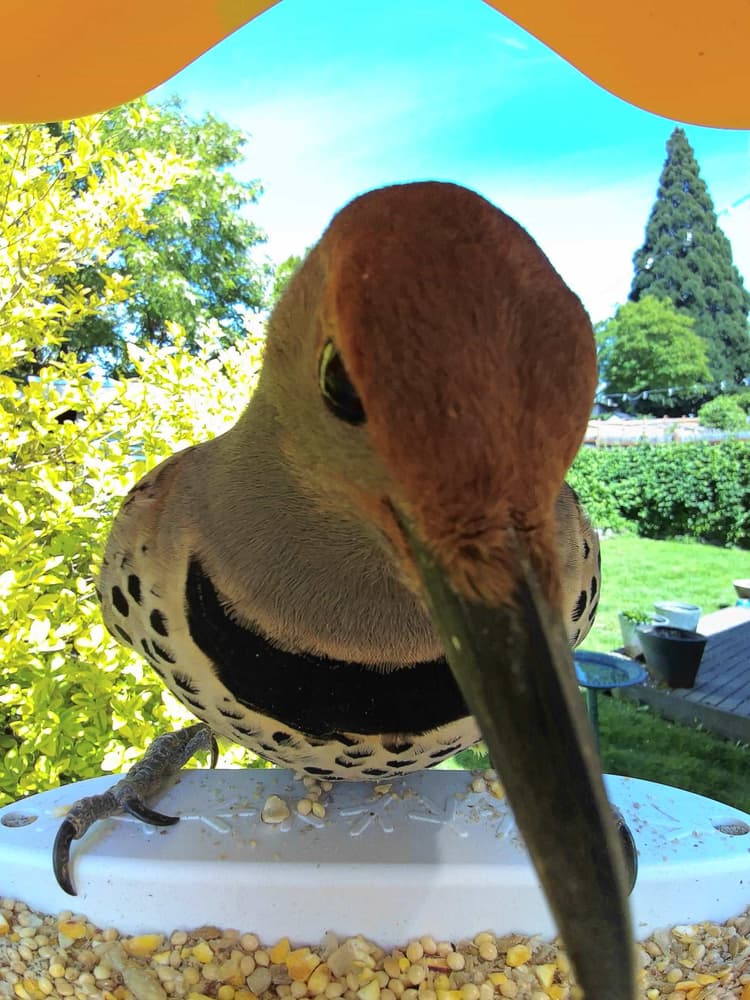
Female Northern Flicker
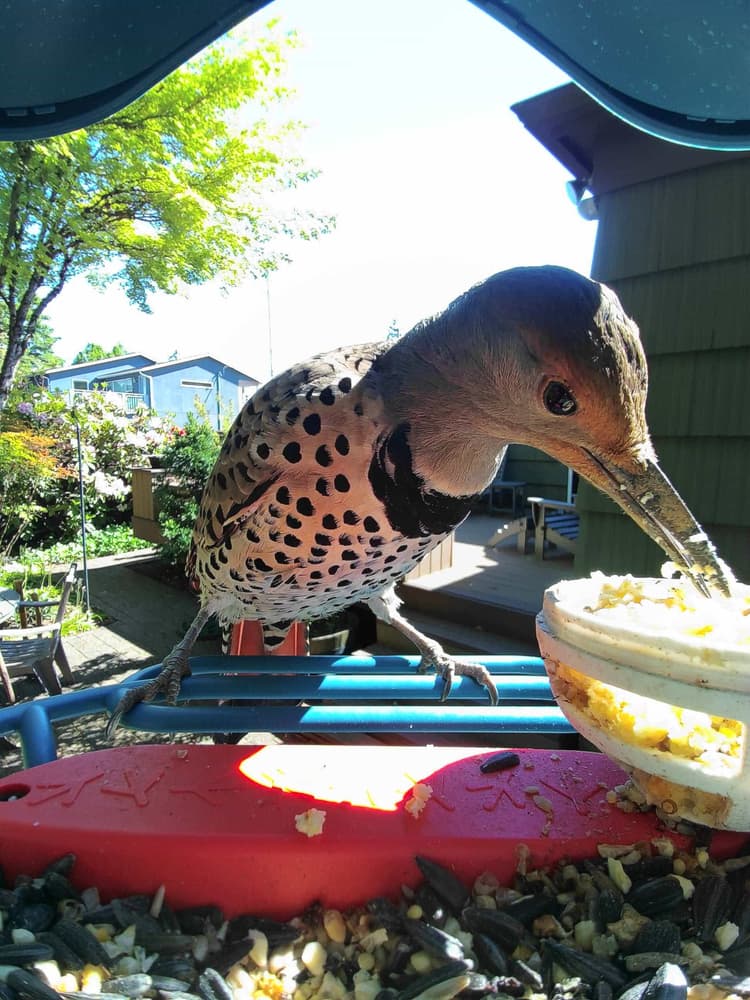
Female Northern Flicker
Juvenile
No specific information was provided distinguishing appearances between juvenile and adult northern flickers. Further information, perhaps on size, coloration, or any differing markings would be needed.
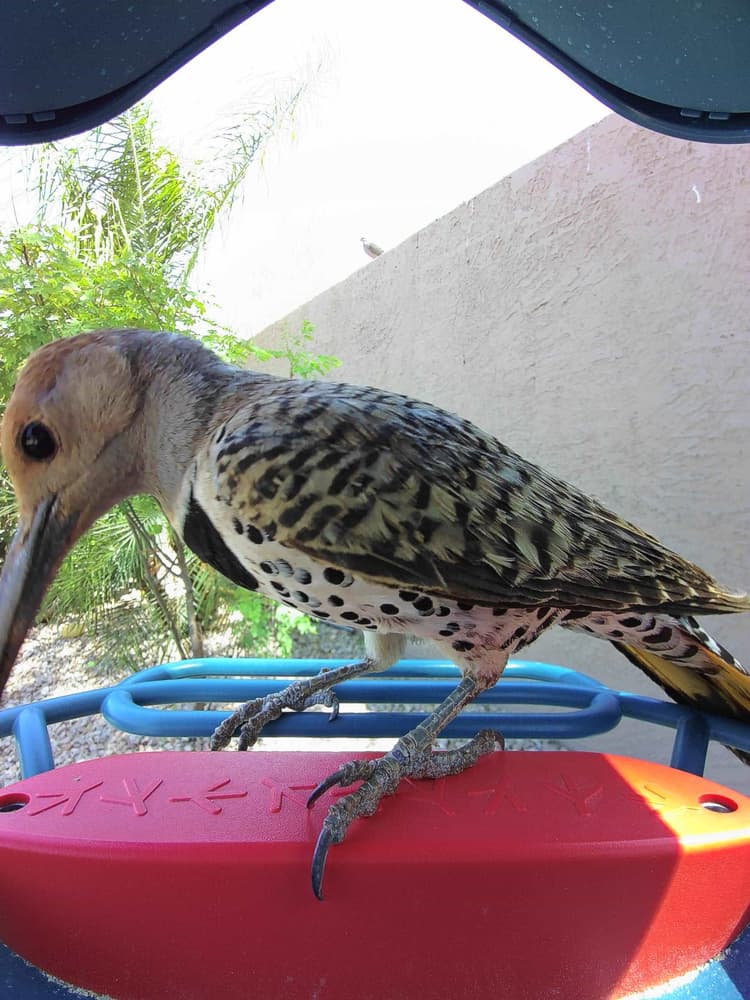
Often mistaken for
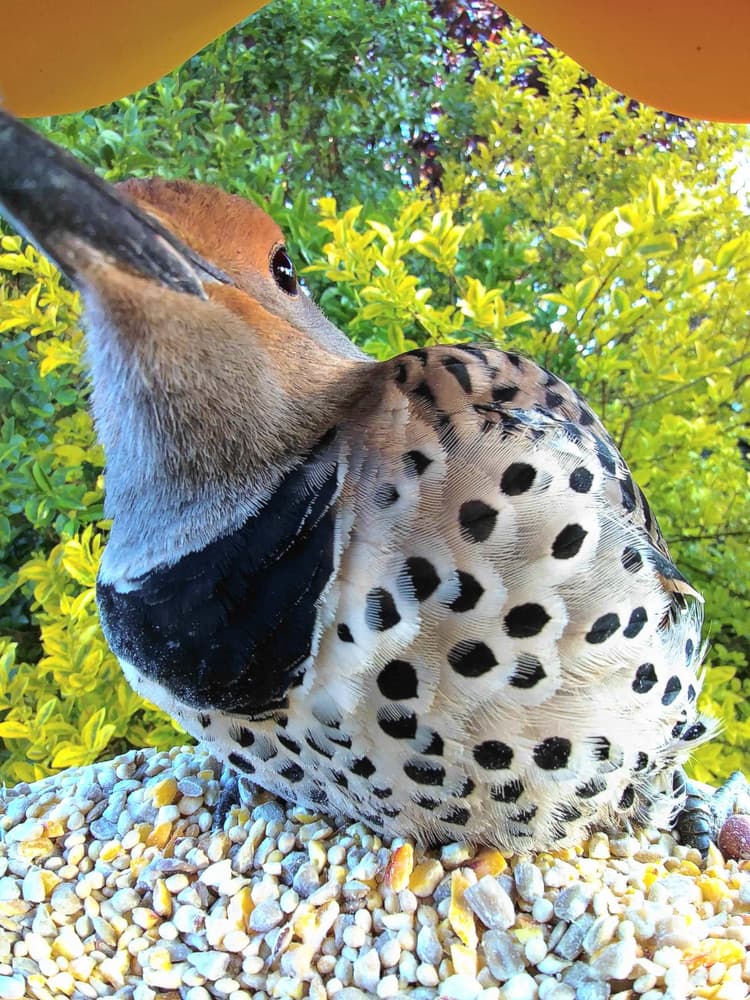
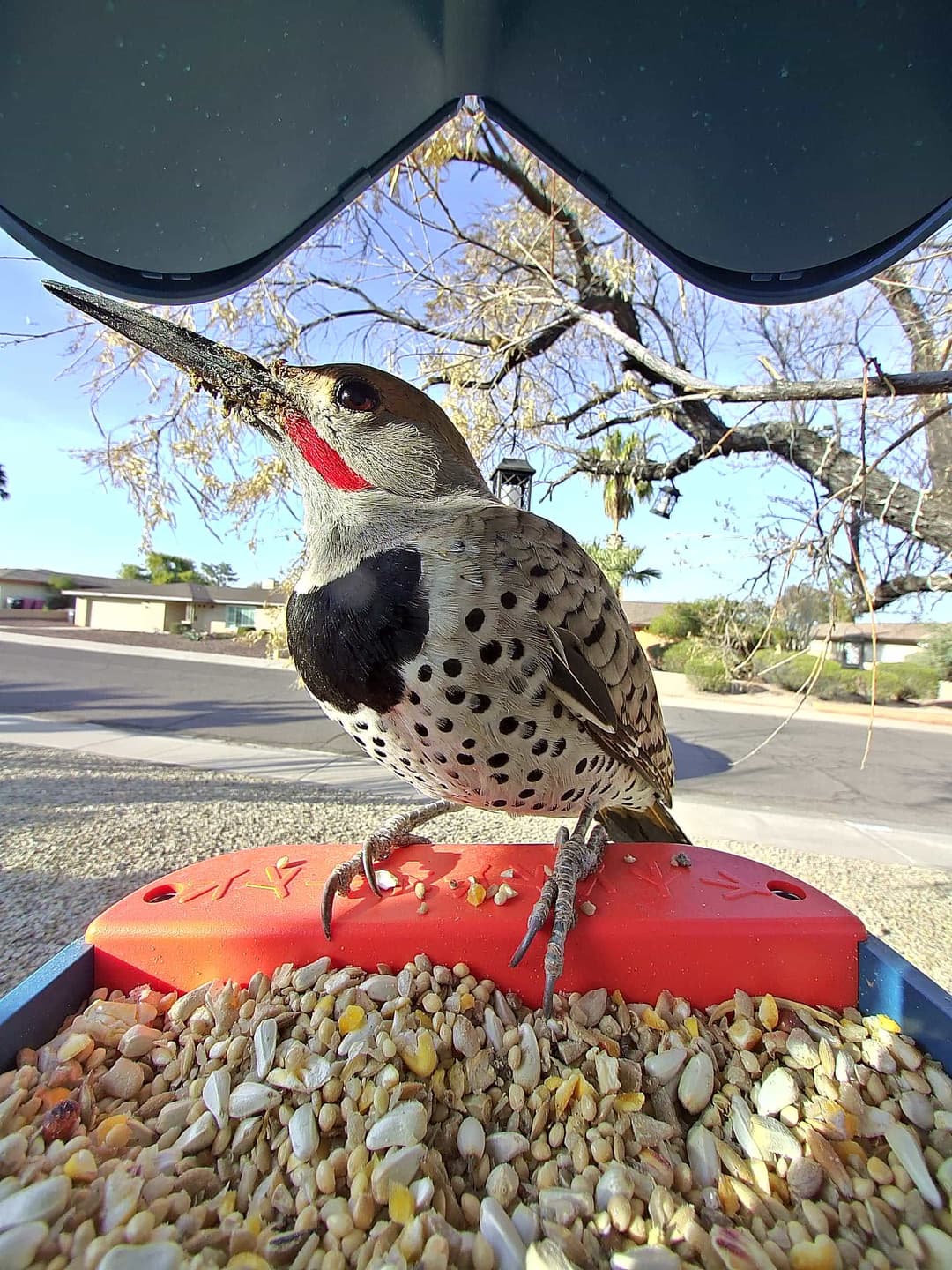
Gilded Flicker vs Northern Flicker
The Northern Flicker and Gilded Flicker are similar, but you can distinguish them by their face and wing markings. The Gilded Flicker has a more pronounced golden-yellow underwing and tail, while the Northern Flicker displays red or yellow wing and tail linings depending on the region. Northern Flickers have a gray face with a red nape crescent; Gilded Flickers have a brown face.
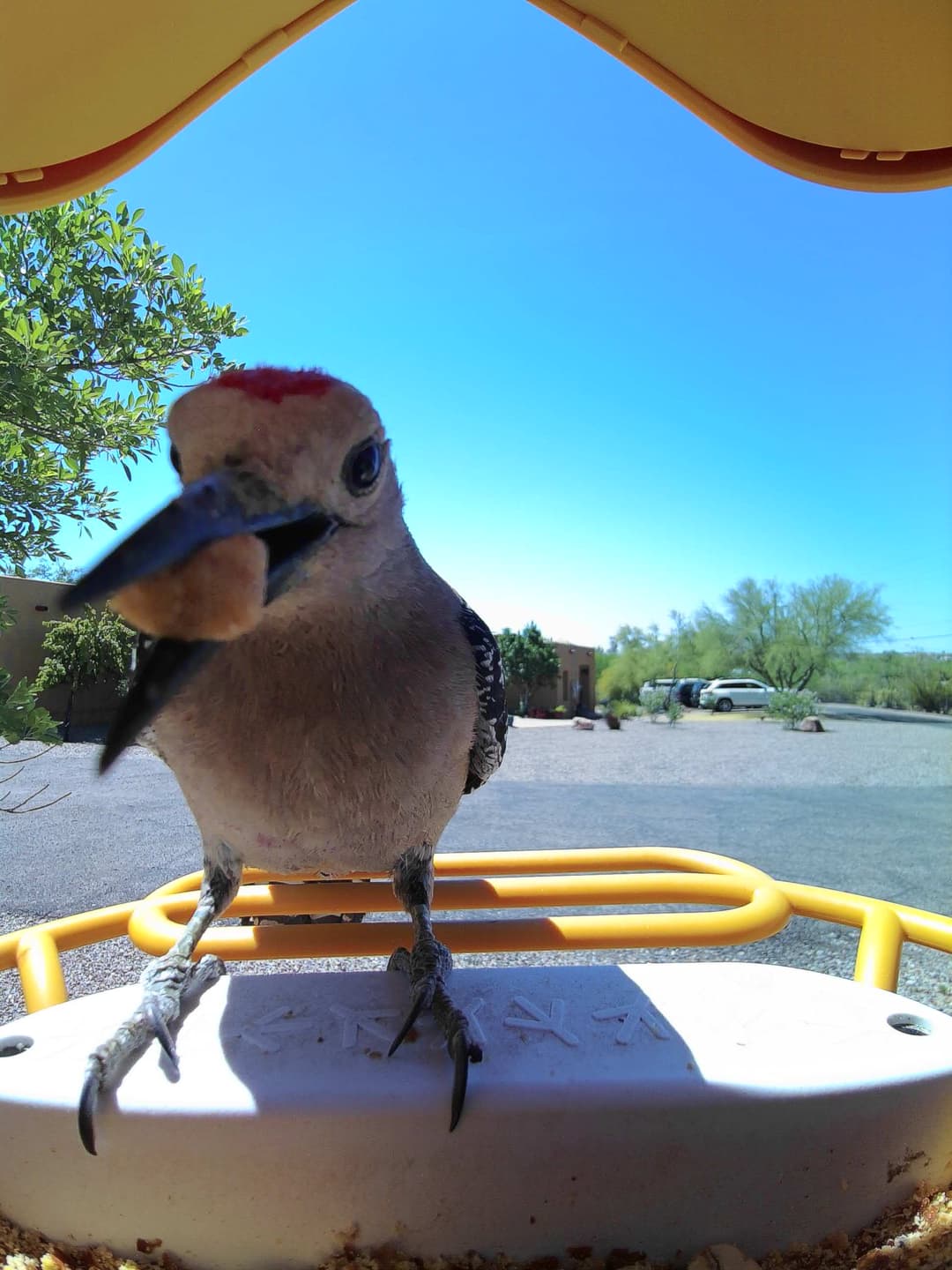
Gila Woodpecker vs Northern Flicker
Gila Woodpeckers and Northern Flickers differ primarily in color and habitat. Gila Woodpecker is more uniformly gray with black and white barring on its back and inhabits arid desert environments. In contrast, the Northern Flicker is more robustly patterned, sporting distinctive spots and a barred back, typically found in wooded areas.
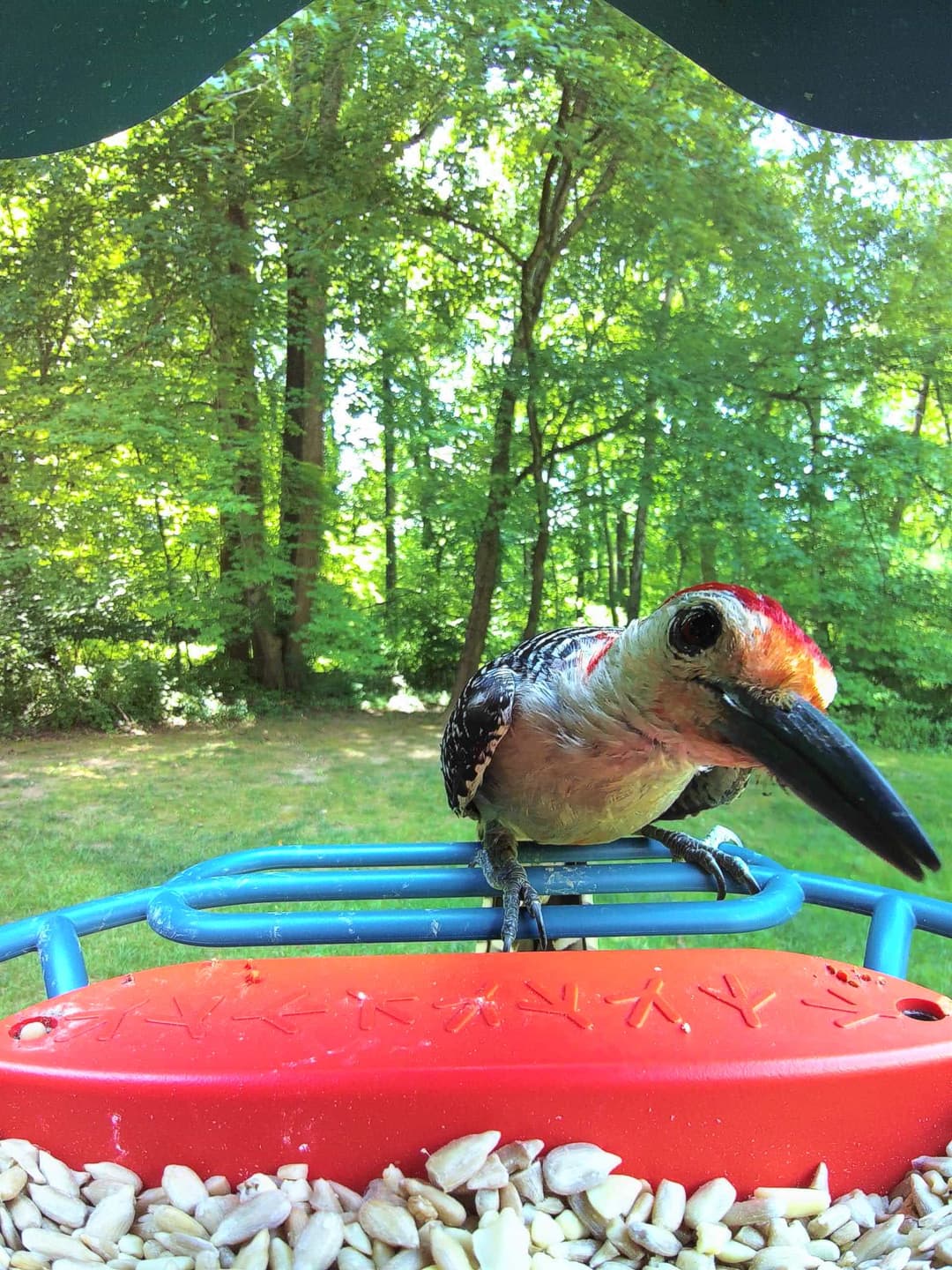
Red-Bellied Woodpecker vs Northern Flicker
Red-Bellied Woodpeckers have a strikingly red cap extending down to their necks and a pale, often reddish, lower belly, unlike the Northern Flicker's more subdued overall appearance with speckled plumage and a full red or yellow shaft. Their habitat overlap is minimal, as Red-Bellied Woodpeckers prefer eastern forests.
Breeding and nesting habits of the northern flicker
Mating behaviors
Male northern flickers defend their nesting territory through various displays, including calling, drumming, and aggressive movements such as swinging their head and flicking their wings open. Courtship displays are mostly similar to these territorial behaviors.
Nesting details
Northern flickers typically nest in cavities in trees or posts, rarely using burrows in the ground. They prefer tree cavities, usually in dead wood, favoring species like pine, cottonwood, and willow. These cavities, excavated by both sexes, are generally 6-20 feet above the ground, but can be as high as 100 feet.
Eggs and chick-rearing
After excavation, the female lays eggs in the cavity. Both parents share the responsibility of incubating the eggs and feeding the chicks until they are ready to fledge.
What does a northern flicker like to eat?
Berries
Fruits
Insects
Seeds
Natural diet
The northern flicker primarily consumes ants and other insects, making it the bird that likely eats ants more frequently than any other in North America. Its diet includes beetles, termites, caterpillars, and various insects. In addition, the northern flicker consumes many fruits and berries, especially during the fall and winter seasons. On occasion, it also eats seeds and nuts.
Bird feeders
At bird feeders, northern flickers may be attracted to offerings such as suet, peanuts, and other nut-based mixtures. They might also occasionally feed on seeds provided at feeders, particularly those that mimic their natural diet.
Providing the right food
Northern flickers are particularly attracted to ants and beetles. They can be coaxed to feeders with Bird Buddy seeds, which are specially chosen by experts for the season. Also, providing suet in your feeder, which is a great source of fat and energy, can be very appealing to them!
Creating a suitable environment
Northern flickers tend to prefer edge habitats, such as along woodland borders, fence rows, or other transitional areas. Leaving an area of your yard bare, with exposed soil can attract ants which in turn will attract Northern Flickers. Providing snags or dead trees can also attract these birds, as they provide nesting cavities and are likely to harbor insects.
Using appropriate feeder types
A platform feeder or a suet feeder works well for Northern flickers. Also, if you’re keen on enticing them, offering water through a bird bath or a shallow container could prove beneficial. Ensure to have a well-placed guard to discourage squirrels and other unwanted patrons.
Playing recorded northern flicker calls
A fun trick is to use the sounds of the birds themselves to attract them. You can play recorded calls of Northern flickers. They may just come over to investigate. However, be aware that excessive or loud playback may distress the birds.
Where can you find northern flickers?
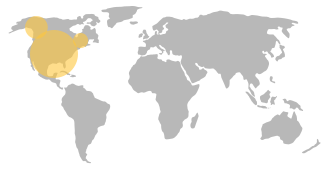
Primary habitat
The northern flicker's preferred habitat includes open forests, woodlots, groves, towns, and semi-open countries. It requires some open ground for foraging and tends to avoid dense, unbroken forests.
Additional range
This bird has a wide range, extending from Alaska to Nicaragua, suggesting a tolerance for various climates. It can even be found in very open countries with few trees.
Do they migrate?
The Northern Flicker, a species of woodpecker, exhibits migratory behavior, with significant differences between its two main subspecies: the Northern Yellow-shafted Flicker and the Red-shafted Flicker. The Northern Yellow-shafted Flickers, which inhabit Alaska and Canada, are strongly migratory. They typically embark on their migration in the fall, traveling predominantly east before heading south. These flickers are known for their large migratory movements along the Atlantic Coast, migrating primarily during the day. Their journey facilitates overwintering in regions further south along the Eastern United States. In contrast, Red-shafted Flickers have a less extensive migration pattern. They often migrate shorter distances, moving southward from their breeding areas and descending from mountainous regions into lower-elevation areas. During the winter, some individuals also spread eastward onto the Great Plains. This subspecies does not undertake the large-scale coastal migrations characteristic of the Northern Yellow-shafted Flickers. Overall, the Northern Flicker’s migratory patterns vary markedly across its range, with timing largely taking place in the fall, allowing these birds to exploit milder climates and resources during the colder months.
What is the role of northern flickers in nature and how to protect them?
Conservation status
The northern flicker, although still common and widespread, has experienced population declines since the 1960s. The species is not currently considered vulnerable or endangered. A significant threat to the northern flicker is competition with introduced starlings for newly excavated nesting sites, which can result in the flickers being driven away. Efforts to support the species focus on maintaining and protecting suitable habitats, including nesting sites. Conservation strategies may involve monitoring populations and managing starling populations to reduce competition.
Ecological role of northern flickers
Its role in the ecosystem
The northern flicker plays a significant role in the ecosystem, particularly in aspects of pest control and seed distribution. By predominantly feeding on ants, beetles, termites and caterpillars, the bird aids in suppressing the population of these pests that may otherwise have a detrimental effect on the environment. For example, by controlling the population of termites, it helps to prevent damage to wooden structures. Additionally, the northern flicker's diet also includes fruits, berries, seeds and nuts which they disperse in their droppings, contributing to the spread and proliferation of plant species across different areas. In fall and winter, the variety of fruits and berries in their diet increases, making their role in seed dispersal even more crucial during these seasons. Finally, their unique nesting habits further underscore their contribution to the ecosystem; by excavating cavities in trees such as pine, cottonwood, and willow, they help in aerating the soil and improving its quality.
How to help protect northern flickers
Preservation tips
Habitat preservation strategies for northern flicker
To conserve the Northern Flicker, habitat preservation is crucial. This includes advocating for and supporting measures to conserve and restore old fields, open woodlands, and forest edges where they reside. Additionally, integrated pest management to control insect populations without heavy reliance on insecticides can be beneficial, as these birds predominantly feed on insects. Installing nest boxes in yards can provide them a safe place for breeding, assisting in their population boost.
Community science initiatives for northern flicker conservation
Community science initiatives are a powerful tool for conservation. Encourage local communities to participate in birdwatching surveys and report sightings of these birds. This can provide valuable data regarding the habitat preferences and population trends of the Northern Flicker. Promote educational initiatives to raise awareness about the bird's importance and concern, fostering a more informed and supportive community towards the conservation measures.