
Golden-Fronted Woodpecker
Golden-Fronted Woodpecker
Melanerpes aurifrons


Quick Identification guide
Quick Identification guide
- •
Features a golden-yellow patch on the forehead with red shading just above the bill
- •
Exhibits black and white barred patterns on the back and wings, providing a distinctive appearance
- •
Displays a short, straight beak ideal for pecking into wood, with a pale, grayish underbelly
What does a golden-fronted woodpecker sound like?
The Golden-fronted Woodpecker exhibits a variety of calls and songs. These include a loud 'churrrr,' as well as a burry 'chuck-chuck-chuck'. Their call patterns tend to be falling and flat. Their call types vary from chirps and chips to drums and rattles, and feature an occasional, distinctive scream. Each vocalization has its own unique character, contributing to the bird's auditory repertoire.


Description
Pairs who dance together, stay together. At least that is the case with golden-fronted woodpeckers. They routinely perform tapping displays and those who renew their bond in early spring go through the courtship display once again. Here, there is definitely no I in team as both male and female excavate their nesting cavity and take up arms, or beaks, defending their territory.
The golden-fronted woodpecker can weigh between 66to99grams and be from20.3to24.3centimeters tall.
Golden-fronted woodpeckers typically live up to 7 years. While this is similar to other woodpeckers such as the Red-bellied woodpecker, Downy woodpecker, and Hairy woodpecker which have average lifespans that range from 5 to 10 years, it is less than the Northern Flicker or the Pileated woodpecker, both of which can live for over 10 years.
Did you know?
Most popular questions about golden-fronted woodpecker
How to recognise a golden-fronted woodpecker?
General appearance
The golden-fronted woodpecker is about the size of a Robin, measuring roughly 9 1/2 inches or 24 cm. It features black and white bars on its back and broad, rounded wings. Its tail is multi-pointed and wedge-shaped. Its most distinctive feature is its buffy brown chest and head, with orange-yellow at the back of its neck, and yellow over its bill. Flashing white patches can be seen in its wings and on its rump when in flight.
Male vs female
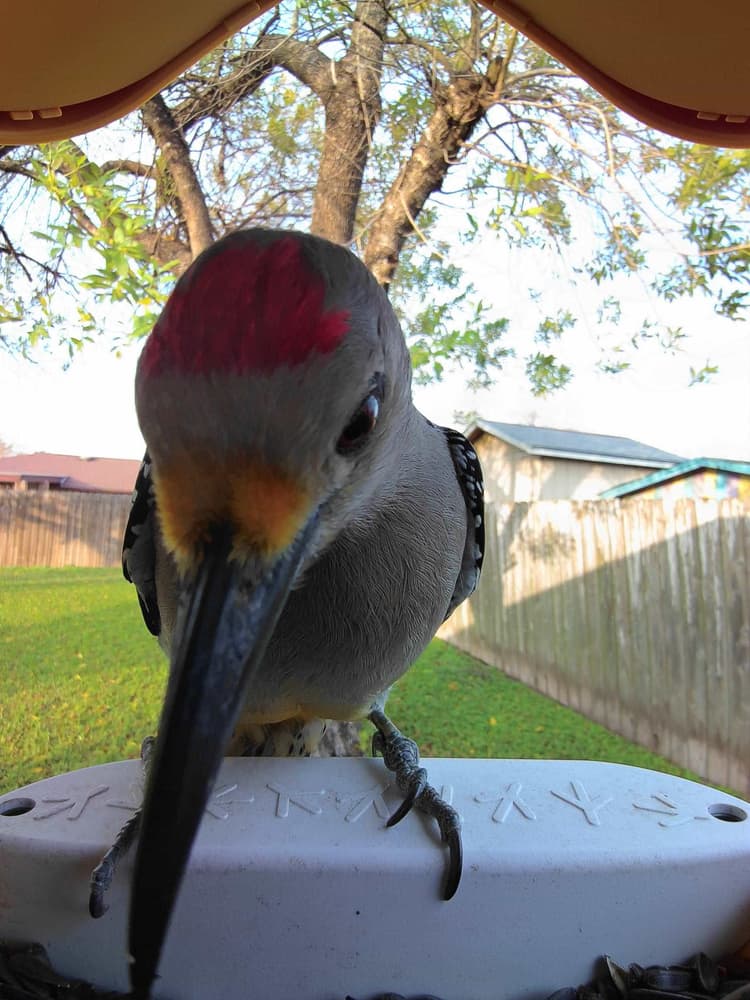
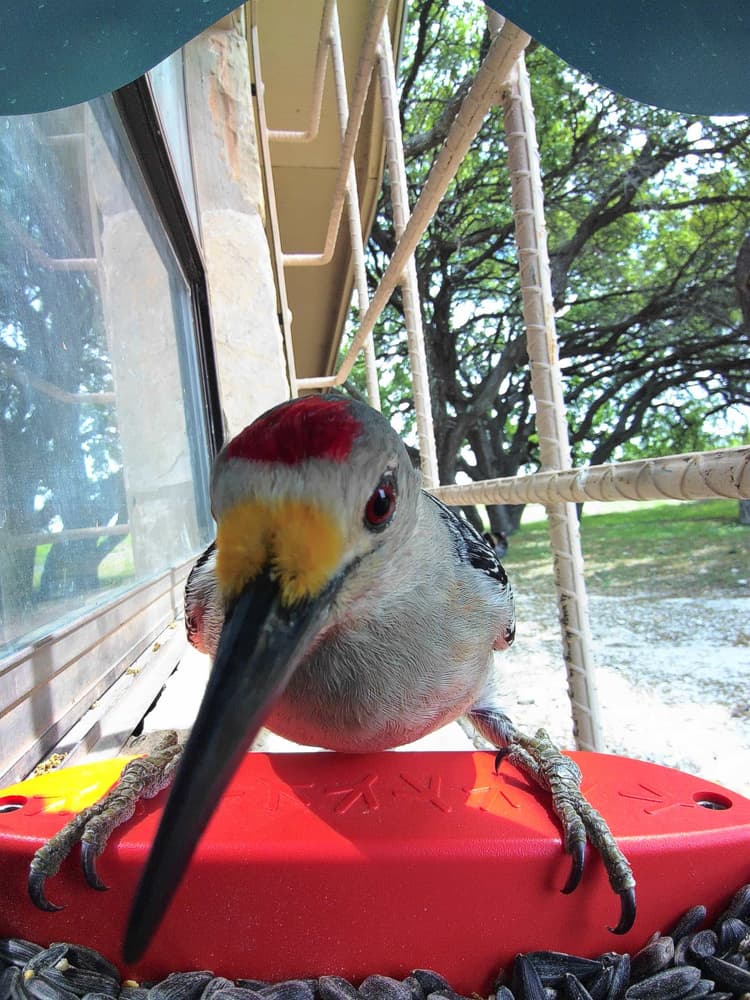
The male golden-fronted woodpecker is differentiated by a red cap on its head. However, note that in case of a Red-bellied Woodpecker, this red can sometimes be replaced by orange on its head.
Juvenile
The description provided does not mention any specific differences in the appearances of juvenile versus adult golden-fronted woodpeckers. Further research may be needed to accurately identify juveniles of this species in the wild.
Often mistaken for
Gila Woodpecker vs Golden-Fronted Woodpecker
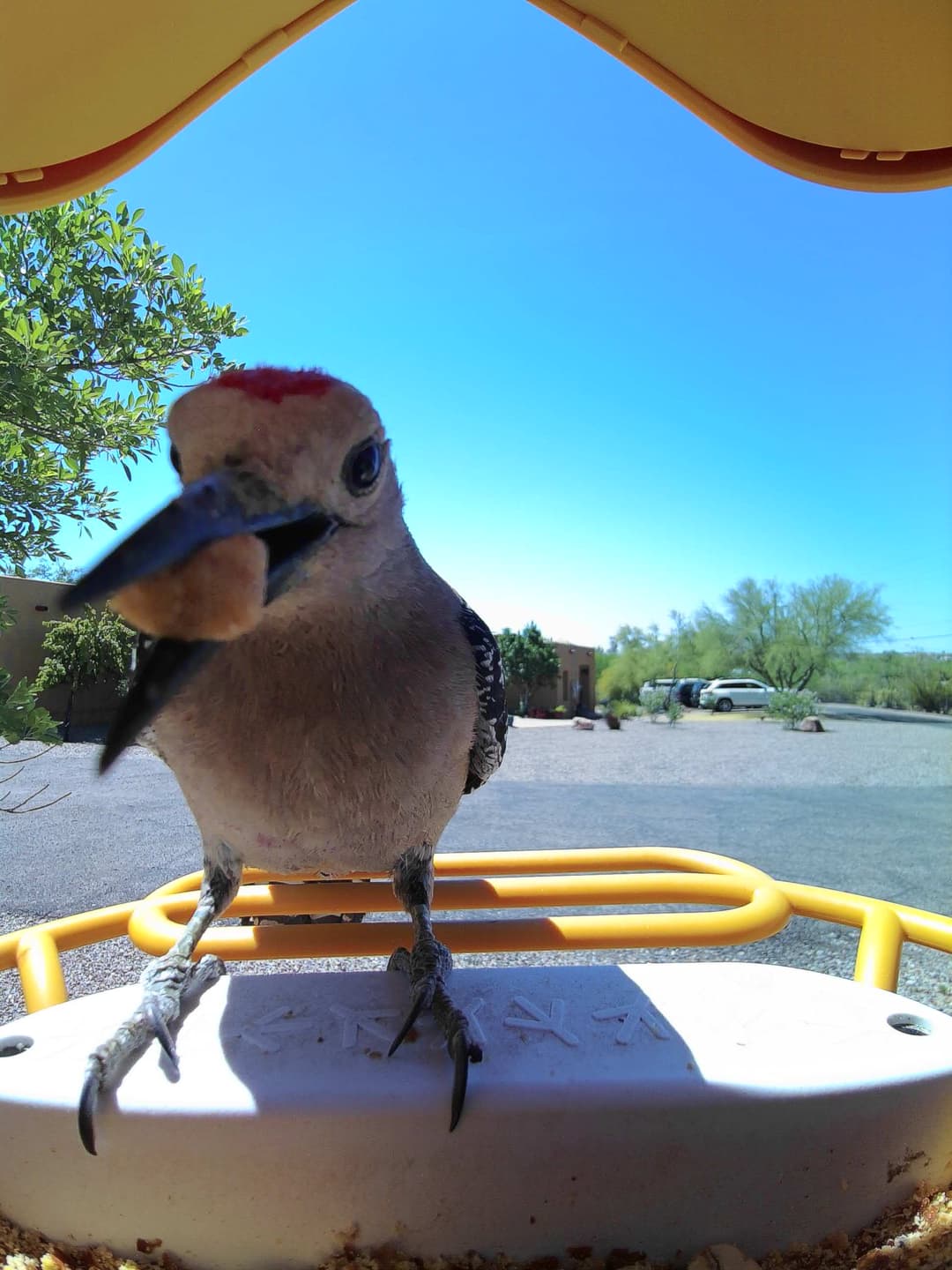
The Golden-Fronted Woodpecker and Gila Woodpecker both have barred backs and similar sizes, but look for the vibrant golden nape and orange to golden crown specifically on the Golden-Fronted. Gila Woodpeckers have a grayish face and lack the distinct gold on the head.
Gilded Flicker vs Golden-Fronted Woodpecker
Golden-Fronted and Gilded Flickers share a similar silhouette and barred back. Note the golden front and crown in the Golden-Fronted, whereas Gilded Flickers have an overall more brownish tone along with a brown crown.
Northern Flicker vs Golden-Fronted Woodpecker
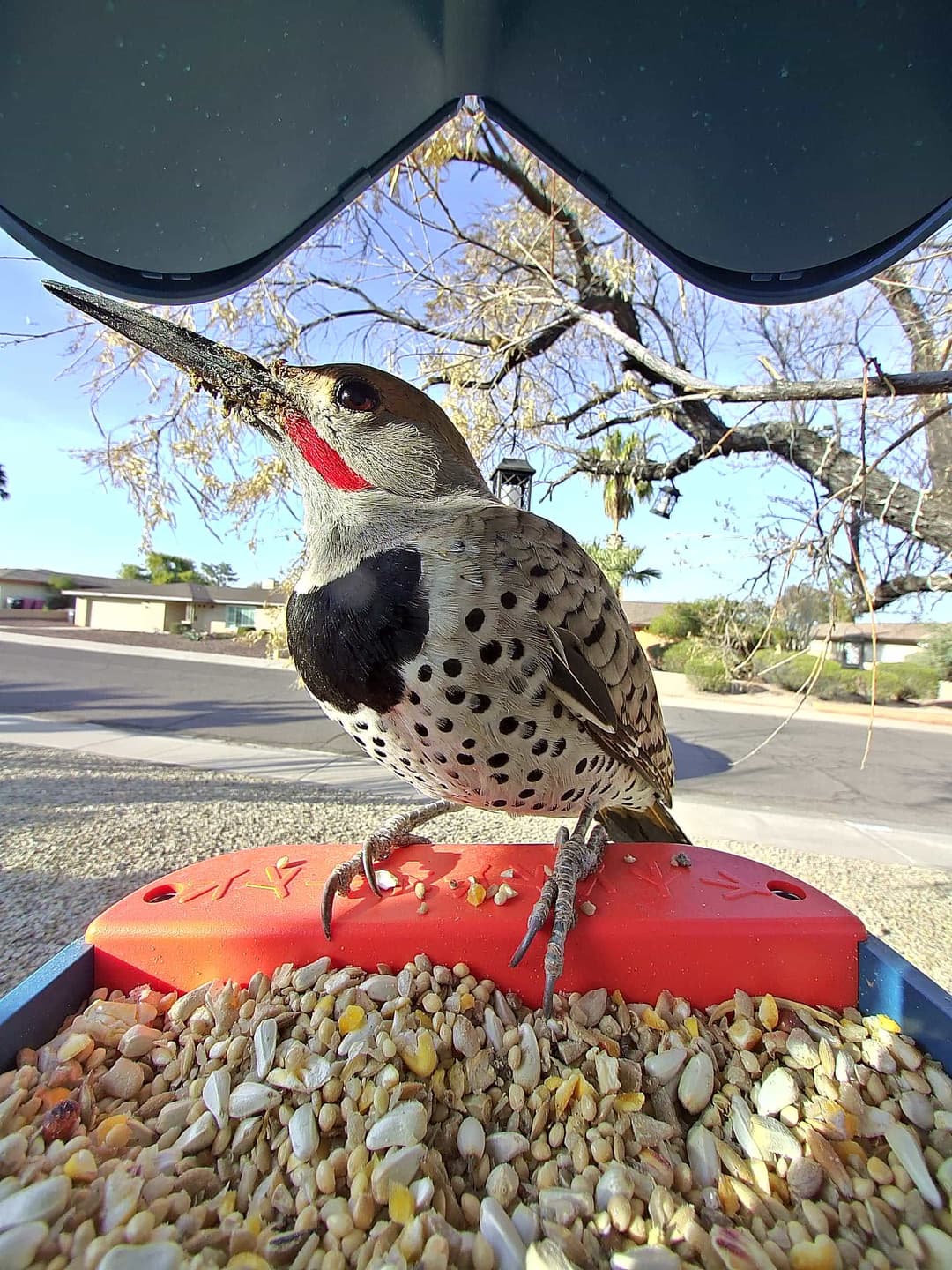
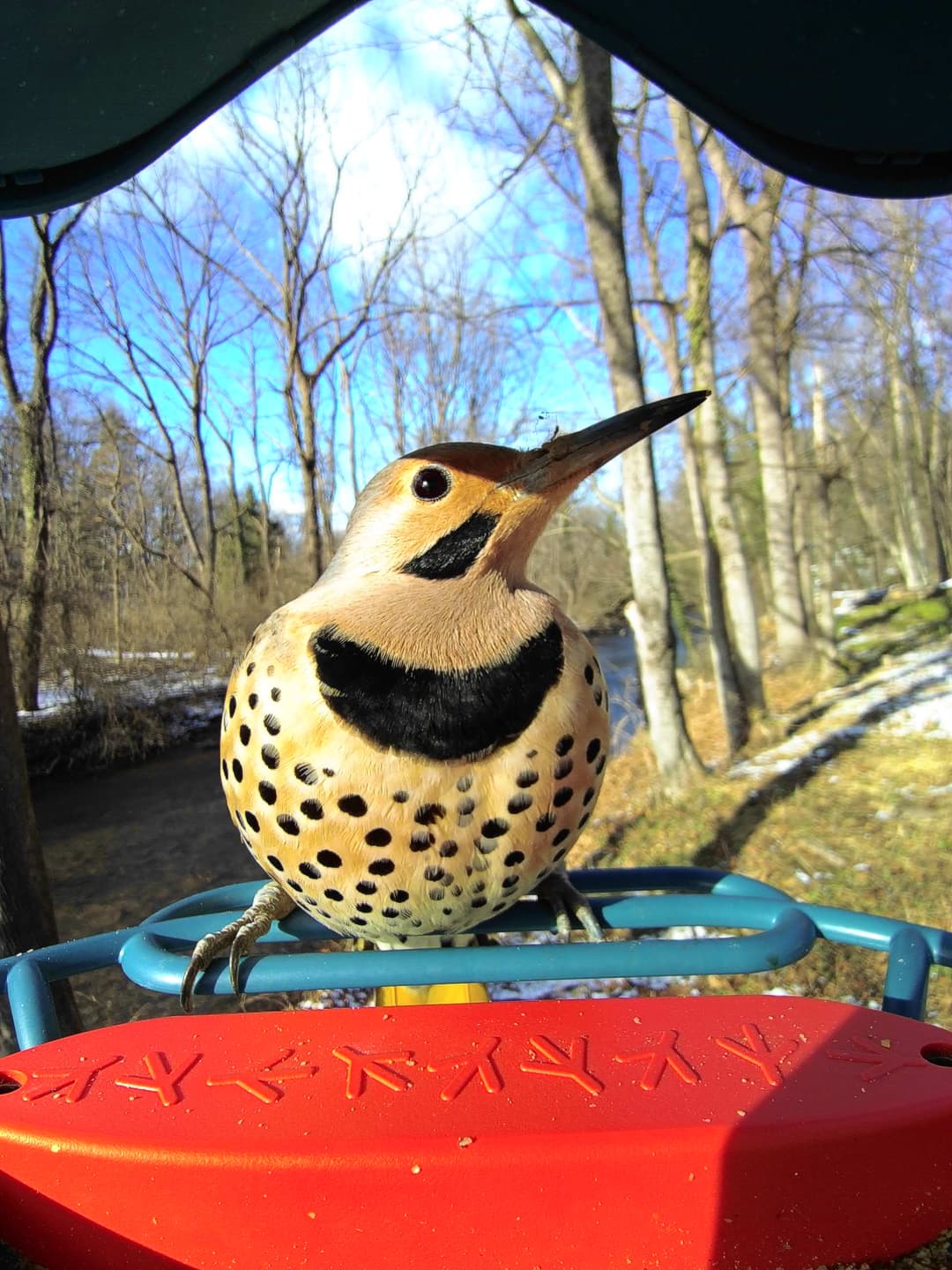
Both species display barred backs and belly spotting, but the Golden-Fronted Woodpecker has a prominent yellow stripe on the wing and golden nape. Northern Flickers lack the bright golden highlights and may have a red nape.
Breeding and nesting habits of the golden-fronted woodpecker
Mating behaviors
Golden-fronted woodpeckers advertise their nesting territory with loud calls and sometimes drumming. This vocal and physical signaling plays a crucial role in attracting mates and defending their nesting area.
Nesting details
The nest site is a cavity in the trunk of a tree, typically mesquite or oak, though they may also use telephone poles or fence posts. Both sexes participate in excavating the cavity, which is usually fairly low, typically less than 20 feet above the ground. These cavities may be reused for more than one season.
Eggs and chick-rearing
Both sexes share responsibilities in incubating the eggs and feeding the chicks. The nesting cavity provides a safe environment for raising the young, protecting them from predators and harsh weather conditions.
What does a golden-fronted woodpecker like to eat?
Bird eggs
Fruits
Insects
Nuts
Seeds
Small animals
Spiders
Natural diet
The golden-fronted woodpecker is omnivorous and feeds on a wide variety of insects. It also consumes nuts, berries, fruits, and seeds from many plants, showing a notable preference for acorns when they are accessible.
Bird feeders
At bird feeders, golden-fronted woodpeckers are likely attracted to suet, sunflower seeds, and peanuts, which align with their natural consumption of seeds and nuts.
Favorite snacks
Golden-fronted woodpeckers love a variety of foods, but their favorites include fruit, nuts, berries, and insects. Try filling your yard with native fruit-bearing trees and shrubs to attract these beautiful birds. Don't forget to include Bird Buddy seeds in their diet, as these seeds are chosen by experts for the season and show the best results.
Feeder types
A platform or tray feeder would be the most suitable for golden-fronted woodpeckers, as they provide easy access to food. A suet feeder can also be an excellent choice, especially in colder months when natural food sources may be scarce. Remember to place the feeders at a safe distance from windows and in a quiet, sheltered spot to make the birds feel secure.
Fun tricks
To make your yard more enticing, consider installing a birdbath. Woodpeckers are known to enjoy water, so a bird bath can be a great way to draw them in. Occasionally change the type of food you offer to keep them interested. Lastly, play some bird songs on your phone or speaker — the golden-fronted woodpecker might not only visit but also join you in a melodious sing-along.
Where can you find golden-fronted woodpeckers?

Primary habitat
The golden-fronted woodpecker is found in open woodlands, especially along rivers, orchards, and dry washes lined with mesquite trees in its North American range.
Additional range
In Central America, the woodpecker is found at the edges of tropical forests and in tree groves situated in open country.
Do they migrate?
The golden-fronted woodpecker primarily acts as a permanent resident, meaning it tends to stay in the same area year-round. It exhibits some local movements, particularly during winter, when it concentrates in areas with ample feeding opportunities. This behavior is driven by the availability of food rather than traditional migration through distinct routes and locations. The species does not follow a defined migratory route, timing, or set of key locations as migratory birds do. Instead, its movements are more opportunistic and localized, responding to changes in food resources within its range. An unusual occurrence was observed when a lone male strayed to western Florida. This individual stayed for several months, during which time it mated with a local red-bellied woodpecker, resulting in the successful raising of two young. However, this deviation does not suggest a regular migratory pattern but rather an isolated incident of vagrancy. In summary, the golden-fronted woodpecker typically remains in one place throughout the year, showing only minor, localized movements to optimize foraging conditions.
What is the role of golden-fronted woodpeckers in nature and how to protect them?
Conservation status
The golden-fronted woodpecker once faced persecution in Texas due to its habit of excavating telegraph poles, resulting in many being shot in the early 20th century. Currently, its population is considered stable, suggesting it is not immediately vulnerable or endangered. There are no significant conservation efforts highlighted for this species, indicating its resilience and adaptability in current conditions. However, monitoring remains important to ensure its continued stability, given historical threats and potential habitat changes.
Ecological role of golden-fronted woodpeckers
Its role in the ecosystem
The golden-fronted woodpecker plays various roles that contribute significantly to the ecosystem. Its omnivorous diet enables it to control pests by feeding on a wide range of insects found on tree trunks, limbs, and even in flight. This helps to keep insect populations in check and maintain a balanced ecosystem. Additionally, the golden-fronted woodpecker contributes to the process of seed dispersal. It consumes nuts, berries, fruits, and seeds from a variety of plants, including acorns when they are available. As the woodpecker moves about, it inadvertently spreads these seeds, aiding in plant propagation. Moreover, the woodpecker's nesting behavior of excavating cavities in trees, telephones poles, or fence posts also benefits the environment. These cavities may provide shelter for other species, thus promoting biodiversity. Overall, the golden-fronted woodpecker has a significant impact on its ecological community.
How to help protect golden-fronted woodpeckers
Preservation tips
Habitat preservation strategies
Safeguarding the habitats of the golden-fronted woodpecker is vital. Local authorities should implement policies to prevent deforestation and promote reforestation in areas the bird inhabits. Moreover, stakeholders should introduce measures to control the use of pesticides which can affect the bird's primary food source. Afforestation attempts must focus on planting oak, hackberry, mesquite, and other trees the species prefer for nesting.
Community science initiatives
Local communities can significantly impact the bird's conservation by participating in community science initiatives. Engage in birdwatching programmes, documenting and reporting sightings of the golden-fronted woodpecker. Schools and local groups can conduct educational programs to raise awareness about the bird and the importance of its conservation. Additionally, support and participate in initiatives by bodies like the Audubon Society that routinely monitor bird populations and drive conservation efforts.