
Ladder-Backed Woodpecker
Ladder-Backed Woodpecker
Dryobates scalaris


Quick Identification guide
Quick Identification guide
Male
- •
Distinctive red crown on the top of the head
- •
Black and white barred pattern across the back and wings, resembling a ladder
- •
White underparts with occasional black spotting on the sides
Female
- •
Lacks the male's red crown, featuring a more subdued black crown instead
- •
Black and white barred pattern similar to the male, giving a ladder-like appearance
- •
Pale throat and underparts with subtle black flecks on the sides
What does a ladder-backed woodpecker sound like?
The ladder-backed woodpecker's vocalizations are characterized by a sharp pik, akin to the Downy Woodpecker, and features a descending whinny as well. Its call pattern is flat, encompassing a range of types - from a chirp/chip to a drum, rattle, and trill. These diverse sounds contribute to a unique and complex song repertoire for this woodpecker species.


Description
Ladder-backed woodpeckers used to be called cactus woodpeckers! These birds were first described in 1829 by Johann Georg Wagler, who has a total of six birds named after him. They have what we call zygodactyl feet: two toes point to the front, two to the back, and wood you look at that: they're just perfect for clinging to vertical surfaces, such as trees!
The ladder-backed woodpecker can weigh between 21to48grams and be from16to18centimeters tall.
The typical lifespan of a ladder-backed woodpecker is 4-5 years. This is similar to related species such as the downy woodpecker, with a natural lifespan of 1-2 years, or the cactus woodpecker which can live up to 7 years. However, longevity can be substantially extended in captivity, with some individuals reaching up to 11 years.
Did you know?
Most popular questions about ladder-backed woodpecker
How to recognise a ladder-backed woodpecker?
General appearance
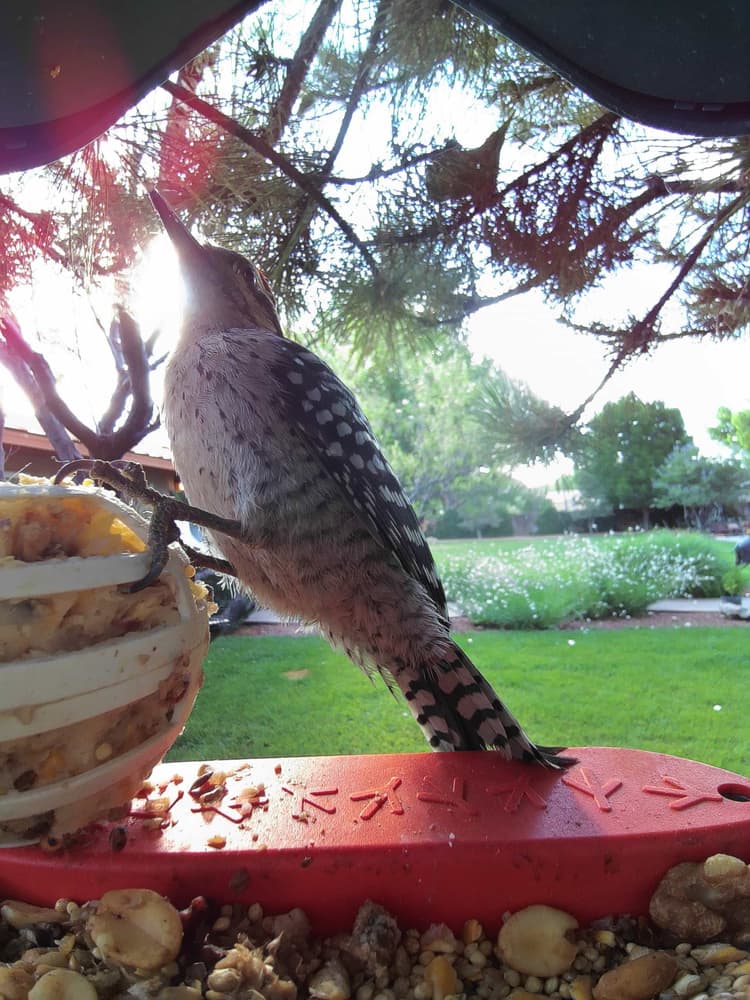
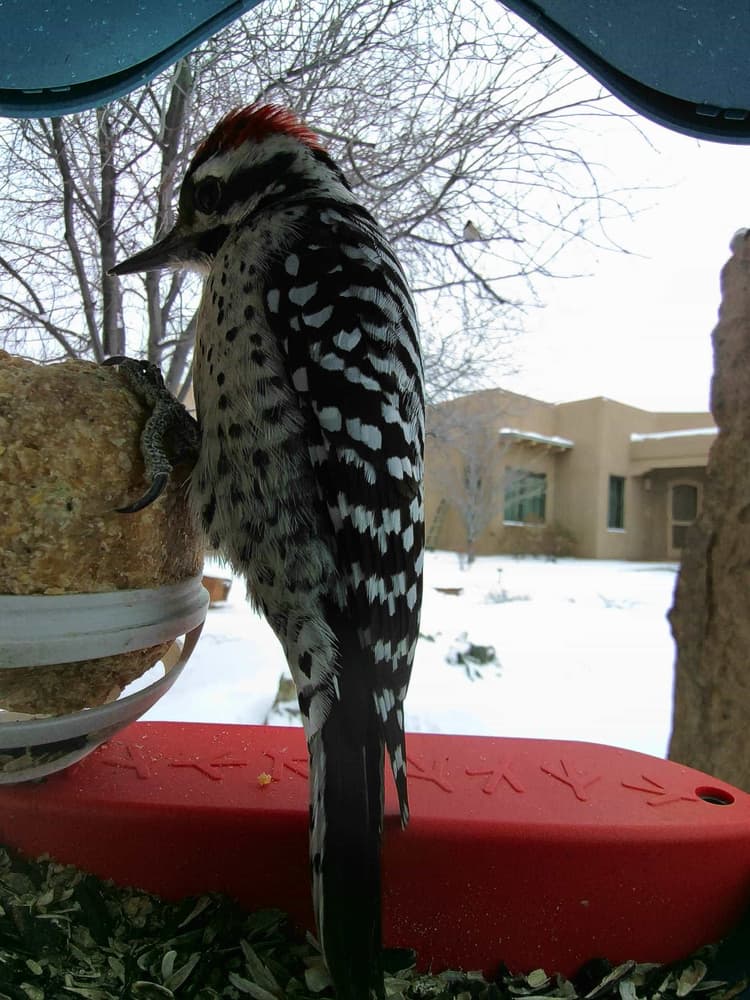
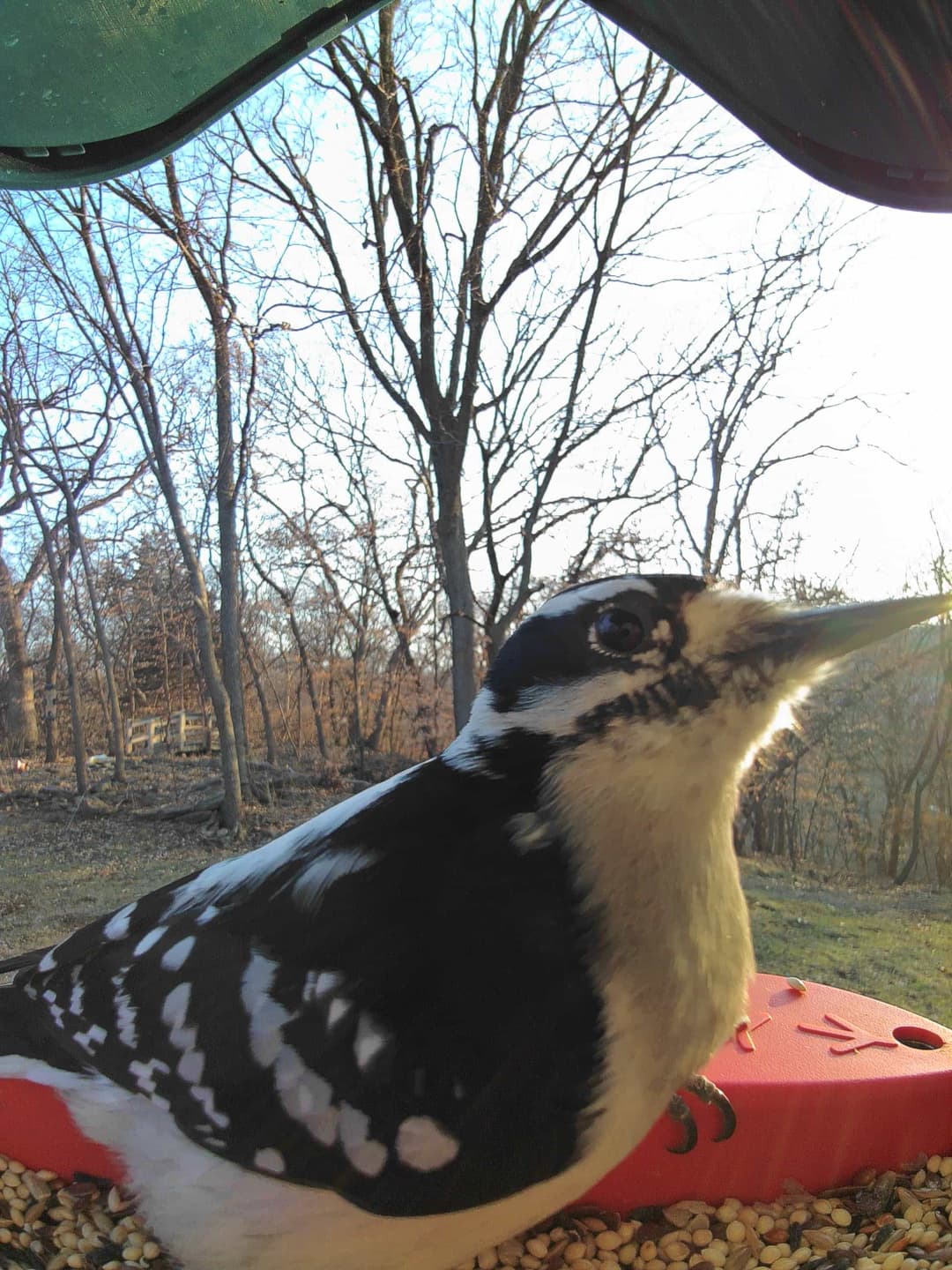
The ladder-backed woodpecker is a small bird characterized by its distinctive black and white barred pattern across its back resembling a ladder. It has a white belly and flanks, while its wings and tail are black with white spots. The bird's face features a white stripe above and below the eye, with a contrasting black line running from the bill to the neck.
Male vs female
Males can be distinguished by a red crown on their heads, while females lack this red crown, having a black and white head pattern instead. This sexual dimorphism is particularly noticeable during the breeding season.
Juvenile
Juvenile ladder-backed woodpeckers resemble adult females but have a duller and less distinct barring pattern on their back and wings. Their head patterns are similarly muted, lacking the clear contrast seen in adults. They do not possess the red crown seen in male adults.
Often mistaken for
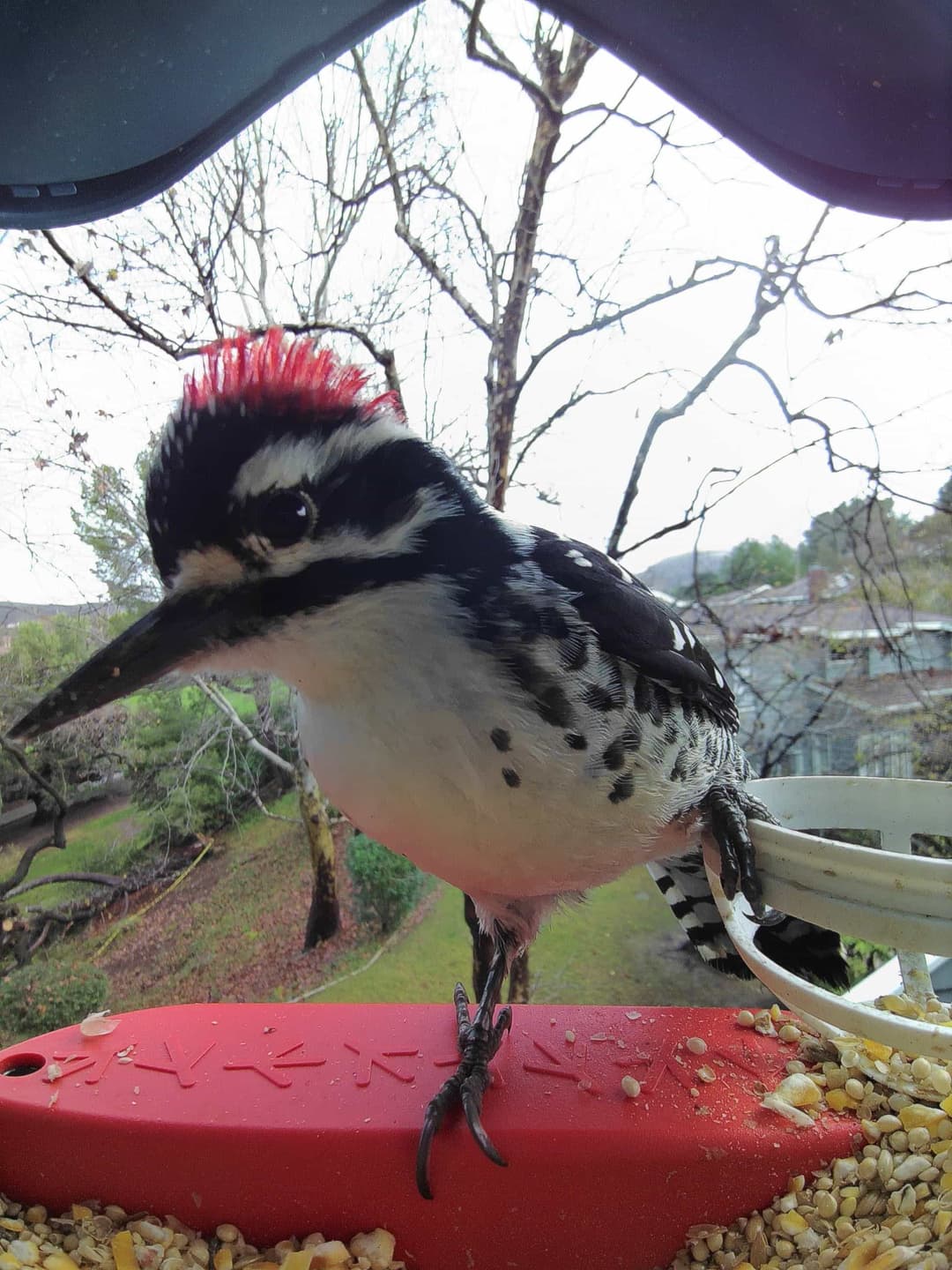
Nuttall’s Woodpecker vs Ladder-Backed Woodpecker
Ladder-Backed has a more pronounced ladder pattern on the back and tends to be found in desert habitats. Nuttall’s is slightly larger, with more overlap with oak and mixed woods. Watch for the less distinct back pattern in Nuttall’s.
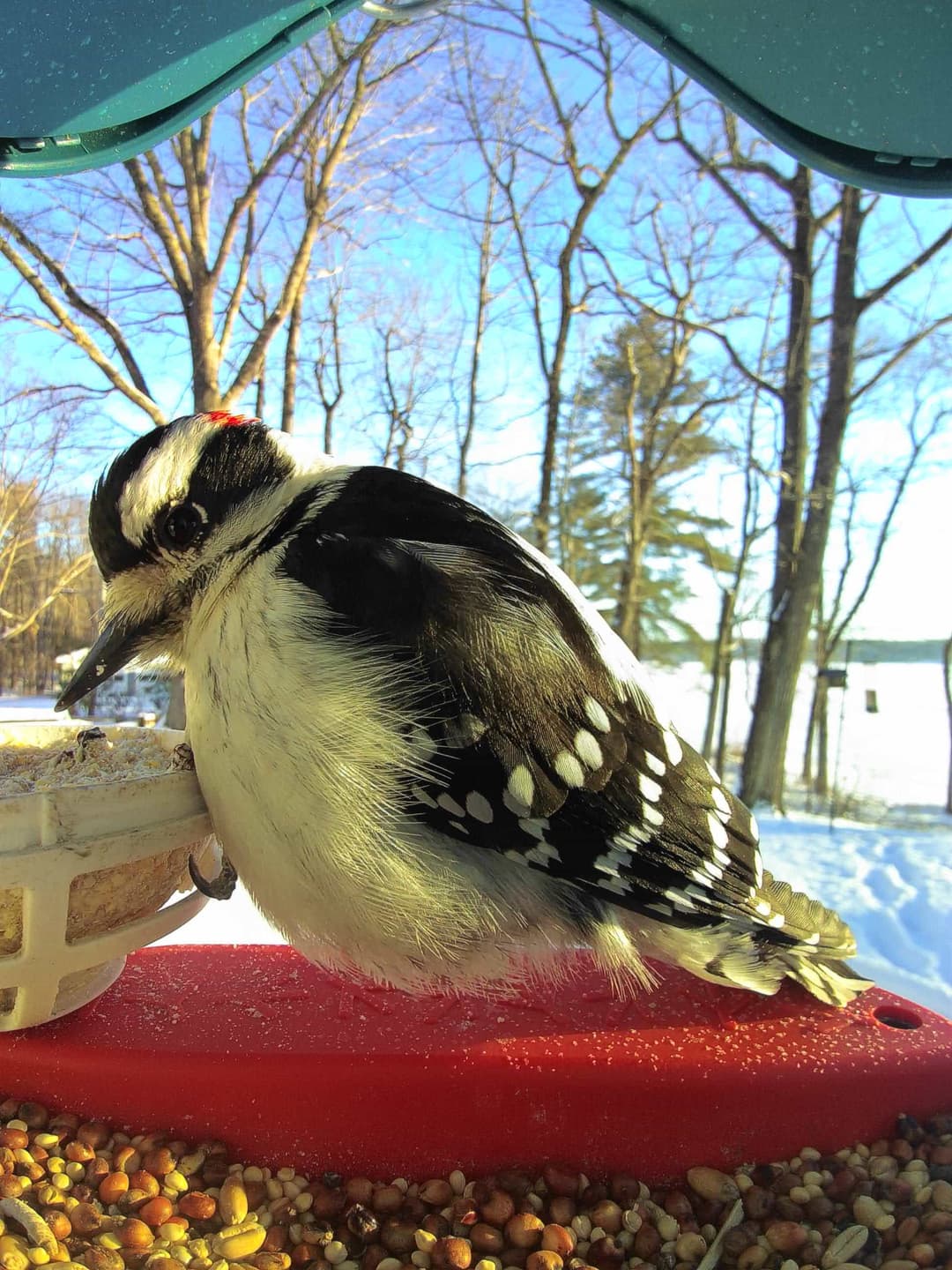
Downy Woodpecker vs Ladder-Backed Woodpecker
Downy Woodpeckers are smaller with a shorter bill. Ladder-Backed features more defined bar patterns on the back and often in drier, more open habitats than Downys, which prefer wooded areas.
Hairy Woodpecker vs Ladder-Backed Woodpecker
Hairy Woodpeckers have larger bodies and longer bills compared to the Ladder-Backed. Ladder-Backed has a more distinct black-and-white barring on the back, while Hairy prefers dense forests and larger trees.
Breeding and nesting habits of the ladder-backed woodpecker
Mating behaviors
Pairs may remain together throughout the year. Their courtship and territorial displays involve raising head feathers, bobbing and turning the head, spreading wings and tail, and engaging in a fluttering display flight.
Nesting details
The ladder-backed woodpecker chooses cavity nest sites in trees like mesquite, hackberry, willow, and oak. They may also use Joshua trees, agave stalks, giant cacti, utility poles, and fence posts. Both sexes probably partake in excavation, though the male may lead.
Eggs and chick-rearing
Typically, woodpeckers lay eggs in the excavated cavity nests. Both parents are involved in the incubation process and chick-rearing, ensuring the young are fed and protected until fledging.
What does a ladder-backed woodpecker like to eat?
Fruits
Insects
Natural diet
The ladder-backed woodpecker primarily feeds on a wide variety of insects. It consumes beetles and their larvae, caterpillars, true bugs, and ants. In addition to insects, this woodpecker also eats some berries and fruits, including cactus fruit, as part of its natural diet.
Bird feeders
Ladder-backed woodpeckers may visit bird feeders, where they are likely to consume offerings such as suet, peanut butter, and sunflower seeds. They are attracted to high-fat and high-protein foods that resemble their natural diet in nutritional content.
Add a suet feeder
One of the simplest ways to attract a ladder-backed woodpecker to your yard is by having a suet feeder. These birds love suet and it can be a powerful lure to attract their interest. Suet feeders are specifically designed to hold a cake or plug of suet which these birds love. Make sure to place the feeder somewhere quiet where the bird will feel safe to eat.
Offer favored foods
Ladder-backed woodpeckers have a broad diet but particularly enjoy eating insects, seeds, fruits, and occasionally small lizards and tree frogs. You can provide a variety of these foods in your garden to attract these birds. Try Bird Buddy seeds, these are optimally chosen by experts based on the season and can deliver the best results in attracting the ladder-backed woodpecker.
Provide a natural habitat
These birds are most comfortable in a natural habitat. You can simulate this in your garden by leaving dead trees or branches in place, if safe to do so, or providing a bird house for them to nest in. Ladder-backed woodpeckers also need trees or large shrubs for nesting and perching.
Water source
Like all birds, ladder-backed woodpeckers need a fresh source of water. Adding a birdbath or a small pond to your garden can attract these birds. Ensure it’s clean and safe for them to drink and bathe.
Play woodpecker sounds
A fun trick to attract woodpeckers is to play recordings of their drumming or calls. Be careful not to do it too often as to not cause stress to the birds. You might just charm the ladder-backed woodpeckers into dropping by for a visit and a 'sing-along'!
Where can you find ladder-backed woodpeckers?

Primary habitat
The ladder-backed woodpecker typically inhabits dry regions in the US Southwest, inclusive of brushland, mesquites, desert washes, river woods, groves, and towns.
Additional range
This woodpecker can be found in unexpected habitats like oaks and pinyon-juniper stands in foothills, Texas coastal woods, and Central American pine-oak woods, thorn forests, and coastal mangroves.
Do they migrate?
The ladder-backed woodpecker is a permanent resident throughout its range, which extends as far south as Nicaragua. This means it does not migrate but instead stays in one place all year. Its range primarily covers parts of the southwestern United States, Mexico, and Central America, including desert and scrub regions where it is adapted to live. As a non-migratory bird, the ladder-backed woodpecker remains within its habitat year-round, focusing on foraging and nesting activities in its established territories. This species prefers arid and semi-arid environments, often found in areas with abundant cacti, mesquites, and other desert vegetation which provide ample food sources such as insects and larvae, as well as suitable nesting sites in tree cavities. Its behavior contrasts with many other bird species that migrate seasonally to exploit different climates or food resources. Instead, the ladder-backed woodpecker has adapted to its environment, displaying resilience to the variable conditions within its range. Understanding its behavior helps in conservation efforts, ensuring the protection of its natural habitat in the face of environmental changes.
What is the role of ladder-backed woodpeckers in nature and how to protect them?
Conservation status
The ladder-backed woodpecker is currently considered common and widespread, despite surveys indicating a slight decline in recent years. It is not classified as vulnerable or endangered. Key conservation efforts are focused on habitat preservation, as habitat loss and fragmentation pose significant threats to the species. Maintaining healthy desert and scrubland ecosystems is crucial to support their population. Conservationists monitor trends to ensure the woodpecker’s continued stability, as changes in land use could further impact its habitat.
Ecological role of ladder-backed woodpeckers
Its role in the ecosystem
The ladder-backed woodpecker plays a crucial role in its ecosystem. As an insectivore, it helps control pest populations by preying on a variety of insects, including beetles, caterpillars, ants, and true bugs, thus contributing to a balanced insect population. Males and females forage together, but on different parts of trees or shrubs, meaning they have an extensive reach when it comes to insect control. Additionally, the ladder-backed woodpecker consumes fruits and berries, including cactus fruit. This feeding habit can contribute to seed dispersal, potentially aiding in the reproduction of certain plant species within its habitat. Furthermore, their nesting behavior - creating cavities in trees or other tall plants - can provide homes for a range of other creatures. So, not only are they part of the food chain as predators, but they also contribute to plant propagation and habitat creation.
How to help protect ladder-backed woodpeckers
Preservation tips
Habitat preservation strategies
To sustain the ladder-backed woodpecker population, we must protect their natural habitats primarily consisting of desert regions with yucca, mesquite, and cacti. This implies opposing deforestation, restricting urban development in these areas, and promoting reforestation initiatives. Another key action is adopting eco-friendly farming techniques that reduce the use of pesticides, as these can indirectly harm woodpeckers.
Community science initiatives
Community involvement is vital for conservation. Participate in citizen science projects such as bird counts and habitat surveys, enabling accurate mapping of the ladder-backed woodpecker's distribution. Education is also crucial; schools and community centers should raise awareness about the importance of preserving this species. Encourage local communities to build woodpecker-friendly gardens, featuring native plants that attract insects for woodpeckers to feed on and dead trees for their nests.