
Red-Headed Woodpecker
Red-Headed Woodpecker
Melanerpes erythrocephalus


Quick Identification guide
Quick Identification guide
- •
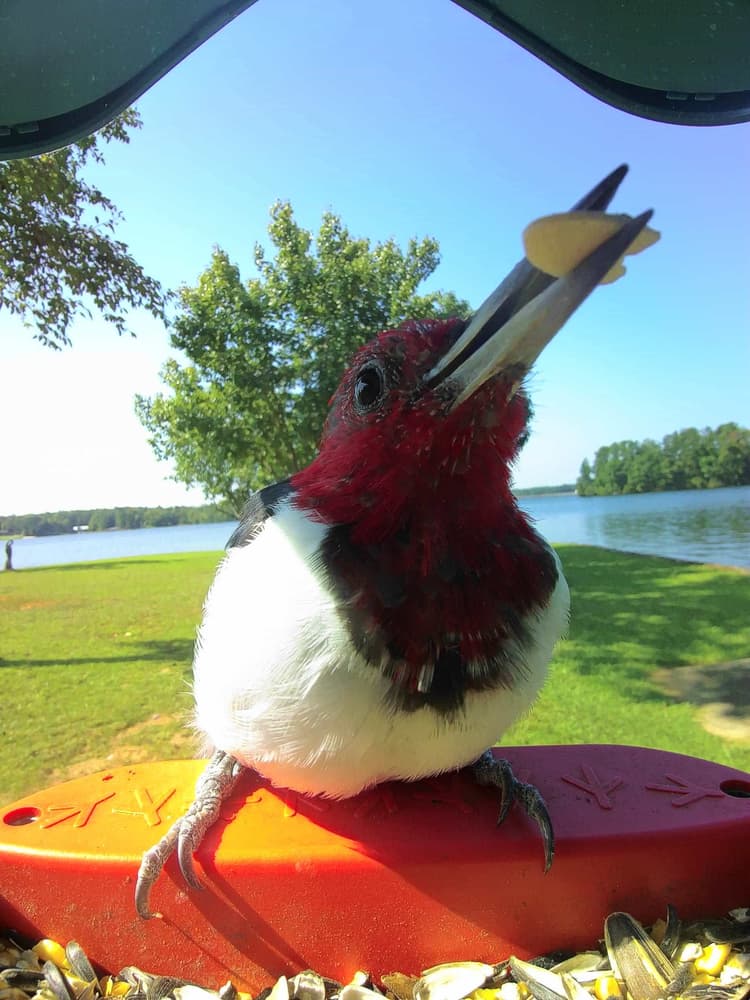
Prominent bright red head contrasts with the rest of the body, making it easily recognizable
- •
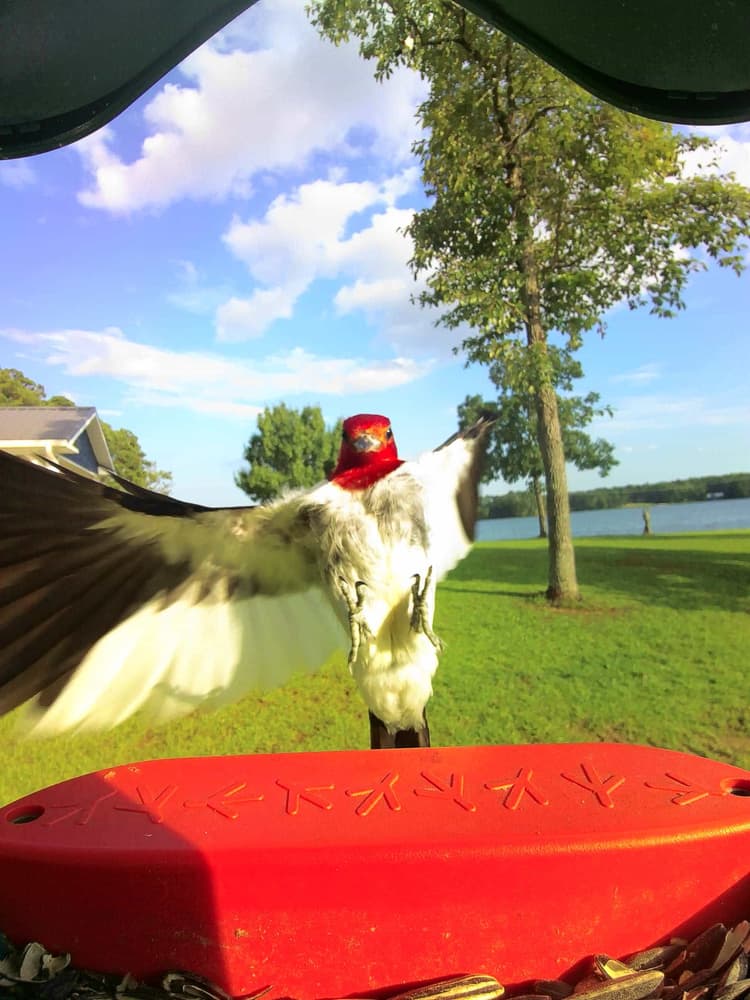
The upperparts are black with a distinctive white wing patch visible when the bird is at rest or in flight
- •
Features a strong, straight beak and a sturdy, medium-sized body for efficient foraging
What does a red-headed woodpecker sound like?
The red-headed woodpecker communicates through a variety of distinct sounds including loud churr-churr and yarrow-yarrow-yarrow. The call patterns primarily fall flat, making the call type unique - the bird produces sounds that can be categorized as a chirp, chip, drum, rattle, or scream. The variation in calls and songs illustrates the complex vocalization system of the red-headed woodpecker.


Description
The red-headed woodpecker has also been called half-shirt' jellycoat, shirt-tail bird, flag bird and flying checker-board! They are extremely territorial and will trash another bird's nest if they have to. All's fair in love and war, right? Speaking of which, they were used as a war symbol among the Cherokee. Did you know that they are the only North American woodpecker that stores food?
The red-headed woodpecker can weigh between 56to91grams and be from19.4to23.5centimeters tall.
The Red-headed Woodpecker typically lives for 12 years. Other species in the same family have approximately equal lifespans, with the Downy Woodpecker living to around 11-12 years and the Hairy Woodpecker up to 15 years. Some outliers like the Pileated Woodpecker can reach ages of 13 years, signifying the strong survival characteristics of this bird family.
Did you know?
Most popular questions about red-headed woodpecker
How to recognise a red-headed woodpecker?
General appearance
The red-headed woodpecker stands at about 10 inches (25 cm) tall, roughly the size of a Robin. Its coloring is striking, with a solid pattern of black, white, and red. Its wing shape is broad and rounded, and it has a multi-pointed, wedge-shaped tail. Large white patches on the wings are key identifiers.
Male vs female
There is no significant difference in the coloration and physical traits between male and female red-headed woodpeckers. Both genders boast the same pattern of black, red, and white, as well as the noteworthy white wing patches.
Juvenile
Distinguishing juvenile red-headed woodpeckers from adults is fairly manageable. Young birds sport a brown head, in contrast to the vivid red of the adults. Their white wing patches are streaked with dark bars. As they approach their first winter, the brown on their head gradually gives way to red.
Often mistaken for
Red-Bellied Woodpecker vs Red-Headed Woodpecker
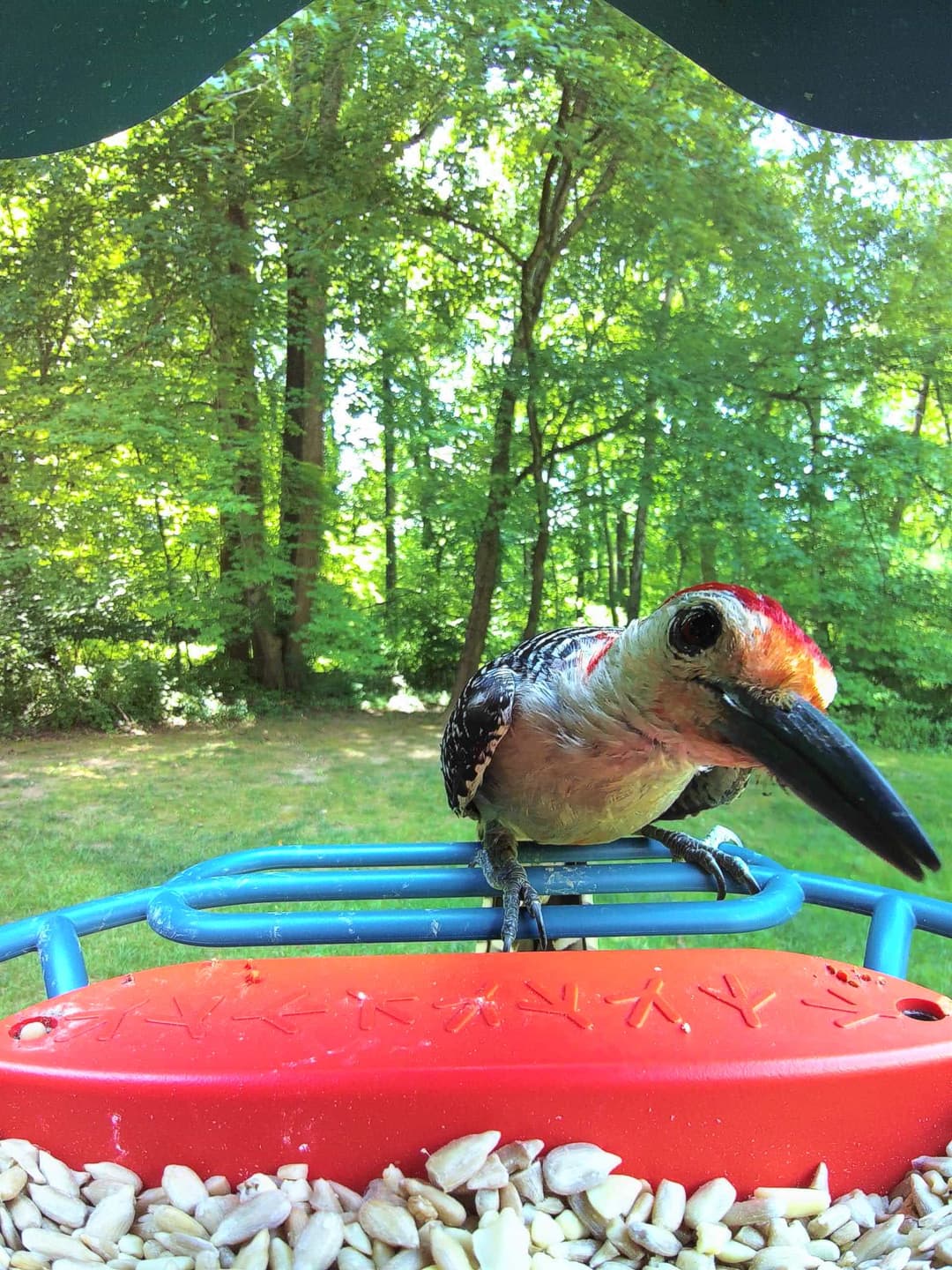
Red-Headed Woodpeckers have a completely red head, whereas Red-Bellied Woodpeckers have a red cap and nape, but their head is not fully red. Additionally, Red-Bellied Woodpeckers have a distinctly barred black and white back and pale belly with a slight reddish tint.
Golden-Fronted Woodpecker vs Red-Headed Woodpecker
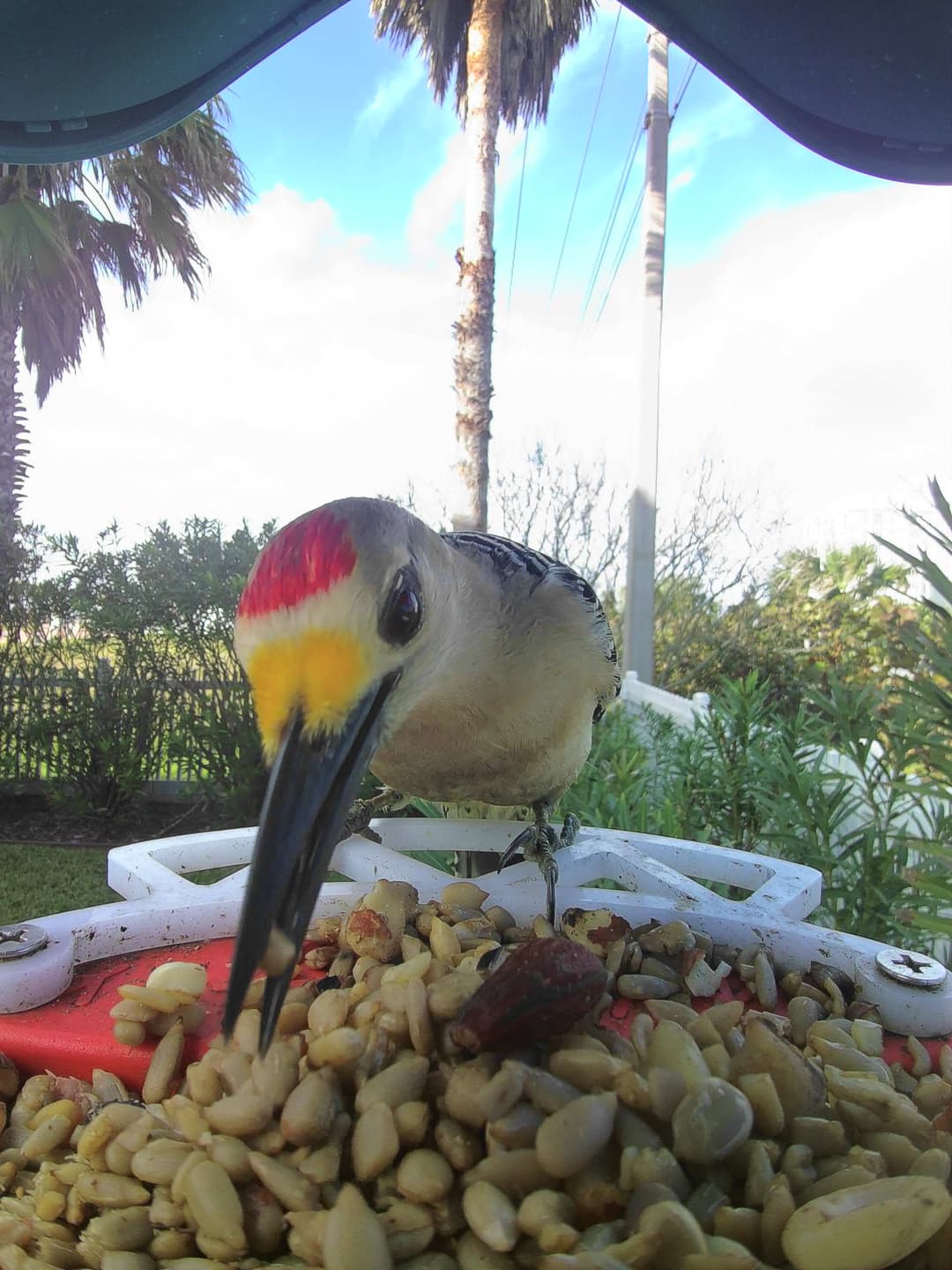
Golden-Fronted Woodpeckers have yellow or golden tones on their forehead and nape, but not a completely red head. Their back is black and white with a barred pattern, different from the Red-Headed Woodpecker's solid black back.
Pileated Woodpecker vs Red-Headed Woodpecker
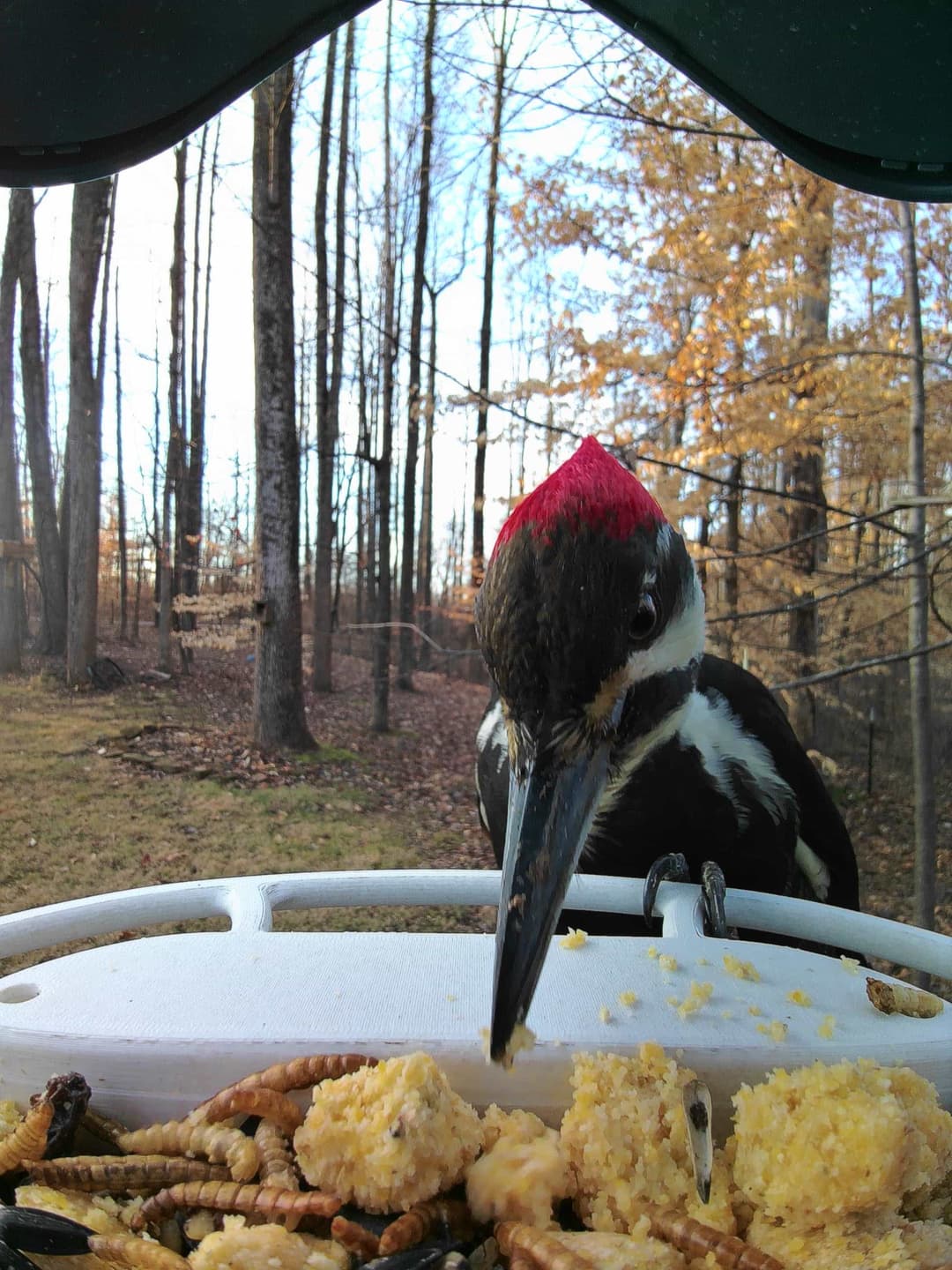
Pileated Woodpeckers are much larger with a bold red crest. Their body is mostly black, lacking the Red-Headed Woodpecker's striking white patches. The Pileated has a white line from the bill to the throat, a feature absent in Red-Headed Woodpecker.
Breeding and nesting habits of the red-headed woodpecker
Mating behaviors
Red-headed woodpeckers establish territories through calling and drumming. Males choose and prepare the nesting site, and females indicate acceptance by tapping on the tree.
Nesting details
Their nests are located in cavities of bare dead trees or limbs, ranging from a few feet above ground to 65 feet or higher. Nesting cavities may be existing roosts or newly excavated by the male.
Eggs and chick-rearing
Once the nest is prepared, females lay eggs which are incubated and cared for by both parents. The chicks are reared in the cavity, with both parents involved in feeding.
What does a red-headed woodpecker like to eat?
Berries
Bird eggs
Birds
Carrion
Fruits
Insects
Nuts
Scraps
Seeds
Small animals
Worms
Natural diet
The red-headed woodpecker is highly omnivorous and perhaps the most omnivorous among woodpeckers. Its diet includes a wide variety of insects and other invertebrates such as spiders and earthworms. It also consumes nuts, seeds, berries, and both wild and cultivated fruits. Occasionally, it may eat small rodents and is known to eat eggs and nestlings of other birds. Additionally, the red-headed woodpecker sometimes feeds on bark.
Bird feeders
At bird feeders, red-headed woodpeckers are likely to consume nuts and seeds, which align with their natural diet. They might also be attracted to suet feeders, as suet provides a high-energy food source similar to those they find in nature.
Use the correct type of feeder
Red-headed woodpeckers are attracted to platform feeders and suet feeders. Suet is a special type of bird feed made from animal fat that is particularly appealing to woodpeckers. You can hang these feeders from trees around your garden or attach them to your windows for easy viewing.
Offer their favorite snacks
Red-headed woodpeckers love to eat a variety of foods. This includes insects, berries, acorns, nuts, and corn. However, for easy feeding and the best results in attracting them, it's advised to use Bird Buddy seeds. These seeds are chosen by bird experts for the season and have proven to be very enticing to the red-headed woodpecker.
Setting the scene for a 'sing-along'
Once your feeders are set up and stocked with tasty Bird Buddy seeds, you might try positioning a bird bath near the feeders. The sound of trickling water can be quite alluring to these woodpeckers, and may encourage them to hang around for a while, enjoying their snacks and ‘singing along’ to the sounds of the yard.
Where can you find red-headed woodpeckers?
Primary habitat
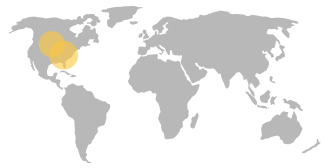
The red-headed woodpecker favors open country, forest edges, groves of tall trees, orchards, and shade trees in towns. Large scattered trees in farm country are also preferred.
Additional range
In winter, its habitat can be influenced by food sources available in fall like acorns or beechnuts. It may inhabit open pine woods and avoids unbroken forests.
Do they migrate?
The red-headed woodpecker exhibits partial migratory behavior, meaning that some individuals are permanent residents while others migrate seasonally. Birds from northern and western regions typically migrate to southeastern states for the winter. This species is considered a short-distance migrant and does not travel south of the United States. The migration of the red-headed woodpecker occurs during the day. These birds generally begin their southward journey in late summer to early fall and return to their breeding grounds in the spring. Key locations for wintering include southeastern states such as Florida, Alabama, and Georgia, where they find milder climates and ample food supply during the colder months. During migration, red-headed woodpeckers might stop in various habitats that offer suitable food sources, such as open woodlands, forest edges, and areas with abundant fruiting trees. Their migratory routes often follow geographical features like river valleys and ridgelines which provide navigational aids and feeding opportunities. This species' migration patterns can vary based on local environmental conditions, food availability, and population dynamics, contributing to their diverse wintering strategies.
What is the role of red-headed woodpeckers in nature and how to protect them?
Conservation status
The red-headed woodpecker, once common in the eastern regions, is now experiencing a significant decline. It is not considered endangered but is vulnerable due to various threats. Key challenges include the loss of nesting sites from the cutting of dead trees, competition with starlings for nest cavities, and high mortality rates from being struck by cars. Conservation efforts are focused on preserving natural habitats and ensuring the availability of nesting sites to support population stability and growth.
Ecological role of red-headed woodpeckers
Its role in the ecosystem
The Red-Headed Woodpecker plays a crucial role in maintaining ecosystem balance. It is reputed as one of the most omnivorous woodpeckers, with a diet including various insects, spiders, and earthworms. As such, it contributes significantly to pest control by reducing harmful insect populations. The species' unique feeding behavior, where it gathers acorns, beechnuts, and other nuts, aids in seed dispersal, promoting vegetation growth as these stored seeds germinate. This woodpecker also has an impact on avian biodiversity as it occasionally feeds on eggs and nestlings of other birds. Moreover, its nesting habits, exploring new cavities while reusing ones previously occupied, foster richer habitat diversity. As a result, it supports various other species that rely on these excavations for shelter. Thus, the red-headed woodpecker offers a multifaceted contribution towards sustaining the ecological integrity of its environment.
How to help protect red-headed woodpeckers
Preservation tips
Habitat preservation strategy
Support red-headed woodpecker conservation through preserving its habitat. This bird thrives in open areas with sparse understory. Protect existing habitats and restore degraded ones. Leave dead trees, which provide nesting habitat and food resources. Implement controlled burns in forested areas to maintain suitability of the habitat.
Community science initiatives
Engage the community in citizen science programs for monitoring populations. Participation in nest monitoring projects can provide valuable data about population trends. Encourage reporting of red-headed woodpecker sightings to local wildlife organizations. Increasing public awareness can also result in human behaviors that are more sensitive to conserving and restoring habitats.