
Lincoln’s Sparrow
Lincoln’s Sparrow
Melospiza lincolnii


Quick Identification guide
Quick Identification guide
Male
- •
streaked brown upperparts and a buff-colored breast with fine streaks
- •
Distinct gray head with chestnut crown and cream-colored eye-ring
- •
Slender, pointed beak suited for seed consumption
Female
- •
streaked brown upperparts and a buff-colored breast with fine streaks
- •
Similar gray head with chestnut crown and cream-colored eye-ring as male
- •
Possesses a slender, pointed beak just like the male
What does a Lincoln's sparrow sound like?
The Lincoln's Sparrow produces rich, melodic vocalizations distinguished by a wren-like song, underscored by a gurgling sound. This song, characterized by a rise in the middle and sudden drop at the end, features a unique, undulating call pattern. Its typical calls can be described as a "Chirp" or "Chip," often interspersed with trilling sounds and whistles, demonstrating a variety in their method of communication.


Description
These dainty little birds were named after Thomas Lincoln, John J Audubon's travel companion. If you want them to pay you a visit, leave a brush pile in your garden. Did you know that females prefer males that sing during colder mornings? Singing when it's really cold requires more energy, which probably means those males are better mates!
The Lincoln's sparrow can weigh between 17to24grams and be from13to15centimeters tall.
The Lincoln’s Sparrow typically lives up to 7 years. This lifespan is near-average for small sparrows, with related species like the Song Sparrow living up to 11 years and the Savannah Sparrow living up to 13 years. These estimates, however, largely depend on surviving the first year, which is a challenging period for most sparrows due to predation and disease.
Did you know?
Most popular questions about Lincoln's sparrow
How to recognise a Lincoln's sparrow?
General appearance
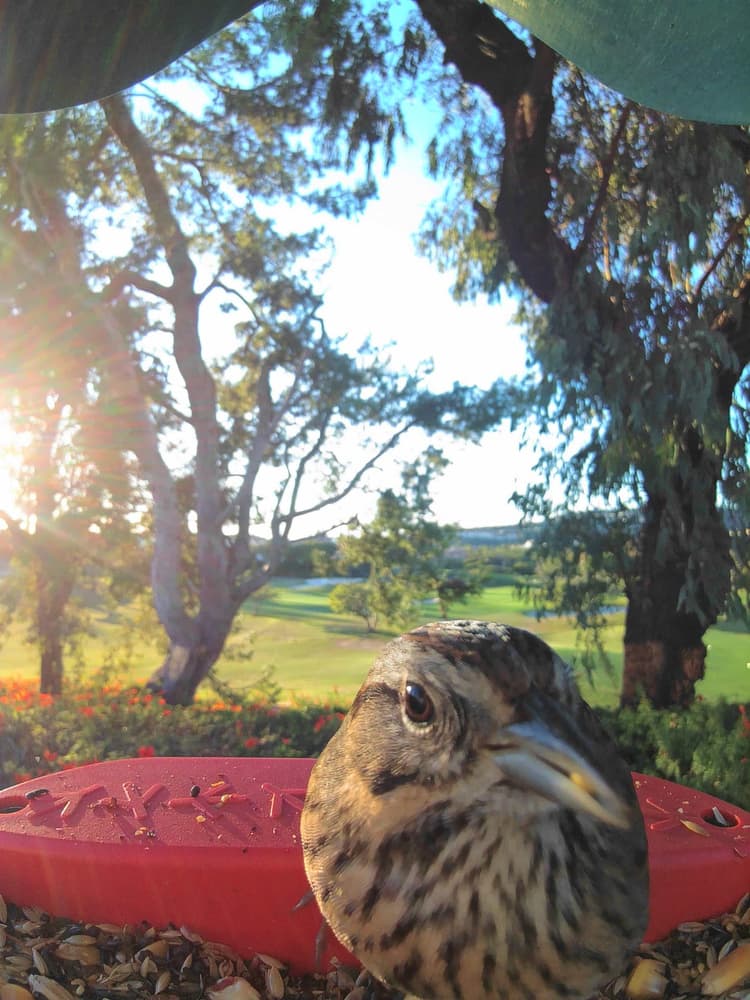
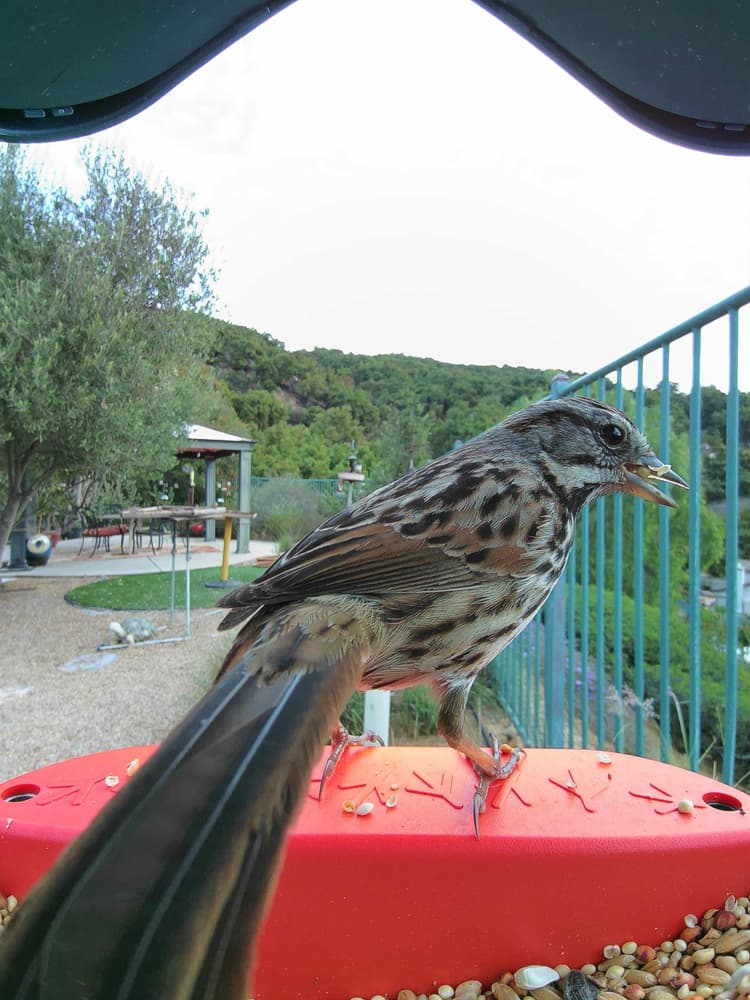
The Lincoln’s Sparrow is about the size of a common Sparrow, measuring 5-6 inches, which is equivalent to 13-15 cm. They are characterized by contrasting face colors including a buff-colored 'whisker', gray eyebrows, as well as brown cheeks and crown. Their chest is richly buff, finely streaked with narrow black lines. Their wings are broad in shape, and they have a notched, rounded, or square-tipped tail. Their colors range from black, brown, and gray, to tan and white.
Male vs female
There is no distinctive coloration or physical trait differences between male and female Lincoln’s Sparrows as they are similar in both size and colors. Both sexes possess the distinctive buff-whisker and brown cheeks making gender identification challenging in the wild.
Juvenile
Juvenile Lincoln’s Sparrows can be mistaken for juvenile Song Sparrows in the summer due to their buffy color and narrow streaks. However, these young sparrows will usually take on the distinctive adult coloring and streaking as they mature.
Often mistaken for
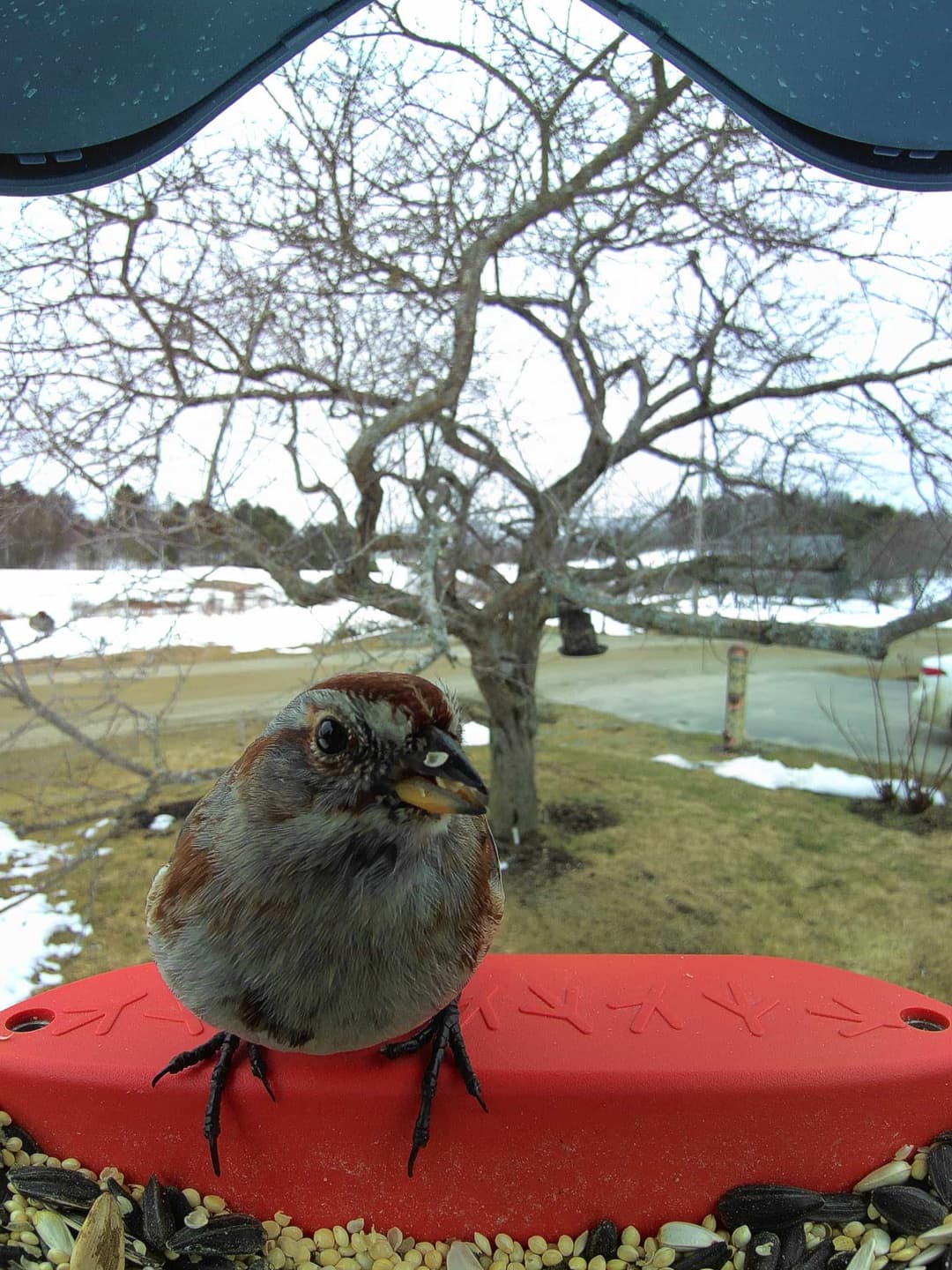
Swamp Sparrow vs Lincoln’s Sparrow
Lincoln's Sparrow has a more finely streaked chest and crisper facial markings compared to the buffy and more uniform look of a Swamp Sparrow. Look for the neat mustache stripe on Lincoln's Sparrow.
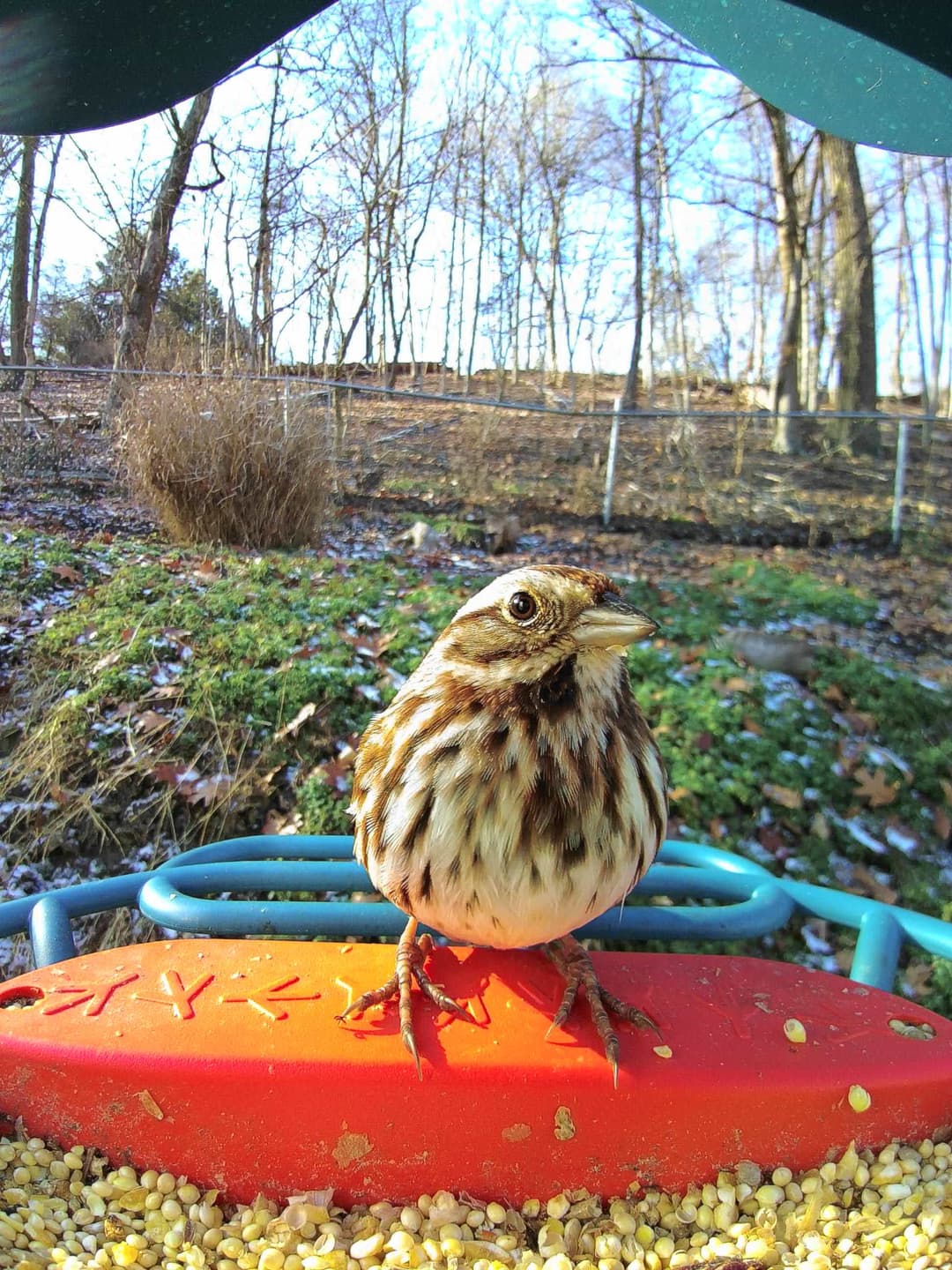
Song Sparrow vs Lincoln’s Sparrow
Lincoln's Sparrow is smaller, with more delicate streaking and a buffy wash to the chest. In contrast, Song Sparrows are bulkier and have bold, messy streaks on a whitish chest.
Savannah Sparrow vs Lincoln’s Sparrow
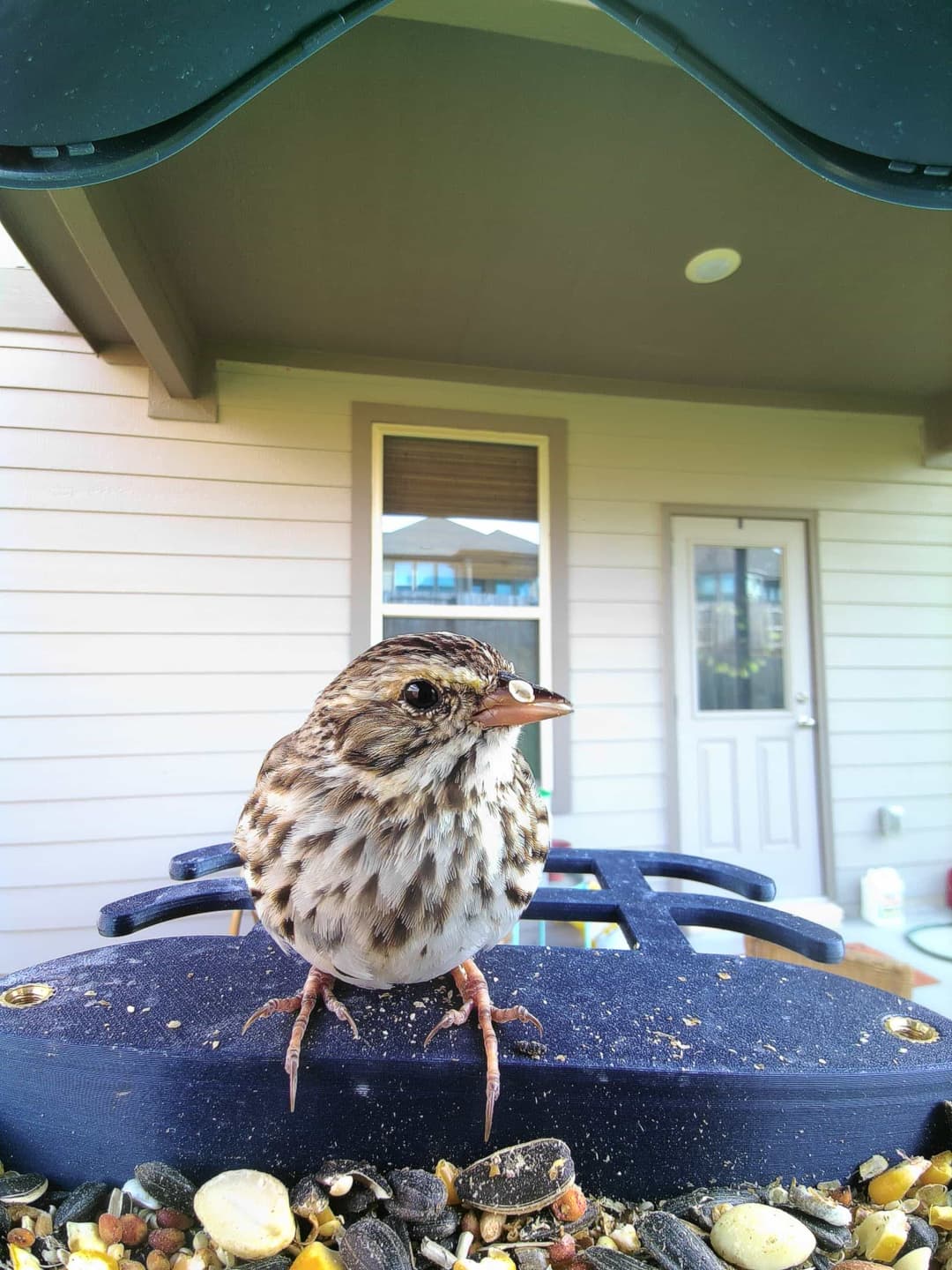
Savannah Sparrows have a distinct yellowish eyebrow, lacking in Lincoln's Sparrow, which instead shows a buffy eye-ring. Lincoln's Sparrow also has a richer, more complex song.
Vesper Sparrow vs Lincoln’s Sparrow
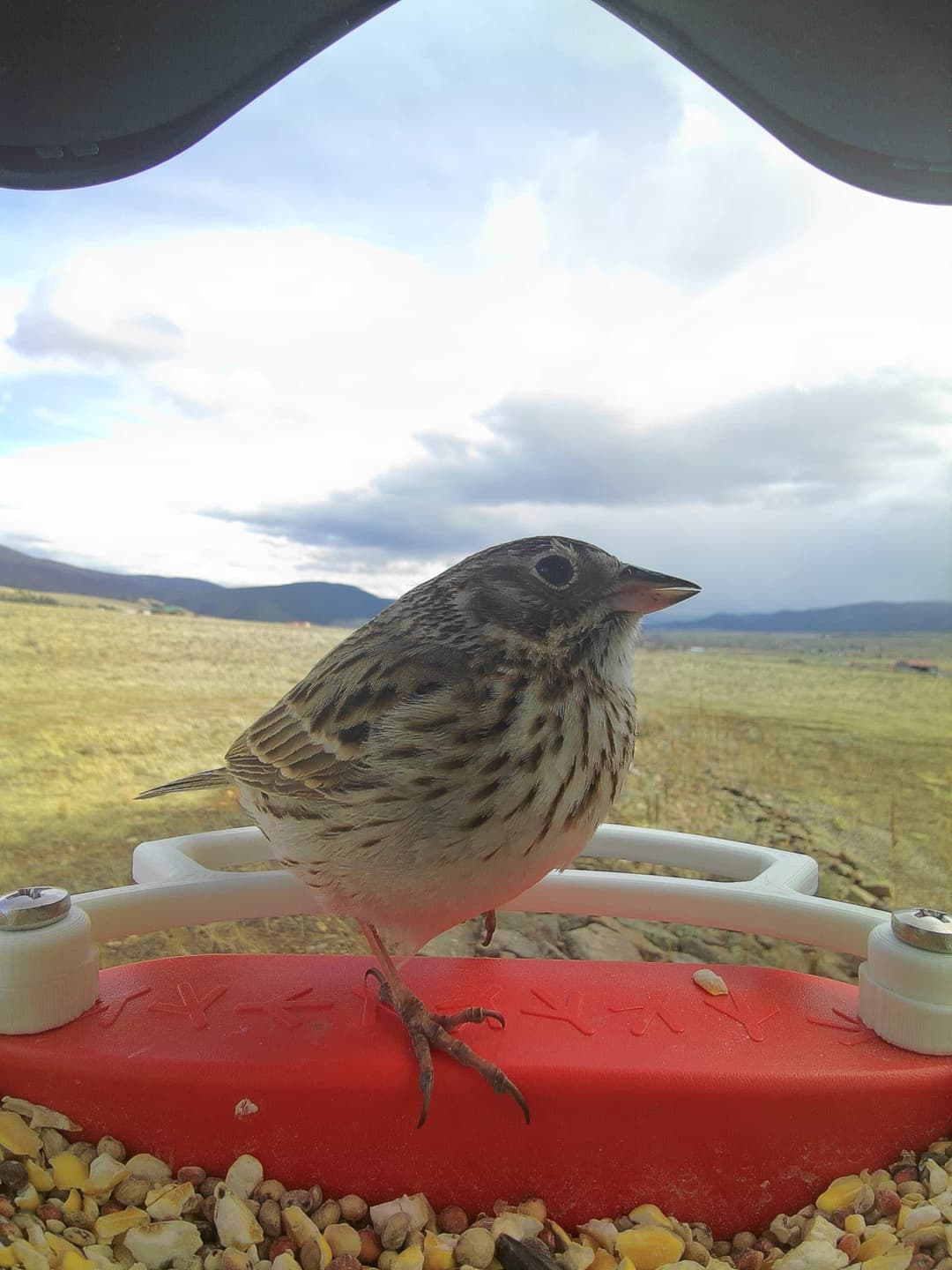
Vesper Sparrows possess white outer tail feathers and a more plain face, whereas Lincoln's Sparrow is more finely patterned, with a buffy chest and crisp face markings.
Breeding and nesting habits of the Lincoln's sparrow
Mating behaviors
Male Lincoln's Sparrows defend their nesting territories through singing. In areas where they coexist with Song Sparrows, competition ensues for territory, but Song Sparrows typically have the upper hand.
Nesting details
Nests are built on the ground, well-concealed under clumps of grass or dense shrubbery, often in depressions within sphagnum moss or other ground cover. The female solely constructs the nest, forming a shallow, open cup from grasses or sedges, lined with fine grass and occasionally animal hair.
Eggs and chick-rearing
Lincoln's Sparrows incubate eggs and rear chicks in ground nests, benefiting from the camouflaged locations. Details on the number of eggs or specific chick-rearing practices are limited, but ground concealment aids in protection from predators.
What does a Lincoln's sparrow like to eat?
Insects
Seeds
Spiders
Natural diet
Lincoln's sparrow primarily feeds on insects and spiders during the summer months. It consumes beetles, caterpillars, ants, and flies which provide essential protein for breeding and growth. During the fall and winter, its diet shifts to seeds and grains, including weed seeds, small fruits, and occasionally berries, enabling survival in colder climates.
Bird feeders
Though Lincoln's sparrow does not frequent feeders as often as some other sparrows, it might occasionally be found consuming millet, sunflower seeds, and cracked corn. Providing mixed seed blends can attract these birds, especially in areas close to their natural habitats.
Choose the right feeder
The Lincoln’s Sparrow prefers platform feeders or ground-feeding. Therefore, opting for a platform or tray feeder is a smart choice. Remember to place your feeder in a calm, serene area with thick shrubbery nearby. This gives your beautiful visitors better safety from predators and is closer to their natural habitat.
Offer tasty treats
The Lincoln’s Sparrow is known for its love for various seeds, insects, and berries. Fill your feeder with high-quality Bird Buddy seeds. Specially chosen by bird experts for the season, these seeds tend to offer amazing results in attracting this shy bird variety. Don't forget to include seasonal fruits and berries occasionally.
Maintained greenery
To ensure frequent visits from the Lincoln’s Sparrow, maintaining a garden with native plants that produce fruits or seeds can be beneficial. They love thickets and dense shrubby areas, so try to include some of these in your garden layout.
Water sources
Like all birds, the Lincoln’s Sparrow appreciates fresh, clean water. Consider installing a bird bath, fountain, or any other water source in your yard.
Sing-along invitation
The Lincoln’s Sparrow is known for its melodious song. Engage in a pleasant 'sing-along' by playing soft bird music or hang wind chimes in your garden. This creates a serene ambience that might just tempt these pretty birds to stay and sing along!
Where can you find Lincoln’s sparrows?

Primary habitat
The Lincoln’s sparrow typically resides in northern and mountainous regions with dense low vegetation near water, such as streamside willow groves, bushy bog edges, and brushy clearings in wet coniferous forest.
Additional range
In winter, this bird retreats to thickets, weeds, and overgrown fields. It prefers environments such as willow and alder thickets, muskeg, and brushy bogs.
Do they migrate?
Lincoln's Sparrow is a migratory bird species known for its seasonal movements. These sparrows breed primarily in the boreal and montane regions of Canada and the northern United States, and they migrate to wintering grounds in the southern United States, Mexico, and Central America. The migration of Lincoln's Sparrow is spread over a long period in both spring and fall. In spring, they typically begin their northward migration from their winter habitats in March and April, reaching their breeding grounds by May. In fall, they embark on their southward journey starting around September, with migration continuing till November. Key locations during migration include the western United States, where varied habitats such as taiga and montane meadows offer necessary stopover sites. Migration routes can be regionally variable, especially in the West, where some birds may migrate both early and late in the season, allowing them flexibility in response to weather conditions and resource availability. The diversity in migration timing helps them adapt to the shifting environmental conditions across their expansive range. Overall, Lincoln's Sparrow exhibits a robust migration strategy that is well-suited to the dynamics of their habitat and resource distribution.
What is the role of Lincoln’s sparrows in nature and how to protect them?
Conservation status
The Lincoln's sparrow is currently classified as "Still widespread and common," indicating it is neither vulnerable nor endangered. Its stable population suggests it faces no immediate significant threats. Key conservation efforts focus on preserving its natural habitat, such as wet meadows and shrubby areas, which are crucial for its breeding and survival. The species benefits from ongoing habitat protection initiatives and monitoring programs. Given its adaptability, the Lincoln's sparrow has managed to maintain a secure status, though continued vigilance is necessary to ensure its continued wellbeing amid changing environmental conditions.
Ecological role of Lincoln’s sparrows
Its role in the ecosystem
The Lincoln’s sparrow plays a significant role in maintaining the health and balance of the ecosystems in which it resides. It is a key contributor to pest control, feeding on various insects such as caterpillars, beetles, moths, ants, flies, and others. By consuming these insects, the sparrow helps to limit their populations, reducing potential damage to plants and crops. Apart from controlling insect populations, the Lincoln's Sparrow also contributes to seed dispersal. It feeds on the seeds of weeds and grasses, particularly in winter. After consuming these seeds, the bird excretes them in different locations, aiding in the dispersion and germination of these plants. Finally, their nests, well hidden under grass clumps or dense shrubberies, provide a microhabitat for other smaller species. Therefore, the Lincoln's sparrow makes substantial contributions to its ecosystem through pest control, seed dispersal, and habitat creation.
How to help protect Lincoln’s sparrows
Preservation tips
Habitat preservation strategies
To help conserve the Lincoln's sparrow, focus on preserving its natural habitat. These birds are found primarily in wetlands and meadows, so policies should be implemented to restrict developments in those areas. Encourage sustainable practices to mitigate climate change as it impacts their habitats. Regular cleanups should be organized to keep their habitat free from pollution.
Community science initiatives
Engage your community in conservation efforts. Organize bird watching groups to monitor sparrows and other local species. Provide educational workshops on the importance of conservation and how to identify different species. Use citizen science platforms, where people can report their sightings of the Lincoln's sparrow, contributing to research and increasing awareness. Share the knowledge about the importance of maintaining rich, undisturbed habitats for this and other species.