
Vesper Sparrow
Vesper Sparrow
Pooecetes gramineus

Quick Identification guide
Quick Identification guide
- •
Features a streaked brown back with fine dark streaks across the body showcasing subtle earthy tones
- •
Displays a white outer tail feathers often noticed in flight against its buffy plumage
- •
Marked by a small, conical beak set within a rounded head, ideal for seed foraging
What does a vesper sparrow sound like?
The vesper sparrow's vocalizations comprise a slow series of four clear musical notes, typically with the last two notes being higher in pitch. The song concludes with a descending series of trills. The sound has been interpretively described as "come-come-where-where-all-together-down-the-hill." The bird's call pattern is flat and displays an undulating quality. The types of calls made by the vesper sparrow include a chirp, a chip sound, a trill, and a whistle.

Description
Did you know these little guys are the only members of their genus, the name of which translates to grass-dweller? However, there's much more to these adaptable birds: they're some of the first to move in and reclaim abandoned fields and mines. Whatever they do, they do it singing! You can hear them throughout the day, but the best time to catch them singing their little hearts out is at twilight.
The vesper sparrow can weigh between 19.5to28grams and be from13to16centimeters tall.
The vesper sparrow typically lives up to 5 years. Compared to other small sparrows, such as the song sparrow which lives around 11 years, or the house sparrow which can reach 15 years, the vesper sparrow has a comparatively shorter lifespan. Other close relatives like the savannah sparrow also live longer, with an average lifespan reaching up to 13 years.
Did you know?
Most popular questions about vesper sparrow
How to recognise a vesper sparrow?
General appearance
The vesper sparrow is a medium-sized sparrow characterized by its streaked brown body, white outer tail feathers, and a conspicuous chestnut shoulder patch. Its appearance includes a blend of brown, gray, and whitish underparts with streaked flanks. A pale eye ring and a slight crest can sometimes be observed, especially when the bird is alert.
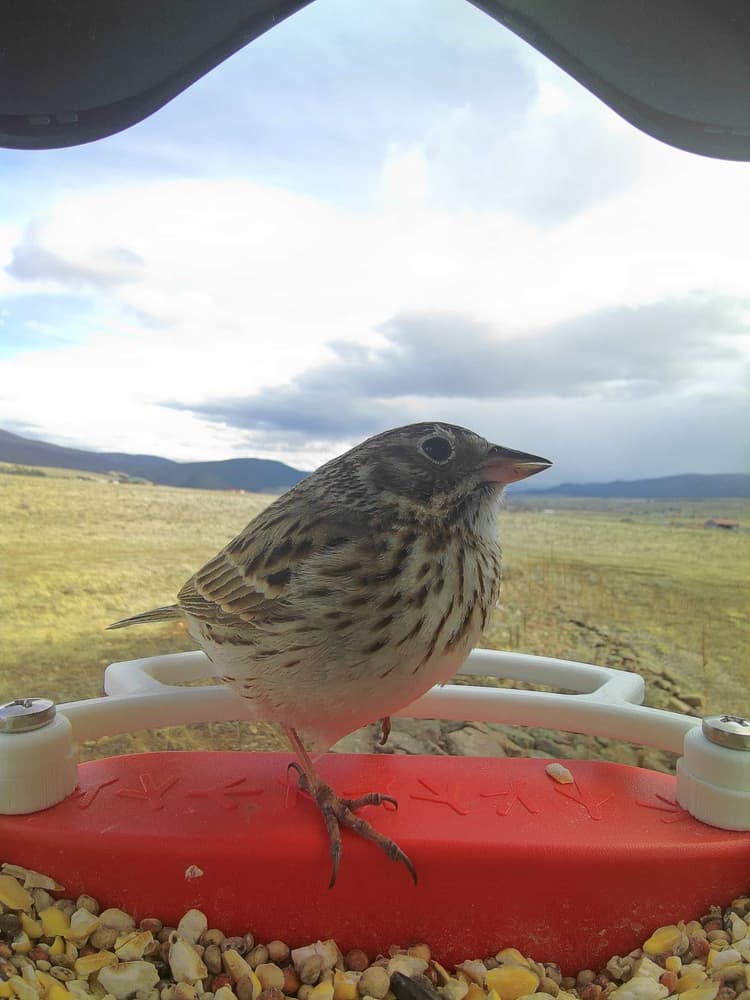
Male vs female
There is minimal sexual dimorphism in vesper sparrows, with males and females appearing similar. Both sexes share the same overall streaked brown coloration and prominent field marks like the white outer tail feathers. During the breeding season, males may exhibit slightly brighter plumage and perform more conspicuous behavior, such as singing from prominent perches.
Juvenile
Juvenile vesper sparrows resemble adults but typically display more subdued and fuzzier plumage with less distinct streaking. They may lack the definitive chestnut shoulder patch seen in adults and have more mottled chest and back patterns. As they mature, the plumage becomes more defined, resembling that of adult sparrows.
Often mistaken for
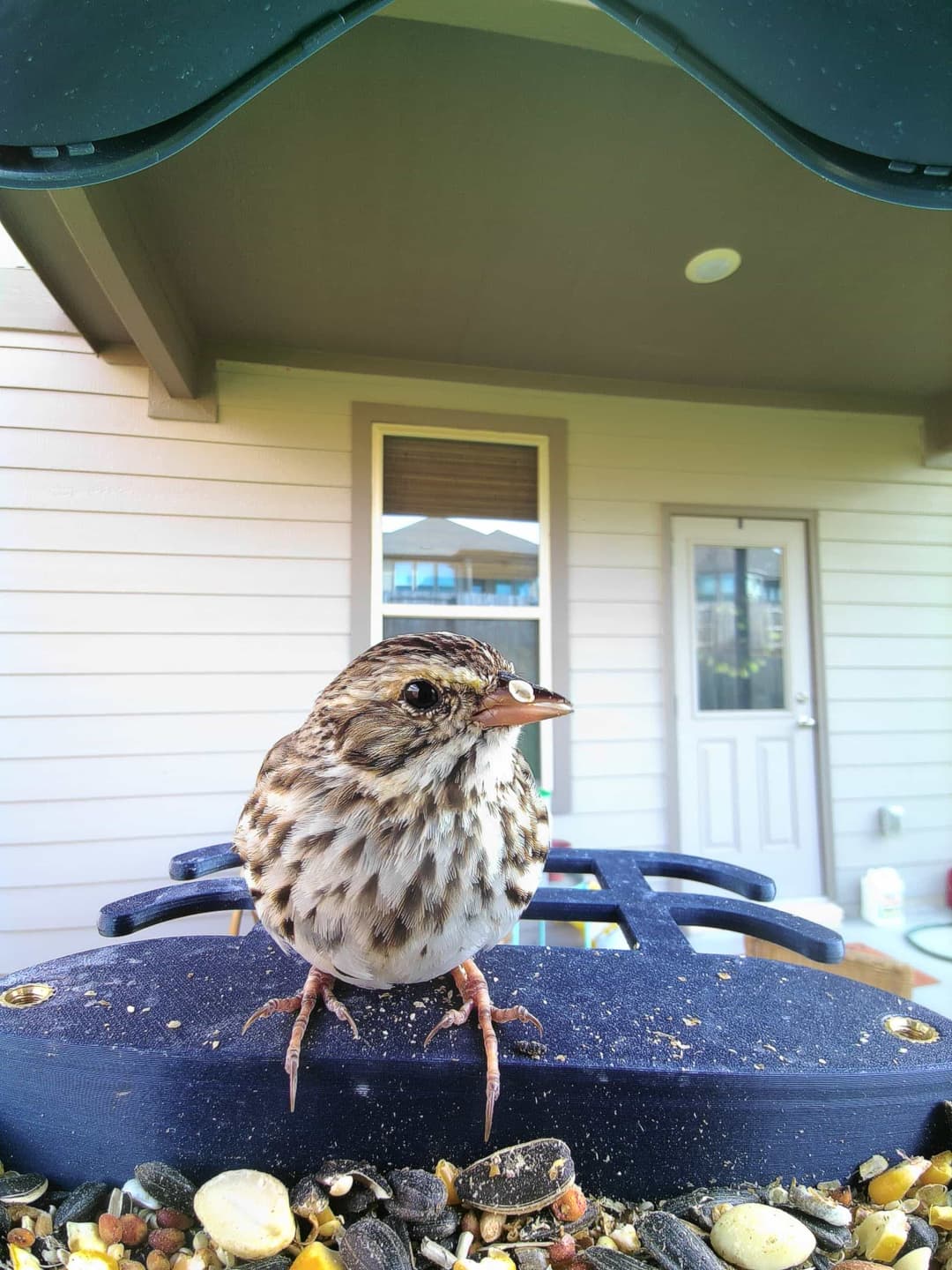
Savannah Sparrow vs Vesper Sparrow
Vesper Sparrows have a more distinct white eye-ring and lack the yellowish eyebrow characteristic of Savannah Sparrows. Vesper Sparrows also have a longer tail, often with white outer feathers visible in flight.
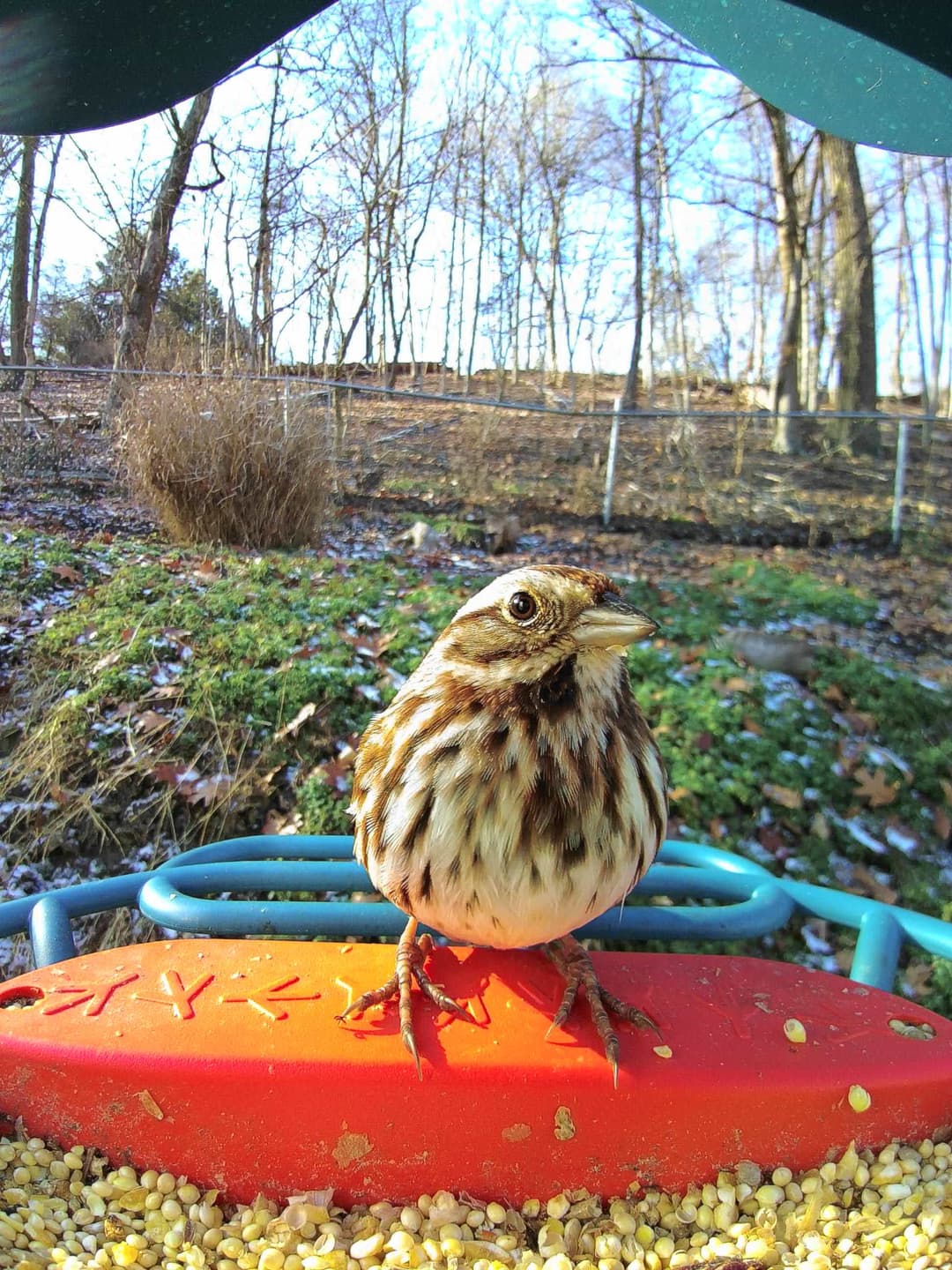
Song Sparrow vs Vesper Sparrow
Vesper Sparrows are paler with less streaking on the breast compared to Song Sparrows. They have a subtle white eye-ring, and their tail is longer and less rounded than the Song Sparrow's.
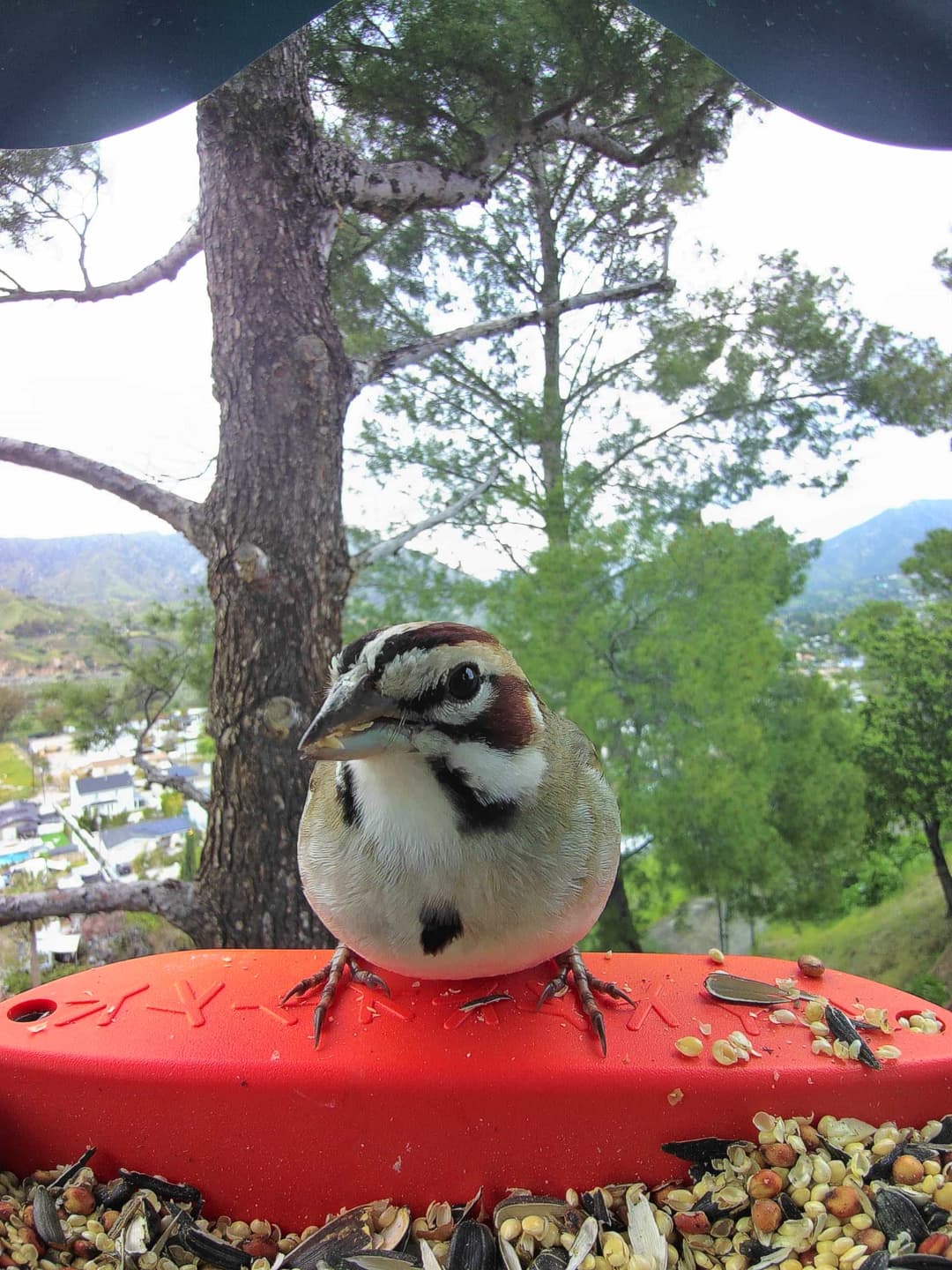
Lark Sparrow vs Vesper Sparrow
Vesper Sparrows lack the distinctive facial pattern of Lark Sparrows, which includes chestnut and white stripes. They are also more uniformly colored with less contrast in their plumage.
Breeding and nesting habits of the vesper sparrow
Mating behaviors
The male defends its nesting territory by singing from prominent raised perches. During courtship, the male often runs about on the ground near the female with wings and tail spread. It may also perform a fluttering display into the air.
Nesting details
Nest sites are located on the ground, typically in slight depressions at the base of grass clumps, weeds, or shrubs. The nests are bulky open cups constructed of grass and weeds, and they are lined with fine grass, rootlets, and animal hair.
Eggs and chick-rearing
Information on egg characteristics and chick-rearing practices is not provided. However, creating a suitable habitat involves maintaining natural ground cover with grasses and low vegetation to support nesting requirements.
What does a vesper sparrow like to eat?
Insects
Seeds
Spiders
Natural diet
The vesper sparrow primarily feeds on a diet consisting of insects and seeds. During the summer, its diet mainly includes a variety of insects such as beetles, grasshoppers, caterpillars, moths, true bugs, as well as spiders and other invertebrates. In the winter months, the sparrow consumes seeds, primarily those of weeds and grasses.
Bird feeders
Vesper sparrows are less commonly found at bird feeders compared to other bird species. However, they might occasionally eat seeds provided in feeders, especially if natural food sources are scarce. Common feeder foods might include millet or mixed bird seed blends that mimic their natural seed diet.
Attracting the vesper sparrow
To attract a Vesper Sparrow to your yard, provide them with favorable conditions. These birds prefer grassy areas with small shrubs. Avoid heavily wooded or residential areas that are too crowded. They feel safer in open spaces, where they can see predators coming.
Feeding the vesper sparrow
Vesper Sparrows are ground feeders, so the best way to attract them is by scattering seeds on the ground, rather than using traditional bird feeders. Bird Buddy seeds are an excellent option, as they are seasonally chosen by experts and loved by the sparrows. Vesper Sparrows enjoy small grains and weed seeds so keep these in supply.
Fun tricks
Vesper Sparrows love dust bathing, so providing a small dust bath can be a fun trick to attract them. Create a shallow depression in a sunny patch of your yard and fill it with fine dirt or sand. This simulates their natural habitat and can encourage them to visit and stay a while. Remember that these sparrows are known for their melodious song so providing them the right environment can even result in a charming sing-along!
Where can you find vesper sparrows?

Primary habitat
Vesper Sparrows prefer open, grassy or weedy fields, often dry, with open soil. They may also inhabit weedy roadsides and gravel pits.
Additional range
Unexpected environments include high mountain grasslands, stubble fields, and grassy areas above sandy beaches. They breed where there are tall plants to use as song perches.
Do they migrate?
The Vesper Sparrow is a migratory bird that does not stay in one place all year. It migrates relatively early in the spring and late in the fall. Peak migration typically occurs in April and October. During spring migration, Vesper Sparrows travel from their wintering grounds in the southern United States and northern Mexico to their breeding territories in the northern United States and southern Canada. In the fall, they reverse this journey to reach their wintering areas. Key locations along their migration route include the Great Plains, Midwest, and Eastern regions of the United States. Vesper Sparrows favor open habitats such as grasslands, fields, and prairies during their migration. These areas provide essential resources for resting and foraging along the way. Their migration is generally undertaken in small flocks, and they travel at night. This species' relatively predictable migration timing and favored habitats are important for birdwatchers and conservationists monitoring their populations and ensuring these key areas are protected during migration seasons.
What is the role of vesper sparrows in nature and how to protect them?
Conservation status
The vesper sparrow is experiencing a decline in numbers in parts of the Eastern United States, likely due to habitat loss, indicating vulnerability in these areas. However, it remains widespread and common in the Western United States. Key conservation efforts should focus on protecting and restoring habitats in the East to prevent further decline. Significant threats include agricultural expansion, urban development, and loss of grasslands. Conservation strategies could include habitat preservation and managing land use to sustain the population in vulnerable regions. Overall, its status ranges from common in the West to vulnerable in the East.
Ecological role of vesper sparrows
Its role in the ecosystem
Vesper Sparrows play a significant role in the ecosystem. As they predominantly feed on various insects such as beetles, grasshoppers, caterpillars, moths, and others during summer, their presence aids in pest control. They hence help maintain a balanced ecosystem by reducing overpopulation of these species, some of which may be agricultural pests. Additionally, their diet majorly consists of seeds, mainly those of weeds and grasses, during winter. In consuming and processing these seeds, the birds contribute to seed dispersal, facilitating the propagation of these plant species. Thus, Vesper Sparrows not only help in inhibiting the unnecessary growth of pest populations but also contribute to the biodiversity of their ecosystems through their feeding habits.
How to help protect vesper sparrows
Preservation tips
Habitat preservation strategies
Focus on preserving and maintaining the natural grassland habitats of the vesper sparrow. Avoid or minimize disturbances such as development activities and intensive farming which fragment their habitats. Manage and restore these areas by applying controlled burns and native plant seeding to maintain open grasslands.
Community science initiatives
Promote community science initiatives to track and monitor the Vesper Sparrow population. Encourage the public to participate in bird counts or surveys and report sightings. This collective effort will help provide valuable data on population trends and spatial distribution, crucial for effective conservation planning. Additionally, public awareness and involvement can encourage more engagement in the bird’s preservation efforts.