
Hooded Grosbeak
Hooded Grosbeak
Hesperiphona abeillei
Quick Identification guide
Quick Identification guide
- •
Features a striking black hood that covers the head and throat, contrasting with a bright yellow body
- •
Possesses a heavy, conical beak that is perfectly adapted for seed eating
- •
Displays white patches on the wings and a stout, thick build
What does a hooded grosbeak sound like?
The hooded grosbeak sings melodious and complex tunes primarily during the breeding season. Its song resembles high-pitched, rapidly repeated short whistles interspersed with unique notes. It consists of a variety of trills, warbles, and short notes. Common calls include conversational ‘chink’ notes and ‘seee’ sounds. Males are frequently the singers, although females also sing occasionally. Vocalization is habitually heard at dawn or in the evening.
Description
Hooded grosbeaks don't mind a little chill; they prefer it! These little birds are regular little mountaineers, inhabiting high altitudes! They are not much for travelling, though, and do not migrate from their little slice of mountain paradise. They prefer to hang out in pairs or small groups.
The hooded grosbeak can weigh between 46to50grams and be from15to19.5centimeters tall.
Little exact information is available on the lifespan of the hooded grosbeak. However, similar species like the rose-breasted grosbeak have a lifespan of up to 13 years. Lifespan in birds can be influenced by many factors, such as predation, disease, and environmental conditions. Therefore, it's probable that the hooded grosbeak has a similar lifespan, assuming favorable conditions.
Did you know?
Most popular questions about hooded grosbeak
How to recognise a hooded grosbeak?
General appearance
The hooded grosbeak is medium-sized with strong, conical beaks. The most distinctive feature of this bird is its vibrant yellow chest and black head and back: hence the name 'hooded'. They possess broad wings which are dark with two white wing bars. Their tails are wide and have white patches on the ends that are seen more prominently during flight.
Male vs female
Male and female hooded grosbeaks possess similar coloration, making them less sexually dimorphic than other bird species. However, males are typically brighter with more sharply defined hood, while females have paler yellow underparts. Both genders display similar black and white patterns on the wings and tail.
Juvenile
Young hooded grosbeaks more closely resemble females in their coloration, but they are generally duller. With age, their plumage transitions gradually to the dark black hood and bright yellow chest of the adults. Juvenile males will typically exhibit their first signs of their black hood by their first fall season.
Often mistaken for
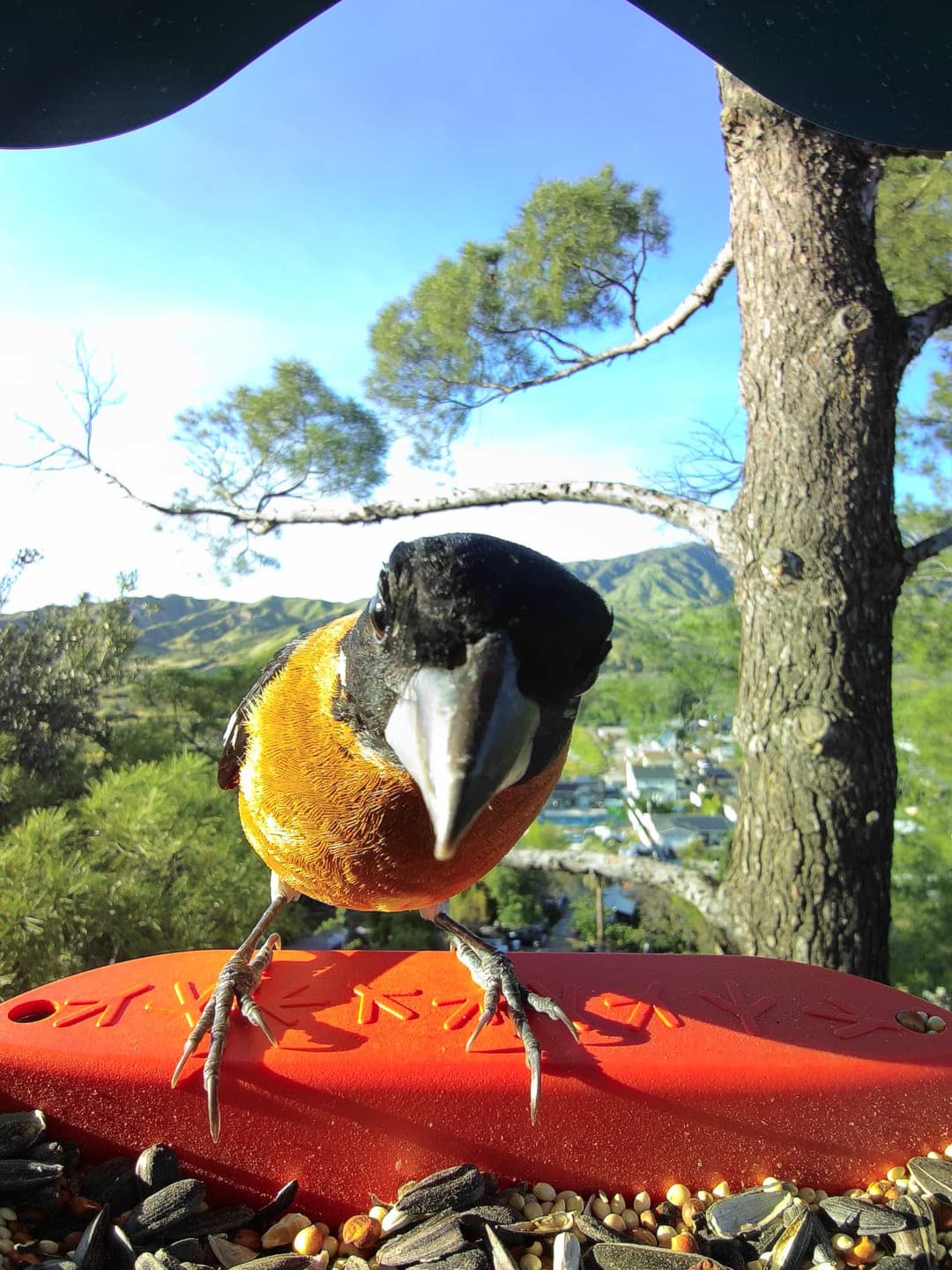
Black-Headed Grosbeak vs Hooded Grosbeak
The Black-Headed Grosbeak is similar to the Hooded Grosbeak due to its overall size and bill shape. However, its head is black instead of having a hooded appearance, and its body exhibits more brown tones. It lacks the vivid yellow underparts characteristic of the Hooded Grosbeak.
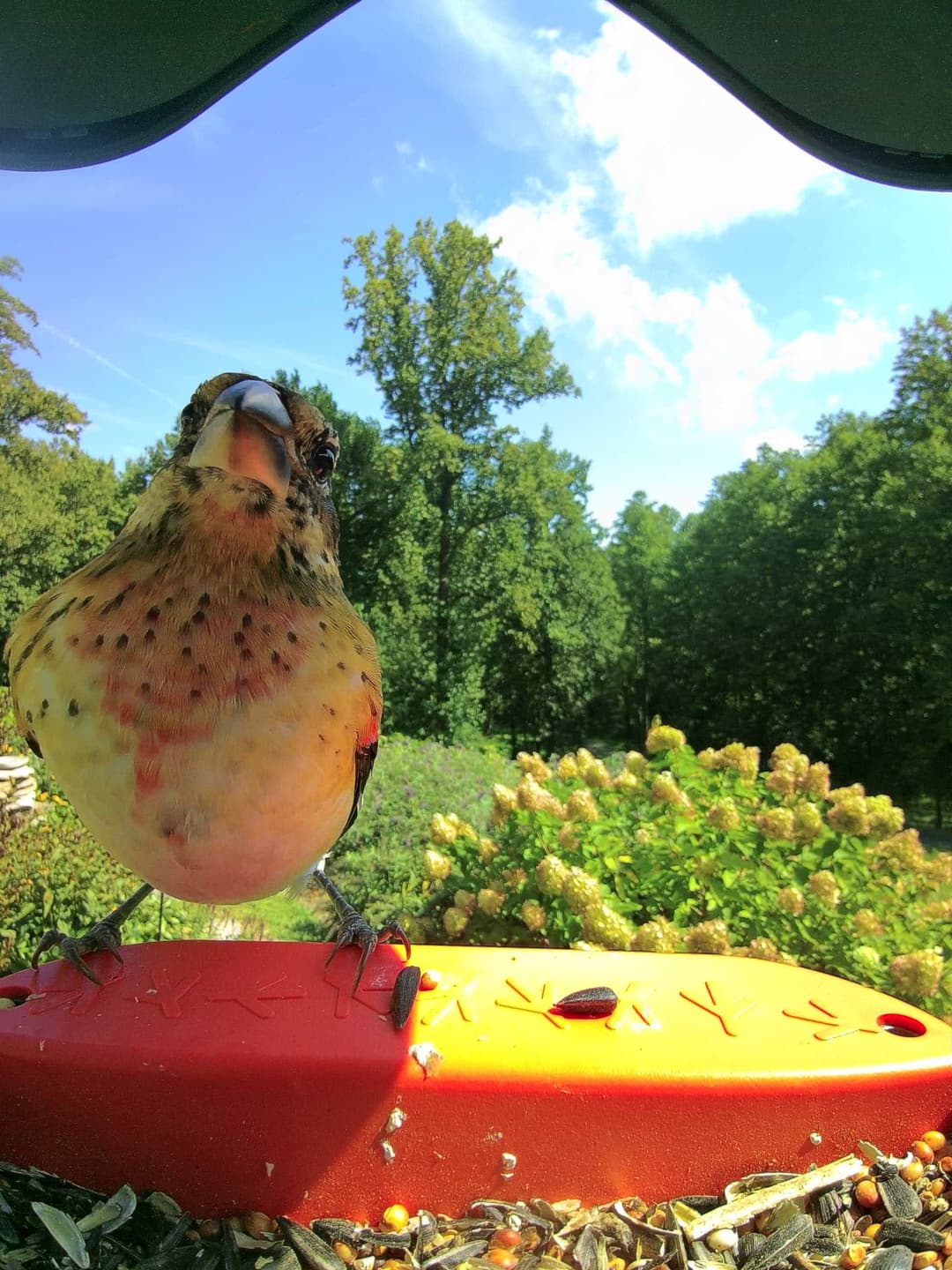
Rose-Breasted Grosbeak vs Hooded Grosbeak
While the Rose-Breasted Grosbeak shares a similar body shape with the Hooded Grosbeak, it is distinguished by its rose-colored breast and black-and-white plumage. It does not have the yellow or orange hues seen in the Hooded Grosbeak.
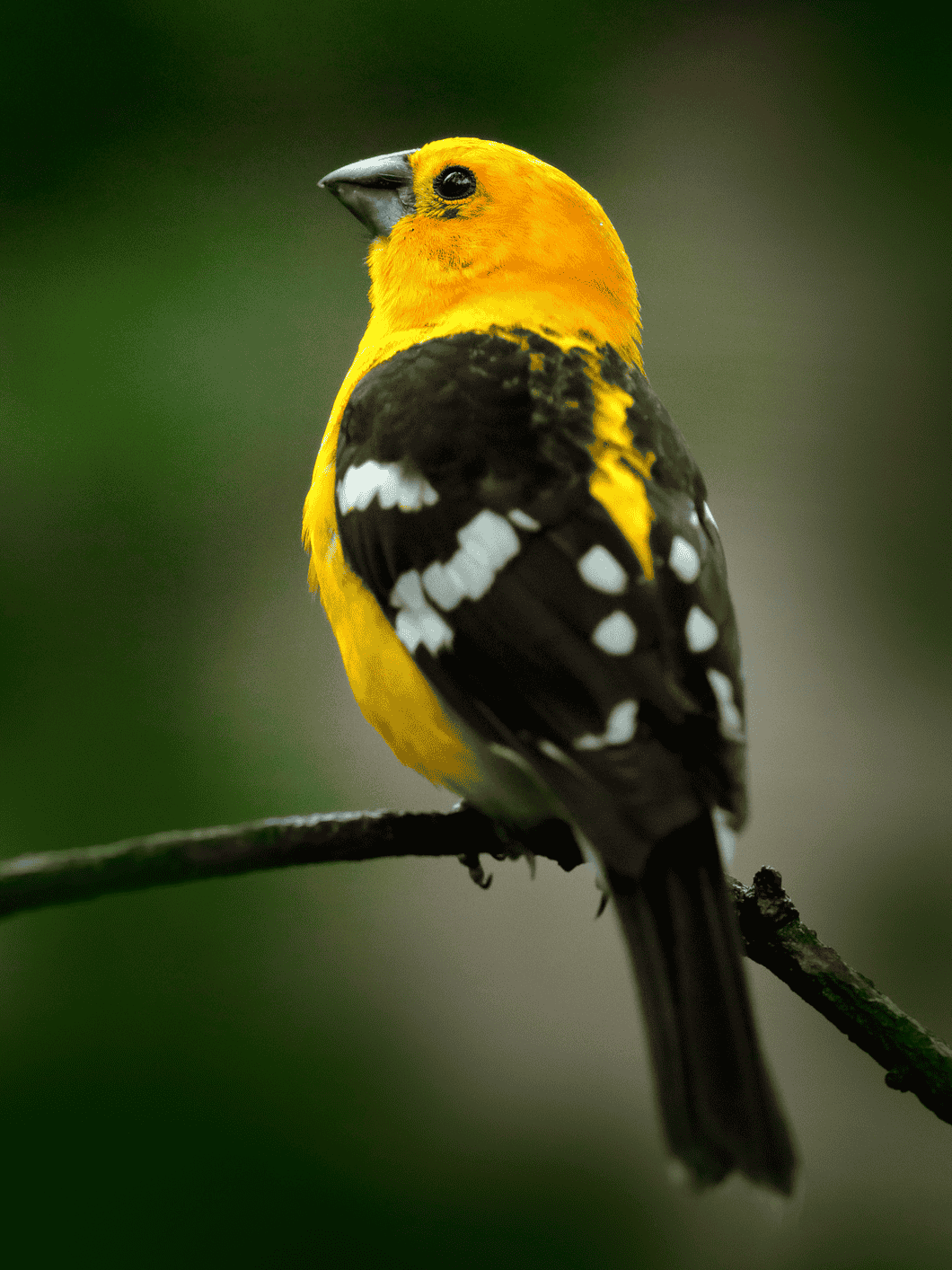
Yellow Grosbeak vs Hooded Grosbeak
The Yellow Grosbeak appears similar due to its yellow coloring and grosbeak bill. However, it typically has less black on the head compared to the Hooded Grosbeak, and its yellow is more uniformly distributed without the distinctive hood.
Evening Grosbeak vs Hooded Grosbeak
The Evening Grosbeak resembles the Hooded Grosbeak but has more olive and gray tones in its plumage. Its head is predominantly darker, lacking the hooded pattern. It also has more prominent white wing patches.

Breeding and nesting habits of the hooded grosbeak
Mating behaviors
Hooded grosbeaks engage in intricate courtship displays involving song, flight displays, and offering food to potential mates. Males showcase their vibrant plumage to attract females.
Nesting details
They typically nest in trees or shrubs, preferring locations that offer dense foliage for concealment. Their nests are cup-shaped and constructed from twigs, grasses, and plant fibers.
Eggs and chick-rearing
Females lay 3-5 eggs, incubating them for about two weeks. Both parents participate in feeding the chicks, which fledge around two weeks after hatching. To attract grosbeaks to gardens, provide dense shrubs and trees, and a consistent food source such as sunflower seeds.
What does a hooded grosbeak like to eat?
Berries
Fruits
Plants
Seeds
Natural diet
Hooded grosbeaks primarily feed on seeds, fruits, and insects. They are known to consume a wide variety of seeds, including those from coniferous trees and deciduous plants. Fruits such as berries are also part of their diet. Insects provide necessary protein, especially during breeding season when nutritional demands are higher.
Bird feeders
At bird feeders, hooded grosbeaks often consume sunflower seeds and mixed seeds. They are attracted to feeders offering a variety of seeds and may also enjoy suet, especially during colder months. Their strong beaks allow them to easily crack open hard shells.
Favorite snacks of hooded grosbeak
To entice a hooded grosbeak to your yard, fill your bird feeder with their preferred diet. This includes seeds, insects, and fruits. 'Bird Buddy' seeds are particularly effective, as they have been chosen by experts for the season.
Ideal feeder types for hooded grosbeak
Hooded Grosbeaks prefer platform feeders or large tube feeders. Place these in a quiet and safe location in your yard. Make sure to clean them regularly to prevent disease spread.
Fun tricks to encourage hooded grosbeak visits
To encourage regular visits from the hooded grosbeak, maintain a steady supply of fresh food, especially during winter months. Planting native shrubs and trees can also provide natural shelter and food sources. And remember, Grosbeaks are known for their song, so a serene environment might entice them for a lovely sing-along.
Where can you find hooded grosbeaks?

Primary habitat
The hooded grosbeak primarily inhabits mountainous regions of Central America, across Mexico. It prefers moist, subtropical forests.
Additional range
It can occasionally be found in shrublands, degraded forests, or plantations, occupying a wider range of environments as needed for feeding and breeding.
Do they migrate?
The hooded grosbeak, predominantly inhabiting parts of Central America, does not migrate. This bird species is largely resident, meaning it stays in its range throughout the year. The hooded grosbeak is typically found in montane forests and woodlands, primarily in regions of Mexico and Central America, such as Guatemala and Honduras. This species prefers high-altitude habitats, often above 1,000 meters, where its environment consists of dense canopy cover and abundant food resources. The consistent climate and availability of food sources in its native regions make migration unnecessary for the hooded grosbeak. Unlike many other bird species that travel long distances between breeding and wintering grounds, the hooded grosbeak's lifestyle is adapted to a stable, year-round habitat. Its territorial behavior further supports its non-migratory nature, as it tends to establish and maintain territories where it can access ample resources throughout the seasons. This local residency helps ensure that the hooded grosbeak thrives in its specialized ecological niche without the need for seasonal migration.
What is the role of hooded grosbeaks in nature and how to protect them?
Conservation status
The hooded grosbeak is generally considered to be of least concern, indicating a stable and relatively common status. However, localized populations may face threats from habitat loss due to deforestation and land-use changes. Conservation efforts focus on preserving natural habitats, especially in regions experiencing rapid deforestation. Protecting forested areas and promoting sustainable land management are critical to ensuring the species' continued stability. Public awareness and engagement in conservation activities further support these efforts, reducing potential threats from human activity.
Ecological role of hooded grosbeaks
Its role in the ecosystem
The Hooded Grosbeak plays a crucial role in maintaining the ecological balance of its habitat. Primarily feeding on insects, they function as natural pest control, reducing the numbers of potentially harmful insect species and consequently supporting the health of vegetation. In addition, these birds consume a large variety of fruits and seeds, contributing to seed dispersal in their environment. This process helps in the propagation of several plant species, ensuring the renewal and growth of forests and woodlands. Therefore, the Hooded Grosbeak is not just a part of the biodiversity but also plays a key role in maintaining it.
How to help protect hooded grosbeaks
Preservation tips
Plant native trees
Contribute to habitat preservation by growing native trees in your backyard. Not only will you create nesting spaces for the hooded grosbeak, but you will also attract insects, their primary food source.
Avoid use of pesticides
Avoid pesticides in your garden as these chemicals can be harmful to the hooded grosbeak. Organic gardening is a fantastic way to provide safe feeding spots for our feathered friends.
Install birdbaths and feeders
Provide fresh water and food with bird baths and feeders. These will be great attractors for the grosbeak and other birds alike.
Join bird-watching groups
Engage in local bird-watching groups to learn more about the hooded grosbeak. Not only does this increase awareness, but it's a great opportunity to connect with fellow bird enthusiasts.
Engage in citizen science
Participate in citizen science projects; your observations can aid in valuable research. A recommended starting point is the Great Backyard Bird Count which takes place every February.