Orange-Breasted Bunting or Painted Bunting?
Here's how to tell the difference
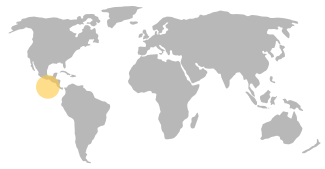
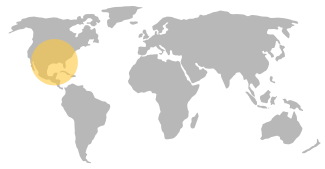

Orange-Breasted Bunting
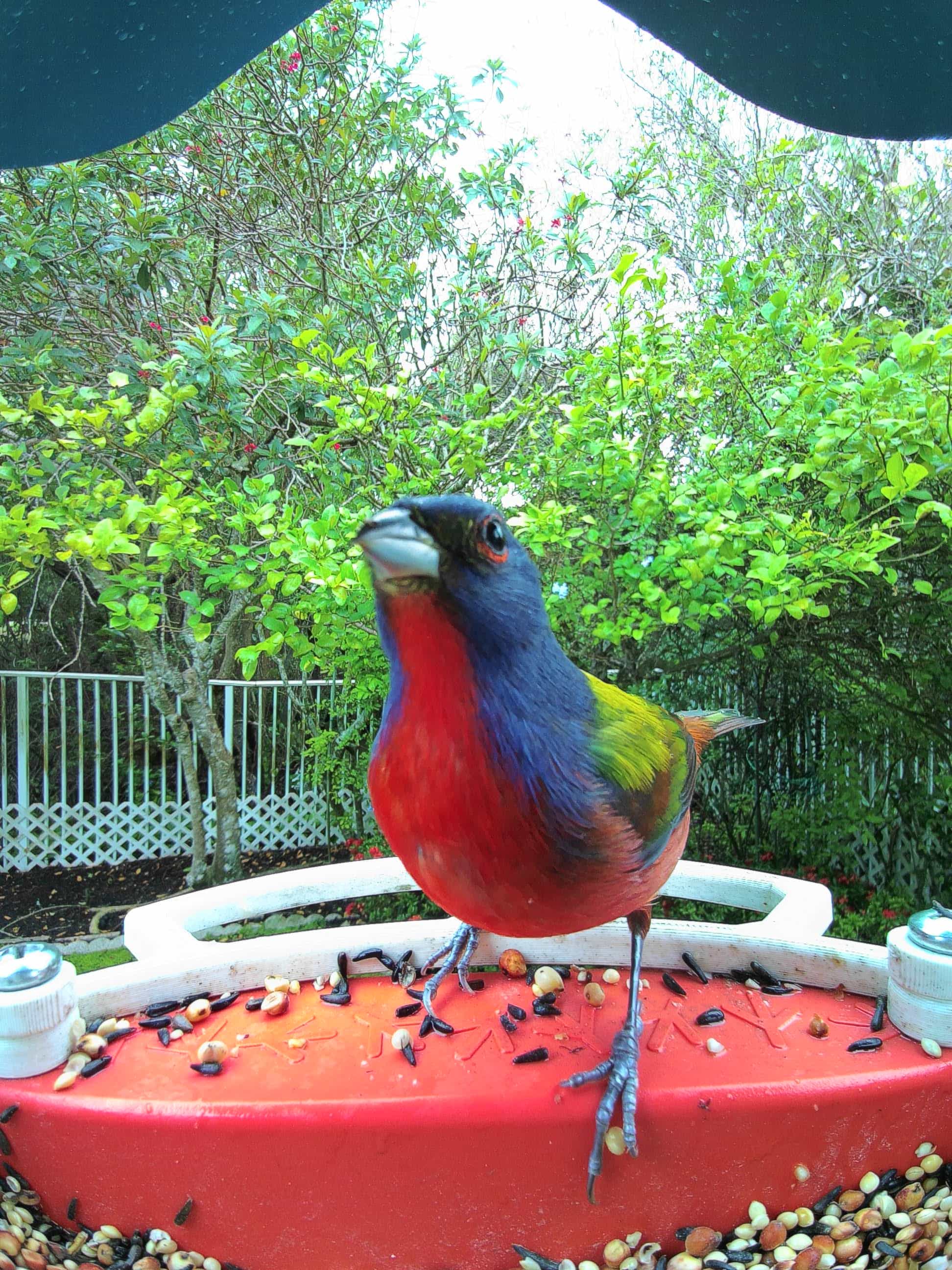


Painted Bunting
Orange-Breasted Bunting
Passerina leclancherii
Orange-Breasted Bunting Identification Guide
The Orange-Breasted Bunting, Passerina leclancherii, showcases vibrant coloration, primarily characterized by its distinct mix of blue and yellow hues. This small passerine bird exhibits a vivid orange breast contrasted against turquoise to bright blue plumage on the head, back, and wings. The underparts transition from orange at the breast to yellows in the belly regions. The head nestles bright bluish tones, offering a striking contrast against the brighter chest and lower body regions.
Male vs Female
Sexual dimorphism in the Orange-Breasted Bunting is pronounced. Males display more vivid colorations, with a glowing orange breast and brighter blue on their upper parts, designed to attract females. Females, in contrast, exhibit more subdued colors with a paler, less bright appearance. Their breasts have softer orange tones, and their upperparts are a duller greenish-blue. This differentiation assists in camouflage, providing extra protection during breeding times.
Juvenile Characteristics
Juveniles present an overall duller and less striking appearance than adults. They typically lack the distinctive orange breast found in mature specimens. Instead, juveniles display a mix of olive and grayish tones across their plumage, helping them blend more easily with their surroundings in the wild. This cryptic coloration slowly gives way to the vibrant colors as they mature.
Size
4.3 - 5.1 in/0.5 oz
There's more to learn about Orange-Breasted Bunting
View full detailsPainted Bunting
Passerina ciris
General appearance
The painted bunting is a uniquely colored bird about the size of a sparrow, with a size of 5 1/2" (14 cm). Its distinguishing physical traits include its bright, vibrant colors and its bill, which is thicker than those seen on other small greenish birds. Its wing shape is rounded and its tail can be notched, rounded or square-tipped.
Male vs female
There is a substantial difference in coloration between the male and female painted buntings. The adult male is unmistakable with a blue head, red throat and chest, and bright green back. These bold colors make the male easy to identify in the wild. The female, on the other hand, is plain green with no markings, making her more difficult to identify among other green birds.
Juvenile
Juvenile painted buntings are much grayer than adult females at first, which distinguishes them from the adults. As they mature, their coloring gradually develops into either the striking colors of the adult male or the more discreet green of the female.
Size
4.7 - 5.1 in/0.5 - 0.7 oz
There's more to learn about Painted Bunting
View full detailsHow to tell the Orange-Breasted Bunting from the Painted Bunting
Visual differences
The Orange-Breasted Bunting is slightly smaller (4.3-5.1 inches, 0.46-0.49 oz) than the Painted Bunting (5.5 inches, 0.46-0.67 oz). Male Orange-Breasteds have distinct orange breasts and contrasting bright plumage, while male Painted Buntings have a blue head, red throat/chest, and green back. Female Painted Buntings are plain green, unlike the likewise vibrant Orange-Breasted females. Both species have thick beaks suitable for seed-eating, but the Painted Bunting's beak is noticeably thicker. Orange-Breasteds often lack the blue and green of Painted males, focusing on warmer tones.
Key differences and behavior
The Orange-Breasted Bunting (Passerina leclancherii) and Painted Bunting (Passerina ciris) exhibit distinct behaviors and habitat preferences. The Orange-Breasted Bunting, found in western Mexico's tropical dry forests, forms small groups or pairs. Its diet includes insects, seeds, and occasional fruits and nectar. During breeding, males perform vibrant aerial displays, with both parents feeding chicks. Conversely, the Painted Bunting inhabits semi-open areas across the southern U.S., showcasing more solitary territorial behaviors, including vocal and physical disputes. Polygynous, the Painted Bunting males often have multiple mates. It favors seeds and small insects, rarely visiting typical feeders, preferring white millet. Both species nest low but differ in habitat adaptation; Orange-Breasted Buntings are more versatile, while Painted Buntings stay within dense low growth.
Still not sure? Here are more lookalikes!
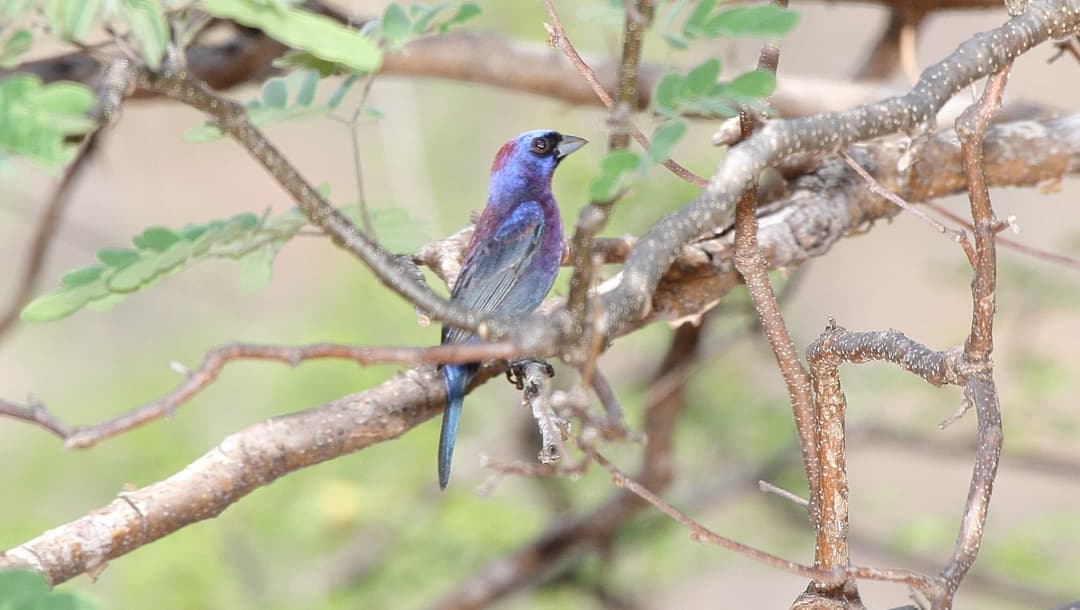
Painted Bunting vs Varied Bunting
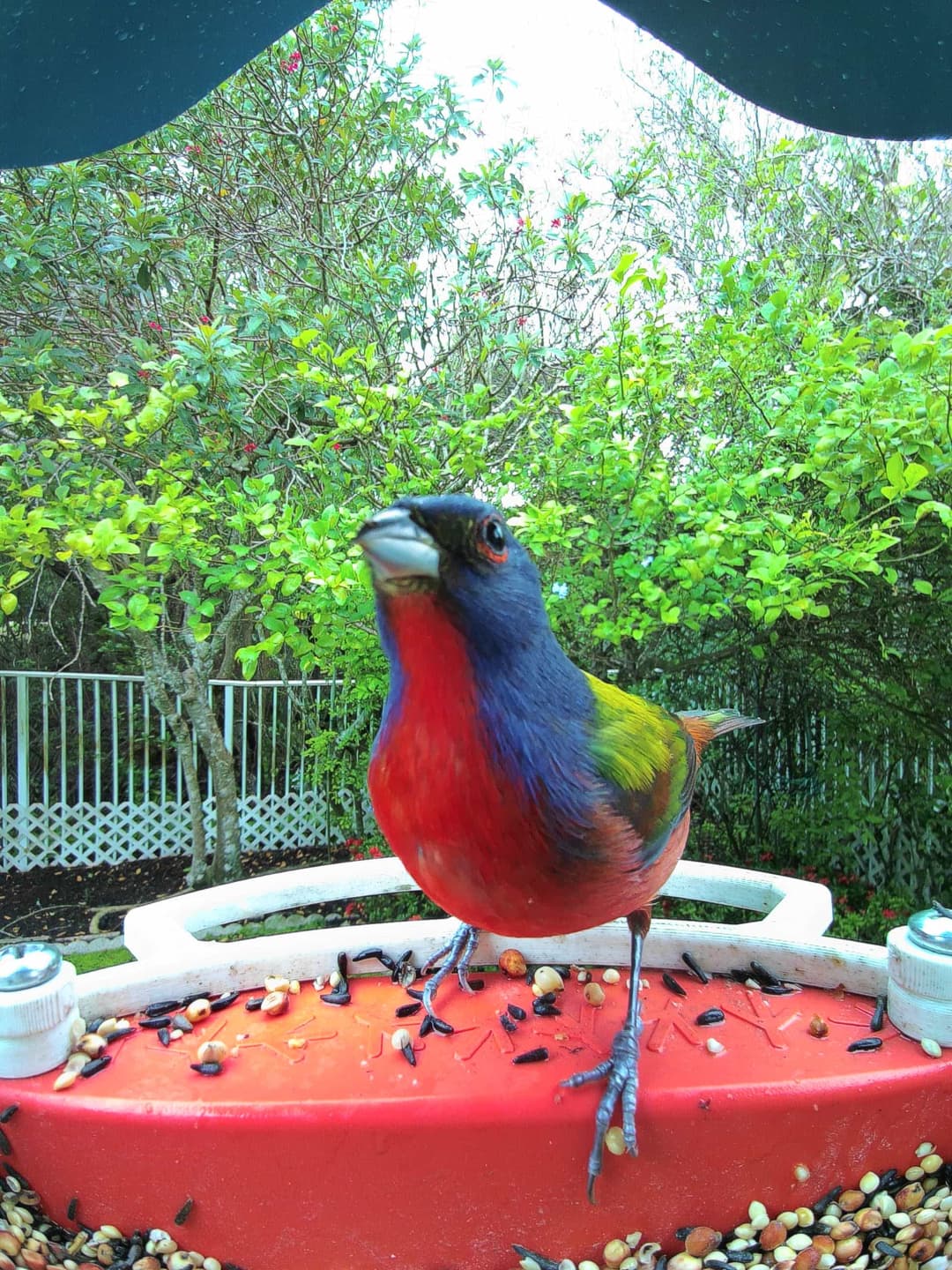
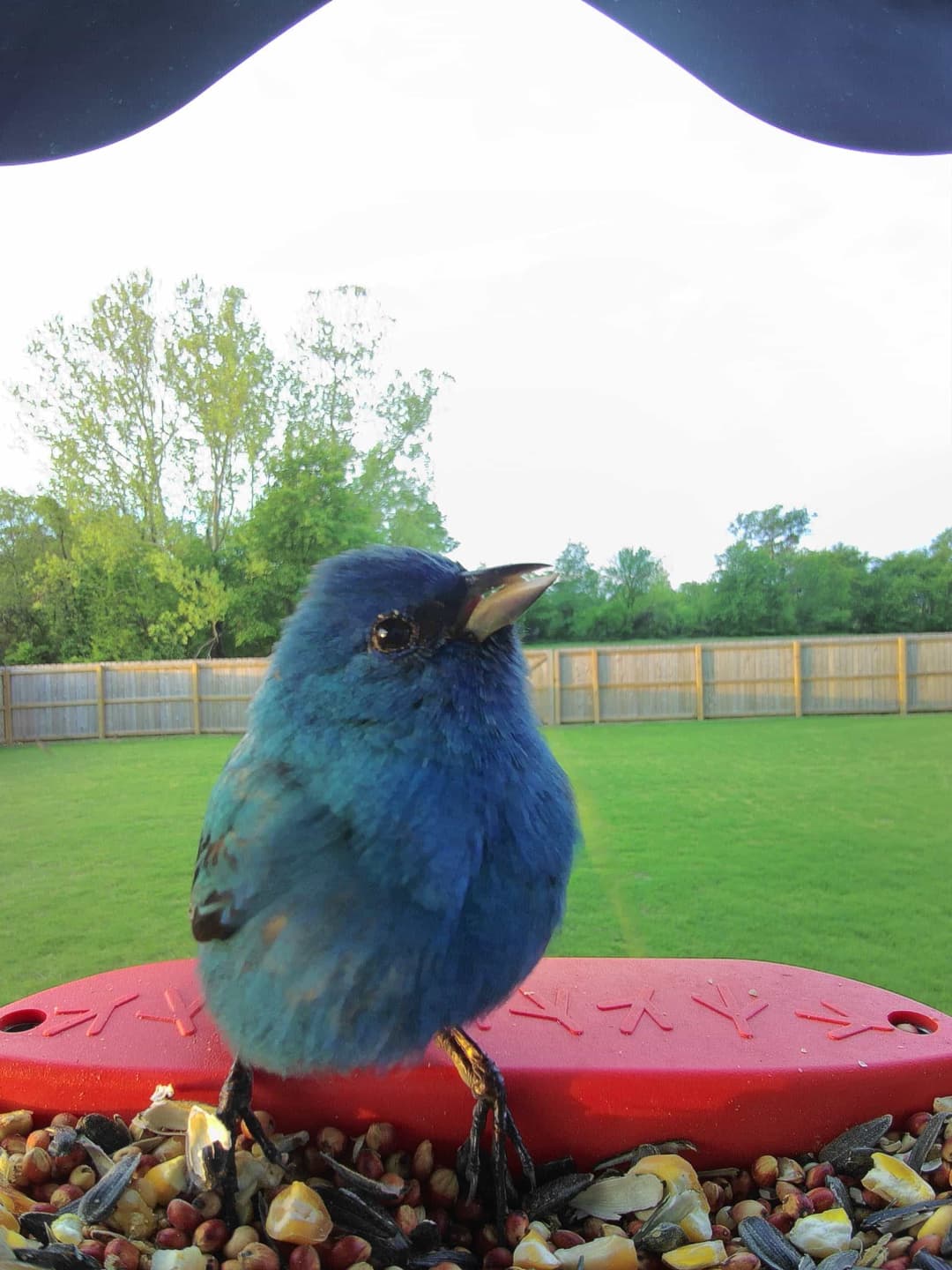
Painted Bunting vs Indigo Bunting
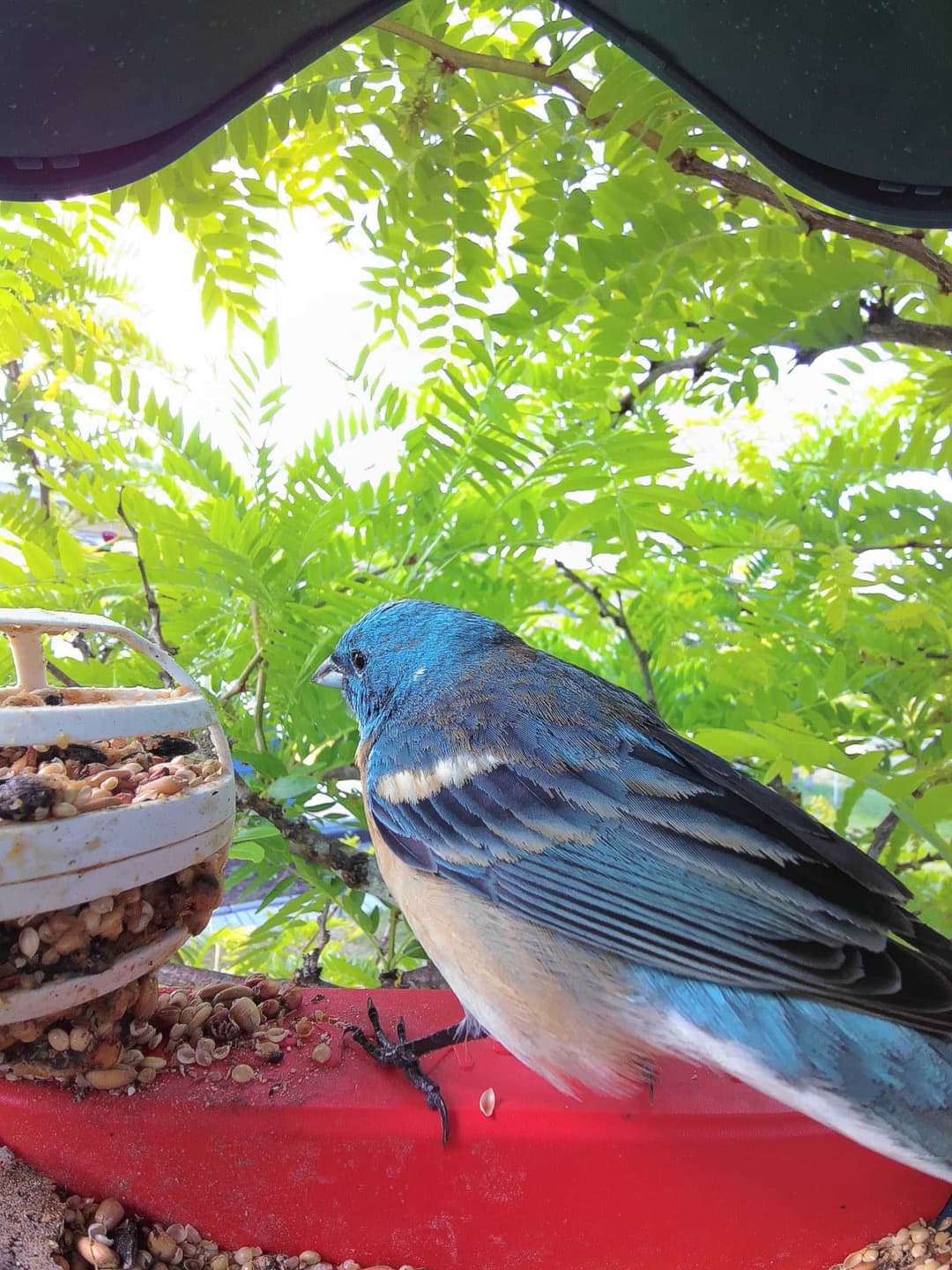
Painted Bunting vs Lazuli Bunting
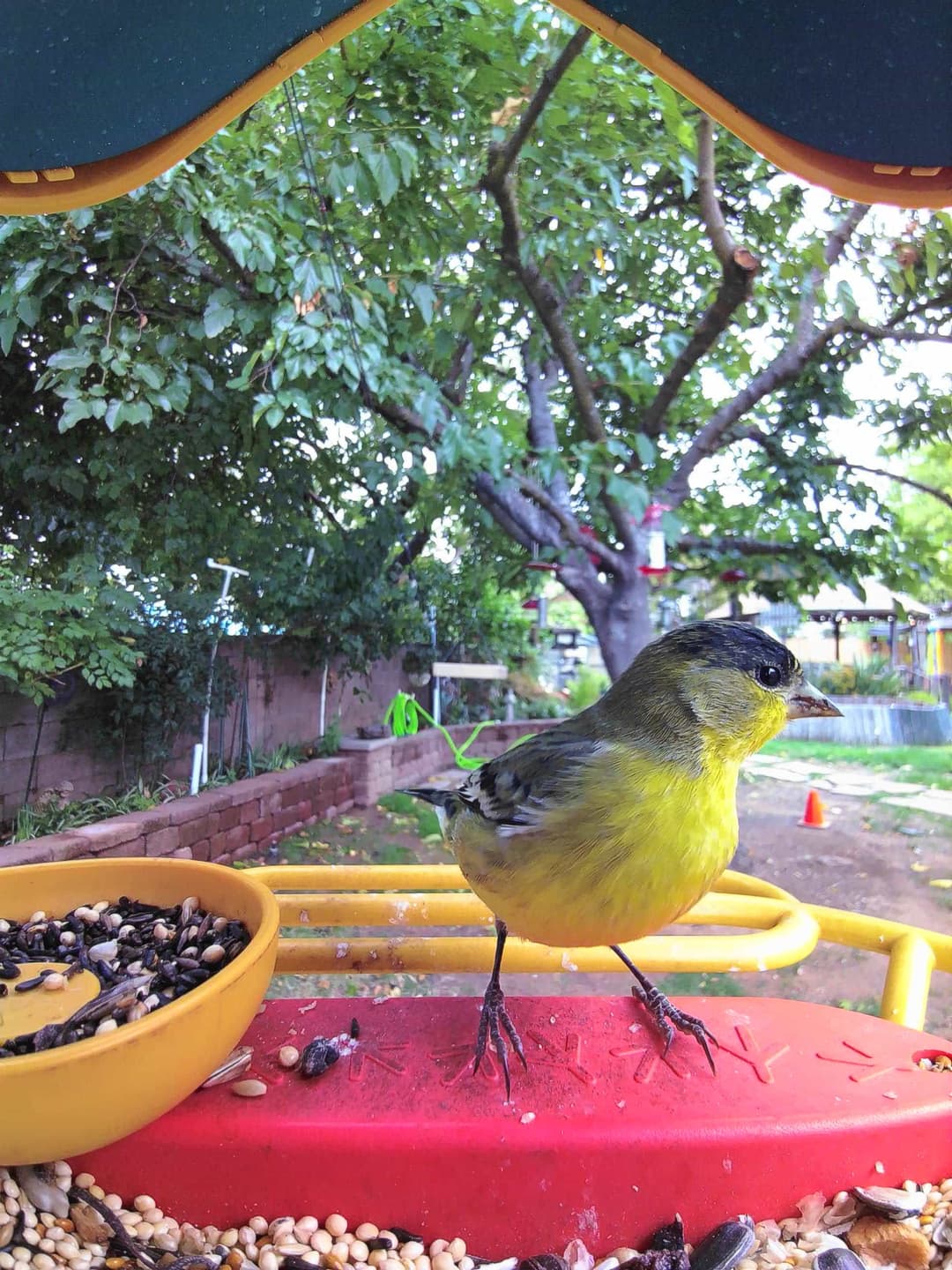
Painted Bunting vs Lesser Goldfinch
Orange-Breasted Bunting vs [Select a bird]


[Select a bird]
Pick a bird to compare
Painted Bunting vs [Select a bird]
[Select a bird]
Pick a bird to compare