
Lesser Goldfinch
Lesser Goldfinch
Spinus psaltria


Quick Identification guide
Quick Identification guide
- •
Exhibits a black crown and upperparts, with varying yellow to olive underparts
- •
Features a short, conical beak, ideal for seed eating
- •
Shows white edges on wings and tail feathers, contrasting with the darker body
What does a lesser goldfinch sound like?
The lesser goldfinch's vocalizations are characterized by a rapid medley of twittering notes, indicative of its typical song. Common calls of this bird include a plaintive tee-yee or cheeo sound. Its call pattern is complex, varying between falling and undulating rhythms. The calls can be further classified into different types such as chatter, chirp/chip, and whistle.


Description
Did you know that lesser goldfinches that live on the East Coast of the US have black backs, whereas West Coast birds have green backs? They will gladly visit your feeder and aren't fussy at all; they like all kinds of seeds. They are sure to brighten up even the gloomiest day; how apt that their call sounds a little like cheer!
The lesser goldfinch can weigh between 8to11.5grams and be from9to11centimeters tall.
The lesser goldfinch typically lives for up to 5 years in the wild. This lifespan is similar to other related small finch species like the American goldfinch, which also averages a 5-year lifespan. In captivity, the lesser goldfinch can live up to 11 years. Despite the short average lifespan, the longest recorded age for a lesser goldfinch is 9 years and 3 months.
Did you know?
Most popular questions about lesser goldfinch
How to recognise a lesser goldfinch?
General appearance
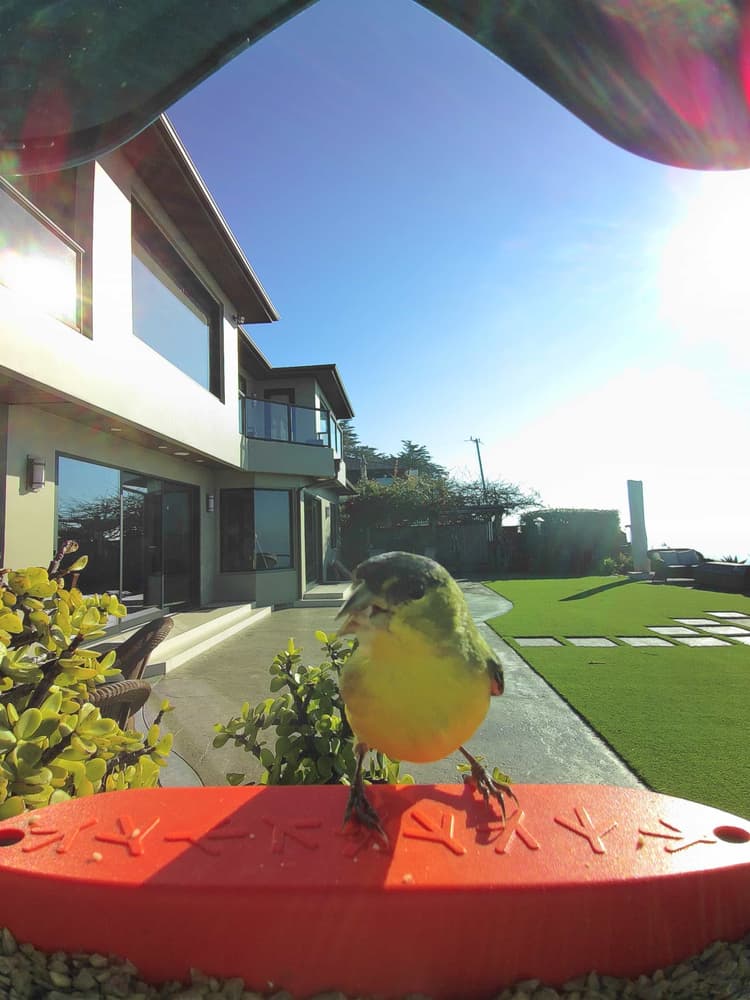
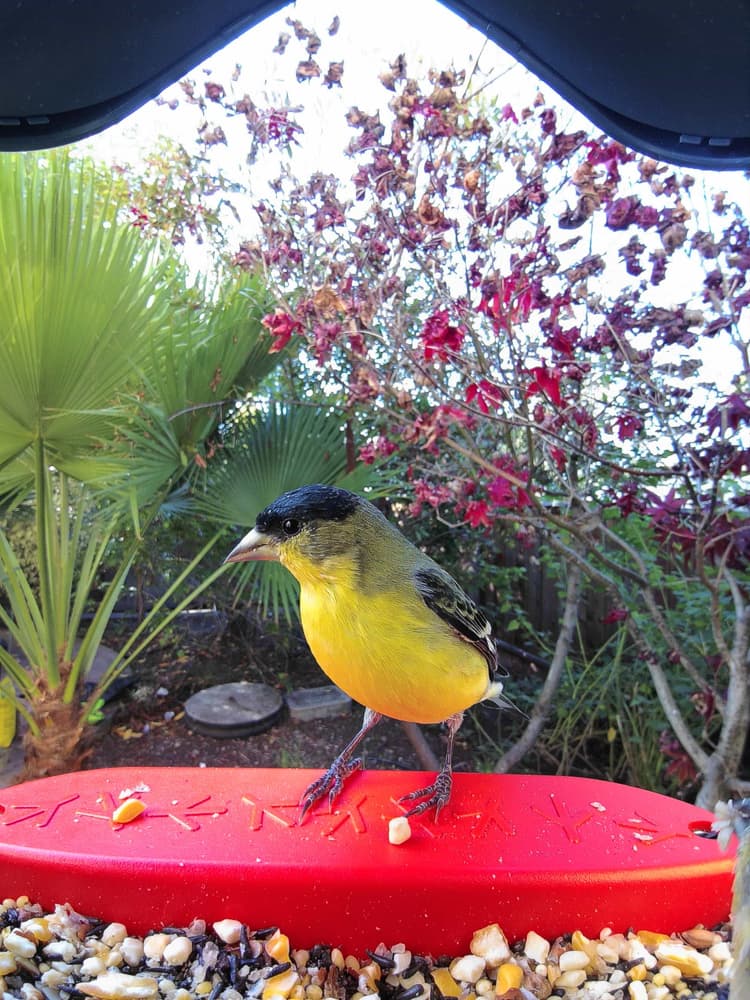
The lesser goldfinch is a small songbird, about 4.5 inches long, with a wingspan of approximately 8 inches. It has a short, conical bill ideal for seed eating. Its tail is notched and relatively short. The species is notable for its bright yellow underparts, contrasting with black or olive-green upperparts. The wings and tail are dark with white wing bars and edges, giving it a distinctive appearance in flight.
Male vs female
Male lesser goldfinches typically display a glossy black cap and upper back. Regionally, their back can also appear olive-green. Females are generally more subdued, with olive-green upperparts and a less distinct cap. Both genders share the yellow underparts, but females have duller shades. During the breeding season, males are brighter with clearer contrast, while females remain consistent year-round.
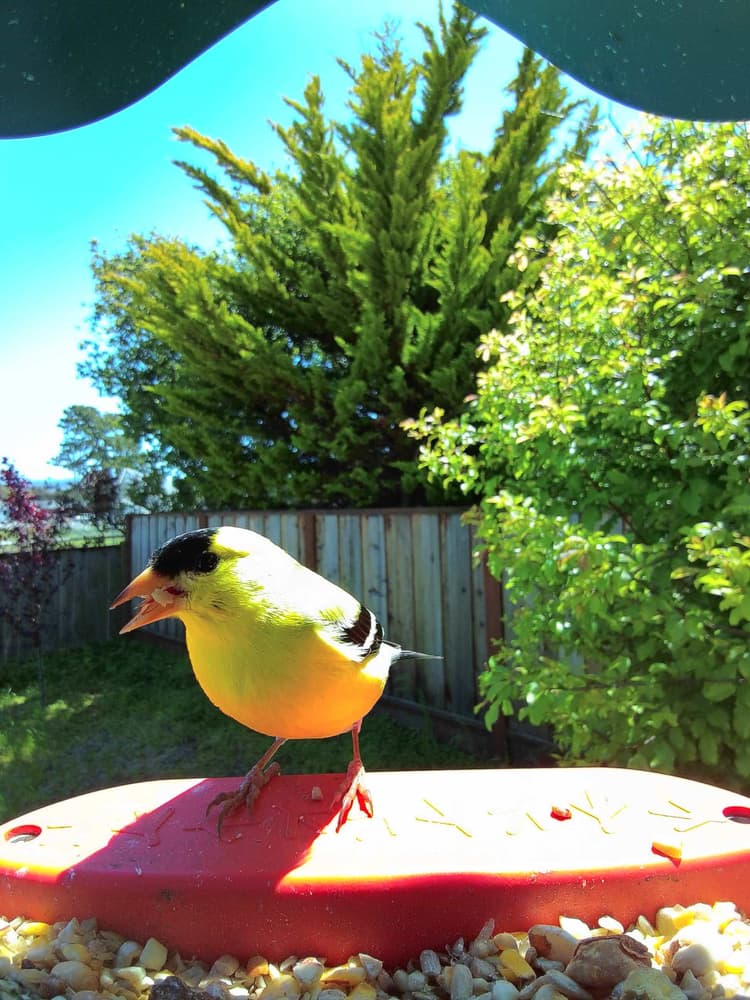
Male Lesser Goldfinch
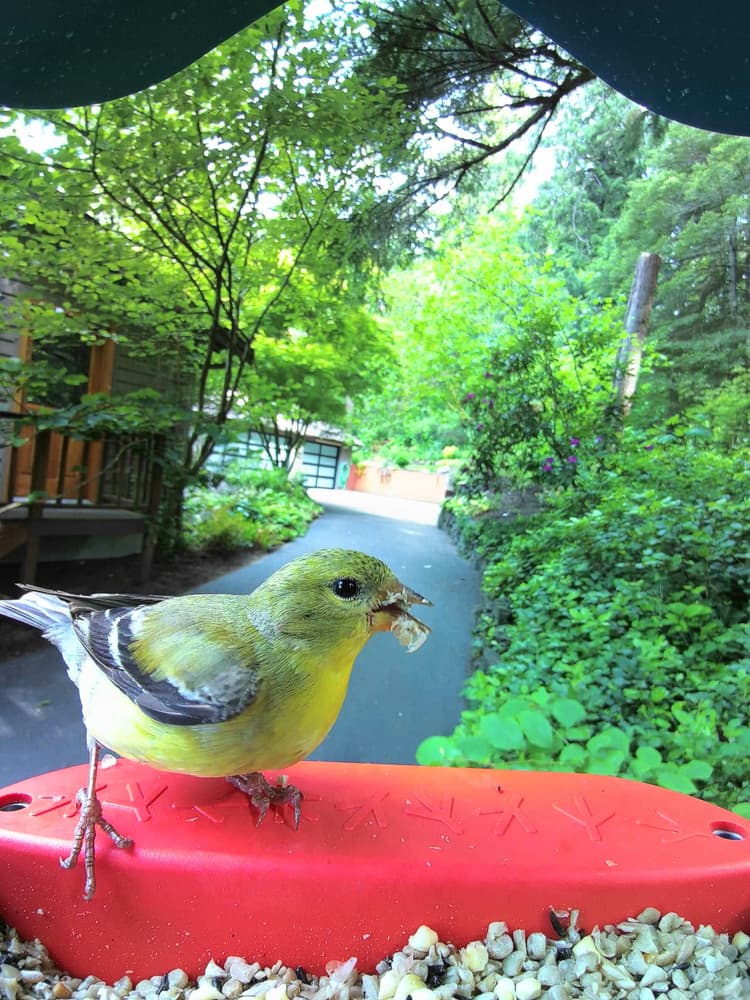
Female Lesser Goldfinch
Juvenile
Juvenile lesser goldfinches resemble adult females, displaying olive-green upperparts and yellowish underparts but with more muted overall tones. They lack the distinct black cap found in adult males. As they mature, male juveniles develop the characteristic coloration and markings of adult males, while females retain their more subdued appearance.
Often mistaken for
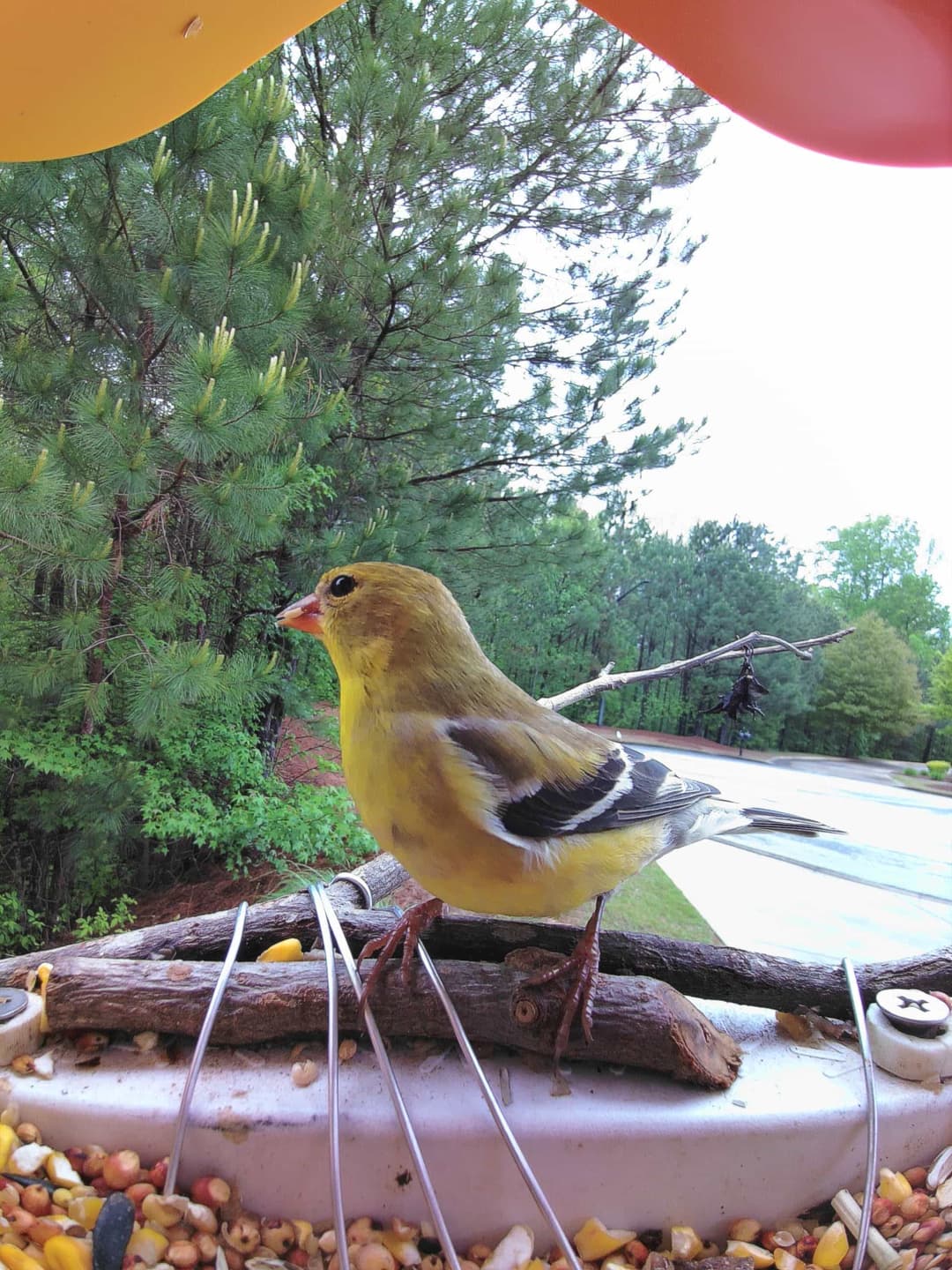
American Goldfinch vs Lesser Goldfinch
Lesser Goldfinch males have black backs, while American Goldfinch males have bright yellow bodies and black wings. Lesser Goldfinch is smaller and has a more muted yellow underbelly compared to the vibrant yellow of the American Goldfinch.
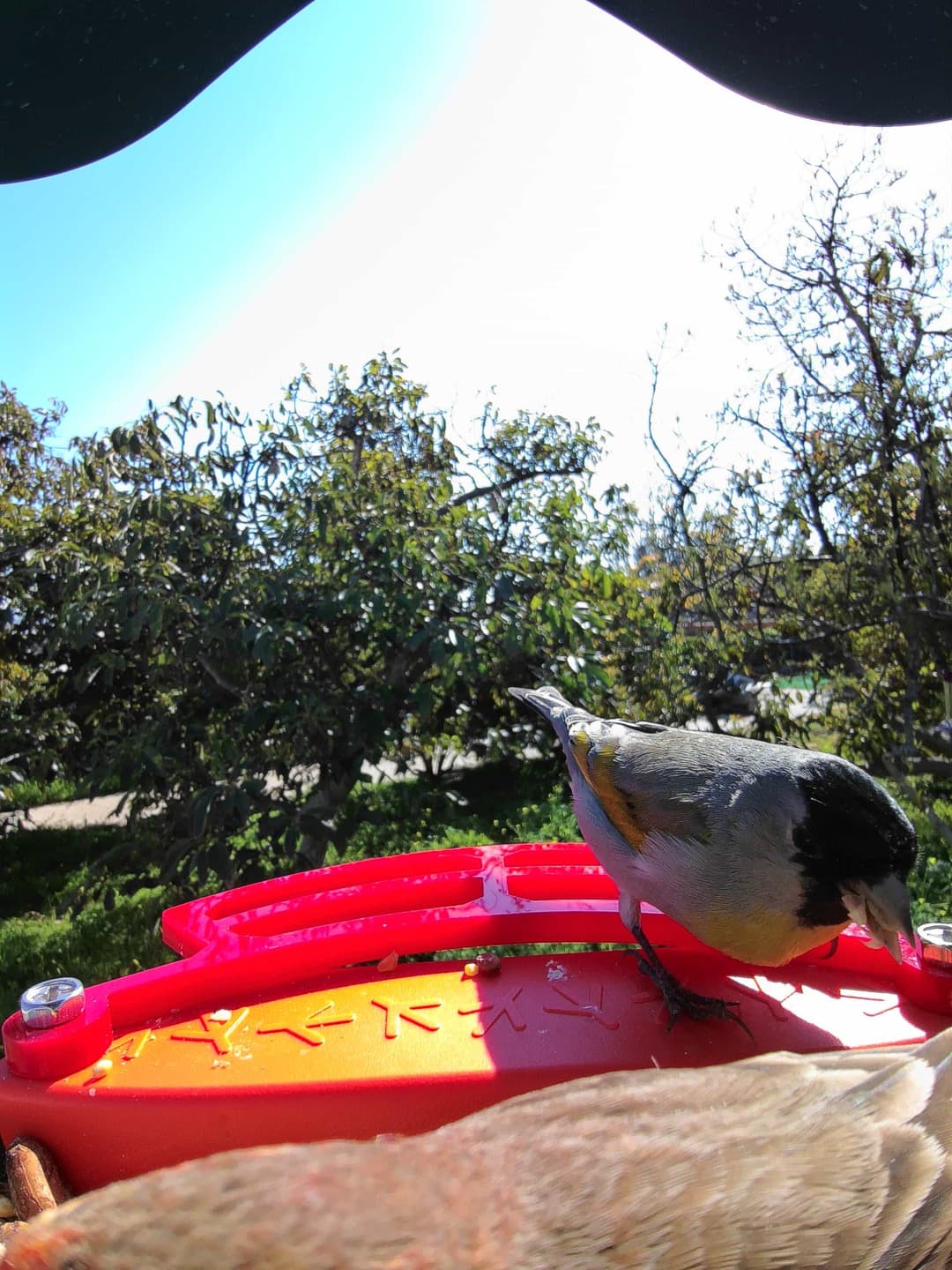
Lawrence’s Goldfinch vs Lesser Goldfinch
Lesser Goldfinch males bore a black cap and are more consistently yellow underneath. Lawrence’s Goldfinch display a gray body with a yellow chest and rump, making it distinct from the more uniformly yellow Lesser Goldfinch.
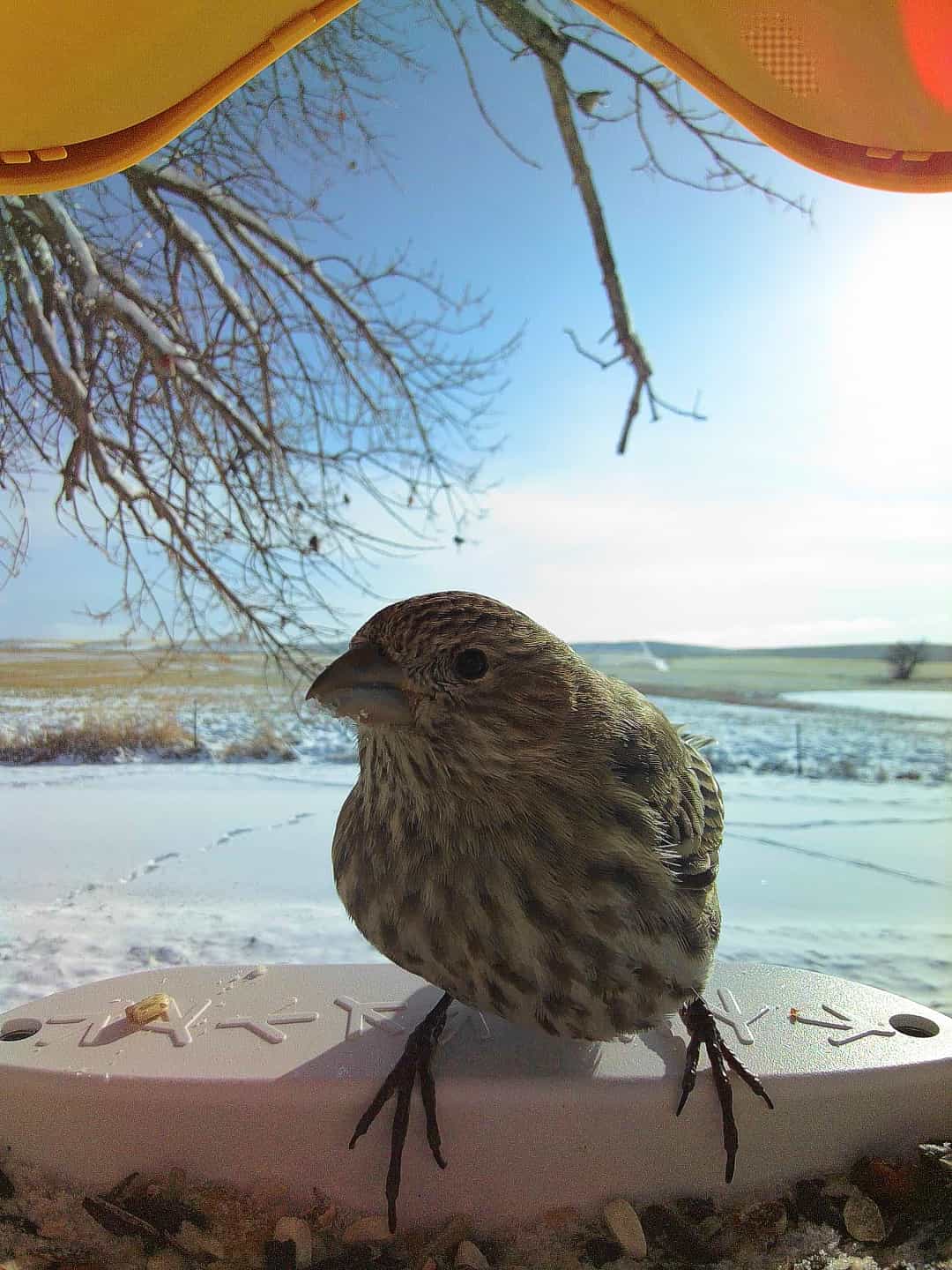
Pine Siskin vs Lesser Goldfinch
Lesser Goldfinch has a bright yellow underbelly and lacks the streaky appearance of the Pine Siskin. Pine Siskins have a more slender body with heavy streaking and a pointed bill, unlike the conical bill of the Lesser Goldfinch.
Evening Grosbeak vs Lesser Goldfinch
Lesser Goldfinch is much smaller compared to the stocky build of the Evening Grosbeak. Grosbeaks have a striking yellow and black coloring on the wings but are much larger with a heavy, conical bill, distinctly different from Lesser Goldfinch.

Breeding and nesting habits of the lesser goldfinch
Mating behaviors
In the warmer parts of the Southwest, the breeding season for lesser goldfinches may extend from early spring to mid-autumn. During courtship, the male lesser goldfinch feeds the female and performs a display flight characterized by widely spread wings and tail, fluttering rapidly while singing.
Nesting details
The female primarily builds the nest, which is a compact open cup constructed from grass, plant fibers, and strips of bark, and lined with plant down. Nests are typically placed in a vertical fork of twigs in shrubs or trees, ranging from 5 to 30 feet above the ground, but can occasionally be higher in trees or lower in bushes and dense weeds.
Eggs and chick-rearing
While detailed specifics about the eggs and chick-rearing practices were not provided, it is common for lesser goldfinches' nests to be incubated by the female. Creating a suitable habitat involves planting a variety of shrubs and trees to offer natural nesting spots, and ensuring a diverse supply of native plants for food and fiber sourcing.
What does a lesser goldfinch like to eat?
Flowers
Insects
Seeds
Natural diet
The lesser goldfinch primarily consumes seeds, especially favoring those from the daisy (composite) family, such as thistle and wild sunflower. Its diet includes seeds from various weeds. Additionally, it eats flowers, buds of trees like cottonwoods, some berries, and insects, primarily small ones like aphids, especially in summer. The lesser goldfinch may also ingest salt as part of its diet.
Bird feeders
At bird feeders, the lesser goldfinch is attracted to small seeds, with a preference for offerings resembling its natural diet. It might be drawn to feeders that provide sunflower seeds and thistle (nyjer) seeds, which are commonly available in commercial bird seed blends and cater to its seed-centric diet.
Favorite snacks of the lesser goldfinch
The Lesser Goldfinch adores high-quality seeds, particularly sunflower, thistle, and dandelion seeds. They also enjoy fruit, especially the juiciness of fresh oranges. Bird Buddy seeds are often a top pick as they are seasonally chosen by experts to best appeal to the dietary preferences of these charming birds.
Optimal feeder types for the lesser goldfinch
A tube feeder, especially one with thistle inserts, is a fantastic choice for the Lesser Goldfinch. They also enjoy mesh sock feeders and hanging bird feeders. Keep your feeders clean and full to make your yard a regular stop for these birds.
Fun tricks to encourage a visit from the lesser goldfinch
Creating an environment they love can be a successful strategy to attract these birds. For example, planting native thistles and sunflowers can attract this songbird. They are also attracted to moving water sources, so consider adding a bird bath or water fountain in your yard. Once your lesser goldfinch guests are comfortably visiting your backyard setup, they may even treat you to a beautiful sing-along as a thank you!
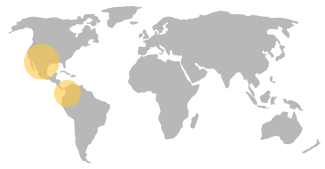
Where can you find lesser goldfinches?
Primary habitat
Lesser goldfinch typically inhabits semi-open areas, such as open brushy country, open woods, and gardens. It is found near thickets and trees close to open weedy fields.
Additional range
It ranges from low valleys to high mountains, typically close to water in dry regions. Occasionally, they inhabit semi-open terrains or woodland edges in the tropics.
Do they migrate?
The lesser goldfinch exhibits both migratory and non-migratory behaviors depending on its geographic location. It is a permanent resident throughout most of its range, which means that it remains in the same location all year in these areas. This includes the desert regions and much of the western United States. However, in some inland parts of the West that are north of the desert regions, the lesser goldfinch is a summer resident only. This indicates that, in these regions, the birds migrate. While specific migration routes are not detailed, it can be inferred that these birds move to warmer areas or lower elevations outside of the summer months, avoiding harsh winter conditions. The lesser goldfinch is also described as a "very rare stray east of [its] normal range," suggesting that it occasionally appears in areas east of its usual habitats, but this is atypical and not part of a regular migratory route. Key locations for observing the lesser goldfinch in its permanent range include California, Arizona, and parts of Texas, whereas summer residents may be observed further inland, moving to more hospitable environments in the winter.
What is the role of lesser goldfinches in nature and how to protect them?
Conservation status
The lesser goldfinch is widespread and fairly common across much of the tropics, with its population numbers considered stable. It is not classified as vulnerable or endangered. While specific conservation efforts for the lesser goldfinch are not highlighted, the species benefits from habitat preservation efforts aimed at tropical regions. Key threats could include habitat degradation due to urbanization or deforestation, though these are not currently causing significant population declines for this species.
Ecological role of lesser goldfinches
Its role in the ecosystem
The Lesser Goldfinch plays an important ecological role primarily as a consumer and disperser of seeds. They are especially attracted to those of the daisy family, thistle, wild sunflower, and various weeds, which promotes growth and propagation of these plants. Their diet also includes insects, mainly small ones such as aphids. This assists in controlling pest populations, benefiting plant communities by minimizing potential damage from these insects. In addition, the Goldfinch's nesting habits can aid in seed dispersal when materials they use, like grass and plant fibers, carry seeds to new locations. This process aids in the diversification and healthy expansion of plant species in their habitats. Hence, the Lesser Goldfinch contributes to both pest control and seed dispersal within its ecosystem.
How to help protect lesser goldfinches
Preservation tips
Habitat preservation strategies
Preserving the lesser goldfinch habitat requires avoiding or limiting development and deforestation in areas where they live. Conservation areas should be established to protect their habitats, creating buffer zones around these regions. Limit the use of pesticides as these chemicals can drastically reduce their food sources.
Community science initiatives
Getting the local community involved is critical. Encourage individuals to participate in bird monitoring activities to keep an eye on lesser goldfinch populations. School programs educating about the importance of bird conservation could be a good start. Initiatives such as creating bird-friendly spaces in gardens and backyards can also enhance their habitat. Encourage reporting and documenting sightings, helping scientists track population trends.