House Bunting or Rock Bunting?
Here's how to tell the difference
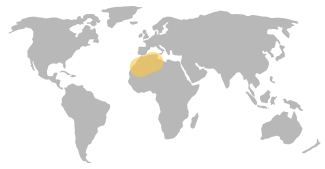

House Bunting

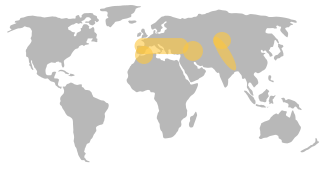
Rock Bunting
House Bunting
Emberiza sahari
General appearance
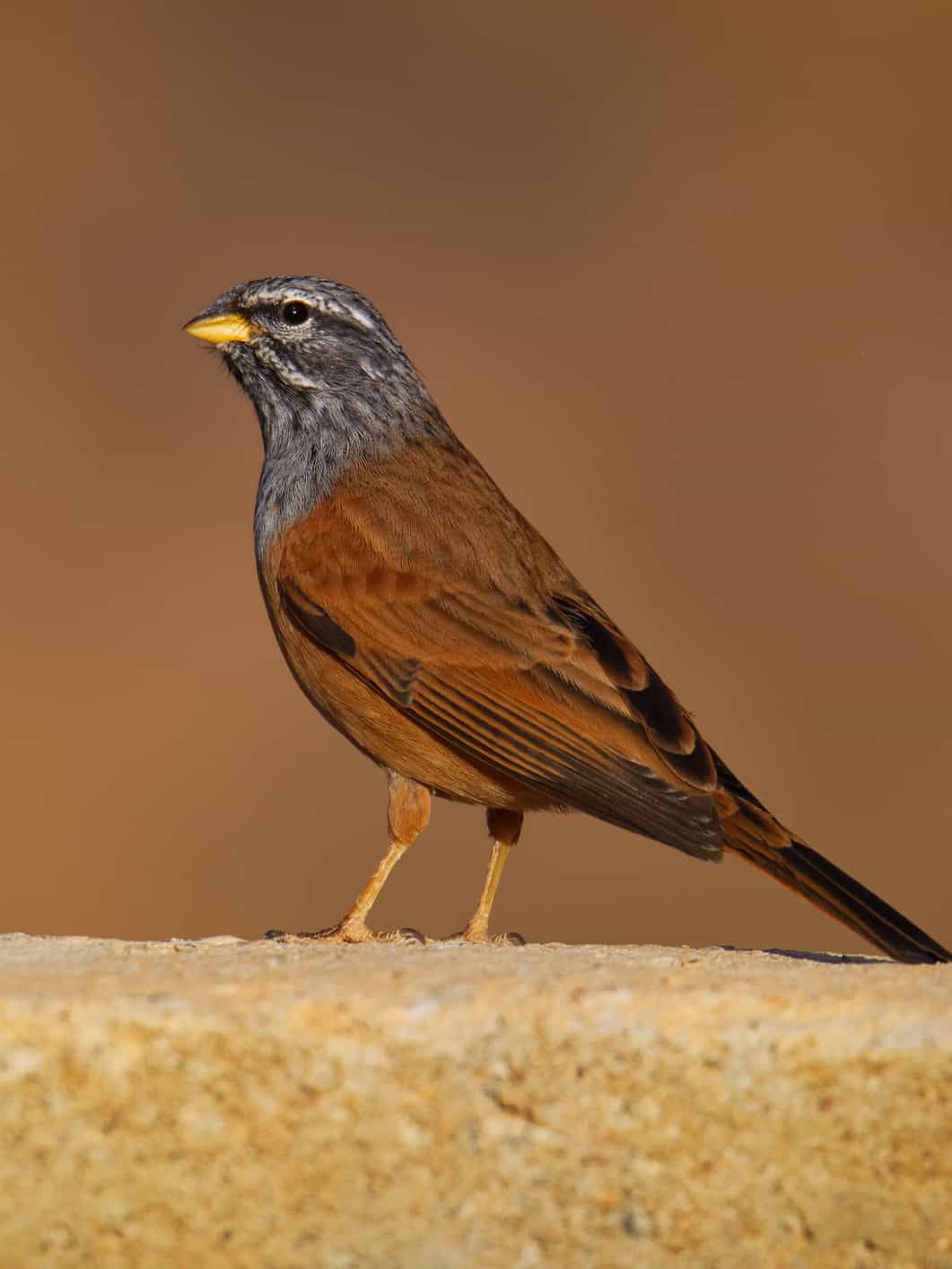
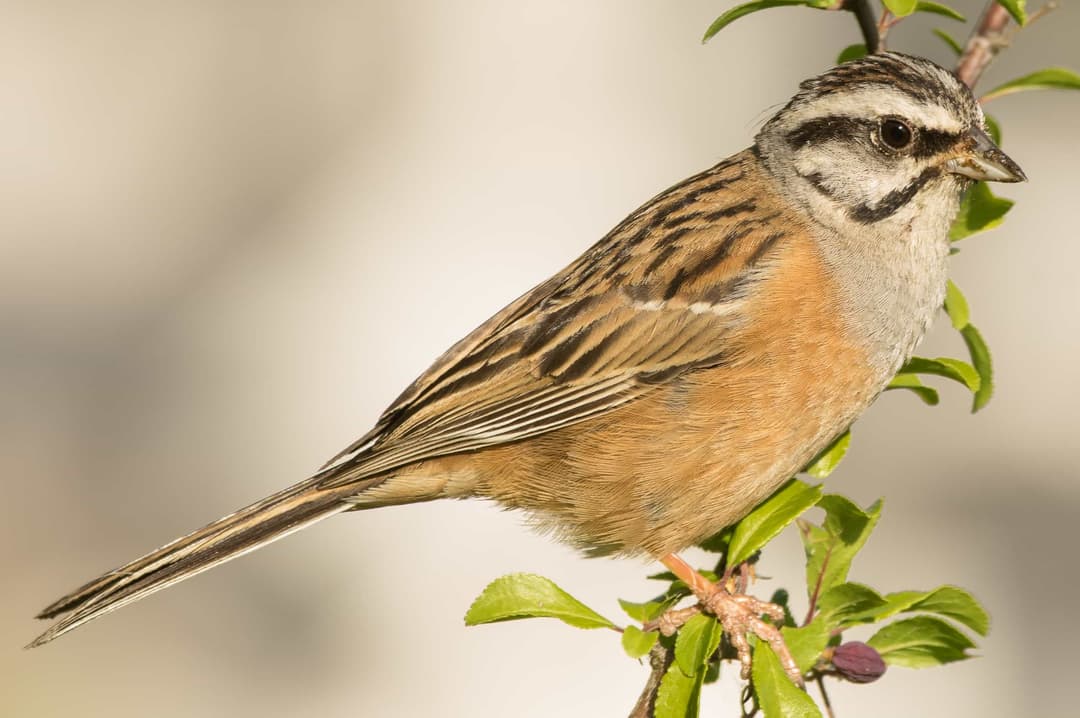
The house bunting is a small bird with a distinctive combination of colors. Its upperparts and tail are a warm brown, while the underparts appear pale grey. Notable features include a darker head with a black eye stripe and throat.
Male vs female
Males and females of the house bunting species look similar, but discernible differences exist. Notably, males bear significantly more black on the head, encircling the eye and covering the throat, in contrast to the females where these features are a muted brown.
Juvenile
Juvenile house buntings possess a more subdued coloration than adults. They lack the stark black markings on the head, instead sporting a more uniform brown coloring. Overall, their plumage is more mottled and less distinctly patterned than the adults.
Size
5.1 - 5.5 in/0.4 - 0.6 oz
There's more to learn about House Bunting
View full detailsRock Bunting
Emberiza cia
General appearance
The Rock Bunting is a small bird, typically measuring around 17 centimeters in length and weighing between 20-30 grams. Its most distinguishing attributes are the streaked brown feathers on the back and wings, and a robust, pinkish-white, conical beak.
Male vs female
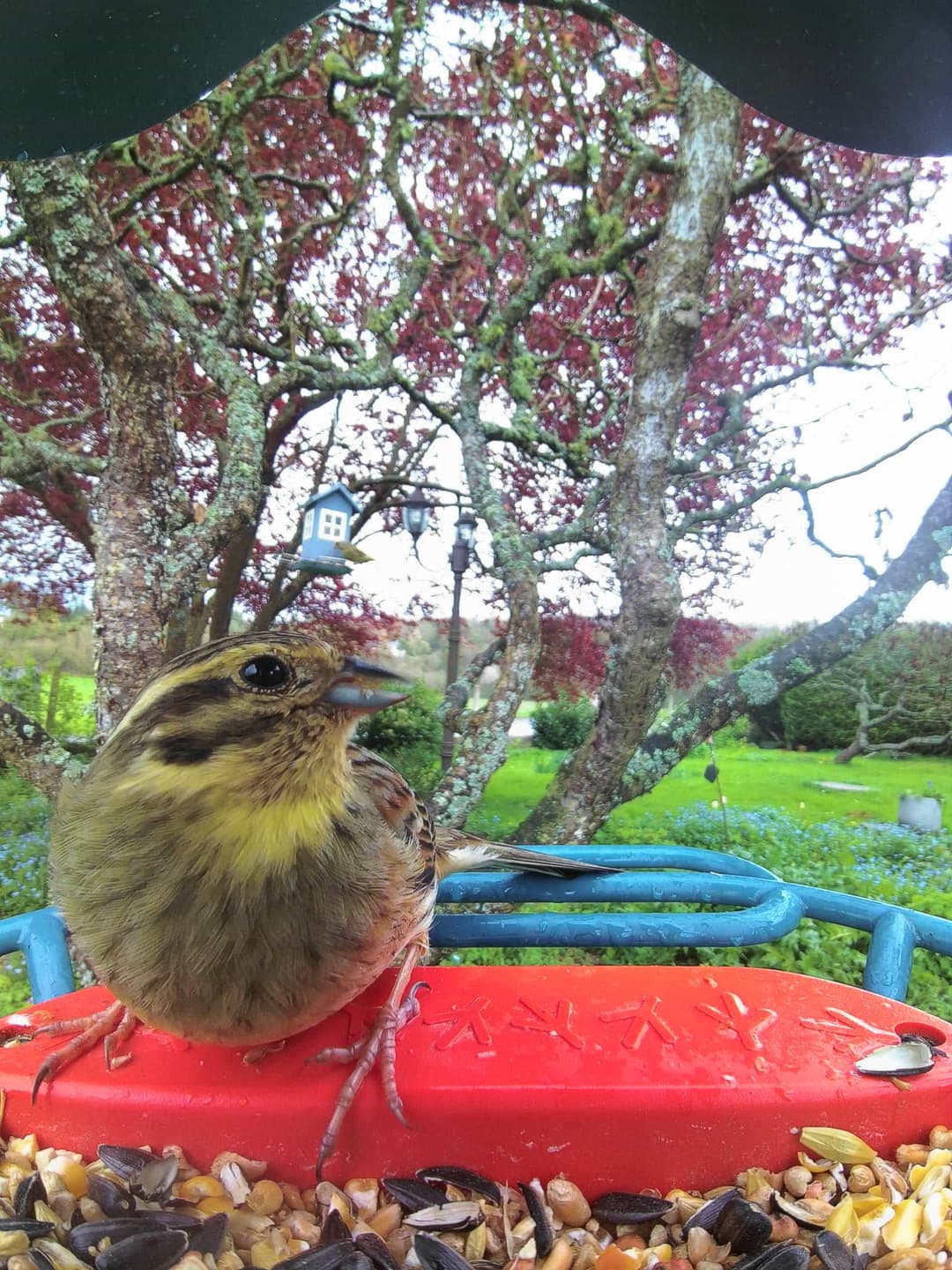
Male Rock Buntings are distinguished by their black and white striped head which is contrasted sharply by a bright yellow neck and underparts. In contrast, females have a subtler coloration with less distinctive head stripes, and a more subdued, earthy brown yellow underparts. These differences are much more pronounced during the breeding season.
Juvenile
Juvenile Rock Buntings resemble the nondescript coloration of the female, but with a more uniformly grey-brown plumage. They lack the distinctive head-stripes of the adults, and have duller underparts. Juveniles also have dark-colored bills initially, which gradually lightens and turns pink as they mature.
Size
6.3 - 6.7 in/0.7 - 0.9 oz
There's more to learn about Rock Bunting
View full detailsHow to tell the House Bunting from the Rock Bunting
Visual differences
House Buntings are smaller, measuring around 5-5.5 inches long and weighing 0.4-0.6 ounces, with warm brown upperparts and pale gray underparts, featuring a black eye stripe and throat. Meanwhile, Rock Buntings are larger at 6.3-6.7 inches, weighing 0.7-1.1 ounces, and have a streaked brown back, a black-and-white striped head, and a robust pinkish-white beak. Male Rock Buntings have bright yellow underparts, while females show muted colors. These distinctions in size, plumage patterns, and coloration aid in identification.
Key differences and behavior
House Bunting (Emberiza sahari) and Rock Bunting (Emberiza cia) exhibit distinct behaviors and habitat preferences. House Buntings, weighing 0.42-0.63 oz and measuring 5.1-5.5 inches, thrive in urban environments across North Africa and the Middle East, often nesting in human structures. They are non-migratory and known for their territorial singing. In contrast, Rock Buntings, slightly larger at 0.67-1.06 oz and 6.3-6.7 inches long, inhabit rocky hillsides and open woodlands across Europe, North Africa, and Asia. Both species are ground foragers, primarily eating seeds and insects, but House Buntings adapt more to bird feeders in urban setups, whereas Rock Buntings favor natural habitats. Despite similar nesting materials, Rock Buntings rarely nest in gardens, while House Buntings readily do so. These differences reflect their adaptability and habitat choices, aiding field identification.
Still not sure? Here are more lookalikes!
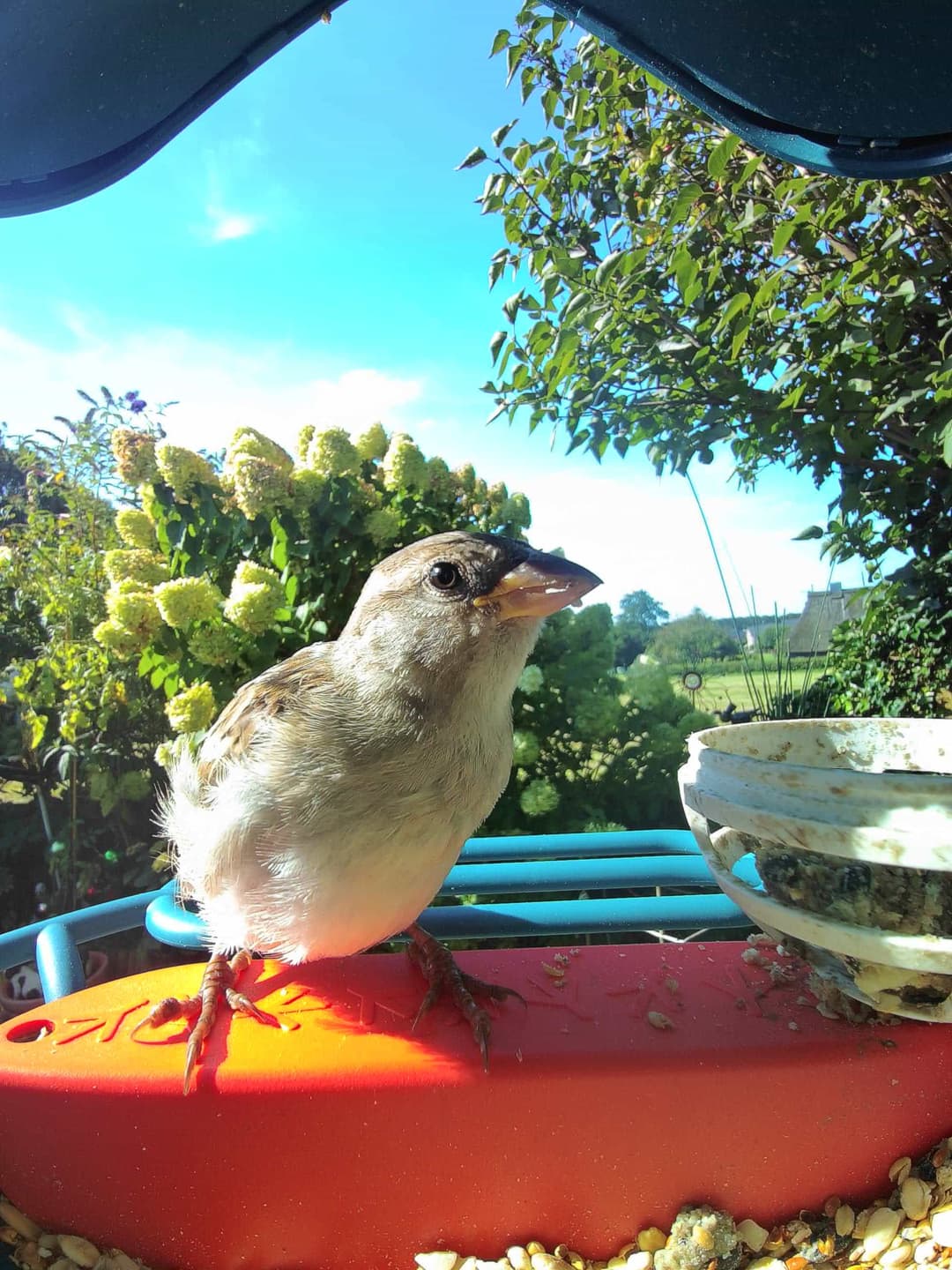
House Bunting vs House Sparrow
House Bunting vs [Select a bird]

[Select a bird]
Pick a bird to compare
Rock Bunting vs [Select a bird]
[Select a bird]
Pick a bird to compare