
Rock Bunting
Rock Bunting
Emberiza cia
Quick Identification guide
Quick Identification guide
- •
The Rock Bunting boasts a rufous face contrasting with a grayish crown, making it distinctive
- •
Features a black-striped head pattern, including a noticeable eye stripe and mustache line
- •
Exhibits a sturdy, conical beak ideal for seed eating, with a warm brown back and wings
Description
The Rock Bunting is a small, colorful bird with a rufous body and a striking black-and-white striped head. Found on rocky hillsides and open woodlands across Europe, North Africa, and Asia, it thrives in rugged landscapes. Known for its cheerful, melodic song, it feeds on seeds and insects, especially during breeding season. A hardy little bird perfectly suited to tough terrains!
The rock bunting can weigh between 19to25grams and be from16to17centimeters tall.
The rock bunting typically lives up to 10-12 years. Compared to other related species such as the Yellowhammer and the Corn Bunting which have similar lifespans, the Rock Bunting’s lifespan is quite average. Lifespan in the wild can vary greatly depending on factors like availability of food and predators.
Did you know?
Most popular questions about rock bunting
How to recognise a rock bunting?
General appearance
The Rock Bunting is a small bird, typically measuring around 17 centimeters in length and weighing between 20-30 grams. Its most distinguishing attributes are the streaked brown feathers on the back and wings, and a robust, pinkish-white, conical beak.
Male vs female
Male Rock Buntings are distinguished by their black and white striped head which is contrasted sharply by a bright yellow neck and underparts. In contrast, females have a subtler coloration with less distinctive head stripes, and a more subdued, earthy brown yellow underparts. These differences are much more pronounced during the breeding season.
Juvenile
Juvenile Rock Buntings resemble the nondescript coloration of the female, but with a more uniformly grey-brown plumage. They lack the distinctive head-stripes of the adults, and have duller underparts. Juveniles also have dark-colored bills initially, which gradually lightens and turns pink as they mature.
Often mistaken for
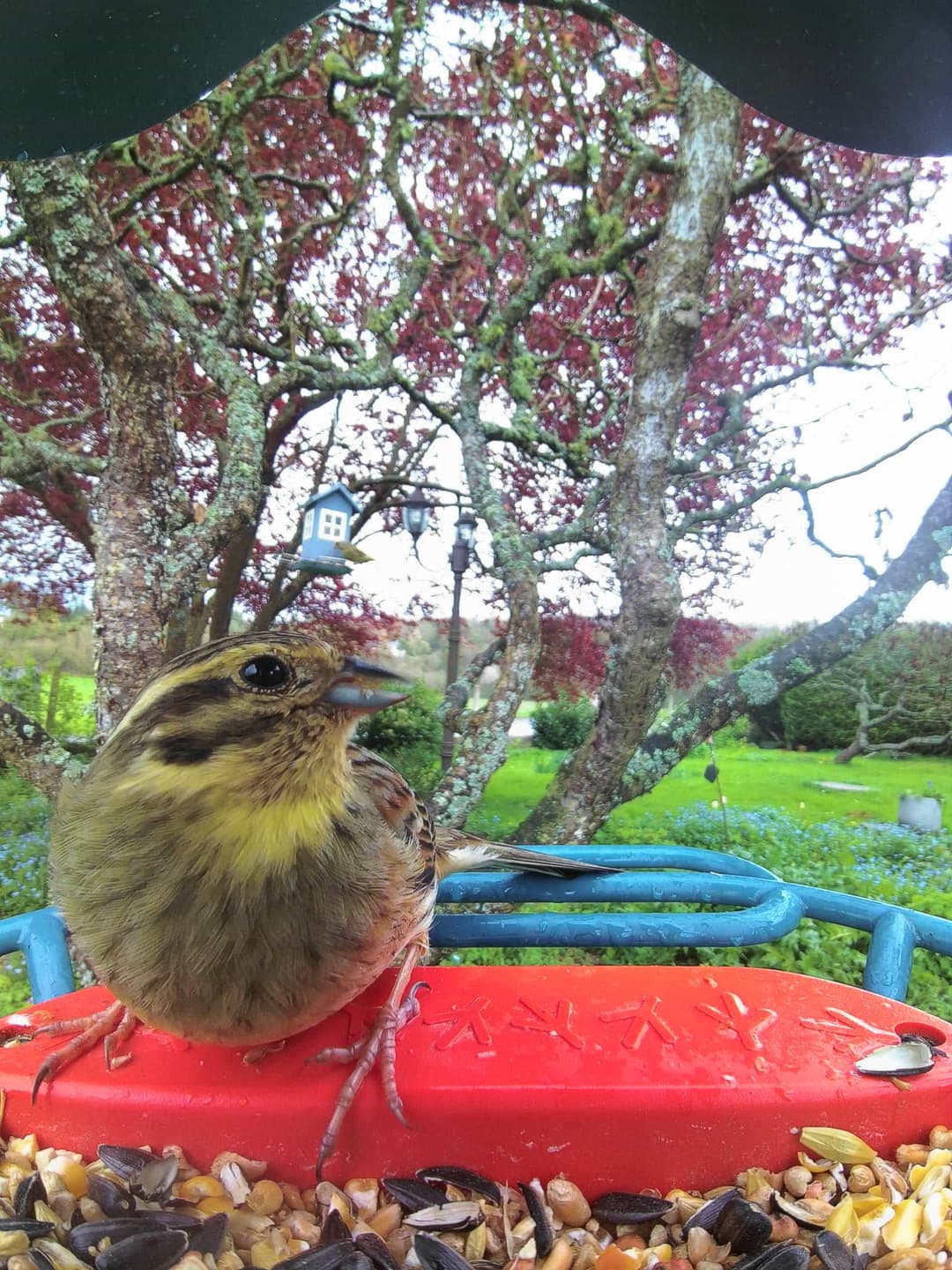
Cirl Bunting vs Rock Bunting
Cirl Buntings are often mistaken for Rock Buntings due to their similar coloration and size. However, Cirl Buntings typically have a greenish tinge on their wings and a distinctive head, with less contrasting patterns compared to the Rock Bunting.
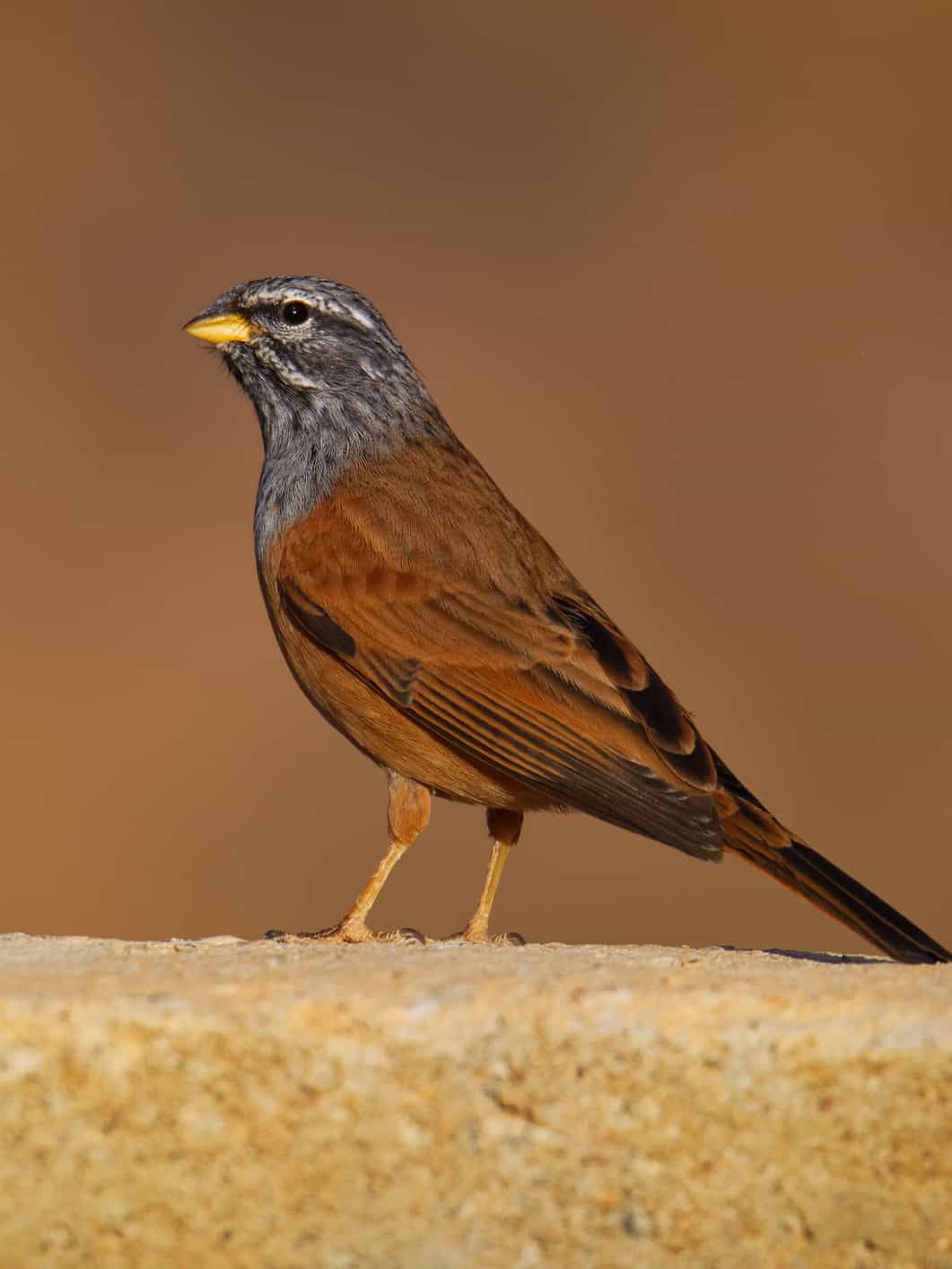
House Bunting vs Rock Bunting
House Buntings resemble Rock Buntings in shape and general build. They differ in being more uniformly brown and lacking the striking contrast of the black-striped head of the Rock Bunting.
Breeding and nesting habits of the rock bunting
Mating behaviors
Rock buntings engage in elaborate courtship displays involving singing and posturing. Males often sing from prominent perches to attract females and establish territory.
Nesting details
Nests are generally built in shrubs or low trees and sometimes on the ground. They are made from grass, small twigs, and lined with feathers and hair. Nesting in gardens is rare, but providing dense shrubbery can encourage it.
Eggs and chick-rearing
Females lay 4-5 eggs, typically incubated for about 13-14 days. Both parents help feed the chicks, which fledge approximately two weeks after hatching. Natural food sources like insects and seeds are vital for the chicks' diet.
What does a rock bunting like to eat?
Insects
Seeds
Natural diet
The rock bunting primarily feeds on seeds, insects, and grains in its natural habitat. Their diet includes a variety of small seeds such as those from grasses and herbs. They also consume insects, especially during the breeding season when protein is essential for chick development. Caterpillars, beetles, and ants are among their preferred insect choices.
Bird feeders
At bird feeders, rock buntings are attracted to various types of seeds. They commonly consume sunflower seeds, millet, and cracked corn. These foods provide a reliable and rich source of energy, particularly during colder months when natural food sources are scarce. Suet blocks may also attract rock buntings due to their high-fat content, offering a suitable supplement to their winter diet.
Setting up the best environment
To attract the Rock Bunting, consider creating a bird-friendly environment in your yard. Plant the types of vegetation that this species prefers, like deciduous trees and shrubs. Don't forget to provide access to clean water; bird baths or small ponds are ideal.
Providing the favorite snacks
The way to a Rock Bunting's heart is through its stomach. Seeds are their main food source, in particular, the Bird Buddy seeds have been chosen by experts for the season and have shown the best results. Adding small insects can also tempt these little fellas.
Choosing the right feeders
Rock Buntings prefer hopper or tray feeders as they allow easy access to seeds. Position the feeder in a quiet and safe location, away from predators and busy human activity. Clean the feeder regularly to prevent disease spread.
Fun tricks to attract rock buntings
Create a bird haven in your backyard. Incorporate birdhouses or nesting boxes to encourage them to stay. Playing bird calls or songs can also attract the Rock Buntings. And remember, consistency is key. Keep the feeders stocked and clean, and the water fresh.
Where can you find rock buntings?
Primary habitat
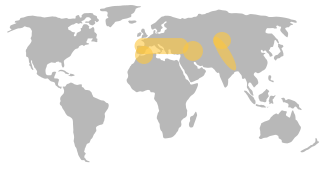
The rock bunting typically resides in mountainous regions of southern Europe and southeast Asia with a preference for dry, rocky areas and sparse vegetation.
Additional range
Unexpectedly, they can also be found in suburban areas, including gardens and parks with suitable food sources.
Do they migrate?
The rock bunting is generally a resident bird, meaning it typically remains in one place throughout the year. However, certain populations exhibit partial migratory behavior, particularly those residing in harsher climates or higher altitudes. In Europe, most rock buntings are sedentary, especially in the Mediterranean region, including Spain and Italy, where they inhabit rocky hillsides, open woodlands, and mountainous areas. Some birds from Central and Eastern Europe may move short distances to lower altitudes or more temperate areas during winter to escape colder conditions. In Asia, the species is found in the Caucasus, Iran, the Himalayas, and parts of Central Asia. Here again, those living in high-altitude or severe climates might descend to lower regions for the winter months. Overall, rock buntings do not engage in long-distance migrations like some other bird species. Their movements are generally localized and depend on environmental factors and food availability. Key locations for rock buntings are linked to mountainous and rocky terrains across their range, where they find suitable habitats for foraging and nesting.
What is the role of rock buntings in nature and how to protect them?
Conservation status
The rock bunting is classified as "Least Concern" by the IUCN, indicating it is relatively common and not immediately at risk of extinction. Its wide distribution across southern Europe, North Africa, and parts of Asia contributes to its stable population. Key threats include habitat degradation due to agricultural expansion and urbanization. Conservation efforts focus on habitat preservation and maintaining traditional agricultural practices that support biodiversity. Despite local declines, the overall population remains stable, reducing immediate conservation urgency. Nonetheless, monitoring and habitat protection remain important to prevent future vulnerabilities.
Ecological role of rock buntings
Its role in the ecosystem
Rock Buntings (Emberiza cia) play a crucial role in the ecosystem. Their diverse diet consists of various insects, seeds, and fruits, which helps to keep the pest populations in check, thus contributing to natural pest control. In addition to pest control, Rock Buntings play a significant role in seed dispersal. They consume seeds and other plant parts, and when they expel waste, the seeds are often still viable and can germinate in new areas. This helps in the propagation of plants and contributes to the plant biodiversity in their habitats. Rock Buntings also eat weed seeds, which can help to control the spread of undesirable plants. Their role as prey for larger predators is vital, as it helps to regulate the higher trophic levels in the food chain. These practices directly contribute to the overall health and biodiversity of the ecosystem.
How to help protect rock buntings
Preservation tips
Habitat preservation strategies
To conserve rock buntings, prioritize the preservation of their natural habitats; mountainous regions with sparse vegetation. Encourage legislation that limits deforestation and expansion of human settlements in such areas. Restoration of degraded habitats is equally crucial. Planting of native shrub species and monitoring can maintain and improve these areas.
Community science initiatives
Community engagement can significantly aid rock bunting conservation efforts. Organize community science programs that increase awareness about the species and its habitat needs. Encourage local involvement in bird watching and monitoring activities, reporting sightings or changes in behavior. This data can track population trends and detect potential threats early. Also, community-driven clean-up events can aid in preserving the quality of the habitats.